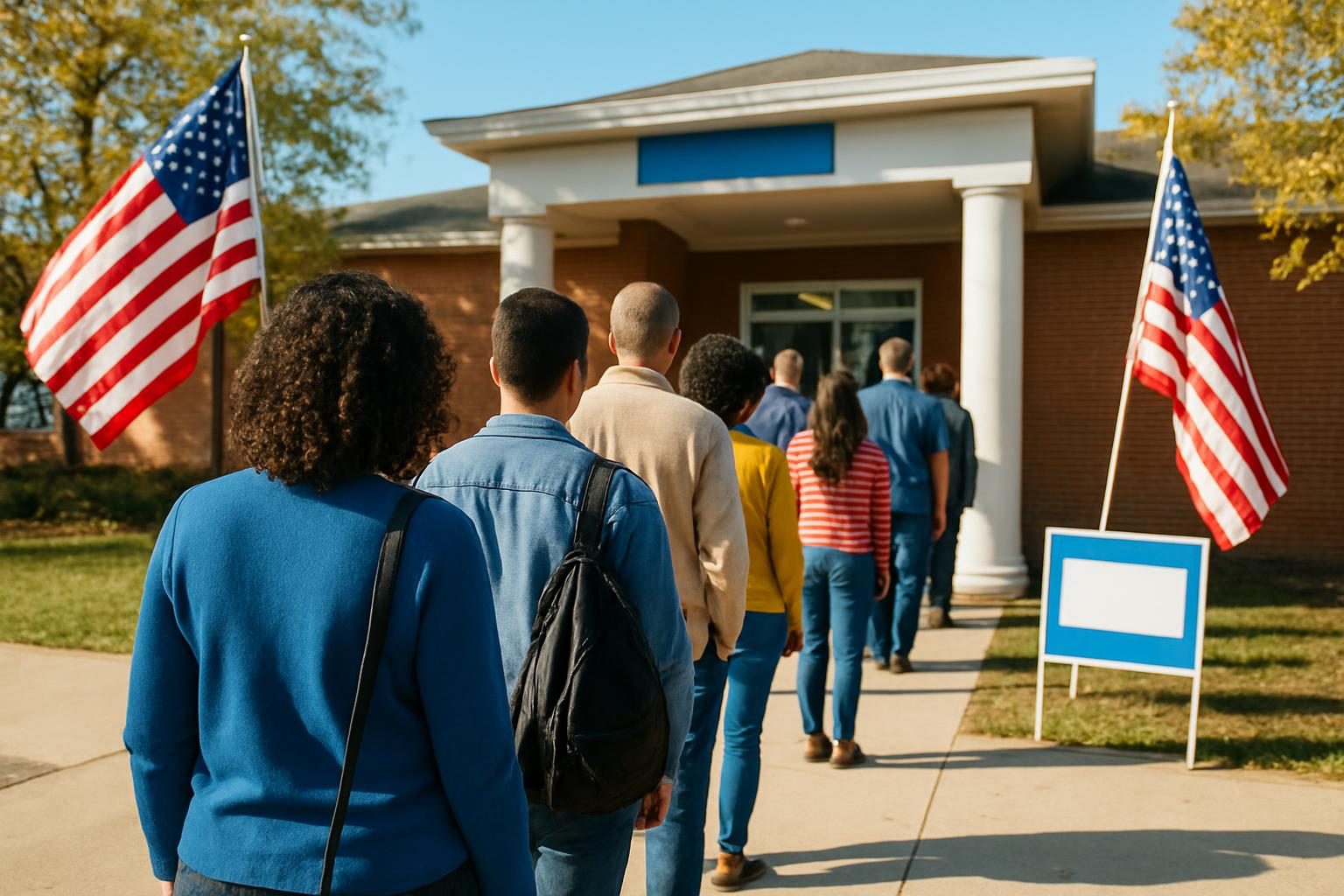
Every four years, a handful of states get a huge say in who leads the Democratic ticket, and then the whole country follows. If you have ever wondered how it all works, you are in the right place. Understanding how presidential primaries work is the first step to making your voice count in 2028.
Quick answer: Presidential primaries and caucuses are state-by-state contests where voters choose which candidate each party’s delegates will support. Candidates win delegates based on party rules, and the delegates formally pick the nominee at the national convention. The 2028 Democratic convention is set for August 7-10, 2028, and the general election is Tuesday, November 7, 2028.
The big picture: how a nominee is chosen
The United States does not pick presidential nominees in one national vote. Instead, each party runs its own nominating process, state by state, over several months. Think of it as 50 states plus territories each sending a message about who should lead the ticket.
Here is the basic path from start to finish:
- The invisible primary. Potential candidates build networks, raise money and travel before anyone votes.
- Announcements. Candidates formally declare and open campaigns.
- Primaries and caucuses. Voters in each state weigh in, and candidates win delegates.
- The national convention. Delegates formally nominate the party’s candidate for president.
- The general election. The nominees face off, and the Electoral College decides the winner.
Each party writes its own rules, so the Democratic process and the Republican process are not identical. That matters a lot when you look at calendars and delegate math.
Primary vs. caucus: what is the difference?
Primaries
A primary is a regular election run by state and local election officials. You show up (or vote by mail, where allowed), mark a ballot and go home. Most states use primaries, and they work much like the elections you already know.
Caucuses
A caucus is a meeting run by a political party. Participants gather in person, discuss and show support for candidates. Caucuses take more time and have historically drawn fewer participants than primaries, which is one reason many states have moved away from them.
Open, closed and in between
States also differ on who can take part. In a closed primary, you generally need to be registered with the party to vote in its contest. In an open primary, voters can usually choose a party’s ballot on election day. Some states fall somewhere in the middle.
Because rules vary and change, check your state’s details on vote.gov or with your state election office. Our simple guide to registering to vote in every state walks you through the first steps.
Primaries are where the choices get made, long before the general election ballot is printed.
How delegates work
When you vote in a primary, you are really voting for delegates who will support a candidate at the convention. A candidate who wins more support in a state generally wins more of that state’s delegates. The exact formula depends on party rules.
Democrats award most delegates proportionally. That means a candidate does not have to win a state outright to leave with delegates. Strong second-place finishes can still add up, which is part of why Democratic nominations can take time to settle.
To become the nominee, a candidate needs a majority of delegates at the convention. Most years, the winner is clear long before delegates gather. Party rules also create some delegates who are not chosen by a state vote. We are publishing a deeper explainer on what superdelegates are and how the Democratic rules work, so check back.
The 2028 Democratic early window
The order of states matters because early results build momentum, media attention and fundraising. On August 15, 2026, at its summer meeting in Austin, Texas, the DNC approved the 2028 early-window calendar. Here it is:
| Date | State |
|---|---|
| January 22, 2028 | South Carolina |
| February 1, 2028 | Nevada |
| February 8, 2028 | New Hampshire |
| February 15, 2028 | New Mexico |
| February 22, 2028 | Michigan |
| February 29, 2028 | Virginia |
| March 7, 2028 | Super Tuesday |
Source: democrats.org (DNC Votes to Officially Select Early States for 2028). For the full picture, see our 2028 Democratic primary calendar, and dive into the states one by one: South Carolina, Nevada, Michigan and Super Tuesday 2028.
What about Iowa and New Hampshire?
Iowa is not in the Democratic early window for 2028. Republicans, meanwhile, are expected to keep Iowa first on their calendar, according to RNC reports from September 2026, though the GOP calendar is not final. Read more in our Iowa caucus 2028 explainer.
New Hampshire is in the DNC window, but state law requires it to hold the first primary in the nation. That clashed with the DNC calendar in 2024, so watch for changes. We cover it in New Hampshire Primary 2028: Date, State Law and the DNC.
A calendar is more than dates. It decides which communities candidates visit, and whose concerns they hear first.

Who is running? Not anyone yet, officially
Here is a fact that surprises people: as of October 5, 2026, no major Democrat has formally declared a 2028 presidential run. The same is true on the Republican side. Candidates are expected to wait until after the November 3, 2026 midterms before making moves, though that is not settled.
That does not mean nothing is happening. Widely reported potential Democratic candidates include Gavin Newsom, Josh Shapiro, JB Pritzker, Gretchen Whitmer, Andy Beshear, Pete Buttigieg, Kamala Harris, Alexandria Ocasio-Cortez, Cory Booker, Raphael Warnock, Ruben Gallego, Mark Kelly, Elissa Slotkin, Chris Van Hollen and Ro Khanna. To be clear, these are potential candidates only, and none has announced.
Want to go deeper? Our 2028 Democratic candidates tracker follows who might run, and we have profiles on Gavin Newsom, Josh Shapiro and Pete Buttigieg. To understand the pre-announcement phase, read When Do 2028 Presidential Campaigns Start? The Invisible Primary.
Who is allowed to run?
The Constitution requires a president to be a natural-born citizen, at least 35 years old, and a US resident for 14 years. The 22nd Amendment limits a president to two elected terms. We are preparing a full guide to the constitutional requirements for running for president.
From primaries to the convention
After the early states and Super Tuesday, the calendar rolls on state by state. By late spring or early summer, a front-runner often has enough delegates to clinch the nomination. Then comes the convention, where delegates make it official and the party unveils its platform.
The 2028 Democratic National Convention is set for August 7-10, 2028. The finalist host cities, announced August 20, 2026, are Boston, Denver and Philadelphia. Atlanta and Chicago were eliminated, and the final pick is expected later in 2026. We will update this page when it is announced, and you can follow along at our 2028 Democratic National Convention page.
Along the way, debates help voters compare candidates. Dates for 2028 primary debates have not been announced yet. Our upcoming guide on how presidential debates work and how to watch them will help when the schedule is set.
Why your primary vote matters
Here is our view, and we will label it as opinion: primaries are the most underrated elections in American life. Turnout is often much lower than in November, which means each vote carries more weight. The people who show up shape the choices everyone else gets later.
Primaries are also where our party debates its direction on health care, wages, climate, voting rights and more. Curious where Democrats stand today? Start with our overview of Democratic Party platform issues.
And do not forget the midterms. The November 3, 2026 elections, covering all 435 House seats, about a third of the Senate and 36 governors, set the stage for 2028. See 2026 Midterm Elections: What’s at Stake for 2028.
Take action: Check your voter registration today at vote.gov, where every state’s official rules, deadlines and online registration links live. Then text one friend and ask whether they are registered too. Primary rules differ by state, so confirm your state’s details with vote.gov or your state election office.

How to get involved before anyone votes
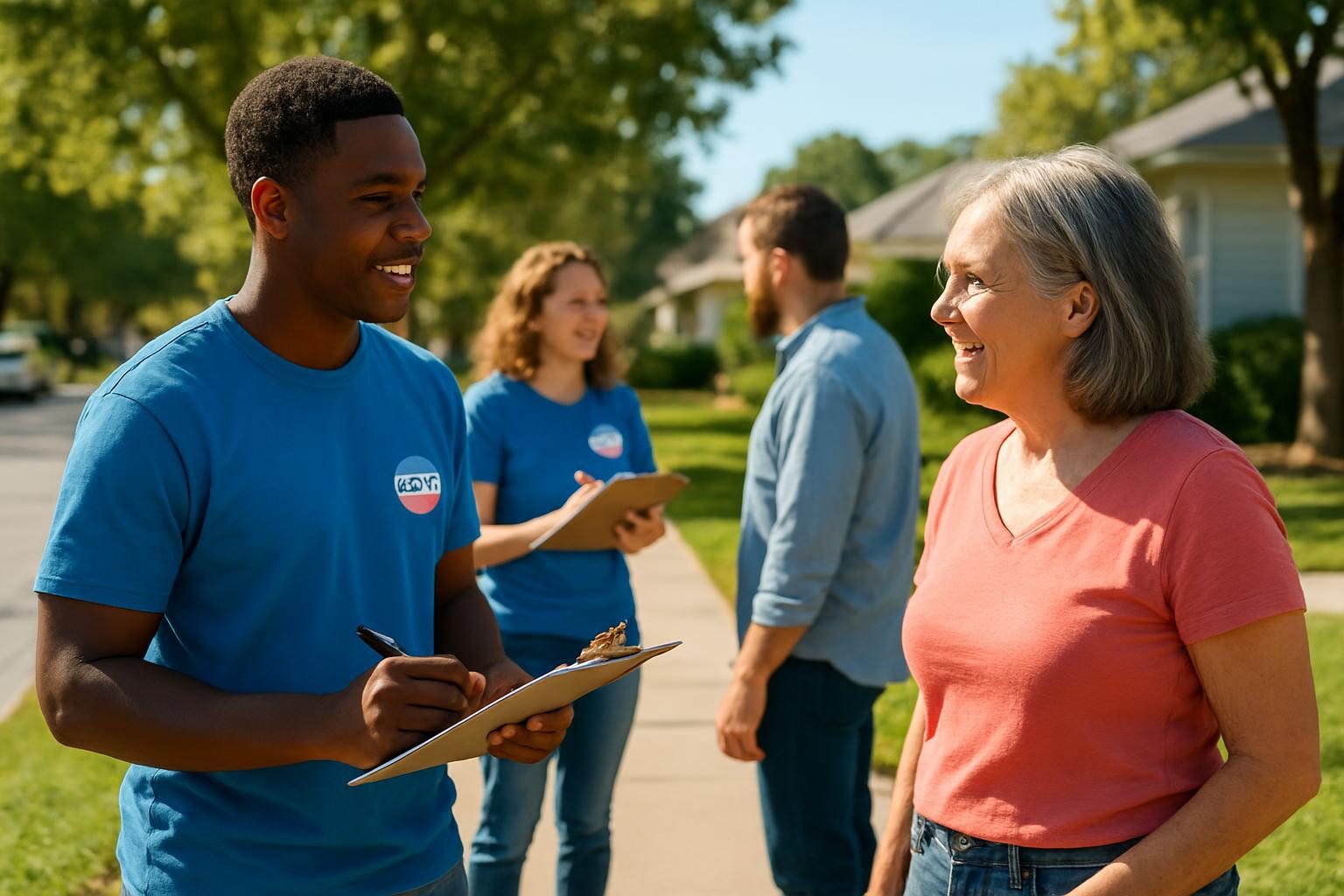
You do not have to wait for a candidate to announce. Volunteers power every campaign, and the groundwork for 2028 starts now. Here are simple ways to jump in:
- Register and update your info. Moved recently? Changed your name? Fix it now through vote.gov. Note that North Dakota has no voter registration.
- Learn your state’s primary rules. Find out whether your state holds a primary or caucus, and whether it is open or closed.
- Volunteer in 2026. Knock doors, make calls or write postcards for the November 3 midterms.
- Help a first-time voter. Share a registration link with a student, a new neighbor or a coworker.
- Follow the news. Bookmark our 2028 presidential election hub and our key dates calendar.
For the bigger picture, our 2028 Election section collects everything in one place. And if you want to see how wave elections happen, read about the history of wave elections and look out for our explainer on the 2018 blue wave and what Democrats learned.
The road to the White House
Remember where this is all headed. After the primaries and the convention comes Tuesday, November 7, 2028, when voters choose electors, and 270 of 538 electoral votes win the presidency. Electors meet December 18, 2028, and the inauguration is January 20, 2029. Learn more in How the Electoral College Works (and Why 270 Matters) and our 2028 swing states guide. We will also cover what happens on Inauguration Day 2029 closer to the date.
Key takeaways
- Presidential nominees are chosen state by state through primaries and caucuses, with delegates making it official at the national convention.
- The DNC approved its 2028 early window on August 15, 2026: South Carolina, Nevada, New Hampshire, New Mexico, Michigan and Virginia, then Super Tuesday on March 7, 2028.
- As of October 5, 2026, no major Democrat or Republican has formally declared a 2028 run; every name you hear is a potential candidate.
- Primary rules, deadlines and eligibility differ by state, so confirm yours on vote.gov or with your state election office.
- The 2028 Democratic convention is set for August 7-10, 2028, and the general election is November 7, 2028.
- You can start now: register, check your status, volunteer in the 2026 midterms and bring a friend along.
Last updated October 2026. Dates and candidate news change fast; we update this page as things are announced.
Frequently asked questions
What is the difference between a primary and a caucus?
A primary is a state-run election where you cast a ballot, usually at a polling place or by mail. A caucus is a party-run meeting where voters gather and show support for a candidate in person. Primaries are far more common today, and the 2028 Democratic early window is made up of state primaries.
Do I have to be registered with a party to vote in a primary?
It depends on your state. Some states hold closed primaries, some are open, and some fall in between. Check your state’s rules and registration deadlines on vote.gov or with your state election office before you plan to vote.
Who wins the nomination?
The candidate who wins a majority of delegates at the national convention becomes the party’s nominee. Delegates are won in state primaries and caucuses based on each party’s rules. The 2028 Democratic National Convention is set for August 7-10, 2028.
Has anyone officially declared a 2028 run?
As of October 5, 2026, no major Democrat has formally declared a 2028 presidential run, and no major Republican has either. Many names are widely reported as potential candidates, and we track them on our candidate tracker and update it as news breaks.
Why is Iowa not in the Democratic early window?
The DNC approved its 2028 early-window calendar on August 15, 2026, and Iowa was not included. Republicans are expected to keep Iowa first on their own calendar, though the GOP calendar is not final. See our Iowa caucus explainer for the full story.