★ Election Day 2028 is in 763 days  ·  Midterms in 28 daysRegister to vote →

Category: 2028 Election

The 2028 presidential election: key dates, the electoral map, and how a nominee is chosen. Start with 2028 Presidential Election: Dates, Candidates, What’s Next.

  • What Happens on Inauguration Day 2029: A Plain Guide

    What Happens on Inauguration Day 2029: A Plain Guide

    Every four years, the country pauses for a few hours and does something remarkable: power changes hands peacefully, in public, with the whole nation watching. That moment is Inauguration Day, and in 2029 it lands on a date we can already circle on the calendar.

    Here is a clear walkthrough of what happens on inauguration day, how we get there, and the part you play long before the oath is spoken.

    Quick answer: Inauguration Day is January 20, 2029. On that day the winner of the November 7, 2028 election takes the presidential oath of office and the new term begins. The electors meet on December 18, 2028 to formally cast the votes that make it official.

    The key dates that lead to Inauguration Day

    Inauguration Day is the finish line of a long process. Knowing the steps makes the whole thing feel less mysterious, and shows where ordinary voters have the most power.

    Date What happens
    Tuesday, November 3, 2026 Midterm elections for all 435 House seats, about a third of the Senate and 36 governorships
    January 22, 2028 South Carolina opens the Democratic early window
    March 7, 2028 Super Tuesday
    August 7-10, 2028 Democratic National Convention
    Tuesday, November 7, 2028 General election
    December 18, 2028 Electors meet to cast their votes
    January 20, 2029 Inauguration Day

    For the full run of dates, see our 2028 election key dates calendar, and our guide on when the 2028 presidential election is.

    Inauguration Day is not the start of the story. It is the day the voters’ decision becomes real.
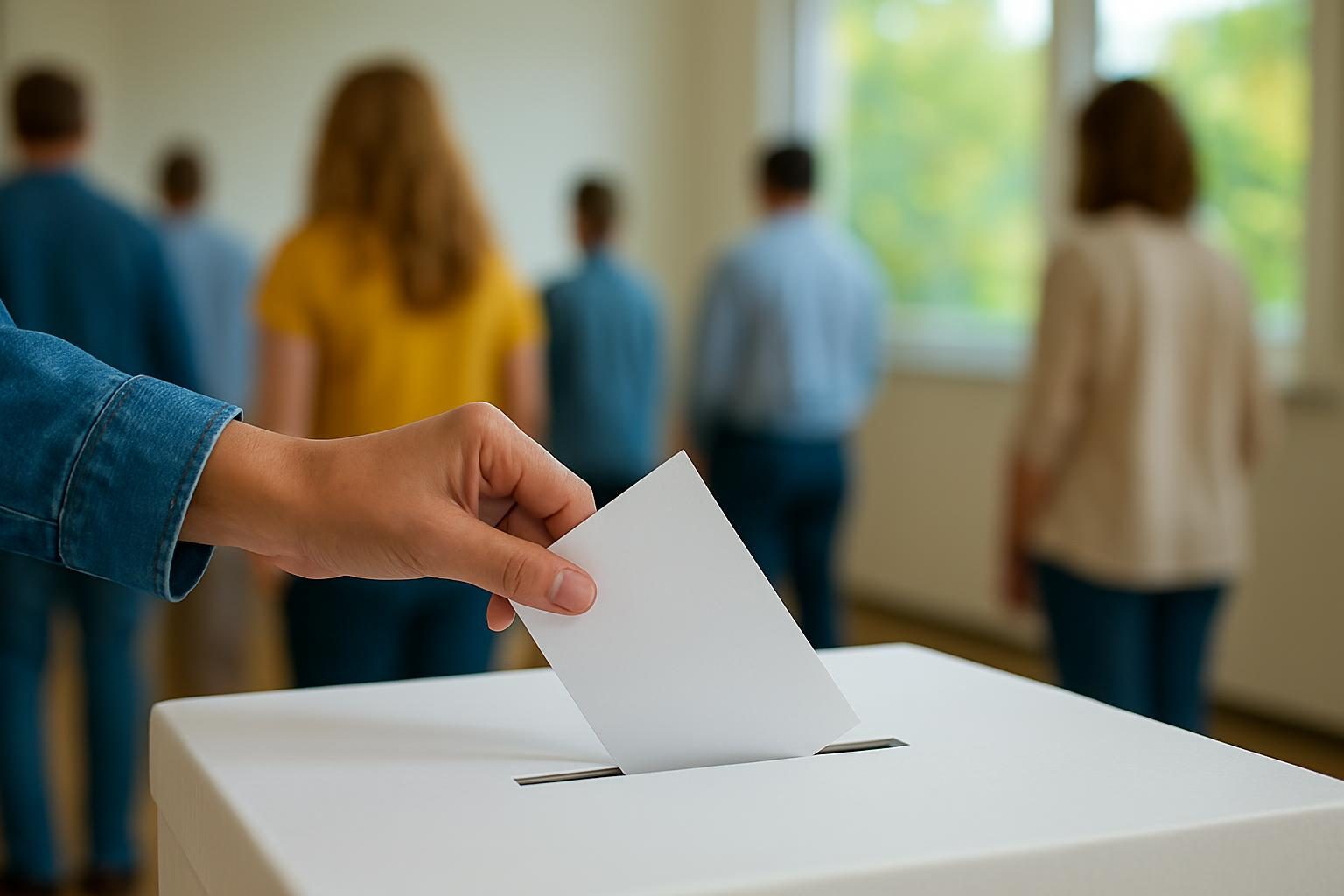
    Hand dropping a ballot into a ballot box at a polling place

    What happens on inauguration day, step by step

    The exact program is set by the inaugural committee and has not been announced yet. We will update this page as details are released. What follows is the long-standing outline of the day, based on how recent inaugurations have gone, so treat the order and timing as a guide rather than a schedule.

    1. The morning gathering

    The day typically begins with ceremonial and traditional events as the incoming and outgoing leaders and their families gather. Many inaugurations have included a worship service in the morning. These customs come from tradition rather than law, so they can vary.

    2. The oath of office

    The heart of the day is the oath. The text is written into the Constitution, and the new president takes it in front of the crowd and the cameras. A new term begins when the oath is administered, and the time of the transfer is set by the Constitution.

    That is the moment the peaceful transfer of power becomes visible to everyone. It is worth savoring, whoever wins.

    3. The inaugural address

    After the oath, the new president speaks to the country. The address is a chance to set the tone and name priorities for the term. Past addresses have varied in length and style, and no one can say now what the 2029 speech will include.

    4. The parade, the celebrations and the first official acts

    The afternoon traditionally includes a procession and celebratory events, and presidents often take early official actions. The details of the 2029 festivities are not announced yet.

    A peaceful handoff only works because millions of ordinary people showed up, registered and voted.
    Volunteers making calls in a busy campaign office

    How we get from Election Day to the oath

    The winner is not decided by a single night of results. A series of formal steps turns votes into a presidency.

    1. Voters cast ballots on Tuesday, November 7, 2028.
    2. States certify results under their own rules and timelines.
    3. Electors meet on December 18, 2028, the first Monday after the second Wednesday in December, to cast their electoral votes.
    4. Congress counts the electoral votes as part of the formal process.
    5. The president is sworn in on January 20, 2029.

    A candidate needs 270 of the 538 electoral votes to win. Our explainer on how the Electoral College works walks through the math, and the 2028 electoral map shows where the fight is likely to happen. The map will use the electoral map from the 2020 census apportionment.

    Who can be sworn in?

    Not just anyone can take the oath as president. The Constitution requires a president to be a natural-born citizen, at least 35 years old, and a US resident for 14 years. The 22nd Amendment also limits a president to two elected terms.

    We cover this in detail in presidential eligibility requirements, and we break down the term-limit debate in our look at the 22nd Amendment.

    Who will take the oath? The race is wide open

    As of October 2026, no major Democrat has formally declared a 2028 presidential run, and no major Republican has either. That means the next chapter is still being written, and the people who show up now help shape it.

    Widely reported potential Democratic candidates include Gavin Newsom, Josh Shapiro, JB Pritzker, Gretchen Whitmer, Andy Beshear, Pete Buttigieg, Kamala Harris, Alexandria Ocasio-Cortez, Cory Booker, Raphael Warnock, Ruben Gallego, Mark Kelly, Elissa Slotkin, Chris Van Hollen and Ro Khanna. These are potential candidates only. None has announced.

    On the Republican side, JD Vance, Marco Rubio, Ron DeSantis, Ted Cruz and Brian Kemp are among those widely mentioned, also as potential candidates only. Follow our 2028 Democratic candidate tracker for updates, and read up on a few names: Gavin Newsom, Josh Shapiro, JB Pritzker and Gretchen Whitmer.

    The road to the oath runs through the primaries

    Before anyone is sworn in, parties choose their nominees. The DNC approved the 2028 early-window calendar on August 15, 2026: South Carolina on January 22, 2028, then Nevada on February 1, New Hampshire on February 8, New Mexico on February 15, Michigan on February 22 and Virginia on February 29. Super Tuesday follows on March 7, 2028.

    New Hampshire state law requires it to hold the first primary in the nation, which clashed with the DNC calendar in 2024, so watch for changes. Iowa is not in the Democratic early window. Our 2028 Democratic primary calendar tracks every date, and how presidential primaries work explains the process.

    The Democratic National Convention is set for August 7-10, 2028. Finalist host cities are Boston, Denver and Philadelphia, and the final pick is expected later in 2026. See our 2028 Democratic National Convention page for the latest.

    Student registering to vote on a laptop at a campus cafe

    Your part in it, starting now

    Inauguration Day can feel far away, but the decisions that lead to it begin with things you can do this fall. The midterms on November 3, 2026 decide who controls Congress and many statehouses. Our guide to the 2026 midterms and what is at stake for 2028 explains why they matter.

    Registration rules are set by each state. Every state’s official rules, deadlines and online registration links are on vote.gov, and you can find your state’s page at an address like https://vote.gov/register/ohio. North Dakota has no voter registration. Many states offer same-day registration, but the rules differ, so confirm the details on vote.gov or with your state election office rather than relying on anything secondhand. For a plain walkthrough, see how to register to vote in every state.

    Take action: Check your registration status today on vote.gov, then text one friend or family member and ask whether they are registered too. Five minutes now can mean one more voice on Election Day.

    Our view: peaceful transfers of power are something to protect and celebrate, and the best way to protect them is to take part. Volunteer for a campaign, give a few hours to a registration drive, or offer a ride to a neighbor on Election Day. Ordinary people are the engine of every inauguration.

    Last updated October 2026. Dates and candidate news change fast; we update this page as things are announced.

    Key takeaways

    • Inauguration Day is January 20, 2029, after the November 7, 2028 general election.
    • Electors meet on December 18, 2028 to cast the votes that make the result official.
    • The oath of office is the core of the day; program details have not been announced yet.
    • No major Democrat or Republican has formally declared a 2028 run as of October 2026.
    • Confirm your voter registration details on vote.gov or with your state election office.
    • The midterms on November 3, 2026 come first, and your vote there counts.

    Frequently asked questions

    When is Inauguration Day 2029?

    Inauguration Day is January 20, 2029. The general election that decides who takes the oath is Tuesday, November 7, 2028, and the electors meet on December 18, 2028 to cast their votes.

    What happens if Inauguration Day falls on a Sunday?

    Public rules and tradition can shift the schedule when January 20 lands on a Sunday, but that is not an issue for 2029. For any date question, check the official inaugural committee announcements once they are published, and we will update this page as details are released.

    Who takes the oath of office, and what does it say?

    The incoming president takes the oath of office, and its text is set out in the Constitution. The Constitution also sets the basic qualifications: a president must be a natural-born citizen, at least 35 years old, and a US resident for 14 years.

    Can I attend the inauguration?

    Details about public access, tickets and viewing areas have not been announced yet. Official information typically comes from the inaugural committee and your members of Congress closer to the date, and we will update this page when it is available.

    Who will be sworn in on January 20, 2029?

    That is up to voters. As of October 2026, no major Democrat or Republican has formally declared a 2028 run, so the field is wide open. Check our 2028 presidential election hub for the latest on who might run.

  • How to Watch Presidential Debates: A 2028 Voter’s Guide

    How to Watch Presidential Debates: A 2028 Voter’s Guide

    Few moments in a campaign put the candidates side by side, unfiltered, in front of millions of people. Presidential debates are your chance to see how the people asking for your vote think, respond and handle pressure. Here is how to watch presidential debates, how they work, and how to turn watching into action.

    Quick answer: Presidential debates are televised, moderated events where candidates answer questions and respond to each other. Most are carried live on broadcast and cable news and streamed free online. No 2028 debate dates have been announced yet; we will update this page when they are.

    What a presidential debate actually is

    A presidential debate is a structured, live event. Candidates stand at podiums, answer questions from one or more moderators, and respond to each other within set time limits. The goal is to help voters compare candidates on the issues, not to hand anyone a victory by default.

    Debates happen at two stages. During the primaries, candidates from the same party compete to become their party’s nominee. In the general election, the nominees of different parties face off. Both matter, and both are worth your time.

    Primary debates vs. general election debates

    Feature Primary debates General election debates
    Who is on stage Candidates from one party Nominees from different parties
    Main goal Choose a party nominee Help voters choose a president
    Who sets the rules The party and the hosting media outlet The sponsoring organization and the campaigns
    Typical timing Before and during the primary season Late in the campaign, ahead of Election Day
    Stage size Can be large, depending on the field Usually the major nominees

    Because the 2028 Democratic field has not formed yet, there is nothing to schedule for primary debates. Our 2028 Democratic candidates tracker follows the people who might run, and none of them has formally declared.

    A debate is the one campaign moment where candidates cannot hide behind a perfectly edited ad.

    Are 2028 debate dates set?

    No. As of this update, we have not seen official 2028 debate dates, hosts or locations announced. We are not going to guess, and you should be skeptical of any site that gives you exact dates this early.

    Here is what we do know about the calendar. The general election is Tuesday, November 7, 2028. The DNC approved its early primary window on August 15, 2026, with South Carolina going first on January 22, 2028, and Super Tuesday landing on March 7, 2028. Debates will be built around that timeline, but the debate schedule itself is still being set. For the full picture, see our 2028 Democratic primary calendar.

    The Republican side is also unsettled. Republicans are expected to keep Iowa first on their calendar, but their calendar is not final. No Democrat or Republican has formally declared a 2028 run, so there is no official field to debate yet.

    Empty debate stage with two podiums under studio lights before a presidential debate

    How to watch presidential debates

    The good news is that watching is easy and usually free. Here is a simple approach that works for most people.

    1. Find out who is hosting. The hosting network or organization announces the channel, streaming options and start time. Check that announcement once a debate is scheduled.
    2. Pick your screen. Many debates air on broadcast and cable news and stream free on news outlet websites and apps. Pick whichever setup works best for you.
    3. Save the time. Put the start time in your calendar and set a reminder. Debates run on a fixed schedule, so being early beats being late.
    4. Prepare a notepad. Jot down the issues you care about most before it starts. It makes it easier to listen for real answers.
    5. Watch with someone. Debates are better shared. Invite a friend, a neighbor or your family.

    If you miss it live

    Full debates are typically posted online afterward, so you can catch up on your schedule. Watching the whole thing beats relying on a few clipped moments, since short clips can leave out the context.

    How to get the most out of a debate

    Debates move fast. It helps to watch with a plan so you leave knowing more than you did when you started.

    • Listen for specifics. Does a candidate describe what they would actually do, how it would work and who it would help?
    • Notice what goes unanswered. If a question gets dodged, that tells you something too.
    • Check claims afterward. Candidates sometimes stretch the truth. Look up a statement from a reliable source before you share it.
    • Compare records, not just performances. A sharp one-liner is memorable, but a candidate’s record and plans matter more.

    Want a head start on the policy side? Our guide to where Democrats stand on the issues is a good place to begin before the first debate.

    The best debate viewers listen for specifics, not slogans, and they check the claims afterward.

    Viewer taking notes while streaming a debate on a laptop at a kitchen table

    Where debates fit in the road to 2028

    Debates are one stop on a long road. Before anyone takes the stage, there is the quiet stretch we call the invisible primary, when potential candidates build donor lists, travel and test their messages. Learn more in when 2028 presidential campaigns start.

    From there, primaries and caucuses begin. Our explainer on how presidential primaries work walks through the process, and the 2028 Democratic National Convention page covers the August 7-10, 2028 event. The finalist host cities are Boston, Denver and Philadelphia, and the final pick is expected later in 2026.

    After the conventions, the general election campaign takes off. Debates matter most in states where the race is close, so it also helps to know the 2028 swing states and how the Electoral College works, since 270 of 538 electoral votes win the presidency.

    The road ends with Inauguration Day on January 20, 2029. If you are curious how that day works, we are preparing a guide to what happens on Inauguration Day 2029.

    Why debates matter to progressive voters

    In our view, debates are one of the best chances for voters to hear directly from candidates about healthcare, wages, housing, climate, voting rights and the economy. Those are the issues that shape everyday life, and the stage is where candidates have to explain their plans out loud, without a script.

    That is also an opportunity. When you watch, talk about it. Ask your friends and family what they heard and what questions they still have. Informed conversations are how movements grow.

    Debates are not the whole story, though. Candidates win and lose on records, organizing and turnout. A great night on stage does not matter if people are not registered and ready to vote.

    Volunteers with clipboards chatting with neighbors on a sunny sidewalk to encourage voting

    Turn watching into voting

    Here is the part that matters most. Watching a debate is great, but showing up on Election Day is what counts. The 2026 midterms are on Tuesday, November 3, 2026, and they set the stage for 2028. See what is at stake in our 2026 midterm elections guide.

    Registration rules vary by state, and some states offer same-day registration, though the details differ. North Dakota has no voter registration at all. For your state’s official rules, deadlines and online registration, go to vote.gov or your state election office. Our how to register to vote guide can walk you through the basics.

    Take action: Check your voter registration status today at vote.gov or your state election office, then text one friend and invite them to do the same. Next time a debate is announced, plan a watch night together.

    Key facts to keep handy

    • 2026 midterm elections: Tuesday, November 3, 2026.
    • 2028 general election: Tuesday, November 7, 2028.
    • Electors meet December 18, 2028, and the inauguration is January 20, 2029.
    • 2028 debate dates: not announced yet.

    For a full timeline, see our 2028 election key dates page, or head to the 2028 presidential election hub for the big picture.

    Key takeaways

    • Presidential debates are moderated, live events where candidates answer questions and respond to each other, in both primaries and the general election.
    • No 2028 debate dates, hosts or locations have been announced yet, and we will update this page when they are.
    • Most debates are carried on broadcast and cable news and streamed online; check the host’s announcement for details.
    • Listen for specifics, check claims afterward and compare records, not just performances.
    • Watching is just the start. Confirm your registration at vote.gov or your state election office.

    Last updated October 2026. Dates and candidate news change fast; we update this page as things are announced.

    Frequently asked questions

    Have the 2028 presidential debate dates been announced?

    No. As of this update, we have not seen official 2028 debate dates, hosts or locations announced, and we will not guess. Primary debate schedules are set by the parties and the general election schedule is typically set well before the fall. We will update this page as soon as real dates are confirmed.

    Where can I watch presidential debates?

    Major debates are usually carried live by broadcast and cable news networks and streamed free online by many news outlets. Exact channels and platforms depend on who hosts each debate, and those details are not set for 2028 yet. Check the host organization’s announcement closer to the date.

    Do I need to be registered to vote to watch a debate?

    No. Anyone can watch a debate. But watching is only the first step, since your voice counts most on Election Day. Check your registration status and find your state’s rules at vote.gov or your state election office.

    Who gets to be on the debate stage?

    It depends on the debate. In primaries, the party and the hosting network set the qualifying rules, which often involve factors like polling or fundraising. For the general election, the sponsoring organization sets the criteria. Since 2028 rules have not been announced, treat any early claims about who qualifies with caution.

    Are there debates between the vice presidential candidates too?

    Vice presidential debates have been a regular part of general election campaigns in modern history. Whether and when one happens in 2028 depends on the nominees and the sponsoring organization, and nothing has been announced yet.

  • Presidential Eligibility Requirements: Who Can Run?

    Presidential Eligibility Requirements: Who Can Run?

    Who gets to run for president of the United States? Fewer rules than you might think, and that is good news for a democracy that belongs to everyone. The presidential eligibility requirements are short, clear and written right into the Constitution.

    Quick answer: To be president, a person must be a natural-born citizen, at least 35 years old, and a US resident for 14 years. The 22nd Amendment also limits a president to two elected terms. No prior office, degree or party membership is required.

    The three constitutional requirements

    The Constitution lists exactly three qualifications to serve as president. They apply to every candidate, from every party, in every election. Here they are at a glance.

    Requirement What it says
    Citizenship Must be a natural-born citizen
    Age Must be at least 35 years old
    Residency Must have been a US resident for 14 years

    That is the whole list in the original text. Beyond these three, there is one more limit that comes from a later amendment, which we cover below.

    Natural-born citizen

    The president must be a natural-born citizen. In plain terms, that means a person who was a US citizen from birth rather than someone who became a citizen later through naturalization.

    The Constitution does not spell out every edge case, and we are not here to give legal advice. If you are curious about a specific situation, a qualified attorney or a nonpartisan legal resource is the right place to ask.

    At least 35 years old

    A president must be at least 35. That is the youngest a person can be to hold the office. It is the same age floor that applies today, whether the election is in 2028 or any other year.

    Plenty of young people care deeply about this election. If you are under 35, you cannot be president yet, but you can register, vote, volunteer and organize your friends right now.

    14 years of US residency

    A president must have been a US resident for 14 years. The Constitution does not require those years to be consecutive or tied to one state, and it does not require holding any prior office.

    The rulebook for who can run is short, and it opens the door wider than most people realize.

    The 22nd Amendment: a two-term limit

    The 22nd Amendment limits a president to two elected terms. That is the fourth rule voters should know, even though it is not part of the original three qualifications.

    This matters for 2028 because the current president is term-limited. We break down what the amendment says and what it means for political chatter in our explainer, Can Trump Run for a Third Term? The 22nd Amendment.

    What is NOT required to run for president

    Many people assume there are hidden hurdles. There are not. The Constitution does not require:

    • A college degree or any specific education
    • Prior experience in elected office
    • Membership in a political party
    • A particular amount of wealth

    That is why the field can include governors, senators, members of Congress, former cabinet officials and others. It is also why the door stays open to people who have never held office at all.

    Meeting the constitutional rules makes someone eligible. Actually winning is a different matter. Parties have their own processes, states have ballot access rules, and candidates need money, volunteers and voters.

    Volunteers with clipboards talking to neighbors on a sunny sidewalk

    Eligible is not the same as on the ballot

    The Constitution tells us who may serve. It does not tell us how a candidate gets from interested to on your ballot. That path runs through primaries, party rules and state-by-state procedures.

    For Democrats, the 2028 primary season begins in the early window the DNC approved on August 15, 2026, at its summer meeting in Austin, Texas. The early states are:

    1. South Carolina: January 22, 2028
    2. Nevada: February 1, 2028
    3. New Hampshire: February 8, 2028
    4. New Mexico: February 15, 2028
    5. Michigan: February 22, 2028
    6. Virginia: February 29, 2028

    Super Tuesday follows on March 7, 2028. Iowa is not in the Democratic early window. For the full run-down, see our 2028 Democratic primary calendar and our guide to how presidential primaries work.

    One thing to watch: New Hampshire state law requires it to hold the first primary in the nation. That clashed with the DNC calendar in 2024, so changes are possible. We will update this page if the situation shifts.

    Who might run in 2028?

    Here is where things stand. As of October 5, 2026, no major Democrat has formally declared a 2028 presidential run. No major Republican has either. What exists right now is a lot of speculation about potential candidates.

    Widely reported potential Democratic candidates include Gavin Newsom, Josh Shapiro, JB Pritzker, Gretchen Whitmer, Andy Beshear, Pete Buttigieg, Kamala Harris, Alexandria Ocasio-Cortez, Cory Booker, Raphael Warnock, Ruben Gallego, Mark Kelly, Elissa Slotkin, Chris Van Hollen and Ro Khanna. These are potential candidates only. None has announced.

    On the Republican side, widely reported potential candidates include JD Vance, Marco Rubio, Ron DeSantis, Ted Cruz and Brian Kemp. Again, none has declared. Republicans are expected to keep Iowa first on their 2028 calendar, per RNC reports from September 2026, but that calendar is not final.

    Want to dig into individual names? Start with our 2028 Democratic candidates tracker, or read profiles like Gavin Newsom 2028, Josh Shapiro 2028, JB Pritzker 2028 and Gretchen Whitmer 2028.

    Anyone can be eligible. It takes voters, volunteers and organizers to turn a candidacy into a win.

    State capitol dome glowing at golden hour

    How the campaign gets going

    Before anyone formally announces, there is an unofficial phase of travel, fundraising and relationship-building. Political insiders call it the invisible primary. Our explainer, When Do 2028 Presidential Campaigns Start?, walks through how it works.

    Once the field is set, expect debates. We plan to cover how presidential debates work and how to watch them as the calendar firms up. No debate dates have been announced yet.

    Then comes the general election on Tuesday, November 7, 2028. The winner needs 270 of 538 electoral votes. Learn why that number matters in How the Electoral College Works, and see where the race could be decided in our 2028 electoral map guide. The Electoral College electors meet on December 18, 2028, and the inauguration is January 20, 2029. We will also explain what happens on Inauguration Day 2029 in a future article.

    Start with 2026

    The road to 2028 runs through this year. The 2026 midterm elections are on Tuesday, November 3, 2026, with all 435 House seats, about a third of the Senate and 36 governors on the ballot. Many of the governors and senators on those ballots, and some who are not, are talked about as future presidential contenders.

    In our view, what happens in the midterms shapes the political ground for 2028. Read 2026 Midterm Elections: What’s at Stake for 2028 to see why every race matters.

    Take action: Check your voter registration today at vote.gov, where every state’s official rules, deadlines and online registration links live. Then text one friend and ask if they are registered too. Not sure where to start? Our guide, How to Register to Vote, walks you through it. Always confirm your state’s deadlines on vote.gov or with your state election office.

    College student using a laptop to check voter registration

    Why this matters for the Democratic path ahead

    Knowing the basics helps you cut through noise. When someone claims a candidate is disqualified, or that a rule says something it does not, you can check it against the Constitution. Facts first, opinions clearly labeled.

    Here is our view: a healthy democracy needs more people participating, not fewer. Eligibility rules are the floor. Registering, voting, knocking on doors and making calls are how we build something on top of it. If you want to see where the party stands on the issues, explore Democratic Party platform issues, and follow the big picture on our 2028 presidential election hub.

    You can also browse everything in our 2028 Election section as new stories are published.

    Key takeaways

    • The Constitution requires a president to be a natural-born citizen, at least 35 years old, and a US resident for 14 years.
    • The 22nd Amendment limits a president to two elected terms.
    • No degree, prior office, party membership or minimum wealth is required to run.
    • As of October 5, 2026, no major Democrat or Republican has formally declared a 2028 run; names are only potential candidates.
    • The general election is Tuesday, November 7, 2028, and 270 of 538 electoral votes win.
    • Check your registration and rules at vote.gov or your state election office.

    Last updated October 2026. Dates and candidate news change fast; we update this page as things are announced.

    Frequently asked questions

    What are the presidential eligibility requirements?

    The Constitution requires a president to be a natural-born citizen, at least 35 years old, and a US resident for 14 years. The 22nd Amendment also limits anyone to two elected terms as president.

    Can someone under 35 run for president?

    The Constitution sets 35 as the minimum age to serve as president. Because the age requirement applies to holding the office, a candidate must meet it to take office. If you are under 35, you can still volunteer, organize and vote once you are eligible.

    Do you have to be a politician or hold office to run for president?

    No. The Constitution does not require any prior experience or office. The listed qualifications are citizenship status, age and residency, plus the two-term limit from the 22nd Amendment.

    Can a president serve more than two terms?

    The 22nd Amendment limits a president to two elected terms. For a deeper look at how that applies to current political talk, see our explainer on the 22nd Amendment and third-term questions.

    Has anyone declared a run for president in 2028?

    As of our latest check on October 5, 2026, no major Democrat has formally declared a 2028 presidential run, and no Republican has either. Many names are widely reported as potential candidates. We update our candidate tracker as news breaks.

  • What Are Superdelegates? The Democratic Rules Explained

    What Are Superdelegates? The Democratic Rules Explained

    Every few years, a debate erupts over a group of Democrats nobody voted for in the primary but who get a say in picking the nominee. They are called superdelegates, and the rules around them have changed a lot. If you have wondered what are superdelegates and whether they can override voters, this guide has you covered.

    Quick answer: Superdelegates, officially called automatic delegates, are Democratic Party leaders and elected officials who get a vote at the national convention without winning it in a primary or caucus. Since a 2018 DNC rule change, they generally cannot vote on the first ballot, so primary and caucus voters, not party insiders, decide the nominee in nearly every scenario.

    What are superdelegates, exactly?

    Every Democratic presidential nominee is chosen at the national convention by delegates. Most of those delegates are “pledged,” meaning they are awarded to candidates based on how voters cast ballots in primaries and caucuses.

    Superdelegates are different. They hold a convention seat because of who they are, not because of a vote in their state. The category generally includes members of Congress, governors, DNC members, and certain current and former party leaders.

    The party’s official term is “automatic delegates,” because they are seated automatically rather than elected. “Superdelegate” is the nickname that stuck, and it is the term most voters search for.

    Why did the party create them?

    The category was created in the early 1980s as a way to give party leaders and officeholders a role at the convention. The idea was to keep experienced elected officials connected to the nominating process. For decades, they were a quiet footnote in the rules.

    That changed whenever a primary got close. Critics argued that unelected insiders could tip a tight race, and that notion fueled real frustration among grassroots voters.

    Pledged delegates vs. automatic delegates

    The difference comes down to where the power comes from. Here is a simple side-by-side look.

    Feature Pledged delegates Automatic delegates (superdelegates)
    How they get a seat Awarded through primary and caucus results Seated because of an office or party position
    Who they represent A candidate, based on voter outcomes Themselves, as party leaders
    First-ballot vote Yes, bound by results Generally no, since the 2018 rule change
    Role if the convention continues Votes continue under party rules May vote on later ballots

    Think of it this way: pledged delegates carry the voice of voters into the convention hall. Automatic delegates are party leaders who show up with a seat, but under today’s rules, not a first-ballot vote.

    Pledged delegates carry the voices of voters into the hall. That is how Democrats choose a nominee.

    Volunteers with clipboards helping neighbors on a sunny sidewalk

    The 2016 fight that changed everything

    The modern debate over superdelegates took off during the 2016 Democratic primary. Many automatic delegates announced their preferences early, and media delegate counts often folded those pledges in alongside pledged delegates won by voters.

    For many supporters of the candidate who trailed, that created a feeling that the contest was tilted before most states had voted. Whatever you think of that race, the frustration was real, and it pushed the party toward reform.

    After the 2016 election, a party commission studied the delegate selection process. The DNC then took up changes to rein in the role of automatic delegates, a debate that culminated in the 2018 vote.

    What the DNC changed in 2018

    In 2018, the DNC voted to change the rules so that automatic delegates generally cannot vote on the first ballot of the presidential nomination. The goal was straightforward: let pledged delegates, chosen through voter results, decide the outcome whenever one candidate has a clear majority.

    Automatic delegates are not removed from the convention. They remain delegates, and their role is mainly a backstop. If no candidate wins a majority of pledged delegates on the first ballot, the convention can move to additional ballots, and automatic delegates can then take part. These additional ballots would occur at the Democratic National Convention, where the nomination is finalized.

    The exception worth knowing

    There is a narrow exception. If it is clear the nominee has won on the first ballot, automatic delegates may still be allowed to vote, but their votes cannot change the outcome. In practice, the rule keeps them from being kingmakers.

    The precise wording of the delegate selection rules is set out by the DNC and can be amended. For the exact current text, check democrats.org rather than relying on summaries, including ours.

    Why this matters for 2028

    Our view: this was a good reform. It puts the focus on voters, where it belongs, and it makes the primary season more transparent. When a nominee emerges, we want that choice to reflect the people who showed up to vote.

    The rules for the 2028 cycle, including delegate rules for the national convention, are still being finalized, so we will update this page as the DNC publishes details.

    When voters, not insiders, pick the nominee, the whole party starts the general election with more energy and more trust.

    Diverse voters lining up at a polling place entrance

    How delegates are won in 2028

    If superdelegates generally cannot decide the first ballot, the real action is in the primaries and caucuses. That is where pledged delegates are won, and that is where you come in.

    The DNC approved the 2028 early-window calendar on August 15, 2026, at its summer meeting in Austin, Texas. Here is the lineup, in order:

    1. South Carolina: January 22, 2028
    2. Nevada: February 1, 2028
    3. New Hampshire: February 8, 2028
    4. New Mexico: February 15, 2028
    5. Michigan: February 22, 2028
    6. Virginia: February 29, 2028

    Super Tuesday follows on March 7, 2028. Iowa is not in the Democratic early window this time. For the full picture, see our 2028 Democratic primary calendar and our guide to Super Tuesday 2028.

    One thing to watch: New Hampshire state law requires it to hold the first primary in the nation, which clashed with the DNC calendar in 2024. Read our explainer on the New Hampshire primary in 2028 for how that tension could play out again.

    If you want a primer on the mechanics, our guide to how presidential primaries work walks through primaries, caucuses and delegates step by step.

    Who might be on the ballot?

    As of the last check on October 5, 2026, no major Democrat has formally declared a 2028 presidential run. Plenty of names are widely reported as potential candidates, including governors like Gavin Newsom, Josh Shapiro, JB Pritzker, Gretchen Whitmer and Andy Beshear, along with figures such as Pete Buttigieg and Kamala Harris.

    Those are potential candidates only. Nobody has announced, and we will not treat anyone as running until they say so. Keep up with the field in our 2028 Democratic candidates tracker, and see when 2028 presidential campaigns start for how the invisible primary works.

    Anyone who runs also has to meet the constitutional requirements for the presidency: natural-born citizen, at least 35 years old, and 14 years of US residency.

    Volunteers working phones in a busy campaign office

    Where the convention fits in

    The delegates, pledged and automatic, come together at the 2028 Democratic National Convention, scheduled for August 7-10, 2028. To learn how to follow the action, see our guide on how to watch presidential debates. The finalist host cities, announced August 20, 2026, are Boston, Denver and Philadelphia. Atlanta and Chicago were eliminated, and the final pick is expected later in 2026.

    Read more about the contenders in our 2028 Democratic National Convention guide. If the host city is announced, we will update that page.

    After the convention, the nominee heads into the general election on Tuesday, November 7, 2028. Winning takes 270 of 538 electoral votes, which we explain in how the Electoral College works.

    What you can do right now

    Superdelegate rules are a good reminder that party structures matter, but voters matter more. The delegate math starts with you showing up in your state’s primary or caucus.

    Before that, there is a big test closer to home. The midterms are on Tuesday, November 3, 2026, with all 435 House seats, about a third of the Senate and 36 governorships on the ballot. See what’s at stake in the 2026 midterms and how it shapes 2028.

    Take action: Check your voter registration today at vote.gov or your state election office, then text one friend and ask if theirs is current too. Primaries are where delegates are won, and you cannot vote in one unless you are registered under your state’s rules. For a state-by-state walkthrough, see how to register to vote.

    Want to dig deeper into what the party stands for? Visit our overview of Democratic Party platform issues, and browse the full 2028 Election category. Our 2028 presidential election hub collects every key date and development in one place.

    Key takeaways

    • Superdelegates, officially automatic delegates, are party leaders and officials who hold a convention seat without winning it in a primary or caucus.
    • A 2018 DNC rule change generally bars them from voting on the first ballot, so voter-chosen pledged delegates decide the nomination in almost every scenario.
    • Automatic delegates act mainly as a backstop if the convention goes to multiple ballots.
    • The 2028 early window runs from South Carolina on January 22 to Virginia on February 29, with Super Tuesday on March 7, 2028.
    • No major Democrat has formally declared a 2028 run as of October 5, 2026, so the field is still taking shape.
    • Your best move is to register, confirm your status on vote.gov, and vote in your state’s primary.

    Last updated October 2026. Dates and candidate news change fast; we update this page as things are announced.

    Frequently asked questions

    What are superdelegates in simple terms?

    Superdelegates are party leaders and elected officials, such as members of Congress, governors and DNC members, who get a vote at the Democratic National Convention without having to win it in a primary or caucus. The party now calls them automatic delegates. Since the 2018 rule change, they generally cannot vote on the first ballot unless the nominee is already clear.

    Do superdelegates still exist in 2026?

    Yes, the category still exists, but its power was sharply limited after the DNC voted in 2018 to bar automatic delegates from voting on the first presidential ballot in most circumstances. Their role is mainly a backstop if the convention goes to multiple ballots. Check democrats.org for the current text of the delegate selection rules.

    Can superdelegates decide the 2028 Democratic nomination?

    Under the rules adopted since 2018, they generally cannot decide the outcome on the first ballot. Pledged delegates, who are awarded based on primary and caucus results, do that work. Automatic delegates would matter only if no candidate wins a majority on the first ballot and the convention continues.

    How is a pledged delegate different from a superdelegate?

    A pledged delegate is chosen through the primary and caucus process and is bound to support a candidate based on voter results. A superdelegate, or automatic delegate, holds a seat because of the office or party position they hold. Voters directly shape the first group, not the second.

    How can I influence who the Democratic nominee is?

    Register to vote and then show up in your state’s primary or caucus, since that is how pledged delegates are won. Confirm your registration and your state’s rules on vote.gov or with your state election office. You can also volunteer for a campaign or local party once the field takes shape.

  • 2018 Blue Wave: What Happened and What Democrats Learned

    2018 Blue Wave: What Happened and What Democrats Learned

    In November 2018, millions of Americans who had never knocked on a door or made a phone call for a candidate did exactly that, and the results rippled through every level of government. The 2018 blue wave is the best recent proof that ordinary voters, working together, can change who holds power in Washington and in statehouses. Here is what happened, what Democrats took from it, and why it matters as 2028 gets closer.

    Quick answer: The 2018 blue wave was the Democratic surge in the midterm elections of November 2018. Democrats won control of the U.S. House, gained governorships and flipped state legislative seats, while Republicans kept the Senate. The big lessons: turnout, local organizing and strong candidates in every kind of district matter, and midterms can reshape a presidency’s second half.

    What was the 2018 blue wave?

    A “wave election” is one where one party’s gains are broad and deep, reaching well beyond a few targeted contests. The 2018 midterms fit that description for Democrats. The party took back the House of Representatives, which gave it the power to set committee agendas, run investigations and block legislation.

    The wave was not only about Congress. Democrats also picked up governorships and made gains in state legislatures across the country, which matters because states run elections, draw many district lines and make decisions that touch daily life. If you want the longer history of wave elections and how the term is used, see our explainer on the blue wave meaning and the history of wave elections.

    Just as important, it was a wave of people. Record numbers of first-time candidates, many of them women, veterans and community leaders, stepped up to run. Volunteers filled campaign offices in places where the party had not invested in years.

    How did it happen?

    No single event explains 2018. A few ingredients came together, and each one is a lesson that still applies.

    Energized, organized voters

    Midterm electorates are usually smaller and older than presidential electorates. In 2018, many Democratic-leaning voters decided that staying home was not an option. They showed up at town halls, joined local groups, registered friends and committed to voting.

    Candidates in places Democrats had written off

    One of the quiet stories of 2018 is how many contested seats there were. Democrats competed in suburban districts, in conservative-leaning areas and in places where the party had often left the seat uncontested. Showing up is a strategy, and it paid off in House races across the map.

    A message people could repeat at the kitchen table

    Candidates talked about costs, health care and whether government works for ordinary families. Those are issues voters feel in their own budgets. You can see how Democrats frame these debates today in our guide to Democratic Party platform issues.

    Diverse voters lining up at a polling place entrance

    What did the wave change?

    Winning the House changed what Democrats could do from Congress, even without the White House or the Senate. A House majority controls the committee gavels, the oversight agenda and what comes to the floor for a vote. It also acts as a check on the other branches of government.

    The wave also changed who is in the room. A new generation of lawmakers arrived in Washington, and some of them are now among the names regularly mentioned in the conversation about 2028. We do not treat any of them as declared candidates; no major Democrat has formally declared a 2028 presidential run as of this writing. You can follow who is being discussed in our 2028 Democratic candidates tracker.

    Waves are not weather. They are built by neighbors who decide to knock on one more door.

    What did Democrats not win?

    Honesty is part of learning from 2018. Democrats won the House but did not win the Senate. Republicans kept their majority there, in part because the Senate map that year was difficult for Democrats, with many Democratic seats up in states that lean the other way.

    That is a useful reminder: a wave is strong, but it is shaped by the map. Which seats are up, how districts are drawn and who turns out all set the limits. The same logic applies to the presidency, where the path runs through the Electoral College. Our explainer on how the Electoral College works covers why 270 electoral votes is the number that matters.

    Lessons Democrats took from 2018

    Here is a quick look at the lessons organizers and strategists commonly draw from the 2018 cycle, and why each one still matters. This table is our summary, not a ranking or a poll.

    Lesson What it looks like in practice
    Compete everywhere Recruit candidates for every seat, including districts that look out of reach on paper.
    Organize early and locally Build volunteer networks long before Election Day, not in the final weeks.
    Turn enthusiasm into registration Help friends and neighbors confirm they are registered and have a plan to vote.
    Talk about everyday costs Lead with issues like health care and household budgets that people feel directly.
    Respect the map Understand that Senate seats, district lines and state rules shape what a wave can win.
    Volunteers making calls inside a busy campaign office

    Why 2018 matters for 2026 and 2028

    We are now days away from the next midterms. The 2026 midterm elections are Tuesday, November 3, 2026, with all 435 House seats, about a third of the Senate and 36 governors on the ballot. For a closer look at what is at stake, read our guide to the 2026 midterm elections and what they mean for 2028.

    Our view: the biggest lesson of 2018 is that nothing is automatic. A strong year for one party is the product of turnout, candidates and organizing, and a weak one can be reversed by the same ingredients. No one can promise a wave in 2026. But every voter who registers, votes and brings a friend along changes the math.

    After the midterms, the focus shifts to the presidential race. The general election is Tuesday, November 7, 2028, with inauguration on January 20, 2029. Before that comes the primary season. The Democratic National Committee approved its early-window calendar on August 15, 2026: South Carolina on January 22, 2028; Nevada on February 1; New Hampshire on February 8; New Mexico on February 15; Michigan on February 22; and Virginia on February 29, with Super Tuesday on March 7, 2028. See every date in our 2028 Democratic primary calendar.

    A wave starts with one person confirming their registration and deciding to show up.

    How to be part of the next wave

    You do not need to be a candidate or a political expert. The people who powered 2018 were mostly ordinary voters who decided to do one more thing than they had done before.

    1. Check your registration. Every state’s official rules, deadlines and online registration links are on vote.gov. Do not rely on a general rule: confirm your own state’s details there or with your state election office.
    2. Make a voting plan. Decide how you will vote, when and where, and check your state’s options.
    3. Volunteer. Local campaigns and community groups need people for phone calls, door knocks and ride-to-the-polls help.
    4. Bring someone with you. Ask a friend, family member or coworker whether they are registered and ready.

    If you are new to the process, our simple guide to registering to vote in every state walks you through it.

    Take action: Take two minutes today to confirm your voter registration at vote.gov, then text one friend and ask whether they have done the same. That small chain is how waves are built.

    A hand dropping a ballot into a ballot box

    Looking ahead to 2028

    The presidential race is still taking shape. No major Democrat has formally declared a 2028 run as of this writing, and the Republican side is the same, with no declared candidates. Potential Democratic names that are widely reported include Gavin Newsom, Josh Shapiro, JB Pritzker, Gretchen Whitmer, Andy Beshear, Pete Buttigieg, Kamala Harris and others, but “potential” is exactly what they are. Anyone considering a run must meet presidential eligibility requirements. We will update our tracker as anything is announced.

    There is plenty else to follow. The 2028 Democratic National Convention is set for August 7-10, 2028, with Boston, Denver and Philadelphia as the finalist host cities; the final pick is expected later in 2026, and you can follow it in our convention host city guide. For the full picture, start at our 2028 presidential election hub. And if you are curious how the nominating process works, including the debate over what superdelegates are, we are building guides to explain it plainly.

    The lesson of 2018 is simple and hopeful: when people organize, show up and vote, outcomes change. The next chapter is yours to write.

    Key takeaways

    • The 2018 blue wave gave Democrats control of the House, plus gains in governorships and state legislatures.
    • Republicans kept the Senate, showing that the map shapes how far any wave can go.
    • Strong turnout, local organizing and candidates in every kind of district were central to the results.
    • The 2026 midterms are Tuesday, November 3, 2026, and no one can promise a wave; turnout decides it.
    • No major Democrat has formally declared a 2028 run; confirm your voter registration at vote.gov.

    Last updated October 2026. Dates and candidate news change fast; we update this page as things are announced.

    Frequently asked questions

    What was the 2018 blue wave?

    The 2018 blue wave was the Democratic surge in the November 2018 midterm elections, when Democrats won control of the U.S. House of Representatives and made gains in governors’ races and state legislatures. It is widely treated as one of the strongest midterm showings for Democrats in decades.

    Did Democrats win the Senate in 2018?

    No. Democrats flipped the House, but Republicans kept control of the Senate. The Senate map that year included many Democratic seats in states that were difficult terrain, which limited the party’s ceiling even in a strong year.

    Why does the 2018 blue wave still matter for 2028?

    It is the clearest recent example of how a midterm can reshape national politics before a presidential race. The lessons about turnout, candidate recruitment and organizing carry into 2026, 2028 and beyond. When 2028 arrives, staying informed about how to watch the presidential debates will help you engage with the candidates and issues.

    Is there a blue wave in 2026?

    Nobody can promise one. The 2026 midterms are Tuesday, November 3, 2026, with all 435 House seats, about a third of the Senate and 36 governors on the ballot. What happens depends on who turns out, and that includes you.

    How do I make sure I can vote in the next election?

    Check your registration status and deadlines on vote.gov or with your state election office. Rules differ by state, so confirm your own state’s details instead of relying on a general rule of thumb.

  • How Presidential Primaries Work: A 2028 Voter’s Guide

    How Presidential Primaries Work: A 2028 Voter’s Guide

    Every four years, a handful of states get a huge say in who leads the Democratic ticket, and then the whole country follows. If you have ever wondered how it all works, you are in the right place. Understanding how presidential primaries work is the first step to making your voice count in 2028.

    Quick answer: Presidential primaries and caucuses are state-by-state contests where voters choose which candidate each party’s delegates will support. Candidates win delegates based on party rules, and the delegates formally pick the nominee at the national convention. The 2028 Democratic convention is set for August 7-10, 2028, and the general election is Tuesday, November 7, 2028.

    The big picture: how a nominee is chosen

    The United States does not pick presidential nominees in one national vote. Instead, each party runs its own nominating process, state by state, over several months. Think of it as 50 states plus territories each sending a message about who should lead the ticket.

    Here is the basic path from start to finish:

    1. The invisible primary. Potential candidates build networks, raise money and travel before anyone votes.
    2. Announcements. Candidates formally declare and open campaigns.
    3. Primaries and caucuses. Voters in each state weigh in, and candidates win delegates.
    4. The national convention. Delegates formally nominate the party’s candidate for president.
    5. The general election. The nominees face off, and the Electoral College decides the winner.

    Each party writes its own rules, so the Democratic process and the Republican process are not identical. That matters a lot when you look at calendars and delegate math.

    Primary vs. caucus: what is the difference?

    Primaries

    A primary is a regular election run by state and local election officials. You show up (or vote by mail, where allowed), mark a ballot and go home. Most states use primaries, and they work much like the elections you already know.

    Caucuses

    A caucus is a meeting run by a political party. Participants gather in person, discuss and show support for candidates. Caucuses take more time and have historically drawn fewer participants than primaries, which is one reason many states have moved away from them.

    Open, closed and in between

    States also differ on who can take part. In a closed primary, you generally need to be registered with the party to vote in its contest. In an open primary, voters can usually choose a party’s ballot on election day. Some states fall somewhere in the middle.

    Because rules vary and change, check your state’s details on vote.gov or with your state election office. Our simple guide to registering to vote in every state walks you through the first steps.

    Primaries are where the choices get made, long before the general election ballot is printed.

    Volunteers with clipboards canvassing neighbors on a sunny sidewalk

    How delegates work

    When you vote in a primary, you are really voting for delegates who will support a candidate at the convention. A candidate who wins more support in a state generally wins more of that state’s delegates. The exact formula depends on party rules.

    Democrats award most delegates proportionally. That means a candidate does not have to win a state outright to leave with delegates. Strong second-place finishes can still add up, which is part of why Democratic nominations can take time to settle.

    To become the nominee, a candidate needs a majority of delegates at the convention. Most years, the winner is clear long before delegates gather. Party rules also create some delegates who are not chosen by a state vote. We are publishing a deeper explainer on what superdelegates are and how the Democratic rules work, so check back.

    The 2028 Democratic early window

    The order of states matters because early results build momentum, media attention and fundraising. On August 15, 2026, at its summer meeting in Austin, Texas, the DNC approved the 2028 early-window calendar. Here it is:

    Date State
    January 22, 2028 South Carolina
    February 1, 2028 Nevada
    February 8, 2028 New Hampshire
    February 15, 2028 New Mexico
    February 22, 2028 Michigan
    February 29, 2028 Virginia
    March 7, 2028 Super Tuesday

    Source: democrats.org (DNC Votes to Officially Select Early States for 2028). For the full picture, see our 2028 Democratic primary calendar, and dive into the states one by one: South Carolina, Nevada, Michigan and Super Tuesday 2028.

    What about Iowa and New Hampshire?

    Iowa is not in the Democratic early window for 2028. Republicans, meanwhile, are expected to keep Iowa first on their calendar, according to RNC reports from September 2026, though the GOP calendar is not final. Read more in our Iowa caucus 2028 explainer.

    New Hampshire is in the DNC window, but state law requires it to hold the first primary in the nation. That clashed with the DNC calendar in 2024, so watch for changes. We cover it in New Hampshire Primary 2028: Date, State Law and the DNC.

    A calendar is more than dates. It decides which communities candidates visit, and whose concerns they hear first.

    Campaign office with volunteers, phones and state maps

    Who is running? Not anyone yet, officially

    Here is a fact that surprises people: as of October 5, 2026, no major Democrat has formally declared a 2028 presidential run. The same is true on the Republican side. Candidates are expected to wait until after the November 3, 2026 midterms before making moves, though that is not settled.

    That does not mean nothing is happening. Widely reported potential Democratic candidates include Gavin Newsom, Josh Shapiro, JB Pritzker, Gretchen Whitmer, Andy Beshear, Pete Buttigieg, Kamala Harris, Alexandria Ocasio-Cortez, Cory Booker, Raphael Warnock, Ruben Gallego, Mark Kelly, Elissa Slotkin, Chris Van Hollen and Ro Khanna. To be clear, these are potential candidates only, and none has announced.

    Want to go deeper? Our 2028 Democratic candidates tracker follows who might run, and we have profiles on Gavin Newsom, Josh Shapiro and Pete Buttigieg. To understand the pre-announcement phase, read When Do 2028 Presidential Campaigns Start? The Invisible Primary.

    Who is allowed to run?

    The Constitution requires a president to be a natural-born citizen, at least 35 years old, and a US resident for 14 years. The 22nd Amendment limits a president to two elected terms. We are preparing a full guide to the constitutional requirements for running for president.

    From primaries to the convention

    After the early states and Super Tuesday, the calendar rolls on state by state. By late spring or early summer, a front-runner often has enough delegates to clinch the nomination. Then comes the convention, where delegates make it official and the party unveils its platform.

    The 2028 Democratic National Convention is set for August 7-10, 2028. The finalist host cities, announced August 20, 2026, are Boston, Denver and Philadelphia. Atlanta and Chicago were eliminated, and the final pick is expected later in 2026. We will update this page when it is announced, and you can follow along at our 2028 Democratic National Convention page.

    Along the way, debates help voters compare candidates. Dates for 2028 primary debates have not been announced yet. Our upcoming guide on how presidential debates work and how to watch them will help when the schedule is set.

    Why your primary vote matters

    Here is our view, and we will label it as opinion: primaries are the most underrated elections in American life. Turnout is often much lower than in November, which means each vote carries more weight. The people who show up shape the choices everyone else gets later.

    Primaries are also where our party debates its direction on health care, wages, climate, voting rights and more. Curious where Democrats stand today? Start with our overview of Democratic Party platform issues.

    And do not forget the midterms. The November 3, 2026 elections, covering all 435 House seats, about a third of the Senate and 36 governors, set the stage for 2028. See 2026 Midterm Elections: What’s at Stake for 2028.

    Take action: Check your voter registration today at vote.gov, where every state’s official rules, deadlines and online registration links live. Then text one friend and ask whether they are registered too. Primary rules differ by state, so confirm your state’s details with vote.gov or your state election office.

    Delegates waving blue signs inside a national convention hall

    How to get involved before anyone votes

    You do not have to wait for a candidate to announce. Volunteers power every campaign, and the groundwork for 2028 starts now. Here are simple ways to jump in:

    • Register and update your info. Moved recently? Changed your name? Fix it now through vote.gov. Note that North Dakota has no voter registration.
    • Learn your state’s primary rules. Find out whether your state holds a primary or caucus, and whether it is open or closed.
    • Volunteer in 2026. Knock doors, make calls or write postcards for the November 3 midterms.
    • Help a first-time voter. Share a registration link with a student, a new neighbor or a coworker.
    • Follow the news. Bookmark our 2028 presidential election hub and our key dates calendar.

    For the bigger picture, our 2028 Election section collects everything in one place. And if you want to see how wave elections happen, read about the history of wave elections and look out for our explainer on the 2018 blue wave and what Democrats learned.

    The road to the White House

    Remember where this is all headed. After the primaries and the convention comes Tuesday, November 7, 2028, when voters choose electors, and 270 of 538 electoral votes win the presidency. Electors meet December 18, 2028, and the inauguration is January 20, 2029. Learn more in How the Electoral College Works (and Why 270 Matters) and our 2028 swing states guide. We will also cover what happens on Inauguration Day 2029 closer to the date.

    Key takeaways

    • Presidential nominees are chosen state by state through primaries and caucuses, with delegates making it official at the national convention.
    • The DNC approved its 2028 early window on August 15, 2026: South Carolina, Nevada, New Hampshire, New Mexico, Michigan and Virginia, then Super Tuesday on March 7, 2028.
    • As of October 5, 2026, no major Democrat or Republican has formally declared a 2028 run; every name you hear is a potential candidate.
    • Primary rules, deadlines and eligibility differ by state, so confirm yours on vote.gov or with your state election office.
    • The 2028 Democratic convention is set for August 7-10, 2028, and the general election is November 7, 2028.
    • You can start now: register, check your status, volunteer in the 2026 midterms and bring a friend along.

    Last updated October 2026. Dates and candidate news change fast; we update this page as things are announced.

    Frequently asked questions

    What is the difference between a primary and a caucus?

    A primary is a state-run election where you cast a ballot, usually at a polling place or by mail. A caucus is a party-run meeting where voters gather and show support for a candidate in person. Primaries are far more common today, and the 2028 Democratic early window is made up of state primaries.

    Do I have to be registered with a party to vote in a primary?

    It depends on your state. Some states hold closed primaries, some are open, and some fall in between. Check your state’s rules and registration deadlines on vote.gov or with your state election office before you plan to vote.

    Who wins the nomination?

    The candidate who wins a majority of delegates at the national convention becomes the party’s nominee. Delegates are won in state primaries and caucuses based on each party’s rules. The 2028 Democratic National Convention is set for August 7-10, 2028.

    Has anyone officially declared a 2028 run?

    As of October 5, 2026, no major Democrat has formally declared a 2028 presidential run, and no major Republican has either. Many names are widely reported as potential candidates, and we track them on our candidate tracker and update it as news breaks.

    Why is Iowa not in the Democratic early window?

    The DNC approved its 2028 early-window calendar on August 15, 2026, and Iowa was not included. Republicans are expected to keep Iowa first on their own calendar, though the GOP calendar is not final. See our Iowa caucus explainer for the full story.

  • How the Electoral College Works (and Why 270 Matters)

    How the Electoral College Works (and Why 270 Matters)

    Every four years, millions of Americans line up to vote for president, and then a smaller group of people makes it official. If you have ever wondered how the electoral college works, you are in good company, and understanding it is one of the most powerful things you can do before 2028.

    Quick answer: The electoral college is the system the Constitution sets up to pick the president. Each state gets electors equal to its House seats plus two Senate seats, for 538 in all. Most states give every elector to whoever wins the state’s popular vote, and a candidate needs 270 to win.

    What the electoral college actually is

    When you vote for president, you are technically voting for a slate of electors pledged to your candidate. Those electors are the people who formally cast votes for president. The candidate who collects a majority of those electoral votes wins the White House.

    There are 538 electoral votes in total, so the magic number is 270. That is one more than half. For 2028, the apportionment of electoral votes comes from the 2020 census, so the map is the same one used in the most recent presidential elections.

    The key date to remember is Tuesday, November 7, 2028, the general election. That is the day voters across the country choose their state’s electors. For the full timeline, see our 2028 election key dates calendar or our guide to when the 2028 presidential election is.

    How electoral votes are divided among the states

    Each state’s electoral votes equal its number of U.S. House members plus its two senators. A state with more people has more House seats, so it has more electoral votes. Every state gets at least three, because every state has at least one House member and two senators.

    That small-state floor is part of the original bargain between big and small states. It is also part of why critics say the system gives some voters more weight than others. We will get to the debate in a moment.

    The winner-take-all rule

    In most states, the candidate who wins the statewide popular vote wins all of that state’s electoral votes. Win a state by a landslide or by a hair, and the payout is the same. That single rule shapes almost everything about how campaigns operate.

    Maine and Nebraska do it differently. They award two electoral votes to the statewide winner and one to the winner of each congressional district. Because the rules are set by states, it is worth checking your own state election office for exactly how it works where you live.

    From Election Day to inauguration: the step-by-step timeline

    The process stretches over more than two months. Here is how it unfolds for 2028:

    Step What happens Date
    1. General election Voters in each state choose their electors by voting for president Tuesday, November 7, 2028
    2. Electors meet Electors gather in their states to cast their votes for president and vice president December 18, 2028
    3. Congress counts Congress meets to count the electoral votes and confirm the result Early January 2029
    4. Inauguration The new president takes the oath of office January 20, 2029

    Electors meet on the first Monday after the second Wednesday in December, which lands on December 18 in 2028. For a look at the ceremony at the end of the process, we are preparing a guide on what happens on Inauguration Day.

    Campaign office table with a U.S. map and pins tracking states

    Why 270 matters so much

    The race for the presidency is not one national election. It is 50 state contests plus the District of Columbia, and each one is a piece of the road to 270. Campaigns think in terms of paths: which combination of states gets us over the line?

    Some states reliably vote for one party, so campaigns do not spend much time there. The real action happens in the closest states, often called battlegrounds or swing states. A shift of a relatively small number of votes in just a few places can flip the whole outcome. Understanding these dynamics was key to what happened in the 2018 blue wave.

    The presidency is not won in one national contest. It is won state by state, one path to 270 at a time.

    Want to see which states are likely to matter most? Explore our 2028 electoral map of battleground states to watch and our deep dive on 2028 swing states.

    What if nobody reaches 270?

    It is rare, but possible. If no candidate wins a majority of electoral votes, the Constitution sends the decision to the U.S. House of Representatives. In that process, each state delegation gets a single vote, and the Senate chooses the vice president.

    We hope never to see it, but it is a good reminder that the rules matter and the margins can be thin. It is also one reason that the midterm elections, which decide who sits in Congress, are not just a sideshow. See our look at what is at stake in the 2026 midterms for 2028.

    Popular vote versus electoral vote

    Here is the part that surprises many people. Because electoral votes are awarded by state, a candidate can win the most votes nationwide and still fall short of 270. It has happened in American history, and it is why the electoral college remains one of the most debated features of our democracy.

    The case for change

    Here is our view, clearly labeled as opinion: we think every vote should count equally, and a system that makes millions of votes in reliably safe states feel optional is hard to defend. When campaigns concentrate on a handful of states, voters elsewhere can feel ignored. Many progressives support reforms that would make the presidency answer to the national popular vote.

    The case for keeping it

    Supporters argue that the system forces candidates to build broad coalitions across regions and protects the voice of smaller states. Whatever your view, changing the system would take major political effort, so for 2028 the rules are the rules. The best response is to understand them and play the map well.

    Until the rules change, the smartest thing any voter can do is show up and bring a friend.

    State capitol dome at golden hour where electors gather

    How the electoral college shapes the Democratic race

    The electoral map also shapes who Democrats nominate. Candidates who can compete in the states that decide elections tend to draw extra attention in the primaries. Governors, senators and former officials are all widely reported as possible 2028 contenders, though as of October 5, 2026, no major Democrat has formally declared a run.

    That is why the early primary calendar is worth watching. The DNC approved its early window on August 15, 2026: South Carolina on January 22, 2028, Nevada on February 1, New Hampshire on February 8, New Mexico on February 15, Michigan on February 22 and Virginia on February 29, followed by Super Tuesday on March 7, 2028. Our 2028 Democratic primary calendar tracks every date, and our candidate tracker follows who might run.

    Primaries are a different process from the general election. We are working on a guide to how presidential primaries and caucuses work so the whole path from first contest to inauguration is clear.

    Who can even be president?

    The Constitution sets a few basic requirements. A president must be a natural-born citizen, at least 35 years old, and a U.S. resident for 14 years. The 22nd Amendment also limits a president to two elected terms.

    We are preparing a full explainer on presidential eligibility requirements. In the meantime, read our piece on whether Trump can run for a third term under the 22nd Amendment.

    Volunteers with clipboards chatting with neighbors on a sunny sidewalk

    What this means for you

    The electoral college can feel abstract, but your vote is the first link in the chain. It decides which electors your state sends, and those electors help decide the presidency. In a close election, a few thousand votes in a single state can change history.

    The good news is that the rules for getting involved are simple. Register, check your status, vote, and help others do the same. Our simple guide to registering in every state walks you through the process.

    Take action: Check your voter registration status today, then text one friend or family member and ask if they have checked theirs. It takes about five minutes, and you can confirm your state’s rules and find your online registration link at vote.gov. Our guide to checking your voter registration status shows you how.

    Want to go further? Volunteer for a local campaign, help a neighbor register, or join a phone bank. Every vote starts as a conversation. And remember, there is a major election coming up even sooner: Tuesday, November 3, 2026, when all 435 House seats, about a third of the Senate and 36 governorships are on the ballot.

    Key takeaways

    • The electoral college has 538 electors, and a candidate needs 270 to win the presidency.
    • Each state gets electors equal to its House seats plus two senators; most states award all of them to the statewide winner.
    • The 2028 general election is Tuesday, November 7, 2028; electors meet December 18, 2028; inauguration is January 20, 2029.
    • A candidate can win the national popular vote and still lose the electoral vote, which is why reform remains a live debate.
    • Your state’s registration rules and deadlines are on vote.gov, so confirm them rather than guessing.

    Last updated October 2026. Dates and candidate news change fast; we update this page as things are announced.

    Frequently asked questions

    How many electoral votes does it take to win the presidency?

    A candidate needs 270 of the 538 electoral votes, which is a simple majority. If no candidate reaches 270, the U.S. House of Representatives decides the winner under the Constitution’s contingent election process.

    When do electors actually vote for president?

    Electors meet in their states on December 18, 2028, which is the first Monday after the second Wednesday in December. That is more than a month after the general election on Tuesday, November 7, 2028. The new president is inaugurated on January 20, 2029.

    Can a candidate win the popular vote and still lose the presidency?

    Yes. Because states award electoral votes, not a national vote total, it is possible to win more votes nationwide and still fall short of 270 electoral votes. It has happened in American history, and it is a main reason the system draws so much debate.

    Do all states award electoral votes the same way?

    No. Most states award all their electoral votes to the statewide winner. Maine and Nebraska split theirs, giving some to the winner of each congressional district. Check your state election office for how your state handles it.

    How do I make sure I can vote in 2028?

    Confirm that you are registered, and update your registration if you have moved or changed your name. Every state’s official rules, deadlines and online registration links are on vote.gov. Do not rely on a guess about deadlines, because they differ by state. For the big picture, start with our 2028 presidential election hub or browse the 2028 Election category.

  • 2028 Swing States: Where the Election Will Be Decided

    2028 Swing States: Where the Election Will Be Decided

    Every four years, millions of Americans watch a presidential race that will really be decided in a handful of places. Understanding the 2028 swing states means understanding where your energy, your vote and your volunteer hours can matter most. And the good news? Nothing about this map is locked in yet.

    Quick answer: Swing states (also called battleground states) are the states where either party can realistically win, and they decide who reaches 270 of the 538 electoral votes. The 2028 general election is Tuesday, November 7, 2028. The exact battleground list is not settled yet, and we will update this page as the race takes shape.

    What is a swing state, anyway?

    A swing state is a state that doesn’t reliably vote for one party. In a “safe” state, the outcome is widely expected long before Election Day. In a swing state, the race is close enough that either side can win, which is why candidates spend their time, money and attention there.

    You’ll hear a few terms used interchangeably: swing state, battleground state, purple state. They all point to the same idea. Here is how they compare to the other kind of state:

    Type of state What it means What campaigns do
    Safe state One party is widely expected to win Spend little; focus on fundraising and surrogates
    Leaning state One party has an edge, but it is not guaranteed Watch closely; may invest late
    Swing (battleground) state Either party can realistically win Heavy advertising, field offices, frequent visits

    One important point: a state’s label can change. States that were once considered reliably one way have shifted over the decades, and our 2028 electoral map of battleground states to watch tracks the states most often discussed as the cycle gets closer.

    A small-town main street at golden hour in a Midwestern battleground community

    Why a few states decide so much

    The presidency isn’t won by the national popular vote. It’s won by collecting at least 270 of the 538 electoral votes, and nearly every state awards its electoral votes to the candidate who wins the state. That’s why the contest narrows to the states that could go either way.

    If you want the full mechanics, we’re preparing a guide on how the Electoral College works and why 270 matters. For now, the short version is simple: win the right combination of states, and you win the White House.

    The 2028 election uses the electoral map from the 2020 census apportionment. That means each state’s electoral vote total reflects population counts from that census, and the 270 target stays the same.

    The map is not set. Two years of organizing, registering and showing up can change which states are in play.

    How the 2028 battleground list takes shape

    Here’s the honest part: no one can hand you a final list of 2028 swing states today. As of October 2026, no major Democrat has formally declared a 2028 presidential run, and no Republican has either. The nominees, the issues and the national mood will all shape which states end up competitive—much like what we saw in the 2018 blue wave.

    What can we say? Several things influence the map over time:

    1. Who the nominees are. Candidates with different strengths appeal to different regions and voters.
    2. The issues voters care about. Costs, health care, jobs and rights can pull a state in either direction.
    3. Turnout. Close states are often decided by who shows up, which is why registration and get-out-the-vote work matter so much.
    4. The midterms. The results this November offer an early read on voter energy heading into 2028.

    The 2026 midterms are your first signal

    Voters head to the polls Tuesday, November 3, 2026, for all 435 House seats, about a third of the Senate and 36 governorships. Those races are a real-world test of which parties and messages are connecting. Read our guide to what’s at stake for 2028 in the 2026 midterms to see how the two elections connect.

    Want to go deeper on specific contests? Our rundown of 2026 Senate races to watch and the 2026 governor races in all 36 states show where the action is right now.

    Volunteers making phone calls in a busy campaign office with a wall map

    Who could be on the ballot?

    Many Democrats are widely reported as potential 2028 candidates. To be clear, these are only potential candidates, and none has formally declared. The list includes governors such as Gavin Newsom of California, Josh Shapiro of Pennsylvania, JB Pritzker of Illinois, Gretchen Whitmer of Michigan and Andy Beshear of Kentucky.

    It also includes Pete Buttigieg, Kamala Harris, Alexandria Ocasio-Cortez, and several senators, among them Cory Booker, Raphael Warnock, Ruben Gallego, Mark Kelly, Elissa Slotkin and Chris Van Hollen, plus Representative Ro Khanna. On the Republican side, names mentioned include JD Vance, Marco Rubio, Ron DeSantis, Ted Cruz and Brian Kemp, again with none declared.

    Why does this matter for swing states? Where a candidate comes from and who they can reach influences the battleground map. Keep up with the field in our 2028 Democratic candidates tracker, or read individual profiles such as Gavin Newsom 2028 and Josh Shapiro 2028.

    The primaries come first

    Before any general election, Democrats have to choose a nominee. The DNC approved the 2028 early-window calendar on August 15, 2026, at its summer meeting in Austin, Texas. Here are the early dates:

    State Date
    South Carolina January 22, 2028
    Nevada February 1, 2028
    New Hampshire February 8, 2028
    New Mexico February 15, 2028
    Michigan February 22, 2028
    Virginia February 29, 2028
    Super Tuesday March 7, 2028

    Notice how several of these early states overlap with places that are also general-election battlegrounds. That’s not an accident: early contests let candidates test their message in states that matter in the fall. Iowa is not in the Democratic early window; read why Democrats dropped Iowa from the early window.

    New Hampshire state law requires it to hold the first primary in the nation, which clashed with the DNC calendar in 2024, so watch for changes. Our New Hampshire primary 2028 explainer covers the details. For the full lineup, see the 2028 Democratic primary calendar, and if you’re new to how it all works, we’re building a guide on how presidential primaries and caucuses work.

    Battleground states aren’t a spectator sport. They’re where ordinary people knocking on doors can tip a national outcome.

    Voters lining up at a polling place entrance on Election Day

    Our view: why swing-state organizing is worth it

    This section is opinion. We believe the best way to win close states is the oldest one: talk to people, register them, and make voting easy. Close states reward campaigns and volunteers who show up early and stay consistent, long before the final weeks.

    We also believe progressive policies resonate when voters hear about them directly: lower costs, health care access, good jobs and protecting rights. If you want to know where Democrats stand, our overview of Democratic Party platform issues is a good place to start.

    And remember, you don’t have to live in a swing state to help. You can phone bank, text voters, donate or travel to volunteer. The people who do that work are a big reason battleground states stay competitive.

    Take action: Check that you’re registered right now. Use our guide to checking your voter registration status, then text one friend or family member and ask them to do the same. It takes five minutes.

    How to get ready: register, check, volunteer

    You can’t help decide a swing state if you’re not registered. Every state’s official rules, deadlines and online registration links are on vote.gov, using addresses like https://vote.gov/register/ohio or https://vote.gov/register/new-york. Always confirm your state’s deadlines on vote.gov or with your state election office.

    Some states allow same-day registration, but the rules differ, so check yours. North Dakota has no voter registration. For a friendly walkthrough, read how to register to vote: a simple guide for every state.

    Simple ways to pitch in before 2028

    • Register to vote, or update your registration if you’ve moved.
    • Help a friend, neighbor or new voter get registered.
    • Volunteer with a local Democratic group or campaign for this November’s midterms.
    • Follow the race here, since we update this page as news breaks.

    The midterms are your warm-up. Our explainer on what happens if Democrats win the House in 2026 shows what’s possible when we turn out. And if you want the big picture of the whole cycle, start with our 2028 presidential election hub.

    Key takeaways

    • Swing states are the states either party can realistically win, and they decide who reaches 270 electoral votes.
    • The 2028 general election is Tuesday, November 7, 2028, and the exact battleground list is not settled yet.
    • No major Democrat has formally declared a 2028 run as of October 2026; the names you hear are potential candidates.
    • The 2026 midterms on November 3, 2026 offer an early read on voter energy.
    • Check your registration and deadlines on vote.gov or with your state election office.
    • You can volunteer in a swing state even if you live somewhere else.

    Last updated October 2026. Dates and candidate news change fast; we update this page as things are announced.

    Frequently asked questions

    What are the 2028 swing states?

    Swing states, also called battleground states, are states where either party has a realistic chance of winning. The exact list for 2028 is not settled yet, because it depends on how voters and the candidates shift over the next two years. Our 2028 electoral map page tracks the states most often discussed.

    How many electoral votes do you need to win in 2028?

    A candidate needs 270 of the 538 electoral votes to win the presidency. The 2028 election uses the electoral map from the 2020 census apportionment, so each state’s electoral vote count reflects that census.

    When is the 2028 general election?

    The general election is Tuesday, November 7, 2028. Electors meet on December 18, 2028, and the inauguration is January 20, 2029. For more, see our 2028 election key dates calendar.

    Does my vote matter if I don’t live in a swing state?

    Yes. Every state votes on the same day for governors, senators, House members, legislators and local offices that shape your daily life, and presidential margins send a message too. You can also volunteer, donate or make calls and send texts to help in battleground states from anywhere.

    How do I register to vote in a swing state?

    Every state’s official rules, deadlines and online registration links are on vote.gov. Use the page for your state, for example vote.gov/register/ohio, and confirm any deadlines there or with your state election office. Some states offer same-day registration, but the rules differ.

    Want more? Browse everything in our 2028 Election section.

  • 2028 Electoral Map: Battleground States to Watch

    2028 Electoral Map: Battleground States to Watch

    Every presidential election comes down to a map, and the 2028 electoral map is already taking shape. A handful of states will decide who sits in the Oval Office on January 20, 2029, and voters in those places have outsized power. The good news: that power is yours to use, and there is plenty of time to get ready.

    Quick answer: The 2028 electoral map has 538 electoral votes, and a candidate needs 270 to win. The general election is Tuesday, November 7, 2028. The battlegrounds are not officially set, but the states that decided close races in recent cycles (Arizona, Georgia, Michigan, Nevada, Pennsylvania, and Wisconsin) are the ones to watch. Make sure you are registered through vote.gov or your state election office.

    How the 2028 electoral map works

    Americans do not vote directly for president. We vote for slates of electors, and those electors make up the Electoral College. There are 538 electoral votes in all, and the winner needs 270 to take the presidency.

    Most states award all of their electoral votes to the candidate who wins the state’s popular vote. That is why campaigns pour time and money into a few competitive states and mostly skip the rest. If you want the full explainer, see our upcoming guide on how the Electoral College works.

    One technical detail matters for 2028: the election uses the electoral map from the 2020 census apportionment. That means each state’s number of electors is already set, so the fight is about who wins each state, not how many votes it carries.

    The key dates on the calendar

    Event Date
    2026 midterm elections Tuesday, November 3, 2026
    General election Tuesday, November 7, 2028
    Electors meet December 18, 2028
    Inauguration January 20, 2029

    Want the full run-up? Our 2028 election key dates calendar walks through everything from now to inauguration, and our guide on when the 2028 presidential election is covers the basics.

    A presidential race is decided state by state, and your state may matter more than you think.

    Volunteers on phones in a campaign office with a large wall map

    Battleground states to watch in 2028

    Here is an important note on honesty: no one can responsibly hand you a final list of 2028 battlegrounds this early. Candidates have not declared, the issues will shift, and the national mood will move between now and Election Day. What we can do is point to the states that proved most competitive in recent cycles. We are not citing polling here, because it is far too early for polling to tell us anything reliable about 2028.

    The Great Lakes trio: Michigan, Pennsylvania, Wisconsin

    These three states have been central to presidential contests in recent cycles, and they are often discussed together because of their shared industrial roots and tight margins. Winning the presidency has frequently run through at least one of them. Michigan is also a big deal on the Democratic side: it sits in the DNC’s early primary window, with its primary set for February 22, 2028.

    Pennsylvania has a Democratic governor who is widely reported as a potential 2028 candidate, and so does Michigan. We cover each of them in our tracker, and you can read more on Josh Shapiro’s 2028 prospects.

    The Sun Belt: Arizona, Georgia, Nevada

    The Sun Belt has become a major part of the conversation as these states have grown and changed. Arizona and Georgia each have Democratic senators who are widely reported as potential 2028 candidates, which tells you how much attention both parties are paying to the region.

    Nevada is a double story. It is a general election battleground and an early Democratic primary state, with its primary on February 1, 2028. Candidates who want to win the nomination and the White House will spend serious time there.

    Other states that could surprise

    Every cycle brings a few surprises. States that look safe for one party can tighten when the national environment shifts, and states we call battlegrounds today can drift. We will keep updating this page as the field and the issues come into focus. For a deeper look, watch for our upcoming guide to 2028 swing states.

    Why the early primary calendar matters for the map

    The Democratic nomination fight and the general election map are connected. Candidates build organizations, test messages, and earn media attention in the early states, and those same skills carry into November.

    On August 15, 2026, the DNC approved the 2028 early-window calendar at its summer meeting in Austin, Texas. Here is the schedule:

    1. South Carolina: January 22, 2028
    2. Nevada: February 1, 2028
    3. New Hampshire: February 8, 2028
    4. New Mexico: February 15, 2028
    5. Michigan: February 22, 2028
    6. Virginia: February 29, 2028

    Super Tuesday follows on March 7, 2028. Iowa is not part of the Democratic early window; you can read why in our Iowa caucus 2028 explainer. For every date in one place, see our 2028 Democratic primary calendar, and for the opening contest, our page on the South Carolina Democratic primary.

    A caution on New Hampshire: state law requires it to hold the first primary in the nation, and that clashed with the DNC calendar in 2024. Watch for changes to the schedule. On the Republican side, Iowa is expected to stay first on the 2028 calendar according to September 2026 reports, but the GOP calendar is not final. To understand the mechanics, see our upcoming explainer on how presidential primaries and caucuses work.

    Primaries pick the candidate; the map decides whether that candidate wins. Both are won by people who show up.

    A diverse line of voters waiting outside a polling place

    Who might run? The candidate picture

    As of October 5, 2026, no major Democrat has formally declared a 2028 presidential run. That is normal this far out, and it means the field is wide open. Candidates are not announced yet, and we will update this page when they are.
    Widely reported potential Democratic candidates include Gavin Newsom, Josh Shapiro, JB Pritzker, Gretchen Whitmer, Andy Beshear, Pete Buttigieg, Kamala Harris, Alexandria Ocasio-Cortez, Cory Booker, Raphael Warnock, Ruben Gallego, Mark Kelly, Elissa Slotkin, Chris Van Hollen, and Ro Khanna. These are potential candidates only, not announced ones.

    Notice how many of them come from or represent battleground states. That is not an accident, and it is part of why the map matters so much to the primary conversation. Explore the full field in our 2028 Democratic candidates tracker, or read about individual names like Gavin Newsom, Pete Buttigieg, Kamala Harris, and Alexandria Ocasio-Cortez.

    On the Republican side, no one has declared either. Potential candidates reported include JD Vance, Marco Rubio, Ron DeSantis, Ted Cruz, and Brian Kemp. Curious about eligibility? The Constitution requires a president to be a natural-born citizen, at least 35 years old, and a US resident for 14 years, and the 22nd Amendment limits a president to two elected terms. Read more in Can Trump run for a third term? or see our upcoming guide on presidential eligibility requirements.

    The road to the map starts in 2026

    Here is our view, and we are labeling it as opinion: the best way to shape the 2028 map is to show up in 2026. The midterm elections on Tuesday, November 3, 2026, will decide all 435 House seats, about a third of the Senate, and 36 governorships. Those results set the stage for everything that follows.

    Governors and legislatures in battleground states run elections, shape voting access, and build the infrastructure that campaigns rely on. Wave elections can also change the national conversation, as we explore in our guide to blue wave meaning and history and our upcoming look at the 2018 blue wave.

    Dig into what is on the ballot with our 2026 midterm elections guide, our 2026 Senate races to watch, and our rundown of 2026 governor races.

    A college student registering to vote on a laptop

    How to get involved right now

    You do not need to wait for a candidate to declare to make a difference. The work that wins battleground states starts years early: registering voters, knocking doors, and building community networks.

    Register and check your status

    Every state’s official rules, deadlines, and online registration links are on vote.gov. Use the format https://vote.gov/register/STATE-NAME, for example vote.gov/register/new-york. Same-day registration exists in many states, but the rules differ, so confirm yours there or with your state election office. North Dakota is unique in that it has no voter registration.

    Already registered? Double-check, especially if you have moved. Our guide on how to check your voter registration status takes just minutes, and our how to register to vote guide covers every state.

    Take action: Go to vote.gov right now, pick your state, and confirm you are registered at your current address. Then send the link to one friend or family member and ask them to do the same.

    Volunteer and talk to your neighbors

    Local campaigns, county parties, and voter-registration groups are always looking for help, and the 2026 races are the perfect place to start. Even a few hours of phone banking or door knocking builds skills and relationships that matter in 2028. If you live in a non-battleground state, you can still call or text voters in competitive states, or support candidates in your own state’s down-ballot races.

    Know where Democrats stand on the issues so you can have confident conversations. Our guide to Democratic Party platform issues is a good place to start.

    What is still unsettled

    Plenty of details are not decided yet, and we want to be upfront about them:

    • No major candidate has formally declared a 2028 run on either side.
    • The GOP primary calendar is not final.
    • New Hampshire’s first-in-the-nation law could still collide with the DNC calendar.
    • The 2028 Democratic National Convention is set for August 7-10, 2028, with finalist host cities Boston, Denver, and Philadelphia. The final pick is expected later in 2026 and is not announced yet. See our convention host city page for updates.

    For the big picture, head to our main 2028 presidential election hub or browse the full 2028 Election category.

    Key takeaways

    • The 2028 general election is Tuesday, November 7, 2028, and a candidate needs 270 of 538 electoral votes to win.
    • The map uses the 2020 census apportionment, so each state’s electoral votes are already set.
    • Battlegrounds are not official yet, but Arizona, Georgia, Michigan, Nevada, Pennsylvania, and Wisconsin are the states to watch based on recent cycles.
    • No major Democrat or Republican has formally declared; names you hear are only potential candidates.
    • The 2026 midterms on November 3, 2026, come first and shape the road to 2028.
    • Check your registration on vote.gov and get involved now.

    Last updated October 2026. Dates and candidate news change fast; we update this page as things are announced.

    Frequently asked questions

    What is the 2028 electoral map?

    It is the state-by-state map of the 538 electoral votes that decide the presidency. In 2028, electors are allocated using the 2020 census apportionment, and a candidate needs 270 electoral votes to win.

    Which states are the 2028 battlegrounds?

    Nobody can say for certain yet. The states that decided close races in recent cycles, including Arizona, Georgia, Michigan, Nevada, Pennsylvania, and Wisconsin, are the ones most watched. The final list will depend on candidates, issues, and the national mood.

    When is the 2028 general election?

    Tuesday, November 7, 2028. Electors meet on December 18, 2028, and the inauguration is January 20, 2029. You can learn more about what happens on Inauguration Day 2029 in our upcoming guide.

    Has any Democrat declared a 2028 run?

    As of early October 2026, no major Democrat has formally declared. Many governors, senators, and other figures are widely reported as potential candidates, but none has announced. We update our candidate tracker as news breaks.

    How do I make sure I can vote in a battleground state?

    Visit vote.gov, choose your state, and follow its official registration rules, deadlines, and online registration links. You can also check with your state or local election office. Rules differ by state, so always confirm there.

  • Can Trump Run for a Third Term? The 22nd Amendment

    Can Trump Run for a Third Term? The 22nd Amendment

    Every few weeks, someone asks the same question: can Trump run for a third term? It’s a fair thing to wonder, especially when headlines and social media keep floating the idea. The good news is that the Constitution speaks to this directly, and you can understand it in about five minutes.

    Quick answer: The 22nd Amendment says no one can be elected president more than twice. Donald Trump was elected in 2016 and 2024, so the text of the amendment bars a third election. Ideas for getting around it have been discussed, but the amendment has not been repealed, and any workaround would face serious legal and political obstacles.

    What the 22nd Amendment says

    The 22nd Amendment was ratified in 1951. Its core rule is short: no person shall be elected to the office of president more than twice. It applies to every president, Democrat or Republican, past or future.

    There is a second piece. If someone takes over a presidency partway through another president’s term and serves more than two years of it, that person can be elected only once on their own. In plain terms, the most anyone can serve is about ten years, and only two of those can come from winning elections in their own right.

    The amendment also exempted the president in office when it was proposed, Harry Truman. After that, the two-election limit has applied to everyone who followed.

    Why it exists

    Before the amendment, the two-term limit was a tradition, not a law. George Washington stepped aside after two terms, and later presidents mostly followed his example. Franklin D. Roosevelt broke the pattern and was elected four times. After his death, Congress moved to write the tradition into the Constitution.

    That history matters because it shows the limit was a deliberate, bipartisan choice about how power should work in a democracy. It was not a quirk or an oversight.

    Where Donald Trump stands under the rule

    Donald Trump won the presidency in 2016 and again in 2024. That is two elections. Under the plain text of the 22nd Amendment, that is the limit.

    Some of his allies and supporters have talked publicly about a third term, and the idea has circulated widely online. Talk is not law, though. As of today, the amendment has not been repealed or rewritten, and no court has cleared a path around it.

    To keep this clear: this article explains what the Constitution says. It is not legal advice, and we are not predicting what anyone will or won’t do.

    The two-term limit isn’t a suggestion. It’s written into the Constitution, and it applies to every president.

    Pen and a small booklet on a wooden table, symbolizing reading the Constitution

    Can the 22nd Amendment be repealed?

    Yes, in theory, because the Constitution can be amended. In practice, it is meant to be hard. Here is the path:

    1. Proposal: Two-thirds of both the House and the Senate approve an amendment, or two-thirds of state legislatures call a convention to propose one.
    2. Ratification: Three-fourths of the states then have to approve it.

    That means broad agreement across the country, not a narrow partisan win. Since the founding, only a small number of amendments have made it through. Repeal of the 22nd Amendment is not in motion, and nothing like it has come close to passing.

    The workarounds people talk about

    Whenever this topic comes up, a few theories appear. Here is a plain look at each, with the caveat that none of them has been tested in court.

    Running as vice president and taking over

    The idea goes like this: a former two-term president runs for vice president, then the president steps down. The problem is the 12th Amendment, which says anyone constitutionally ineligible to be president is ineligible to be vice president. Most readers of the text see a direct conflict. Legal scholars have debated how the amendments interact, but no court has ruled on it, and we won’t pretend the question is settled one way or the other.

    Arguing the amendment doesn’t apply

    Some argue the wording leaves room for interpretation, for instance because it says “elected” rather than “serve.” A theory like this would run straight into the amendment’s evident purpose and a century of shared understanding. Any attempt would almost certainly be challenged in court, and nothing in the current record suggests a court has endorsed it.

    Changing the rule through Congress or the states

    Only the amendment process can change a constitutional limit. A regular law, an executive order, or a party rule cannot override the Constitution. This is the simplest answer to most of the creative theories: the Constitution outranks everything else.

    What the Constitution requires of any president

    It helps to see the term limit alongside the other requirements. To serve as president, a person must be:

    Requirement What it says
    Citizenship A natural-born US citizen
    Age At least 35 years old
    Residency A US resident for 14 years
    Term limit (22nd Amendment) Not elected to the presidency more than twice

    Want the full rundown? We’re building a guide on who can run for president and the constitutional requirements.

    Elections should be decided by voters, not by clever readings of the rulebook.

    Volunteers with clipboards talking with neighbors on a sunny sidewalk

    So who is actually running in 2028?

    As of October 5, 2026, no major Democrat has formally declared a 2028 presidential run. The same is true on the Republican side. That surprises people, but it’s normal: most serious candidates wait until after the midterms to make their moves.
    Widely reported potential Democratic candidates include Gavin Newsom, Josh Shapiro, JB Pritzker, Gretchen Whitmer, Andy Beshear, Pete Buttigieg, Kamala Harris, Alexandria Ocasio-Cortez, Cory Booker, Raphael Warnock, Ruben Gallego, Mark Kelly, Elissa Slotkin, Chris Van Hollen and Ro Khanna. To be clear, they are potential candidates only. None has announced. To learn where these leaders stand on key issues, see the Democratic Party platform issues.

    On the Republican side, names that come up include JD Vance, Marco Rubio, Ron DeSantis, Ted Cruz and Brian Kemp. Again, none has declared. Follow our 2028 Democratic candidates tracker for updates as people make decisions, and see our 2028 presidential election guide for the big picture.

    Key 2028 dates to keep in mind

    Whoever ends up on the ballot, the calendar is set. The general election is Tuesday, November 7, 2028. Electors meet on December 18, 2028, and the inauguration is January 20, 2029. For a detailed look at the race, see our 2028 electoral map.

    The Democratic primary season starts early. The DNC approved its 2028 early-window calendar on August 15, 2026, with South Carolina going first on January 22, 2028, followed by Nevada, New Hampshire, New Mexico, Michigan and Virginia. Super Tuesday is March 7, 2028. See every date in our 2028 Democratic primary calendar, and our 2028 election key dates page for the full timeline to inauguration.

    The convention is August 7-10, 2028. Boston, Denver and Philadelphia are the finalist host cities, and the final pick is still being made. Details are in our 2028 Democratic National Convention guide.

    Line of diverse voters waiting outside a polling place entrance

    Why this matters for you, and what to do about it

    Here is our view, clearly labeled as opinion: the best answer to any question about who gets to lead the country is a huge, engaged electorate. Rules and constitutional limits protect the system, but voters make the decisions. When more people register, show up and volunteer, outcomes belong to the public.

    The next big test comes before 2028. The midterms are Tuesday, November 3, 2026, with all 435 House seats, about a third of the Senate and 36 governors on the ballot. What happens there shapes the next two years and sets the stage for 2028. Read what’s at stake in the 2026 midterms and which Senate races to watch.

    Take action: Check your voter registration today at vote.gov (find your state at vote.gov/register/your-state-name), or confirm details with your state election office. Then text one friend and ask if they’re registered too. Deadlines and rules differ by state, so always confirm on vote.gov. Our how to register to vote guide walks you through it.

    Key takeaways

    • The 22nd Amendment says no one can be elected president more than twice.
    • Donald Trump was elected in 2016 and 2024, so the text of the amendment bars a third election.
    • Repealing the amendment would take two-thirds of Congress (or a states’ convention) plus three-fourths of the states, and no such effort has passed.
    • Workaround theories, like running for vice president, are contested and have not been tested in court.
    • As of October 5, 2026, no major Democrat or Republican has formally declared a 2028 run.

    • The general election is Tuesday, November 7, 2028. Register and make a voting plan now.

    Last updated October 2026. Dates and candidate news change fast; we update this page as things are announced.

    Frequently asked questions

    Can Trump run for a third term in 2028?

    The 22nd Amendment says no person can be elected president more than twice. Donald Trump has already been elected twice, in 2016 and 2024, so the plain text of the amendment bars a third election. Talk of getting around it has circulated, but the amendment has not been repealed or changed. (It’s worth noting that the Electoral College determines how those elections are won, even when the popular vote differs.)

    What does the 22nd Amendment actually say?

    It says no person shall be elected to the office of president more than twice. It also limits anyone who serves more than two years of another president’s term to one additional election. It was ratified in 1951 and applies to every president, regardless of party.

    Could the 22nd Amendment be repealed?

    Only through the constitutional amendment process, which requires broad national agreement: approval by two-thirds of both chambers of Congress (or a convention called by the states), followed by ratification by three-fourths of the states. That is a very high bar, and no such amendment has been adopted.

    Could a president run for vice president instead and then take over?

    This idea gets floated online, but it is a contested legal theory, not settled law. The 12th Amendment says anyone ineligible to be president is ineligible to be vice president. Because the 22nd Amendment limits who can be elected president, most readers of the text see a problem. We are not offering legal advice, and no court has ruled on it.

    Who can run for president in 2028, then?

    A president must be a natural-born citizen, at least 35 years old, and a US resident for 14 years, and cannot have been elected twice already. As of October 5, 2026, no major Democrat or Republican has formally declared a 2028 run, though many are widely reported as potential candidates. Explore the full picture in our 2028 election coverage.

  • 2028 Democratic National Convention: Dates and Host City Race

    2028 Democratic National Convention: Dates and Host City Race

    Every four years, thousands of Democrats gather under one roof to cheer, argue, and officially pick their nominee. The 2028 Democratic National Convention is already on the calendar, and the race to host it is down to three cities. Here is everything we know right now, and what is still up in the air.

    Quick answer: The 2028 Democratic National Convention is scheduled for August 7-10, 2028. The finalist host cities, announced August 20, 2026, are Boston, Denver and Philadelphia. Atlanta and Chicago were eliminated. A final pick is expected later in 2026 and has not been announced yet.

    2028 Democratic National Convention: the dates

    The convention will run from August 7 to August 10, 2028. That puts it roughly three months before Election Day, which is Tuesday, November 7, 2028.

    Think of it as the moment the primary season turns into the general election. By then, the early contests will be long over, and the party will be ready to unite behind one ticket.

    For the full run of dates between now and Inauguration Day, see our 2028 election key dates calendar. If you are mainly wondering about Election Day itself, our guide on when the 2028 presidential election is has you covered.

    Where it fits on the road to 2028

    The convention is the final big stop on a long road. Here is how the verified timeline stacks up so far:

    Date Event
    Nov 3, 2026 Midterm elections
    Jan 22, 2028 South Carolina Democratic primary
    Feb 1, 2028 Nevada
    Feb 8, 2028 New Hampshire
    Feb 15, 2028 New Mexico
    Feb 22, 2028 Michigan
    Feb 29, 2028 Virginia
    Mar 7, 2028 Super Tuesday
    Aug 7-10, 2028 Democratic National Convention
    Nov 7, 2028 General election
    Dec 18, 2028 Electors meet
    Jan 20, 2029 Inauguration

    The early-window dates were approved by the DNC on August 15, 2026, at its summer meeting in Austin, Texas. New Hampshire’s state law requires it to hold the first primary in the nation, which clashed with the DNC calendar in 2024, so watch for changes. Our 2028 Democratic primary calendar tracks every date as it firms up.

    The convention is where months of primary fights turn into one team and one plan for November.

    American city skyline at golden hour, representing a convention host city finalist

    The host city race: Boston, Denver or Philadelphia

    On August 20, 2026, the finalists were announced: Boston, Denver and Philadelphia. Atlanta and Chicago were eliminated from the competition.

    A final decision is expected later in 2026. As of today, October 8, 2026, no winner has been named. We will update this page the moment that changes.

    Why the host city matters

    A convention is more than four days of speeches. It brings visitors, media attention and a burst of local energy to the host city and its surrounding region.

    It also sets the visual backdrop for the nominee’s big moment. The city chosen shapes the story the party tells about itself on national television.

    What we do not know yet

    Plenty is still unsettled, and we want to be plain about it. These details have not been announced:

    • Which of the three finalists will host
    • The venue and the daily schedule
    • How tickets, credentials and public events will work
    • Volunteer opportunities tied to the convention

    We will not guess. When the party announces more, we will add it here with the date.

    What actually happens at a convention

    Conventions are the party’s official stage. Delegates from every state and territory gather to formally nominate a presidential candidate, approve the party’s platform, and kick off the fall campaign.

    The big prime-time speeches get the headlines. But the real work includes adopting the platform that states what the party stands for. Our explainer on where Democrats stand on the big issues heading into 2028 will dig into that.

    Delegates are won through the state primaries and caucuses. If you want to understand how that works, our upcoming guide on how presidential primaries and caucuses work breaks it down. Early contests like the South Carolina Democratic Primary play a crucial role in shaping the field. The convention also touches on party rules, including what superdelegates are and how the Democratic rules treat them.

    Your primary vote starts the process, and the convention is where it becomes a nomination.

    Volunteers with clipboards helping neighbors on a sunny sidewalk

    Who might be on that stage?

    Here is the honest picture: as of October 5, 2026, no major Democrat has formally declared a 2028 presidential run. Nobody is officially a candidate yet.

    Many names are widely reported as potential candidates. They include governors Gavin Newsom, Josh Shapiro, JB Pritzker, Gretchen Whitmer and Andy Beshear, as well as Pete Buttigieg, Kamala Harris, Alexandria Ocasio-Cortez, Cory Booker, Raphael Warnock, Ruben Gallego, Mark Kelly, Elissa Slotkin, Chris Van Hollen and Ro Khanna.

    That is a list of possibilities, not a field. People may decide to run, or not. Follow the shifting picture in our 2028 Democratic candidates tracker.

    On the other side, no Republican has declared either. Widely discussed potential names include JD Vance, Marco Rubio, Ron DeSantis, Ted Cruz and Brian Kemp. Republicans are also expected to keep Iowa first on their calendar, though their calendar is not final. (Iowa is not in the Democratic early window.) For context on whether any candidate could serve beyond two terms, see our explainer on the 22nd Amendment and presidential term limits.

    Before 2028 comes 2026

    It is easy to look ahead to August 2028 and forget that the nearest big moment is Tuesday, November 3, 2026. That is when all 435 House seats, about a third of the Senate, and 36 governorships are on the ballot.

    Here is our view, and it is opinion: the 2028 campaign gets built on what happens this fall. Strong turnout now shapes the playing field, the energy and the infrastructure that carry into the next presidential race.

    Get up to speed with our 2026 midterm elections guide, look at the 2026 Senate races to watch, and read about what happens if Democrats win the House in 2026. Curious about the history of big Democratic years? Try our explainer on the meaning of a blue wave.

    Take action: Make sure you are ready for November 3. Visit vote.gov, pick your state, and confirm your registration status and deadlines. Then text one friend or family member and ask if they have checked theirs.

    Student filling out an online form on a laptop to register to vote

    How to get involved now

    You do not need a convention ticket to make a difference. The work that decides elections happens in neighborhoods, long before the balloons drop.

    1. Register or update your registration. Moved recently? Changed your name? Check your state’s rules and online registration link at vote.gov, or ask your state election office. North Dakota has no voter registration, and many states offer same-day registration, but rules differ, so confirm before you go.
    2. Make a plan to vote. Decide when and how you will vote on November 3, and check your polling place details with your state or local election office.
    3. Volunteer. Local campaigns and Democratic organizations need people to knock on doors, make calls and help neighbors get to the polls.
    4. Bring someone with you. One friend who votes because you asked is a real, countable win.

    Not sure where to start? Our simple guide on how to register to vote in every state walks you through it.

    Where the convention fits in the big picture

    The presidency is won with 270 of 538 electoral votes, and the convention helps launch the final stretch of that race. If you want the full lay of the land, start with our 2028 presidential election hub or browse the whole 2028 Election section.

    Upcoming guides will cover the 2028 electoral map and the 2028 swing states that may decide the outcome. For a refresher on the system itself, see how the Electoral College works.

    Key takeaways

    • The 2028 Democratic National Convention is scheduled for August 7-10, 2028.
    • The finalist host cities are Boston, Denver and Philadelphia; Atlanta and Chicago were eliminated.
    • The final host city has not been announced yet; a pick is expected later in 2026.
    • As of October 5, 2026, no major Democrat has formally declared a 2028 run.
    • The next big test is the November 3, 2026 midterms, and your registration is the first step.
    • For voting rules and deadlines, always check vote.gov or your state election office.

    Last updated October 2026. Dates and candidate news change fast; we update this page as things are announced.

    Frequently asked questions

    When is the 2028 Democratic National Convention?

    The convention is scheduled for August 7-10, 2028. That is about three months before the general election on Tuesday, November 7, 2028. The host city has not been announced yet.

    Where will the 2028 Democratic National Convention be held?

    It is not decided yet. The three finalist cities, announced August 20, 2026, are Boston, Denver and Philadelphia. Atlanta and Chicago were eliminated. A final pick is expected later in 2026, and we will update this page when it is announced.

    Has anyone declared a run for the Democratic nomination yet?

    As of October 5, 2026, no major Democrat has formally declared a 2028 presidential run. Many people are widely reported as potential candidates, but none has made it official. Our candidate tracker follows the field as it develops.

    Can I attend the Democratic National Convention?

    Most seats go to delegates, alternates, party officials and credentialed guests, and details about tickets, volunteering or events have not been announced. Watch democrats.org and this page for updates. Many host-city events and local volunteer opportunities tend to be open to the public.

    Do I need to be registered to vote to be part of the process?

    You need to be registered to vote in primaries and the general election, and rules vary by state. Check your status and find your state’s deadlines and online registration link at vote.gov or with your state election office.

  • Blue Wave Meaning: History of Wave Elections

    Blue Wave Meaning: History of Wave Elections

    You hear it every election season: “Is a blue wave coming?” But what does that phrase actually mean, and where did the idea come from? It turns out the story of wave elections is a story about ordinary people showing up in huge numbers.

    Quick answer: A blue wave is a wave election in which Democrats win far more seats than usual, often flipping control of the House, the Senate or state legislatures. There is no official definition, but 1932, 1964, 2006, 2008 and 2018 are the years most often cited.

    Blue Wave Meaning: What the Phrase Really Says

    The blue wave meaning is simple. “Blue” is the color most news outlets use for Democrats, and “wave” describes a swell of votes that lifts candidates up and down the ballot, far beyond what anyone expected in a normal year.

    A wave is not one race. It is a pattern: many districts, many states and many offices all moving in the same direction at once. That is why analysts talk about waves in terms of seats flipped and control changing hands.

    The word also works for the other side. When Republicans sweep, people call it a red wave. The mechanics are the same, and so are the lessons.

    Is there an official definition?

    No. Nobody certifies a wave. Commentators, historians and campaigns use the label after the votes are counted, and they do not always agree on which years qualify.

    That matters for a simple reason: waves are easy to see in hindsight and very hard to predict. We will be careful on this page to separate what happened from what might happen.

    Why Wave Elections Happen

    Waves rarely come from a single cause. Looking across history, a few ingredients show up again and again.

    • Frustration with the party in power. Midterms in particular tend to be a referendum on the sitting president.
    • Enthusiasm and turnout. Voters who feel energized show up. Voters who feel ignored stay home.
    • Strong organizing. Volunteers, local parties and campaigns that knock doors and make calls turn mood into votes.
    • Good candidates in more places. Waves happen when Democrats compete everywhere, not just in a few favorite districts.

    Notice what is missing from that list: magic. Every wave is built out of people deciding to participate. That is the part you control.

    Every wave is built the same way: one neighbor, one registration, one ballot at a time.

    Volunteers with clipboards canvassing a neighborhood sidewalk

    The Giants: 1932 and 1964

    Before the modern blue waves, there were two historic Democratic landslides that reshaped American politics. They are the benchmark that every later wave gets measured against.

    1932: The Depression election

    In 1932, the country was in the grip of the Great Depression. Voters handed Franklin D. Roosevelt a decisive win over the incumbent Herbert Hoover, and Democrats built large majorities in Congress.

    The result opened the door to the New Deal, a sweeping set of federal programs aimed at recovery and relief. It also helped create a Democratic coalition that shaped national politics for decades.

    1964: The landslide that fueled big laws

    In 1964, Lyndon B. Johnson won in a landslide against Barry Goldwater, and Democrats held large majorities in Congress. That strength helped set the stage for major legislation in the years that followed, including Medicare and Medicaid.

    The lesson from both years is the same. When Democrats win big, they can pass big things. Waves are not just about bragging rights; they decide what gets done.

    The Modern Blue Waves: 2006, 2008 and 2018

    Here is a quick look at the three modern examples most often cited. Details such as exact seat counts are easy to check in official results, so we are keeping this section to the big picture.

    Year Type of election The big picture
    2006 Midterm Democrats won back control of Congress after a long stretch in the minority.
    2008 Presidential Barack Obama won the White House, and Democrats strengthened their hold on Congress.
    2018 Midterm Democrats flipped the House in a midterm powered by record-setting midterm energy and a wave of new candidates.

    2006: The midterm comeback

    The 2006 midterms showed how a midterm wave can shift power. Voters unhappy with the direction of the country turned out, and Democrats took back Congress.

    2008: A wave on a presidential ballot

    Waves can arrive in presidential years too. In 2008, enthusiasm at the top of the ticket lifted candidates all the way down the ballot, and Democrats came away with the presidency and strong congressional numbers.

    2018: The newest example

    The 2018 midterms are the freshest memory for many voters. Democrats flipped the House, and a large and diverse class of first-time candidates stepped up to run. For a deeper look, see our upcoming guide to the 2018 blue wave and what Democrats learned.

    Waves are easy to see in hindsight, and nearly impossible to promise. The only safe plan is to organize like it is close.

    Volunteers making calls in a busy campaign office

    What Every Wave Has in Common

    Line up 1932, 1964, 2006, 2008 and 2018 and a pattern jumps out. In each case, voters wanted change, Democrats gave them a reason to turn out, and people in communities across the country did the unglamorous work of getting neighbors to the polls.

    Here is the simple version, in order:

    1. Voters grow frustrated with the status quo.
    2. Democrats field candidates in as many places as possible.
    3. Volunteers register voters, knock on doors and make calls.
    4. Turnout surges, and the results spill far down the ballot.

    A warning from us, framed as opinion: it is tempting to treat a wave as inevitable when the mood looks good. We think that is the wrong lesson. Waves reward the people who act like nothing is guaranteed.

    Waves Are Not Guarantees

    It is worth being straight about what a wave can and cannot do. A wave can flip a chamber. It cannot, by itself, fix everything, and it does not last forever. The next cycle starts the day after the last one ends.

    That is also why we avoid making predictions here. We will not hand you poll numbers or forecasts we cannot verify. What we can do is show you the history, keep our dates accurate and point you to the work that moves outcomes. For information about upcoming party events, see our guide to the 2028 Democratic National Convention.

    What It Means for 2026 and 2028

    The next test is close. The midterm elections are Tuesday, November 3, 2026, with all 435 House seats, about a third of the Senate and 36 governors on the ballot. Our 2026 midterm elections guide explains what is at stake for 2028, and our list of 2026 Senate races to watch shows where the action is.

    Curious about the payoff? Read what happens if Democrats win the House in 2026. A strong midterm can shape the fight that comes next: the presidential race on Tuesday, November 7, 2028.

    That race is still wide open. As of October 5, 2026, no major Democrat has formally declared a 2028 run. Plenty of names are widely reported as potential candidates, and you can follow them in our 2028 Democratic candidates tracker.

    For the full picture, start with our 2028 presidential election hub, or browse everything in the 2028 Election category. As the race takes shape, we will also be covering the 2028 electoral map and the 2028 swing states.

    A college student registering to vote on a laptop

    How You Can Build the Next Wave

    Every wave on this page started with someone deciding to get involved. Here is how you can do the same, starting this week.

    • Check your registration. Rules and deadlines differ by state, so confirm yours at vote.gov or with your state election office. North Dakota is the one state with no voter registration.
    • Vote in every election. Midterms, primaries and local races all count.
    • Volunteer. Phone banks, canvasses and voter registration drives all need hands.
    • Talk to friends and family. A personal reminder is one of the most effective nudges there is.

    New to the process? Our simple guide to registering to vote in every state walks you through it. And to mark your calendar, see our 2028 election key dates.

    Take action: Open vote.gov right now, check your state’s registration rules and confirm you are set for November 3, 2026. Then text one friend and ask if they are registered too.

    Key takeaways

    • A blue wave is a wave election where Democrats win far more seats than usual; there is no official definition.
    • 1932 and 1964 are the historic landslides, and 2006, 2008 and 2018 are the modern examples most often cited.
    • Waves come from frustration, enthusiasm, turnout and organizing, not luck.
    • No wave is guaranteed; the midterms are Tuesday, November 3, 2026 and the presidential election is Tuesday, November 7, 2028.
    • As of October 5, 2026, no major Democrat has formally declared a 2028 run.
    • Your best move is simple: register, vote, volunteer and bring someone with you.

    Last updated October 2026. Dates and candidate news change fast; we update this page as things are announced.

    Frequently asked questions

    What does blue wave mean in politics?

    A blue wave is a Democratic wave election: a cycle when Democrats win many more seats than usual, often flipping control of the House, the Senate or statehouses. Blue is the color most media outlets use for Democrats, so the phrase just means a big, sweeping Democratic win.

    What is the opposite of a blue wave?

    A red wave. It describes a cycle when Republicans make sweeping gains. The wave language can apply to either party, which is why the same history lesson helps explain both.

    Which elections count as blue waves?

    Historians and commentators most often point to 1932 and 1964 as giant Democratic landslides, and 2006, 2008 and 2018 as modern examples. There is no official definition, so where people draw the line can vary.

    Is a blue wave guaranteed in 2026 or 2028?

    No. Waves are only clear in hindsight, and no election result is guaranteed. What we can say is that turnout and organizing matter, and the 2026 midterms on November 3, 2026 are the next big test.

    How can I help build a blue wave?

    Make sure you are registered, vote in every election, and bring friends and family along. Check your registration status and rules at vote.gov or your state election office, then volunteer with a campaign or local party near you.