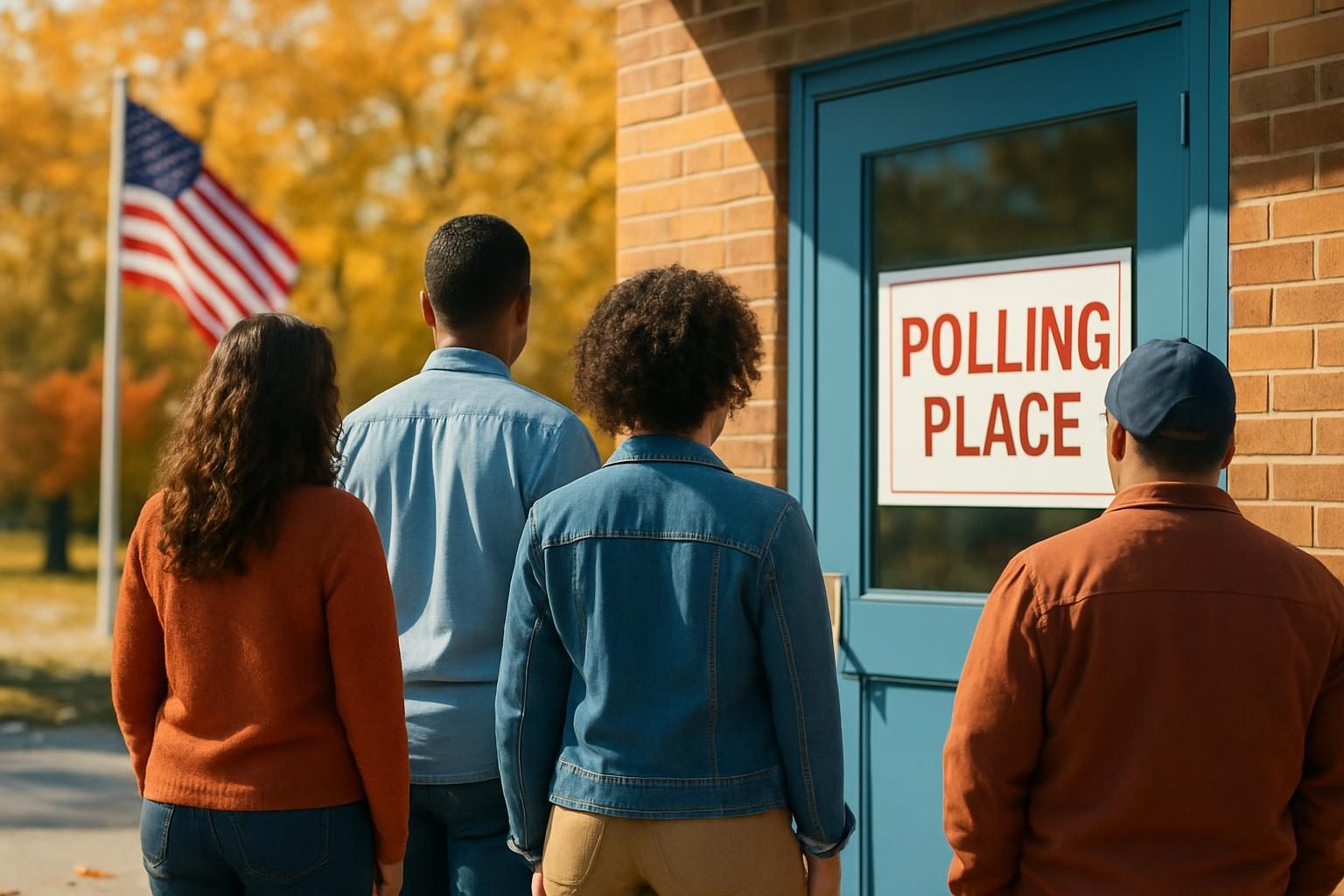
Every big election comes down to one question: what do you want your government to do for you, your family and your community? Democrats have plenty of answers, and understanding them is the first step to choosing, volunteering and voting with confidence. Here is a clear, friendly guide to the Democratic party platform issues shaping the road to 2028.
Quick answer: The Democratic Party’s core priorities include lowering health care and living costs, building an economy that works for working families, acting on climate, protecting voting rights and civil rights, and expanding access to education. The official 2028 platform has not been written yet; the party will adopt one around its convention on August 7-10, 2028. Until then, platforms, votes and candidate records are the best guides.
A note on how we work: facts on this page are sourced and dated, and anything that is our opinion is labeled as such. We link to platforms and public votes rather than invented quotes. Where something is not settled yet, we say so.
What a party platform is (and is not)
A party platform is a statement of goals adopted at the national convention. Delegates debate it, amend it and vote on it. It is a roadmap, not a law, and no candidate is legally bound by it.
That matters because platforms and real-world governing do not always match perfectly. A platform tells you what a party says it wants. Votes, bills and budgets tell you what it actually did. The best approach is to read both.
The 2028 Democratic National Convention is scheduled for August 7-10, 2028. The finalist host cities are Boston, Denver and Philadelphia, and the final pick is expected later in 2026. For the latest, see our guide to the 2028 Democratic National Convention and the host city race.
Why the platform is still blank
As of October 2026, no major Democrat has formally declared a 2028 presidential run. The party’s direction will be shaped by the 2026 midterms, by whoever emerges in the primaries, and by what voters say they need. That is good news for you: this conversation is still open, and your voice counts.
Health care: lowering costs and protecting coverage
Health care is one of the issues Democrats have fought on for decades. The broad goal is simple: more people covered, lower costs, and no one going broke because they got sick. The Affordable Care Act, passed with Democratic votes, remains the party’s signature achievement here.
Where Democrats differ is on how far to go. Some want to build on the existing system by expanding subsidies, strengthening Medicaid and lowering prescription drug prices. Others want a single national program, often called Medicare for All. Both camps share the goal of universal coverage.
Opponents argue that government-heavy approaches could raise taxes, reduce choice or strain budgets. That is a fair debate to have, and it is worth hearing out. Our view: the stakes are personal, and families deserve a system that does not punish them for being ill. For more depth, see what Democrats want on health care.
What to watch
- How candidates propose to cover people who fall through the gaps
- Plans to lower prescription drug costs
- Positions on protecting Medicaid and the ACA
- How they would pay for any expansion
A platform tells you what a party says it wants; votes and budgets tell you what it actually did.

The economy: good jobs, fair pay and lower costs
Democrats generally argue that the economy should work for working people, not just those at the top. That means supporting unions, investing in infrastructure and manufacturing, and making sure everyone pays their fair share in taxes. It also means tackling everyday costs like housing, child care and groceries.
Critics, including many Republicans, argue that taxes and regulation can slow growth and discourage business investment. Democrats respond that strong public investment builds the foundation for lasting prosperity. Both sides claim to want a thriving economy; the disagreement is about the path.
Within the party, there are real debates about how aggressive to be on taxes, how to balance deficits with investment, and how to talk to voters who feel squeezed by prices. We will keep tracking how candidates frame these questions. You can learn more in our upcoming explainer on the Democratic economic agenda.
Wages and worker power
Raising the minimum wage and protecting the right to organize are longtime Democratic priorities. Supporters say a higher wage floor helps families keep up with the cost of living. Critics worry about effects on small businesses and hiring. Our view is that no one working full time should live in poverty, and we will cover the arguments in depth in the minimum wage debate.
Climate and energy: acting while creating jobs
Democrats treat climate change as a serious threat and an economic opportunity. The party’s approach centers on cutting pollution, expanding clean energy, and building the jobs and industries that come with it. Think solar installers, battery factories and electricians wiring the grid of the future.
The main debates are about speed, cost and fairness. How quickly should the country move off fossil fuels? How do we protect workers and communities that depend on them? Opponents argue that aggressive climate policy can raise energy prices and hurt industries; Democrats counter that inaction costs more in disasters and lost opportunity.
Our view: climate action and good jobs go hand in hand, and communities that powered the country for generations should not be left behind. For the policy history and what may come next, see Democrats and climate policy.
Voting rights and fair elections
Democrats broadly believe that every eligible citizen should be able to vote easily and have that vote count. That includes support for protecting the Voting Rights Act, expanding access like early voting and online registration, and pushing back against rules they see as barriers.
Republicans often emphasize election security and integrity measures such as ID requirements. Democrats argue that the evidence does not justify rules that make voting harder for eligible people. This is one of the most heated debates in American politics, and it deserves facts over slogans.
Map-drawing matters too. How districts are drawn can shape who wins, which is why many Democrats care about fair maps. Learn more in our planned explainers on the Voting Rights Act and how gerrymandering works.
Your own voting rules
Rules differ by state. Every state’s official rules, deadlines and online registration links are on vote.gov; swap in your state’s name in the web address to find yours. North Dakota has no voter registration. Same-day registration exists in many states, but the rules differ, so confirm yours on vote.gov or with your state election office. Our simple guide to registering to vote in every state walks you through it.
Every eligible voter should be able to cast a ballot that counts, and that is a goal worth organizing around.
Civil rights, reproductive freedom and equal treatment
Democrats generally support protecting civil rights for people of every race, religion, gender and background. That includes opposing discrimination in housing, jobs and policing, and defending LGBTQ+ rights.
Reproductive health care has been a defining issue since the Supreme Court’s 2022 decision in Dobbs v. Jackson Women’s Health Organization, which returned abortion policy to the states. Many Democrats want to protect access to abortion and contraception. Opponents, including many Republicans and religious groups, hold sincere moral convictions in the other direction.
This is an area where Americans are deeply divided, and we think the respectful way to engage is to listen first and argue from facts. Our view remains that personal medical decisions belong with patients and their doctors.
Education and student debt
Democrats emphasize well-funded public schools, affordable college and support for teachers. Many also want to ease the burden of student loans, from expanding repayment relief to forgiving some debt. Supporters say high debt holds back young people from buying homes and starting families.
Critics argue that broad forgiveness is unfair to those who already paid or never attended college, and that it does not fix rising tuition. These are real tradeoffs. We cover them in where Democrats stand on student debt relief.
Democracy, courts and the rules of the game
Beyond individual policies, Democrats are talking about the structure of democracy itself. That includes defending the peaceful transfer of power, protecting free and fair elections, and debating the role of the courts.
The Constitution sets the ground rules: a president must be a natural-born citizen, at least 35 years old and a US resident for 14 years, and the 22nd Amendment limits a president to two elected terms. If you have heard chatter about a third term, see our explainer on whether Trump can run for a third term.
Where the party debates itself
Democrats are a big coalition, and healthy debate is part of the deal. Here is a snapshot of where the conversation tends to center, framed as our reading rather than hard divisions.
| Issue | Common goal | Open debate |
|---|---|---|
| Health care | Universal, affordable coverage | Build on the ACA or move to a single national program |
| Economy | Good jobs and lower costs | How much to tax, spend and regulate |
| Climate | Cut pollution, grow clean energy | Pace of the transition and how to protect workers |
| Voting rights | Easy access, secure elections | Which federal reforms to prioritize |
| Education | Affordable, quality schooling | Scope of student debt relief |
These debates are a strength. They push candidates to make their case, and they give primary voters real choices.

How the 2026 midterms and the 2028 race shape the agenda
Platforms do not become policy without votes. The 2026 midterms, held Tuesday, November 3, 2026, will decide all 435 House seats, about a third of the Senate and 36 governorships. The results will set the stage for what Democrats can push, block or promise heading into 2028.
If you want to see what is at stake, check our guides to the 2026 midterm elections and what they mean for 2028 and the 2026 Senate races to watch.
The 2028 timeline at a glance
The general election is Tuesday, November 7, 2028, and the inauguration is January 20, 2029. The Democratic early-window primary calendar was approved by the DNC on August 15, 2026:
- South Carolina: January 22, 2028
- Nevada: February 1, 2028
- New Hampshire: February 8, 2028
- New Mexico: February 15, 2028
- Michigan: February 22, 2028
- Virginia: February 29, 2028
Super Tuesday is March 7, 2028. Iowa is not in the Democratic early window. New Hampshire state law requires it to hold the first primary in the nation, which clashed with the DNC calendar in 2024, so watch for changes. Our 2028 Democratic primary calendar keeps every date in one place.
The candidates and their platforms
No major Democrat has formally declared a 2028 presidential run as of October 5, 2026. Widely reported potential candidates include governors, senators, representatives and former administration officials, such as Gavin Newsom, Josh Shapiro, JB Pritzker, Gretchen Whitmer, Andy Beshear, Pete Buttigieg, Kamala Harris, Alexandria Ocasio-Cortez, Cory Booker, Raphael Warnock, Ruben Gallego, Mark Kelly, Elissa Slotkin, Chris Van Hollen and Ro Khanna. These are potential candidates only; none has announced a run.
To judge where each stands, look at their records: bills they sponsored, laws they signed, votes they cast. Skip screenshots and unsourced quotes. Our 2028 Democratic candidates tracker is updated as the field takes shape.
Take action: Pick one issue from this page that matters most to your family, then check your voter registration status at vote.gov today. Text one friend or relative and ask them to do the same. It takes five minutes and it is how winning coalitions start.
Where to start
Feeling like there is a lot here? Here is a simple roadmap to go from reading to doing.
- Check your registration. Visit vote.gov or your state election office, and read our guide to registering to vote.
- Mark your dates. Start with the midterms on November 3, 2026, then browse our 2028 election key dates calendar.
- Follow the field. Bookmark the 2028 presidential election hub for the big picture.
- Get involved locally. Learn how to get involved in politics locally and how to volunteer for a campaign.
- Think bigger. If you are curious about office yourself, see how to run for local office.
Want more on the history of the surge that gives this site its name? Read what a blue wave means and the history of wave elections. You can also browse everything in the Issues & Ideas section.
Key takeaways
- A party platform is a roadmap, not a law; the 2028 Democratic platform has not been written yet.
- Core Democratic priorities include lower health care and living costs, good jobs, climate action, voting rights and educational opportunity.
- Democrats debate the “how” on many issues, and opponents make serious counterarguments worth understanding.
- No major Democrat has declared a 2028 run as of October 2026; judge potential candidates by their records.
- Check your voter registration on vote.gov and mark November 3, 2026 for the midterms.
Last updated October 2026. Dates and candidate news change fast; we update this page as things are announced.
Frequently asked questions
What is the Democratic Party platform?
The platform is a document the party adopts at its national convention that lays out its goals and priorities. It is not a law and does not bind any candidate, but it signals where the party is headed. The 2028 Democratic National Convention is scheduled for August 7-10, 2028, and the 2028 platform has not been written yet.
Has the Democratic Party released a 2028 platform?
No. The 2028 platform will be drafted and adopted around the convention, and no major Democrat has formally declared a 2028 presidential run as of October 2026. Until then, the best guides are past platforms, congressional votes and the records of potential candidates. We update this page as things change.
Do all Democrats agree on every issue?
No, and that is normal for a big coalition. Democrats debate how fast to move, how much to spend and which tools work best on issues like health care, the economy and climate. Most of the party shares core goals, such as protecting voting rights, lowering costs and expanding opportunity.
How can I find out where a specific candidate stands?
Look at primary sources: the candidate’s official website, their voting record if they hold office, and bills they have sponsored. Be cautious with viral quotes and screenshots. Our candidate tracker lists potential 2028 Democrats and links you to the next steps.
How do I make sure I can vote on these issues?
Check your registration status and rules at vote.gov or with your state election office. Every state has its own deadlines and options, and North Dakota has no voter registration. Do this well before Election Day so nothing surprises you.