
In November 2018, millions of Americans who had never knocked on a door or made a phone call for a candidate did exactly that, and the results rippled through every level of government. The 2018 blue wave is the best recent proof that ordinary voters, working together, can change who holds power in Washington and in statehouses. Here is what happened, what Democrats took from it, and why it matters as 2028 gets closer.
Quick answer: The 2018 blue wave was the Democratic surge in the midterm elections of November 2018. Democrats won control of the U.S. House, gained governorships and flipped state legislative seats, while Republicans kept the Senate. The big lessons: turnout, local organizing and strong candidates in every kind of district matter, and midterms can reshape a presidency’s second half.
What was the 2018 blue wave?
A “wave election” is one where one party’s gains are broad and deep, reaching well beyond a few targeted contests. The 2018 midterms fit that description for Democrats. The party took back the House of Representatives, which gave it the power to set committee agendas, run investigations and block legislation.
The wave was not only about Congress. Democrats also picked up governorships and made gains in state legislatures across the country, which matters because states run elections, draw many district lines and make decisions that touch daily life. If you want the longer history of wave elections and how the term is used, see our explainer on the blue wave meaning and the history of wave elections.
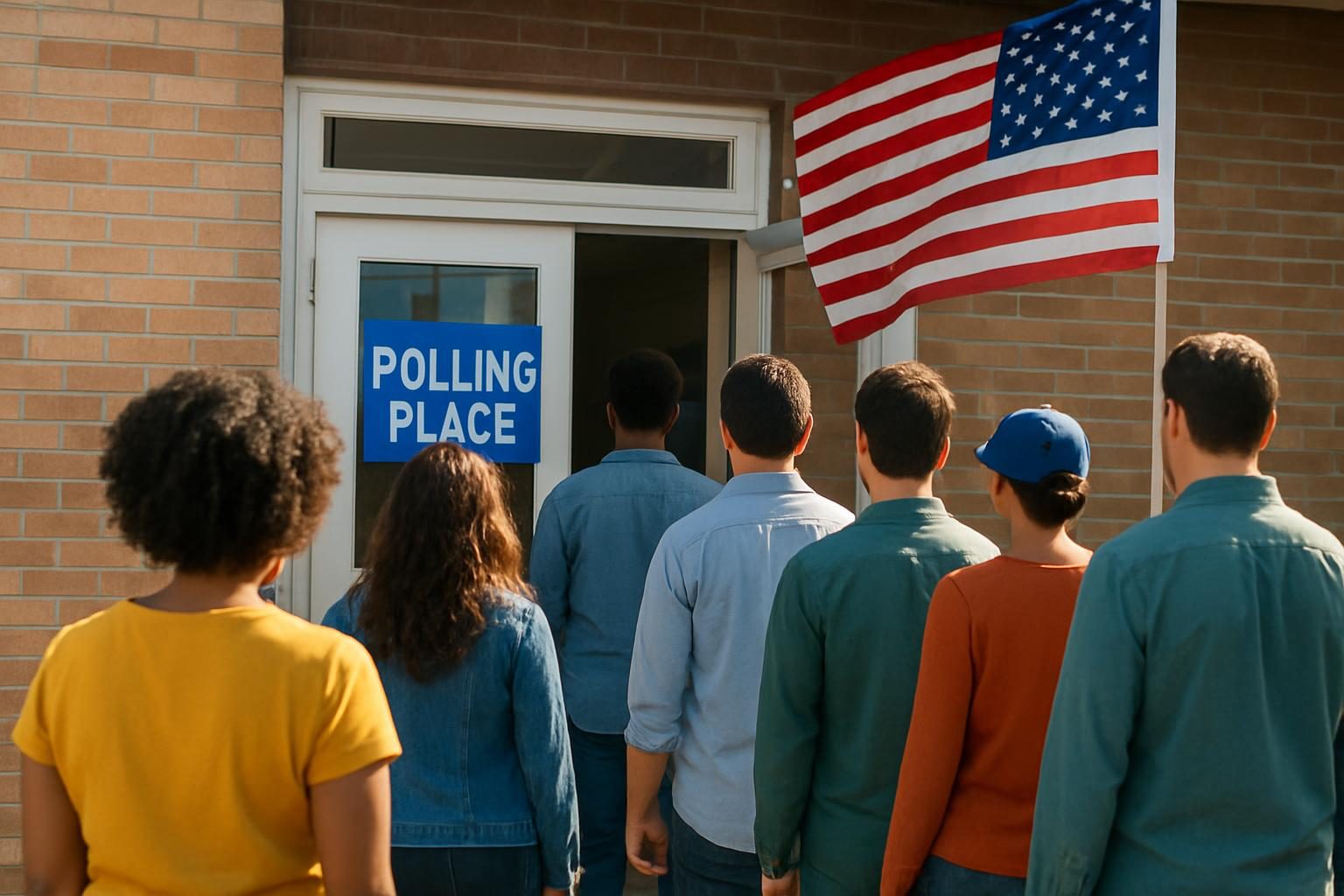
Just as important, it was a wave of people. Record numbers of first-time candidates, many of them women, veterans and community leaders, stepped up to run. Volunteers filled campaign offices in places where the party had not invested in years.
How did it happen?
No single event explains 2018. A few ingredients came together, and each one is a lesson that still applies.
Energized, organized voters
Midterm electorates are usually smaller and older than presidential electorates. In 2018, many Democratic-leaning voters decided that staying home was not an option. They showed up at town halls, joined local groups, registered friends and committed to voting.
Candidates in places Democrats had written off
One of the quiet stories of 2018 is how many contested seats there were. Democrats competed in suburban districts, in conservative-leaning areas and in places where the party had often left the seat uncontested. Showing up is a strategy, and it paid off in House races across the map.
A message people could repeat at the kitchen table
Candidates talked about costs, health care and whether government works for ordinary families. Those are issues voters feel in their own budgets. You can see how Democrats frame these debates today in our guide to Democratic Party platform issues.
What did the wave change?
Winning the House changed what Democrats could do from Congress, even without the White House or the Senate. A House majority controls the committee gavels, the oversight agenda and what comes to the floor for a vote. It also acts as a check on the other branches of government.
The wave also changed who is in the room. A new generation of lawmakers arrived in Washington, and some of them are now among the names regularly mentioned in the conversation about 2028. We do not treat any of them as declared candidates; no major Democrat has formally declared a 2028 presidential run as of this writing. You can follow who is being discussed in our 2028 Democratic candidates tracker.
Waves are not weather. They are built by neighbors who decide to knock on one more door.
What did Democrats not win?
Honesty is part of learning from 2018. Democrats won the House but did not win the Senate. Republicans kept their majority there, in part because the Senate map that year was difficult for Democrats, with many Democratic seats up in states that lean the other way.
That is a useful reminder: a wave is strong, but it is shaped by the map. Which seats are up, how districts are drawn and who turns out all set the limits. The same logic applies to the presidency, where the path runs through the Electoral College. Our explainer on how the Electoral College works covers why 270 electoral votes is the number that matters.
Lessons Democrats took from 2018
Here is a quick look at the lessons organizers and strategists commonly draw from the 2018 cycle, and why each one still matters. This table is our summary, not a ranking or a poll.
| Lesson | What it looks like in practice |
|---|---|
| Compete everywhere | Recruit candidates for every seat, including districts that look out of reach on paper. |
| Organize early and locally | Build volunteer networks long before Election Day, not in the final weeks. |
| Turn enthusiasm into registration | Help friends and neighbors confirm they are registered and have a plan to vote. |
| Talk about everyday costs | Lead with issues like health care and household budgets that people feel directly. |
| Respect the map | Understand that Senate seats, district lines and state rules shape what a wave can win. |

Why 2018 matters for 2026 and 2028
We are now days away from the next midterms. The 2026 midterm elections are Tuesday, November 3, 2026, with all 435 House seats, about a third of the Senate and 36 governors on the ballot. For a closer look at what is at stake, read our guide to the 2026 midterm elections and what they mean for 2028.
Our view: the biggest lesson of 2018 is that nothing is automatic. A strong year for one party is the product of turnout, candidates and organizing, and a weak one can be reversed by the same ingredients. No one can promise a wave in 2026. But every voter who registers, votes and brings a friend along changes the math.
After the midterms, the focus shifts to the presidential race. The general election is Tuesday, November 7, 2028, with inauguration on January 20, 2029. Before that comes the primary season. The Democratic National Committee approved its early-window calendar on August 15, 2026: South Carolina on January 22, 2028; Nevada on February 1; New Hampshire on February 8; New Mexico on February 15; Michigan on February 22; and Virginia on February 29, with Super Tuesday on March 7, 2028. See every date in our 2028 Democratic primary calendar.
A wave starts with one person confirming their registration and deciding to show up.
How to be part of the next wave
You do not need to be a candidate or a political expert. The people who powered 2018 were mostly ordinary voters who decided to do one more thing than they had done before.
- Check your registration. Every state’s official rules, deadlines and online registration links are on vote.gov. Do not rely on a general rule: confirm your own state’s details there or with your state election office.
- Make a voting plan. Decide how you will vote, when and where, and check your state’s options.
- Volunteer. Local campaigns and community groups need people for phone calls, door knocks and ride-to-the-polls help.
- Bring someone with you. Ask a friend, family member or coworker whether they are registered and ready.
If you are new to the process, our simple guide to registering to vote in every state walks you through it.
Take action: Take two minutes today to confirm your voter registration at vote.gov, then text one friend and ask whether they have done the same. That small chain is how waves are built.

Looking ahead to 2028
The presidential race is still taking shape. No major Democrat has formally declared a 2028 run as of this writing, and the Republican side is the same, with no declared candidates. Potential Democratic names that are widely reported include Gavin Newsom, Josh Shapiro, JB Pritzker, Gretchen Whitmer, Andy Beshear, Pete Buttigieg, Kamala Harris and others, but “potential” is exactly what they are. Anyone considering a run must meet presidential eligibility requirements. We will update our tracker as anything is announced.
There is plenty else to follow. The 2028 Democratic National Convention is set for August 7-10, 2028, with Boston, Denver and Philadelphia as the finalist host cities; the final pick is expected later in 2026, and you can follow it in our convention host city guide. For the full picture, start at our 2028 presidential election hub. And if you are curious how the nominating process works, including the debate over what superdelegates are, we are building guides to explain it plainly.
The lesson of 2018 is simple and hopeful: when people organize, show up and vote, outcomes change. The next chapter is yours to write.
Key takeaways
- The 2018 blue wave gave Democrats control of the House, plus gains in governorships and state legislatures.
- Republicans kept the Senate, showing that the map shapes how far any wave can go.
- Strong turnout, local organizing and candidates in every kind of district were central to the results.
- The 2026 midterms are Tuesday, November 3, 2026, and no one can promise a wave; turnout decides it.
- No major Democrat has formally declared a 2028 run; confirm your voter registration at vote.gov.
Last updated October 2026. Dates and candidate news change fast; we update this page as things are announced.
Frequently asked questions
What was the 2018 blue wave?
The 2018 blue wave was the Democratic surge in the November 2018 midterm elections, when Democrats won control of the U.S. House of Representatives and made gains in governors’ races and state legislatures. It is widely treated as one of the strongest midterm showings for Democrats in decades.
Did Democrats win the Senate in 2018?
No. Democrats flipped the House, but Republicans kept control of the Senate. The Senate map that year included many Democratic seats in states that were difficult terrain, which limited the party’s ceiling even in a strong year.
Why does the 2018 blue wave still matter for 2028?
It is the clearest recent example of how a midterm can reshape national politics before a presidential race. The lessons about turnout, candidate recruitment and organizing carry into 2026, 2028 and beyond. When 2028 arrives, staying informed about how to watch the presidential debates will help you engage with the candidates and issues.
Is there a blue wave in 2026?
Nobody can promise one. The 2026 midterms are Tuesday, November 3, 2026, with all 435 House seats, about a third of the Senate and 36 governors on the ballot. What happens depends on who turns out, and that includes you.
How do I make sure I can vote in the next election?
Check your registration status and deadlines on vote.gov or with your state election office. Rules differ by state, so confirm your own state’s details instead of relying on a general rule of thumb.