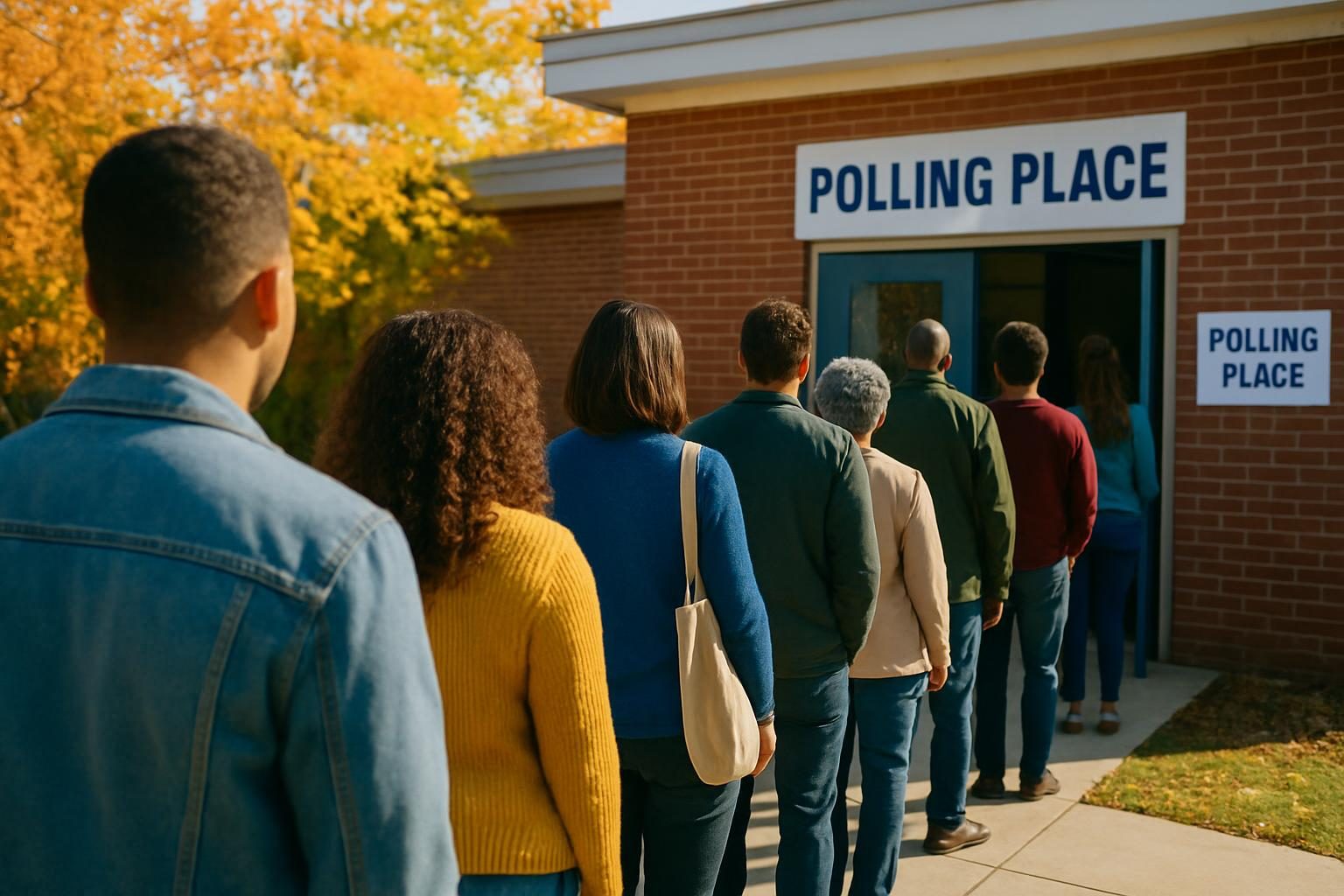
You care about the 2028 race, you’re ready to vote, and then comes the question nobody warned you about: are you even allowed to vote in your party’s primary? The answer depends on where you live, and getting it right can be the difference between casting a ballot and being turned away.
Here’s the good news: it’s simple to figure out once you know the vocabulary. Let’s break down open vs closed primaries so you can walk into the process with confidence.
Quick answer: In a closed primary, you generally must be registered with a party to vote in its primary. In an open primary, you can generally choose a party’s ballot on primary day. Many states use hybrids, and rules vary, so confirm yours on vote.gov or with your state election office.
Primaries are how parties choose their nominees. Each state decides how its primaries run, and the parties add their own rules on top. That patchwork is why a friend in one state can show up and pick a ballot while you in another need to have registered with a party ahead of time.
What is a primary, and why do the rules matter?
A primary is an election in which voters help pick a party’s candidate for the general election. In presidential years, primaries and caucuses are the first big test of who becomes the nominee. If you want a voice in who leads the Democratic ticket, the primary is where you get it.
The rules matter because they decide who gets that voice. They shape who can participate, how candidates campaign, and what kinds of voters get courted. For a deeper walkthrough of the presidential process, see our guide on how presidential primaries work.
Closed primaries: party members only
In a closed primary, generally only voters registered with a given party can vote in that party’s primary. If you’re registered as a Democrat, you get the Democratic ballot. If you’re registered with another party or as unaffiliated, you may not be able to vote in the Democratic contest, depending on state rules.
What this means for you
The key move is to check your registration early. If you’re a Democrat-leaning voter registered under another label, or you’ve never picked a party, you may need to update your registration before the primary. Deadlines and procedures differ by state, so look yours up rather than guessing.
Why states and parties like them
Supporters say closed primaries let a party’s own members choose their nominee. Critics say they can leave out independent voters, who are a growing share of the electorate in many places. Reasonable people disagree, and it’s a live debate in statehouses and party meetings.
You can’t use a voice you haven’t registered to use, so check your status before the primary, not on the day.
Open primaries: pick a ballot on primary day
In an open primary, voters can generally choose which party’s primary to participate in, often without having registered with that party. You show up, tell the poll worker or select on your ballot which party’s contest you want, and vote in that one.
Open primaries tend to be friendlier to independents and to voters who like to decide late. The tradeoff, which critics raise, is that voters from outside a party can influence its nomination. Supporters respond that broader participation is a feature, not a bug.
One practical point: even in open systems, you usually can’t vote in more than one party’s primary in the same election. Pick your ballot carefully.
The hybrids: semi-open and semi-closed primaries
Real life is messier than two boxes. Many states use hybrid systems, and the labels vary from source to source. Here’s a plain-language guide to the common types.
| Type | Who can generally vote | What to remember |
|---|---|---|
| Closed | Voters registered with that party | Check your party registration well ahead of time |
| Semi-closed | Party members, plus often unaffiliated voters | Independents may be able to join a party’s primary; other parties’ members may not |
| Semi-open | Voters choose a party’s ballot at the polls | Choice may be made privately or publicly depending on the state |
| Open | Voters choose a party’s ballot, often regardless of registration | You usually still pick just one party’s ballot |
Because states use different names and details, treat this table as a map of the general idea, not a ruling on your state. Your state election office has the authoritative answer.
What about independents and unaffiliated voters?
Independents are a big part of the electorate, and the rules for them vary the most. In some states, unaffiliated voters can choose a party’s primary ballot. In others, a party decides whether to let them in. In still others, party registration is required.
If you’re unaffiliated and want a say in the Democratic nomination, look up your state’s rules now. You may be able to participate with no change at all, or you may need to take a step in advance. We’d rather you find out in October than on primary day.
Every eligible voter deserves a clear path to the ballot, and knowing the rules is the first step on that path.
Presidential primaries, caucuses and the 2028 calendar
For 2028, the Democratic National Committee approved its early-window calendar on August 15, 2026, at its summer meeting in Austin, Texas. The early states are South Carolina on January 22, 2028, Nevada on February 1, New Hampshire on February 8, New Mexico on February 15, Michigan on February 22 and Virginia on February 29. Super Tuesday is March 7, 2028. Iowa is not in the Democratic early window.
Each of those states runs its own election system, which means open vs closed rules can differ from one early state to the next. Our state pages dig into the details: South Carolina, Nevada, New Hampshire, New Mexico, Michigan and Virginia. For the full list of dates, see our 2028 Democratic primary calendar.
Two caveats. New Hampshire state law requires it to hold the first primary in the nation, which clashed with the DNC calendar in 2024, so watch for changes. And Republicans are expected to keep Iowa first on their calendar, but the GOP calendar is not final. Participation details for specific 2028 contests may still be getting set, and we’ll update this page as they’re announced.
Once you’re in the primary, results turn into delegates through party rules. We’ll cover that in how Democrats award delegates.

Why this debate matters for Democrats
Here’s our view, clearly labeled as opinion: Democrats do best when more people take part. A primary system that makes it easy for newly engaged and independent-leaning voters to join the conversation can help build the energy a winning coalition needs. We also recognize that party members have good reasons to care about who picks their nominee, and sensible people land in different places on this question.
What isn’t a matter of opinion is that clear rules and clear information help everyone. Confusion about eligibility keeps people home, and that’s a loss for democracy no matter which party you support. Learning your state’s system is a small act that makes you a more powerful voter, and one you can pass on to friends.
For more on where Democrats stand on the issues that drive primary debates, read our overview of Democratic Party platform issues.
How to find out your state’s rules
You don’t need a law degree. You need about ten minutes and the right sources.
- Visit vote.gov. Every state’s official rules, deadlines and online registration links are at vote.gov/register/your-state-name (for example, vote.gov/register/ohio or vote.gov/register/new-york).
- Check your registration and party status. Use your state or local election office’s lookup tool if one is available.
- Look up primary participation rules. Your state election office can tell you whether primaries are open, closed or a hybrid, and what applies to unaffiliated voters.
- Note every deadline. Registration and party-change deadlines vary by state, so confirm them on vote.gov or with your state election office rather than relying on a number you heard secondhand.
- Ask about same-day registration. Many states offer it, but rules differ, so verify before you count on it. North Dakota has no voter registration.
Need a step-by-step walkthrough? Our guide on how to register to vote covers it in plain language.
Take action: Today, spend ten minutes at vote.gov confirming your registration and your party status. Then text one friend and ask whether they’ve checked theirs. Two checked registrations beat zero every time.
Don’t forget the 2026 midterms
Primary rules are a 2028 story, but your next big chance to vote is closer: the midterm elections are Tuesday, November 3, 2026, with all 435 House seats, about a third of the Senate and 36 governors on the ballot. The same registration habits that prepare you for 2028 pay off right now. Read what’s at stake in our 2026 midterm elections guide.
Want the big picture of the road ahead? Our 2028 presidential election hub tracks dates and developments, and you can browse everything in the Primaries & Calendar section. As of this writing, no major Democrat has formally declared a 2028 run, so there’s plenty of time to get informed and get involved.
Key takeaways
- Closed primaries generally limit participation to voters registered with a party; open primaries generally let you choose a party’s ballot on primary day.
- Many states use hybrid systems, and unaffiliated voters are treated differently from state to state.
- Presidential primary participation rules for 2028 can vary by state and may still be getting finalized.
- Always confirm your state’s rules and deadlines on vote.gov or with your state election office.
- Checking your registration now is the easiest way to protect your vote in 2026 and 2028.
Last updated October 2026. Dates and candidate news change fast; we update this page as things are announced.
Frequently asked questions
What is the difference between open and closed primaries?
In a closed primary, generally only voters registered with a party can vote in that party’s contest. In an open primary, voters can usually choose which party’s primary to take part in, often regardless of their own registration. Many states use variations of these two models, so check your own state’s rules.
Can independents vote in Democratic primaries?
It depends entirely on your state. Some states let unaffiliated voters pick a party’s primary ballot, some let parties decide, and some require party registration. Confirm the rules for your state on vote.gov or with your state election office.
Can I switch my party registration before a primary?
In many states you can change your party registration, but the rules and timing vary by state, and some set cutoffs well before an election. Don’t assume. Look up your state’s process on vote.gov or ask your state or local election office.
What is a semi-closed or semi-open primary?
These are hybrid systems. A semi-closed primary typically lets unaffiliated voters join a party’s primary while keeping registered members of other parties out. A semi-open primary typically lets voters choose a party’s ballot at the polls. Terms and details vary, so your state election office is the best source.
Do open and closed primary rules apply to the 2028 presidential primaries?
Presidential primaries are run under state rules and party rules, so your state’s primary system generally matters for 2028. Some states hold caucuses or parties set their own participation rules, and details for 2028 may still be settled. We update this page as states and parties announce details.