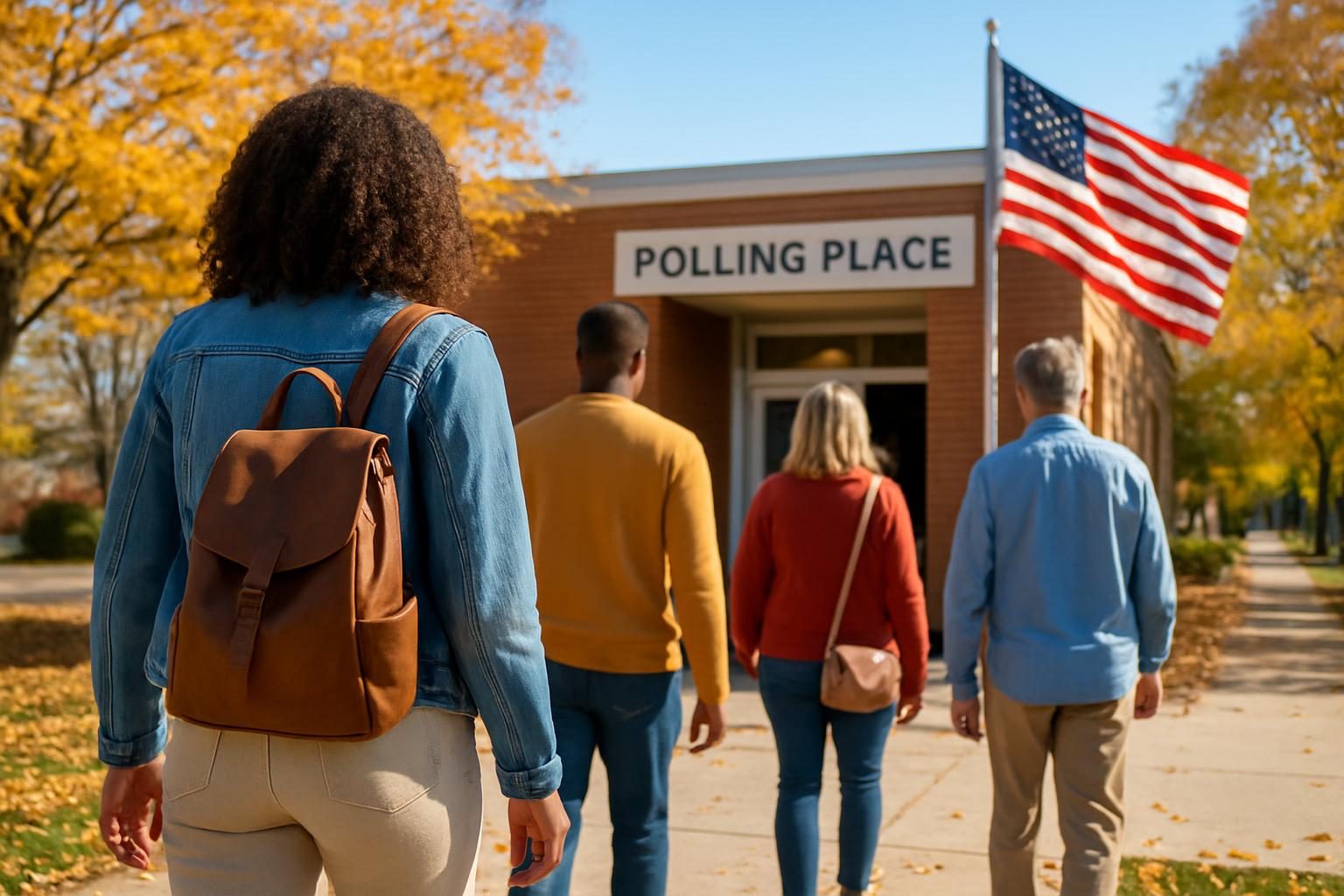
Circle it on your calendar, set a reminder on your phone, and tell a friend: the next presidential election is closer than it feels. Midterms come first, but the road to the White House is already being built, one primary date and one registered voter at a time. Understanding what a blue wave means can help you track the political momentum heading into 2028.
Quick answer: When is the 2028 presidential election? Tuesday, November 7, 2028. The Democratic primary calendar kicks off January 22, 2028 in South Carolina, electors meet December 18, 2028, and the next president is inaugurated January 20, 2029.
Below is a plain-language guide to every milestone, from tonight to Inauguration Day. We will keep it current as new dates are set, so bookmark it and check back.
The big date: Tuesday, November 7, 2028
The general election for president falls on Tuesday, November 7, 2028. That is the day Americans in every state choose electors who will formally pick the next president. Many states also offer early voting and mail voting before that day, and the rules vary by state, so check with your state election office.
You do not vote directly for a president under the Constitution’s system. You vote for a slate of electors, and a candidate needs 270 of 538 electoral votes to win. The 2028 election uses the electoral map based on the 2020 census apportionment.
What comes after Election Day
The calendar does not stop when the polls close. Here is how the final stretch unfolds:
- November 7, 2028: General election day.
- December 18, 2028: Electors meet, on the first Monday after the second Wednesday in December.
- January 20, 2029: Inauguration of the next president.
Curious how the electoral count actually works? Our upcoming explainer, How the Electoral College Works (and Why 270 Matters), breaks it down step by step.
Election Day is just one date on the calendar; the real work happens in the two years before it.

Your 2028 election timeline at a glance
Here are the confirmed milestones in one place. Dates marked “still being set” are not final, and we will update this page when they are.
| Milestone | Date | Status |
|---|---|---|
| 2026 midterm elections | Tuesday, November 3, 2026 | Confirmed |
| Democratic National Convention host city pick | Later in 2026 | Finalists: Boston, Denver, Philadelphia |
| South Carolina Democratic primary | January 22, 2028 | DNC approved |
| Nevada Democratic primary | February 1, 2028 | DNC approved |
| New Hampshire Democratic primary | February 8, 2028 | DNC approved; watch for changes |
| New Mexico Democratic primary | February 15, 2028 | DNC approved |
| Michigan Democratic primary | February 22, 2028 | DNC approved |
| Virginia Democratic primary | February 29, 2028 | DNC approved |
| Super Tuesday | March 7, 2028 | Confirmed |
| 2028 Democratic National Convention | August 7-10, 2028 | Dates set; host city pending |
| General election | November 7, 2028 | Confirmed |
| Electors meet | December 18, 2028 | Confirmed |
| Inauguration | January 20, 2029 | Confirmed |
Want the full state-by-state picture as it develops? Our 2028 Democratic primary calendar tracks every date so far, and a dedicated 2028 Election Key Dates: A Calendar From Now to Inauguration guide is on the way.
The 2026 midterms come first
Before 2028, there is a huge test: the midterm elections on Tuesday, November 3, 2026. All 435 House seats are up, about a third of the Senate, and 36 governorships. The results will shape the political landscape heading into the presidential race.
That makes this fall one of the best chances to build momentum. If you want the details, start with our guide to when the 2026 midterms are and what is on the ballot, then see the Senate races to watch and what happens if Democrats win the House. Our 2026 midterms hub collects it all.
This is our view, clearly labeled: strong turnout in 2026 is the best down payment on 2028. Every volunteer shift and every newly registered neighbor this fall carries over.
Every volunteer shift and every newly registered neighbor this fall is a down payment on 2028.

The Democratic primary calendar
On August 15, 2026, at its summer meeting in Austin, Texas, the DNC approved the early-window calendar for 2028. The order is: South Carolina on January 22, Nevada on February 1, New Hampshire on February 8, New Mexico on February 15, Michigan on February 22 and Virginia on February 29. Super Tuesday follows on March 7, 2028.
Notably, Iowa is not in the Democratic early window. Republicans, by contrast, are expected to keep Iowa first on their calendar, according to September 2026 reports, but the GOP calendar is not final.
Watch New Hampshire
New Hampshire state law requires the state to hold the first primary in the nation. That clashed with the DNC calendar in 2024, so keep an eye out for changes. We will update this page if the schedule shifts.
New to how the system works? Our upcoming explainer, How Presidential Primaries and Caucuses Work, covers the basics.
The convention: August 7-10, 2028
The 2028 Democratic National Convention is set for August 7-10, 2028. The finalist host cities, announced August 20, 2026, are Boston, Denver and Philadelphia. Atlanta and Chicago were eliminated.
The final pick is expected later in 2026. It is not announced yet, and we will update this page the moment it is.
Who is running? Right now, nobody has declared
Here is the honest answer: as of October 5, 2026, no major Democrat has formally declared a 2028 presidential run, and no Republican has either. That means the “who is running” question is still wide open.
Plenty of names are widely reported as potential Democratic candidates. They include Gavin Newsom, Josh Shapiro, JB Pritzker, Gretchen Whitmer, Andy Beshear, Pete Buttigieg, Kamala Harris, Alexandria Ocasio-Cortez, Cory Booker, Raphael Warnock, Ruben Gallego, Mark Kelly, Elissa Slotkin, Chris Van Hollen and Ro Khanna. To be clear, those are potential candidates only, and none has announced.
On the Republican side, widely mentioned potential candidates include JD Vance, Marco Rubio, Ron DeSantis, Ted Cruz and Brian Kemp. Again, none has declared.
Follow the field on our 2028 Democratic candidates tracker, which we update as announcements happen.
Who is eligible?
The Constitution requires a president to be a natural-born citizen, at least 35 years old, and a US resident for 14 years. The 22nd Amendment limits a president to two elected terms. For more, see Who Can Run for President? The Constitutional Requirements.

Get ready now: registration is your first step
The simplest thing you can do for 2028 takes about five minutes: make sure you are registered, at your current address. Every state’s official rules, deadlines and online registration links are on vote.gov, where you can pick your state (for example, vote.gov/register/new-york).
Rules differ by state. Many states offer same-day registration, but the details vary, and North Dakota has no voter registration at all. We never guess at deadlines: confirm yours on vote.gov or with your state election office.
Take action: Open vote.gov right now, check your registration, and fix anything out of date after a move or name change. Then text one friend or family member and ask them to do the same. For a walkthrough, read our simple guide to registering to vote in every state.
How to stay in the loop
A lot is still being set, from the convention host city to final primary details. Our 2028 presidential election hub is the best place to start, and the full 2028 Election category collects everything in one spot.
We will also be adding guides on topics like 2028 Swing States: Where the Election Will Be Decided and How Presidential Debates Work and How to Watch Them. Debate dates have not been announced yet.
Key takeaways
- The 2028 presidential election is Tuesday, November 7, 2028, with electors meeting December 18, 2028 and inauguration on January 20, 2029.
- The DNC-approved early primary window runs from South Carolina on January 22, 2028 through Virginia on February 29, with Super Tuesday on March 7, 2028.
- The Democratic National Convention is August 7-10, 2028, with Boston, Denver or Philadelphia still to be chosen.
- As of October 5, 2026, no major Democrat or Republican has formally declared a 2028 run; many names are only potential candidates.
- The November 3, 2026 midterms come first, and strong turnout this fall builds momentum for 2028.
- Check your registration on vote.gov and confirm all deadlines with your state election office.
Last updated October 2026. Dates and candidate news change fast; we update this page as things are announced.
Frequently asked questions
What is the date of the 2028 presidential election?
The 2028 general election is Tuesday, November 7, 2028. The new president is inaugurated on January 20, 2029.
When does the 2028 Democratic primary season start?
The DNC’s early window opens with South Carolina on January 22, 2028, followed by Nevada on February 1, New Hampshire on February 8, New Mexico on February 15, Michigan on February 22 and Virginia on February 29. Super Tuesday is March 7, 2028. New Hampshire’s state law could still cause calendar changes, so watch for updates.
Has anyone officially announced a run for president in 2028?
As of October 5, 2026, no major Democrat has formally declared a 2028 presidential run, and no Republican has either. Many names are widely reported as potential candidates, but none are running yet. We track the field on our candidate tracker and update it as news breaks.
When is the 2028 Democratic National Convention?
The convention is set for August 7-10, 2028. Boston, Denver and Philadelphia are the finalist host cities, announced August 20, 2026, and the final pick is expected later in 2026. Atlanta and Chicago were eliminated.
How do I make sure I can vote in 2028?
Check your registration status and register or update it at vote.gov, which lists every state’s official rules, deadlines and online registration links. North Dakota is the one state with no voter registration. Always confirm deadlines and ID rules with vote.gov or your state election office.