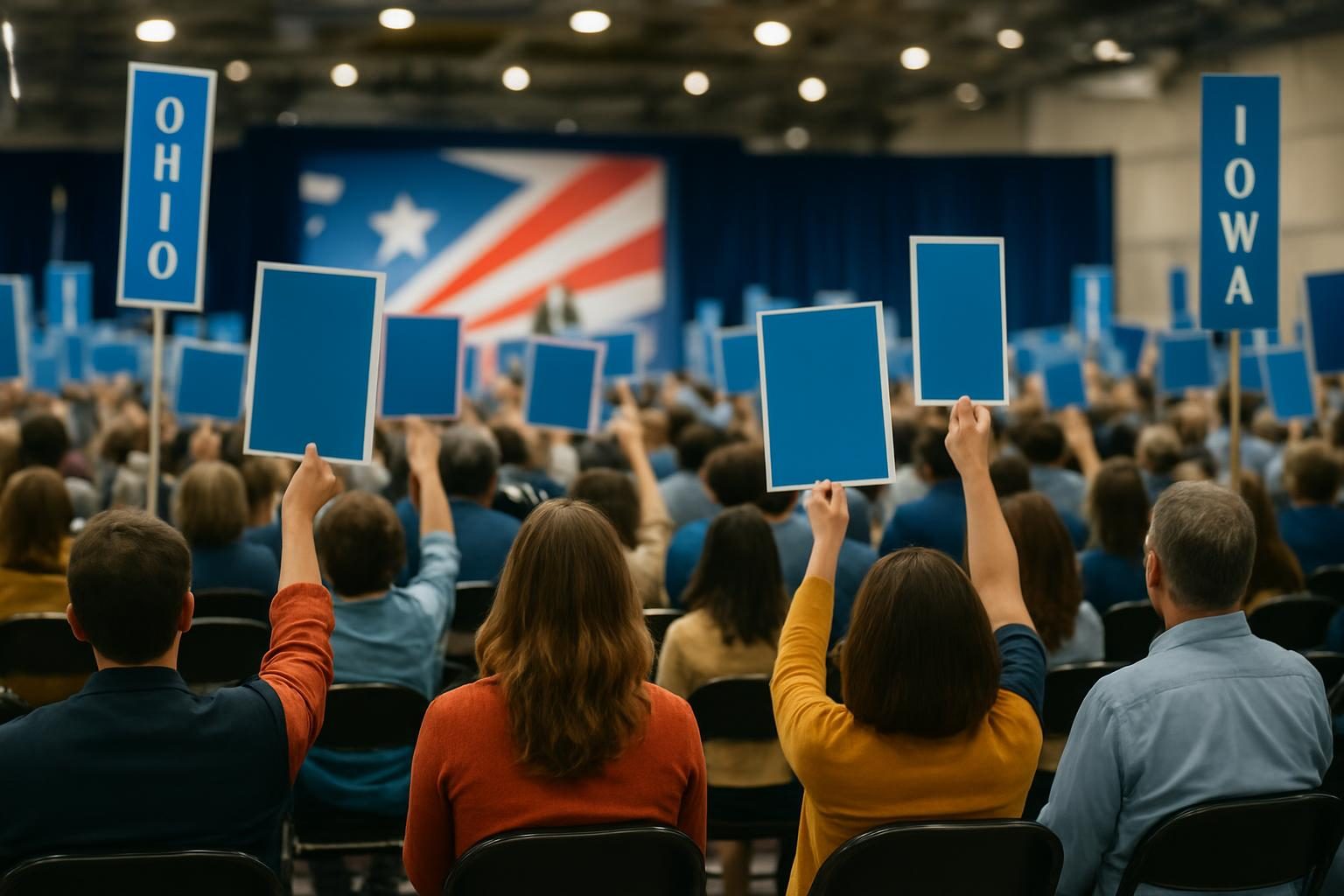
Every few years, a debate erupts over a group of Democrats nobody voted for in the primary but who get a say in picking the nominee. They are called superdelegates, and the rules around them have changed a lot. If you have wondered what are superdelegates and whether they can override voters, this guide has you covered.
Quick answer: Superdelegates, officially called automatic delegates, are Democratic Party leaders and elected officials who get a vote at the national convention without winning it in a primary or caucus. Since a 2018 DNC rule change, they generally cannot vote on the first ballot, so primary and caucus voters, not party insiders, decide the nominee in nearly every scenario.
What are superdelegates, exactly?
Every Democratic presidential nominee is chosen at the national convention by delegates. Most of those delegates are “pledged,” meaning they are awarded to candidates based on how voters cast ballots in primaries and caucuses.
Superdelegates are different. They hold a convention seat because of who they are, not because of a vote in their state. The category generally includes members of Congress, governors, DNC members, and certain current and former party leaders.
The party’s official term is “automatic delegates,” because they are seated automatically rather than elected. “Superdelegate” is the nickname that stuck, and it is the term most voters search for.
Why did the party create them?
The category was created in the early 1980s as a way to give party leaders and officeholders a role at the convention. The idea was to keep experienced elected officials connected to the nominating process. For decades, they were a quiet footnote in the rules.
That changed whenever a primary got close. Critics argued that unelected insiders could tip a tight race, and that notion fueled real frustration among grassroots voters.
Pledged delegates vs. automatic delegates
The difference comes down to where the power comes from. Here is a simple side-by-side look.
| Feature | Pledged delegates | Automatic delegates (superdelegates) |
|---|---|---|
| How they get a seat | Awarded through primary and caucus results | Seated because of an office or party position |
| Who they represent | A candidate, based on voter outcomes | Themselves, as party leaders |
| First-ballot vote | Yes, bound by results | Generally no, since the 2018 rule change |
| Role if the convention continues | Votes continue under party rules | May vote on later ballots |
Think of it this way: pledged delegates carry the voice of voters into the convention hall. Automatic delegates are party leaders who show up with a seat, but under today’s rules, not a first-ballot vote.
Pledged delegates carry the voices of voters into the hall. That is how Democrats choose a nominee.
The 2016 fight that changed everything
The modern debate over superdelegates took off during the 2016 Democratic primary. Many automatic delegates announced their preferences early, and media delegate counts often folded those pledges in alongside pledged delegates won by voters.
For many supporters of the candidate who trailed, that created a feeling that the contest was tilted before most states had voted. Whatever you think of that race, the frustration was real, and it pushed the party toward reform.
After the 2016 election, a party commission studied the delegate selection process. The DNC then took up changes to rein in the role of automatic delegates, a debate that culminated in the 2018 vote.
What the DNC changed in 2018
In 2018, the DNC voted to change the rules so that automatic delegates generally cannot vote on the first ballot of the presidential nomination. The goal was straightforward: let pledged delegates, chosen through voter results, decide the outcome whenever one candidate has a clear majority.
Automatic delegates are not removed from the convention. They remain delegates, and their role is mainly a backstop. If no candidate wins a majority of pledged delegates on the first ballot, the convention can move to additional ballots, and automatic delegates can then take part. These additional ballots would occur at the Democratic National Convention, where the nomination is finalized.
The exception worth knowing
There is a narrow exception. If it is clear the nominee has won on the first ballot, automatic delegates may still be allowed to vote, but their votes cannot change the outcome. In practice, the rule keeps them from being kingmakers.
The precise wording of the delegate selection rules is set out by the DNC and can be amended. For the exact current text, check democrats.org rather than relying on summaries, including ours.
Why this matters for 2028
Our view: this was a good reform. It puts the focus on voters, where it belongs, and it makes the primary season more transparent. When a nominee emerges, we want that choice to reflect the people who showed up to vote.
The rules for the 2028 cycle, including delegate rules for the national convention, are still being finalized, so we will update this page as the DNC publishes details.
When voters, not insiders, pick the nominee, the whole party starts the general election with more energy and more trust.
How delegates are won in 2028
If superdelegates generally cannot decide the first ballot, the real action is in the primaries and caucuses. That is where pledged delegates are won, and that is where you come in.
The DNC approved the 2028 early-window calendar on August 15, 2026, at its summer meeting in Austin, Texas. Here is the lineup, in order:
- South Carolina: January 22, 2028
- Nevada: February 1, 2028
- New Hampshire: February 8, 2028
- New Mexico: February 15, 2028
- Michigan: February 22, 2028
- Virginia: February 29, 2028
Super Tuesday follows on March 7, 2028. Iowa is not in the Democratic early window this time. For the full picture, see our 2028 Democratic primary calendar and our guide to Super Tuesday 2028.
One thing to watch: New Hampshire state law requires it to hold the first primary in the nation, which clashed with the DNC calendar in 2024. Read our explainer on the New Hampshire primary in 2028 for how that tension could play out again.
If you want a primer on the mechanics, our guide to how presidential primaries work walks through primaries, caucuses and delegates step by step.
Who might be on the ballot?
As of the last check on October 5, 2026, no major Democrat has formally declared a 2028 presidential run. Plenty of names are widely reported as potential candidates, including governors like Gavin Newsom, Josh Shapiro, JB Pritzker, Gretchen Whitmer and Andy Beshear, along with figures such as Pete Buttigieg and Kamala Harris.
Those are potential candidates only. Nobody has announced, and we will not treat anyone as running until they say so. Keep up with the field in our 2028 Democratic candidates tracker, and see when 2028 presidential campaigns start for how the invisible primary works.
Anyone who runs also has to meet the constitutional requirements for the presidency: natural-born citizen, at least 35 years old, and 14 years of US residency.

Where the convention fits in
The delegates, pledged and automatic, come together at the 2028 Democratic National Convention, scheduled for August 7-10, 2028. To learn how to follow the action, see our guide on how to watch presidential debates. The finalist host cities, announced August 20, 2026, are Boston, Denver and Philadelphia. Atlanta and Chicago were eliminated, and the final pick is expected later in 2026.
Read more about the contenders in our 2028 Democratic National Convention guide. If the host city is announced, we will update that page.
After the convention, the nominee heads into the general election on Tuesday, November 7, 2028. Winning takes 270 of 538 electoral votes, which we explain in how the Electoral College works.
What you can do right now
Superdelegate rules are a good reminder that party structures matter, but voters matter more. The delegate math starts with you showing up in your state’s primary or caucus.
Before that, there is a big test closer to home. The midterms are on Tuesday, November 3, 2026, with all 435 House seats, about a third of the Senate and 36 governorships on the ballot. See what’s at stake in the 2026 midterms and how it shapes 2028.
Take action: Check your voter registration today at vote.gov or your state election office, then text one friend and ask if theirs is current too. Primaries are where delegates are won, and you cannot vote in one unless you are registered under your state’s rules. For a state-by-state walkthrough, see how to register to vote.
Want to dig deeper into what the party stands for? Visit our overview of Democratic Party platform issues, and browse the full 2028 Election category. Our 2028 presidential election hub collects every key date and development in one place.
Key takeaways
- Superdelegates, officially automatic delegates, are party leaders and officials who hold a convention seat without winning it in a primary or caucus.
- A 2018 DNC rule change generally bars them from voting on the first ballot, so voter-chosen pledged delegates decide the nomination in almost every scenario.
- Automatic delegates act mainly as a backstop if the convention goes to multiple ballots.
- The 2028 early window runs from South Carolina on January 22 to Virginia on February 29, with Super Tuesday on March 7, 2028.
- No major Democrat has formally declared a 2028 run as of October 5, 2026, so the field is still taking shape.
- Your best move is to register, confirm your status on vote.gov, and vote in your state’s primary.
Last updated October 2026. Dates and candidate news change fast; we update this page as things are announced.
Frequently asked questions
What are superdelegates in simple terms?
Superdelegates are party leaders and elected officials, such as members of Congress, governors and DNC members, who get a vote at the Democratic National Convention without having to win it in a primary or caucus. The party now calls them automatic delegates. Since the 2018 rule change, they generally cannot vote on the first ballot unless the nominee is already clear.
Do superdelegates still exist in 2026?
Yes, the category still exists, but its power was sharply limited after the DNC voted in 2018 to bar automatic delegates from voting on the first presidential ballot in most circumstances. Their role is mainly a backstop if the convention goes to multiple ballots. Check democrats.org for the current text of the delegate selection rules.
Can superdelegates decide the 2028 Democratic nomination?
Under the rules adopted since 2018, they generally cannot decide the outcome on the first ballot. Pledged delegates, who are awarded based on primary and caucus results, do that work. Automatic delegates would matter only if no candidate wins a majority on the first ballot and the convention continues.
How is a pledged delegate different from a superdelegate?
A pledged delegate is chosen through the primary and caucus process and is bound to support a candidate based on voter results. A superdelegate, or automatic delegate, holds a seat because of the office or party position they hold. Voters directly shape the first group, not the second.
How can I influence who the Democratic nominee is?
Register to vote and then show up in your state’s primary or caucus, since that is how pledged delegates are won. Confirm your registration and your state’s rules on vote.gov or with your state election office. You can also volunteer for a campaign or local party once the field takes shape.