
Every two years, someone asks the big question: is a wave coming? With the midterms days away, the honest answer is that nobody knows yet, but we do know what to watch, and we know what you can do about it.
This guide explains what people mean by a blue wave midterm, which signals point toward one in 2026 and which point away. It will not hand you a prediction dressed up as fact. It will give you the tools to read the news like an analyst and the reasons to get involved right now.
Quick answer: A blue wave midterm means Democrats make big, broad gains across many districts and states. Whether 2026 becomes one depends on factors like presidential approval, the generic ballot, turnout and open seats. None of them settle it alone, and no one can promise a wave. The midterms are Tuesday, November 3, 2026, and turnout is the part you control.
What is a wave election, exactly?
A wave election is one where a party does far better than usual, and does it nearly everywhere at once. Think of it as a tide rising across the whole map, not a few lucky ripples. The party catching the wave tends to flip seats in very different kinds of places: suburbs, small towns, and districts that looked safe on paper.
Here is the catch: there is no official definition. No rulebook says “gain this many seats and you have a wave.” Historians and analysts use the word as shorthand, and they sometimes disagree about which elections qualify.
That is why it helps to look at the long view. Our history of wave elections walks through how the term has been used, and our look back at the 2018 blue wave shows what it looked like when many people felt one arrive.
Wave, ripple or tide: how analysts think about size
Analysts often talk in degrees. A modest shift toward one party is not usually called a wave. A very large one, with many seats changing hands and strong results in places the party rarely wins, is. Everything in between is where the arguments happen.
So when you hear a pundit in late October say “this could be a wave,” treat it as a read of the mood, not a forecast carved in stone.
A wave is not a prediction you wait for. It is a result that millions of people build.

The factors that point toward a wave
Forecasters tend to look at the same handful of indicators. Here is a plain-language guide to each, and how it can push toward a Democratic wave.
| Factor | What it is | Why it can point toward a wave |
|---|---|---|
| Presidential approval | How many Americans approve of the president’s job performance | Midterms often work as a referendum on the party in the White House; lower approval has historically meant trouble for that party |
| Generic ballot | A poll asking which party people plan to back for Congress | A consistent, sizable lead for one party can signal a national mood in its favor |
| Turnout and enthusiasm | Who actually shows up, and how energized they are | A motivated base and strong turnout in key groups can swing close races |
| Open seats | Races with no incumbent running | Open seats are easier to flip because there is no incumbent advantage |
| Candidate quality and money | Strong recruits and resources in competitive races | Good candidates with the means to compete can put more seats in play |
Presidential approval: the midterm referendum
Midterms are often read as a verdict on whoever holds the White House. Historically, the president’s party has frequently lost ground in these elections. If the public is unhappy with the direction of the country, that mood can spill into congressional races.
We will not quote approval numbers here, because they move and we only publish figures we can source and date. Check a reputable polling average and look at the trend, not a single poll. For the pattern across cycles, see our explainer on how midterms affect presidential elections.
The generic ballot: a mood ring, not a map
The generic ballot asks a simple question: if the election were today, would you vote for the Democratic or Republican candidate in your House district? It is a useful temperature check.
It also has limits. National numbers do not map neatly onto 435 separate House races, and district lines matter enormously. Use it to gauge direction, not to count seats.
Turnout: the factor you can move
Midterm electorates are usually smaller than presidential ones, which means every voter carries more weight. When one side is fired up and the other is not, close races can tip.
This is where the story stops being about analysts and starts being about you. Registration, reminders and rides to the polls are not glamorous, but they are how waves get built.
Open seats: where flips are most likely
When an incumbent retires, the seat becomes more competitive. There is no name recognition or built-in advantage to overcome. Watch retirements and open-seat contests closely, because that is where a wave often first shows up. We will cover the biggest contests in our 2026 House races to watch guide.
The factors that point away from a wave
Being optimistic does not mean ignoring the headwinds. A fair read of 2026 has to include the reasons a wave might not materialize.
The map is a real obstacle
The number of genuinely competitive House seats is smaller than the total. Many districts are drawn to favor one party, so even a strong national mood can only reach so far. A big popular-vote edge does not always become a big seat gain.
The Senate is its own puzzle. Only about a third of seats are up this year, and which ones are up shapes what is even possible. Our guide to 2026 Senate races to watch breaks down the terrain.
Incumbency still matters
Incumbents usually have name recognition, fundraising advantages and established campaign operations. In a wave, many incumbents lose. In a normal year, most win again. That is why open seats and well-funded challengers matter so much.
Mood can fade or shift
Polls move, news cycles change, and enthusiasm can drain away if people assume the outcome is already decided. This is the quiet danger of wave talk: if voters think a win is guaranteed, some stay home. No result is guaranteed until the votes are counted.
Waves do not wash over the map on their own. They are carried by neighbors who knock, call and vote.

How to read the signals without getting fooled
Everyone loves a confident headline. Here is a short checklist for staying grounded as the final days tick down.
- Look at trends, not single polls. One survey can be an outlier. A pattern across many is more meaningful.
- Remember polls are snapshots. They describe a moment, not a destiny, and they can miss who actually turns out.
- Think district by district. Control of Congress is decided in individual races, not by a national average.
- Check the source and the date. If a number has no source or is months old, be skeptical.
- Watch what you can influence. Registration and turnout are the parts of the story ordinary people can actually change.
When in doubt, treat predictions, ours included, as informed opinion. Our view is that the fundamentals give Democrats real reasons for hope. Our view is also that hope is not a strategy. Votes are.
What a strong Democratic night could mean
This is why the stakes feel so high. Winning the House, for instance, would change what Congress can do, from oversight to which bills even get a vote. We lay it out in what happens if Democrats win the House.
The ballot is also bigger than Congress. Thirty-six states are choosing governors, and those offices shape everything from health care access to how elections are run. See our rundown of the 2026 governor races. Many states also have initiatives on the ballot, which we will cover in our 2026 state ballot measures guide.
And yes, it connects to 2028. Midterm results can shape the national mood, the party’s momentum and the field of potential presidential candidates. For the big picture, start with our hub on what’s at stake for 2028.
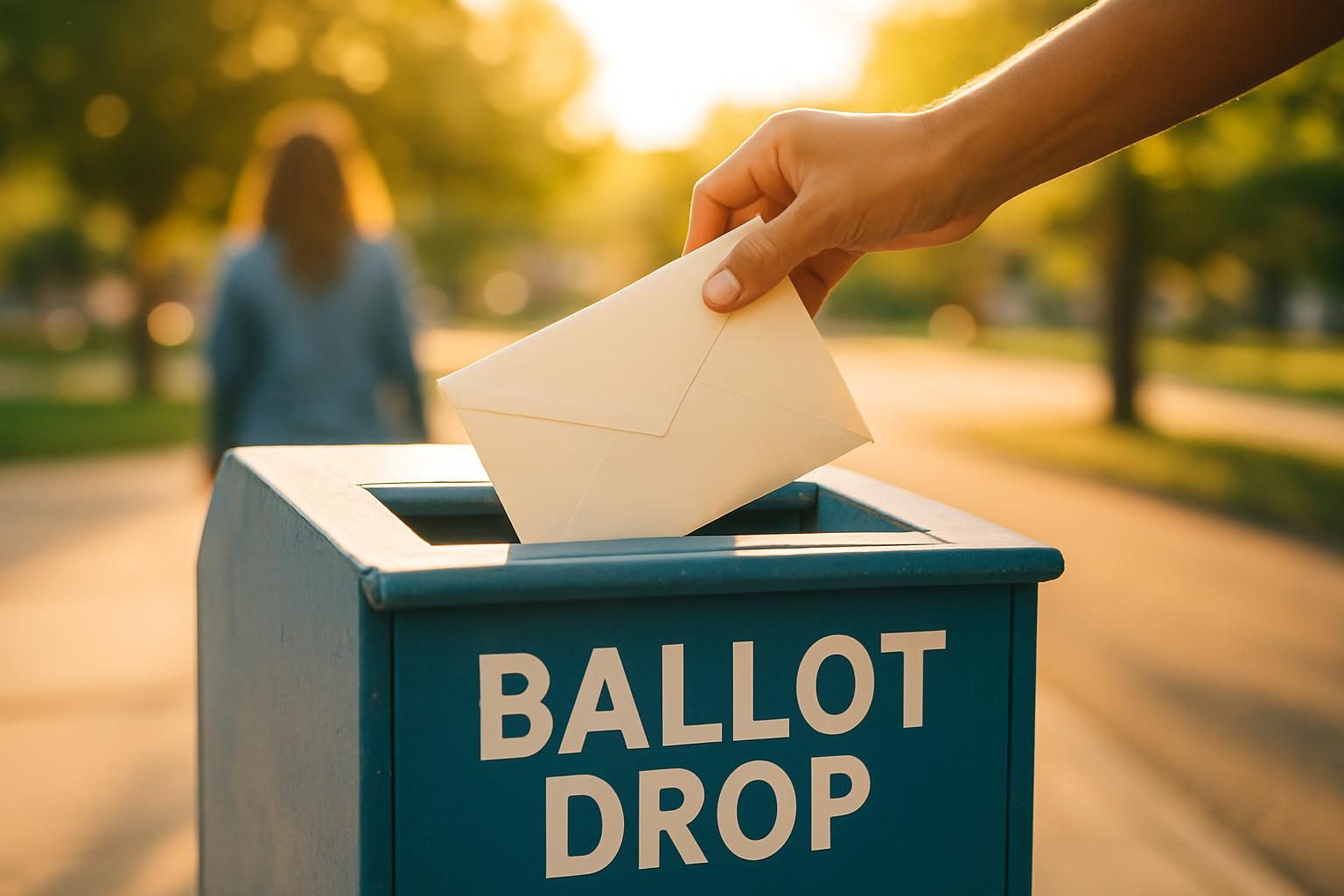
Your part in building a blue wave
You do not need to be a pundit to matter. You need to be registered, informed and willing to nudge a few people you know. The midterms are on Tuesday, November 3, 2026, and every day between now and then counts.
Start with the basics. Our last-minute checklist for voting in the 2026 midterms covers the practical steps. Voting rules differ by state, so for your registration status, deadlines and options, go to vote.gov or your state election office. Our simple guide to registering in every state can help, too.
Not sure when to expect answers once the polls close? We are preparing a guide to when midterm election results come in, and we will update this page when it is ready.
Take action: Check your voter registration status today at vote.gov, then text three friends or family members and ask if they have a plan to vote. Offer to go together. If you have a few spare hours, volunteer with a local campaign or voter-protection group.
Key takeaways
- A blue wave means broad, large Democratic gains, but there is no official definition, so treat the label as shorthand.
- Presidential approval, the generic ballot, turnout and open seats are the main signals analysts watch.
- The map, incumbency and shifting moods can all limit a wave, so no outcome is guaranteed.
- Polls are snapshots, not predictions; read trends and check sources and dates.
- Turnout is the factor ordinary voters can move, and the midterms are Tuesday, November 3, 2026.
- For your state’s rules and deadlines, use vote.gov or your state election office.
Last updated October 2026. Dates and candidate news change fast; we update this page as things are announced.
Frequently asked questions
What is a blue wave midterm?
A blue wave midterm is an election in which Democrats make large, broad gains in Congress and often in state offices, usually across many kinds of districts rather than just a handful. There is no official threshold, so analysts and historians use the term loosely. For the longer history, see our guide to the meaning of a blue wave.
Does the president’s party usually lose seats in a midterm?
Historically, the president’s party has often lost ground in midterm elections, which is one reason analysts watch presidential approval so closely. It is a pattern, not a rule, and the size of any shift varies a lot from one cycle to the next. Our explainer on how midterms affect presidential elections looks at the record.
Can polls tell us whether a wave is coming?
Polls such as the generic ballot can show the mood of the country, but they are snapshots, not predictions. They can miss turnout shifts, and national numbers do not always translate into individual district results. Treat them as one signal among several, and remember that the only count that matters is the one on Election Day.
When is the 2026 midterm election?
The 2026 midterm elections are on Tuesday, November 3, 2026. All 435 House seats, about a third of the Senate and 36 governorships are on the ballot. Check your polling place, early voting options and any remaining deadlines with your state election office or through vote.gov. You can also read our guide to the date and what’s on the ballot.
How can I help if I want a blue wave?
Make sure you are registered and have a plan to vote, then help people you know do the same. You can also volunteer with a campaign or voter-protection group, talk to friends and family, and give time to races in your area. For rules and deadlines in your state, go to vote.gov or your state election office. More coverage lives in our Midterms 2026 section.