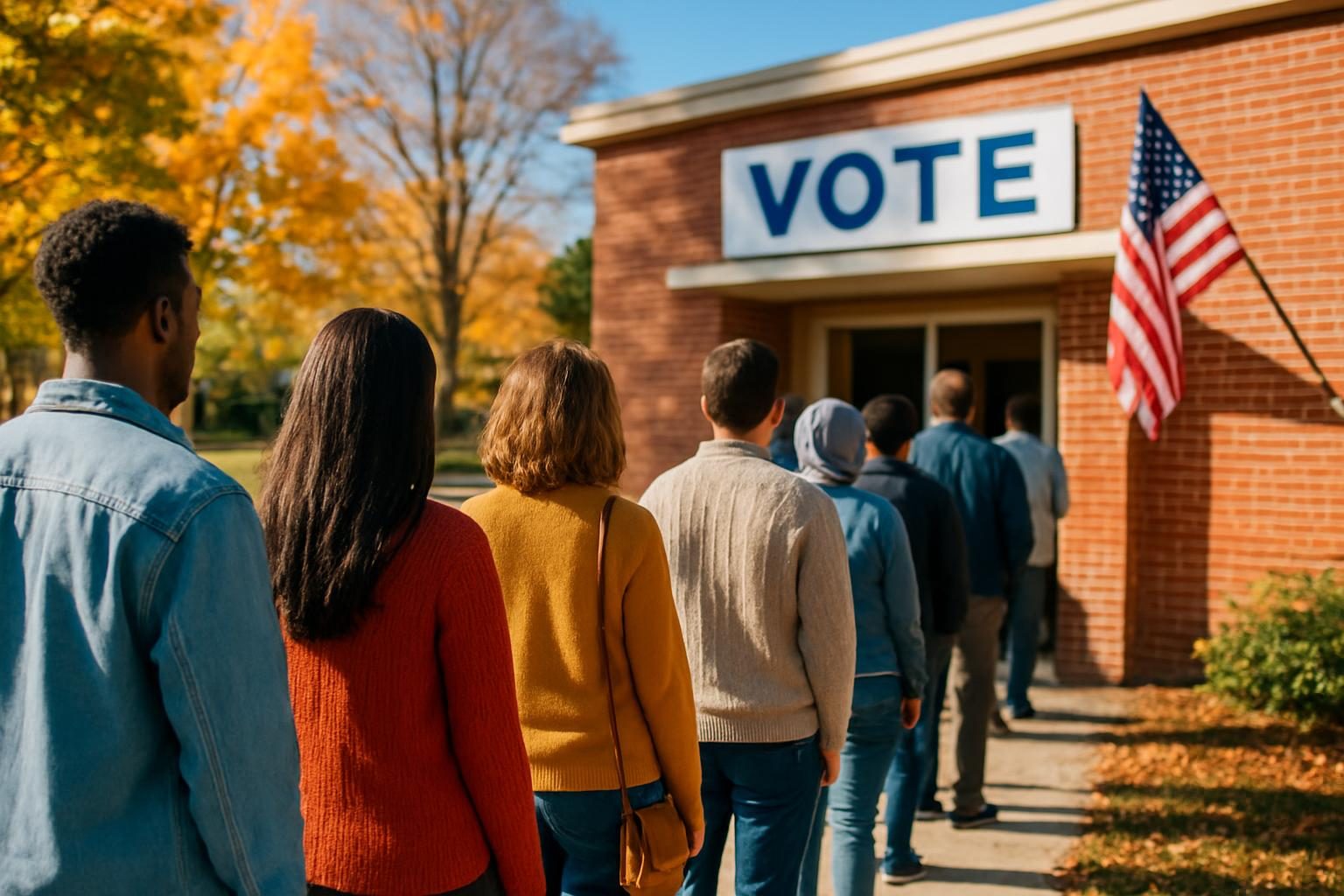
Every two years, the country takes a giant, public mood check. Midterm elections don’t pick a president, but they change who holds power, who looks like a rising star and which voters show up ready to fight. If you want to understand how midterms affect presidential elections, the history is surprisingly clear, and it’s full of reasons to get involved right now.
Quick answer: Midterms don’t decide the presidency, but they shape the race that follows. They set the balance of power in Congress and the states, boost or dent the profiles of potential candidates, and show which party’s voters are energized. The 2026 midterms are on Tuesday, November 3, 2026, and what happens then will echo into 2028.
What midterms are, and why they matter for 2028
A midterm election happens halfway through a president’s four-year term. In 2026, all 435 House seats, about a third of the Senate and 36 governorships are on the ballot. You can see the full picture in our guide to the 2026 midterm date and what’s on the ballot.
Think of midterms as the opening chapter of the next presidential story. The results decide who can pass laws, who can investigate, who runs state governments and who gets a national spotlight. Then those same factors carry straight into the next campaign.
The general election is Tuesday, November 7, 2028, and the winner needs 270 of 538 electoral votes. But the road there runs right through November 2026. For the full rundown, see our 2026 midterm elections: what’s at stake for 2028 overview.
Three ways midterms shape the presidential race
1. They change who holds power
Control of the House or Senate decides which agenda moves forward and which stalls. It also decides who can hold hearings and demand answers. A new majority can reshape the conversation voters are having when the presidential campaign heats up.
2. They create (or damage) future candidates
Governors and senators who win big in a midterm often get a surge of national attention. That matters because several widely reported potential 2028 Democrats are current governors or senators, from Pennsylvania to Michigan to Illinois. Winning, or helping your party win, is a strong résumé line.
3. They show where the energy is
Turnout, volunteer sign-ups and small-dollar giving all reveal which side is fired up. Campaigns study this closely. A midterm with strong enthusiasm gives a party a ready-made army of organizers heading into the next cycle.
A midterm is the country’s mood check, and the winners get to write the next chapter.
The history: three midterm-to-presidential pairs
Our brief looks at three cycles: 2010 and 2012, 2018 and 2020, and 2022 and 2024. Here is a simple side-by-side view of what each midterm did and what followed.
| Midterm | Big story | What came next |
|---|---|---|
| 2010 | Democrats suffered heavy losses, including losing control of the House | President Obama won re-election in 2012 |
| 2018 | Democrats won back the House in a “blue wave” year | Joe Biden won the presidency in 2020 |
| 2022 | A much closer midterm than many expected, with Democrats holding the Senate | Donald Trump won the presidency in 2024 |
2010 and 2012: a rough midterm, a presidential comeback
The 2010 midterms were painful for Democrats, who lost the House majority. Many people assumed the president was in deep trouble. Yet in 2012, Barack Obama won re-election.
The lesson: a bad midterm is not a verdict on the next presidential race. A presidential campaign has its own candidate, its own message and a far larger electorate. Turnout in presidential years looks very different from turnout in midterm years.
2018 and 2020: the blue wave that built a movement
In 2018, Democrats won back the House in what many call a blue wave. That election drew record-setting numbers of new candidates and volunteers, many of them first-timers. If you want the full story of that term, read our explainer on blue wave meaning and the history of wave elections.
Two years later, Joe Biden won the presidency. We can’t say 2018 caused 2020, and we won’t pretend otherwise. But it is fair to say the organizing energy built in 2018 gave Democrats a deep bench of volunteers and local leaders heading into the next cycle.
2022 and 2024: a closer midterm, a different outcome
The 2022 midterms came in tighter than many predicted, and Democrats held the Senate. Then in 2024, Donald Trump won the presidency. That is a good reminder that midterms and presidential years don’t follow one tidy script.
In our view, the takeaway is not doom. It’s that every cycle is decided by who organizes, who shows up and who makes a persuasive case. That is exactly the part you and your neighbors control.
History doesn’t hand out winners. It rewards the side that organizes early and keeps showing up.

What the pattern really tells us
Across these cycles, a few things hold up. The president’s party often faces a tough midterm, but that has not locked in the next presidential result. Midterms matter most for what they build: majorities, candidates, volunteers and momentum.
So treat any “midterms predict the presidency” claim with caution. We don’t have a formula, and anyone selling one is guessing. What we do have is a clear picture of how early work pays off.
Opinion: why 2026 is a big opportunity
This section is our view. We think progressives have a real chance to shape the next two years, and the next four. A strong 2026 midterm can put checks on power, elect governors who run state elections and give voters concrete results to point to.
For a closer look at one big prize, read what happens if Democrats win the House in 2026. And to see where the Senate fight is being waged, check our 2026 Senate races to watch.
Governors, states and the 2028 map
Governor races matter more for presidential politics than many people realize. Governors help run state government, and they often become the face of a party’s message. Our guide to the 2026 governor races in all 36 states breaks down what’s at stake.
The 2028 race will also be fought on a familiar battlefield. The map uses the electoral votes from the 2020 census apportionment, so every state’s weight is already set. See which states could decide it in our 2028 electoral map and battleground states guide.

How the midterms feed the 2028 campaign calendar
The 2028 Democratic calendar is already taking shape. The DNC approved its early-window calendar on August 15, 2026, at its summer meeting in Austin, Texas. Here are the dates:
- South Carolina: January 22, 2028
- Nevada: February 1, 2028
- New Hampshire: February 8, 2028
- New Mexico: February 15, 2028
- Michigan: February 22, 2028
- Virginia: February 29, 2028
Super Tuesday is March 7, 2028. Iowa is not in the Democratic early window. New Hampshire state law requires it to hold the first primary in the nation, which clashed with the DNC calendar in 2024, so watch for changes. See the full lineup in our 2028 Democratic primary calendar.
Republicans are expected to keep Iowa first on their calendar, according to September 2026 reports, though that calendar is not final.
Who might run, and what 2026 means for them
As of October 5, 2026, no major Democrat has formally declared a 2028 presidential run. Widely reported potential candidates include Gavin Newsom, Josh Shapiro, JB Pritzker, Gretchen Whitmer, Andy Beshear, Pete Buttigieg, Kamala Harris, Alexandria Ocasio-Cortez, Cory Booker, Raphael Warnock, Ruben Gallego, Mark Kelly, Elissa Slotkin, Chris Van Hollen and Ro Khanna. Those are potential names, not announcements.
Expect many of them to campaign for 2026 candidates this fall. That’s a classic way to build relationships and name recognition without declaring anything. Follow along in our 2028 Democratic candidates tracker, or read deeper on Gavin Newsom, Josh Shapiro, Pete Buttigieg and Kamala Harris.
On the Republican side, no one has declared either. Potential names include JD Vance, Marco Rubio, Ron DeSantis, Ted Cruz and Brian Kemp.
Your move: how to turn history into action
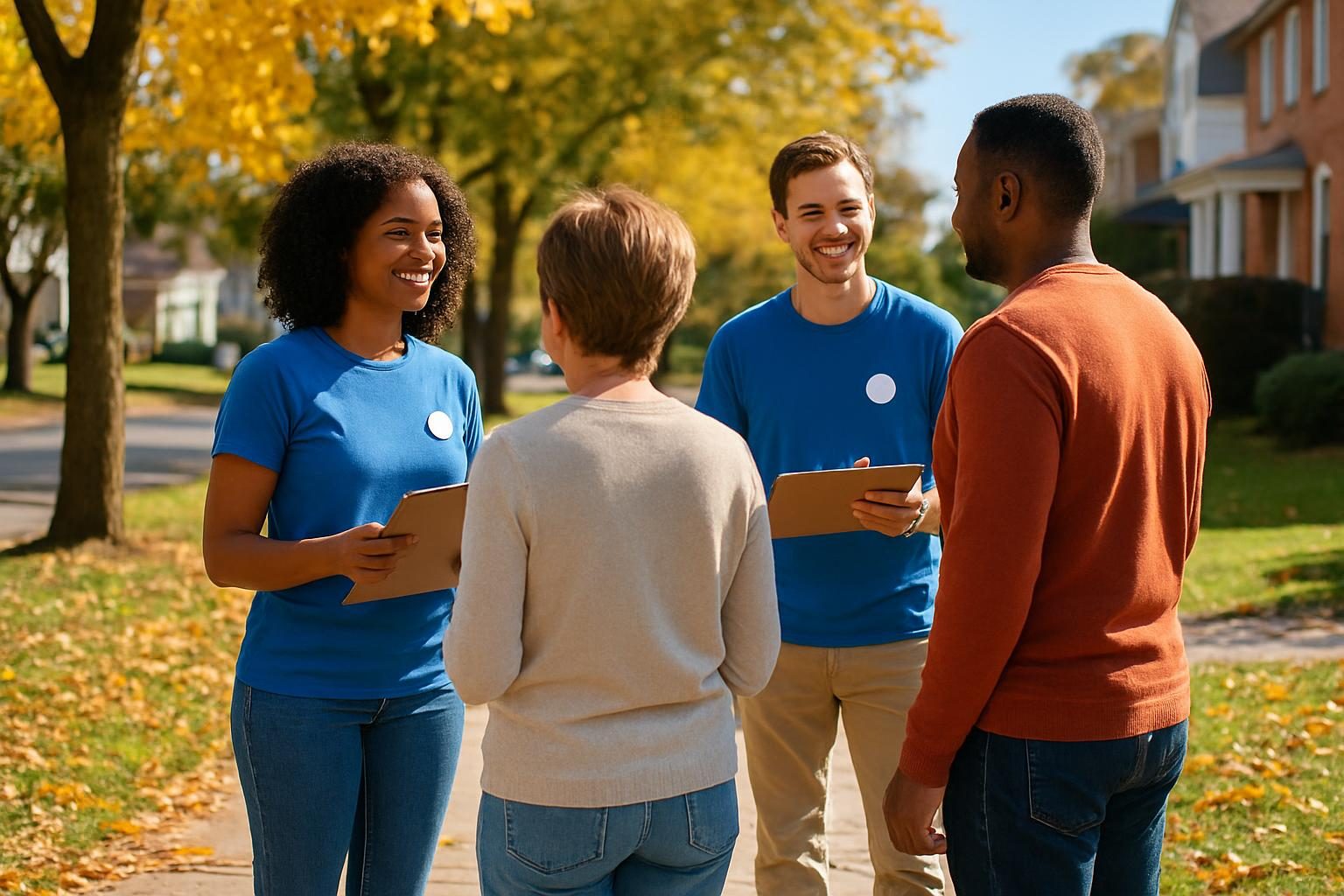
Here’s the encouraging part. Every one of these cycles came down to people doing ordinary, powerful things: registering, voting, knocking on doors and talking to friends. You don’t need a big title to matter.
The midterms are on Tuesday, November 3, 2026. Check your registration status and your state’s rules on vote.gov, or contact your state election office. Rules and deadlines differ by state, so confirm yours rather than guessing. Our simple guide to registering to vote in every state can help you get started.
Take action: Today, visit vote.gov and confirm you’re registered at your current address. Then text three friends or family members and ask them to do the same. Offer to go vote together.
If you want to go further, volunteer with a local campaign, a voter registration drive or a get-out-the-vote effort. Even a couple of hours of phone banking or door knocking adds up. And if you’re not sure which issues drive you, our overview of Democratic Party platform issues is a good place to start.
Key takeaways
- Midterms don’t pick a president, but they set the stage for the next race.
- The 2026 midterms are Tuesday, November 3, 2026, with all 435 House seats, about a third of the Senate and 36 governorships on the ballot.
- History from 2010, 2018 and 2022 shows midterm results are not a crystal ball for the presidency.
- As of October 5, 2026, no major Democrat has formally declared a 2028 run; names are potential only.
- The general election is Tuesday, November 7, 2028, with 270 of 538 electoral votes needed to win.
- Confirm your registration and voting rules on vote.gov or with your state election office.
Last updated October 2026. Dates and candidate news change fast; we update this page as things are announced.
Frequently asked questions
Do midterm results predict who will win the presidency?
Not reliably. Midterms tell us about the national mood and which party’s voters are fired up, but the presidential race has its own candidates, issues and electoral map. History shows the president’s party often struggles in midterms, yet presidents have won re-election after both good and bad midterm showings.
When are the 2026 midterm elections?
The 2026 midterms are on Tuesday, November 3, 2026. All 435 House seats, about a third of the Senate and 36 governorships are on the ballot. Check out 2026 House races to watch, then confirm your polling place and registration options on vote.gov or with your state election office.
How do midterms affect the 2028 presidential race?
They shape who holds power in Congress and in governors’ mansions, which sets the political terrain for 2028. They can also boost the profile of governors and senators who win big, and they build the volunteer and voter lists that campaigns use later. Midterms also help decide who controls state offices that run elections.
Has any candidate formally declared a 2028 Democratic run?
As of October 5, 2026, no major Democrat has formally declared a 2028 presidential run. Many names are widely reported as potential candidates, but those are not announcements. We update our candidate tracker as news breaks.
How do I make sure I can vote in the midterms?
Start at vote.gov, which has every state’s official registration rules, deadlines and online registration links. Deadlines and same-day registration rules differ by state, so confirm yours there or with your state election office as soon as possible.
Want more on the road ahead? Explore our full Midterms 2026 coverage and our 2028 presidential election hub.