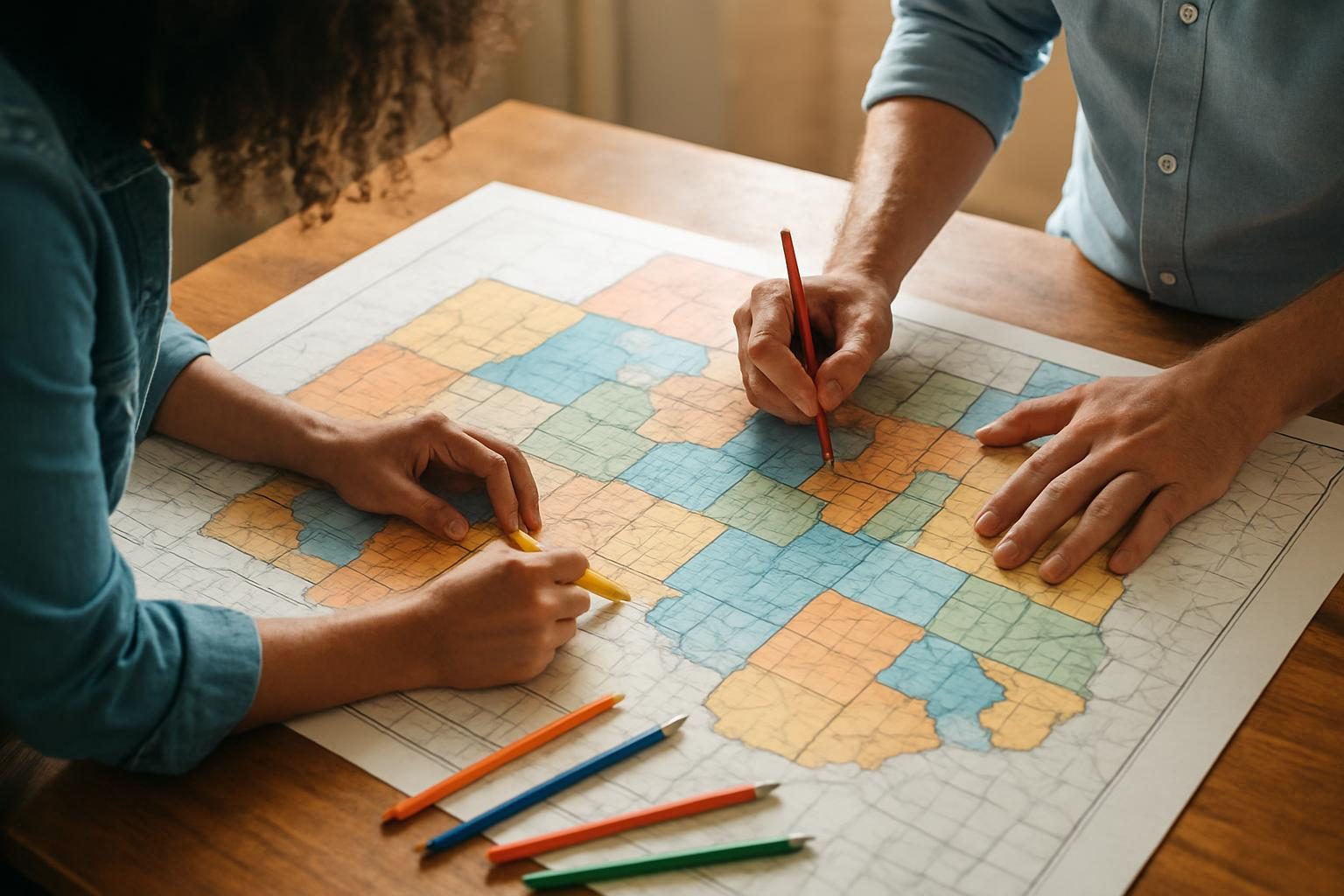
Imagine a game where one team gets to move the goalposts before kickoff. That is what happens when politicians pick their voters instead of the other way around. Gerrymandering explained simply: it is the practice of drawing district lines to rig outcomes, and it quietly shapes who holds power in Congress and statehouses across the country.
Our take: Gerrymandering lets mapmakers decide elections before voters speak, and it is bad for democracy no matter which party does it. We believe fair, transparent, independent map-drawing is one of the most important pro-democracy reforms available, and you can help by registering, voting and getting involved locally.
What is gerrymandering, exactly?
Every state with more than one U.S. House seat has to divide itself into districts. State legislatures also draw their own districts. Those lines decide which neighbors vote together and, often, which party is likely to win.
Gerrymandering happens when the people drawing those lines use that power to favor one party, one incumbent or one group over others. The word is a blend of an early American governor’s name and the salamander-like shape of a district drawn in his era. The tactic is old, but modern mapping software has made it far more precise.
That precision is the problem. With detailed voter data, mapmakers can predict how a district will vote down to the block. They can build safe seats and starve competitive ones.
How the trick works: packing and cracking
Two techniques do most of the work. They sound technical, but the idea is simple: waste the other side’s votes.
| Technique | What mapmakers do | Effect on voters |
|---|---|---|
| Packing | Cram opposing voters into a few districts | They win those seats by huge margins, but their votes are wasted beyond what was needed |
| Cracking | Split opposing voters across many districts | They fall just short in each one and win nothing |
Think of a state where voters are split roughly evenly. A fair map might produce a roughly even split of seats. A gerrymandered map can turn that same electorate into a lopsided delegation, with no one changing their mind.
The result is that the party drawing the map can win more seats than its share of votes would suggest. Voters in the disfavored party are told their voice counts, while the map quietly discounts it.
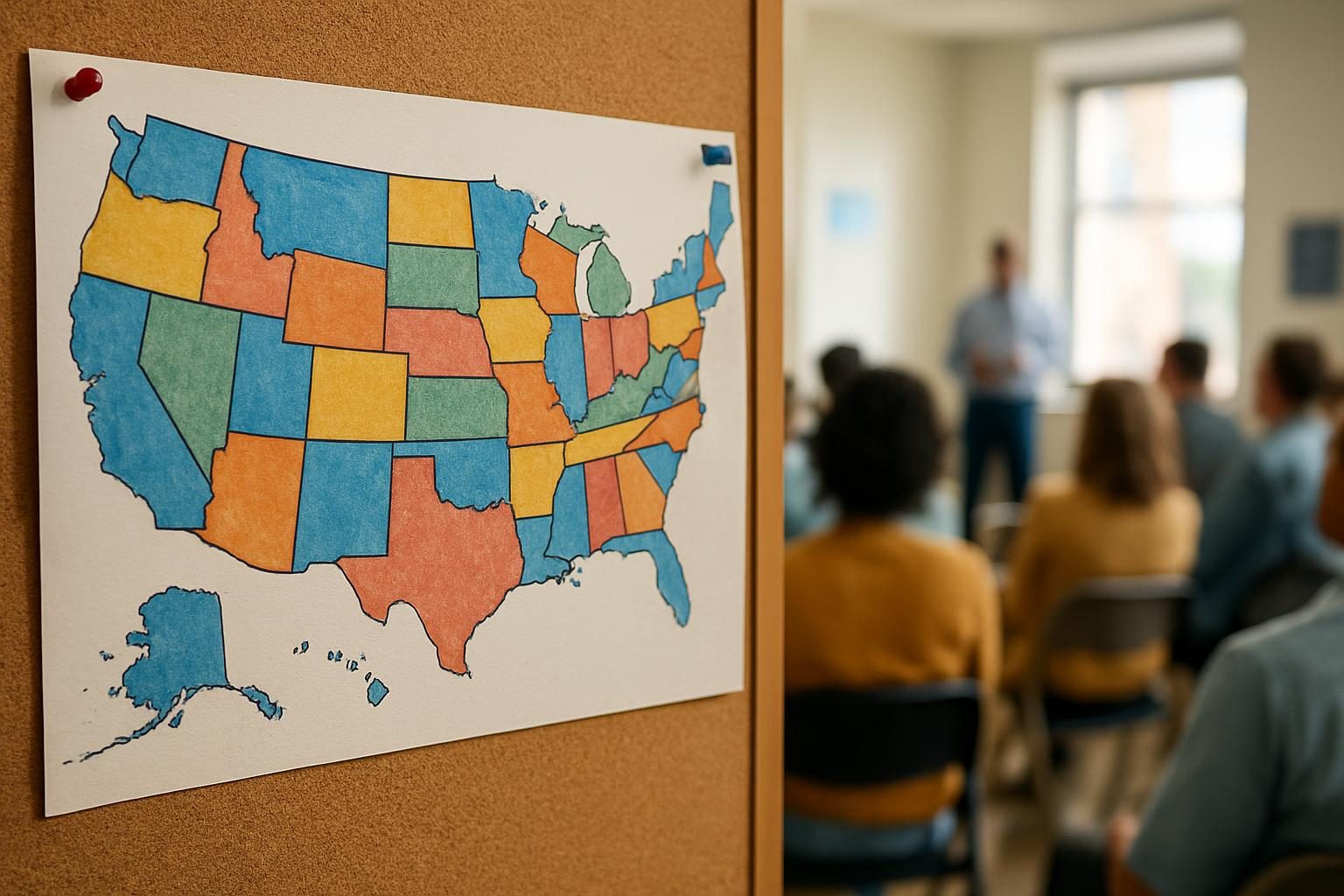
Why gerrymandering matters for 2028 and beyond
The presidency is decided by the Electoral College, and electors are awarded by state, so district lines do not directly pick the president. If you want the basics on that system, see our guide to how the Electoral College works and why 270 matters. The 2028 contest still runs on the map from the 2020 census apportionment.
But maps shape almost everything else around a president. They help decide who controls the House, who controls statehouses, and who writes the rules for elections in each state. A president with a hostile Congress built on lopsided maps will struggle to deliver on any promise.
That is why the 2026 midterms matter so much. The races on November 3, 2026 cover all 435 House seats, about a third of the Senate and 36 governorships, and they set the stage for the next round of map fights. Our 2026 midterm elections guide breaks down what is at stake for 2028.
When maps pick the winners, voters stop being the deciders and start being the audience.
Why this is a pro-democracy issue
Here is our view, clearly labeled as opinion: elections should be competitive enough that politicians have to earn your vote. Safe seats do the opposite. When a district is drawn so that one party is nearly guaranteed to win, the real contest moves to a low-turnout primary, and the general election becomes a formality.
That tends to reward the most extreme candidates and punish compromise. It also makes people feel like voting does not matter, which is corrosive for any democracy.
We also believe the fix should apply to everyone. Both parties have drawn aggressive maps when they held the pen. A principled reform movement says no one should get to pick their voters, and that includes Democrats. Standing for fair maps even when it costs us a seat is how we earn the credibility to demand it from others.
The strongest arguments on the other side
Fair debate means stating the opposing case at its best. Here are the serious arguments critics of reform make.
Redistricting is a legislative job
The Constitution gives states, and by extension their elected legislatures, significant authority over how elections are run. Opponents of independent commissions argue that handing map-drawing to unelected panels removes accountability. If voters dislike a map, they can vote out the legislators who drew it.
Unilateral disarmament is risky
Some argue that if one party adopts fair maps while the other keeps drawing partisan ones, the fair-play side simply loses seats. That is a real concern, and it is why many reformers push for national standards or action across multiple states at once rather than going it alone.
“Fair” is hard to define
Even good-faith mapmakers have to balance competing goals: keeping communities together, following county lines, honoring legal requirements and avoiding odd shapes. Reasonable people disagree on which goal comes first, and a neutral-looking map can still favor one party because of where people happen to live.
These are not silly objections. Our response is that independent commissions, clear public criteria and transparent data are better than leaving the pen in the hands of those who benefit. Accountability that only arrives after a decade-long map is locked in is not much accountability at all.
A fair map does not guarantee a win for anyone. It just guarantees that voters get a real say.
What a fairer system could look like
Reform does not require a single magic bullet. Advocates point to a handful of practical steps:
- Independent or bipartisan commissions that draw maps instead of the politicians who run on them.
- Clear, public criteria such as compactness, keeping communities together and respecting existing boundaries.
- Open meetings and public data so anyone can see how and why lines were drawn.
- Legal protections for voters, including the ones tied to civil rights law. Our upcoming explainer on the Voting Rights Act and why it still matters covers that history.
- Standards that apply across states so one side does not carry the burden alone.
States differ widely in how they draw maps today. Some use commissions, others leave it to legislatures, and the rules continue to change through legislation and court cases. We are not going to guess at current details here; check your state election office for how your own state does it, and we will update this page as developments are confirmed.
For a broader look at the party’s stance on democracy and elections, see our guide to Democratic Party platform issues, or browse everything in Issues & Ideas.
How maps connect to the big 2028 picture
It is tempting to treat redistricting as a nerdy side issue. It is actually upstream of nearly every policy fight. Health care, wages, climate and student debt all depend on who holds a majority. If you care about the Democratic health care plan or the Democratic economic agenda, the maps that decide Congress belong on your radar.
The same goes for the presidential race. No Major Democrat has formally declared a 2028 run as of our latest check, but the field of potential candidates is already being watched closely. Follow our 2028 Democratic candidates tracker and the 2028 presidential election hub for what is confirmed.
And remember that the voting itself starts early. The DNC approved its early window on August 15, 2026, beginning with South Carolina on January 22, 2028. Our 2028 Democratic primary calendar keeps every date in one place.

What you can do right now
You cannot redraw a map from your couch, but you can do a lot. Gerrymandering thrives when people tune out. It weakens when people show up, ask questions and pay attention to who is drawing the lines.
Take action: Check your registration today at vote.gov (find your state at https://vote.gov/register/STATE-NAME) or with your state election office, then text one friend and ask if they have checked theirs. Confirm deadlines and rules yourself; they vary by state.
Beyond that, get local. Redistricting hearings, commission meetings and legislative sessions are often sparsely attended, which means your voice carries real weight. Learn how to get involved in politics locally, or find out how to volunteer for a campaign that supports fair maps and strong turnout.
If you have never registered, start with our simple guide to registering in every state. And if you are curious how all of this fits into the long game, our look at the history of wave elections shows what happens when voters turn out in force.
The good news is that this problem has a solution, and the solution is people. Fair maps are built by engaged voters who refuse to be treated like an afterthought. That could be you, starting this week.
Key takeaways
- Gerrymandering is drawing district lines to favor a party or group, often by packing or cracking voters.
- It affects Congress and statehouses most directly, and that shapes what any president can accomplish.
- Critics of reform raise real concerns about accountability, unilateral disarmament and defining “fair.”
- We favor independent, transparent map-drawing that applies to both parties.
- Rules for voting and map-drawing vary by state; confirm yours at vote.gov or your state election office.
- Registering, voting and showing up locally are the most direct ways to fight back.
Last updated October 2026. Dates and candidate news change fast; we update this page as things are announced.
Frequently asked questions
What is gerrymandering in simple terms?
Gerrymandering is drawing electoral district lines to give one party or group an advantage. Mapmakers pick which voters go in which district, so they can influence outcomes before anyone casts a ballot.
What is the difference between packing and cracking?
Packing crams as many of the opposing party’s voters as possible into a few districts so they win those by huge margins. Cracking splits the opposing party’s voters across many districts so they fall short everywhere. Both waste their votes.
Does gerrymandering affect the presidential election?
Not directly, because presidential electors are awarded by state, not by congressional district (with limited exceptions in a couple of states). But maps shape who controls Congress and state legislatures, which affects election rules and the policies a president can pass.
Who draws district maps?
It depends on the state. In many states the legislature draws the maps, sometimes with a governor’s signature or veto. Other states use independent or bipartisan commissions. Check your state election office for how your state does it.
How can I find out if my district is gerrymandered?
Start by looking up your state’s process and current maps through your state election office. Then confirm your registration and polling information at vote.gov so you are ready to vote under whatever map applies to you.