★ Election Day 2028 is in 763 days  ·  Midterms in 28 daysRegister to vote →

Category: Issues & Ideas

Where Democrats stand on the big issues and how to get involved. Start with Democratic Party Platform Issues: Where Democrats Stand.

  • Minimum Wage Increase Debate: The Case and the Critiques

    Minimum Wage Increase Debate: The Case and the Critiques

    Millions of people work full time and still count every dollar before payday. The minimum wage increase debate is really a debate about what a day’s work should be worth in America. Here is our progressive case, the best arguments against it, and what you can do about it.

    Our take: We believe a higher, regularly adjusted wage floor is good policy: it rewards work, helps families cover basics, and puts money back into local economies. Serious critics raise real concerns about job impacts and regional cost differences, and we address them fairly below. The fight will be decided by who votes, so register and show up.

    Why the wage floor is back on the ballot

    The federal minimum wage is set by Congress, and lawmakers have not raised it in many years. Meanwhile, rent, groceries, child care and gas have kept climbing. A wage that stands still while prices move is a pay cut in slow motion.

    That stalemate in Washington pushed the fight to the states. Many states and cities have set their own higher wage floors, through the legislature or directly by ballot measure. The result is a patchwork where the same job pays very differently depending on which side of a state line you work on.

    That patchwork is part of why this issue sits at the center of the Democrats’ economy agenda. It is also a clear example of how elections change daily life, from the statehouse to the ballot box.

    Diner owner and employee reviewing a work schedule together

    The case for raising the minimum wage

    We make this argument from our own point of view, and we will say so plainly: this is opinion. Here is why we think a higher wage floor is the right call.

    Work should lift people out of struggle

    The core idea is simple. If you work hard, you should be able to afford a place to live and food on the table. Many people earning near the minimum are adults, not teenagers, and many are supporting families. A wage floor is a statement about the dignity of that work.

    Higher pay circulates locally

    Workers at the bottom of the pay scale tend to spend what they earn close to home: at the grocery store, the pharmacy, the corner repair shop. That spending supports local businesses. Supporters argue a raise is not just a cost to employers but also a boost to the customers who keep them open.

    It reduces the burden on public programs

    When wages are too low to cover basics, families often lean on public assistance to fill the gap. Advocates argue that a higher floor means employers carry more of the cost of their own workforce, rather than leaving taxpayers to cover it. That is a fairness argument as much as an economic one.

    Indexing ends the cycle of fights

    Many Democratic proposals tie future increases to living costs, so the wage floor adjusts automatically instead of requiring a new act of Congress every decade. We think that is smart. It takes a basic standard of living out of the political tug-of-war.

    A wage that stands still while prices climb is a pay cut in slow motion.

    What the strongest critics say

    A good argument has to face the best opposition, not a cartoon of it. Here are the strongest critiques, stated fairly.

    Job losses and reduced hours

    The classic concern is that when labor gets more expensive, employers hire fewer people or cut hours. Critics say this risk is greatest for the least experienced workers, who can lose a first rung on the ladder. Economists have studied this for decades and disagree, and the answer seems to depend on how large the increase is and how quickly it takes effect.

    One national number for very different economies

    Living costs in a big coastal city are not the same as in a small rural town. Critics argue that a single national floor could be too low for expensive areas and too high for cheaper ones, straining local businesses. This is a serious point, and it is why many proposals include phase-in periods and regional flexibility.

    Pressure on small businesses

    Small employers often run on thin margins and cannot absorb costs as easily as large chains. Opponents warn that sudden increases could force price hikes, closures, or automation. Supporters respond that gradual phase-ins and small-business support can ease the transition, but the concern deserves a real answer.

    Other tools might target help better

    Some critics prefer wage supplements for low-income workers, such as tax credits, arguing these direct help to those who need it most without touching hiring costs. Others favor training and education. These are sincere policy alternatives, not bad-faith arguments, and many policymakers see them as complements to a wage floor rather than substitutes.

    Where we land

    Our view: these critiques argue for smart design, not for doing nothing. Gradual phase-ins, indexing, and attention to small businesses can address the real risks. Leaving the floor frozen is also a policy choice, and it has costs of its own.
    State capitol dome at golden hour with a rally crowd below

    How the two sides compare

    Question Supporters of a higher floor say Critics say
    Jobs Moderate increases have shown modest or no job losses in many studies Larger or faster increases may cut hours or hiring
    Cost of living Wages have not kept pace with prices Costs vary widely by region, so one number may not fit
    Small business Phase-ins and customer spending soften the impact Thin margins make sudden increases risky
    Best tool A wage floor sets a basic standard for all work Tax credits or training may target help better

    Where Democrats and the 2028 field stand

    Raising the wage floor is a long-standing Democratic priority, and you can see how it fits alongside other goals on our page about Democratic Party platform issues. Details differ, including how high to go, how fast, and whether to index future increases.

    As for 2028, no major Democrat has formally declared a presidential run as of our latest check. Governors, senators and others are widely reported as potential candidates, and you can follow them in our 2028 Democratic candidates tracker. Their positions on the wage floor will take shape as the field does, and we will update this page as that happens.

    The calendar matters too. The DNC approved its early-window primary schedule on August 15, 2026, starting with South Carolina. You can see every date in our 2028 Democratic primary calendar.

    The wage floor is decided by whoever shows up, from the statehouse to the White House.
    Voter dropping a ballot into a ballot box at a polling place

    Why your vote decides this

    Because Congress has been stuck, much of the action has happened in states and cities. That means school board seats, city councils, statehouses and ballot measures shape what workers earn. Your vote reaches further on this issue than you might think.

    The next big test is the midterms on Tuesday, November 3, 2026, when all 435 House seats, about a third of the Senate and 36 governorships are on the ballot. Our guide to the 2026 midterm elections explains what is at stake for 2028 and beyond.

    Rules differ by state, so confirm your registration and deadlines on vote.gov (swap in your own state’s name at the end of the link) or with your state election office. Our guide to registering in every state walks you through it step by step.

    Take action: Check your registration status today on vote.gov, then text one friend or coworker and ask whether they are registered too. If you want to do more, see our starter guide to volunteering for a campaign.

    How to get involved beyond the ballot

    You do not need to run for office to move this issue. Show up at a city council meeting when wages or workers come up. Talk to neighbors who run small businesses and listen to what they need. Our guide to getting involved in politics locally has simple first steps.

    For a wider look at the topics shaping the next election, browse our Issues & Ideas section. And if you have ever thought about stepping up yourself, our beginner’s roadmap to running for local office is a good place to start.

    Key takeaways

    • The federal minimum wage is set by Congress, and the long stall has pushed the fight to states and cities.
    • Our view: a higher, indexed wage floor rewards work and supports local economies.
    • Serious critics raise job, regional cost and small-business concerns; smart design can address them.
    • No major Democrat has formally declared a 2028 run, so candidate positions are still forming.
    • Check your registration on vote.gov or with your state election office, and vote on Tuesday, November 3, 2026.

    Last updated October 2026. Dates and candidate news change fast; we update this page as things are announced.

    Frequently asked questions

    What is the federal minimum wage?

    The federal minimum wage is set by Congress, and it has not changed in many years, which is a big reason the debate keeps coming back. Many states and cities set higher wage floors of their own, so what you earn at the bottom depends heavily on where you live. Check your state labor department for the current rate where you work.

    Can states raise the minimum wage without Congress?

    Yes. States can set a wage floor above the federal one, and many have done so through legislation or ballot measures. Some cities and counties set their own higher rates too, where state law allows. That is why local and state elections matter so much on this issue.

    Do higher minimum wages cost jobs?

    Economists disagree, and the answer depends on how big the increase is, how fast it phases in, and the local economy. Supporters point to research finding modest or no job losses from moderate increases. Critics warn that large jumps, especially in lower-cost regions, could cut hours or hiring. We lay out both sides above.

    What do Democrats propose on the minimum wage?

    Democrats have broadly backed raising the federal wage floor and, in many versions, tying future increases to living costs. Specific proposals vary, and no 2028 presidential candidate has formally declared yet, so positions are still taking shape. We will update our coverage as candidates announce.

    How can I make sure I can vote on wage ballot measures and races?

    Confirm your registration status and deadlines on vote.gov or with your state election office. Rules differ by state, including whether same-day registration is available. Our registration guide walks you through the steps.

  • Student Loan Forgiveness Democrats: Where They Stand

    Student Loan Forgiveness Democrats: Where They Stand

    Tens of millions of Americans carry student debt, and for many of them it shapes everything: when they buy a home, start a business or start a family. Democrats have made relief a signature issue, but the party’s approach has been anything but uniform. Here is where student loan forgiveness Democrats back stands today, what has worked, what has stalled, and what is still wide open for 2028.

    Our take: Democrats are broadly united on the goal of easing the student debt burden, but divided on how: broad cancellation, targeted relief, or fixing college costs at the source. We think durable relief needs Congress, which makes the 2026 midterms and the 2028 primaries the moments that matter. No major Democrat has formally declared for 2028 yet, so the party’s next debt plan is still being written.

    Why student debt is a Democratic issue

    Student debt sits at the crossroads of several things progressives care about: economic opportunity, racial and generational equity, and the idea that education should be a ladder, not a trap. A degree is often sold as the path to the middle class. Yet many borrowers find themselves paying for years while balances barely move.

    That is why the issue shows up so often in Democratic Party platform issues and in the broader Democrats’ economy agenda. It touches household budgets directly, and it speaks to younger voters who are among the party’s most important and most persuadable supporters.

    Our view: debt relief is not a handout. It is a correction to a system that asked 18-year-olds to take on enormous obligations with little guidance and few protections.

    What Democrats have actually tried

    The record is a mix of administrative actions, program fixes and court fights. We will stick to the broad shape rather than numbers we cannot verify here.

    Executive action

    Democratic administrations have used the powers of the executive branch to adjust repayment programs and to pursue cancellation for certain groups of borrowers. Some of these efforts delivered real relief to real people. Others ran into legal challenges over how far a president can go without new legislation.

    Repayment and program reforms

    Beyond cancellation, Democrats have pushed to make income-driven repayment more manageable and to fix programs that were supposed to help public servants and defrauded students but were hard to access in practice. These are less flashy than a headline cancellation number, but they change monthly bills and long-term balances for many borrowers.

    Legislation

    Congressional Democrats have introduced proposals ranging from broad cancellation to more targeted relief and to tuition-free or debt-free college. Broad cancellation has not become law. That gap between what voters want and what Congress has passed is the heart of the story.

    Friends discussing household finances and student debt around a kitchen table

    Where the party splits

    It is a mistake to say “Democrats believe X” about student debt, because there is a genuine range. Here is a simplified map of the main camps.

    Approach Core idea Main appeal Main challenge
    Broad cancellation Wipe out a large share of federal student debt Big, immediate relief; simple message Cost, fairness questions, legal authority
    Targeted relief Focus on specific groups such as lower-income borrowers or those defrauded by schools More focused spending; easier to defend Complexity; some borrowers fall through the cracks
    Repayment reform Make monthly payments affordable and balances actually fall Helps future borrowers too Slower, less visible results
    Lower college costs Tuition-free or debt-free college, more public funding Prevents the problem from growing Requires sustained funding and state buy-in

    Many Democrats support more than one of these at once. The real debate is about priority, price tag and what can survive in court and in Congress.

    Relief that depends on a single court ruling or a single election is relief that can disappear overnight.

    The strongest arguments against broad forgiveness

    A serious case for relief should take the critics seriously. Here are the strongest objections, stated fairly.

    Fairness. Some argue it is unfair to people who already paid off their loans, chose a cheaper school, or never went to college. Why should they help cover someone else’s debt?

    Cost to taxpayers. Cancellation is not free. Critics, including some budget-minded voices in both parties, argue the money could be spent on other priorities or that large one-time costs add to deficits.

    It does not fix tuition. If prices keep rising, cancellation could be a one-time bandage on a wound that keeps reopening. Without reform, new borrowers could end up in the same place.

    Who benefits most. Some argue that broad cancellation can help people who go on to earn high incomes, such as those with graduate degrees, more than those who never finished college and still owe money.

    Legal authority. Even some supporters of relief worry that unilateral executive action invites court challenges and sours the public on the idea if it is struck down.

    How we respond

    Our view is that most of these points are arguments for better design, not for doing nothing. Targeting relief, pairing it with cost controls and passing it through Congress can answer the fairness, cost and legal concerns at once. Reasonable people can disagree about how much to forgive and who should qualify, and we expect that debate to continue through the primaries.

    State capitol dome at golden hour symbolizing legislative action on student debt

    Why Congress matters more than any single candidate

    Executive actions can be paused, challenged or reversed. Laws are sturdier. If you want relief that lasts, the most reliable path is legislation, and that depends on who controls the House and Senate.

    That is why the 2026 midterm elections matter so much. Every House seat and about a third of the Senate are on the ballot on Tuesday, November 3, 2026. The majority that emerges will set the terms for what is possible on student debt, on health care and on the economy.

    Maps matter too. How districts are drawn shapes who wins, and we explain the stakes in our guide to gerrymandering.

    Take action: Check your registration status today at vote.gov and confirm your details with your state election office. If you carry student debt, tell one friend who does too. A conversation at the kitchen table is how turnout starts.

    What the 2028 field might say

    As of our latest check, no major Democrat has formally declared a 2028 presidential run. That means there are no official campaign plans on student debt yet, and we are not going to guess at them.

    Widely reported potential candidates include governors such as Gavin Newsom, Josh Shapiro, JB Pritzker, Gretchen Whitmer and Andy Beshear, along with Pete Buttigieg, Kamala Harris, Alexandria Ocasio-Cortez, Cory Booker, Raphael Warnock, Ruben Gallego, Mark Kelly, Elissa Slotkin, Chris Van Hollen and Ro Khanna. They are potential candidates only. Some have records on higher education and debt, and voters will have a chance to compare them if and when they enter.

    Follow who is weighing a bid on our 2028 Democratic candidates tracker, and see the full picture on our 2028 presidential election hub.

    Questions worth asking every candidate

    1. Do you support broad cancellation, targeted relief or both, and how would you pay for it?
    2. How would you make sure relief survives court challenges?
    3. What will you do to stop tuition and borrowing from growing again?
    4. How will you fix repayment programs that already exist so borrowers can actually use them?
    5. What is your plan for people who owe money but never finished a degree?

    Primaries are where the party decides what it will fight for. Showing up is how your priorities make the list.

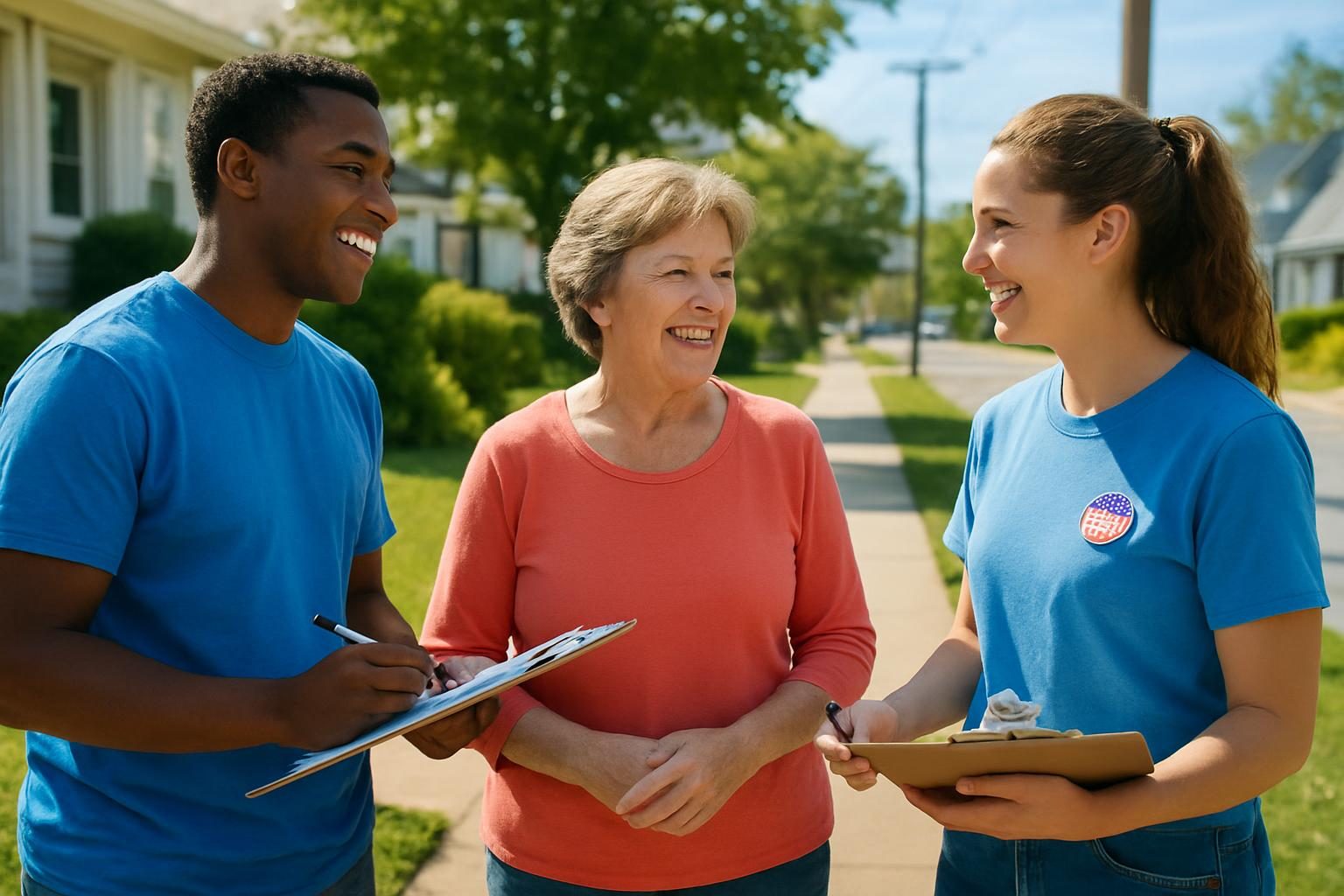
    Volunteers canvassing a neighborhood to encourage voter participation

    Where your voice counts: primaries and conventions

    The Democratic primary season begins early in 2028. The DNC approved the early window on August 15, 2026: South Carolina on January 22, Nevada on February 1, New Hampshire on February 8, New Mexico on February 15, Michigan on February 22 and Virginia on February 29. Super Tuesday is March 7, 2028. Iowa is not in the Democratic early window. Every date is on our 2028 Democratic primary calendar.

    New Hampshire state law requires it to hold the first primary in the nation, which clashed with the DNC calendar in 2024, so watch for changes. Our New Hampshire primary explainer tracks it.

    If you want to understand how delegates are won, read how presidential primaries work. The party then gathers at the 2028 Democratic National Convention on August 7-10, 2028, with Boston, Denver and Philadelphia as finalist host cities. The final pick is expected later in 2026, and we will update when it is announced. More at our convention guide.

    Student debt in the bigger economic picture

    Debt relief does not stand alone. It connects to wages, housing and health costs, and Democrats are weighing how these fit together. Related debates include the minimum wage increase debate and our look at the Democratic health care plan.

    Our view is that a message about affordability is strongest when it ties these pieces together. Voters feel one budget, not separate policy silos.

    How to make this count

    Opinions are not votes. Here is how to turn your concern about student debt into power.

    • Register and check your status. Rules and deadlines differ by state. Confirm on vote.gov or with your state election office. Our registration guide walks through it.
    • Vote on November 3, 2026. Congress is where lasting relief gets written.
    • Volunteer. Start with our campaign volunteer starter guide.
    • Get local. School boards, state legislatures and public universities all shape college costs. See how to get involved locally.

    For more on where the party stands across issues, browse our Issues & Ideas section.

    Key takeaways

    • Democrats broadly agree on easing student debt but differ on cancellation, targeting and cost reform.
    • Lasting relief likely needs Congress, because executive actions can be challenged in court.
    • The strongest critiques center on fairness, cost, tuition growth and legal authority, and they deserve real answers.
    • No major Democrat has formally declared for 2028, so official student debt plans are not out yet.
    • The 2026 midterms are on November 3, 2026, and your registration status is the first thing to check.

    Last updated October 2026. Dates and candidate news change fast; we update this page as things are announced.

    Frequently asked questions

    What is the Democratic position on student loan forgiveness?

    There is no single position. Many Democrats support broad forgiveness, others prefer targeted relief for specific groups, and some focus on lowering college costs going forward. Party-wide messaging is still being worked out, and no 2028 platform exists yet.

    Have any 2028 Democratic candidates announced a student debt plan?

    No. As of our latest check, no major Democrat has formally declared a 2028 presidential run, so there are no official campaign plans yet. We track potential candidates on our Democratic candidates page and will update this article as policies are announced.

    Why have forgiveness efforts run into legal trouble?

    Executive-branch efforts at broad cancellation have faced court challenges over how much authority the president has to cancel debt without a new law from Congress. That is a big reason many advocates argue lasting relief needs legislation, which makes congressional elections matter.

    What are the main arguments against broad forgiveness?

    Critics raise fairness to people who already paid or never borrowed, cost to taxpayers, and the concern that cancellation does not stop tuition from rising. Supporters answer that relief can be paired with college-cost reforms, but the debate is real and worth hearing out.

    How can I influence where Democrats go on student debt?

    Register and vote in the 2026 midterms and the 2028 primaries, then show up for candidates whose plans you believe in. Confirm your registration status on vote.gov or with your state election office, and consider volunteering or attending local meetings.

  • Democrats Climate Policy: What Passed and What’s Next

    Democrats Climate Policy: What Passed and What’s Next

    Democrats have spent years turning climate promises into laws, tax credits and factories. Now the fight is over what survives, what comes next and who gets to decide. Here is a clear look at Democrats and climate policy, and why your vote in 2026 and 2028 shapes the answer.

    Our take: Democratic climate policy has moved from slogans to real law, most notably the 2022 Inflation Reduction Act, and the next chapter will be decided at the ballot box. We think the strongest path pairs clean energy with jobs, lower bills and cleaner air, and that voters who register, show up and organize are what make it possible.

    What Democrats have actually passed

    For decades, climate action in Washington meant hearings and failed bills. That changed in 2022, when Democrats in Congress passed the Inflation Reduction Act and a Democratic president signed it. It is widely described as the largest federal climate investment in US history.

    The law relied mostly on incentives rather than mandates. Tax credits and grants were aimed at clean electricity, electric vehicles, home efficiency upgrades and domestic manufacturing of things like batteries and solar components. The idea was simple: make clean energy cheaper and build more of it here.

    Democrats also supported earlier investments in roads, bridges, transit, grid upgrades and electric vehicle charging through the bipartisan infrastructure law of 2021. Not every Democrat thought these laws went far enough, and we will get to that debate below. But together they marked a real shift from talking to building.

    Beyond Congress

    A lot of climate policy happens outside Capitol Hill. Democratic governors, legislatures and mayors have set clean electricity goals, updated building codes, expanded transit and invested in resilience against floods, fires and heat. State action matters because it can move faster than Washington and show what works.

    That is one reason local elections matter so much. Utility regulators, zoning boards and city councils quietly decide how fast clean energy gets built in your community. Our guide to getting involved in politics locally shows how to take part without running for anything.

    Climate policy is not only a Washington story. It is also a story about your utility board, your city council and your ballot.

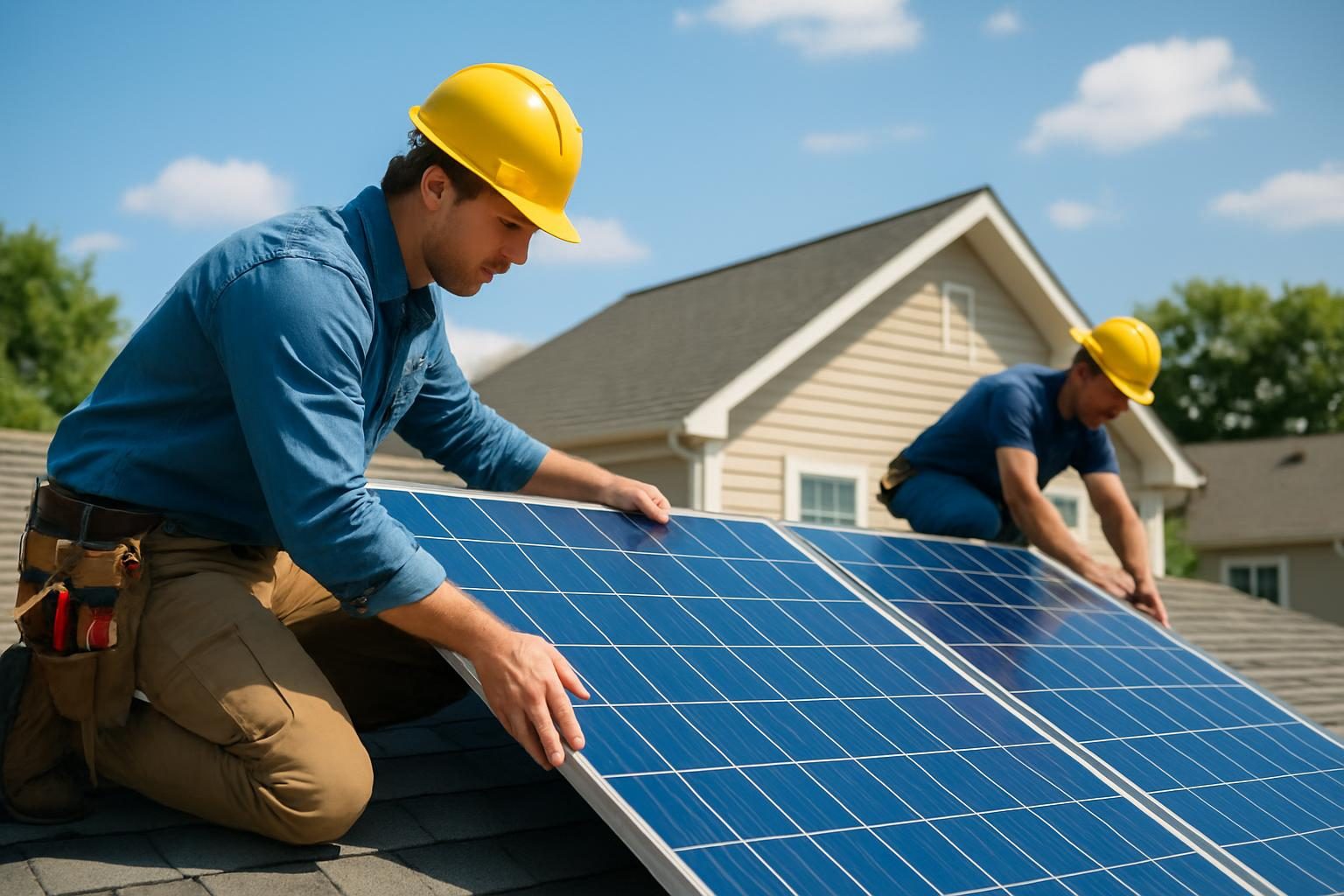
    Workers installing rooftop solar panels on a suburban home

    The Democratic case for climate action

    Here is the argument we find most persuasive, and it is our opinion, not a settled fact: climate policy is economic policy. Building clean energy means construction, manufacturing, electrical work and long-term demand for skilled trades. Efficient homes and cheaper power can lower household costs over time.

    There is a health case too. Cleaner air means fewer asthma triggers and less pollution in neighborhoods that have lived near highways, ports and power plants for generations. And there is a security case: producing more energy at home, from more sources, makes communities less exposed to price shocks overseas.

    Democrats also frame climate as a question of fairness. The people hit first and hardest by heat, floods and pollution are often those with the fewest resources to recover. Good policy should reach them first, not last.

    Where Democrats still disagree

    Democrats are united on the problem and divided on the tools. That is healthy, and it will play out in the 2028 primary. Here are the main fault lines.

    Debate One view Another view
    Carbon pricing Put a price on pollution and let markets do the work Rely on public investment and standards, not new costs on families
    Permitting reform Speed up approvals so clean energy and transmission lines get built Keep strong environmental and community review in place
    Scale of the agenda Go bigger and faster, in the spirit of the Green New Deal framework Focus on achievable steps that can win votes in Congress
    Fossil fuel transition Set firm phase-out goals Move gradually and protect workers and regions that depend on energy jobs

    The Green New Deal, introduced as a House resolution in 2019, is a good example. It was a statement of goals linking climate action with jobs and fairness, not a detailed bill. Democrats still argue about how much of it to adopt and how to pay for it.

    These debates connect to the broader economic agenda, including wages and worker protections. For the full picture, see our explainer on the Democrats’ economy plan.

    The strongest arguments from the other side

    Good democracy means taking opposing arguments seriously. Here are the strongest ones critics raise, stated fairly.

    1. Cost and prices. Critics argue that climate policies can raise energy costs, and that households and small businesses feel those costs before they see benefits. They say affordability should come first.
    2. Reliability. Some argue that moving too quickly away from fossil fuels risks strains on the grid, especially during extreme weather. They want firm, always-available power prioritized.
    3. Government spending. Fiscal conservatives question whether large federal subsidies are the best use of taxpayer money, and whether markets would deliver cleaner energy without them.
    4. Jobs and communities. Lawmakers from energy-producing regions warn that fast transitions can hurt workers and towns that depend on oil, gas and coal. Some of these concerns are shared by Democrats from those areas.
    5. Global emissions. Some argue that US action alone cannot solve a global problem, and that policy should weigh what other large emitters do.

    Our view is that these concerns deserve real answers rather than dismissal. That means keeping a close eye on bills, building the grid alongside new generation, and investing in the workers and places most affected. Climate policy wins when people can see that it helps them.

    Climate policy wins when people can see what it does for them: steadier jobs, cleaner air and lower bills.

    Residents at a community town hall meeting about local energy

    What is next: the fight over durability

    The biggest question now is whether these policies last. Laws passed by one majority can be changed by the next, and climate tax credits and agency rules have been targets of repeal and rollback efforts. Because the details keep shifting, check current reporting for what is in force today.

    That is why elections are climate policy. The 2026 midterms, held Tuesday, November 3, 2026, will decide all 435 House seats, about a third of the Senate and 36 governorships. Control of Congress shapes what can be protected, expanded or undone. We cover the stakes in our 2026 midterm elections guide.

    Beyond that, the 2028 general election is Tuesday, November 7, 2028, and the new president takes office January 20, 2029. Climate will be one of the issues Democratic candidates are asked about from the first debate on.

    What to watch in the 2028 field

    No major Democrat has formally declared a 2028 run as of this writing. Several governors, senators and former officials are widely reported as potential candidates, and each has a different climate record and style. Our 2028 Democratic candidates tracker follows who is considering a run, and we will update it as announcements happen.

    Here is what we suggest listening for: Do they have a plan to lower energy bills? Do they talk about workers and rural communities? Do they have a realistic path through Congress, or through states and agencies? Specifics matter more than slogans.

    The calendar also matters. The DNC approved its early window in August 2026, starting with South Carolina on January 22, 2028, and Nevada on February 1. Our 2028 Democratic primary calendar lists every date so far, and climate questions will be asked in those early states.

    Volunteers canvassing a neighborhood sidewalk on a sunny day

    Why climate is also a democracy issue

    Climate policy depends on a working democracy. If maps are drawn to protect incumbents and voting is made harder, public opinion on clean air and clean energy has a tougher time turning into law. That is why we link climate to the basics of fair elections.

    Our explainers on gerrymandering and the Voting Rights Act show how the rules of the game shape the policies we get. Fair maps and open access to the ballot are climate policy, in the sense that they decide who is heard.

    For a wider look at where the party stands across issues, see Democratic Party platform issues, and browse more in the Issues & Ideas section.

    How you can help

    You do not need to be an expert to matter here. Elections are won by people who show up, knock on doors, make calls and bring friends along. Here is a simple starting list:

    • Check your registration. Every state’s rules, deadlines and online registration links are on vote.gov, and you can swap in your own state name in the web address. Confirm your deadline there or with your state election office.
    • Vote in every election. Local and state races decide utilities, zoning and building codes.
    • Volunteer. Our starter guide to volunteering for a campaign walks through what to expect.
    • Bring a friend. A personal conversation is more persuasive than any ad.

    Take action: Take five minutes today to confirm your voter registration on vote.gov or with your state election office, then text one friend and ask whether they are registered too. Our guide to registering in every state makes it easy.

    Key takeaways

    • The 2022 Inflation Reduction Act is widely described as the largest federal climate investment in US history, built mostly on incentives.
    • Democrats agree on the problem but debate the tools, from carbon pricing to permitting reform to the scale of the agenda.
    • Critics raise real concerns about costs, reliability, spending and affected workers, and we think they deserve real answers.
    • Laws can be undone, so elections, including the November 3, 2026 midterms, decide how long climate policy lasts.
    • No major Democrat has formally declared for 2028 yet; check our tracker for updates.
    • Confirm your registration on vote.gov and get involved locally; that is where change starts.

    Last updated October 2026. Dates and candidate news change fast; we update this page as things are announced.

    Frequently asked questions

    What is the biggest climate law Democrats have passed?

    The Inflation Reduction Act, signed in 2022 under a Democratic president and Congress, is widely described as the largest federal climate investment in US history. It used tax credits, grants and loans to encourage clean energy, electric vehicles, efficiency upgrades and domestic manufacturing. Parts of it have been the target of repeal and rollback efforts since, so check current reporting for what remains in force.

    Do all Democrats agree on climate policy?

    No. Democrats broadly agree that climate change is real, human-caused and urgent, but they debate the tools. Some favor a carbon price, others prefer public investment and standards, and others emphasize permitting reform to build clean energy faster. Potential 2028 candidates have not laid out final platforms, and we will update this page as they do.

    What is the Green New Deal?

    The Green New Deal is a framework, introduced as a House resolution in 2019, that links climate action with jobs and economic fairness. It was a statement of goals, not a detailed law, and Democrats disagree about how much of it to adopt. It remains a reference point in primary debates.

    Can climate policy really change who wins elections?

    It can matter, especially when framed around jobs, energy bills and health. We think climate works best as part of an economic message that voters can feel in their communities. What moves any given voter varies by place, so local organizing and listening matter.

    How can I influence climate policy as a voter?

    Start by confirming your registration on vote.gov or with your state election office, then vote in every election, including local ones where utilities, zoning and building codes are decided. You can also volunteer with campaigns, attend local meetings and talk with neighbors. Our guides to getting involved locally and volunteering are good places to begin.

  • How to Run for Local Office: A Beginner’s Roadmap

    How to Run for Local Office: A Beginner’s Roadmap

    The politicians who shape your daily life are not in Washington. They are on your city council, your school board, your county commission, and your water district. And many of those seats are decided by a handful of votes, sometimes with no challenger at all.

    If you have ever thought “I could do better than this,” this guide is for you. Here is how to run for local office, step by step, and why we think more progressives should.

    Our take: Running for local office is more doable than most people think, and it matters more than most people realize. Pick a seat that fits your life, learn your local filing rules from your official election office, build a small team, talk to a lot of neighbors, and start early. Progressive change often begins right here, close to home.

    Why local office matters so much

    Local governments decide things you feel every single day: zoning and housing, policing and public safety, school budgets, parks, libraries, transit, and how your tax dollars get spent. A school board vote can change what your kids learn. A zoning vote can decide whether your neighbors can afford to stay.

    It is also where future leaders learn the craft. Many of the people now mentioned as potential 2028 presidential candidates, from governors to senators, started somewhere smaller. You can see who is being discussed in our 2028 Democratic candidates tracker, but remember that nobody major has formally declared yet.

    Here is our view: a healthy democracy needs more people from more walks of life at the table. That means more renters, more nurses, more teachers, more young people, and more working parents, not fewer.

    The seat closest to your kitchen table often has the most power over your daily life.

    Residents attending a city council meeting in a small town chamber

    Step 1: Choose the right seat

    Not every office is the same. Before you decide, learn what each body actually does, how often it meets, and whether the job is paid, part-time, or full-time. Attend a few meetings first. Watch how decisions are made and who shows up.

    Common local offices to consider

    Office What it usually handles Good fit if you care about
    School board School budgets, curriculum policy, hiring the superintendent Education, kids, equity
    City or town council Local laws, budgets, zoning, services Housing, transit, public safety
    County commission or board County budgets, health services, roads, courts support Public health, infrastructure
    Special districts Water, parks, libraries, fire protection Utilities, public spaces
    Local party committee Party organizing, delegate selection, candidate recruitment Building the movement

    Titles and powers differ from place to place, so check how your own community is set up. Your city or county website is a good starting point.

    Step 2: Check the basics before you commit

    Every office has its own rules. Residency requirements, age limits, filing paperwork, petition signatures, and deadlines all vary by state and locality. We will not guess at yours, because the details matter and the consequences of missing one are real.

    Your county or state election office is the authority here. Ask them which offices are up, what the requirements are to appear on the ballot, and what the filing calendar looks like. This is not legal advice, just a plain recommendation to get the rules straight from the source.

    You also need to be registered where you live. If you are not sure of your status, start at our simple guide to registering in every state, or go straight to vote.gov for your state’s official rules and links.

    Step 3: Learn your community before you pitch it

    The strongest local campaigns start with listening. Spend a few weeks talking to neighbors, small business owners, teachers, faith leaders, and union members. Ask what is working and what is not.

    Then do your homework on the issues. Read the budget. Read the meeting minutes. Find out who has been winning, who has been running unopposed, and why. You do not need to be an expert on everything, but you should know the basics of the seat you want.

    • Read the budget: it shows what your government truly values.
    • Attend meetings: watch how votes happen and who speaks.
    • Talk to current officeholders: ask what the job really takes.
    • Find allies: civic groups, neighborhood associations, and unions can be crucial partners.

    If you want to build relationships first, our guide to getting involved in politics locally is a great warm-up, and you do not need to run to use it.

    You do not need a perfect résumé. You need to show up, listen, and keep showing up.

    Volunteers making calls in a busy local campaign office

    Step 4: Build your team and your message

    No one wins alone. Even a small local race needs a few reliable people: someone to help with scheduling and logistics, someone to keep the books clean, and a handful of volunteers willing to knock on doors.

    Your message in one sentence

    Voters should be able to tell, in a sentence, who you are and why you are running. “I am a teacher and a parent, and I want our schools to have the resources our kids deserve” beats a long list of vague promises. Keep it real and keep it local.

    Where progressive values fit

    Many progressive priorities show up at the local level in practical ways: affordable housing, fair wages for city workers, public health, clean water, and safe streets. National debates, such as the ones in our explainers on the Democratic economy agenda and health care plans, often have a local version. A debate over a local minimum wage proposal or climate resilience planning can be won or lost in a city hall.

    Step 5: Handle the money and the paperwork carefully

    Campaign finance rules apply even to small local races. Many places require you to register a committee, open a dedicated bank account, and file regular reports. Rules on contribution limits and disclosure differ widely.

    The safest approach is simple: keep personal and campaign money separate, record everything, and ask your local election office or ethics commission what applies to you. Mistakes here can be costly, so do not rely on guesswork or advice from a friend of a friend.

    On fundraising, most local candidates start with people they know and grow from there. Small contributions from many neighbors can matter just as much as the dollar total, because they signal real support.

    Step 6: Run a campaign built on conversations

    In local races, the most powerful tool is still a real conversation. Knock on doors. Make calls. Show up at community events. Many voters have never been asked their opinion by someone running for office, and they remember it.

    Volunteers are the engine of any grassroots campaign. If you are looking to build or join a team, our starter guide to volunteering for a campaign explains the basics from the other side of the clipboard.

    Take action: This week, look up your city council or school board schedule and attend one meeting. Then check that you are registered at your current address at vote.gov. Bring a friend.

    Neighbors walking into a lakeside town hall at dusk for a community meeting

    The strongest arguments against running (and our answers)

    It is worth taking the skeptics seriously. Here are the best objections we hear, stated fairly.

    “Local politics is thankless and the pay is low”

    This is true in many places. Many local offices pay little or nothing, and the hours can be long. That is a real barrier, and it tends to favor people with flexible jobs or family wealth. Our response: that is exactly why we need to make these seats more accessible, through fair stipends, evening meetings, and childcare support, and why more working people should run.

    “My one voice won’t change anything”

    Local bodies are small, so a single member can make a real difference by asking questions, proposing amendments, and building coalitions. Even losing a race can shift the conversation and build a base for the next one.

    “I’d rather volunteer than run”

    That is a great choice, and campaigns need volunteers. But volunteering and running are not rivals. Many candidates start as organizers. If you are not ready to run yet, back someone you trust, and keep the door open.

    “Party politics will poison local government”

    Some people argue that local government should be nonpartisan and that party labels distract from practical problems like fixing roads. They have a point, and many local offices are indeed nonpartisan. Still, values shape choices on housing, schools, and budgets. We believe being open about your values is more honest than pretending they do not exist.

    Think beyond one election

    Elections do not happen in a vacuum. Local officials often influence voter access, polling places, and how districts are drawn. If you care about fair maps, read our explainer on how gerrymandering decides elections. For the bigger picture of why every level matters, see our look at what is at stake in the 2026 midterms, and our 2028 presidential election hub for what comes next.

    For more on the values behind this work, browse our Issues & Ideas section or read about where Democrats stand on the big issues. Debates like student debt relief also play out in local politics, from community college boards to city hiring policies.

    Key takeaways

    • Local offices shape housing, schools, safety, and budgets, and many seats are decided by very few votes.
    • Choose a seat that fits your life, and attend meetings before you file.
    • Get filing rules, deadlines, and campaign finance requirements from your county or state election office, not guesswork.
    • Build a small, reliable team and a clear one-sentence message rooted in your community.
    • Conversations with neighbors, at doors and events, are the heart of a local campaign.
    • Register, vote, and volunteer even if you are not ready to run yet; every step builds the movement.

    Last updated October 2026. Dates and candidate news change fast; we update this page as things are announced.

    Frequently asked questions

    Do I need political experience to run for local office?

    No. Many local candidates are first-timers: teachers, nurses, small business owners, renters, and parents who got involved after a neighborhood issue. Experience in your community, from PTA meetings to tenant associations, counts for a lot. Showing up to meetings and listening is the best preparation.

    How do I find out which local offices are on my ballot?

    Start with your county or state election office, which can tell you which offices are up and when. You can also check your registration status and find official election contacts through vote.gov. Many city and county websites also post upcoming election calendars.

    How much money do I need to run for city council or school board?

    It varies enormously by place and office. Some small-town races are won with volunteers, door knocking, and modest budgets, while big-city races cost far more. Your local election office or ethics commission can explain the campaign finance rules and reporting requirements that apply to you.

    Can I run for local office if I work a full-time job?

    Often yes, since many local offices are part-time and some are only lightly paid. Check the time commitment of the seat, including meeting schedules, before you commit. Talk with current officeholders about what the job really demands.

    Are local elections partisan?

    It depends on where you live. Some cities, counties, and school districts hold nonpartisan elections, where party labels do not appear on the ballot, while others are partisan. Your local election office can tell you how the office you want is elected.

  • How to Volunteer for a Political Campaign: A Starter Guide

    How to Volunteer for a Political Campaign: A Starter Guide

    Every vote you see counted on election night began with a person who knocked on a door, made a call or sent a text. Campaigns run on people, and the people who show up are often neighbors who had never done it before. If you have ever thought, “I should do something,” this guide is for you.

    Our take: Learning how to volunteer for a campaign is one of the most effective things an everyday voter can do. Pick a race you care about, contact the campaign or your local Democratic Party organization, choose a role that fits your schedule (canvassing, phone banking, texting, data entry or voter registration help), and start with one shift. We think volunteering is democracy at its best, and it is open to almost anyone.

    Why volunteering matters more than you think

    It is easy to believe that elections are decided by money, ads and consultants. Those things matter. But the oldest and most trusted form of persuasion is still a real person saying, “Hi, I’m your neighbor, and here’s why this election matters.”

    Our view: a democracy is only as strong as the number of people willing to take part in it. Voting is the minimum. Volunteering is how you help everyone else do it too, from checking that a friend is registered to reminding a neighbor about Election Day.

    And the timing is right. The 2026 midterm elections are on Tuesday, November 3, 2026, with all 435 House seats, about a third of the Senate and 36 governorships on the ballot. The final stretch of any campaign is when volunteers matter most. For the big picture, see our guide to the 2026 midterm elections and what is at stake for 2028.

    Volunteers making phone calls in a busy campaign field office

    Step 1: Pick the race (and the cause) that moves you

    You do not need to start with the presidency. Some of the highest-impact work happens in races you may never see on cable news: a state legislative seat, a county office, a school board contest, a ballot measure on climate policy, or other local ballot measures.

    Ask yourself three questions:

    1. What issue gets you fired up? Health care, the economy, voting rights, education, climate. Our explainer on where Democrats stand on the big issues can help you sort out your priorities.
    2. Which race is closest to home? Local and state races often have small teams, so a single volunteer can make a visible difference.
    3. Which candidate or organization shares your values? Read their website, their record and their platform before you sign up.

    Where to look

    Start with your candidate’s official website and look for a “volunteer” or “get involved” page. Then check in with your county or state Democratic Party organization, which often coordinates volunteers across many races at once. If you are not sure who will be on your ballot, your state or local election office can tell you.

    If you want to go beyond one campaign, our guide to getting involved in politics locally, no run needed has more ideas.

    Voting is the minimum. Volunteering is how you help everyone else do it too.

    Step 2: Choose a role that fits your life

    Campaigns need far more than people who enjoy knocking on doors. Whatever your personality or schedule, there is probably a job for you.

    Role What you do Good fit if you…
    Canvassing Talk to voters at their doors using a script and a list Like being outdoors and meeting people
    Phone banking Call voters from home or a campaign office Prefer conversations without the walking
    Text banking Send and answer messages to voters Want a flexible, low-pressure option
    Data entry Log voter responses and keep lists accurate Are detail-oriented and like working behind the scenes
    Voter registration Help eligible neighbors register or check their status Care about expanding participation
    Event help Set up, greet, hand out materials, run sign-in tables Enjoy being part of a crowd and a team
    Hosting Open your home or a local space for a house party or meeting Have a welcoming space and a wide circle of friends

    Not sure? Tell the volunteer coordinator what you like doing and what time you have. Good coordinators love that question and will point you somewhere useful.

    Step 3: Sign up and show up for your first shift

    Your first shift is easier than you think. Most campaigns give new volunteers a short training, a script and often a partner. Nobody expects you to be an expert on every policy detail.

    What to expect

    • A quick orientation. You will learn the candidate’s key messages and how to log what voters tell you.
    • A script and a goal. The point is usually to listen, share a few key points, and note where a voter stands.
    • Someone to ask. If a voter has a question you cannot answer, say so and note it. Honesty builds trust.

    Tips for a good first shift

    • Wear comfortable shoes, bring water and charge your phone.
    • Go with a friend if the campaign allows it.
    • Listen more than you talk. People remember being heard.
    • Thank everyone, including people who disagree with you.
    • Follow the campaign’s safety guidance and step away if a situation feels uncomfortable.

    Take action: Open a new tab right now and look up one candidate on your ballot. Find their volunteer page, sign up for one shift this month, and send a friend the link so you can go together.

    Two canvassers walking up to a front door in a neighborhood

    Help people register and vote

    One of the most valuable things a volunteer can do has nothing to do with persuasion: helping people take part. A neighbor who is not sure if they are registered, a college student who just moved, a first-time voter who does not know where to start. These are people you can help in minutes.

    Every state’s official rules, deadlines and online registration links are on vote.gov, which has a page for each state (swap in your state’s name at the end of the web address). North Dakota is the one state with no voter registration. Many states offer same-day registration, but the rules differ, so always confirm the details on vote.gov or with your state election office rather than relying on word of mouth.

    Want a plain-language walkthrough you can share? Send people to our simple guide to registering to vote in every state.

    Why this is about more than one election

    Here is our view: the strongest argument for volunteering is that it builds something that lasts. A campaign ends. The relationships, the lists, the trained volunteers and the local habit of showing up do not have to.

    That matters because many of the rules that shape elections are decided in places most voters rarely look. Legislative district lines, for example, determine whose votes carry weight for a decade. Our explainer on how gerrymandering decides elections shows why state-level races deserve volunteers too. And the history of the Voting Rights Act is a reminder that access to the ballot was won by people who organized, marched and knocked on doors.

    Volunteers have also powered past waves. If you want the history, read about the 2018 blue wave and what Democrats learned and the broader story of wave elections.

    A campaign ends. The neighbors you meet and the habit of showing up can last for years.

    Hands dropping a ballot into a box on Election Day

    The strongest arguments against volunteering (and our response)

    Not everyone is convinced that volunteering is worth the time. Here are the most common objections, stated fairly, with our answers.

    “My single effort won’t change anything.”

    It is true that one volunteer will not decide a major election. But campaigns are built from many individual efforts that add up, and local races can turn on small numbers of voters. The honest framing is that your contribution is real but shared, like a vote that counts alongside millions of others.

    “Politics is too divisive; I would rather stay out of it.”

    This is a fair feeling, and plenty of thoughtful people share it. Our response is that the alternative to participation is not peace, it is leaving decisions to whoever shows up. Respectful conversation on a doorstep is one of the best antidotes to polarization, not a cause of it.

    “Campaigns waste volunteer time or rely on free labor.”

    Some do, and critics are right that a disorganized operation can burn people out. That is a reason to choose well and to ask questions: what will I be doing, how will it be used, and who will support me? Good campaigns value volunteers and treat their time with respect.

    “Canvassing and calls are less effective than ads.”

    Reasonable people debate the best mix of tactics, and we will not pretend to settle it with statistics here. What we can say is that campaigns of every kind still invest heavily in direct voter contact, and that personal conversations also help people register, check their polling place and make a plan to vote, things an ad cannot do.

    “I disagree with this party or candidate.”

    Then volunteer for the cause or the candidate you do believe in, or for a nonpartisan voter help effort. Our site leans progressive and we encourage you to get involved on the blue side, but the core idea is simple: a democracy is stronger when more people take part.

    Looking ahead: 2028 and beyond

    The next presidential election is on Tuesday, November 7, 2028, and the Democratic early primary window is already set, starting with South Carolina on January 22, 2028. As of October 2026, no major Democrat has formally declared a run, so the field is still wide open. You can follow the tracker of potential 2028 Democratic candidates and the full 2028 Democratic primary calendar as things develop.

    The best time to build the skills and relationships that win in 2028 is now. Volunteering this fall teaches you how a campaign actually works, and it connects you to the people who will organize the next big race. And if volunteering stirs bigger ambitions, we are working on a guide on how to run for local office.

    Keep exploring the issues that bring people to campaigns, from health care to the economy, and browse more in our Issues & Ideas section. For the full roadmap, start at our 2028 presidential election hub.

    Key takeaways

    • Volunteering is open to almost anyone, and campaigns usually train you on your first shift.
    • Start with a race or cause you care about, then contact the campaign or your local Democratic Party organization.
    • There are roles for every personality: canvassing, calls, texts, data, events, hosting and voter registration help.
    • Helping neighbors register and vote is one of the most valuable things you can do. Always send people to vote.gov or their state election office for rules and deadlines.
    • The 2026 midterms are on November 3, 2026, so the next few weeks matter, and the work carries into 2028.
    • Honest objections to volunteering exist, and the best answer is to choose a well-run effort and start small.

    Last updated October 2026. Dates and candidate news change fast; we update this page as things are announced.

    Frequently asked questions

    Do I need experience to volunteer for a campaign?

    No. Most campaigns train new volunteers on the spot, usually with a script, a shift partner and a short orientation. If you can show up, follow a simple plan and be friendly, you can help. Tell the volunteer coordinator what you enjoy and they will match you to a role.

    How much time do I have to give?

    It is up to you. Some people give a couple of hours on a weekend, others commit to a weekly shift, and some take on bigger leadership roles as the election gets closer. Campaigns generally prefer a reliable small commitment over a big promise that falls through.

    Can I volunteer if I am not registered to vote or cannot vote?

    Rules about who can volunteer vary by campaign and by state, so ask the campaign directly. If you are eligible to vote and not yet registered, check your state’s rules and deadlines at vote.gov or with your state election office. Many campaigns also help volunteers and neighbors with registration.

    How do I find a campaign to volunteer for?

    Start with your local Democratic Party organization, your candidates’ official websites, and the groups already organizing in your community. Look for a volunteer or get-involved page and sign up. If you are not sure who is on your ballot, your state or local election office can tell you.

    Is it safe to volunteer, and what if I get a hostile reaction?

    Most conversations are polite, even when people disagree. Campaigns usually train volunteers to stay calm, thank people for their time and move on from a bad exchange. Canvass with a partner when you can, follow your campaign’s safety guidance, and leave any situation that feels uncomfortable.

  • How to Get Involved in Politics Locally (No Run Needed)

    How to Get Involved in Politics Locally (No Run Needed)

    You do not need a campaign, a title or a free year to shape your community. Most of the decisions that touch your daily life, from school budgets to zoning to who runs your polling place, are made by local officials in meetings that few people attend. If you have been wondering how to get involved in politics locally, the answer is simpler and more powerful than you think.

    Our take: The fastest way to make a real difference is to start where power is closest and attendance is lowest: local meetings, county party committees, school boards and volunteer teams. You do not have to run for office. You have to show up, stay consistent and bring a neighbor. Check your voter registration at vote.gov (use your own state’s page) and take one concrete step this week.

    Why local politics is where progressives win first

    National races get the headlines, but local government is where policy becomes real. City councils decide housing rules and public transit. County boards oversee health departments and, in many places, elections. School boards set priorities for the classrooms your kids or neighbors’ kids sit in.

    Here is our view: progressive change is built from the bottom up. Many of the people who end up in state legislatures, governor’s mansions and Congress started on a school board, a city council or a county committee. When a community builds strong local organizing, it shows at every level of the ballot.

    It also matters for the big picture. Local and state officials help run elections and are part of the process that draws legislative maps, as we explain in our guide to how gerrymandering decides elections. If you care about fair representation in 2028, local engagement is not a side project. It is the foundation.

    Most decisions that shape your daily life are made in rooms with plenty of empty chairs.

    Volunteers with clipboards canvassing a sunny neighborhood street

    Start here: six ways to get involved without running

    You do not have to do all of these. Pick one that fits your life and start there.

    1. Check your registration. Confirm you are registered at your current address. Every state’s official rules, deadlines and online registration links are on vote.gov. Our simple guide to registering in every state can help you find your way.
    2. Attend a public meeting. Go to one city council, county board or school board meeting. Read the agenda first and just listen.
    3. Join your local Democratic committee. County and local party committees organize volunteers, host candidate forums and run get-out-the-vote efforts. Search for yours or ask your state party how to join.
    4. Volunteer for a campaign. Phone banking, canvassing and postcard writing are the engine of every election. We are preparing a guide on how to volunteer for a political campaign.
    5. Testify or write to officials. Many local bodies take public comment. A short, personal, specific message often carries more weight than people expect.
    6. Join a community group. Tenant associations, parent groups, environmental groups and neighborhood organizations are where relationships and trust get built.

    A simple first-month plan

    Week Action Time needed
    1 Check or update your voter registration on vote.gov A few minutes
    2 Look up your local meeting schedule and read one agenda About an hour
    3 Attend one public meeting and introduce yourself to one person An evening
    4 Contact your county Democratic committee and sign up for one volunteer shift A few hours

    Take action: Open vote.gov right now, choose your state and confirm you are registered at your current address. Then text one friend and ask them to do the same.

    The power of showing up consistently

    Elected officials notice who comes back. A person who attends every month, asks informed questions and thanks staff for their work builds credibility fast. That credibility opens doors to committees, advisory boards and, if you ever want it, a path to office.

    If that day comes, we are working on a guide to running for local office. But plenty of people never run and still change their towns. Organizers, note-takers, volunteers and voters are the backbone of every successful movement.

    Bring people with you

    Your biggest contribution may be your network. Invite a neighbor to a meeting. Offer a ride to a friend who needs to register. Share a clear explanation of what is on the ballot. Every person you bring multiplies your impact.

    Democracy is not a spectator sport, and the best seats are the ones you fill yourself.

    Volunteers making calls in a busy local campaign office

    Connect local work to the bigger picture

    What you do locally feeds directly into state and national outcomes. The 2026 midterm elections arrive on Tuesday, November 3, 2026, with all 435 House seats, about a third of the Senate and 36 governorships on the ballot. Our guide to what is at stake in the 2026 midterms explains how those results shape the road to 2028.

    That road includes a Democratic primary season whose early window the DNC approved on August 15, 2026. The first contest is South Carolina on January 22, 2028, followed by Nevada, New Hampshire, New Mexico, Michigan and Virginia. You can follow every date in our 2028 Democratic primary calendar. The general election is Tuesday, November 7, 2028.

    No major Democrat has formally declared a 2028 presidential run as of this writing. Many names are widely discussed as potential candidates, and you can follow them in our 2028 Democratic candidates tracker. Whoever emerges will need volunteers in every community. The people who show up for local races now are the ones who will be ready.

    Pick issues you care about

    Passion lasts longer than obligation. If health care keeps you up at night, see where the party stands in our explainer on what Democrats want on health care. If wages and cost of living are your focus, read the Democratic economic agenda explained. Climate, student debt and wages also drive local organizing, and we have guides coming on Democrats and climate policy, student debt relief and the minimum wage debate. For the broader picture, start with our overview of Democratic Party platform issues.

    Citizens walking toward a state capitol building at golden hour

    The strongest arguments against this approach

    A good case deserves a fair test. Here are the best objections we hear, and how we think about them.

    “Local politics is too small to matter”

    Critics argue that national fights over the economy, courts and democracy itself deserve our limited energy. It is a reasonable instinct, and national races matter enormously. Our response is that national outcomes are built on local infrastructure: volunteers, trusted messengers and informed voters. Skipping the local level means giving up the foundation.

    “I do not have time”

    This is the most common and most legitimate barrier. Work, caregiving and money are real constraints. That is why we recommend small, repeatable steps rather than all-or-nothing commitment. A few hours before an election, or one meeting a month, still counts.

    “Parties are part of the problem”

    Some people distrust party organizations and prefer nonpartisan or issue-based groups. That is a fair choice, and many effective community groups have no party tie. We believe progressive goals are best advanced through elected Democrats, so we encourage party involvement, but nonpartisan civic work strengthens democracy too.

    “One person cannot change anything”

    It can feel that way, especially in a big state. But local elections are often decided by small margins, and local meetings often have few attendees. A single informed, organized person is rarely a small force at that scale.

    Make your voice count at the ballot box

    Involvement is not a substitute for voting; it is what makes voting meaningful. Know when your local elections are, who is on the ballot and what the stakes are. Voting rules vary by state, so confirm deadlines and options on vote.gov or with your state election office. To understand the history behind these protections, read our explainer on the Voting Rights Act and why it matters.

    For the national timeline, our 2028 presidential election hub collects every date and development in one place.

    Key takeaways

    • Local government shapes daily life, and local meetings are often lightly attended, so your voice goes further there.
    • You can get involved without running: attend meetings, join your county committee, volunteer, testify and organize neighbors.
    • Check your voter registration first, using vote.gov or your state election office for the rules that apply to you.
    • The 2026 midterms are Tuesday, November 3, 2026, and the 2028 general election is Tuesday, November 7, 2028.
    • Small, consistent commitments beat big, short-lived bursts of activity.

    Last updated October 2026. Dates and candidate news change fast; we update this page as things are announced.

    Frequently asked questions

    How do I get involved in politics locally if I have no experience?

    Start small and close to home. Attend one public meeting of your city council, county board or school board, read the agenda beforehand, and introduce yourself to a staffer or neighbor. Then pick one recurring way to help, such as volunteering with your county Democratic committee or a local issue group. Experience comes from showing up.

    Do I have to join a political party to get involved?

    No. You can attend public meetings, join nonpartisan community groups, testify on local issues and volunteer for causes without joining any party. If you want to help elect Democrats, your county or local Democratic committee is the usual doorway, and rules for membership and party roles vary by state, so check with your local party or state election office.

    How much time does local political involvement take?

    As much or as little as you have. One evening a month at a public meeting counts. So does a few hours of phone banking before an election, or an afternoon of knocking on doors. Consistency matters more than volume, and a small regular commitment tends to last longer than a burst of activity that burns you out.

    Does local politics really affect national elections like 2028?

    Yes. Local and state officials draw district maps, run elections, set polling place rules and shape the volunteer networks that national campaigns rely on. The 2028 presidential race, with its general election on Tuesday, November 7, 2028, will be won in part by the ground game built in communities long before then.

    How do I make sure I can vote in local elections?

    Confirm your registration status and deadlines on vote.gov or with your state election office. Rules for registering, updating your address and same-day registration differ by state, so always check the official source for where you live. Local elections often happen in odd years or in primaries, so find out when yours are.

    Want more? Browse everything in our Issues & Ideas section.

  • Democrats Economy Plan: The Agenda Explained

    Democrats Economy Plan: The Agenda Explained

    Everyone talks about the economy, but too few explain what the Democratic economic agenda actually is. Here is the plain-language version, with our argument for why it deserves your vote and your energy. The democrats economy plan is not one bill; it is a set of ideas about who the economy should work for.

    Our take: The Democratic economic agenda rests on four ideas: pay working people fairly, cut everyday costs like health care and housing, make taxes fairer, and invest in good jobs. We think that approach builds a stronger economy for more people. As of October 2026 no major Democrat has formally declared a 2028 run, so a 2028 platform is still unwritten.

    What “the Democratic economic agenda” really means

    Democrats do not share one official economic plan. The party’s economic vision shows up in its platforms, its votes in Congress and the priorities of its governors. For the full picture on all issues, see our guide to Democratic Party platform issues.

    The common thread is simple. The economy is not just a scoreboard of stock prices and growth numbers. It is whether a nurse, a delivery driver or a teacher can pay rent, see a doctor and still save a little.

    That is our view, and it shapes how we read every policy below.

    The four pillars, in plain language

    Pillar The idea Examples of how it shows up
    Fair pay and worker power Work should pay enough to live on, and workers should have a voice Minimum wage proposals, support for unions, overtime and paid leave
    Lower everyday costs Families should not be crushed by basic necessities Health care coverage, prescription costs, housing supply, child care
    A fairer tax code Those who gain the most should contribute their share Higher rates on top earners, closing loopholes, taxing corporate profits
    Public investment in jobs Smart spending today creates growth tomorrow Infrastructure, clean energy, manufacturing, education and training

    Each pillar connects to the others. Higher wages mean little if rent eats the raise, and lower costs mean little if jobs disappear.

    Construction workers on a public infrastructure project under blue skies

    Pillar one: pay people what the work is worth

    Democrats have long argued that a full-time job should keep a person out of poverty. That is why raising the minimum wage is a recurring Democratic priority. We cover the case and the critiques in our upcoming piece on the minimum wage increase debate.

    Worker power matters too. Democrats generally back the freedom to organize, because collective bargaining is one of the few tools that lets workers share in the gains they help create.

    Our view: when workers have bargaining power, wages rise and communities benefit. Paychecks get spent at local diners, hardware stores and barbershops.

    An economy is only strong if the person stocking the shelves can afford to live in the town they work in.

    Pillar two: bring down the costs that squeeze families

    Health care

    Medical bills are one of the biggest sources of financial stress. Democrats have pushed to expand coverage and lower costs, from protecting coverage options to negotiating prescription prices. Read the details in our guide to the Democrats’ health care plan.

    Housing and child care

    Rent and home prices have outrun paychecks in many places. Democratic officials in states and cities have focused on building more housing and easing the barriers that keep it from getting built. Child care is the same story: when it costs as much as rent, parents, especially mothers, are pushed out of the workforce.

    Student debt

    Education debt follows people for decades and delays buying homes and starting families. We lay out the debate in our upcoming explainer on where Democrats stand on student debt relief.

    Pillar three: a tax code that asks more of the top

    Democrats argue that large corporations and the wealthiest households should pay a fairer share, and that the revenue can fund services that benefit everyone. The specifics vary by lawmaker, and we will not invent numbers or rates here. What unites the party is the principle: tax policy is a choice about priorities.

    Our view: a tax code that rewards wealth over work is a policy decision, not a law of nature. It can be changed through elections.

    Main street small businesses with customers walking by on a sunny day

    Pillar four: invest in jobs you can build a life on

    Public investment is where Democrats see the best return. Roads, bridges, broadband, the power grid and domestic manufacturing create jobs now and make businesses more productive later.

    Clean energy is a big part of this story, because it ties job creation to lower energy costs. We go deeper in our upcoming piece on Democrats and climate policy.

    Job training matters just as much. Community colleges, apprenticeships and technical programs give workers a path to skilled jobs without a mountain of debt.

    The strongest arguments against the Democratic plan

    A fair argument means stating the other side at its best. Here are the strongest objections, in their own terms.

    • Cost and deficits. Critics argue that large public programs add to the national debt and that borrowing today means higher taxes or interest costs later.
    • Taxes and growth. Many conservatives argue that higher taxes on businesses and high earners discourage investment, hiring and expansion.
    • Wage mandates. Opponents of a higher minimum wage say it can lead some employers to cut hours or hiring, especially small businesses in lower-cost regions.
    • Government efficiency. Skeptics say markets allocate resources better than agencies do and that big programs can be slow, wasteful or captured by special interests.
    • Regulation. Some argue that rules on energy, housing and business raise prices and slow construction.

    These are serious points, and economists debate them in good faith. Our response is that the evidence and the stakes favor action: families cannot wait for costs to fix themselves, and well-designed public investment can pay for itself in growth and opportunity. We also think Democrats should take the housing and regulation critique seriously, because building more is something both sides can support.

    Good ideas earn votes when they show up in a paycheck, a prescription bill or a rent payment.

    Why elections decide whether any of this happens

    Ideas do not become law on their own. Congress writes budgets and tax laws, and governors and legislatures shape wages, housing and health programs in their states. That is why the midterms matter: on Tuesday, November 3, 2026, voters decide all 435 House seats, about a third of the Senate and 36 governorships. See what is on the line in our 2026 midterm elections guide.

    Maps matter as well. District lines can decide who wins power, which is why we explain gerrymandering and the Voting Rights Act in plain language.

    What comes next for 2028

    As of October 2026, no major Democrat has formally declared a presidential run. Widely reported potential candidates include governors like Gavin Newsom, Josh Shapiro, JB Pritzker, Gretchen Whitmer and Andy Beshear, along with figures such as Pete Buttigieg, Kamala Harris, Alexandria Ocasio-Cortez and several senators. None of them is officially running, and their economic platforms are not written yet.

    The DNC approved its 2028 early calendar on August 15, 2026, beginning with South Carolina on January 22, 2028. Follow every date on our 2028 Democratic primary calendar and every name on our candidate tracker. For the big picture, start with our 2028 presidential election hub.

    The general election is Tuesday, November 7, 2028, and the economy will be at the center of it. For more on this topic, visit our Issues & Ideas section.

    Volunteers with clipboards canvassing neighbors on a sunny sidewalk

    How to turn this into action

    Reading about policy is a start. Winning it takes people. Local races often decide housing, wages and schools, and they are won by neighbors knocking on doors.

    If you are curious where to begin, see our upcoming guide on how to get involved in politics locally. If you want to help a campaign, we are preparing a guide on how to volunteer for a campaign.

    Take action: Check your voter registration today. Use your state’s official page on vote.gov to confirm your status or register, then send the link to one friend. Rules and deadlines differ by state, so confirm yours with vote.gov or your state election office.

    Need a walkthrough? Our how to register to vote guide covers every state.

    Key takeaways

    • The Democratic economic agenda centers on fair pay, lower everyday costs, a fairer tax code and public investment in jobs.
    • There is no single official plan; the ideas show up in party platforms, votes and state policy.
    • Critics raise real concerns about deficits, taxes, wage mandates and regulation, and a good debate takes them seriously.
    • As of October 2026 no major Democrat has formally declared a 2028 run, so a 2028 economic platform is not written yet.
    • Elections decide whether ideas become law. The midterms are Tuesday, November 3, 2026, and the general election is Tuesday, November 7, 2028.
    • Register, check your status on vote.gov, and get involved locally.

    Last updated October 2026. Dates and candidate news change fast; we update this page as things are announced.

    Frequently asked questions

    What is the Democrats’ economy plan?

    There is no single document that every Democrat signs, but the party’s economic message has common threads: raise wages and protect workers’ rights, lower everyday costs like health care and housing, make the tax code fairer, and invest in jobs and infrastructure. Our Democratic Party platform issues guide tracks where the party stands. As of October 2026 no major Democrat has formally declared a 2028 run, so a presidential economic platform has not been written yet.

    Has any Democrat announced a 2028 economic platform?

    Not yet. As of our latest check, no major Democrat has formally declared a 2028 presidential campaign, so there is no official 2028 economic platform from any candidate. Several governors, senators and former officials are widely reported as potential candidates. We track them on our 2028 Democratic candidates page and will update this article as announcements happen.

    How is the Democratic approach different from the Republican one?

    In broad terms, Democrats emphasize public investment, worker protections and a tax code that asks more of high earners and corporations. Republicans generally emphasize lower taxes, less regulation and a smaller federal role. Both sides claim to want growth and good jobs; the disagreement is over who benefits and who pays. We argue the Democratic approach serves working families better, and we explain the strongest opposing arguments in their own section above.

    Will the 2026 midterms affect the economic agenda?

    Yes. The midterms on Tuesday, November 3, 2026 decide all 435 House seats, about a third of the Senate and 36 governorships. Congress writes the budgets, tax laws and spending bills that turn economic ideas into reality. Our 2026 midterm elections guide explains what is at stake heading into 2028.

    How can I make sure I can vote on economic issues?

    Check your registration status and, if needed, register through your state’s official page on vote.gov. Rules, deadlines and online registration options differ by state, so always confirm on vote.gov or with your state election office. North Dakota is the one state with no voter registration. Our how to register to vote guide walks through it.

  • Democrats Health Care Plan: What Democrats Want

    Democrats Health Care Plan: What Democrats Want

    Almost everyone has a health care story: a surprise bill, a prescription that cost too much, a parent navigating insurance, a job kept just for the coverage. These are not abstract policy problems. They are kitchen-table fears, and they are exactly why the Democrats health care plan matters so much heading toward 2028.

    So what do Democrats actually want? Here is our take, grounded in laws that passed, votes that were cast and the debates still unfolding.

    Our take: Democrats broadly agree that health care is a right, not a luxury: protect and build on the Affordable Care Act, strengthen Medicare and Medicaid, and bring down drug and out-of-pocket costs. They disagree on how far to go, from a public option to Medicare for All. No 2028 Democratic platform exists yet, and no major Democrat has formally declared a run, so we will update this page as plans emerge.

    The big idea: coverage should not depend on luck

    The Democratic approach starts from a simple principle. Whether you can see a doctor should not depend on your job, your zip code or your bank balance. That principle has driven the party’s health policy for decades.

    That is our view, and it is also the through-line of the party’s record. The Affordable Care Act (ACA), signed in 2010, was the biggest expansion of coverage in a generation. Democrats have spent years defending it, improving it and asking what comes next.

    For the broader picture of where the party stands, see our guide to Democratic Party platform issues.

    What the Affordable Care Act did

    The ACA changed the rules of the game in several lasting ways. Here are the pillars most people remember:

    • Pre-existing conditions: insurers can no longer deny coverage or charge more because you have a health history.
    • Marketplaces and subsidies: people without employer coverage can shop for plans and get help paying for them.
    • Medicaid expansion: states can extend Medicaid to more low-income adults, and many have.
    • Young adults: people can stay on a parent’s plan until age 26.

    Details of these programs have been amended, litigated and adjusted over the years. For current rules and enrollment options, check Healthcare.gov or your state’s marketplace rather than relying on any summary, including ours.

    Health care is not a luxury good. A country this wealthy can guarantee that sickness never means bankruptcy.

    Pharmacist handing a prescription to a customer at a neighborhood pharmacy

    Lowering drug prices and out-of-pocket costs

    Ask voters what worries them most and prescription costs come up again and again. Democrats have made drug pricing a central fight, and they have real legislative results to point to.

    In 2022, Democrats in Congress passed the Inflation Reduction Act, which allowed Medicare to negotiate prices for certain prescription drugs for the first time and capped out-of-pocket drug costs for people on Medicare. It passed without Republican votes in the Senate. We see that as proof that Democratic control of government changes what is possible.

    Democrats generally want to go further: broader negotiation, limits on what patients pay for essentials such as insulin, and more transparency from drug makers and middlemen. Specific proposals vary by candidate, and we will track them as the field takes shape in our 2028 Democratic candidates tracker.

    Medicare, Medicaid and the safety net

    Medicare and Medicaid are the backbone of American health coverage for seniors, people with disabilities, children and low-income families. Democrats view them as promises the country made to each other, and they have consistently opposed deep cuts.

    That is a major reason health care shows up in every election cycle. Decisions about funding, eligibility and state options are made by the Congress and the president we elect. The stakes in the 2026 midterm elections include who controls the House and a third of the Senate, and with them the power to defend or reshape these programs.

    Where Democrats disagree with each other

    Here is the honest part. Democrats share a goal, universal coverage and lower costs, but not a single roadmap. The main options in the debate look like this:

    Approach Basic idea Main question
    Build on the ACA Strengthen subsidies, close coverage gaps, expand Medicaid Does it reach everyone?
    Public option Add a government plan people can choose alongside private plans How would it affect competition and costs?
    Medicare for All One national program replaces most private insurance How to pay for it and manage the transition?

    Supporters of each path are fighting for the same people. In our view, that debate is healthy, as long as the party keeps its eyes on results: more people covered, lower bills, better care.

    Many of the potential 2028 contenders, including governors, senators and House members, have publicly weighed in on these questions over the years, but no major Democrat has declared a presidential run, and positions can evolve. We will not guess; we will report what candidates actually propose.

    Democrats can argue about the route and still agree on the destination: no one should fear a doctor’s bill.

    Family at a kitchen table comparing health insurance options on a laptop

    The strongest arguments on the other side

    A good argument deserves a fair hearing. Here are the strongest points critics of the Democratic approach make, stated as they would state them.

    Cost and taxes

    Critics argue that expanding government health programs is expensive and that the bill eventually lands on taxpayers or the national debt. They say big promises need honest accounting, and they are right that any plan should be priced openly.

    Markets and choice

    Many Republicans and some independents believe competition, transparency and consumer choice lower prices better than federal mandates. They point to flexible plans, health savings accounts and fewer regulations as ways to make coverage cheaper.

    Disruption

    Others worry that large changes, especially single-payer proposals, could disrupt employer coverage that many families like and trust. They argue that incremental fixes carry less risk.

    Our response

    We take these concerns seriously, and we think they are answered by the record. Medicare negotiation lowered a price the market would not, and the ACA’s protections are popular because people have lived without them. Cost is a real constraint, and in our view the bigger cost is leaving families one diagnosis away from financial ruin. Democrats should be specific about how they pay for their ideas, and voters should demand it.

    Diverse voters waiting in line at a polling place entrance

    Why this is a 2028 election issue

    Health policy is not decided in a vacuum. It is decided by who wins the White House, the Senate and the House. The 2028 general election is on Tuesday, November 7, 2028, and the nominee will be chosen through a primary season that begins in South Carolina on January 22, 2028. See our 2028 Democratic primary calendar for every date so far.

    A candidate’s health care plan is one of the best windows into their values. Watch for specifics: who gets covered, what it costs, how it is paid for and whether it can actually pass. For the full timeline, our 2028 presidential election hub has you covered.

    Health care also connects to the rest of the agenda. Our explainers on the Democratic economic agenda and student debt relief show how affordability ties it all together.

    Take action: Health care policy is only as strong as the voters who show up. Confirm your registration today at vote.gov, then talk to one friend or family member about a health care issue that affects them. Not registered? Our guide on how to register to vote walks you through it, and you can find your state’s rules, deadlines and online registration link on vote.gov or with your state election office.

    How to get involved beyond voting

    Voting is the foundation, not the ceiling. Health care wins at the state and local level too, from Medicaid decisions to hospital oversight. You can learn how to get involved in politics locally or how to volunteer for a campaign that is fighting on the issues you care about.

    Every great expansion of coverage in American history began with ordinary people organizing, calling, knocking on doors and voting. That can be you. For more on this topic and others, browse our Issues & Ideas section.

    Key takeaways

    • Democrats broadly agree that everyone should have affordable, reliable health coverage.
    • The Affordable Care Act and the Inflation Reduction Act are the major recent laws shaping Democratic health policy.
    • Democrats debate how far to go: build on the ACA, add a public option or move to Medicare for All.
    • Critics raise real concerns about cost, choice and disruption, and Democrats should answer them with specifics.
    • No major Democrat has declared a 2028 run and no platform exists yet; we will update this page as plans emerge.
    • Register, vote and get involved; check vote.gov for your state’s rules.

    Last updated October 2026. Dates and candidate news change fast; we update this page as things are announced.

    Frequently asked questions

    Is there one official Democrats health care plan for 2028?

    Not yet. No major Democrat has formally declared a 2028 presidential run, and the party’s 2028 platform has not been written. Democrats broadly agree on protecting and expanding coverage, but they differ on how far and how fast to go. We will update this page as candidates lay out their plans.

    What is the difference between a public option and Medicare for All?

    A public option would add a government-run insurance plan that people could choose alongside private insurance. Medicare for All would replace most private insurance with a single national program. Both aim at universal coverage, but they differ sharply on cost, disruption and how much choice people keep.

    What did the Affordable Care Act do?

    The Affordable Care Act, passed in 2010, created insurance marketplaces with subsidies, let states expand Medicaid, barred insurers from denying coverage over pre-existing conditions, and let young adults stay on a parent’s plan until 26. Its details have been amended and litigated since, so check Healthcare.gov or your state exchange for current rules.

    How can I vote on health care?

    Register and vote. Health care policy is decided by Congress, the White House and state legislatures, so every election matters. Your official registration rules, deadlines and online registration link are on vote.gov, or you can contact your state election office.

    What are the main arguments against the Democratic approach?

    Critics say expanding government programs costs too much, that higher taxes could follow, and that markets and competition lower prices better than mandates. Some also worry about disrupting employer coverage. We lay out these arguments fairly in their own section and explain why we still disagree.

  • Voting Rights Act Explained: History and Why It Matters

    Voting Rights Act Explained: History and Why It Matters

    Every ballot you cast sits on top of a fight that people bled for. The Voting Rights Act of 1965 is one of the most effective civil rights laws in American history, and the argument over it is far from over. Here is the voting rights act explained: where it came from, what it does, what the courts have changed, and what you can do about it before 2028.

    Our take: The Voting Rights Act of 1965 outlawed racial discrimination in voting and opened the ballot box to millions of Americans. The Supreme Court has weakened parts of it, but it is still law, and we believe Congress should restore and strengthen it. Protecting it starts with registering, voting and showing up locally.

    What the Voting Rights Act is, in plain language

    The Voting Rights Act (VRA) is a federal law signed in 1965 that bans racial discrimination in voting. It grew out of a simple promise already written into the Constitution: the 15th Amendment, ratified after the Civil War, says the right to vote cannot be denied because of race.

    For roughly a century, that promise was routinely broken. Many states and localities used tools designed to keep Black citizens away from the polls. The VRA gave the federal government real power to stop them.

    The tactics the law was built to stop

    • Literacy tests that registrars could apply unfairly to turn away eligible voters.
    • Poll taxes that made voting cost money.
    • Intimidation and violence against people who tried to register.
    • Arbitrary rules and shifting requirements that local officials could enforce selectively.
    Historic march for voting rights near a courthouse in the civil rights era

    How we got here: a short history

    The 15th Amendment was ratified in 1870, yet enforcement faded and discriminatory systems took hold across much of the South. Ordinary Americans spent decades organizing, litigating and marching to change that.

    In 1965, activists in Selma, Alabama, led a march for voting rights that met brutal violence from state troopers. National outrage followed, and Congress passed the Voting Rights Act that summer. President Lyndon B. Johnson signed it into law.

    Key moments at a glance

    Year Milestone
    1870 15th Amendment ratified, barring denial of the vote based on race
    1965 Voting Rights Act signed into law after the Selma marches
    2013 Shelby County v. Holder strikes down the coverage formula for federal preclearance
    2021 Brnovich v. Democratic National Committee narrows how Section 2 is applied to certain voting rules

    The right to vote was never simply given. It was organized for, marched for and defended in court.

    What the law actually does

    Two pieces of the VRA get the most attention. They work differently, so it helps to keep them straight.

    Section 2: the nationwide ban

    Section 2 prohibits voting practices that discriminate on the basis of race or color, anywhere in the country. Voters and the Justice Department can bring cases when a rule or district map unfairly denies minority voters an equal chance to participate or elect their preferred candidates.

    Section 5: federal preclearance

    Section 5 required certain places with a history of discrimination to get federal approval before changing their voting rules. The idea was to block discriminatory changes before they took effect, rather than fighting them one lawsuit at a time after an election had already happened.

    What the courts changed

    This is where the story gets harder. In Shelby County v. Holder (2013), the Supreme Court struck down the formula that decided which places had to seek preclearance. Without a valid formula, Section 5 stopped functioning in practice.

    In Brnovich v. Democratic National Committee (2021), the Court upheld two Arizona voting rules and set out factors that, in our view, make it harder to win Section 2 challenges to certain rules. Section 2 remains available, but the bar for challengers is higher.

    The VRA was not repealed. Parts of it were weakened, and that is the central fact for voters today.

    State capitol dome at golden hour, symbolizing state-level voting law debates

    Why it still matters in 2026 and beyond

    Voting rules are set largely by states, which means the fights over them happen in statehouses, county offices and courtrooms. Changes to ID requirements, polling place locations, early voting, mail ballots and district lines can all affect who finds it easy or hard to vote.

    District maps are a big part of this. If you want to understand how lines can blunt the power of voters, read our explainer on how gerrymandering lets maps decide elections. Section 2 is one of the tools used to challenge maps that dilute minority voting strength.

    And the stakes run through every race on the calendar. The 2026 midterm elections on Tuesday, November 3, 2026, will help decide who controls Congress, which is the body that could restore or rewrite the VRA. Governors and legislators elected this fall also shape voting rules in their states.

    A right you cannot easily use is a right only on paper, and that is why the details of voting law matter.

    Our view: Congress should restore and strengthen the VRA

    This section is opinion. We believe the best response to Shelby County is for Congress to write a new, modern coverage framework and shore up Section 2. The Constitution gives Congress the power to enforce the 15th Amendment, and the Court’s 2013 decision itself pointed to Congress as the body that could update the formula.

    Past proposals, including the John Lewis Voting Rights Advancement Act, have aimed to do exactly that. None has become law as of this writing. We believe a bipartisan history of renewing the VRA, which Congress did several times, is a model worth returning to.

    Democrats have made voting rights a core part of their agenda. For a broader look at where the party stands, see our guide to Democratic Party platform issues.

    The strongest arguments on the other side

    Good arguments deserve a fair hearing, so here is how critics of broader federal oversight make their case.

    • Federalism. The Constitution gives states primary authority over running elections. Critics argue that federal preclearance intrudes on that role.
    • Outdated formula. In Shelby County, the Court’s majority reasoned that the coverage formula relied on old data and did not reflect current conditions. Supporters of that ruling say laws must be justified by present-day facts.
    • Equal treatment of states. Opponents argue that singling out certain states for special scrutiny treats them unequally without current justification.
    • Election integrity and confidence. Many supporters of rules like voter ID say these measures protect confidence in results, and they argue such rules are common and reasonable.
    • Race-conscious remedies. Some critics worry that remedies based on race, such as certain district drawing requirements, raise their own constitutional questions.

    Our response is that discrimination in voting did not vanish in 2013, that Congress can build a formula based on current evidence, and that making it easy for eligible citizens to vote and having secure elections are goals that can go together. Reasonable people can still disagree on where to draw lines, and we encourage you to read the opinions and make up your own mind.

    Volunteers helping neighbors register to vote at a sidewalk table

    What you can do right now

    You do not need to be a lawyer to defend voting rights. The most powerful steps are simple, and they start with you being ready to vote.

    1. Check your registration and update it if you moved. Official rules, deadlines and online registration links for every state are on vote.gov, and our simple guide to registering in every state walks you through it. Confirm all deadlines with vote.gov or your state election office.
    2. Vote in every election, including primaries and local races. Many voting rules are set by state and local officials, so those races matter.
    3. Bring someone with you. Help a friend, relative or classmate check their registration.
    4. Volunteer. Campaigns and community groups need people to register voters and help neighbors find their polling place. Our upcoming guide on how to volunteer for a political campaign will help you get started.
    5. Get involved close to home. Our planned piece on how to get involved in politics locally will show easy first steps.
    Take action: Open vote.gov today, pick your state, and confirm you are registered at your current address. Then send the link to one friend and ask them to do the same.

    The road to 2028

    The next presidential election is Tuesday, November 7, 2028, and the Democratic primary season begins with South Carolina on January 22, 2028. See the full 2028 Democratic primary calendar for every date so far, and our 2028 presidential election hub for the big picture.

    No major Democrat has formally declared a 2028 run as of this writing. Voting rights will likely be part of the conversation, and you can follow who might run in our 2028 Democratic candidates tracker. For more on the topics we cover, visit our Issues & Ideas section.

    The Voting Rights Act is proof that ordinary people can change the course of American democracy. Register, vote, volunteer and keep that story going.

    Key takeaways

    • The Voting Rights Act of 1965 banned racial discrimination in voting and followed the Selma marches.
    • Section 2 applies nationwide, while Section 5 required federal preclearance for certain places.
    • The Supreme Court struck down the Section 5 coverage formula in 2013 and narrowed Section 2 in 2021, but the law still stands.
    • We believe Congress should update and strengthen the law; critics raise federalism and election-confidence concerns.
    • Check your registration and local rules at vote.gov or your state election office.
    • Registering, voting, volunteering and showing up locally are the most direct ways to protect your vote.

    Last updated October 2026. Dates and candidate news change fast; we update this page as things are announced.

    Frequently asked questions

    What is the Voting Rights Act in simple terms?

    The Voting Rights Act of 1965 is a federal law that bans racial discrimination in voting. It gives the federal government tools to challenge unfair rules, and it lets voters and the Justice Department go to court when those rules shut people out.

    Did the Supreme Court strike down the Voting Rights Act?

    No, the law is still on the books. In Shelby County v. Holder (2013), the Court struck down the formula that decided which places needed federal approval for voting changes, and in Brnovich v. Democratic National Committee (2021) it narrowed how Section 2 can be used against certain rules. Parts of the law remain in force.

    What is the John Lewis Voting Rights Advancement Act?

    It is a proposed bill, introduced in Congress in past sessions, that would update the Voting Rights Act after the Shelby County decision. It has not become law. Check Congress.gov for its current status, and we will update this page if that changes.

    How do I check my voter registration and find the rules where I live?

    Go to vote.gov, choose your state, and follow the link to your official state election office. That is where you can confirm your registration, deadlines, ID requirements and polling place. Rules differ by state, so always check the official source.

    How can I help protect voting rights?

    Make sure you are registered and help friends and family do the same, vote in every election including local ones, and volunteer with groups that help voters. Staying informed about voting laws in your state also matters, because many fights happen in state legislatures.

  • Gerrymandering Explained: How Maps Decide Elections

    Gerrymandering Explained: How Maps Decide Elections

    Imagine a game where one team gets to move the goalposts before kickoff. That is what happens when politicians pick their voters instead of the other way around. Gerrymandering explained simply: it is the practice of drawing district lines to rig outcomes, and it quietly shapes who holds power in Congress and statehouses across the country.

    Our take: Gerrymandering lets mapmakers decide elections before voters speak, and it is bad for democracy no matter which party does it. We believe fair, transparent, independent map-drawing is one of the most important pro-democracy reforms available, and you can help by registering, voting and getting involved locally.

    What is gerrymandering, exactly?

    Every state with more than one U.S. House seat has to divide itself into districts. State legislatures also draw their own districts. Those lines decide which neighbors vote together and, often, which party is likely to win.

    Gerrymandering happens when the people drawing those lines use that power to favor one party, one incumbent or one group over others. The word is a blend of an early American governor’s name and the salamander-like shape of a district drawn in his era. The tactic is old, but modern mapping software has made it far more precise.

    That precision is the problem. With detailed voter data, mapmakers can predict how a district will vote down to the block. They can build safe seats and starve competitive ones.

    How the trick works: packing and cracking

    Two techniques do most of the work. They sound technical, but the idea is simple: waste the other side’s votes.

    Technique What mapmakers do Effect on voters
    Packing Cram opposing voters into a few districts They win those seats by huge margins, but their votes are wasted beyond what was needed
    Cracking Split opposing voters across many districts They fall just short in each one and win nothing

    Think of a state where voters are split roughly evenly. A fair map might produce a roughly even split of seats. A gerrymandered map can turn that same electorate into a lopsided delegation, with no one changing their mind.

    The result is that the party drawing the map can win more seats than its share of votes would suggest. Voters in the disfavored party are told their voice counts, while the map quietly discounts it.

    Irregular district map pinned to a corkboard at a community meeting

    Why gerrymandering matters for 2028 and beyond

    The presidency is decided by the Electoral College, and electors are awarded by state, so district lines do not directly pick the president. If you want the basics on that system, see our guide to how the Electoral College works and why 270 matters. The 2028 contest still runs on the map from the 2020 census apportionment.

    But maps shape almost everything else around a president. They help decide who controls the House, who controls statehouses, and who writes the rules for elections in each state. A president with a hostile Congress built on lopsided maps will struggle to deliver on any promise.

    That is why the 2026 midterms matter so much. The races on November 3, 2026 cover all 435 House seats, about a third of the Senate and 36 governorships, and they set the stage for the next round of map fights. Our 2026 midterm elections guide breaks down what is at stake for 2028.

    When maps pick the winners, voters stop being the deciders and start being the audience.

    Why this is a pro-democracy issue

    Here is our view, clearly labeled as opinion: elections should be competitive enough that politicians have to earn your vote. Safe seats do the opposite. When a district is drawn so that one party is nearly guaranteed to win, the real contest moves to a low-turnout primary, and the general election becomes a formality.

    That tends to reward the most extreme candidates and punish compromise. It also makes people feel like voting does not matter, which is corrosive for any democracy.

    We also believe the fix should apply to everyone. Both parties have drawn aggressive maps when they held the pen. A principled reform movement says no one should get to pick their voters, and that includes Democrats. Standing for fair maps even when it costs us a seat is how we earn the credibility to demand it from others.

    The strongest arguments on the other side

    Fair debate means stating the opposing case at its best. Here are the serious arguments critics of reform make.

    Redistricting is a legislative job

    The Constitution gives states, and by extension their elected legislatures, significant authority over how elections are run. Opponents of independent commissions argue that handing map-drawing to unelected panels removes accountability. If voters dislike a map, they can vote out the legislators who drew it.

    Unilateral disarmament is risky

    Some argue that if one party adopts fair maps while the other keeps drawing partisan ones, the fair-play side simply loses seats. That is a real concern, and it is why many reformers push for national standards or action across multiple states at once rather than going it alone.

    “Fair” is hard to define

    Even good-faith mapmakers have to balance competing goals: keeping communities together, following county lines, honoring legal requirements and avoiding odd shapes. Reasonable people disagree on which goal comes first, and a neutral-looking map can still favor one party because of where people happen to live.

    These are not silly objections. Our response is that independent commissions, clear public criteria and transparent data are better than leaving the pen in the hands of those who benefit. Accountability that only arrives after a decade-long map is locked in is not much accountability at all.

    A fair map does not guarantee a win for anyone. It just guarantees that voters get a real say.

    Diverse line of voters waiting outside a polling place

    What a fairer system could look like

    Reform does not require a single magic bullet. Advocates point to a handful of practical steps:

    1. Independent or bipartisan commissions that draw maps instead of the politicians who run on them.
    2. Clear, public criteria such as compactness, keeping communities together and respecting existing boundaries.
    3. Open meetings and public data so anyone can see how and why lines were drawn.
    4. Legal protections for voters, including the ones tied to civil rights law. Our upcoming explainer on the Voting Rights Act and why it still matters covers that history.
    5. Standards that apply across states so one side does not carry the burden alone.

    States differ widely in how they draw maps today. Some use commissions, others leave it to legislatures, and the rules continue to change through legislation and court cases. We are not going to guess at current details here; check your state election office for how your own state does it, and we will update this page as developments are confirmed.

    For a broader look at the party’s stance on democracy and elections, see our guide to Democratic Party platform issues, or browse everything in Issues & Ideas.

    How maps connect to the big 2028 picture

    It is tempting to treat redistricting as a nerdy side issue. It is actually upstream of nearly every policy fight. Health care, wages, climate and student debt all depend on who holds a majority. If you care about the Democratic health care plan or the Democratic economic agenda, the maps that decide Congress belong on your radar.

    The same goes for the presidential race. No Major Democrat has formally declared a 2028 run as of our latest check, but the field of potential candidates is already being watched closely. Follow our 2028 Democratic candidates tracker and the 2028 presidential election hub for what is confirmed.

    And remember that the voting itself starts early. The DNC approved its early window on August 15, 2026, beginning with South Carolina on January 22, 2028. Our 2028 Democratic primary calendar keeps every date in one place.

    Volunteers with clipboards canvassing neighbors on a sunny sidewalk

    What you can do right now

    You cannot redraw a map from your couch, but you can do a lot. Gerrymandering thrives when people tune out. It weakens when people show up, ask questions and pay attention to who is drawing the lines.

    Take action: Check your registration today at vote.gov (find your state at https://vote.gov/register/STATE-NAME) or with your state election office, then text one friend and ask if they have checked theirs. Confirm deadlines and rules yourself; they vary by state.

    Beyond that, get local. Redistricting hearings, commission meetings and legislative sessions are often sparsely attended, which means your voice carries real weight. Learn how to get involved in politics locally, or find out how to volunteer for a campaign that supports fair maps and strong turnout.

    If you have never registered, start with our simple guide to registering in every state. And if you are curious how all of this fits into the long game, our look at the history of wave elections shows what happens when voters turn out in force.

    The good news is that this problem has a solution, and the solution is people. Fair maps are built by engaged voters who refuse to be treated like an afterthought. That could be you, starting this week.

    Key takeaways

    • Gerrymandering is drawing district lines to favor a party or group, often by packing or cracking voters.
    • It affects Congress and statehouses most directly, and that shapes what any president can accomplish.
    • Critics of reform raise real concerns about accountability, unilateral disarmament and defining “fair.”
    • We favor independent, transparent map-drawing that applies to both parties.
    • Rules for voting and map-drawing vary by state; confirm yours at vote.gov or your state election office.
    • Registering, voting and showing up locally are the most direct ways to fight back.

    Last updated October 2026. Dates and candidate news change fast; we update this page as things are announced.

    Frequently asked questions

    What is gerrymandering in simple terms?

    Gerrymandering is drawing electoral district lines to give one party or group an advantage. Mapmakers pick which voters go in which district, so they can influence outcomes before anyone casts a ballot.

    What is the difference between packing and cracking?

    Packing crams as many of the opposing party’s voters as possible into a few districts so they win those by huge margins. Cracking splits the opposing party’s voters across many districts so they fall short everywhere. Both waste their votes.

    Does gerrymandering affect the presidential election?

    Not directly, because presidential electors are awarded by state, not by congressional district (with limited exceptions in a couple of states). But maps shape who controls Congress and state legislatures, which affects election rules and the policies a president can pass.

    Who draws district maps?

    It depends on the state. In many states the legislature draws the maps, sometimes with a governor’s signature or veto. Other states use independent or bipartisan commissions. Check your state election office for how your state does it.

    How can I find out if my district is gerrymandered?

    Start by looking up your state’s process and current maps through your state election office. Then confirm your registration and polling information at vote.gov so you are ready to vote under whatever map applies to you.

  • Democratic Party Platform Issues: Where Democrats Stand

    Democratic Party Platform Issues: Where Democrats Stand

    Every big election comes down to one question: what do you want your government to do for you, your family and your community? Democrats have plenty of answers, and understanding them is the first step to choosing, volunteering and voting with confidence. Here is a clear, friendly guide to the Democratic party platform issues shaping the road to 2028.

    Quick answer: The Democratic Party’s core priorities include lowering health care and living costs, building an economy that works for working families, acting on climate, protecting voting rights and civil rights, and expanding access to education. The official 2028 platform has not been written yet; the party will adopt one around its convention on August 7-10, 2028. Until then, platforms, votes and candidate records are the best guides.

    A note on how we work: facts on this page are sourced and dated, and anything that is our opinion is labeled as such. We link to platforms and public votes rather than invented quotes. Where something is not settled yet, we say so.

    What a party platform is (and is not)

    A party platform is a statement of goals adopted at the national convention. Delegates debate it, amend it and vote on it. It is a roadmap, not a law, and no candidate is legally bound by it.

    That matters because platforms and real-world governing do not always match perfectly. A platform tells you what a party says it wants. Votes, bills and budgets tell you what it actually did. The best approach is to read both.

    The 2028 Democratic National Convention is scheduled for August 7-10, 2028. The finalist host cities are Boston, Denver and Philadelphia, and the final pick is expected later in 2026. For the latest, see our guide to the 2028 Democratic National Convention and the host city race.

    Why the platform is still blank

    As of October 2026, no major Democrat has formally declared a 2028 presidential run. The party’s direction will be shaped by the 2026 midterms, by whoever emerges in the primaries, and by what voters say they need. That is good news for you: this conversation is still open, and your voice counts.

    Health care: lowering costs and protecting coverage

    Health care is one of the issues Democrats have fought on for decades. The broad goal is simple: more people covered, lower costs, and no one going broke because they got sick. The Affordable Care Act, passed with Democratic votes, remains the party’s signature achievement here.

    Where Democrats differ is on how far to go. Some want to build on the existing system by expanding subsidies, strengthening Medicaid and lowering prescription drug prices. Others want a single national program, often called Medicare for All. Both camps share the goal of universal coverage.

    Opponents argue that government-heavy approaches could raise taxes, reduce choice or strain budgets. That is a fair debate to have, and it is worth hearing out. Our view: the stakes are personal, and families deserve a system that does not punish them for being ill. For more depth, see what Democrats want on health care.

    What to watch

    • How candidates propose to cover people who fall through the gaps
    • Plans to lower prescription drug costs
    • Positions on protecting Medicaid and the ACA
    • How they would pay for any expansion

    A platform tells you what a party says it wants; votes and budgets tell you what it actually did.

    Volunteers with clipboards talking with neighbors on a sunny sidewalk

    The economy: good jobs, fair pay and lower costs

    Democrats generally argue that the economy should work for working people, not just those at the top. That means supporting unions, investing in infrastructure and manufacturing, and making sure everyone pays their fair share in taxes. It also means tackling everyday costs like housing, child care and groceries.

    Critics, including many Republicans, argue that taxes and regulation can slow growth and discourage business investment. Democrats respond that strong public investment builds the foundation for lasting prosperity. Both sides claim to want a thriving economy; the disagreement is about the path.

    Within the party, there are real debates about how aggressive to be on taxes, how to balance deficits with investment, and how to talk to voters who feel squeezed by prices. We will keep tracking how candidates frame these questions. You can learn more in our upcoming explainer on the Democratic economic agenda.

    Wages and worker power

    Raising the minimum wage and protecting the right to organize are longtime Democratic priorities. Supporters say a higher wage floor helps families keep up with the cost of living. Critics worry about effects on small businesses and hiring. Our view is that no one working full time should live in poverty, and we will cover the arguments in depth in the minimum wage debate.

    Climate and energy: acting while creating jobs

    Democrats treat climate change as a serious threat and an economic opportunity. The party’s approach centers on cutting pollution, expanding clean energy, and building the jobs and industries that come with it. Think solar installers, battery factories and electricians wiring the grid of the future.

    The main debates are about speed, cost and fairness. How quickly should the country move off fossil fuels? How do we protect workers and communities that depend on them? Opponents argue that aggressive climate policy can raise energy prices and hurt industries; Democrats counter that inaction costs more in disasters and lost opportunity.

    Our view: climate action and good jobs go hand in hand, and communities that powered the country for generations should not be left behind. For the policy history and what may come next, see Democrats and climate policy.

    Voting rights and fair elections

    Democrats broadly believe that every eligible citizen should be able to vote easily and have that vote count. That includes support for protecting the Voting Rights Act, expanding access like early voting and online registration, and pushing back against rules they see as barriers.

    Republicans often emphasize election security and integrity measures such as ID requirements. Democrats argue that the evidence does not justify rules that make voting harder for eligible people. This is one of the most heated debates in American politics, and it deserves facts over slogans.

    Map-drawing matters too. How districts are drawn can shape who wins, which is why many Democrats care about fair maps. Learn more in our planned explainers on the Voting Rights Act and how gerrymandering works.

    Your own voting rules

    Rules differ by state. Every state’s official rules, deadlines and online registration links are on vote.gov; swap in your state’s name in the web address to find yours. North Dakota has no voter registration. Same-day registration exists in many states, but the rules differ, so confirm yours on vote.gov or with your state election office. Our simple guide to registering to vote in every state walks you through it.

    Every eligible voter should be able to cast a ballot that counts, and that is a goal worth organizing around.

    A state capitol dome at golden hour

    Civil rights, reproductive freedom and equal treatment

    Democrats generally support protecting civil rights for people of every race, religion, gender and background. That includes opposing discrimination in housing, jobs and policing, and defending LGBTQ+ rights.

    Reproductive health care has been a defining issue since the Supreme Court’s 2022 decision in Dobbs v. Jackson Women’s Health Organization, which returned abortion policy to the states. Many Democrats want to protect access to abortion and contraception. Opponents, including many Republicans and religious groups, hold sincere moral convictions in the other direction.

    This is an area where Americans are deeply divided, and we think the respectful way to engage is to listen first and argue from facts. Our view remains that personal medical decisions belong with patients and their doctors.

    Education and student debt

    Democrats emphasize well-funded public schools, affordable college and support for teachers. Many also want to ease the burden of student loans, from expanding repayment relief to forgiving some debt. Supporters say high debt holds back young people from buying homes and starting families.

    Critics argue that broad forgiveness is unfair to those who already paid or never attended college, and that it does not fix rising tuition. These are real tradeoffs. We cover them in where Democrats stand on student debt relief.

    Democracy, courts and the rules of the game

    Beyond individual policies, Democrats are talking about the structure of democracy itself. That includes defending the peaceful transfer of power, protecting free and fair elections, and debating the role of the courts.

    The Constitution sets the ground rules: a president must be a natural-born citizen, at least 35 years old and a US resident for 14 years, and the 22nd Amendment limits a president to two elected terms. If you have heard chatter about a third term, see our explainer on whether Trump can run for a third term.

    Where the party debates itself

    Democrats are a big coalition, and healthy debate is part of the deal. Here is a snapshot of where the conversation tends to center, framed as our reading rather than hard divisions.

    Issue Common goal Open debate
    Health care Universal, affordable coverage Build on the ACA or move to a single national program
    Economy Good jobs and lower costs How much to tax, spend and regulate
    Climate Cut pollution, grow clean energy Pace of the transition and how to protect workers
    Voting rights Easy access, secure elections Which federal reforms to prioritize
    Education Affordable, quality schooling Scope of student debt relief

    These debates are a strength. They push candidates to make their case, and they give primary voters real choices.

    A college student completing a form on a laptop in a campus library

    How the 2026 midterms and the 2028 race shape the agenda

    Platforms do not become policy without votes. The 2026 midterms, held Tuesday, November 3, 2026, will decide all 435 House seats, about a third of the Senate and 36 governorships. The results will set the stage for what Democrats can push, block or promise heading into 2028.

    If you want to see what is at stake, check our guides to the 2026 midterm elections and what they mean for 2028 and the 2026 Senate races to watch.

    The 2028 timeline at a glance

    The general election is Tuesday, November 7, 2028, and the inauguration is January 20, 2029. The Democratic early-window primary calendar was approved by the DNC on August 15, 2026:

    1. South Carolina: January 22, 2028
    2. Nevada: February 1, 2028
    3. New Hampshire: February 8, 2028
    4. New Mexico: February 15, 2028
    5. Michigan: February 22, 2028
    6. Virginia: February 29, 2028

    Super Tuesday is March 7, 2028. Iowa is not in the Democratic early window. New Hampshire state law requires it to hold the first primary in the nation, which clashed with the DNC calendar in 2024, so watch for changes. Our 2028 Democratic primary calendar keeps every date in one place.

    The candidates and their platforms

    No major Democrat has formally declared a 2028 presidential run as of October 5, 2026. Widely reported potential candidates include governors, senators, representatives and former administration officials, such as Gavin Newsom, Josh Shapiro, JB Pritzker, Gretchen Whitmer, Andy Beshear, Pete Buttigieg, Kamala Harris, Alexandria Ocasio-Cortez, Cory Booker, Raphael Warnock, Ruben Gallego, Mark Kelly, Elissa Slotkin, Chris Van Hollen and Ro Khanna. These are potential candidates only; none has announced a run.

    To judge where each stands, look at their records: bills they sponsored, laws they signed, votes they cast. Skip screenshots and unsourced quotes. Our 2028 Democratic candidates tracker is updated as the field takes shape.

    Take action: Pick one issue from this page that matters most to your family, then check your voter registration status at vote.gov today. Text one friend or relative and ask them to do the same. It takes five minutes and it is how winning coalitions start.

    Where to start

    Feeling like there is a lot here? Here is a simple roadmap to go from reading to doing.

    1. Check your registration. Visit vote.gov or your state election office, and read our guide to registering to vote.
    2. Mark your dates. Start with the midterms on November 3, 2026, then browse our 2028 election key dates calendar.
    3. Follow the field. Bookmark the 2028 presidential election hub for the big picture.
    4. Get involved locally. Learn how to get involved in politics locally and how to volunteer for a campaign.
    5. Think bigger. If you are curious about office yourself, see how to run for local office.

    Want more on the history of the surge that gives this site its name? Read what a blue wave means and the history of wave elections. You can also browse everything in the Issues & Ideas section.

    Key takeaways

    • A party platform is a roadmap, not a law; the 2028 Democratic platform has not been written yet.
    • Core Democratic priorities include lower health care and living costs, good jobs, climate action, voting rights and educational opportunity.
    • Democrats debate the “how” on many issues, and opponents make serious counterarguments worth understanding.
    • No major Democrat has declared a 2028 run as of October 2026; judge potential candidates by their records.
    • Check your voter registration on vote.gov and mark November 3, 2026 for the midterms.

    Last updated October 2026. Dates and candidate news change fast; we update this page as things are announced.

    Frequently asked questions

    What is the Democratic Party platform?

    The platform is a document the party adopts at its national convention that lays out its goals and priorities. It is not a law and does not bind any candidate, but it signals where the party is headed. The 2028 Democratic National Convention is scheduled for August 7-10, 2028, and the 2028 platform has not been written yet.

    Has the Democratic Party released a 2028 platform?

    No. The 2028 platform will be drafted and adopted around the convention, and no major Democrat has formally declared a 2028 presidential run as of October 2026. Until then, the best guides are past platforms, congressional votes and the records of potential candidates. We update this page as things change.

    Do all Democrats agree on every issue?

    No, and that is normal for a big coalition. Democrats debate how fast to move, how much to spend and which tools work best on issues like health care, the economy and climate. Most of the party shares core goals, such as protecting voting rights, lowering costs and expanding opportunity.

    How can I find out where a specific candidate stands?

    Look at primary sources: the candidate’s official website, their voting record if they hold office, and bills they have sponsored. Be cautious with viral quotes and screenshots. Our candidate tracker lists potential 2028 Democrats and links you to the next steps.
    How do I make sure I can vote on these issues?

    Check your registration status and rules at vote.gov or with your state election office. Every state has its own deadlines and options, and North Dakota has no voter registration. Do this well before Election Day so nothing surprises you.