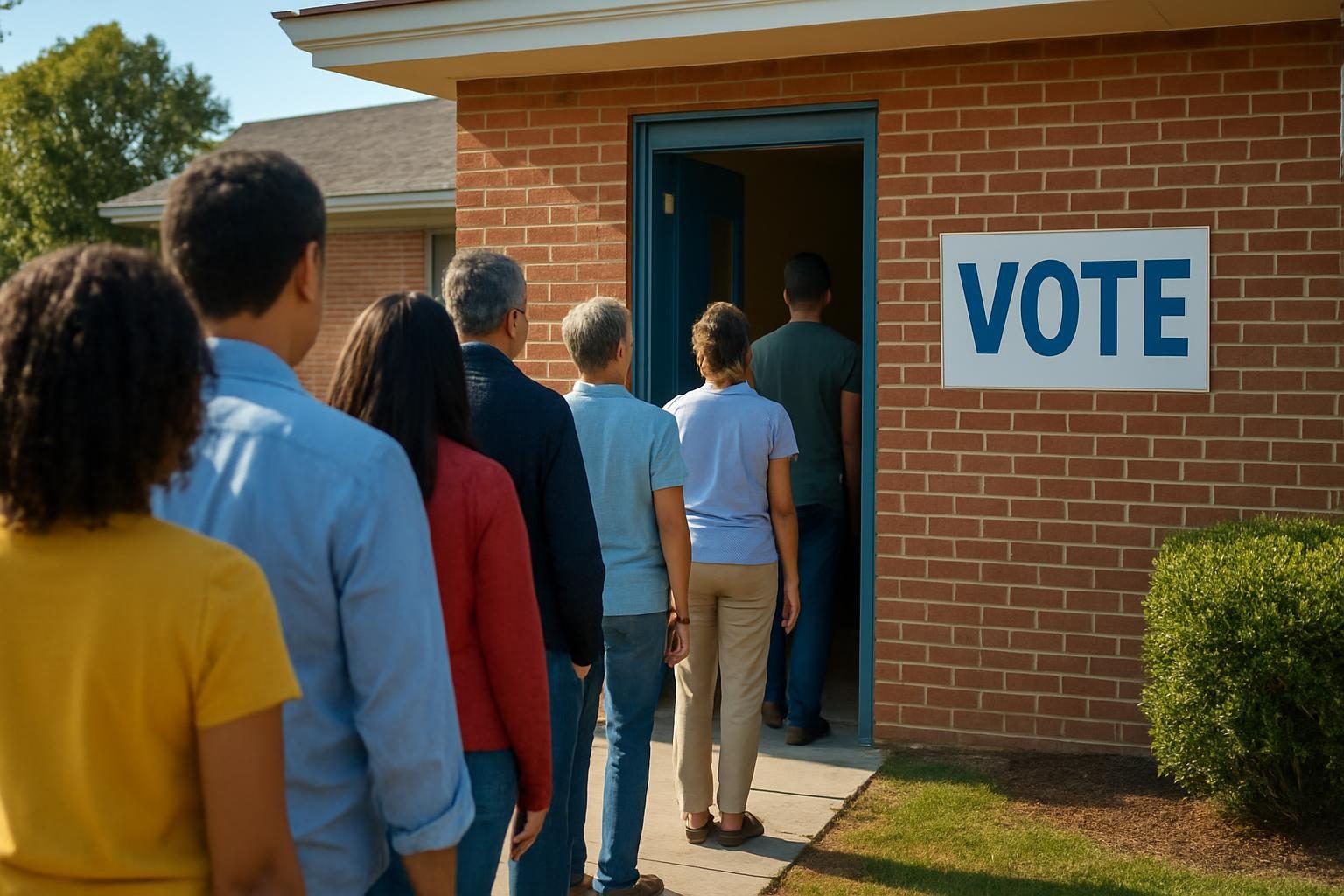
Every election, some voters are ready to cast a ballot and then lose precious time because they went to the wrong place. A few minutes of prep now can save you a headache on the day that counts. Here’s exactly how to find your polling place, step by step.
Quick answer: Go to vote.gov, pick your state, and follow the link to your official state or county election office. Use its lookup tool to enter your address and see your polling place. Check again before every election, because locations can change.
Voting is the most direct way to shape the country we live in. Knowing where to do it is the first step, and it takes less time than scrolling your phone for a few minutes. Let’s make sure nothing stands between you and your ballot.
Start With Official Sources
The safest place to look is always an official government source. Your state and county election offices run your elections, so they have the final word on where you vote. Anything else, from a friend’s text to an old flyer, should be double-checked.
The easiest front door is vote.gov. It points you to your state’s official election information, including registration rules and links to the offices that maintain polling place lookup tools. Every state does this a little differently, so start there and follow the link for your state.
Why Official Sources Matter
Misinformation about voting spreads quickly around election time. A look-alike website or a rumor on social media can send you to the wrong place or the wrong date. Sticking with your state or county election office, reached through vote.gov, keeps you safe.
Step-by-Step: Finding Your Polling Place
- Go to vote.gov and choose your state from the list.
- Follow the link to your state’s official election website or your local election office.
- Find the polling place lookup tool. It may be labeled something like “Where do I vote?” or “Find my polling location.”
- Enter your address exactly as it appears on your voter registration.
- Write down or screenshot the address, the hours, and any notes about accessibility or parking.
- Make a plan for how you’ll get there and when you’ll go.
Some states ask for extra details, such as your name or date of birth. Others only need your address. Either way, the process usually takes just a couple of minutes.
Finding your polling place takes a few minutes. Missing your chance to vote can cost an entire election.
Make Sure You’re Registered First
A polling place doesn’t help if your registration is out of date. Before you go hunting for a location, confirm that you’re registered at your current address. It’s a quick check, and it can head off big problems later.
Our guide to checking your voter registration status walks through it in minutes. If you’ve moved recently, you may need to update your information, and we’re preparing a guide on updating your voter registration after moving. For a broader walkthrough, see how to register to vote in every state.
One note: North Dakota doesn’t have voter registration, so the process there looks different. Everywhere else, registration and polling place assignment go hand in hand.
Understand How Your State Assigns Polling Places
Not every state or county handles polling places the same way. Knowing which setup applies to you can save confusion on the day.
| Setup | What it means | What to do |
|---|---|---|
| Assigned polling place | Your address determines where you vote. | Look up your location on your official election website. |
| Vote centers | Some places let you vote at any designated site in your county. | Check the list of centers and choose the most convenient one. |
| Early voting sites | Locations may differ from your Election Day place. | Look up early voting options separately. |
| Mail voting | Your ballot arrives or is requested by mail. | Confirm your options and any drop-off locations with your election office. |
Rules differ by state and sometimes by county, so confirm yours with your state election office. Don’t assume a rule from one state applies to another.
Look Up Early Voting and Mail Options Too
Election Day isn’t the only way to vote in many places. If you have a busy schedule, a job with long hours, or caregiving duties, other options can make your life easier. They’re worth knowing about even if you plan to vote in person.
Our guide to early voting and how to find your options explains how it works. If you’d rather skip the trip, read how to vote by mail. Availability and rules vary by state, so confirm what’s offered where you live.
Take action: Open vote.gov right now, find your state, and look up your polling place. Then text the link to one friend or family member and ask them to do the same.
What to Know Before You Go
Finding the address is step one. A little extra prep makes the visit smooth and stress-free.
Check ID Requirements
Some states ask voters to show identification, and the rules differ widely. Check what applies to you before you leave the house. Our guide to voter ID requirements by state is a good starting point, and your state election office has the official answer.
Confirm Hours and Accessibility
Look up the hours for your polling place, and plan around work and family. If you or someone you’re bringing needs accessibility accommodations, check what your location offers ahead of time. Your local election office can answer questions about access.
Plan Your Trip
Decide how you’ll get there, whether by walking, driving, or public transit. Think about parking, bus routes, and how long the line might be. Going at a quieter time of day, if your schedule allows, can shorten your wait.
A democracy works best when everyone knows the way to the ballot box and brings a friend along.

Special Situations
If You’ve Recently Moved
A new address usually means a new polling place. Update your registration and look up your location again. Don’t rely on where you voted last time.
If You’re a College Student
Students often wonder whether to vote at home or at school. The answer depends on your state and your situation. We’re working on a college students voting guide, and in the meantime your state election office can tell you what applies.
If You’re Turning 18 Soon
Young voters may be able to prepare before their birthday, depending on state rules. Our upcoming explainer on whether you can register to vote at 17 will cover it. Until then, check vote.gov for your state’s rules.
If You’re Not Sure Where to Go on Election Day
Call your local election office or check its website. Poll workers can also point you in the right direction. Never guess, because being at the wrong location can cause unnecessary trouble.
Why This Matters for 2026 and 2028
The next big test is the 2026 midterm elections on Tuesday, November 3, 2026, when all 435 House seats, about a third of the Senate, and 36 governorships are on the ballot. Those results shape the political landscape heading into the next presidential race. See our 2026 midterm elections guide to see what’s at stake.
Looking further ahead, the general election is Tuesday, November 7, 2028. Our 2028 presidential election hub tracks the dates, the field, and what’s next. Habits you build now, like checking your polling place every cycle, carry straight into 2028.
Here’s our view: voting is how ordinary people make sure the issues they care about get heard. From health care to housing to jobs, where Democrats stand on the issues only matters if supporters show up. A smooth trip to the polls is part of that.
Get Others Ready, Too
Your effort can multiply. Many people skip voting because they’re unsure about the logistics, not because they don’t care. A friendly nudge can make all the difference.
- Share the vote.gov link with friends and family.
- Offer a ride, or go together and make an outing of it.
- Remind coworkers and neighbors to look up their location.
- Volunteer with a local campaign or community group to help voters get ready.
Every conversation counts. Small acts add up, and communities that show up together get heard.
Last updated October 2026. Dates and candidate news change fast; we update this page as things are announced.
Key takeaways
- Start at vote.gov and follow the link to your official state or county election office.
- Look up your polling place with your registered address, and check again before every election.
- Confirm your registration is current, especially if you’ve moved.
- Early voting and mail options may offer more flexibility, but rules vary by state.
- Check ID rules, hours, and accessibility before you go.
- Help a friend find their polling place. Voting is stronger together.
Frequently asked questions
What is the easiest way to find my polling place?
Start at vote.gov, which links to every state’s official election office. Your state or county election website usually has a lookup tool where you enter your address. Your state’s website will have the most accurate, up-to-date answer.
Do I have to vote at a specific polling place?
In many places, yes: you are assigned a location based on your address. Some states and counties use vote centers where any registered voter in the county can vote. Check with your state or local election office to see which system applies to you.
Can my polling place change from one election to the next?
Yes. Locations can change because of building availability, redistricting, or local decisions. Never assume last election’s location is still correct. Look it up again before every election.
What should I do if my name isn’t on the list at my polling place?
Stay calm and ask a poll worker for help. First confirm you’re at the right location. Then ask what options your state offers, such as checking registration status or casting a provisional ballot. Rules vary, so confirm the details with your state election office.
Can I find my polling place if I plan to vote early or by mail?
Early voting sites are often different from your Election Day location, and mail ballots may have drop-off locations or not require a polling place at all. Your state or local election office lists the options available to you. You can also browse more guides in our Voting & Registration category.