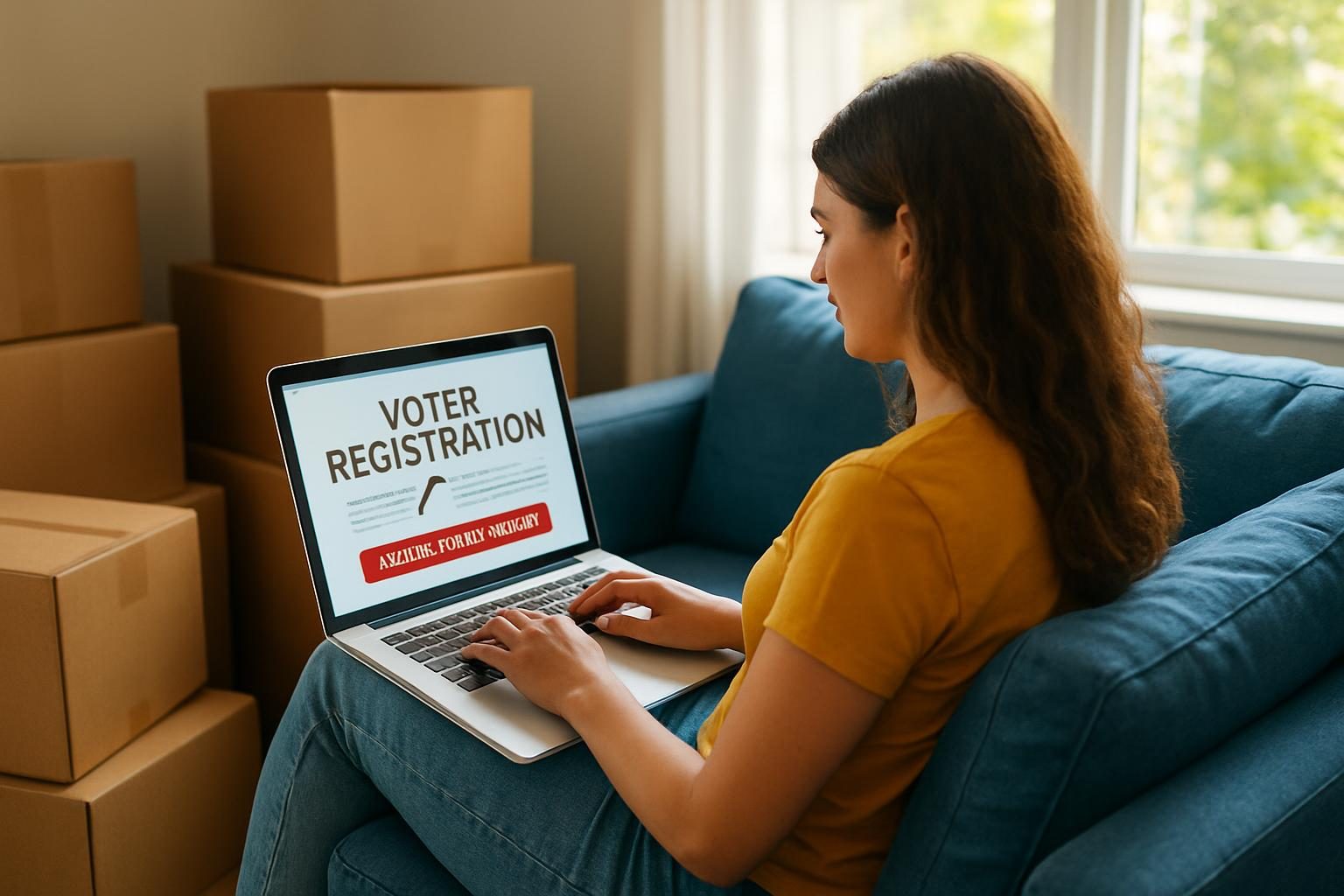
You packed the boxes, changed your address with the post office and finally found the coffee maker. But there is one more item on the moving checklist that really matters: your voice. If you want to update voter registration after moving, the good news is that it usually takes just a few minutes.
A new address can mean a new polling place, a new ballot and new local races where your vote carries real weight. Let’s get you set so nothing stands between you and Election Day. If you do encounter any issues at your polling place, learn what to do if turned away at polls.
Quick answer: To update your voter registration after moving, go to vote.gov, pick your state and follow its official steps. If you moved within your state, you usually update your address. If you moved to a new state, you generally register there. Rules and deadlines differ, so confirm yours on vote.gov or with your state election office.
Why updating your registration after a move matters
Your registration is tied to where you live. That address decides which ballot you get, which districts you vote in and where you cast your vote. When you move, your old registration doesn’t follow you automatically.
Think of it like this: you wouldn’t leave your old address on your mail forwarding forever. Your voter registration works the same way. A quick update keeps your vote counting where you actually live.
And here is the optimistic part. Local races are often decided by small margins, and the people who show up make the difference. Every updated registration is a vote that is ready to count. If you want to go further, you can even consider becoming a poll worker to help others vote.
Did you move within your state or to a new state?
This is the first question to answer, because it changes your next step.
You moved within the same state
In most states you update your existing registration with your new address. That keeps your voting history on file and gets you assigned to the right local districts. Many states let you do this online, while others use a paper form or in-person update.
You moved to a different state
Voter registration is run by each state, so you will generally need to register in your new state. Start by choosing your new state on vote.gov. It is also worth checking how your previous state handles cancelling your old registration, since you should only be registered in one place.
Your vote follows your address, so every move is a chance to make sure your voice is ready to count.

How to update voter registration after moving: step by step
Here is a simple plan. Each step is quick, and you can finish the whole thing in one sitting.
- Go to vote.gov. Choose your state to find its official registration page. Every state’s page follows the format
https://vote.gov/register/STATE-NAME, such as Ohio or New York. - Check your current status. See what address is on file. Our guide to checking your voter registration status walks you through it.
- Gather your information. You will typically need your name, date of birth, new address and an ID number. Requirements vary by state.
- Submit your update. Use your state’s online option if it has one, or follow its instructions for a mail form or in-person update.
- Confirm it went through. Check your status again after a little time has passed, and watch for a confirmation from your election office.
If you want a broader walkthrough, our guide to how to register to vote in every state covers the basics.
What you will probably need
Exact requirements depend on your state, but most updates ask for a similar set of details. Having them ready makes the process fast.
| Item | Why it is asked for |
|---|---|
| Full legal name | Matches you to your existing record |
| Date of birth | Confirms your identity and eligibility |
| New home address | Determines your polling place and districts |
| Previous address | Helps election officials find and update your record |
| ID number (such as a driver’s license or part of a Social Security number) | Verifies your identity; requirements vary by state |
Not sure which ones your state wants? Your vote.gov state page and your state election office will tell you exactly what applies.
Ways to update, and what to know about timing
Depending on where you live, you may have several ways to update. Many states offer online updates. Others accept mail forms or in-person updates at an election office. Some states link address changes at the motor vehicle office to voter records, but don’t assume it happened automatically. Double check.
Same-day registration exists in many states, but the rules differ a lot from place to place. We can’t tell you your state’s deadline here, because it depends on where you live and can change. Confirm the current cutoff on vote.gov or with your state or local election office, and do it sooner rather than later.
A five-minute update today can save you a stressful scramble on Election Day.

Moving to one of our spotlight states?
Each state has its own process. If you are heading to one of these places, our state guides break down the details in plain language:
- Arizona, California and Florida
- Georgia, Michigan and Pennsylvania
- Texas, Virginia and Wisconsin
Heading somewhere else? We are building out guides for every state, including Colorado, Oregon and Minnesota. Until yours is up, your state’s page on vote.gov is the place to start. Note that North Dakota has no voter registration at all, so a move there works differently.
Voting by mail after a move
If you vote by mail or absentee, your new address matters even more. Ballots go to the address on file, so an out-of-date record can mean a ballot sent to the wrong home. Update your registration first, then check how mail voting works in your state with our guide to how to vote by mail and absentee ballots.
If you are a college student, or you are living away from your old home, your state’s rules on where you can register may have some wrinkles. Check vote.gov or your election office to make sure you register where you are eligible.
Why this matters for the elections ahead
The 2026 midterm elections are on Tuesday, November 3, 2026, with all 435 House seats, about a third of the Senate and 36 governors on the ballot. Our overview of the 2026 midterm elections and what is at stake for 2028 explains why those races matter. If your registration is out of date, check your state’s rules right away on vote.gov or with your election office.
Looking further ahead, the general election is Tuesday, November 7, 2028, and the Democratic calendar is already taking shape. You can follow it in our 2028 Democratic primary calendar and our hub on the 2028 presidential election. Primaries have their own rules, so see how presidential primaries work as well.
Our view: a democracy is strongest when everyone who is eligible can easily take part. Keeping your registration current is one of the simplest ways to stay in the game, and it makes you a better neighbor, too, because you can help the people around you do the same.
Take action: Open vote.gov right now, pick your state and update your address. Then text three friends or family members who moved recently and ask whether they have done the same. It takes five minutes and it can change who shows up. Once you’re registered, consider phone banking and text banking to help get out the vote in your new community.

Help others get set, too
Moves happen constantly: new jobs, new apartments, new schools. That means plenty of people in your life may have an out-of-date registration without realizing it.
Volunteer at a registration drive, share the vote.gov link in your group chat or help a neighbor check their status. These small acts add up, and they are the foundation of every successful campaign. For more, browse our voting and registration section.
Last updated October 2026. Dates and candidate news change fast; we update this page as things are announced.
Key takeaways
- Your voter registration is tied to your address, so update it every time you move.
- Start at vote.gov, where every state’s official rules and links live.
- Moved within your state? You usually update your address. Moved to a new state? You generally register there.
- Deadlines and options vary, so always confirm yours on vote.gov or with your state election office.
- Check your status afterward to make sure your update went through.
- Help a friend do the same: voting power grows when we do this together.
Frequently asked questions
Do I need to update my voter registration if I moved within the same county?
In most cases, yes. Your address determines your polling place, your ballot and the districts you vote in, even for a short move across town. Rules differ by state, so confirm on vote.gov or with your state or local election office.
Can I update my voter registration online?
Many states offer online registration and updates, but not all of them. Vote.gov links to each state’s official page, and it will show you what options your state offers, including mail forms and in-person updates.
What if I moved to a different state?
You will generally need to register in your new state, since voter registration is run state by state. Start at vote.gov and choose your new state to see the official steps. It is also smart to follow your new state’s process for any cancellation of your old registration.
Can I update my registration at the DMV?
Many states connect driver’s license or ID address changes to voter registration, but the details vary. Do not assume it carried over automatically. After you change your address anywhere, check your registration status to be sure.
What if I moved right before an election?
Check your state’s rules right away on vote.gov or with your election office. Some states allow same-day registration, but the rules differ widely, and some states have strict cutoffs. For upcoming elections, see our 2026 midterm voter registration deadlines by state. Never rely on a friend’s advice or last election’s experience, because your state’s rules matter most.