
You don’t need a title, a budget or a big following to help win an election. You need a phone, a little time and a friendly voice. Phone banking and text banking are two of the most direct ways to talk to real voters, and this guide shows you how to start.
Quick answer: To phone bank or text bank for a campaign, find a local campaign, party office or progressive group offering shifts, sign up, attend a short training, and use the provided script and tools to contact voters. Many shifts are remote, so you can help from home. Ask the program about its rules before you start, and never guess on voting information.
What phone banking and text banking actually are
Phone banking means calling voters from a list a campaign or organization provides. Text banking means sending short messages to voters through a platform, then answering replies. Both are about conversations: sharing information, answering questions and encouraging people to vote.
The goal depends on the stage of the race. Early on, volunteers might introduce a candidate, recruit other volunteers or help people check their registration. Closer to the election, the focus shifts to making sure people have a plan to vote.
If you’ve never done it, don’t worry. Most volunteers start as beginners, and the tools are built for that. Your job isn’t to win every argument. It’s to be a warm, honest person on the other end of the line.
Step 1: Find a phone bank or text bank near you (or not near you)
There are plenty of places to look. Pick one that matches the races you care about, then sign up for a first shift.
- Campaign websites. Most campaigns have a “volunteer” or “get involved” page where you can sign up for shifts.
- Your county or state Democratic Party. Local party offices often run regular phone and text banks for the whole ticket.
- Progressive organizations. Issue groups, labor unions and voter-engagement groups often run their own programs.
- Local volunteer groups. Neighborhood and campus groups often organize shifts and can walk you through your first one.
Because remote volunteering is common, you aren’t limited to your own area. You can help in a competitive state across the country or focus on a race close to home. To see where the next big fights are, check our guides to the 2026 midterm elections and the 2028 swing states.
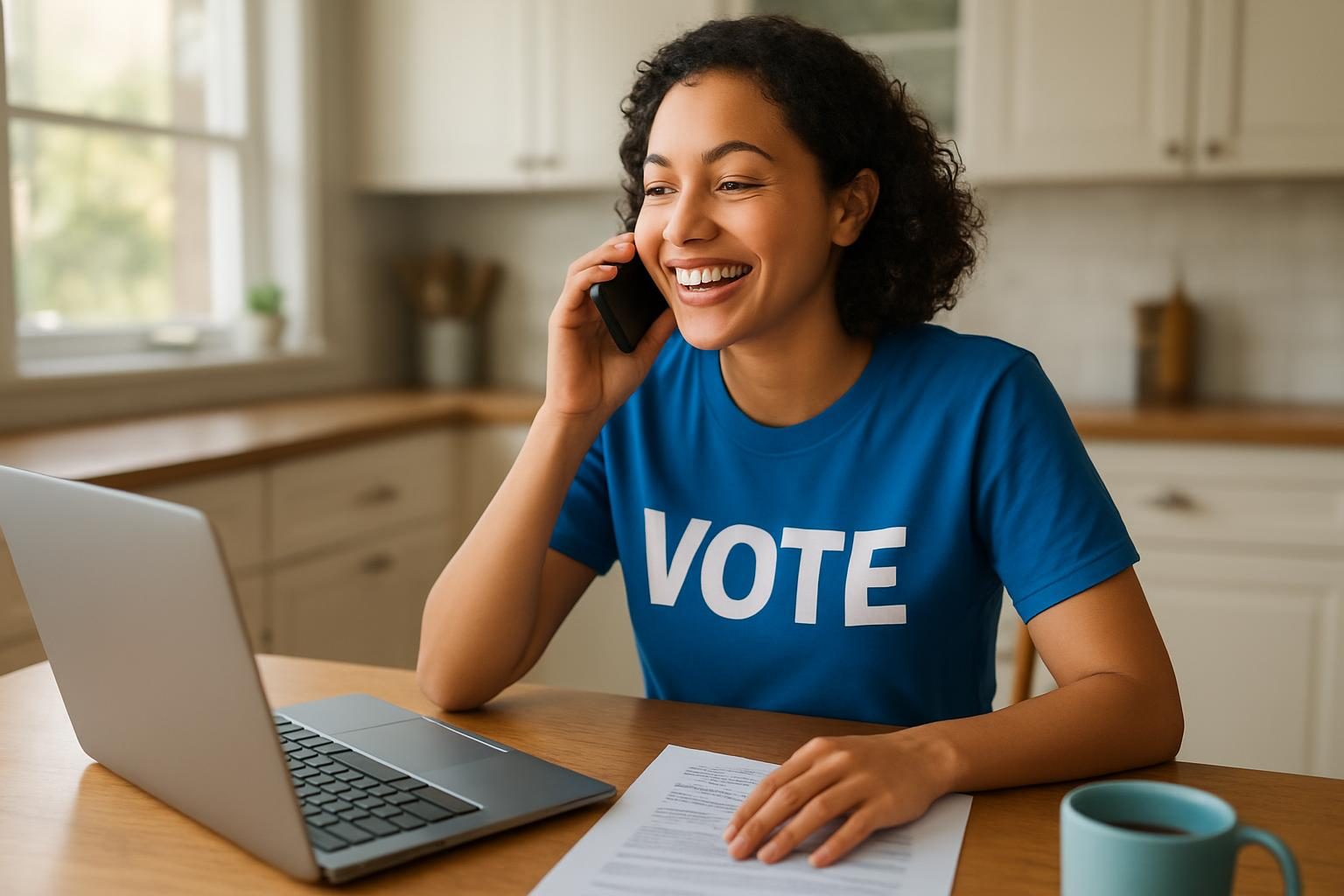
Step 2: Know what training and scripts look like
Almost every program starts with a short orientation. It might be a few minutes on a video call, a written guide or a quick walkthrough from a shift leader before you begin. You’ll learn the tool, the goal of the campaign and what to do if something unexpected happens.
What a script usually includes
Scripts are built so nobody has to improvise. A typical one covers a short intro, the reason you’re reaching out, one or two questions and a clear next step. You’ll also usually get answers to common questions, and a way to record what the voter said.
Use the script as a guide, not a straitjacket. Your own voice, a natural pace and a smile (people really can hear it) matter more than reading word for word.
A simple call or text flow
- Introduce yourself. Give your first name and say who you’re volunteering with.
- State why you’re reaching out. Keep it short and specific.
- Ask a question and listen. Let the voter talk. Their answer tells you what to do next.
- Offer the next step. That might be a plan to vote, information from the campaign or a volunteer sign-up.
- Thank them and log the result. Record the outcome in the tool so the campaign can follow up.
You don’t have to be a policy expert to be a great volunteer. You have to be kind, honest and consistent.
Step 3: Phone bank vs. text bank at a glance
Both methods work, and many volunteers try each. Here’s how they compare.
| Feature | Phone bank | Text bank |
|---|---|---|
| Format | Live voice conversations | Short written messages |
| Pace | Real-time; you talk and listen | Flexible; replies may come minutes or hours later |
| Best for | Longer conversations and warm, personal tone | Quick reminders and easy replies |
| Comfort level | Can feel nerve-racking at first | Often feels easier for beginners |
| Typical tools | Web-based dialer or call list | Texting platform with message templates |
If you’re nervous, start with texting. If you like conversation, try a call shift. Either way you’ll be doing something that genuinely moves races.
Step 4: Handle tough calls with grace
Most calls and texts are short and pleasant. Some go unanswered, and a few won’t be. That’s normal, and it’s part of the work.
Voters who are not interested
Say thank you and move on. Not everyone wants to talk, and that’s fine. Log the result and go to the next contact without taking it personally.
Disagreement or frustration
Stay calm and polite. You don’t have to debate. Listen, acknowledge what the person said and, if the conversation isn’t productive, thank them and end it. Your calm tone represents the campaign far better than a win in an argument.
Questions you can’t answer
Never guess. Use your talking points, tell the voter you’ll pass the question along if your program allows it, or direct them to the campaign’s website. For anything about how, when or where to vote, send them to vote.gov or their state election office. Wrong voting information can cost someone their vote, so accuracy comes first.
Requests to stop contact
If someone asks not to be contacted again, honor it immediately and record it using your tool. Respecting that request is both good manners and an important part of doing this the right way.
Rude or abusive responses
You never have to stay on a call or keep texting with someone who is abusive. End the conversation, log it and tell your shift leader if you want support. A good program has your back.

Legal basics for texting voters
Texting is regulated, and the rules can be more complicated than they look. This section is a general overview, not legal advice. Your campaign or organization should handle the compliance side, and your training should explain what you need to do.
- Use the platform you’re given. Campaigns and organizations choose tools designed for compliant messaging. Don’t mass-text people from your personal phone on your own.
- Follow the approved messages. Stick to the templates and guidance you’re given.
- Honor opt-outs. If someone says to stop, record it so they are removed from future messages.
- Be honest. Say who you’re with and never mislead a voter about voting rules, dates or places.
If you have a question about the rules, ask your shift leader or program organizer. For anything related to voting itself, direct voters to vote.gov or their state election office.
Remote shifts: help from your couch
Remote volunteering has made it easy to fit this work into real life. You can join a shift from home, between classes or on a quiet evening after dinner.
Most remote programs use a web-based dialer or texting platform and a video call so you can see your teammates and ask questions. All you typically need is a laptop or phone, a reliable internet connection and a quiet place to talk.
Remote also means you can support races outside your own community. Our 2028 electoral map and swing states guide show where battleground contests are likely to matter most.
Take action: Pick one campaign or group this week, sign up for a single beginner shift, and invite one friend to join you. Starting small beats waiting for the perfect moment.
Every conversation is a small act of democracy, and a lot of them add up to a win.
The final weeks before Election Day
The last stretch before an election is when volunteer energy matters most. Campaigns shift into get-out-the-vote mode, with a heavy focus on making sure supporters know how and when to vote.
Expect shifts to get more frequent and sometimes longer. Many campaigns hold weekend call and text marathons, and some add shifts on Election Day itself. If you can give extra time near the end, tell your organizer.
The message in these weeks is usually about a voting plan: how someone will vote, where and when. Always send people to vote.gov or their state election office for the exact rules in their state, and never state a deadline you haven’t confirmed. If a voter says they might not be registered, point them to our guide on how to check voter registration status, and see our simple guide to registering in every state.
Some voters will be voting by mail, so our explainer on how to vote by mail is a handy resource. If someone tells you they were turned away at the polls, you can mention that there is a process for that, and our upcoming guide on provisional ballots will explain it in plain language.

Beyond the phone: keep building your skills
Once you’re comfortable, there’s plenty more to do. You can help register voters, join a canvass, train new volunteers or become a poll worker. Look out for our upcoming guide on how to become a poll worker if you want to help on Election Day itself.
It also helps to understand what’s at stake. Our overview of Democratic Party platform issues lays out where Democrats stand, which makes it easier to talk with confidence. And for the bigger picture, our 2028 presidential election hub tracks what’s next.
Our view: this kind of volunteering is among the most powerful things an everyday person can do. The 2018 wave is a good reminder of what organized, people-powered work can accomplish. Read the story in 2018 Blue Wave: what happened and what Democrats learned.
You can also browse more guides in our Voting & Registration section.
Key takeaways
- Phone banking and text banking connect you directly with voters, and beginners are welcome.
- Find shifts through campaign websites, your local Democratic Party and progressive organizations.
- Training and scripts make it easy: introduce yourself, ask, listen, offer a next step and log the result.
- Remote shifts let you help from home, including in races outside your own area.
- Follow your program’s texting rules, honor opt-outs and never guess on voting information.
- Always point voters to vote.gov or their state election office for registration and voting rules.
Last updated October 2026. Dates and candidate news change fast; we update this page as things are announced.
Frequently asked questions
Do I need experience to phone bank or text bank?
No. Almost every campaign and organization runs a short training before your first shift, and most give you a script and a way to log responses. You only need a phone or computer, a willingness to follow the training, and a friendly tone.
Will voters see my personal phone number?
It depends on the tool. Many phone banks use a web dialer that connects calls through the platform, and many text banks send messages through a platform instead of your personal number. Your shift leader can tell you how the specific tool works, so ask before your first shift if privacy matters to you.
Can I phone bank or text bank for a campaign in another state?
Yes. Remote volunteering lets you contact voters anywhere, as long as the campaign or organization is running a remote program. Many volunteers help in competitive states, and you can also help in your own community.
What if a voter asks a question I cannot answer?
Do not guess. Use the answers in your script or talking points, offer to have someone follow up if your program allows it, or point the voter to vote.gov or their state election office for voting rules. Saying you do not know is always better than giving wrong information.
Is texting voters legal?
Texting for campaigns is regulated, and the rules involve things like consent, opt-outs and the tools used. We are not a source of legal advice. Volunteering through a campaign or organization that provides a compliant platform and training is the simplest path, and your training will cover what you need to do.