
Here is a stat nobody needs: the number of people who found out they were not registered on the day they showed up to vote. Here is a better plan: spend five minutes right now making sure you are ready. Checking your voter registration status is quick, free, and one of the most powerful things you can do for democracy.
Quick answer: To check voter registration status, go to vote.gov, choose your state, and follow the link to your state’s official lookup tool. Enter the details it asks for, usually your name and date of birth, and confirm that your name and address are correct. If anything is off or missing, fix it through your state’s official process, and confirm deadlines on vote.gov or with your state election office.
Why checking your voter registration status matters
Registration records can change without you doing anything. People move, rental addresses shift, names change after marriage, and election offices update their lists. Sometimes a record is outdated, and sometimes a person is simply not on the rolls at all.
The good news is that this is easy to catch early. A quick check tells you whether you are registered, whether your address is current, and whether you need to take any action before the next election.
There is a bigger picture here too. The 2026 midterm elections are on Tuesday, November 3, 2026, with all 435 House seats, about a third of the Senate, and 36 governorships on the line. The 2028 presidential general election follows on Tuesday, November 7, 2028. Every one of those contests is decided by the people who are ready and registered.
Your vote only counts if your registration is in order, and the best time to check is before you need it.
How to check your voter registration status, step by step
The process is simple, and it works the same way in spirit for every state. Each state runs its own elections, so the exact lookup tool differs, but vote.gov gets you to the right place.
- Go to vote.gov. It is the official U.S. government site for voter registration information.
- Pick your state. Every state has its own page with official rules, deadlines, and links. The address follows a simple pattern, such as https://vote.gov/register/ohio or https://vote.gov/register/new-york.
- Find the registration status link. Your state’s page points you to its official lookup tool or to your state election office.
- Enter the requested details. This is typically your name and date of birth, and some states also ask for your address or ZIP code.
- Read your results carefully. Confirm that your name is spelled correctly, your address is current, and your registration is active.
- Take action if something is wrong. Update or register through your state’s official process.
If a lookup tool cannot find you, do not assume the worst right away. Try again with alternate spellings, a previous name, or an older address. If you still come up empty, contact your state or local election office to ask directly.
What information you will probably need
Have a few basics handy so the check goes smoothly. Requirements differ by state, so treat this as a general guide rather than a rule.
| Information | Why it may be needed |
|---|---|
| Full legal name | To match your record, including any previous names |
| Date of birth | To confirm your identity in the lookup |
| Home address or ZIP code | Some states use it to find your record or your local district |
| County or city | Helps when a state search tool asks you to narrow results |
One safety tip: an official lookup should never ask for a payment, a bank account, or your full Social Security number. If a site does, close it and go back to vote.gov.

What to check once you find your record
Finding your name is only half the job. Read the whole record with a critical eye, because small errors can cause real headaches later.
Your name and address
Make sure your name matches the one you use on your ID, and that your address is where you actually live now. An old address is the most common problem, especially for renters and younger voters who move often.
Your registration status
Look for words like active or inactive, and read any notes the tool gives you. If your status is marked inactive or something looks unfamiliar, contact your election office to find out what it means in your state and what to do about it.
Your polling place and voting options
Many state tools also show where you vote and what districts you live in. Use that information to plan ahead. If you want to skip the Election Day line, look into early voting options in your state, or find out how voting by mail works where you live.
Also look up what you may need to bring with you. Rules about identification differ widely, so check voter ID requirements for your state well before you head to the polls.
Not registered, or your info is out of date? Here is what to do
This happens to lots of people, and it is fixable. The key is to act through official channels and to confirm timing with your state.
If you are not registered
Use vote.gov to find your state’s official registration process. Many states allow online registration, and you can learn more about registering to vote online. Our full walkthrough, How to Register to Vote: A Simple Guide for Every State, covers the basics for everyone.
Same-day registration exists in many states, but the rules differ, so do not count on it without confirming. And one fun fact for North Dakota readers: your state has no voter registration at all.
On deadlines, we will be straightforward: they vary by state, and we will not guess at them here. Confirm yours on vote.gov or with your state election office, and do it early.
If you moved
An address change usually means updating your record, and a move to a new state means registering there. Our upcoming guide, how to update your voter registration after moving, will walk through it.
If you are a student
Students often wonder whether to register at home or at school. The answer depends on your situation and your state’s rules, so see our planned college students voting guide and confirm the details with your state election office.
If you are about to turn 18
Some young people can get ahead of the game. Learn how it works in our guide to whether you can register to vote at 17, and check your state’s rules on vote.gov.
Five minutes of checking today beats five hours of regret on Election Day.
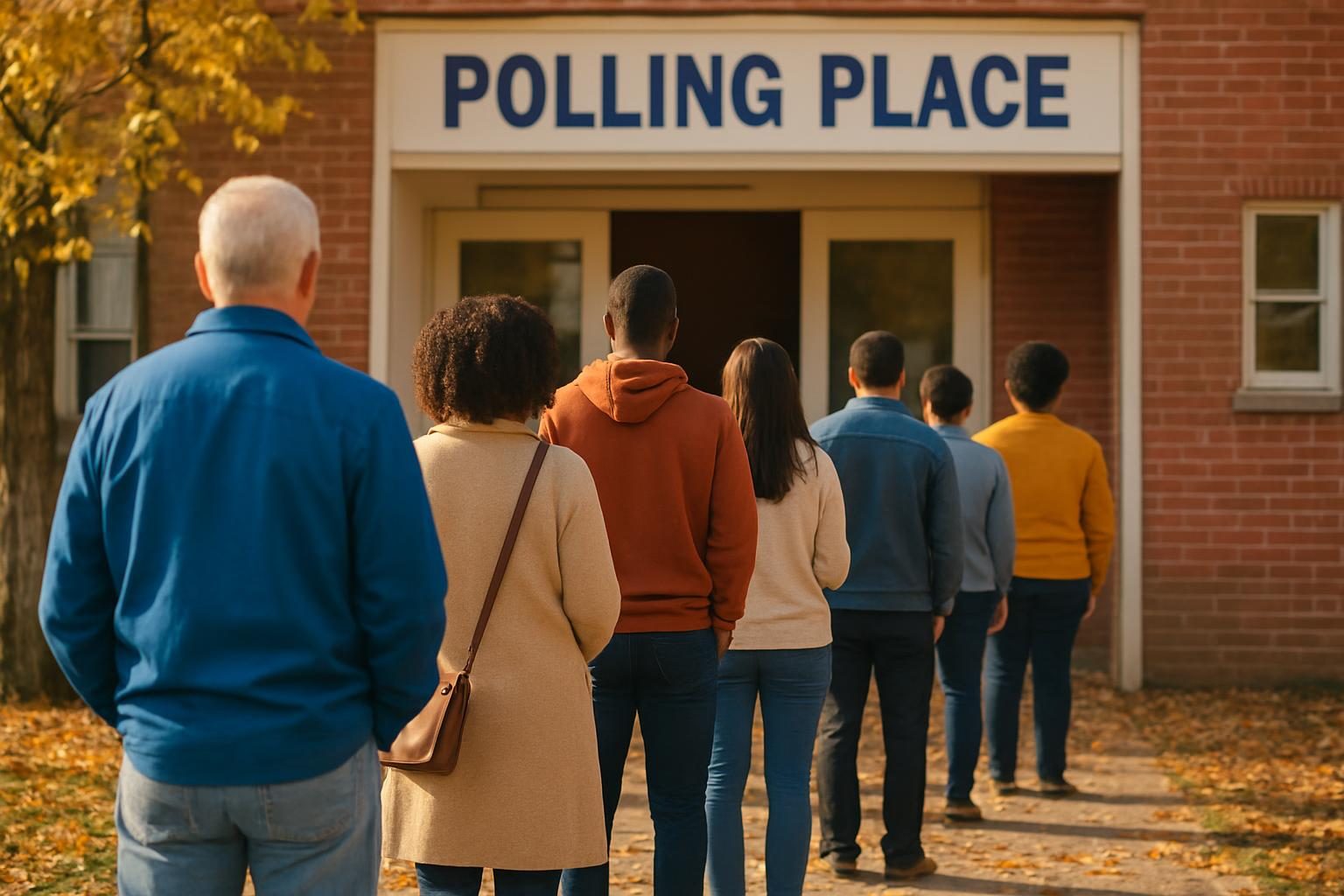
How often should you check?
A good rule of thumb is to check at least once a year, plus a few specific moments when a check really pays off.
- After you move, even across town
- After you change your name
- Before each major election
- If you have not voted in a while
- Any time you get mail from an election office that you do not understand
Think of it like checking your tire pressure before a road trip. It takes a minute, and it keeps you from getting stuck.
Why every single registration matters for 2026 and 2028
As of October 5, 2026, no major Democrat has formally declared a 2028 presidential run. Plenty of names are widely reported as potential candidates, and you can follow them in our 2028 Democratic candidates tracker. But before anyone gets on a debate stage, voters have work to do.
First up is November 3, 2026. What happens in the midterms shapes what comes next, from who controls Congress to who leads statehouses. If you want to dig in, read about the 2026 Senate races to watch, the 36 governor races explained simply, and what happens if Democrats win the House.
Then comes the primary season. The Democratic National Committee approved its 2028 early-window calendar on August 15, 2026, starting with South Carolina on January 22, 2028. You can see every date in our 2028 Democratic primary calendar. Whether and how you can vote in a primary depends on your state’s rules, so confirm them with your state election office.
Here is our view: a healthy democracy is one where every eligible person who wants to participate can. A clean, current registration is the foundation. It is not glamorous, but it is where winning starts.
Help your friends and neighbors get ready
Checking your own status is great. Getting five friends to check theirs is a movement. Most people do not avoid voting out of apathy. They just assume everything is fine, or they feel unsure where to begin.
You can be the person who makes it easy. Send the vote.gov link in a group chat. Offer to sit with a relative while they look themselves up. Bring it up at the next family dinner.
Take action: Open vote.gov right now, check your own registration status, and then text the link to three people you know. Ask them to check theirs and report back. Want to do more? Look for a local volunteer group helping with registration drives near you.

Swing states and special situations
Some states get extra attention in presidential years, and for good reason. If you live in one, a clean registration matters just as much as anywhere else, and each state has its own process. We are building guides for several, including Arizona, Georgia, Michigan, and Pennsylvania.
Whatever your state, the official source for its rules is vote.gov or your state election office. We are happy to point you in the right direction, but we never want you relying on a blog for a deadline or a legal rule.
Keep going: your next steps
Once you are confirmed and ready, there is plenty more to explore. Browse everything in our Voting & Registration section, or get the big-picture view in our 2028 presidential election hub. Keep our 2028 election key dates calendar handy so you always know what is coming.
Voting is also about what you care about. If you want to understand where the party stands, check out Democratic Party platform issues. Then find your people, whether that is a campaign office, a county party, or a neighborhood group, and get involved.
Key takeaways
- Start at vote.gov to find your state’s official registration status tool.
- Check your name, address, and status, not just whether you show up.
- If something is wrong, fix it through official channels and confirm deadlines on vote.gov or with your state election office.
- Check at least once a year and any time you move or change your name.
- The 2026 midterms are on November 3, 2026, and the general election is on November 7, 2028.
- Help three friends check their status; it multiplies your impact.
Last updated October 2026. Dates and candidate news change fast; we update this page as things are announced.
Frequently asked questions
How often should I check my voter registration status?
A good habit is to check once a year, plus any time you move, change your name, or haven’t voted in a while. A quick check before every major election is the safest approach. It takes a few minutes and can save you a lot of trouble later.
Can I check my registration status without creating an account?
In most states, yes. Official state lookup tools usually ask for basic details such as your name, date of birth, and sometimes your address or ZIP code. Start at vote.gov to find your state’s official page, and never pay a third party for this service.
What if I’m not registered or my information is wrong?
Don’t panic. Register or update your record through your state’s official process, which you can find on vote.gov. Rules and deadlines differ by state, so confirm the details with vote.gov or your state election office. Some states also offer same-day registration, but the rules vary.
Does registration status carry over if I move to a new state?
No. Registration is handled state by state, so moving to a new state means registering there under that state’s rules. Moving within your state usually means updating your address. Check vote.gov or your state election office for the correct steps.
Is checking my voter registration status safe?
It is safe when you use official government sites. Start from vote.gov, which links to each state’s official tools, and look for a .gov web address. Be wary of any site that charges a fee or asks for sensitive details like a full Social Security number or bank information.