
Heading off to college doesn’t mean giving up your voice. It does mean answering a surprisingly big question: should you vote from your home address or your school address? This college students voting guide walks you through both options so you can pick the one that works for you.
Quick answer: In general, college students can choose to register at their school address or keep their home address, but each state sets its own rules. You can only be registered in one place at a time. Check your state’s rules and registration options at vote.gov, then register, update, or request a mail ballot accordingly.
Why your vote as a student matters
Young voters are a huge part of the future of this country, and the decisions made in every election, from city council to the White House, shape the world you’ll be living in long after graduation. Housing costs, student debt, healthcare, climate, and civil rights are all on the ballot in one form or another.
The next big test arrives soon. The 2026 midterm elections are on Tuesday, November 3, 2026, with all 435 House seats, about a third of the Senate, and 36 governors up for election. Our 2026 midterm elections guide explains what’s at stake.
And the longer game matters too. The 2028 general election is Tuesday, November 7, 2028, and the primaries start earlier than you might think. Getting your registration sorted now means you’re ready for every election between here and there.
The big question: home address or school address?
Here’s the good news: for many students, this is a real choice, not a trap. Neither option is automatically right. The best answer depends on your state, your situation, and where you want your vote to count.
Rules about residency and registration differ from state to state, and we are not able to give legal advice. Always confirm the details for your state on vote.gov or with your state election office before you act.
Option 1: Register at your school address
If you live on or near campus during the school year, you may be able to register where you attend college. This can make voting simple: your polling place may be close, and you can vote in the elections that affect the community where you spend most of your time.
Think about it this way. Local decisions about transit, rent, public safety, and campus-area development affect you every day. Voting where you live can give you a say in those choices.
Option 2: Stay registered at your home address
Many students keep their home registration, especially if they plan to return after graduation or if their home state is one where races are expected to be close. If you do, you’ll typically vote by mail or in person when you’re home.
Our guide to voting by mail and absentee ballots explains how that process generally works, so you can plan ahead instead of scrambling.
You get one registration and one vote. The smart move is choosing the place where you want yours to count.
How to decide: a quick comparison
Use this table as a starting point. It is general information, not a rulebook, since requirements vary by state.
| Question to ask | School address may fit if… | Home address may fit if… |
|---|---|---|
| Where do I spend most of the year? | You live on or near campus most months | You split time or head home often |
| Where do I want my vote to count? | You care about local issues near campus | You care about races back home |
| How easy is voting in person? | You want a polling place nearby | You’re comfortable voting by mail |
| What are my plans after graduation? | You may stay in the area | You plan to return home |
| What does my state allow? | Your state allows students to register at school | Your state offers easy mail or absentee voting |
One more thing to think about: some students wonder whether registering at school could affect financial aid or family tax matters. We can’t advise on that, and the answer may depend on your situation. If it’s a concern, ask your school’s financial aid office or a qualified professional, and confirm voting rules on vote.gov.

Step by step: how to register as a college student
The process is simpler than most people expect. Here’s the general path.
- Decide where you’ll register. Use the comparison above and the rules for your state.
- Visit vote.gov. Every state’s official rules, deadlines, and online registration links are there. The link follows a simple pattern, such as vote.gov/register/ohio or vote.gov/register/new-york.
- Check whether you’re already registered. You may be registered at your home address from before you left. Our voter registration status guide shows how to check in minutes.
- Register or update your information. Many states offer online registration. See our explainer on online voter registration for the basics.
- Confirm your deadline. Registration deadlines differ by state, and some states offer same-day registration. Confirm yours on vote.gov or with your state election office rather than relying on a number you saw elsewhere.
- Plan how you’ll vote. In person, early, or by mail. Pick one and put it on your calendar.
For a broader walkthrough, our guide on how to register to vote in every state covers the basics.
Already moved? Update your registration
If you’ve changed addresses, don’t assume your old registration follows you. Look at our upcoming guide on updating your voter registration after moving for the steps, and check your state’s process on vote.gov in the meantime.
Turning 18 soon?
Some states allow younger people to pre-register before they turn 18. Rules vary, so see our upcoming explainer on whether you can register to vote at 17, and check vote.gov for your state’s rules.
Take action: Open vote.gov right now, pick your state, and check your registration status. It takes a few minutes. Then text one friend in your dorm or class and ask them to do the same.
A few minutes on your phone today can decide whether your voice is counted or missed in November.
Voting when you’re away from home
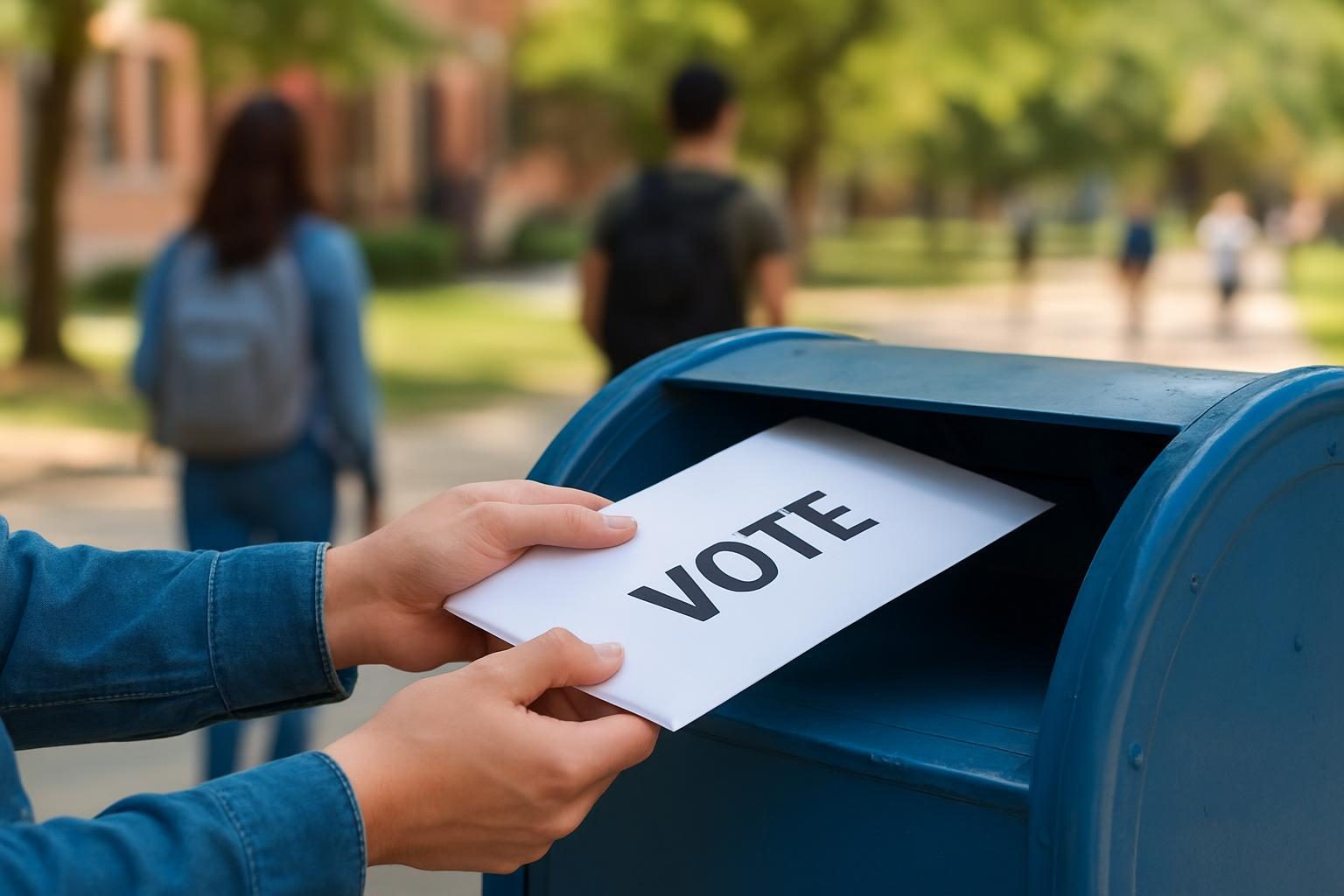
If you stay registered at home but study somewhere else, mail voting is likely your best friend. Many states let you request an absentee or mail ballot, but the rules, forms, and deadlines differ. Start early, because mail takes time in both directions.
Our guide to how to vote by mail explains the general process. Always double-check your state’s specific requirements on vote.gov or with your state election office.
Voting in person near campus
If you register at school, you’ll want to know where to go and when. Some states offer early voting, which can be a lifesaver around exams and finals. Read how early voting works, and use our polling place finder guide to locate your spot.
Bring the right ID
ID rules vary widely by state, and some states have specific rules about which student IDs count. Don’t guess. Review our voter ID requirements overview and confirm the details for your state with your state election office.
State-specific help for common student destinations
Many students attend school in states where elections can be especially competitive. If that’s you, these state guides can help:
More states are coming, including guides for California, Texas, and New York. Until then, vote.gov has the official details for every state. And note that North Dakota has no voter registration at all.

Beyond the ballot: get involved
Voting is the foundation, but it’s not the ceiling. Campuses are full of energy, and campaigns need exactly that. You can help classmates register, volunteer for a local campaign, or organize a ride to the polls with your friends.
Looking ahead, the 2028 Democratic primary calendar is already taking shape. On August 15, 2026, the DNC approved its early window: South Carolina on January 22, 2028; Nevada on February 1; New Hampshire on February 8; New Mexico on February 15; Michigan on February 22; and Virginia on February 29. Super Tuesday is March 7, 2028. See our 2028 Democratic primary calendar for every date so far.
If you’re studying in or near one of those states, you could have a front-row seat. Our guide to how presidential primaries work explains how it all fits together.
No major Democrat has formally declared a 2028 presidential run yet. Keep up with the field through our 2028 Democratic candidates tracker, and see the big picture in our 2028 presidential election hub.
Our view: the best way to feel powerful in politics is to participate. Register, vote, and bring a friend. That’s how young people have changed elections before, and it’s how we do it again. You can find more practical guides in our Voting & Registration section.
Last updated October 2026. Dates and candidate news change fast; we update this page as things are announced.
Key takeaways
- College students can often choose between registering at school or keeping their home address, but rules vary by state.
- You can only be registered in one place at a time, so pick where you want your vote to count.
- Vote.gov has official rules, deadlines, and registration links for every state; confirm deadlines there or with your state election office.
- If you stay registered at home, learn how absentee or mail voting works in your state and start early.
- The 2026 midterms are Tuesday, November 3, 2026, and the next presidential election is Tuesday, November 7, 2028.
- Voting is just the start: help a friend register and consider volunteering.
Frequently asked questions
Can I register to vote at my college address?
In general, students can choose to register where they live while attending school, but rules differ by state. Check your state’s requirements on vote.gov or with your state election office before you register. For state-specific guidance, see our Florida voter registration guide as an example of the detailed steps involved.
Will registering at school affect my financial aid or my parents’ taxes?
We can’t give legal or tax advice, and the answer can depend on your situation. If you’re worried, ask your school’s financial aid office or a qualified tax professional before you register, then confirm voting rules on vote.gov.
Can I vote in two places in the same election?
No. You should be registered in only one place, and voting twice in the same election is illegal. If you move or switch your registration, update it with your state election office so your records stay accurate.
What if I’m studying in a different state from where I’m registered?
You can often request an absentee or mail ballot from your home election office, but deadlines and rules vary by state. Visit vote.gov or your state election office to confirm how it works for you.
What ID do I need to vote as a student?
ID rules vary widely by state, and some states have specific rules about student IDs. Check your state’s requirements on vote.gov or with your state election office, and see our voter ID guide for an overview.