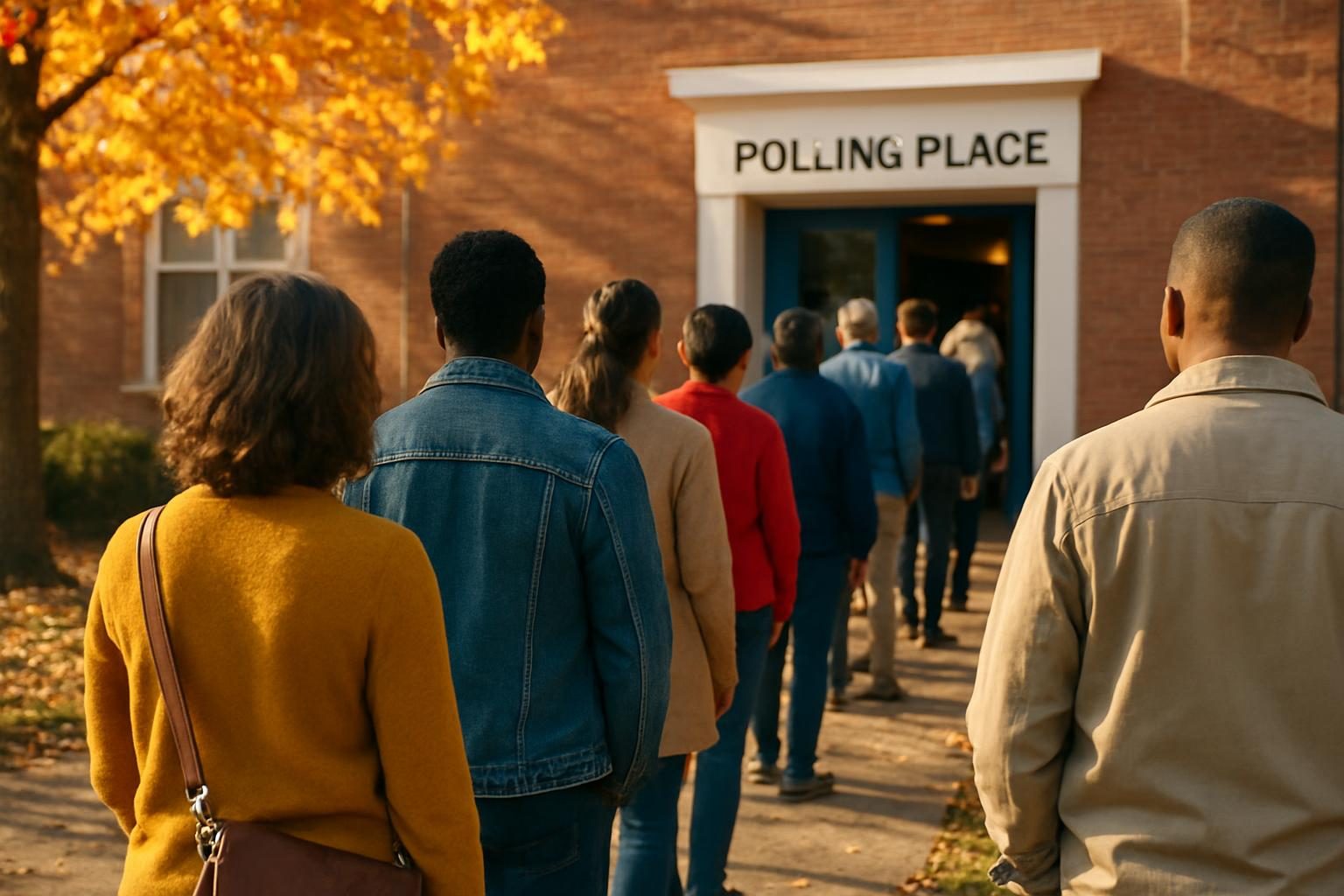
The 2026 midterms are days away, and your vote is the most powerful tool you have to shape what comes next. The good news: voting is simpler than it looks, and you can knock out every step in a single afternoon. This how to vote in the 2026 midterms checklist walks you through each one.
Quick answer: Midterm Election Day is Tuesday, November 3, 2026. To vote, confirm you are registered, pick how you will vote (early, by mail or on Election Day), check your state’s ID rules, find your polling place, and preview your ballot. Rules vary by state, so confirm every detail on vote.gov or with your state election office.
Last updated October 2026. Dates and candidate news change fast; we update this page as things are announced.
Why this election matters so much
On November 3, 2026, voters will decide all 435 House seats, about a third of the Senate and 36 governorships. That is a huge slice of the government, and it sets the stage for the 2028 presidential race. Our guide to what’s at stake in the 2026 midterms for 2028 breaks down the bigger picture.
Midterms are often decided by who shows up. Turnout in these elections tends to be lower than in presidential years, which means every ballot carries extra weight. To understand what’s at stake, check out our analysis of whether a blue wave will happen in 2026. If you are reading this, you are already ahead of the game.
Midterms are won by the people who show up, and that can be you, your neighbors and your friends.
Your seven-step voting checklist
Here is the whole plan at a glance. Work through it top to bottom, and you will be ready well before the polls open.
- Confirm your registration is active and your address is current.
- Choose your voting method: early in person, mail or Election Day.
- Check your state’s ID rules so nothing surprises you.
- Find your polling place or ballot drop-off location.
- Preview your ballot and research the races and measures.
- Make a plan for when, how and with whom you will vote.
- Bring a friend and help someone else get to the polls.

Step 1: Confirm your voter registration
Start here, because everything else depends on it. Moved recently? Changed your name? Skipped the last couple of elections? Do not assume you are still on the rolls.
Where to check
Every state’s official rules, deadlines and online registration links are on vote.gov. Pick your state and follow the links; for example, Ohio’s page and New York’s page show how the pages are laid out. Your state election office can confirm whether your registration is active.
What if you are not registered?
Do not panic, but do not wait. Registration deadlines vary by state, and some states offer same-day registration while the rules differ from place to place. We are not going to guess at your deadline, so confirm it on vote.gov or with your state election office right now.
North Dakota is the one state with no voter registration at all. For everyone else, our plain-language guide on how to register to vote in every state and our 2026 midterm voter registration deadlines by state page can help you sort out the details.
Take action: Check your registration today, then text three friends or family members and ask them to do the same. Thirty seconds on your end could be the reason someone else votes.
Step 2: Choose how you will vote
You usually have more than one option, and the right one is the one you will actually follow through on. The options and rules differ by state, so treat this as a menu to explore rather than a promise that every choice is open to you.
| Method | How it works | Good for |
|---|---|---|
| Early in person | Vote at a designated site before Election Day, where your state offers it | Busy schedules and shorter lines |
| Mail ballot | Receive, complete and return a ballot by mail or drop-off, where your state allows it | Voters who want time to research at home |
| Election Day | Vote at your assigned polling place on Tuesday, November 3, 2026 | Voters who like the traditional experience |
If you are voting by mail
Mail voting rules, including how and when ballots must be returned, vary by state. Read your instructions carefully, sign where required, and return your ballot as your state directs. If you are unsure whether your window is still open, contact your state election office and ask about options like drop boxes or in-person voting.
If you are voting in person
Plan your trip like you would any important appointment. Pick a time, check your route, and give yourself some cushion in case of a line. If you can, avoid the after-work rush.
Step 3: Check your state’s ID rules
ID requirements are not the same everywhere. Some states ask voters to show photo ID, others accept a wider range of documents, and some have special rules for first-time voters or those who registered by mail. We will not guess which category your state falls into.
The fastest fix is to look up your state’s current requirements on vote.gov or call your state election office before you go. Gather what you need the night before, and put it somewhere you will not forget it.
A five-minute check of your state’s ID rules can save you a headache at the polls.

Step 4: Find your polling place
Polling places can change between elections, so do not rely on memory. Your state or county election office can tell you exactly where to vote, and vote.gov points you to the right official tools for your state.
Look up the address, note the hours your state sets for voting, and check whether early voting sites differ from your Election Day location. If you are voting by mail, find out whether your county offers drop-off locations and when they are open.
Make a quick voting plan
- Pick the day and time you will vote.
- Decide how you will get there, and have a backup.
- Arrange childcare or time off work ahead of time.
- Bring any ID or paperwork your state requires.
Most employers and families can work with you if you ask early, so do it now rather than on Tuesday morning.
Step 5: Preview your ballot
Walking into the booth informed is one of the best things you can do for yourself. Your ballot may include federal races, state offices, local contests and ballot measures, and what appears depends on where you live. Your state or county election office can help you find a sample ballot.
Races worth knowing about
Depending on your state, you could be choosing a House member, a senator, a governor, or all three. Read up with our guides to 2026 Senate races to watch and our explainer on all 36 governor races. Curious about the stakes in Congress? See what happens if Democrats win the House in 2026, and keep an eye out for our upcoming 2026 House races to watch guide.
Local races and ballot measures
Do not skip the bottom of the ballot. Local offices and ballot questions often shape daily life in ways that surprise people, from schools to local services. Many states also put big questions directly to voters, and our upcoming guide to 2026 state ballot measures will help you sort through them.
Know where candidates stand
Our guide to Democratic Party platform issues explains where Democrats stand on the big topics. Whatever you decide, take your sample ballot with you if your state allows it, so you can vote with confidence.

Step 6: Plan for Election Night
After you vote, you will want to know what happens next. Results do not always arrive all at once, and counting timelines vary. We will explain it all in our upcoming guide on when midterm election results come in, so check back for updates.
In the meantime, remember that the date to circle is Tuesday, November 3, 2026. For a refresher on the calendar, see when the 2026 midterms are and what’s on the ballot.
Step 7: Bring people with you
Voting is personal, but it is also contagious. People are far more likely to show up when someone they trust asks them to. That is where you come in.
Offer a ride to a neighbor. Remind a coworker about the date. Volunteer with a local campaign or a nonpartisan voter-help group for a few hours. Small acts add up, and this is how wave elections are built. Want some history? Read about the meaning of a blue wave and what happened in the 2018 blue wave.
Looking ahead: why this vote shapes 2028
Midterms do not just decide who holds office now. They shape the political landscape heading into the next presidential race. See how that has played out in how midterms affect presidential elections from 2010 to 2024.
As of this writing, no major Democrat has formally declared a 2028 run, though plenty of names are being discussed. Follow our 2028 Democratic candidates tracker and our 2028 presidential election hub as that race develops. The general election is Tuesday, November 7, 2028, and your 2026 vote is the first step on that road.
Our view: the best way to prepare for 2028 is to win in 2026, and that starts with you checking your registration, making a plan and voting. You can also browse everything we have on this topic in our Midterms 2026 category.
Key takeaways
- Election Day is Tuesday, November 3, 2026, with all 435 House seats, about a third of the Senate and 36 governorships on the line.
- Confirm your registration first; deadlines and same-day options vary by state, so check vote.gov or your state election office.
- Pick your voting method (early, mail or Election Day) based on what your state offers and what you will actually do.
- ID rules differ by state, so verify yours before you leave home.
- Look up your polling place and preview your ballot, including local races and ballot measures.
- Bring someone with you: a ride, a reminder or a few volunteer hours can move the needle.
Frequently asked questions
Is it too late to register to vote in the 2026 midterms?
It depends on your state. Deadlines vary, and some states offer same-day registration while others have already closed registration. Check your state’s official rules on vote.gov or with your state election office today to find out where you stand.
Can I still vote by mail this late?
In many states the window for requesting or returning a mail ballot is closing fast, and some states have rules about when ballots must be received. Look up your state’s current mail ballot rules on vote.gov or your state election office website, and consider early in-person voting or Election Day if time is short.
Do I need a photo ID to vote?
ID rules differ from state to state. Some states ask for photo ID, some accept other documents, and some have different rules for first-time voters. Confirm exactly what your state requires with your state election office or through vote.gov before you head out.
How do I find my polling place?
Your state election office or county election office can tell you where to vote. Start at vote.gov, choose your state, and follow the links to official tools. Polling places can change between elections, so check this year even if you voted in the past.
What if I make a mistake on my ballot or have trouble at the polls?
Ask a poll worker right away; they can explain your options for correcting a ballot or resolving a problem. If you are told you cannot vote, ask about your state’s provisional ballot process, and contact your state election office for guidance.