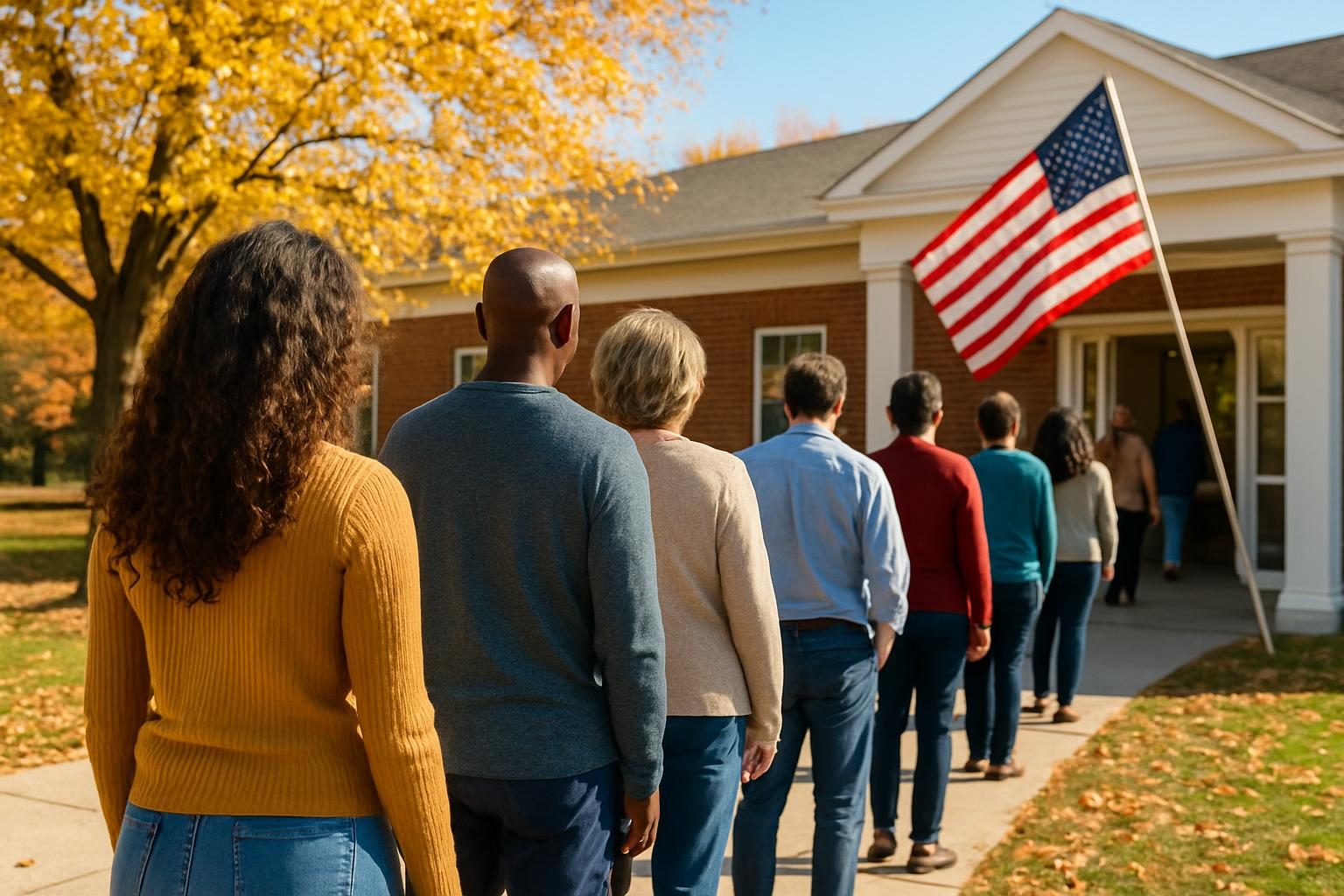
Every two years, Americans get a chance to hit the reset button on the direction of the country, and the 2026 midterm elections are one of those moments. The decisions made on this ballot will echo through Congress, statehouses and the presidential race that follows.
If you want a say in 2028, the work starts now. This guide walks through what is on the ballot, what control actually means, how the results reshape the field and how you can plug in.
Quick answer: The 2026 midterm elections are on Tuesday, November 3, 2026. All 435 House seats, about a third of the Senate and 36 governorships are up for election. The results decide who controls Congress and many state governments, and they shape the 2028 presidential field.
What are the 2026 midterm elections?
Midterms are the national elections held in the middle of a president’s four-year term. This year they fall on Tuesday, November 3, 2026. They do not choose a president, but they decide who writes the laws, who confirms judges and who runs dozens of states.
Here is what is up for election at the federal and state level:
| Office | What is on the ballot in 2026 |
|---|---|
| U.S. House of Representatives | All 435 seats |
| U.S. Senate | About one-third of the seats |
| Governors | 36 governorships |
| State and local offices | Varies by state: legislatures, statewide offices, local races, ballot measures |
Want the basics of the date and your ballot? Our explainer on when the 2026 midterms are and what is on the ballot is the place to go. You can also browse everything we publish on the topic in our Midterms 2026 category.
Why midterms matter more than people think
Midterm turnout is usually lower than in presidential years. That is exactly why every vote carries extra weight. When fewer people show up, the people who do show up decide who holds power.
The offices on this ballot touch daily life. Congress writes tax and spending laws. Governors run state budgets, schools and health programs. State legislatures draw maps, set voting rules and decide how your community is funded.
Here is our view: when people say “my vote does not matter in a midterm,” they have it backwards. A midterm is where your single vote counts for more, because the pool of voters is smaller.
Midterms are where a smaller crowd makes the big decisions, so showing up counts for more.
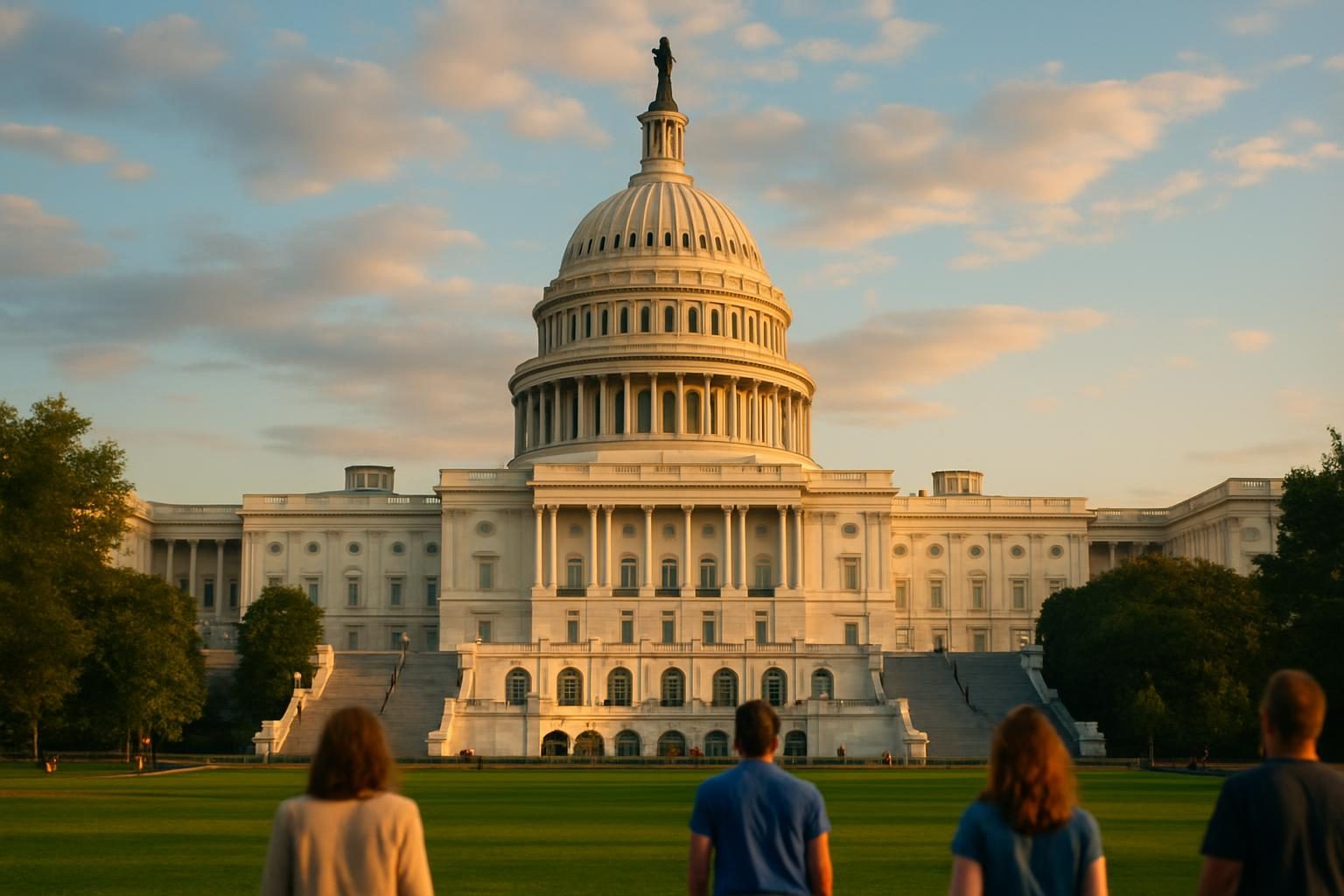
The House: all 435 seats
Every seat in the U.S. House is on the ballot every two years. That makes it the most direct reflection of the country’s mood. If voters want change, the House is where it shows up fastest.
What controlling the House means
The party with the majority picks the Speaker, runs every committee and decides which bills get a vote. That includes the power to set the agenda, hold oversight hearings and write the government’s spending bills, which must start in the House.
A majority also controls the calendar. Bills a party opposes can simply never reach the floor. That is real power, and it is on the line in every House district this November.
How districts work
Each member represents one congressional district. Some districts are safely held by one party. Others are true toss-ups where a few thousand votes decide the outcome. The competitive districts get the most attention and the most volunteers, and they often decide control of the whole chamber.
Curious what a change in control would look like? We break it down in what happens if Democrats win the House in 2026.
The Senate: about a third of the seats
Senators serve six-year terms, and the terms are staggered, so roughly one-third of the chamber is up each cycle. That means the Senate map changes with each election, depending on which seats happen to be up.
Why the Senate is a big deal
The Senate confirms federal judges, cabinet secretaries and many other top officials. It also votes on treaties. A majority in the Senate decides who gets confirmed to lifetime judicial seats, and that shapes the country for decades.
Senate control also decides whether a president’s agenda moves forward or stalls. Even a narrow majority changes who sets priorities and what gets a vote.
Races to watch
Some states have toss-up Senate contests where both parties are investing heavily. We are tracking the key contests in 2026 Senate races to watch, and we will keep that page current as the campaign moves.

The governors: 36 states choose a chief executive
Thirty-six states elect a governor this year. Governors sign or veto laws, manage state budgets, appoint judges and agency heads, and often serve as the public face of their party.
They also shape how elections run. In many states, governors and the officials they appoint influence the administration of voting. That makes these races important for everyone who cares about access to the ballot.
Governors and the 2028 field
Governors are a big part of the 2028 conversation. Several governors are widely reported as potential 2028 Democratic candidates, including Gavin Newsom of California, Josh Shapiro of Pennsylvania, JB Pritzker of Illinois, Gretchen Whitmer of Michigan and Andy Beshear of Kentucky. To be clear, none has declared a run; these are names that are frequently discussed, not announced candidates.
How a governor’s party and allies do in November can raise or lower their national profile. A strong year at home can become a launching pad. Dig into every state in 2026 governor races: all 36 states explained simply.
Why state legislatures and local races count too
Many states also elect legislators, secretaries of state, attorneys general and local officials. These offices rarely get big headlines, but they decide a lot: school funding, health programs, policing rules, housing and how elections are run.
Ballot measures can matter just as much. In some states, voters decide directly on laws and constitutional changes. What appears on your ballot depends on where you live, so check with your state or local election office to see exactly what you will be voting on.
How the 2026 results reshape 2028
Midterm results do more than fill seats. They set the stage for the next presidential race in several concrete ways.
- They set the agenda. Whoever controls Congress shapes the big debates heading into 2028, from the economy to health care to voting rights.
- They test the message. Candidates, strategists and donors study the results to see which arguments worked and which did not.
- They raise or lower profiles. Governors and senators who win, or who campaign hard for others, gain visibility with party activists and donors.
- They build the organization. Volunteer lists, voter data and local networks built in 2026 carry straight into the 2028 effort.
- They shape the map. State-level wins affect who runs elections and who writes the rules in the states that will matter in 2028.
We go deeper on this connection in how midterm results shape the next presidential race.
The road to the White House in 2028 runs straight through the ballots cast this November.

Who might run in 2028?
Here is where things stand. As of October 5, 2026, no major Democrat has formally declared a 2028 presidential run. No Republican has either. Everything you read about 2028 right now is about possibilities.
Widely reported potential Democratic candidates include:
- Governors: Gavin Newsom (California), Josh Shapiro (Pennsylvania), JB Pritzker (Illinois), Gretchen Whitmer (Michigan) and Andy Beshear (Kentucky)
- Former officials: Pete Buttigieg (former Transportation Secretary) and Kamala Harris (former Vice President)
- Members of Congress: Alexandria Ocasio-Cortez (New York representative), Cory Booker (New Jersey senator), Raphael Warnock (Georgia senator), Ruben Gallego (Arizona senator), Mark Kelly (Arizona senator), Elissa Slotkin (Michigan senator), Chris Van Hollen (Maryland senator) and Ro Khanna (California representative)
On the Republican side, the names most often mentioned as potential candidates include JD Vance (Vice President), Marco Rubio (Secretary of State), Ron DeSantis, Ted Cruz and Brian Kemp. None has declared.
Keep up with the whole field in 2028 Democratic candidates: who might run (tracker), and get the big picture in 2028 presidential election: dates, candidates and what to expect.
The 2028 calendar is already taking shape
The next presidential contest has firm dates already. The general election is Tuesday, November 7, 2028. Electors meet on December 18, 2028, and the inauguration is January 20, 2029. A candidate needs 270 of 538 electoral votes to win.
The Democratic National Committee approved its 2028 early-window calendar on August 15, 2026, at its summer meeting in Austin, Texas. Here are the dates:
| State | Date |
|---|---|
| South Carolina | January 22, 2028 |
| Nevada | February 1, 2028 |
| New Hampshire | February 8, 2028 |
| New Mexico | February 15, 2028 |
| Michigan | February 22, 2028 |
| Virginia | February 29, 2028 |
Super Tuesday is March 7, 2028. Iowa is not in the Democratic early window. New Hampshire state law requires it to hold the first primary in the nation, which clashed with the DNC calendar in 2024, so watch for changes there. Republicans are expected to keep Iowa first on their calendar, but the GOP calendar is not final.
The 2028 Democratic National Convention is set for August 7-10, 2028. The finalist host cities are Boston, Denver and Philadelphia; the final pick is expected later in 2026, and we will update this page when it is announced. See every date in the 2028 Democratic primary calendar.
The issues driving the 2026 conversation
Voters will be weighing the cost of living, health care, jobs, education, reproductive rights, voting rights and the future of democracy itself. Our view is that Democrats have a strong case to make on kitchen-table issues, and the best way to make it is to talk to neighbors about how policy shows up in their lives.
Policy details differ from candidate to candidate and race to race, so read what your own candidates say and check their records. For an overview of the big debates heading into 2028, see where Democrats stand on the big issues.
Take action: Check your voter registration today at vote.gov, then text one friend or family member and ask whether they have a plan to vote on November 3. Two minutes of effort can mean two more votes.
How to register, check your status and vote
Voting rules are set by each state, so details differ depending on where you live. The one reliable rule: confirm everything with an official source.
- Register or check your registration: Every state’s official rules, deadlines and online registration links are on vote.gov, in the format https://vote.gov/register/your-state (for example, https://vote.gov/register/ohio or https://vote.gov/register/new-york).
- Know your deadline: Registration deadlines differ by state, and we are not going to guess at yours. Confirm it on vote.gov or with your state election office.
- Same-day registration: Many states offer it, but the rules differ. Check your state’s details before you count on it.
- North Dakota: It is the one state with no voter registration.
- Find your options: Ask your state or local election office about early voting, mail ballots, polling place locations and any ID requirements.
New to all this? Our beginner-friendly walkthrough, how to register to vote: a simple guide for every state, covers the steps.
How to get involved before and after election day
Voting is the foundation, but you can do more. Campaigns and local organizations are always looking for people to help, and no experience is needed.
Easy ways to pitch in
- Volunteer for a phone bank, text bank or door-knocking shift for a candidate you believe in.
- Help a neighbor or classmate register or check their registration.
- Offer rides or childcare so someone can get to the polls.
- Work as a poll worker or ask your local election office how to sign up.
- Chip in what you can to candidates or organizations you trust.
The work does not end on election night. After November 3, results are counted and certified under each state’s rules, and the people elected start building their agendas. Stay engaged, show up to local meetings and keep the energy going into 2028.
Key takeaways
- The 2026 midterm elections are on Tuesday, November 3, 2026.
- All 435 House seats, about a third of the Senate and 36 governorships are up for election.
- Control of Congress and statehouses shapes the agenda, the judges and the rules heading into 2028.
- As of October 5, 2026, no major Democrat has formally declared a 2028 presidential run; all names are potential candidates.
- The general election in 2028 is Tuesday, November 7, 2028, and the DNC’s early-window calendar was approved on August 15, 2026.
- Check your registration and rules at vote.gov or with your state election office, then vote and bring a friend.
Where to start
Feeling a little overwhelmed? Take it one step at a time with this simple roadmap.
- Check your registration at vote.gov or with your state election office.
- Learn what is on your ballot, from the House race to the governor’s race and local measures.
- Make a voting plan: how you will vote, when and where, and who you will bring along.
- Volunteer for a few hours with a campaign or local group you trust.
- Follow along as the 2028 picture comes into focus, starting with our guides on the primary calendar and candidates.
Last updated October 2026. Dates and candidate news change fast; we update this page as things are announced.
Frequently asked questions
When are the 2026 midterm elections?
The 2026 midterm elections are on Tuesday, November 3, 2026. All 435 House seats, about a third of the Senate and 36 governorships are on the ballot. Your state may also offer early or mail voting, so check your state election office for the options and rules where you live.
What offices are on the ballot in 2026?
Every seat in the U.S. House of Representatives, roughly one-third of the U.S. Senate and 36 governorships are up. Many states also vote on state legislatures, other statewide offices, local races and ballot measures. Your exact ballot depends on where you live, so check with your state election office.
Why do midterm elections matter for 2028?
Midterms decide who controls Congress and many state governments heading into the next presidential race. They also raise or lower the profile of potential candidates, especially governors and senators who are on the ballot or campaigning for others. Results shape the issues, the money and the energy going into 2028.
How do I register to vote or check my registration?
Every state’s official rules, deadlines and online registration links are on vote.gov. You can also contact your state or local election office. Deadlines differ by state, so confirm yours on vote.gov or with your state election office as early as you can. North Dakota is the one state with no voter registration.
Has anyone declared a run for president in 2028?
As of October 5, 2026, no major Democrat has formally declared a 2028 presidential run, and no Republican has either. Many names are widely reported as potential candidates, but those are possibilities, not announcements. We update our candidate tracker as news breaks.