You do not have to wait for your 18th birthday to start your voting journey. In many states, you can get on the voter rolls early, so you are ready to cast a ballot the moment you are eligible. If you have been wondering whether you can register to vote at 17, the answer is often yes, and it takes just a few minutes.
Quick answer: In many states, you can register to vote at 17 through pre-registration, which gets you on the rolls before you are old enough to vote. Rules differ by state, including the minimum age and whether 17-year-olds can vote in primaries. Check your state’s official page on vote.gov to see exactly what applies to you.
What pre-registration actually means
Pre-registration lets young people sign up to vote before they reach voting age. You fill out the same kind of information you would for regular registration: your name, address, date of birth and identification details. The state holds your record and activates it when you become eligible.
Think of it as getting your paperwork done early. Instead of scrambling in an election year, you are already set. When you turn 18, you are ready to vote in your first election.
The key point: you still cannot vote until you are eligible. Pre-registration is about being prepared, not about casting a ballot early. The federal rule is that you must be 18 by Election Day to vote in the general election, and states handle the details of how younger people get on the rolls.
The rules are set by your state
Voting and registration rules are largely run by states, so what is true in one place may not be true next door. Some states let you pre-register at 16 or 17. Others have different age cutoffs or process details. A few have their own twists on how pre-registered voters are handled.
That is why we do not publish a one-size-fits-all age chart. Rules change, and you deserve the official answer for where you live. The most reliable place to find it is vote.gov, the federal government’s official voter registration site.
Each state has its own page there, using a simple pattern: https://vote.gov/register/STATE-NAME. For example, https://vote.gov/register/ohio or https://vote.gov/register/new-york. You will find the state’s rules, deadlines and registration links in one place.
Your voice does not start on your 18th birthday. The paperwork can start years sooner.

How to register to vote at 17, step by step
The process is straightforward. Here is a simple path to follow, and it works whether you are pre-registering or registering as soon as you are eligible.
- Visit vote.gov. Find your state’s page and read the eligibility rules, including the minimum age to register.
- Gather your information. Most states ask for your full name, home address, date of birth and an ID number, such as a driver’s license, state ID or part of a Social Security number.
- Choose how to register. Many states offer online registration. Others use paper forms by mail or in person at a state office. Our guide on whether you can register to vote online explains the options.
- Submit and save your confirmation. Keep any confirmation number or receipt. It helps if you need to follow up later.
- Check your status. After a few weeks, confirm that your record is on file. Our walkthrough on how to check your voter registration status takes only minutes.
For a broader overview that covers every state, see our simple guide to registering to vote.
What you might need on hand
Having your documents ready makes things faster. The exact requirements are set by your state, so use this table as a starting checklist and confirm details on your state’s vote.gov page.
| Item | Why it may be asked for |
|---|---|
| Full legal name | To create your voter record |
| Date of birth | To confirm your age and eligibility timing |
| Home address | To assign your districts and polling place |
| Driver’s license or state ID number | To verify who you are |
| Last digits of Social Security number | Used as an alternate identifier in some states |
Can 17-year-olds vote in primaries?
This is one of the most common questions, and it is a good one. In some states, a 17-year-old who will turn 18 by the general election can vote in the primary that comes before it. In other states, you must be 18 on the day of the primary itself.
Because this varies, do not assume. Confirm with your state election office or on vote.gov before you plan around a particular primary.
If you are curious how the nominating contests work in a presidential year, our explainer on how presidential primaries work breaks it down. And if you want to see what is coming, the 2028 Democratic primary calendar lists the dates set so far. The DNC approved its early-window calendar on August 15, 2026, with South Carolina leading off on January 22, 2028.
A registered voter who shows up is the most powerful thing in a democracy.
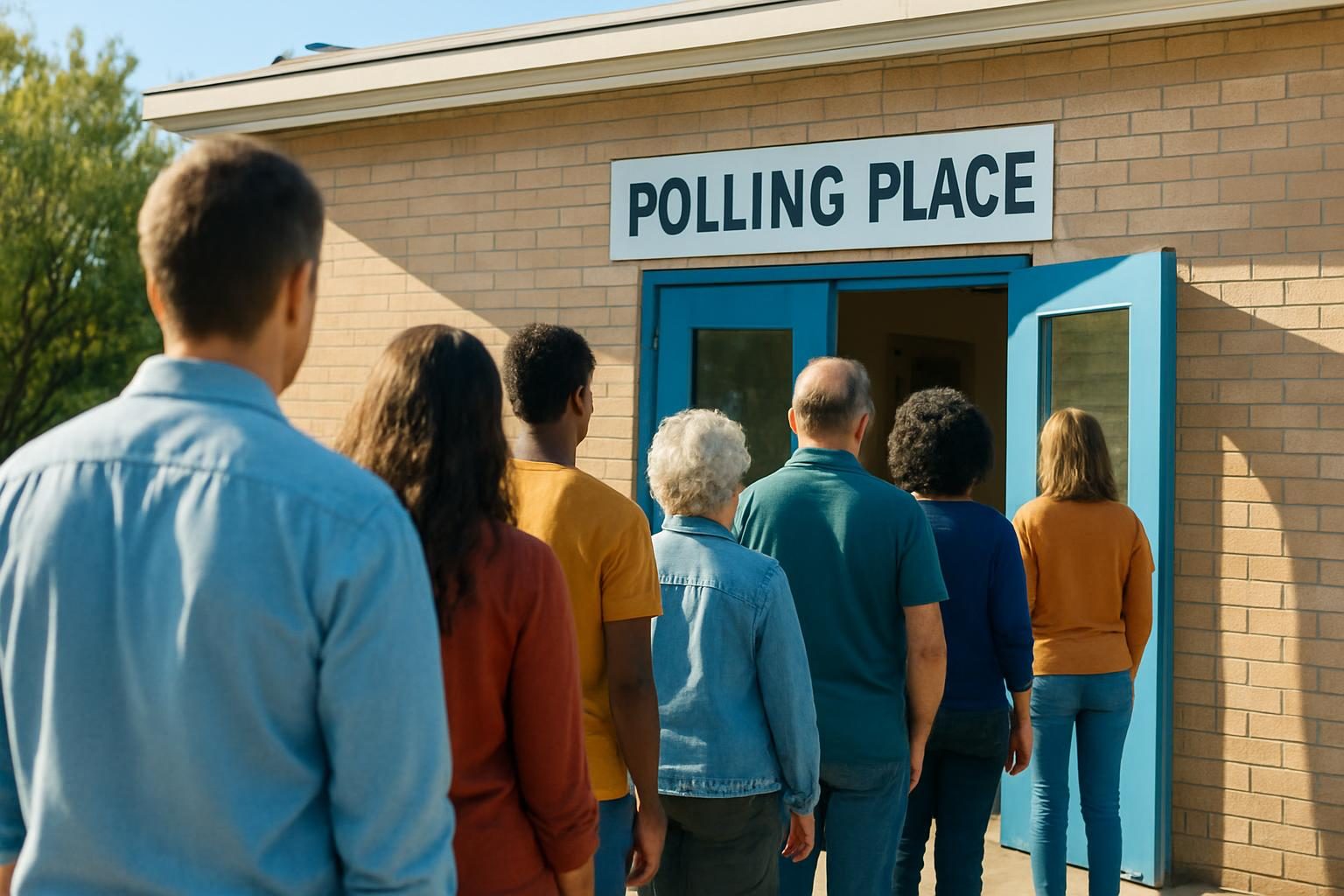
Why young voters should get registered early
Here is our view, and we are happy to say so plainly: registering early is one of the easiest ways to make sure your voice counts. Elections are often decided by communities that show up, and young people are a huge part of that story. The more of us who are ready, the stronger our democracy is.
Getting registered early also removes a common barrier. Many people miss out on an election simply because they ran out of time, moved or were not sure how the process worked. Doing it ahead of schedule means one less thing to worry about when it counts.
There is a practical side too. Once you are on the rolls, you can start learning about candidates, ballot measures and the issues that matter to you. Our guide to where Democrats stand on the issues is a good place to begin.
The next big dates
The next national election is the 2026 midterms on Tuesday, November 3, 2026, covering all 435 House seats, about a third of the Senate and 36 governors. The next presidential election is Tuesday, November 7, 2028. If you are 17 now, you may be eligible by then, and possibly sooner depending on your birthday and your state’s rules.
To see what is on the line this fall, read our overview of the 2026 midterm elections and what is at stake for 2028. For the road ahead, our 2028 presidential election hub tracks dates and developments, and we update it as news breaks.

Special situations to know about
If you are a college student
Heading off to school soon? You will need to decide whether to register at your home address or your campus address. Both can be valid in many places, but the choice has consequences. Our college students voting guide walks through it.
If you move after registering
Your registration is tied to your address. If you move, you will generally need to update it. We are working on a guide to updating your voter registration after you move, and in the meantime your state election office can tell you what to do.
If you live in a state without much information online
Some states make things easy online, and some rely more on paper forms or in-person offices. If you cannot find what you need, contact your state or local election office directly. They can tell you how pre-registration works where you live. For example, see our guide on how to register to vote in Illinois.
State-specific guides
We are building out state-by-state registration guides. Right now you can read ours for Pennsylvania, Michigan and Georgia, with more on the way, including California, Texas and Florida. You can also browse everything in our Voting & Registration category.
Take action: Open vote.gov right now, pick your state and see whether you can pre-register today. Then text one friend who is 16 or 17 and send them the link. It takes five minutes and could be the start of a lifetime of voting.
What to do after you register
Registering is the first step, not the last. Once you are on the rolls, there is plenty more to do to get ready.
Learn how you will vote when the time comes. Read up on early voting, voting by mail and the voter ID rules in your state so there are no surprises. Then find out how to find your polling place.
And do not stop at voting. Volunteer, canvass, phone bank or help a friend register. Campaigns and community groups love energetic young people, and you do not need experience to jump in. Every conversation you have makes the next election a little stronger.
One more reminder: we are not a government agency and this is not legal advice. For any question about your eligibility, deadlines or documents, rely on vote.gov or your state election office.
Last updated October 2026. Dates and candidate news change fast; we update this page as things are announced.
Key takeaways
- In many states, you can register to vote at 17 through pre-registration, but the rules differ by state.
- Pre-registration gets you on the rolls early; you still cannot vote until you are eligible.
- Whether 17-year-olds can vote in primaries depends on your state, so confirm before you plan.
- Vote.gov has an official page for every state with the rules and registration links.
- Check your status after you register, and update it if you move.
- Do not stop at registering: learn how to vote, volunteer and bring a friend along.
Frequently asked questions
Can you register to vote at 17?
In many states, yes. Pre-registration lets 16- and 17-year-olds sign up before they can vote, but rules vary by state. Check your state’s page on vote.gov to see exactly what applies to you.
Can a 17-year-old vote in a primary?
Some states allow 17-year-olds to vote in a primary if they will turn 18 by the general election. Not every state does, so confirm with your state election office or vote.gov before counting on it.
Do I need a Social Security number or ID to pre-register?
Requirements differ by state, and many ask for a driver’s license, state ID or the last digits of a Social Security number. Your state’s vote.gov page explains what to have ready.
What happens to my pre-registration when I turn 18?
In most states that offer pre-registration, your registration becomes active once you reach the eligible age. Details vary, so confirm your status with your state election office after your birthday.
What if I live in a state without pre-registration?
You can still register as soon as you become eligible. Mark your calendar, gather your documents and use vote.gov to find your state’s official process, rules and deadlines.