★ Election Day 2028 is in 763 days  ·  Midterms in 28 daysRegister to vote →

Category: Voting & Registration

How to register, check your status, and vote early or by mail in every state. Start with How to Register to Vote: A Simple Guide for Every State. Start with 2026 Midterm Voter Registration Deadlines by State.

  • How to Register to Vote in Illinois: 2026 Guide

    How to Register to Vote in Illinois: 2026 Guide

    Want to know how to register to vote in Illinois? The good news is that the process is straightforward, and you can get it done in a few minutes. Every election, from your local school board to the race for the White House, is decided by the people who show up, and that starts with being on the rolls. If you’re in a different state, we also have guides like our guide to registering in New York.

    Quick answer: To register to vote in Illinois, confirm you are eligible, then register online, by mail, in person or through a state agency such as the DMV, using the official links on vote.gov/register/illinois. Deadlines and ID rules are set by the state, so check the current details on vote.gov or with your state election office.

    We are a progressive guide to the 2028 election, and we believe the best way to build a better future is to start at the ballot box. This page walks you through the Illinois basics, step by step, with no legal jargon. For voters in other states, we also have guides like our New Mexico voter registration guide.

    Who can register to vote in Illinois

    In general, you need to be a U.S. citizen, meet the state’s minimum age requirement by Election Day, and live in Illinois. Illinois sets its own rules on residency length and on how voting rights work for people with past convictions, so read the specifics on the official state page before you fill anything out.

    Not 18 yet? Many states let younger people pre-register so they are ready on their birthday. See our guide to registering to vote at 17 and confirm what Illinois allows on vote.gov.

    If you are a student, your choice of home address or school address can matter. Our college students voting guide explains how to think it through.
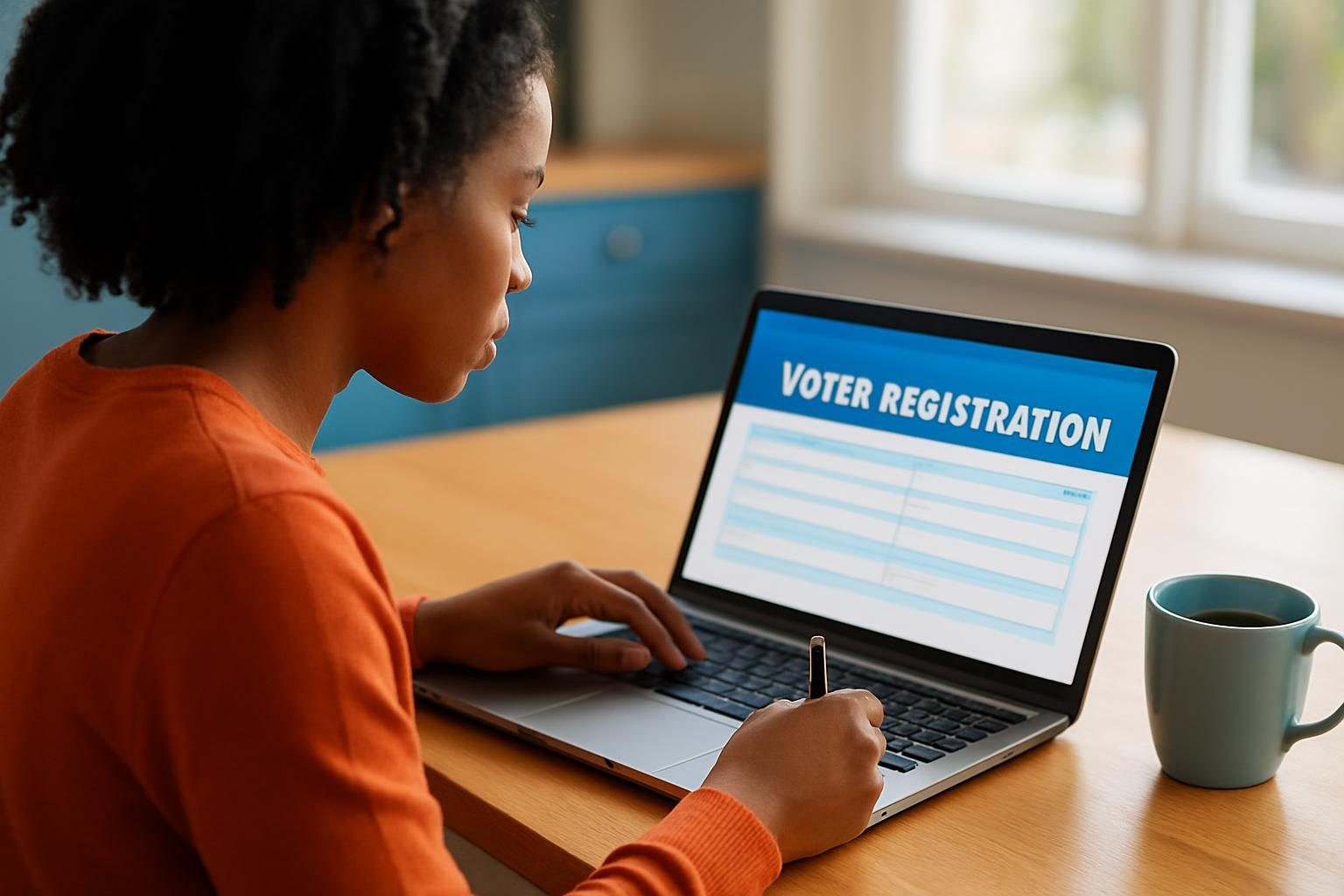
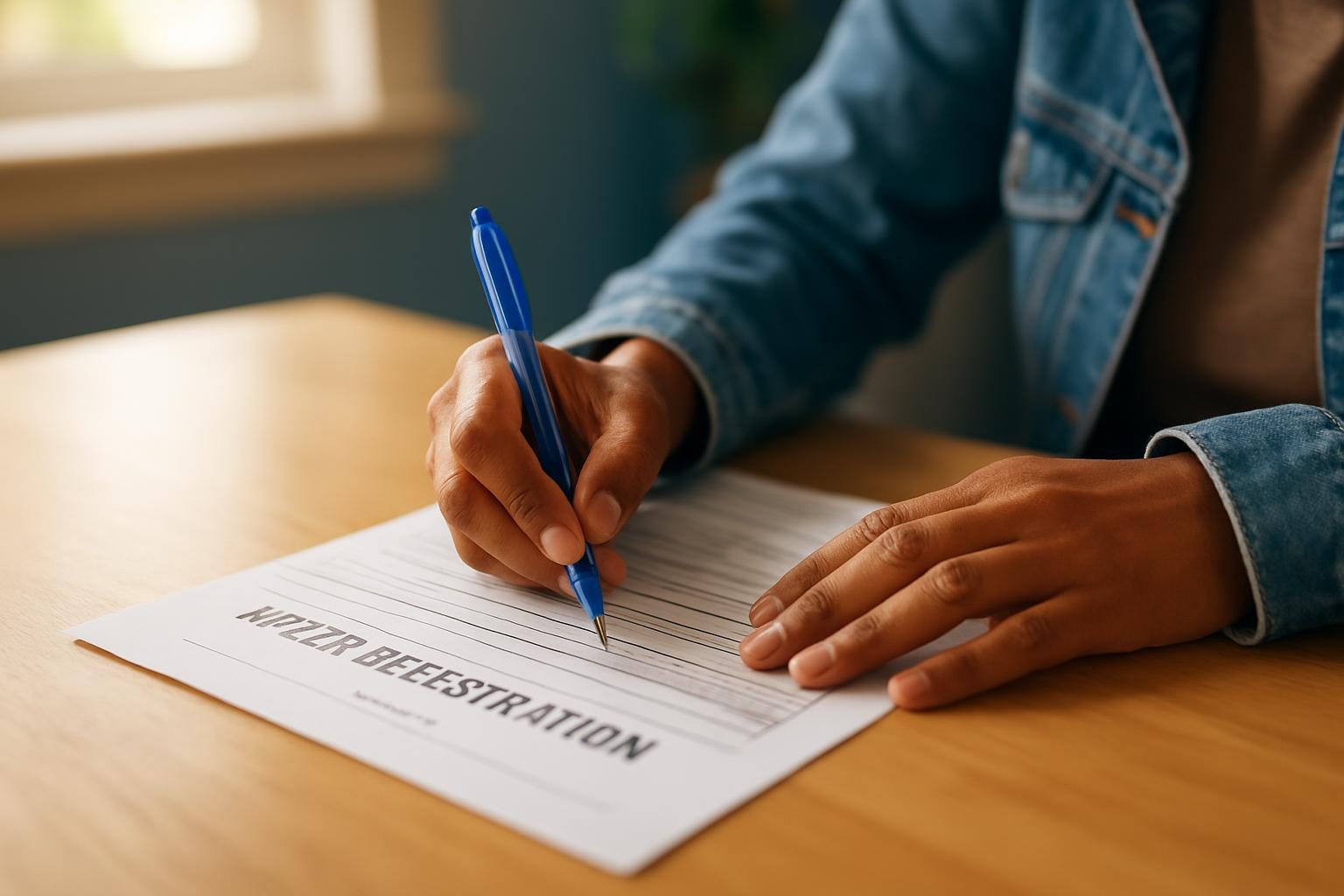
    Person completing an online voter registration form on a laptop at home

    Every way to register in Illinois

    Illinois gives you several routes to get registered. Pick whichever one fits your life. Whichever you choose, start from vote.gov/register/illinois, which lists the state election office and the official online registration link.

    Method How it works Good to know
    Online Use the official Illinois online registration system, linked from vote.gov. Fastest option for most people. Have your identifying information handy.
    By mail Complete a registration form and send it to your local election authority. Allow time for mail delivery and processing. Confirm the current form and address on vote.gov.
    In person Register at your local election office or another official location. Ask about what to bring so you are not turned away.
    At the DMV or other state agencies Register or update your information when you handle a license or ID transaction. A convenient way to stay current when you move or renew.

    Illinois also has options for registering close to Election Day. Rules for those options can differ by method and location, so check the current details on vote.gov before you count on them. We will not guess at a deadline here, because accuracy matters more than a quick answer.

    For a broader look at how online registration works across the country, read Can You Register to Vote Online?

    Registering takes minutes. The decisions made by the people you help elect last for years.

    How to check or update your registration

    Do not assume you are registered just because you voted once. Moving, changing your name or going a long stretch without voting can all affect your status. A quick check now can save you a headache later.

    Check your status

    Use the official Illinois voter lookup, which you can reach through vote.gov or your state election office. Enter your information, confirm your name and address, and note your assigned polling place and ballot details when they are available. Our voter registration status guide covers the process in plain language.

    Update your information

    If you have moved, changed your name or want to update your details, submit the update through the same official channels you would use to register. Do it as early as you can. We are working on a dedicated guide to updating your registration after a move, so look for our guide to updating your voter registration after moving soon.

    ID basics for Illinois voters

    Identification can come up in two places: when you register and when you vote. The rules differ by method, and they can change, so we are not going to hand you a checklist that might be out of date.

    Here is what we recommend. Before you register, look at the official Illinois page linked on vote.gov to see what information the online or paper form asks for. Before you vote, confirm what you need to bring to your polling place or what to include with a mail ballot. For a national look at how states handle this, see our voter ID requirements by state guide.

    Take action: Open vote.gov/register/illinois right now, check your status, and text one friend or family member to do the same. Two minutes today can mean two more votes in the next election.
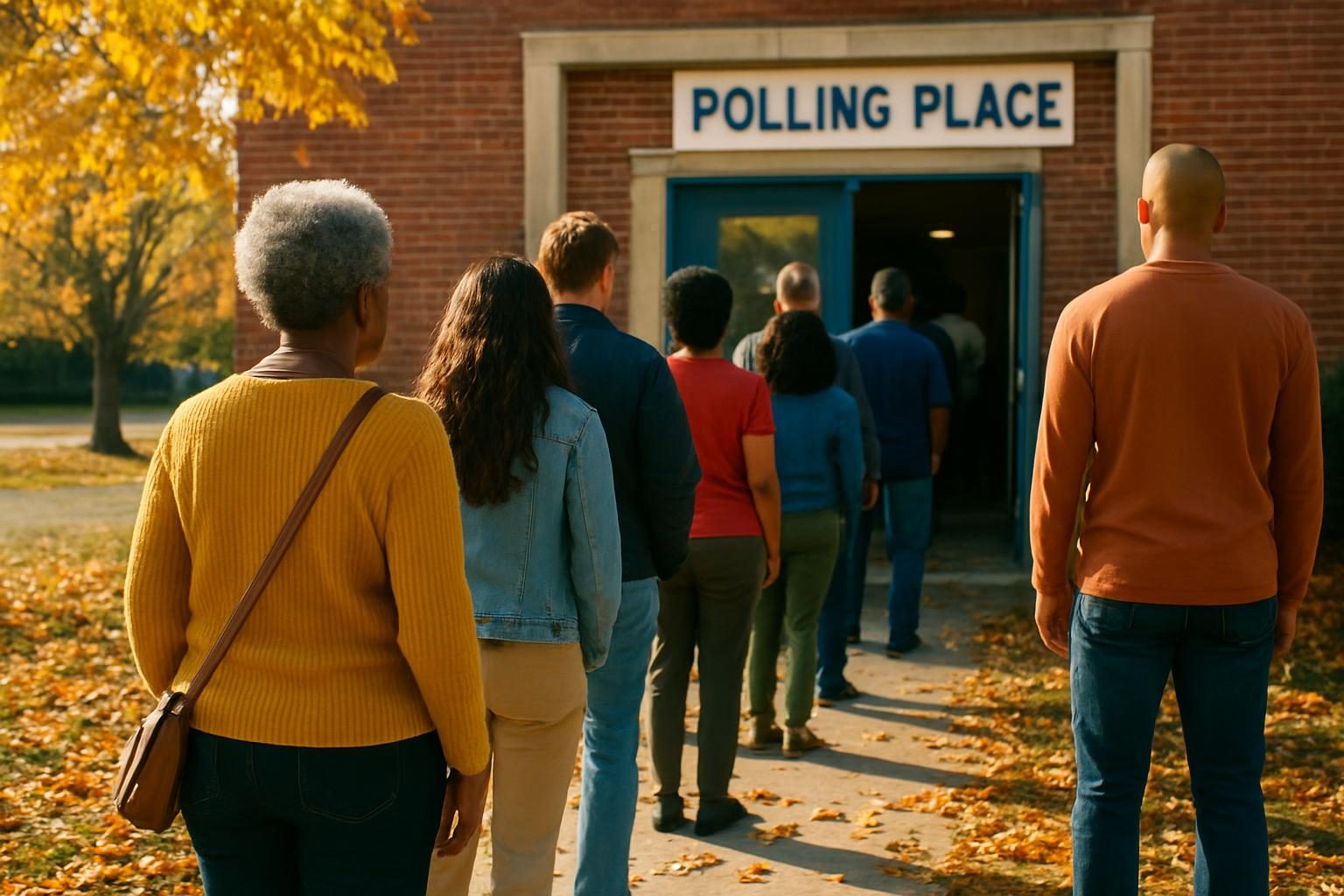
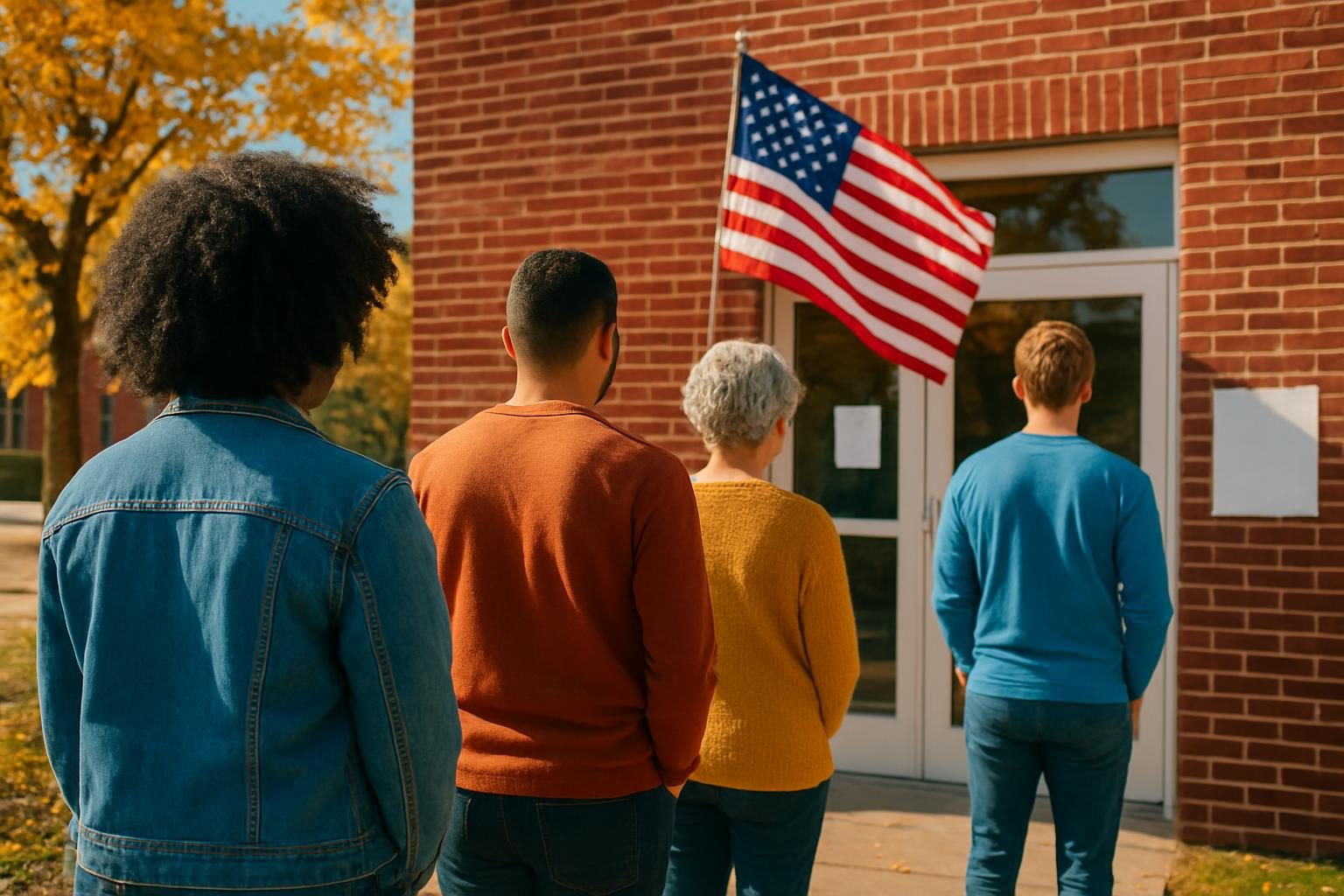
    Line of voters waiting outside a polling place on a fall morning

    Early voting and voting by mail in Illinois

    Illinois gives voters options beyond Election Day. Depending on the election, you may be able to vote early in person or request a ballot by mail. These options can be a lifeline if you work long hours, care for family or just want to avoid a crowded polling place.

    The details, including when early voting starts, where to go and how to request and return a mail ballot, are set by the state and your local election authority. Confirm them with your state election office through vote.gov. For explainers, see our guides on early voting and how to vote by mail, and learn how to find your polling place.

    The 2026 midterms are on Tuesday, November 3, 2026, with all 435 House seats, about a third of the Senate and 36 governors on the ballot. If you are reading this before that date, check your options right away. Our 2026 midterm elections guide explains what is at stake.

    Every election is a chance to show up for the neighbors, schools and services we care about.

    Illinois in the 2028 race

    Illinois is home to one of the governors people often mention as a potential 2028 Democratic candidate, JB Pritzker. To be clear, no major Democrat has formally declared a run, and potential candidates are just that: potential. You can follow the field in our 2028 Democratic candidates tracker.

    When does Illinois vote in the 2028 primary? The date is still being set, and we do not want to guess. Check back, because we will update this page when it is announced. Meanwhile, the DNC has approved its early-window calendar, which you can explore in our 2028 Democratic primary calendar. The general election is Tuesday, November 7, 2028.

    For the big picture, start with our 2028 presidential election hub, and learn how presidential primaries work so you know what to expect when your turn comes.
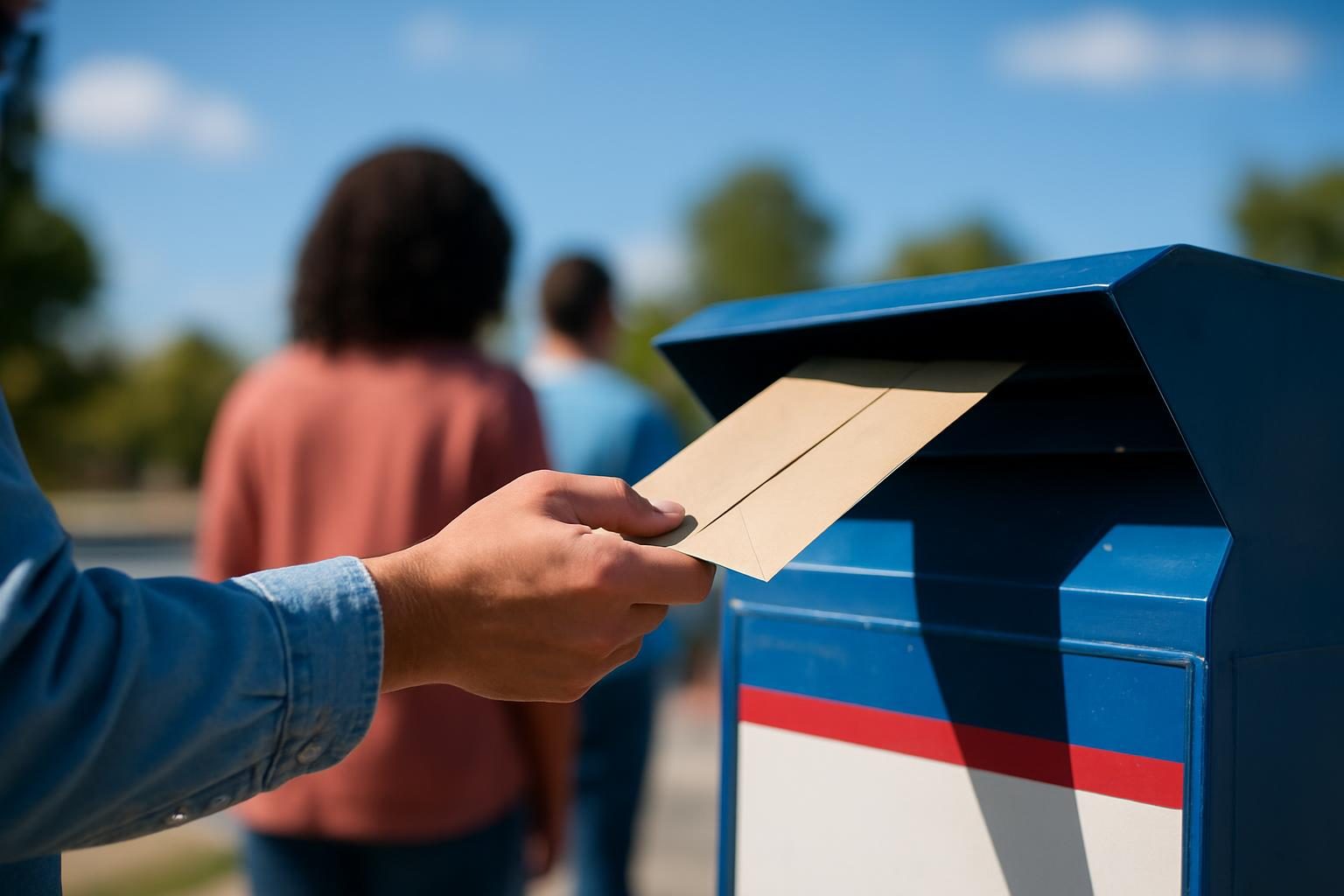
    Hands placing a mail ballot into a secure ballot drop box

    Your 5-step Illinois voter checklist

    1. Confirm you are eligible. Review the requirements on vote.gov/register/illinois.
    2. Check your status. Look yourself up first. You may already be registered.
    3. Register or update. Choose online, mail, in person or a state agency, and use the official links.
    4. Plan how you will vote. Decide among early voting, mail voting or Election Day, and confirm details with your state election office.
    5. Bring someone with you. Share this guide, offer a ride or volunteer. Our national guide to registering in every state is easy to pass along.

    Have friends in other states? Send them to the guides we have so far, including Michigan, Wisconsin and Pennsylvania. Guides for more states are on the way, including Ohio and Indiana. You can browse everything in our Voting & Registration section.

    Key takeaways

    • Start at vote.gov/register/illinois for the official state election office and online registration link.
    • Illinois offers several ways to register, including online, by mail, in person and through state agencies.
    • Check your status before you assume you are registered, and update it after any move or name change.
    • Confirm current deadlines and ID rules on vote.gov or with your state election office, since they can change.
    • The 2028 Illinois primary date is still being set. We will update this page when it is announced.
    • Registering is the first step. Vote, volunteer and bring a friend.

    Last updated October 2026. Dates and candidate news change fast; we update this page as things are announced.

    Frequently asked questions

    Can I register to vote online in Illinois?

    Illinois offers online voter registration, and vote.gov links to the official state page where you can start. Eligibility and ID requirements for the online form are set by the state, so confirm the details on vote.gov or with your state election office before you begin.

    How do I know if I am already registered in Illinois?

    Use the voter lookup tool on the official Illinois election websites, which you can reach through vote.gov. You will usually need your name and address, and sometimes your date of birth. If anything is wrong or missing, update it right away rather than waiting until Election Day.

    What is the registration deadline in Illinois?

    Deadlines depend on the election and the method you use, and Illinois has options that can extend how late you can sign up. Check the current deadline on vote.gov or with your state election office, and register as early as you can so you are not racing the clock.

    Do I need to re-register if I move within Illinois?

    Yes, in most cases you should update your registration when your address changes so you are assigned to the right polling place and ballot. You can usually do this through the same channels you would use to register. Confirm the current steps on vote.gov.

    When is the 2028 Illinois presidential primary?

    The date has not been announced yet. States set their primary dates on their own schedules, and we will update this page as soon as Illinois confirms. For the Democratic early-window states that are already set, see our 2028 primary calendar.

  • How to Register to Vote in Florida: 2026 Guide

    How to Register to Vote in Florida: 2026 Guide

    Florida is one of the biggest prizes in American politics, and every single registered voter there counts. Whether you just moved to the Sunshine State, just turned 18, or have been meaning to get around to it for years, getting registered takes only a few minutes. Here is how to register to vote in Florida, step by step. (If you’ve recently relocated from another state, you may also want to review how to register to vote in Illinois or your current state’s requirements.)

    Quick answer: To register to vote in Florida, start at the official state page on vote.gov. It links to Florida’s online registration, the paper application, and your state election office. You can also register by mail, in person at election offices, or at the DMV. Deadlines and ID rules are set by the state, so confirm them on vote.gov before you act.

    Who can register to vote in Florida

    The basics are similar across the country, but Florida’s rules are set by state law and can change. In general, you need to be a U.S. citizen, a Florida resident, and old enough to vote by Election Day. Florida also has rules about certain felony convictions and about mental capacity determinations, so the details matter. (Requirements vary by state—for example, see our New Mexico registration guide.)

    If you have a past conviction and are not sure whether your rights have been restored, do not guess. Check with the state election office or your county Supervisor of Elections, and use the Florida page on vote.gov to find the right contacts. Our view: never assume you are ineligible, because a quick, official answer is worth the effort.

    Young people have options too. Many states let teens pre-register before they turn 18. Read our guide to registering to vote at 17, then confirm Florida’s current age rules with your county elections office.

    Young voter completing an online registration form on a laptop

    Every way to register in Florida

    Florida gives you several paths. Pick whichever is easiest for you, and keep a record of when you applied. For official links and the current rules, the Florida page on vote.gov is your home base.

    Method How it works Best for
    Online Florida offers online registration through the state’s official system, linked from vote.gov. Anyone with a computer or phone and the required ID details
    By mail Print the official voter registration application, fill it out, and return it to your county Supervisor of Elections as instructed on the form. People who prefer paper
    In person Visit your county Supervisor of Elections office to register or get help. Anyone with questions or a complicated situation
    At the DMV You can register or update your registration when you get or renew a driver’s license or state ID. New residents and anyone renewing an ID

    Other public offices that offer voter registration services may also be available, and counties can have local options. Ask your Supervisor of Elections what is available near you.

    Be careful about where you register online. Always begin at vote.gov or your county Supervisor of Elections website, not a random search result. That way you land on the real government system and never hand your personal information to a look-alike site.

    Want to compare states? Our guide to registering online explains how online registration works nationwide, and our main registration guide covers every state.

    Registering takes a few minutes. The decisions made by the people you help elect last for years.

    How to check or update your registration

    Do not assume you are still registered. People fall off the rolls or end up with outdated information after a move, a name change, or a long stretch between elections. A two-minute check can save you a real headache.

    Check your status

    Use the voter lookup tool on Florida’s official state election website, or call your county Supervisor of Elections. The vote.gov Florida page points you to the right place. Our voter status check guide walks through the process.

    Update your information

    If you moved, changed your name, or want to update your address, you generally need to update your registration so your ballot and polling place are correct. Moving between counties is an especially important reason to update. We are preparing a guide on updating your voter registration after moving, and in the meantime your county elections office can walk you through it.

    Students should read our college students voting guide to decide whether to register at a home or school address.

    Hands placing a mail ballot envelope into a drop box

    ID basics for Florida voters

    Florida generally asks for identification at the point of registration and again when you vote. The specific forms of ID that are accepted, and any alternatives if you lack one, are determined by state law and can change. We will not guess at a list here, because a wrong answer could cost you your vote.

    Before you register, have your driver’s license or state ID number handy, or the last digits of your Social Security number if that is what the form asks for. Before you vote, check the current ID requirements with your county Supervisor of Elections or through vote.gov. For a national comparison, see our voter ID requirements by state guide.

    Early voting and mail voting in Florida

    You do not have to vote on Election Day. Florida offers options that make it easier to fit voting into a busy life, including early in-person voting and voting by mail. Availability, dates, and locations are set at the state and county level and can change from one election to the next.

    Voting by mail can be a lifesaver for people with unpredictable work schedules, health needs, or caregiving duties. To request a mail ballot and learn the current rules, contact your county Supervisor of Elections. Our explainer on voting by mail covers how absentee and mail ballots work in general.

    Prefer to vote in person ahead of the crowds? Read our guide to early voting, then ask your county elections office for the early voting sites and hours that apply to you. Not sure where to go on Election Day? Our polling place guide can help.

    Take action: Open vote.gov/register/florida right now and check that your registration is current. Then text one friend or family member in Florida and ask them to do the same.

    Line of diverse voters waiting outside a polling place

    Florida in the 2028 race

    Florida will have a say in the 2028 presidential election, and its voters will help choose the nominees. The date of Florida’s 2028 presidential primary is still being set, so we are not listing one here. Check back, because we will update this page as soon as the date is confirmed.

    What we do know is the national picture. The DNC approved its 2028 early-window calendar on August 15, 2026, starting with South Carolina, and Super Tuesday is March 7, 2028. Florida is not among the early states, so its primary comes later in the process. See our 2028 Democratic primary calendar for every date so far, and how presidential primaries work for a refresher.

    The general election is Tuesday, November 7, 2028. As of this writing, no major Democrat has formally declared a run, though many potential candidates are widely discussed. Follow along with our 2028 Democratic candidates tracker, and see the full picture at our 2028 presidential election hub.

    Closer to home, the 2026 midterms on Tuesday, November 3, 2026 decide all 435 House seats, about a third of the Senate, and 36 governorships. Our 2026 midterms guide explains what is at stake for 2028.

    Every election is decided by the people who show up, and showing up starts with being registered.

    Your 5-step Florida checklist

    1. Check your status. Use the official lookup tool through vote.gov or call your county Supervisor of Elections.
    2. Register or update. Choose online, mail, in person, or the DMV. Update your registration after any move or name change.
    3. Confirm the deadline. Check the current registration deadline on vote.gov or with your county elections office, and do not wait until the last minute.
    4. Know your ID. Confirm what identification is accepted before you register and again before you vote.
    5. Make a voting plan. Decide whether you will vote early, by mail, or on Election Day, and then bring a friend.

    Want to go further? Volunteer with a local campaign, a voter registration drive, or a ride-to-the-polls effort in your community. Our view: registration is the first step, and helping a neighbor register multiplies your impact. You can also browse more in the Voting & Registration section.

    Key takeaways

    • Start at the official Florida page on vote.gov to find online registration and your state election office.
    • You can register online, by mail, in person, or through the DMV.
    • Check your status regularly, and update it after a move or name change.
    • ID rules and deadlines are set by the state and can change, so confirm them before you act.
    • Florida’s 2028 primary date is still being set; we will update this page when it is announced.
    • Registering is step one. Helping others register is how movements grow.

    Last updated October 2026. Dates and candidate news change fast; we update this page as things are announced.

    Frequently asked questions

    Can I register to vote in Florida online?

    Florida offers online registration through the state’s official system, and vote.gov links to it from the Florida page. Always start at vote.gov/register/florida so you land on the real state site and not a look-alike.

    Can I register to vote in Florida before I turn 18?

    Florida generally allows young people to pre-register before their 18th birthday, with the registration taking effect once they are eligible. Confirm the current age rules on vote.gov or with your county Supervisor of Elections. Our guide to registering at 17 explains how pre-registration works in general.

    How do I know if I am already registered in Florida?

    Use the voter lookup tool on the Florida state election website, which you can reach through vote.gov, or contact your county Supervisor of Elections. Check after any move, name change, or long gap between elections.

    Do I need ID to register or vote in Florida?

    Florida asks for identification when you register and when you vote, but the exact accepted forms are set by the state and can change. Check the current rules on vote.gov or with your county elections office before you head out.

    What is the registration deadline in Florida?

    Deadlines are set by state law and can change, so we do not list a date here. Check the current deadline for your election on vote.gov or with your county Supervisor of Elections, and register as early as you can.

  • How to Register to Vote in California: 2026 Guide

    How to Register to Vote in California: 2026 Guide

    California is the biggest voting state in the country, and every voter here has real power to shape the next two years and the 2028 race. The first step takes only a few minutes. This guide walks you through how to register to vote in California, check your status, and get ready for the ballots ahead.

    Quick answer: To register to vote in California, go to the official page at vote.gov/register/california, which links to the state’s online registration and lists the state election office. You can also register by mail, in person or through the DMV. Always confirm the current deadline on vote.gov or with your state election office before you act.

    The 2026 midterm elections are on Tuesday, November 3, 2026, and they set the stage for 2028. If you are not sure you are registered, do not wait. Our 2026 midterm elections guide explains what is at stake.

    Who Can Register to Vote in California

    Eligibility rules are set by the state, so treat the official page as the final word. In general, you must be a US citizen who lives in California and is old enough to vote by Election Day. There are additional rules, for example for people with certain criminal convictions, so check the official details rather than guessing.

    If you are not yet 18, you may be able to pre-register. Read our explainer on registering to vote at 17, then confirm California’s current rules on vote.gov.

    Registering takes minutes, but the power it unlocks lasts every election day for years to come.

    A young voter completing an online registration form on a laptop

    Every Way to Register to Vote in California

    California gives you several routes, so you can pick the one that fits your life. Here is a quick comparison. Details and any deadlines can change, so use the official page to confirm before you start. (Other states have different processes—for example, see how to register to vote in New Hampshire.)

    Method How it works Good for
    Online Start from vote.gov/register/california, which links to the state’s online registration. Most people; it is quick and works from your phone.
    By mail Complete a paper registration form and send it to your county election office. Get the current form and address from the state election office. Anyone who prefers paper or has limited internet access.
    In person Visit your county election office or another official site to register with help from staff. People who want to ask questions face to face.
    At the DMV Register or update your registration when you get or renew a license or ID. Anyone already making a trip to the DMV.

    Not sure which is best? For most people, online is the fastest path. If you want to see how it works across the country, our guide on registering to vote online explains what to expect.

    How to Check or Update Your Registration

    Registered a while ago? It is worth a two-minute check. People get dropped or end up with outdated information more often than you might think, especially after a move or a name change.

    Check your status

    Use the lookup tool run by the state election office, which you can reach through vote.gov. Our walkthrough on how to check your voter registration status shows what to look for.

    Update your information

    If you moved, changed your name, or want to update your party preference, update your registration through the same official channels you would use to register. If you moved from another state, see our upcoming guide on how to update your voter registration after moving, or check out our guide on registering to vote in Florida. Confirm the current deadline on vote.gov before you assume you are covered.

    ID Basics for California Voters

    Rules about what identification you need can depend on how you register and whether you have voted before. Because the details matter and can change, we are not listing specific documents here. Check the official page at vote.gov/register/california or ask your county election office what applies to you.

    For a broader look at how states handle ID, see our guide to voter ID requirements by state. For rules specific to your situation, always go to the official source.

    A quick status check today can save you a headache on Election Day.

    Hands placing a ballot envelope into a drop box

    Early Voting and Mail Voting Overview

    Many voters like having options beyond a single Election Day. California offers ways to vote by mail and ahead of Election Day, and the details, including when ballots go out and how to return them, are set by the state and your county. Check the current rules on vote.gov or with your county election office.

    If you plan to cast a ballot by mail, our guide on how to vote by mail covers the basics, and our explainer on early voting shows how to find your options. Once you know how you want to vote, our tool-free guide to finding your polling place helps you make a plan.

    California in the 2028 Race

    California is a giant in presidential politics, and it is home to one of the best-known names on the list of potential Democratic candidates. Governor Gavin Newsom and Representative Ro Khanna are both widely reported as potential 2028 contenders. As of our October 2026 check, no major Democrat has formally declared a run, so we describe them only as potential candidates. You can follow the full list in our 2028 Democratic candidates tracker.

    What about timing? The DNC approved its early-window calendar on August 15, 2026, and California is not part of that early window. The date of California’s 2028 presidential primary is still being set, so we are not listing one here. Check back, because we will update this page the moment it is announced. In the meantime, our 2028 Democratic primary calendar tracks every date so far, and our guide to how presidential primaries work explains the process.

    The general election is Tuesday, November 7, 2028. For the big picture, start with our 2028 presidential election hub.

    Capitol dome at golden hour with volunteers walking toward a community event

    Your 5-Step California Registration Checklist

    1. Check your status. Use the lookup tool linked from vote.gov to see whether you are already registered and whether your address is current.
    2. Pick your method. Choose online, mail, in person or the DMV from the table above.
    3. Confirm the deadline. Check the current deadline on vote.gov or with your state election office. Do not rely on a date you heard secondhand.
    4. Register or update. Complete the form with accurate, current information, and keep a record of when you submitted it.
    5. Make a voting plan. Decide whether you will vote by mail, early or in person, and tell a friend or family member so they can do it with you.

    Take action: Open vote.gov/register/california right now, check your status, and send the link to one friend who has not registered yet. One quick text can bring a whole new voter into the process.

    Want to help beyond your own ballot? Offer to be the registration buddy for a roommate, a coworker, or someone at your place of worship. Our overview of how to register to vote in every state is easy to share, and so is the Voting & Registration section of our site.

    Our view: A strong democracy depends on people showing up, and California voters have an outsized voice in choosing the next president. Registering and voting is the simplest, most powerful thing you can do for the future you want.

    Last updated October 2026. Dates and candidate news change fast; we update this page as things are announced.

    Key takeaways

    • The official starting point is vote.gov/register/california, which links to online registration and the state election office.
    • You can register online, by mail, in person or through the DMV; online is the fastest for most people.
    • Check your status after any move or name change, and confirm the current deadline on vote.gov.
    • The 2026 midterms are Tuesday, November 3, 2026, and the 2028 general election is Tuesday, November 7, 2028.
    • California’s 2028 primary date is still being set; we will update this page when it is announced.

    Frequently asked questions

    Can I register to vote in California online?

    Yes. The official page at vote.gov/register/california links to the state’s online registration, which is the fastest route for most people. Confirm the current steps and any deadline on vote.gov or with the California Secretary of State’s office before you start.

    How do I know if I’m already registered in California?

    Use the voter status lookup tool run by the state election office, which you can reach through vote.gov. Check it after any move, name change or long gap since you last voted. If anything looks wrong, update your registration right away.

    Do I need to register again if I moved within California?

    Generally, yes: your registration is tied to your address, so a move usually means updating it. You can typically do this the same ways you would register. Check vote.gov for the current process and deadline.

    Can 16- and 17-year-olds do anything to get ready to vote?

    Many states let teens pre-register before they turn 18, and the rules vary. Check vote.gov for California’s current pre-registration rules, and read our guide on registering to vote at 17 for the general picture.

    When is the California presidential primary in 2028?

    The date is still being set, so we are not listing one. The DNC has approved its early-window calendar, but California is not in that early window. Check back, because we update this page as soon as dates are announced.

  • Register to Vote at 17: Can You Pre-Register?

    Register to Vote at 17: Can You Pre-Register?

    You do not have to wait for your 18th birthday to start your voting journey. In many states, you can get on the voter rolls early, so you are ready to cast a ballot the moment you are eligible. If you have been wondering whether you can register to vote at 17, the answer is often yes, and it takes just a few minutes.

    Quick answer: In many states, you can register to vote at 17 through pre-registration, which gets you on the rolls before you are old enough to vote. Rules differ by state, including the minimum age and whether 17-year-olds can vote in primaries. Check your state’s official page on vote.gov to see exactly what applies to you.

    What pre-registration actually means

    Pre-registration lets young people sign up to vote before they reach voting age. You fill out the same kind of information you would for regular registration: your name, address, date of birth and identification details. The state holds your record and activates it when you become eligible.

    Think of it as getting your paperwork done early. Instead of scrambling in an election year, you are already set. When you turn 18, you are ready to vote in your first election.

    The key point: you still cannot vote until you are eligible. Pre-registration is about being prepared, not about casting a ballot early. The federal rule is that you must be 18 by Election Day to vote in the general election, and states handle the details of how younger people get on the rolls.

    The rules are set by your state

    Voting and registration rules are largely run by states, so what is true in one place may not be true next door. Some states let you pre-register at 16 or 17. Others have different age cutoffs or process details. A few have their own twists on how pre-registered voters are handled.

    That is why we do not publish a one-size-fits-all age chart. Rules change, and you deserve the official answer for where you live. The most reliable place to find it is vote.gov, the federal government’s official voter registration site.

    Each state has its own page there, using a simple pattern: https://vote.gov/register/STATE-NAME. For example, https://vote.gov/register/ohio or https://vote.gov/register/new-york. You will find the state’s rules, deadlines and registration links in one place.

    Your voice does not start on your 18th birthday. The paperwork can start years sooner.

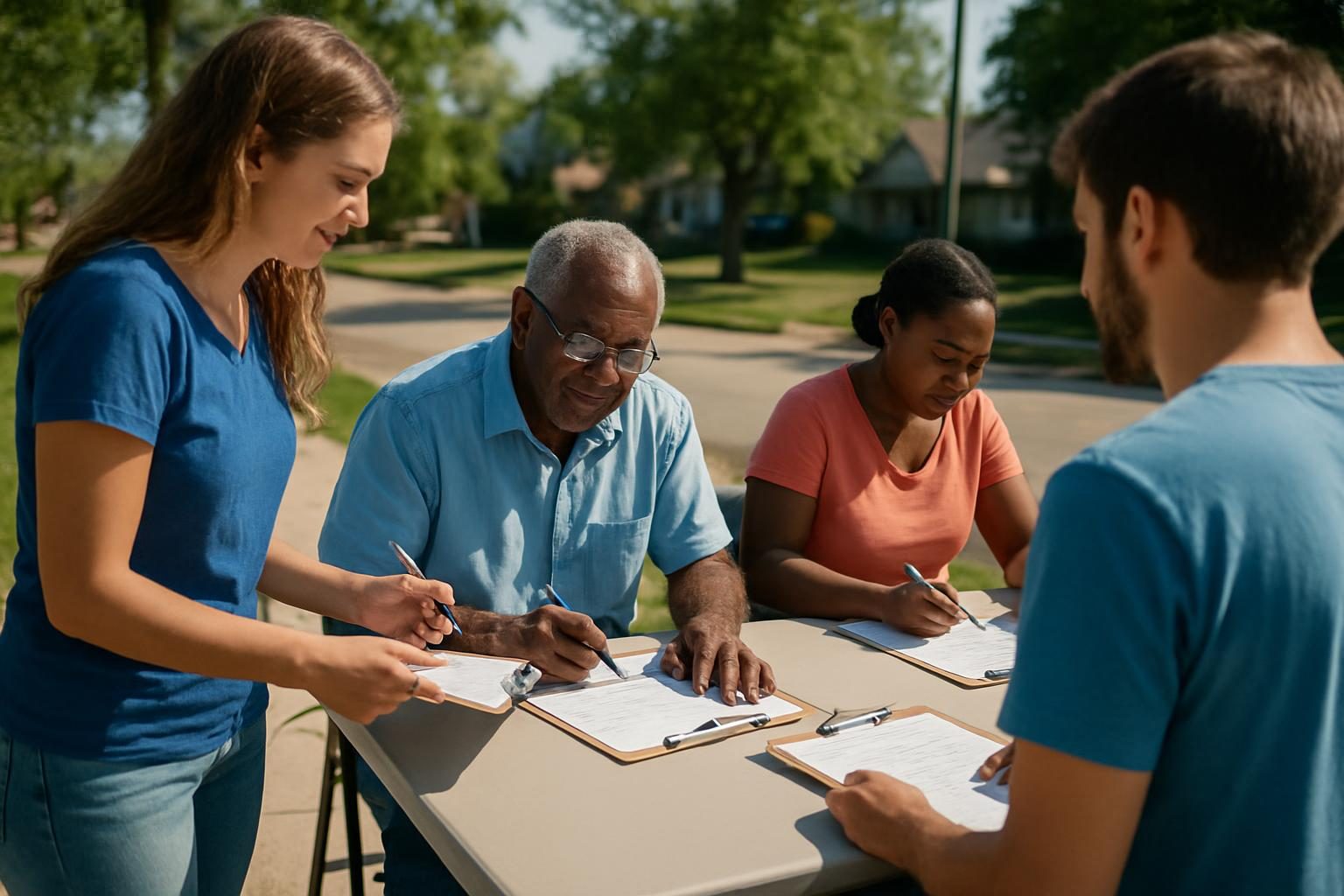
    Young volunteers with clipboards helping students on a sunny sidewalk

    How to register to vote at 17, step by step

    The process is straightforward. Here is a simple path to follow, and it works whether you are pre-registering or registering as soon as you are eligible.

    1. Visit vote.gov. Find your state’s page and read the eligibility rules, including the minimum age to register.
    2. Gather your information. Most states ask for your full name, home address, date of birth and an ID number, such as a driver’s license, state ID or part of a Social Security number.
    3. Choose how to register. Many states offer online registration. Others use paper forms by mail or in person at a state office. Our guide on whether you can register to vote online explains the options.
    4. Submit and save your confirmation. Keep any confirmation number or receipt. It helps if you need to follow up later.
    5. Check your status. After a few weeks, confirm that your record is on file. Our walkthrough on how to check your voter registration status takes only minutes.

    For a broader overview that covers every state, see our simple guide to registering to vote.

    What you might need on hand

    Having your documents ready makes things faster. The exact requirements are set by your state, so use this table as a starting checklist and confirm details on your state’s vote.gov page.

    Item Why it may be asked for
    Full legal name To create your voter record
    Date of birth To confirm your age and eligibility timing
    Home address To assign your districts and polling place
    Driver’s license or state ID number To verify who you are
    Last digits of Social Security number Used as an alternate identifier in some states

    Can 17-year-olds vote in primaries?

    This is one of the most common questions, and it is a good one. In some states, a 17-year-old who will turn 18 by the general election can vote in the primary that comes before it. In other states, you must be 18 on the day of the primary itself.

    Because this varies, do not assume. Confirm with your state election office or on vote.gov before you plan around a particular primary.

    If you are curious how the nominating contests work in a presidential year, our explainer on how presidential primaries work breaks it down. And if you want to see what is coming, the 2028 Democratic primary calendar lists the dates set so far. The DNC approved its early-window calendar on August 15, 2026, with South Carolina leading off on January 22, 2028.

    A registered voter who shows up is the most powerful thing in a democracy.

    Line of diverse voters waiting outside a polling place entrance

    Why young voters should get registered early

    Here is our view, and we are happy to say so plainly: registering early is one of the easiest ways to make sure your voice counts. Elections are often decided by communities that show up, and young people are a huge part of that story. The more of us who are ready, the stronger our democracy is.

    Getting registered early also removes a common barrier. Many people miss out on an election simply because they ran out of time, moved or were not sure how the process worked. Doing it ahead of schedule means one less thing to worry about when it counts.

    There is a practical side too. Once you are on the rolls, you can start learning about candidates, ballot measures and the issues that matter to you. Our guide to where Democrats stand on the issues is a good place to begin.

    The next big dates

    The next national election is the 2026 midterms on Tuesday, November 3, 2026, covering all 435 House seats, about a third of the Senate and 36 governors. The next presidential election is Tuesday, November 7, 2028. If you are 17 now, you may be eligible by then, and possibly sooner depending on your birthday and your state’s rules.

    To see what is on the line this fall, read our overview of the 2026 midterm elections and what is at stake for 2028. For the road ahead, our 2028 presidential election hub tracks dates and developments, and we update it as news breaks.

    Hands dropping a ballot into a ballot box

    Special situations to know about

    If you are a college student

    Heading off to school soon? You will need to decide whether to register at your home address or your campus address. Both can be valid in many places, but the choice has consequences. Our college students voting guide walks through it.

    If you move after registering

    Your registration is tied to your address. If you move, you will generally need to update it. We are working on a guide to updating your voter registration after you move, and in the meantime your state election office can tell you what to do.

    If you live in a state without much information online

    Some states make things easy online, and some rely more on paper forms or in-person offices. If you cannot find what you need, contact your state or local election office directly. They can tell you how pre-registration works where you live. For example, see our guide on how to register to vote in Illinois.

    State-specific guides

    We are building out state-by-state registration guides. Right now you can read ours for Pennsylvania, Michigan and Georgia, with more on the way, including California, Texas and Florida. You can also browse everything in our Voting & Registration category.

    Take action: Open vote.gov right now, pick your state and see whether you can pre-register today. Then text one friend who is 16 or 17 and send them the link. It takes five minutes and could be the start of a lifetime of voting.

    What to do after you register

    Registering is the first step, not the last. Once you are on the rolls, there is plenty more to do to get ready.

    Learn how you will vote when the time comes. Read up on early voting, voting by mail and the voter ID rules in your state so there are no surprises. Then find out how to find your polling place.

    And do not stop at voting. Volunteer, canvass, phone bank or help a friend register. Campaigns and community groups love energetic young people, and you do not need experience to jump in. Every conversation you have makes the next election a little stronger.

    One more reminder: we are not a government agency and this is not legal advice. For any question about your eligibility, deadlines or documents, rely on vote.gov or your state election office.

    Last updated October 2026. Dates and candidate news change fast; we update this page as things are announced.

    Key takeaways

    • In many states, you can register to vote at 17 through pre-registration, but the rules differ by state.
    • Pre-registration gets you on the rolls early; you still cannot vote until you are eligible.
    • Whether 17-year-olds can vote in primaries depends on your state, so confirm before you plan.
    • Vote.gov has an official page for every state with the rules and registration links.
    • Check your status after you register, and update it if you move.
    • Do not stop at registering: learn how to vote, volunteer and bring a friend along.

    Frequently asked questions

    Can you register to vote at 17?

    In many states, yes. Pre-registration lets 16- and 17-year-olds sign up before they can vote, but rules vary by state. Check your state’s page on vote.gov to see exactly what applies to you.

    Can a 17-year-old vote in a primary?

    Some states allow 17-year-olds to vote in a primary if they will turn 18 by the general election. Not every state does, so confirm with your state election office or vote.gov before counting on it.

    Do I need a Social Security number or ID to pre-register?

    Requirements differ by state, and many ask for a driver’s license, state ID or the last digits of a Social Security number. Your state’s vote.gov page explains what to have ready.

    What happens to my pre-registration when I turn 18?

    In most states that offer pre-registration, your registration becomes active once you reach the eligible age. Details vary, so confirm your status with your state election office after your birthday.

    What if I live in a state without pre-registration?

    You can still register as soon as you become eligible. Mark your calendar, gather your documents and use vote.gov to find your state’s official process, rules and deadlines.

  • College Students Voting Guide: Home or School Address?

    College Students Voting Guide: Home or School Address?

    Heading off to college doesn’t mean giving up your voice. It does mean answering a surprisingly big question: should you vote from your home address or your school address? This college students voting guide walks you through both options so you can pick the one that works for you.

    Quick answer: In general, college students can choose to register at their school address or keep their home address, but each state sets its own rules. You can only be registered in one place at a time. Check your state’s rules and registration options at vote.gov, then register, update, or request a mail ballot accordingly.

    Why your vote as a student matters

    Young voters are a huge part of the future of this country, and the decisions made in every election, from city council to the White House, shape the world you’ll be living in long after graduation. Housing costs, student debt, healthcare, climate, and civil rights are all on the ballot in one form or another.

    The next big test arrives soon. The 2026 midterm elections are on Tuesday, November 3, 2026, with all 435 House seats, about a third of the Senate, and 36 governors up for election. Our 2026 midterm elections guide explains what’s at stake.

    And the longer game matters too. The 2028 general election is Tuesday, November 7, 2028, and the primaries start earlier than you might think. Getting your registration sorted now means you’re ready for every election between here and there.

    The big question: home address or school address?

    Here’s the good news: for many students, this is a real choice, not a trap. Neither option is automatically right. The best answer depends on your state, your situation, and where you want your vote to count.

    Rules about residency and registration differ from state to state, and we are not able to give legal advice. Always confirm the details for your state on vote.gov or with your state election office before you act.

    Option 1: Register at your school address

    If you live on or near campus during the school year, you may be able to register where you attend college. This can make voting simple: your polling place may be close, and you can vote in the elections that affect the community where you spend most of your time.

    Think about it this way. Local decisions about transit, rent, public safety, and campus-area development affect you every day. Voting where you live can give you a say in those choices.

    Option 2: Stay registered at your home address

    Many students keep their home registration, especially if they plan to return after graduation or if their home state is one where races are expected to be close. If you do, you’ll typically vote by mail or in person when you’re home.

    Our guide to voting by mail and absentee ballots explains how that process generally works, so you can plan ahead instead of scrambling.

    You get one registration and one vote. The smart move is choosing the place where you want yours to count.

    How to decide: a quick comparison

    Use this table as a starting point. It is general information, not a rulebook, since requirements vary by state.

    Question to ask School address may fit if… Home address may fit if…
    Where do I spend most of the year? You live on or near campus most months You split time or head home often
    Where do I want my vote to count? You care about local issues near campus You care about races back home
    How easy is voting in person? You want a polling place nearby You’re comfortable voting by mail
    What are my plans after graduation? You may stay in the area You plan to return home
    What does my state allow? Your state allows students to register at school Your state offers easy mail or absentee voting

    One more thing to think about: some students wonder whether registering at school could affect financial aid or family tax matters. We can’t advise on that, and the answer may depend on your situation. If it’s a concern, ask your school’s financial aid office or a qualified professional, and confirm voting rules on vote.gov.

    Student completing a voter registration form on a laptop in a dorm room

    Step by step: how to register as a college student

    The process is simpler than most people expect. Here’s the general path.

    1. Decide where you’ll register. Use the comparison above and the rules for your state.
    2. Visit vote.gov. Every state’s official rules, deadlines, and online registration links are there. The link follows a simple pattern, such as vote.gov/register/ohio or vote.gov/register/new-york.
    3. Check whether you’re already registered. You may be registered at your home address from before you left. Our voter registration status guide shows how to check in minutes.
    4. Register or update your information. Many states offer online registration. See our explainer on online voter registration for the basics.
    5. Confirm your deadline. Registration deadlines differ by state, and some states offer same-day registration. Confirm yours on vote.gov or with your state election office rather than relying on a number you saw elsewhere.
    6. Plan how you’ll vote. In person, early, or by mail. Pick one and put it on your calendar.

    For a broader walkthrough, our guide on how to register to vote in every state covers the basics.

    Already moved? Update your registration

    If you’ve changed addresses, don’t assume your old registration follows you. Look at our upcoming guide on updating your voter registration after moving for the steps, and check your state’s process on vote.gov in the meantime.

    Turning 18 soon?

    Some states allow younger people to pre-register before they turn 18. Rules vary, so see our upcoming explainer on whether you can register to vote at 17, and check vote.gov for your state’s rules.

    Take action: Open vote.gov right now, pick your state, and check your registration status. It takes a few minutes. Then text one friend in your dorm or class and ask them to do the same.

    A few minutes on your phone today can decide whether your voice is counted or missed in November.

    Hands dropping a ballot envelope into a mail drop box near campus

    Voting when you’re away from home

    If you stay registered at home but study somewhere else, mail voting is likely your best friend. Many states let you request an absentee or mail ballot, but the rules, forms, and deadlines differ. Start early, because mail takes time in both directions.

    Our guide to how to vote by mail explains the general process. Always double-check your state’s specific requirements on vote.gov or with your state election office.

    Voting in person near campus

    If you register at school, you’ll want to know where to go and when. Some states offer early voting, which can be a lifesaver around exams and finals. Read how early voting works, and use our polling place finder guide to locate your spot.

    Bring the right ID

    ID rules vary widely by state, and some states have specific rules about which student IDs count. Don’t guess. Review our voter ID requirements overview and confirm the details for your state with your state election office.

    State-specific help for common student destinations

    Many students attend school in states where elections can be especially competitive. If that’s you, these state guides can help:

    More states are coming, including guides for California, Texas, and New York. Until then, vote.gov has the official details for every state. And note that North Dakota has no voter registration at all.

    Volunteers helping students get involved in voting on a sunny campus sidewalk

    Beyond the ballot: get involved

    Voting is the foundation, but it’s not the ceiling. Campuses are full of energy, and campaigns need exactly that. You can help classmates register, volunteer for a local campaign, or organize a ride to the polls with your friends.

    Looking ahead, the 2028 Democratic primary calendar is already taking shape. On August 15, 2026, the DNC approved its early window: South Carolina on January 22, 2028; Nevada on February 1; New Hampshire on February 8; New Mexico on February 15; Michigan on February 22; and Virginia on February 29. Super Tuesday is March 7, 2028. See our 2028 Democratic primary calendar for every date so far.

    If you’re studying in or near one of those states, you could have a front-row seat. Our guide to how presidential primaries work explains how it all fits together.

    No major Democrat has formally declared a 2028 presidential run yet. Keep up with the field through our 2028 Democratic candidates tracker, and see the big picture in our 2028 presidential election hub.

    Our view: the best way to feel powerful in politics is to participate. Register, vote, and bring a friend. That’s how young people have changed elections before, and it’s how we do it again. You can find more practical guides in our Voting & Registration section.

    Last updated October 2026. Dates and candidate news change fast; we update this page as things are announced.

    Key takeaways

    • College students can often choose between registering at school or keeping their home address, but rules vary by state.
    • You can only be registered in one place at a time, so pick where you want your vote to count.
    • Vote.gov has official rules, deadlines, and registration links for every state; confirm deadlines there or with your state election office.
    • If you stay registered at home, learn how absentee or mail voting works in your state and start early.
    • The 2026 midterms are Tuesday, November 3, 2026, and the next presidential election is Tuesday, November 7, 2028.
    • Voting is just the start: help a friend register and consider volunteering.

    Frequently asked questions

    Can I register to vote at my college address?

    In general, students can choose to register where they live while attending school, but rules differ by state. Check your state’s requirements on vote.gov or with your state election office before you register. For state-specific guidance, see our Florida voter registration guide as an example of the detailed steps involved.

    Will registering at school affect my financial aid or my parents’ taxes?

    We can’t give legal or tax advice, and the answer can depend on your situation. If you’re worried, ask your school’s financial aid office or a qualified tax professional before you register, then confirm voting rules on vote.gov.

    Can I vote in two places in the same election?

    No. You should be registered in only one place, and voting twice in the same election is illegal. If you move or switch your registration, update it with your state election office so your records stay accurate.

    What if I’m studying in a different state from where I’m registered?

    You can often request an absentee or mail ballot from your home election office, but deadlines and rules vary by state. Visit vote.gov or your state election office to confirm how it works for you.

    What ID do I need to vote as a student?

    ID rules vary widely by state, and some states have specific rules about student IDs. Check your state’s requirements on vote.gov or with your state election office, and see our voter ID guide for an overview.

  • How to Find Your Polling Place: A Simple Voter Guide

    How to Find Your Polling Place: A Simple Voter Guide

    Every election, some voters are ready to cast a ballot and then lose precious time because they went to the wrong place. A few minutes of prep now can save you a headache on the day that counts. Here’s exactly how to find your polling place, step by step.

    Quick answer: Go to vote.gov, pick your state, and follow the link to your official state or county election office. Use its lookup tool to enter your address and see your polling place. Check again before every election, because locations can change.

    Voting is the most direct way to shape the country we live in. Knowing where to do it is the first step, and it takes less time than scrolling your phone for a few minutes. Let’s make sure nothing stands between you and your ballot.

    Start With Official Sources

    The safest place to look is always an official government source. Your state and county election offices run your elections, so they have the final word on where you vote. Anything else, from a friend’s text to an old flyer, should be double-checked.

    The easiest front door is vote.gov. It points you to your state’s official election information, including registration rules and links to the offices that maintain polling place lookup tools. Every state does this a little differently, so start there and follow the link for your state.

    Why Official Sources Matter

    Misinformation about voting spreads quickly around election time. A look-alike website or a rumor on social media can send you to the wrong place or the wrong date. Sticking with your state or county election office, reached through vote.gov, keeps you safe.

    Step-by-Step: Finding Your Polling Place

    1. Go to vote.gov and choose your state from the list.
    2. Follow the link to your state’s official election website or your local election office.
    3. Find the polling place lookup tool. It may be labeled something like “Where do I vote?” or “Find my polling location.”
    4. Enter your address exactly as it appears on your voter registration.
    5. Write down or screenshot the address, the hours, and any notes about accessibility or parking.
    6. Make a plan for how you’ll get there and when you’ll go.

    Some states ask for extra details, such as your name or date of birth. Others only need your address. Either way, the process usually takes just a couple of minutes.

    Finding your polling place takes a few minutes. Missing your chance to vote can cost an entire election.

    A person using a phone map to look up a voting location

    Make Sure You’re Registered First

    A polling place doesn’t help if your registration is out of date. Before you go hunting for a location, confirm that you’re registered at your current address. It’s a quick check, and it can head off big problems later.

    Our guide to checking your voter registration status walks through it in minutes. If you’ve moved recently, you may need to update your information, and we’re preparing a guide on updating your voter registration after moving. For a broader walkthrough, see how to register to vote in every state.

    One note: North Dakota doesn’t have voter registration, so the process there looks different. Everywhere else, registration and polling place assignment go hand in hand.

    Understand How Your State Assigns Polling Places

    Not every state or county handles polling places the same way. Knowing which setup applies to you can save confusion on the day.

    Setup What it means What to do
    Assigned polling place Your address determines where you vote. Look up your location on your official election website.
    Vote centers Some places let you vote at any designated site in your county. Check the list of centers and choose the most convenient one.
    Early voting sites Locations may differ from your Election Day place. Look up early voting options separately.
    Mail voting Your ballot arrives or is requested by mail. Confirm your options and any drop-off locations with your election office.

    Rules differ by state and sometimes by county, so confirm yours with your state election office. Don’t assume a rule from one state applies to another.

    Look Up Early Voting and Mail Options Too

    Election Day isn’t the only way to vote in many places. If you have a busy schedule, a job with long hours, or caregiving duties, other options can make your life easier. They’re worth knowing about even if you plan to vote in person.

    Our guide to early voting and how to find your options explains how it works. If you’d rather skip the trip, read how to vote by mail. Availability and rules vary by state, so confirm what’s offered where you live.

    Take action: Open vote.gov right now, find your state, and look up your polling place. Then text the link to one friend or family member and ask them to do the same.

    What to Know Before You Go

    Finding the address is step one. A little extra prep makes the visit smooth and stress-free.

    Check ID Requirements

    Some states ask voters to show identification, and the rules differ widely. Check what applies to you before you leave the house. Our guide to voter ID requirements by state is a good starting point, and your state election office has the official answer.

    Confirm Hours and Accessibility

    Look up the hours for your polling place, and plan around work and family. If you or someone you’re bringing needs accessibility accommodations, check what your location offers ahead of time. Your local election office can answer questions about access.

    Plan Your Trip

    Decide how you’ll get there, whether by walking, driving, or public transit. Think about parking, bus routes, and how long the line might be. Going at a quieter time of day, if your schedule allows, can shorten your wait.

    A democracy works best when everyone knows the way to the ballot box and brings a friend along.

    Volunteers talking with neighbors about their voting plans on a sunny sidewalk

    Special Situations

    If You’ve Recently Moved

    A new address usually means a new polling place. Update your registration and look up your location again. Don’t rely on where you voted last time.

    If You’re a College Student

    Students often wonder whether to vote at home or at school. The answer depends on your state and your situation. We’re working on a college students voting guide, and in the meantime your state election office can tell you what applies.

    If You’re Turning 18 Soon

    Young voters may be able to prepare before their birthday, depending on state rules. Our upcoming explainer on whether you can register to vote at 17 will cover it. Until then, check vote.gov for your state’s rules.

    If You’re Not Sure Where to Go on Election Day

    Call your local election office or check its website. Poll workers can also point you in the right direction. Never guess, because being at the wrong location can cause unnecessary trouble.

    Why This Matters for 2026 and 2028

    The next big test is the 2026 midterm elections on Tuesday, November 3, 2026, when all 435 House seats, about a third of the Senate, and 36 governorships are on the ballot. Those results shape the political landscape heading into the next presidential race. See our 2026 midterm elections guide to see what’s at stake.

    Looking further ahead, the general election is Tuesday, November 7, 2028. Our 2028 presidential election hub tracks the dates, the field, and what’s next. Habits you build now, like checking your polling place every cycle, carry straight into 2028.

    Here’s our view: voting is how ordinary people make sure the issues they care about get heard. From health care to housing to jobs, where Democrats stand on the issues only matters if supporters show up. A smooth trip to the polls is part of that.

    A voter's hands dropping a ballot into a ballot box

    Get Others Ready, Too

    Your effort can multiply. Many people skip voting because they’re unsure about the logistics, not because they don’t care. A friendly nudge can make all the difference.

    • Share the vote.gov link with friends and family.
    • Offer a ride, or go together and make an outing of it.
    • Remind coworkers and neighbors to look up their location.
    • Volunteer with a local campaign or community group to help voters get ready.

    Every conversation counts. Small acts add up, and communities that show up together get heard.

    Last updated October 2026. Dates and candidate news change fast; we update this page as things are announced.

    Key takeaways

    • Start at vote.gov and follow the link to your official state or county election office.
    • Look up your polling place with your registered address, and check again before every election.
    • Confirm your registration is current, especially if you’ve moved.
    • Early voting and mail options may offer more flexibility, but rules vary by state.
    • Check ID rules, hours, and accessibility before you go.
    • Help a friend find their polling place. Voting is stronger together.

    Frequently asked questions

    What is the easiest way to find my polling place?

    Start at vote.gov, which links to every state’s official election office. Your state or county election website usually has a lookup tool where you enter your address. Your state’s website will have the most accurate, up-to-date answer.

    Do I have to vote at a specific polling place?

    In many places, yes: you are assigned a location based on your address. Some states and counties use vote centers where any registered voter in the county can vote. Check with your state or local election office to see which system applies to you.

    Can my polling place change from one election to the next?

    Yes. Locations can change because of building availability, redistricting, or local decisions. Never assume last election’s location is still correct. Look it up again before every election.

    What should I do if my name isn’t on the list at my polling place?

    Stay calm and ask a poll worker for help. First confirm you’re at the right location. Then ask what options your state offers, such as checking registration status or casting a provisional ballot. Rules vary, so confirm the details with your state election office.

    Can I find my polling place if I plan to vote early or by mail?

    Early voting sites are often different from your Election Day location, and mail ballots may have drop-off locations or not require a polling place at all. Your state or local election office lists the options available to you. You can also browse more guides in our Voting & Registration category.

  • Can You Register to Vote Online? Yes, in Most States

    Can You Register to Vote Online? Yes, in Most States

    Good news: you can probably register to vote from your couch, in about the time it takes to brew a cup of coffee. No stamps, no trips to a government office, no waiting in line. Just a few minutes, a screen, and a few details about yourself.

    So, can you register to vote online? In most states, yes. Here is how it works, what to watch out for, and how to get it done today.

    Quick answer: Yes, most states let eligible voters register online through an official state website. The easiest way to find yours is vote.gov, which links to every state’s official rules, deadlines, and registration options. A few states still require paper or in-person steps, so always confirm your state’s rules on vote.gov or with your state election office.

    Yes, you can register to vote online in most states

    Online voter registration has become the standard way to sign up in most of the country. You enter your information on your state’s official site, submit it, and your local election officials take it from there.

    It is faster than a paper form, there is no mailing involved, and you get confirmation right away in many cases. For busy people, students, and anyone who has ever stared at a form wondering where to send it, that is a big upgrade.

    That said, not every state works the same way. Some states do not offer a fully online option, and the details of who can use it and what you need to provide differ from place to place. That is why we always send you to official sources rather than guessing.

    Start at vote.gov

    If you only remember one thing from this article, make it this: start at vote.gov. It is the federal government’s official starting point for registering to vote, and it connects you to the correct state resource.

    Every state has its own page on the site, with official rules, deadlines, and links to online registration where it is available. The web address follows a simple pattern: https://vote.gov/register/ohio for Ohio, https://vote.gov/register/new-york for New York, and so on. Just put your state’s name at the end.

    Why start here instead of searching the web? Because searching can lead you to look-alike sites, ads, and third-party pages that are not run by your state. Beginning at vote.gov means you reach your real state election office, not someone else’s sales pitch.

    Registering to vote takes minutes, and it is the first step in every election you will ever care about.

    Volunteers helping neighbors with voter registration at a sidewalk table

    What you will typically need to register online

    Requirements differ by state, so treat this as a general picture and check your state’s page for the specifics. Most online systems ask for some version of the following.

    • Basic identity details: your full legal name and date of birth.
    • Your address: the place you live now, which determines your district and your polling place.
    • An ID number: many states ask for a driver’s license or state ID number, or a portion of your Social Security number.
    • Confirmation of eligibility: you will be asked to affirm that you meet your state’s requirements, such as citizenship and age.

    Some states connect to their motor vehicle agency to verify your information, which is why a driver’s license number comes up so often. If you do not have a license or state ID, do not give up. Many states offer alternatives, and your state’s page on vote.gov or your state election office can tell you what applies to you.

    How online voter registration works, step by step

    The process looks a little different in every state, but the basic path is familiar. Here is the general flow.

    1. Go to vote.gov. Choose your state from the registration page.
    2. Read your state’s rules. Make sure you are eligible and see what your state requires.
    3. Follow the link to your state’s official site. If online registration is available, you will be sent there.
    4. Fill out the form. Enter your details carefully. Typos in a name or address can cause headaches later.
    5. Submit and save your confirmation. Take a screenshot or write down any confirmation number you receive.
    6. Check your status later. Confirm that your registration was processed.

    Our guide to checking your voter registration status shows you how to do step six in minutes. It is worth doing even if you registered a while ago, since it catches problems while there is still time to fix them.

    What if your state does not offer online registration?

    A few states do not offer a full online option. In those places, you may need to fill out a paper form, mail it in, or register in person at an election office or another designated location.

    North Dakota is a special case: it does not have voter registration at all. Its rules for voting work differently, so check vote.gov or the state’s official election office for how it works.

    Whatever your state requires, vote.gov will point you in the right direction. If the path is not obvious, call or visit your state or local election office. They answer these questions every day.

    Take action: Open vote.gov right now, pick your state, and follow the registration link. Then text two friends or family members and ask if they are registered at their current address. It is the simplest organizing you will do all year.

    College student on a campus lawn using a laptop to update voter registration

    Same-day registration: a helpful option in many states

    Many states offer same-day registration, which lets eligible people register and vote in a short window, sometimes during early voting or on Election Day itself. It is a great safety net if you missed an earlier deadline or just moved.

    The catch: the rules differ a lot. Where you can do it, what you need to bring, and when it is available all vary by state, and it often happens in person rather than online. Do not count on it without checking.

    We will not give you a specific deadline number here, because deadlines vary and can change. Confirm yours on vote.gov or with your state election office, and give yourself plenty of time. Registering early is always the safer move.

    A deadline you check today is one you will never miss tomorrow.

    Who should register or update their registration now

    Registering is not just for first-time voters. Here are the people who most often need to take action.

    New voters and young people

    If you recently turned 18, you need to be registered before you can vote. Rules about registering before you turn 18 differ by state, and we are working on a guide to pre-registration rules for 17-year-olds. Until then, check your state’s page on vote.gov.

    College students

    Students often wonder whether to register at home or at school. The answer depends on your state’s rules and your situation, and we are building a college students voting guide to help. For now, your state election office can answer it directly.

    Anyone who has moved

    If you changed addresses, your registration may not follow you. Updating it matters because your address decides your districts and where you vote. Our upcoming guide on how to update your voter registration after moving will walk through it, and your state’s page on vote.gov can help in the meantime.

    Line of diverse voters waiting outside a polling place on a bright morning

    Why this matters for 2026 and 2028

    The next big test is close. The 2026 midterm elections are on Tuesday, November 3, 2026, with all 435 House seats, about a third of the Senate, and 36 governors on the ballot. Our overview of the 2026 midterm elections explains what is at stake for 2028.

    Then comes the big one: the general election on Tuesday, November 7, 2028. The Democratic primary calendar is already taking shape, with the DNC approving its early-window states on August 15, 2026. You can follow every date in our 2028 Democratic primary calendar.

    Here is our view, and we are not shy about it: elections are won by people who show up, and showing up starts with being registered. Every neighbor who gets registered, every friend who checks their status, and every volunteer who spends an afternoon helping others sign up makes the whole system stronger.

    Beware of look-alike sites and scams

    Because registration is online, a few bad actors try to take advantage. Stay safe with some simple habits.

    • Start at vote.gov and follow its links to official state sites.
    • Be skeptical of ads and sponsored search results that promise to register you for a fee. Registering to vote through your state is not something you should have to pay for.
    • Protect your information. Only enter personal details on official state websites.
    • Ask your election office if something looks off. They would rather you ask than guess.

    Ready for more? Find your state’s guide

    Want to go deeper? Our main resource, How to Register to Vote: A Simple Guide for Every State, is the best place to start, and you can browse everything in our Voting & Registration section.

    We also have state-specific guides for key states, including Arizona, Georgia, Michigan, Pennsylvania, and Wisconsin. More are on the way, including California, Texas, and Florida.

    Once you are registered, plan your vote. Learn how voting by mail works, explore early voting, and check what to bring with our guide to voter ID requirements by state. You may also want to know how to find your polling place.

    This article is general information, not legal advice. For the rules where you live, always check vote.gov or your state or local election office.

    Key takeaways

    • Most states let eligible voters register online through an official state website.
    • Start at vote.gov, which links to every state’s official rules and registration options.
    • A few states require paper or in-person registration, and North Dakota has no voter registration.
    • Same-day registration exists in many states, but the rules differ, so confirm yours before relying on it.
    • Always confirm deadlines on vote.gov or with your state election office, and register early.
    • After you register, check your status so you know it went through.

    Last updated October 2026. Dates and candidate news change fast; we update this page as things are announced.

    Frequently asked questions

    Can you register to vote online in every state?

    Not quite. Most states offer online registration, but a few still require a paper form, a mailed application, or an in-person visit. Check your state’s page on vote.gov to see exactly what is available where you live.

    Is registering to vote online safe?

    Official state systems are built for this purpose, and vote.gov is the federal government’s guide to them. Start at vote.gov and follow its link to your state’s official site, rather than using a third-party site you found through a search ad or a social post.

    What do I need to register to vote online?

    Requirements vary by state, but you will generally need to confirm your name, date of birth, and address, and many states ask for a driver’s license or state ID number or a partial Social Security number. Your state’s page on vote.gov explains what your state asks for.

    Can I register online on Election Day?

    It depends on your state. Some states offer same-day registration, but the rules differ on where and how you can do it, and it often happens in person rather than online. Confirm the rules on vote.gov or with your state election office well before Election Day.

    How do I know my online registration worked?

    Look for a confirmation message or number when you finish, and check your registration status with your state’s election website a little while later. Our guide to checking your voter registration status walks you through it.

  • How to Register to Vote in Wisconsin: 2026 Guide

    How to Register to Vote in Wisconsin: 2026 Guide

    Wisconsin has a long history of close elections, which means every single registration matters. Whether you just moved to Milwaukee, turned 18 in Eau Claire, or finally decided to get involved in Madison, getting registered is the first step toward having a say in what comes next. This guide shows you how to register to vote in Wisconsin, and how to stay ready for 2026 and 2028.

    Quick answer: To register to vote in Wisconsin, confirm you meet the eligibility rules, then register through the options listed on the official vote.gov Wisconsin page, which links to the state election office and online registration. Always check the current deadline there, since rules and dates can change.

    Who can register to vote in Wisconsin

    In general, you must be a U.S. citizen, meet the state’s age requirement by Election Day, and live in Wisconsin at your current address. There are also rules about residency length and about eligibility after certain criminal convictions, which are rooted in voting rights law. The exact details are set by the state, so read them directly rather than relying on a summary.

    The best place to confirm your eligibility is the official Wisconsin page on vote.gov. It points you to the Wisconsin state election office, which is the authority on who qualifies. If your situation is unusual, such as a recent move, a name change, or time spent living abroad, ask the state election office directly.

    Thinking about teens in your life? Some states let young people pre-register before they turn 18. Our upcoming explainer on pre-registration rules for 17-year-olds will cover how that works.

    Volunteers helping neighbors complete voter registration forms at a sidewalk table

    Every way to register to vote in Wisconsin

    States typically offer several paths to registration. Here is how the common options work, and what to confirm for Wisconsin before you act. We are deliberately not listing deadlines or document requirements here, because they can change and the state’s own sources are the final word.

    Method How it works What to confirm on vote.gov
    Online Fill out your registration through the state’s official online system, linked from vote.gov. Which ID details you need and whether you qualify to use the online option
    By mail Complete and send in a registration form to your local election official. Where to send it and the current mail-in deadline
    In person Register at your local election office or clerk. Office hours, location and the documents to bring
    At the DMV Many states connect registration to driver’s license or state ID transactions. Whether and how Wisconsin offers this, and how to update an address
    Same-day or at the polls Some states allow registration close to or on Election Day. Whether it is available, where, and what proof you need

    Not sure which route fits you? Online is often the fastest for people who already have a state ID. If you want a broader view of how this works nationwide, see our explainer on registering online and our simple guide to registering in every state.

    Registration takes minutes, but it unlocks every election you will ever vote in.

    How to check or update your Wisconsin registration

    Don’t assume you are still registered. Moves, name changes, and long gaps between elections can all affect your record. Checking takes just a couple of minutes and can save you a headache at the polls.

    Check your status

    Start with the vote.gov Wisconsin page, which connects you to the state election office and its voter lookup tools. Look for your name, current address, and polling information. Our guide to checking your voter registration status walks through what to look for.

    Update after a move or name change

    If you have changed addresses or names since you last voted, update your registration so your ballot and polling place match where you live now. Even a move across town can matter. We are working on a dedicated guide, Moved? How to Update Your Voter Registration, and you can also use the state options on vote.gov in the meantime.

    Students, in particular, often wonder whether to register at home or at school. Our planned college students voting guide will tackle that question.

    Voter ID basics in Wisconsin

    Wisconsin has voter identification requirements, so plan to bring acceptable ID when you vote. We are not listing the accepted documents here because those lists can change and we would rather send you to the source than risk giving you outdated information.

    Before Election Day, confirm what counts through the state election office, which you can reach from vote.gov. If you lack an accepted ID, ask the state election office what options exist to get one. For a national overview, see our guide to voter ID requirements by state.

    Hands dropping a ballot envelope into an outdoor ballot drop box

    Early voting and voting by mail in Wisconsin

    Many voters like the flexibility of casting a ballot before Election Day, whether that means voting early in person or requesting a ballot by mail. These options can fit around work schedules, family needs, and travel.

    The rules for early and mail voting vary by state and can change, including how to request a ballot, how to return it, and when. Check the current Wisconsin rules with the state election office through vote.gov. For general background, read our explainers on how early voting works and how to vote by mail.

    You will also want to know where to vote in person. Our upcoming guide on how to find your polling place will help, and the state election office can point you to yours now.

    Wisconsin in the 2026 midterms and the 2028 race

    The 2026 midterm elections are Tuesday, November 3, 2026, with all 435 House seats, about a third of the Senate, and 36 governors on the ballot. Check the official sources for what is on your Wisconsin ballot and for the current registration rules. Our 2026 midterms guide explains what is at stake heading into 2028.

    For the presidential race, the general election is Tuesday, November 7, 2028. Wisconsin is not in the DNC’s approved early window, which covers South Carolina, Nevada, New Hampshire, New Mexico, Michigan and Virginia. Wisconsin’s primary date is still being set, so check back and we will update this page when it is announced.

    Wisconsin is widely watched as a battleground, and that is our view of why every registration counts here. See our 2028 swing states guide and the full 2028 Democratic primary calendar to follow the road ahead. Neighboring Michigan is in the early window, and our Michigan registration guide is useful if you have friends or family there.

    In a state where elections can come down to a few votes, one registered neighbor can matter.

    Take action: Open vote.gov/register/wisconsin right now and check your registration. Then text one friend or family member and ask them to do the same.

    Crowd waving blue signs at a lakeside community gathering at dusk

    Your 5-step Wisconsin registration checklist

    1. Confirm you are eligible. Review the rules on the vote.gov Wisconsin page or with the state election office.
    2. Check your current registration. Look yourself up first, especially if you have moved or changed your name.
    3. Register or update. Choose online, mail, in person, or another option the state offers, and check the current deadline on vote.gov.
    4. Plan your ID and your vote. Confirm accepted ID and decide whether you will vote early, by mail, or on Election Day.
    5. Get others involved. Share the link, help a neighbor register, and volunteer with a group you trust.

    If you want to get more involved beyond your own ballot, consider volunteering to help neighbors register, driving voters to the polls, or working as a poll worker. Local campaigns and community groups always need help, especially as the 2028 race heats up. Not sure where Democrats stand on the issues? Our guide to Democratic Party platform issues is a good place to start.

    For the bigger picture, explore our 2028 presidential election hub and the rest of our voting and registration guides.

    Key takeaways

    • The official vote.gov Wisconsin page lists the state election office and online registration.
    • Always confirm the current registration deadline on vote.gov or with the state election office.
    • Check your registration status and update it after any move or name change.
    • Plan for Wisconsin’s voter ID rules before you vote.
    • Wisconsin’s 2028 primary date is still being set; we will update this page.

    Last updated October 2026. Dates and candidate news change fast; we update this page as things are announced.

    Frequently asked questions

    Can I register to vote online in Wisconsin?

    Wisconsin has an online registration option, and the official vote.gov Wisconsin page links to it along with the state election office. Requirements for using it can change, so confirm the current rules on vote.gov before you start.

    Does Wisconsin have same-day voter registration?

    Same-day registration exists in many states, but the rules differ from place to place and can change. Check vote.gov or the Wisconsin Elections Commission for the current Wisconsin rules, including what documents to bring.

    How do I know if I’m already registered in Wisconsin?

    Use the state’s official voter lookup, which you can reach through the vote.gov Wisconsin page or the state election office. Check it any time you move, change your name, or haven’t voted in a while.

    Do I need ID to vote in Wisconsin?

    Wisconsin has voter ID rules, so plan to bring acceptable identification to the polls. Because the list of accepted IDs can change, confirm the current rules on vote.gov or with the state election office before Election Day.

    When is the 2028 presidential primary in Wisconsin?

    The date is still being set. The DNC’s 2028 early-window calendar does not include Wisconsin, so check back with us as the full calendar takes shape.

  • How to Register to Vote in Pennsylvania: 2026 Guide

    How to Register to Vote in Pennsylvania: 2026 Guide

    Pennsylvania is one of the most closely watched states in American politics, and every single registered voter there matters. If you want a say in who represents your community, your state and the country, the first step takes just a few minutes. Here is how to register to vote in Pennsylvania, step by step.

    Quick answer: To register to vote in Pennsylvania, go to the official page at vote.gov/register/pennsylvania, which links to the state’s online registration and lists your state election office. You can also register by mail or in person, and you should always check the current deadline on vote.gov before you count on a date.

    Who can register to vote in Pennsylvania

    Eligibility rules are set by the state, so always confirm the details with the official source. In general, you need to be a U.S. citizen, a resident of Pennsylvania, and old enough to vote by the date of the election you want to take part in. There are also specific rules about residency length and about certain criminal convictions. (Eligibility requirements vary by state—for example, see our guide on how to register to vote in Wisconsin.)

    Not sure whether you qualify? Do not guess. The official page at vote.gov/register/pennsylvania and your state election office can answer eligibility questions directly, and that is the safest way to find out.

    Young people can often get ahead of the game, too. If you are about to turn 18, see our upcoming explainer on whether you can register to vote at 17 and how pre-registration rules work.

    Person registering to vote online at a laptop at home

    Every way to register in Pennsylvania

    You have options, and the best one is whichever you will actually finish. Here is a quick look at the main routes. Details such as forms, ID numbers you may need to provide, and deadlines can change, so confirm everything on vote.gov or with your state election office.

    Method How it works Good to know
    Online Use the state’s online registration system, linked from vote.gov/register/pennsylvania. Fastest for most people. Always start from the official page to avoid look-alike sites.
    By mail Complete a voter registration application and send it to your county election office. Check vote.gov for the current form and mailing details.
    In person Register at your county election office or other official registration locations. Handy if you want help with the form. Check hours before you go.
    At the DMV You can often register or update your information when you handle driver’s license or ID business. Confirm how it works at your local PennDOT location.

    Want the big picture beyond Pennsylvania? Our simple guide to registering to vote in every state walks through the basics nationwide, and our upcoming piece on whether you can register to vote online covers how online registration works across the country.

    Registering to vote takes minutes, and it shapes elections for years.

    How to check or update your registration

    Registering once is not always the end of the story. People move, change their names, or get dropped from the rolls by mistake. A quick check can save you real stress close to Election Day.

    Check your status

    Use the official state tools linked from vote.gov/register/pennsylvania to confirm you are registered, and confirm your name and address are correct. Our guide on how to check your voter registration status in minutes shows what to look for and what to do if something looks off.

    Update your information

    If you moved, changed your name, or want to change your party registration, you generally need to update your record. Do it on the official registration page and confirm any current deadlines there. We are also putting together a guide for people who have moved and need to update their voter registration.

    If you are a college student, where you register can be a real question, especially if your school address differs from your family’s. Our planned college students voting guide will tackle that, and your state election office can answer it for your situation today.

    Line of voters waiting outside a polling place on an autumn day

    Voter ID basics in Pennsylvania

    ID rules are one of the most confusing parts of voting, and they can differ depending on whether you are a first-time voter, voting in person or voting by mail. We will not guess at a list here, because accuracy matters more than speed.

    Before you head out to vote, check what identification is required for your situation on vote.gov or with your county election office. For a broader look at how the rules differ across the country, see our guide to voter ID requirements by state.

    Bring any documents the state asks for, and if you are ever told you cannot vote, ask about your options, such as whether a provisional ballot is available. Your county election office can explain exactly how that works.

    Early and mail voting in Pennsylvania

    Pennsylvania offers ways to vote besides showing up on Election Day, including mail-in voting. Those options are a big deal for shift workers, caregivers, students and anyone whose schedule does not bend easily around a single day at the polls.

    The exact steps, application process, return rules and deadlines are set by the state and can change. Check the current rules on vote.gov or with your county election office before you plan around any date.

    For a general explainer, read our guide to how to vote by mail and how absentee ballots work and our overview of early voting and how to find your options. And once you know how you will vote, our upcoming guide on how to find your polling place will help you plan the trip.

    A plan for how you will vote is just as important as being registered.

    Volunteers making calls in a busy community campaign office

    Pennsylvania in the 2028 race

    Pennsylvania has long been a battleground, and we expect it to draw major attention in 2028. For a closer look at the states likely to decide the contest, see our rundown of 2028 swing states and our 2028 electoral map. It takes 270 of 538 electoral votes to win the presidency, and the general election is Tuesday, November 7, 2028.

    Pennsylvania’s 2028 primary date is still being set, and we do not want to give you a date that is not confirmed. The DNC has approved its early-window calendar, which does not include Pennsylvania, so see our 2028 Democratic primary calendar for every date so far. Check back, because we will update this page when Pennsylvania’s date is announced.

    No major Democrat has formally declared a 2028 run yet. Governors, senators and former officials are widely reported as potential candidates, and our 2028 Democratic candidates tracker follows who might run. For the full overview, start with our 2028 presidential election hub.

    Before 2028, there is an election right now. The midterms are Tuesday, November 3, 2026, with all 435 House seats, about a third of the Senate and 36 governorships on the ballot. Our 2026 midterm elections guide explains what is at stake, and your registration needs to be in order for it.

    Take action: Open vote.gov/register/pennsylvania right now and confirm you are registered at your current address. Then text one friend or family member in Pennsylvania the same link and ask them to do the same.

    Your 5-step Pennsylvania registration checklist

    1. Confirm you are eligible. Review the requirements on vote.gov or ask your state election office.
    2. Check your current status. You may already be registered. Use the official tools to find out.
    3. Register or update. Choose online, mail, in person or the DMV, and check the current deadline before you count on a date.
    4. Plan how you will vote. Decide whether you will vote in person, early or by mail, and confirm the rules and ID needs for that option.
    5. Bring someone with you. Help a friend register, volunteer with a campaign or community group, and make sure your people vote too.

    Looking at other states? We also have guides for Michigan, Georgia and Arizona, and our Voting & Registration section keeps growing. If you are in a neighboring state, our Ohio guide and New York guide are on the way.

    Key takeaways

    • The official starting point is vote.gov/register/pennsylvania, which links to online registration and your state election office.
    • Pennsylvania offers online, mail, in-person and DMV registration options.
    • Always check the current deadline on vote.gov or with your state election office, and never rely on a date from a social post.
    • Check your registration before every election, especially after a move or name change.
    • Pennsylvania’s 2028 primary date is still being set, and we will update this page when it is announced.
    • The next big test is the midterm election on Tuesday, November 3, 2026.

    Last updated October 2026. Dates and candidate news change fast; we update this page as things are announced.

    Frequently asked questions

    Can I register to vote online in Pennsylvania?

    Yes, Pennsylvania offers online voter registration. The official page at vote.gov/register/pennsylvania links to the state’s online registration system, so start there to make sure you are using the real site and not a look-alike.

    How do I know if I am already registered in Pennsylvania?

    You can check your registration through the state’s official tools, which are linked from vote.gov and the Pennsylvania election office. If you have moved, changed your name, or have not voted in a while, it is smart to check before every election.

    Do I need to register again if I move within Pennsylvania?

    Generally, yes, you need to update your registration when your address changes so that you are listed in the right place for the right ballot. Use the official registration page on vote.gov to update your information, and check the current rules and deadlines there.

    Can I vote by mail in Pennsylvania?

    Pennsylvania offers mail-in voting. The rules, application steps and deadlines are set by the state and can change, so confirm the current process on vote.gov or with your county election office before you request a ballot.

    When is the 2028 presidential primary in Pennsylvania?

    The date has not been announced in our verified calendar yet. The DNC’s early-window states are set, but Pennsylvania’s primary timing is still being finalized, and we will update this page as soon as it is confirmed.

  • How to Register to Vote in North Carolina (2026 Guide)

    How to Register to Vote in North Carolina (2026 Guide)

    North Carolina is one of the most closely watched states in American politics, and every registered voter there counts. Whether you just turned 18, moved across the state, or have never gotten around to signing up, getting registered is the first step toward having your say. Here is how to register to vote in North Carolina, step by step. If you’re in a different state, we also have guides for registering to vote in Pennsylvania and other states.

    Quick answer: To register to vote in North Carolina, start at the official page, vote.gov/register/north-carolina. It links to the state election office and the current ways to register. Rules and deadlines change, so confirm the details there before you act.

    Who can register to vote in North Carolina

    Voter eligibility is set by the state, and the details can change. In general, you must be a US citizen, live in the state, and meet the age requirement to vote. Some states also have rules about past convictions, and those rules differ widely. For comparison, see how voter eligibility works in Wisconsin.

    We don’t want to hand you a rule that may be out of date. Check the current eligibility requirements on vote.gov or with the North Carolina state election office, which vote.gov links to directly.

    Not 18 yet? Some states allow younger people to pre-register. Our upcoming guide on whether you can register to vote at 17 will explain how those rules work in general.

    Registration is the one step that comes before every vote you will ever cast, so get it done early.

    Volunteers helping neighbors complete voter registration forms at an outdoor table

    Every way to register in North Carolina

    States typically offer several routes to registration. The table below shows the common options and what to check for each. Because availability and requirements can change, treat it as a map and confirm the specifics on vote.gov.

    Method How it generally works What to confirm
    Online Many states offer an official online form. vote.gov links to North Carolina’s current option. Whether online registration is available to you and what information you need
    By mail You complete a paper application and send it to the correct election office. Where to get the form, where to send it, and how mailing time affects deadlines
    In person You register at your county or state election office. Office hours, location, and what to bring
    At the DMV Many states let you register when you get or update a driver’s license or ID. Whether it is offered and whether your information carries over

    Our national guide, How to Register to Vote: A Simple Guide for Every State, explains how these methods work across the country. Curious about the online route in particular? Our upcoming explainer on whether you can register to vote online covers it.

    Some states allow same-day registration, but the rules differ from state to state. Ask the North Carolina state election office what applies to you rather than assuming.

    How to check or update your registration

    Already registered? Great. Now make sure your record is current. Your registration can go stale if you move, change your name, or haven’t voted in a while.

    The state election office provides a way to look up your registration, and vote.gov will point you to it. Confirm that your name, address and other details are correct. Our guide to checking your voter registration status walks through the process in minutes.

    If you’ve moved, even within North Carolina, you will likely need to update your address. Look out for our upcoming piece, Moved? How to Update Your Voter Registration, and check the current process with the state election office.

    Voting from a college dorm or a campus address? The rules about which address to use can be confusing. Our upcoming college students voting guide will help sort out home versus school address questions.

    Voter ID basics

    Voter ID rules vary a lot from state to state, and they can change. We won’t guess at what counts as acceptable ID in North Carolina. The safe move is to confirm the current requirements with the state election office before you head to the polls.

    For a general look at how ID rules work across the country, see our guide to voter ID requirements by state. Then verify the North Carolina specifics at vote.gov/register/north-carolina.

    Don’t leave voting to guesswork: confirm your registration and your ID rules well before Election Day.

    A person dropping a ballot envelope into a secure ballot box

    Early voting and mail voting overview

    You often have more than one way to cast a ballot. Many states let voters cast ballots in person before Election Day, and many allow voting by mail. The details, including who qualifies, how to request a ballot, and when it must be returned, are set by each state.

    For North Carolina’s current options, check with the state election office through vote.gov. To understand the basics first, read our guides on how early voting works and how to vote by mail.

    Planning to vote in person? Our upcoming guide on how to find your polling place will help you locate where to go.

    North Carolina in the 2028 race

    The 2028 general election is on Tuesday, November 7, 2028. But the road there starts long before, with primaries that shape who ends up on the ballot. The Democratic National Committee approved its early-window calendar on August 15, 2026, with South Carolina, Nevada, New Hampshire, New Mexico, Michigan and Virginia going first. Super Tuesday is March 7, 2028.

    North Carolina’s primary date is still being set. We will update this page when it is confirmed, so check back. You can follow the full national schedule on our 2028 Democratic primary calendar and learn more about the process in How Presidential Primaries Work.

    As of October 2026, no major Democrat has formally declared a 2028 run. Several figures are widely reported as potential candidates, and you can follow them in our 2028 Democratic candidates tracker. For the big picture, see our 2028 presidential election hub.

    Our view: every election is decided by the people who show up, and being registered in a state that gets this much attention is a real chance to make your voice count.

    Take action: Open vote.gov/register/north-carolina today, check or complete your registration, then text one friend or family member and ask them to do the same.

    A capitol dome at golden hour with supporters waving blue flags

    Your 5-step checklist

    1. Visit the official page. Go to vote.gov/register/north-carolina for the state election office and registration options.
    2. Confirm you’re eligible. Check the current requirements for North Carolina.
    3. Register or update. Use the method that works best for you, and check the current deadline.
    4. Verify your status. Make sure your name and address are correct, and confirm the current ID rules.
    5. Make a voting plan. Decide whether you will vote early, by mail, or on Election Day, and share it with a friend.

    Want to keep going? Read about the stakes of the next big contest in our 2026 midterm elections guide. The midterms are on Tuesday, November 3, 2026, so your vote matters soon. For more state guides, browse the Voting & Registration section.

    Last updated October 2026. Dates and candidate news change fast; we update this page as things are announced.

    Key takeaways

    • Start at the official page, vote.gov/register/north-carolina, for the state election office and registration options.
    • Rules, deadlines and ID requirements can change, so always confirm them on vote.gov or with the state.
    • Check your registration even if you think you’re set, especially if you moved or changed your name.
    • Early voting and voting by mail may be options; confirm North Carolina’s current rules.
    • North Carolina’s 2028 primary date is still being set, and we will update this page when it is announced.

    Frequently asked questions

    Can I register to vote online in North Carolina?

    Online options and requirements can change, so start at the official page, vote.gov/register/north-carolina. It lists the state’s current online registration link, if one is available to you, along with the state election office. Always confirm what is offered and what you need before you begin.

    How do I check if I’m already registered in North Carolina?

    Use the state election office’s voter lookup tool, which you can reach through vote.gov. Check your name, address and party details. If anything is out of date, update it right away rather than waiting until Election Day.

    What is the deadline to register in North Carolina?

    We don’t list specific deadlines here because they can change and may differ depending on how you register. Check the current deadline on vote.gov or with the North Carolina state election office. Same-day options exist in some states, so confirm what applies to you.

    Do I need ID to vote in North Carolina?

    Voter ID rules can change, and we won’t guess at what counts. Check the current requirements and acceptable forms of ID with the state election office through vote.gov. Our voter ID by state page also gives a general overview of how ID rules work across the country.

    When is the North Carolina primary in 2028?

    The date has not been announced yet, and it is still being set. We will update this page as soon as it is confirmed. In the meantime, you can follow the national picture on our 2028 Democratic primary calendar page.

  • How to Register to Vote in Nevada: A 2026 Guide

    How to Register to Vote in Nevada: A 2026 Guide

    Nevada may be one of the most important states in the 2028 Democratic race, and your voice here counts. Before you can use it, you need to be registered, and the good news is that signing up is straightforward. This guide walks you through how to register to vote in Nevada, step by step.

    Quick answer: To register to vote in Nevada, confirm you are eligible, then register through the official options listed at vote.gov/register/nevada, which links to the state election office and online registration. Check your status before every election, and confirm current deadlines and rules on vote.gov rather than relying on any third-party page.

    Who can register to vote in Nevada

    Eligibility rules are set by the state, so always confirm the details with the official source. In general, you must be a U.S. citizen, a resident of Nevada, and old enough to vote by the election in question. Some people with past convictions or other circumstances may have special rules.

    If you are not sure whether you qualify, do not guess. Check vote.gov/register/nevada or contact your state or county election office. They can answer your specific situation, and we are not a substitute for their guidance.

    Planning ahead for a younger family member or friend? Our upcoming explainer on pre-registration rules for 17-year-olds covers how that works in general.

    Hands filling out a voter registration form on a table

    Every way to register in Nevada

    States typically offer several routes to registration. The table below shows the common ones and what to look for. Because options and rules can change, confirm exactly what is available today on vote.gov.

    Method How it works Good to know
    Online Follow the link from vote.gov to Nevada’s official online registration. Usually the fastest option. Always start from vote.gov to avoid lookalike sites.
    By mail Complete a registration form and send it to the address the state election office provides. Allow time for mail delivery and confirm the current deadline before you send it.
    In person Register at an official election office or another location the state lists. Handy if you have questions, since staff can walk you through it.
    At the DMV Register or update your information when you handle a driver’s license or state ID. Convenient if you are already there. Check that your registration actually went through.

    Not sure which route suits you? Our broader guide on how to register to vote in every state compares the common methods, and our explainer on whether you can register to vote online covers the digital option in more depth.

    Registering takes minutes, but it unlocks every election from city council to the White House.

    How to check or update your registration

    Registered a while ago? Do not assume you are all set. Moves, name changes and records clean-ups can all affect your status, and the easiest time to catch a problem is long before Election Day.

    Check your status

    Use the voter lookup tool from the Nevada election office, which you can reach through vote.gov. Confirm that your name, address and party preference are correct. Our walkthrough on how to check your voter registration status in minutes shows what to look for.

    Update after a move or name change

    If you have moved or changed your name, update your registration through the official channels. Our upcoming guide on updating your registration after you move will cover the general steps. For Nevada’s current rules, use vote.gov or your election office.

    Students and new residents

    Nevada has plenty of college students and newcomers, and the question of which address to use comes up a lot. Our coming college students voting guide explains how to think about home versus school addresses. Confirm the specifics with the state election office.

    Line of diverse voters waiting outside a polling place

    ID basics

    Identification rules are one of the things that vary most from state to state, and they can differ by how you register and how you vote. We are not going to list specific documents here, because getting that wrong could cost you your vote.

    Instead, check the current requirements on vote.gov and with your county election office before you register and again before you vote. For a national overview of how these rules differ, see our guide to voter ID requirements by state.

    Early and mail voting overview

    Many states give voters more than one way to cast a ballot, including early voting and voting by mail. Nevada’s rules on each can change, so the official state election office is the place to confirm what is available to you this cycle and how to request or return a ballot.

    To understand how these options work in general, read our explainers on early voting and how to find your options and how to vote by mail. Once you know your plan, our upcoming guide on how to find your polling place will help you locate where to go.

    A plan made today beats a scramble on Election Day. Know how and where you will vote.

    Capitol dome glowing at golden hour

    Nevada in the 2028 race

    Nevada is set to play a starring role. At its summer meeting in Austin on Aug. 15, 2026, the DNC approved an early-window calendar for 2028. South Carolina leads on Jan. 22, 2028, and Nevada follows on Feb. 1, 2028, ahead of New Hampshire on Feb. 8, New Mexico on Feb. 15, Michigan on Feb. 22 and Virginia on Feb. 29. Super Tuesday is March 7, 2028.

    That early slot means Nevada voters help shape who becomes the Democratic nominee. As of Oct. 5, 2026, no major Democrat has formally declared a 2028 presidential run, though many names are widely reported as potential candidates. Keep an eye on our 2028 Democratic candidates tracker for updates.

    For the full picture, see our Nevada Democratic primary 2028 guide and the complete 2028 Democratic primary calendar. Calendars can still change, and we update this page as official announcements come in.
    In our view, a state this early in the process gives its voters unusual power to push the conversation toward the priorities working families care about. Registering is how you claim that power. The general election is Tuesday, Nov. 7, 2028, and our 2028 presidential election hub tracks it all.

    Your 5-step Nevada registration checklist

    1. Confirm you are eligible. Review the requirements at vote.gov/register/nevada or ask your election office.
    2. Check whether you are already registered. Use the official lookup tool before you sign up again.
    3. Pick your method. Choose online, mail, in person or DMV based on what is currently offered.
    4. Confirm the current deadline and ID rules. Check them on vote.gov or with your county election office.
    5. Make a voting plan. Decide whether you will vote early, by mail or on Election Day, and tell a friend.

    Take action: Spend five minutes right now checking your Nevada registration through vote.gov, then text one friend or family member to do the same. Every confirmed registration is a vote protected.

    Key takeaways

    • Start at vote.gov/register/nevada for official registration links and the state election office.
    • Check your registration status now, and update it if you have moved or changed your name.
    • Do not rely on us for deadlines or ID lists. Confirm them with vote.gov or your election office.
    • Nevada is set for Feb. 1, 2028 on the DNC’s approved early calendar, second after South Carolina.
    • No major Democrat has formally declared a 2028 run as of Oct. 5, 2026.

    Last updated October 2026. Dates and candidate news change fast; we update this page as things are announced.

    Frequently asked questions

    Can I register to vote online in Nevada?

    Nevada is listed on vote.gov, which links to the state’s official registration options, including online registration where it is offered. Start at vote.gov/register/nevada and follow the link to the official state site so you never hand your information to a lookalike page.

    How do I know if I’m already registered in Nevada?

    Use your state election office’s voter lookup tool, which you can reach through vote.gov. Enter the details it asks for and confirm that your name, address and party preference are correct. Our guide to checking your voter registration status walks through it.

    Do I have to register again if I move within Nevada?

    In general, yes: your registration is tied to your address, so you should update it when you move. Do it through the state election office link on vote.gov and confirm the current rules and deadlines there.

    What is the registration deadline in Nevada?

    Deadlines and same-day options can change, so we do not list a number here. Check the current deadline on vote.gov or with your state or county election office, and register early so you are not up against the clock.

    When is Nevada’s 2028 presidential primary?

    The DNC’s approved 2028 early-window calendar lists Nevada on Feb. 1, 2028, as the second contest after South Carolina on Jan. 22. Primary details can still shift, so we update this page as official announcements come in. For more, see our Voting & Registration section.

  • How to Register to Vote in Michigan: 2026 Guide

    How to Register to Vote in Michigan: 2026 Guide

    Michigan has a way of deciding things. Close statewide races, big turnout moments and a front-row seat in the 2028 primary calendar mean your voice carries real weight here. The first step is simple: make sure you’re registered. If you want to know how to register to vote in Michigan, this guide walks you through it.

    Quick answer: To register to vote in Michigan, you can use the state’s online registration, mail, in-person options or a visit to a state driver’s license office. Start at the official page, vote.gov/register/michigan, which links to the state election office and online registration. Always confirm current deadlines and requirements there before you act.

    Who can register to vote in Michigan

    In general, you need to be a U.S. citizen, a resident of Michigan, and old enough to vote by Election Day. Michigan also has its own residency and eligibility rules, and a few situations (like past convictions or being overseas or in the military) can work differently from the basic picture.

    Because the details matter, we don’t want to hand you a half-answer. Check the current eligibility rules on vote.gov or with the Michigan state election office. If you’re not sure you qualify, ask before you assume you can’t.

    Young people can often get ahead of the game, too. Rules on registering before you turn 18 vary, and our upcoming guide on pre-registration rules will break it down.

    Registering takes minutes, but it keeps your voice in every election for years to come.

    College student completing a voter registration form on a laptop

    Every way to register in Michigan

    Michigan offers several paths, so pick the one that fits your life. Here’s an overview of the main options. Exact requirements and cutoffs can change, so confirm each one on vote.gov/register/michigan.

    Method How it works Good to know
    Online Fill out the state’s official online registration form, linked from vote.gov. Typically requires a Michigan driver’s license or state ID. Check current requirements.
    By mail Download, print and mail a completed registration application to your local clerk. Make sure it arrives in time. Check the current deadline on vote.gov.
    In person Register at your local clerk’s office. Bring proof of residency if required. Confirm what to bring with your clerk.
    At a driver’s license office Register or update your information when you handle your license or state ID. Ask at the counter, and confirm your registration went through afterward.

    Not sure online sign-up is available to you? Our explainer on registering to vote online covers how it works across the country. And for a national overview, see our simple guide to registering in every state.

    Same-day registration

    Many states allow some form of same-day registration, but the rules differ from state to state. Don’t count on it as your plan. Confirm whether and how it applies to you on vote.gov or with your state election office, and register early to be safe.

    How to check or update your registration

    Registered a while ago? Moved? Changed your name? Take two minutes to check. An outdated registration is one of the easiest problems to fix, and one of the most frustrating to discover at the polls.

    Use the official voter lookup tool linked through vote.gov or your state election office. You can confirm that you’re registered, see the address on file, and find your polling place. Our guide to checking your voter registration status shows how to do it in minutes.

    If you’ve moved, update your address through the official channels. Our upcoming guide, Moved? How to Update Your Voter Registration, will walk through it. College students juggling a home address and a campus address should watch for our college students voting guide.

    The best time to check your registration is long before the election, not in the middle of it.

    Line of voters waiting outside a polling place entrance

    ID basics

    Michigan has identification rules for voting, and they can affect both registering and casting a ballot. Because requirements and accepted documents can change, we won’t give you a list that might be out of date.

    Here’s what to do instead. Look up what Michigan currently requires on vote.gov or with your state election office, and see our voter ID requirements by state guide for a broader look. If you don’t have the right ID, ask your local clerk what options exist. Don’t assume you’re out of luck.

    Early and mail voting overview

    Registering is step one. Step two is choosing how you’ll vote. Michigan offers options beyond Election Day, and many voters find them more convenient.

    Specific dates, request rules and drop-off options are set by Michigan. Check them on vote.gov or with your local clerk so you don’t miss a cutoff.

    Hands placing a ballot into a drop box at golden hour

    Michigan in the 2028 race

    Michigan isn’t just a place where votes count. It’s a place where the 2028 conversation will be shaped. On August 15, 2026, the DNC approved its 2028 early-window calendar at its summer meeting in Austin, Texas, and Michigan is on it, with a primary set for February 22, 2028.

    That puts Michigan voters among the first in the country to weigh in. For the full story, read our Michigan Democratic primary 2028 guide and our full 2028 Democratic primary calendar. Calendars can shift, so we update these pages as news develops.

    No major Democrat has formally declared a 2028 presidential run as of this writing. Plenty of names are widely reported as potential candidates, including Michigan’s own Gretchen Whitmer and Elissa Slotkin. Follow the field in our 2028 Democratic candidates tracker and get the big picture in our 2028 presidential election hub.

    Our view: when a state votes early, a registered voter has outsized influence on who the party takes into the general election. That’s a reason to be ready now, not later.
    Take action: Check your Michigan registration today at vote.gov/register/michigan, then text a friend or family member and ask them to do the same. Two minutes each can make a real difference.

    Your 5-step Michigan registration checklist

    1. Confirm you’re eligible. Review the current rules on vote.gov or with the state election office.
    2. Check your status. Use the official lookup tool to see whether you’re already registered at your current address.
    3. Pick your method. Choose online, mail, in person or a driver’s license office, and gather any ID or proof of residency you need.
    4. Register or update. Complete your registration or address change, and note the current deadline on vote.gov.
    5. Plan your vote. Decide whether you’ll vote early, by mail or on Election Day, and find out where and when.

    Why your registration matters beyond 2028

    The next big test comes sooner than you might think. The midterm elections are on Tuesday, November 3, 2026, with all 435 House seats, about a third of the Senate and 36 governors on the ballot. Read what’s at stake in our 2026 midterm elections guide.

    Looking ahead, the general election is Tuesday, November 7, 2028. Mark your calendar with our 2028 election key dates. And if you like to follow the bigger map, see how Michigan fits into our 2028 swing states coverage.

    Want more state-by-state help? Explore our Voting & Registration section, or check our guides for neighbors like Wisconsin, Ohio and Pennsylvania.

    Key takeaways

    • Start at the official page, vote.gov/register/michigan, for the state election office and online registration.
    • Michigan offers several ways to register, including online, mail, in person and at a driver’s license office.
    • Check your status now and update your registration if you’ve moved or changed your name.
    • Don’t rely on memory for deadlines or ID rules. Confirm current details on vote.gov or with your state election office.
    • Michigan’s Democratic primary is on the DNC’s approved 2028 calendar for February 22, 2028.
    • No major Democrat has formally declared a 2028 run yet, so now is the time to get registered and involved.

    Last updated October 2026. Dates and candidate news change fast; we update this page as things are announced.

    Frequently asked questions

    Can I register to vote online in Michigan?

    Michigan offers online registration, and the official page at vote.gov/register/michigan links to it. Online sign-up is typically for people with a Michigan driver’s license or state ID, so check the current requirements on vote.gov or with your state election office before you start.

    How do I know if I’m already registered in Michigan?

    Use the official voter lookup tool linked from vote.gov or your state election office. You can see whether you’re registered, where, and what your polling place is. It takes just a few minutes and is the best habit to build before every election.

    Do I need to re-register if I move within Michigan?

    Yes, in most cases you should update your registration so it matches your current address. You can do that through the same official channels used to register. Confirm the current process and any deadlines on vote.gov or with your local clerk.

    What is the registration deadline in Michigan?

    Deadlines can differ depending on how you register, and some states allow same-day registration. We don’t want to give you a wrong date, so check the current deadline on vote.gov or with your state election office, and do it early.

    When is the Michigan Democratic primary in 2028?

    The DNC’s approved 2028 early-window calendar lists Michigan on February 22, 2028. Calendars can change, so we update this page as news develops, and you can follow the details on our Michigan primary page.