★ Election Day 2028 is in 763 days  ·  Midterms in 28 daysRegister to vote →

Category: Voting & Registration

How to register, check your status, and vote early or by mail in every state. Start with How to Register to Vote: A Simple Guide for Every State. Start with 2026 Midterm Voter Registration Deadlines by State.

  • How to Register to Vote in Georgia: A 2026 Guide

    How to Register to Vote in Georgia: A 2026 Guide

    Georgia has been one of the most closely watched states in American politics, and every registered voter there matters. Getting registered is quick, free to try, and the first step to having a say in who leads your community and your country.

    This guide walks you through how to register to vote in Georgia, how to check that you are already on the rolls, and what to know about ID, early voting and mail ballots.

    Quick answer: To register to vote in Georgia, start at the official page at vote.gov/register/georgia, which links to the state election office and the state’s online registration. You can also register by mail, in person or through the DMV. Confirm the current deadline on vote.gov before you plan, because we do not guess at dates.

    Who can register to vote in Georgia

    Voter eligibility is set by state law, and the details can change. In general, you must be a U.S. citizen, a resident of the state, and old enough to vote by Election Day. Rules around felony convictions and mental competency are set by the state, so check the specifics if either applies to you.

    If you are not sure whether you qualify, do not assume the answer is no. Ask the Georgia election office directly. You can find its contact information on vote.gov’s Georgia page.

    Under 18? Pre-registration rules vary by state. Our planned guide on whether you can register to vote at 17 will cover how it works.

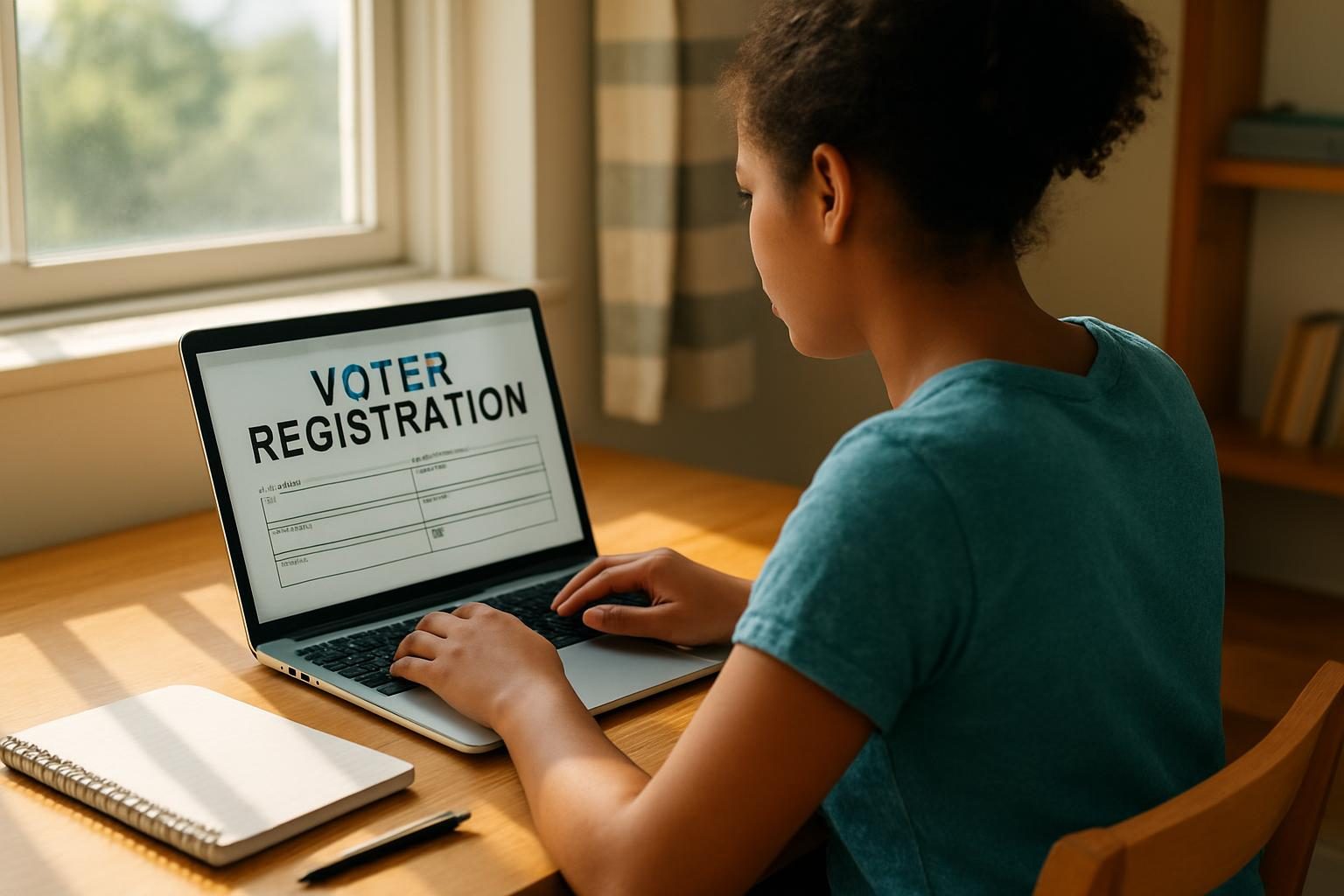
    A voter completing a registration form on a laptop at home

    Every way to register to vote in Georgia

    There is more than one door into the voter rolls. Pick whichever is easiest for you, then check your status afterward to make sure it went through.

    Method How it works Good to know
    Online Use Georgia’s official online registration, linked from vote.gov. Fastest option for most people. Always start from vote.gov to avoid look-alike sites.
    By mail Complete a registration form and mail it to the address on the form. Confirm the current form and mailing address with the state election office.
    In person Register at an election office or other official location. Check hours and what to bring before you go.
    At the DMV Register or update your information when you handle driver’s license business. Ask to register during your visit, and confirm afterward that it was processed.

    Whichever route you choose, check the current deadline on vote.gov or with the Georgia election office. Deadlines can differ by election, and we will not hand you a number that might be out of date.

    Want a broader look at how registration works nationwide? See our simple guide to registering to vote in every state.

    Registering takes minutes, but it unlocks every election on your ballot for years to come.

    How to check or update your registration

    Do not assume you are still registered. People get dropped or fall out of date after a move, a name change or a long stretch between elections. A two-minute check can save you a headache later.

    Check your status

    Use the state’s official voter lookup, reachable through vote.gov. Confirm your name, address and polling place. Our walkthrough on how to check your voter registration status in minutes shows what to look for.

    Update your information

    If you moved, changed your name or want to fix a mistake, update your record through the same official channels you would use to register. Our planned guide, Moved? How to Update Your Voter Registration, will go deeper on this.

    College students have a few extra questions about home versus school addresses. Our upcoming college students voting guide will help sort that out.

    Voter ID basics in Georgia

    ID rules are one of the places where voters most often get tripped up, and the details can change. We are not going to list specific accepted IDs here, because the safest answer is always the current one from the state.

    Before you vote, confirm what identification Georgia requires for in-person voting and for mail ballots by checking vote.gov or the state election office. For a national overview, see our guide to voter ID requirements by state.

    If you do not have the ID you need, ask the election office what options exist. Do not give up before asking.
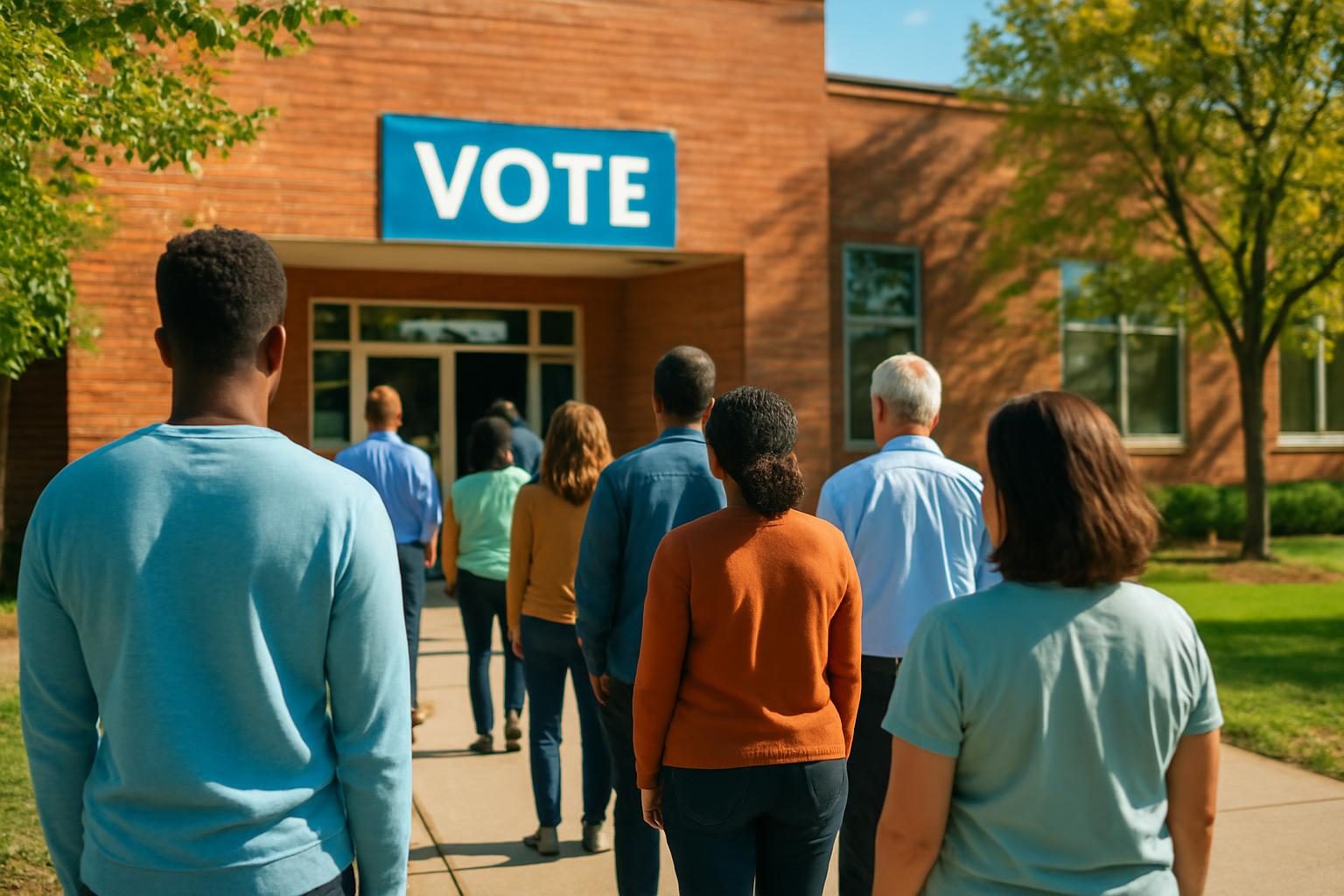
    A line of voters waiting outside a polling place

    Early voting and mail voting overview

    Georgia gives voters options beyond Election Day, and using them can make voting easier if you work long hours, care for family or travel. The specifics, including dates, locations and who can request a mail ballot, are set by the state and can change, so verify them for each election.

    For current Georgia rules on any of these, start at vote.gov or contact the state election office directly.

    A plan beats good intentions: pick how you will vote, check the rules, and tell a friend.

    Supporters gathered near a state capitol at golden hour

    Georgia in the 2028 race

    Georgia is often discussed as a battleground, and our 2028 electoral map and swing states pages track where the race may be decided. Presidential contests are won by reaching 270 electoral votes, which is why individual states get so much attention. If you want the mechanics, read how the Electoral College works.

    The general election is Tuesday, November 7, 2028. As for Georgia’s 2028 presidential primary, the date is still being set. Check back, because we will update this page when it is announced. For the early Democratic states that are already set, see our 2028 Democratic primary calendar.

    No major Democrat has formally declared a 2028 run as of this writing. Georgia’s own Raphael Warnock is among the senators widely reported as a potential candidate, but that is speculation, not an announcement. Follow our 2028 Democratic candidates tracker for updates.

    Before 2028, there is also the 2026 midterm on Tuesday, November 3, 2026. See what’s at stake in the 2026 midterms.

    Take action: Open vote.gov/register/georgia right now, confirm your registration or sign up, then text one friend or family member the link and ask them to do the same.

    Your 5-step Georgia registration checklist

    1. Confirm you are eligible using the state’s rules, linked from vote.gov.
    2. Check your status with the official voter lookup to see if you are already registered.
    3. Register or update online, by mail, in person or through the DMV.
    4. Verify the deadline and ID rules on vote.gov or with the state election office.
    5. Make a voting plan: early, by mail or on Election Day, and find your polling place.

    Want to get more involved? Volunteer to help neighbors register, and learn where Democrats stand in our guide to Democratic Party platform issues. You can also browse more guides in our Voting & Registration section, or see how neighboring races shape up in our guides to registering to vote in North Carolina and registering to vote in Florida.

    Key takeaways

    • Start at vote.gov/register/georgia for the official state links.
    • You can register online, by mail, in person or at the DMV.
    • Check the current deadline and ID rules on vote.gov before you plan.
    • Check your status regularly, especially after a move.
    • Georgia’s 2028 primary date is still being set; we will update this page.

    Last updated October 2026. Dates and candidate news change fast; we update this page as things are announced.

    Frequently asked questions

    Can I register to vote online in Georgia?

    Georgia offers online registration, and vote.gov links to the state’s official portal along with the state election office. Start at vote.gov/register/georgia so you land on the real state page and not a look-alike site.

    How do I know if I’m already registered in Georgia?

    Use the state’s official voter lookup, which you can reach through the Georgia links on vote.gov. Check after any move, name change or long gap between elections, and confirm your polling place details while you are there.

    Does Georgia have same-day voter registration?

    Not as a standard option, as far as we can confirm. Rules differ from state to state and can change, so confirm the current deadline and process on vote.gov or with the Georgia election office rather than relying on a rule of thumb.

    Do I need to re-register if I move within Georgia?

    Yes, update your registration so your address and polling place are current. You can usually do this through the same official channels you would use to register, so start at vote.gov and confirm the steps for your situation.

    When is Georgia’s 2028 presidential primary?

    The date is still being set, so we do not have one to share yet. We will update this page as soon as it is announced, and our Democratic primary calendar tracks the early states.

  • How to Register to Vote in Arizona: A 2026 Guide

    How to Register to Vote in Arizona: A 2026 Guide

    Arizona is one of the most closely watched states in American politics, and it is decided by people who show up. Every election, a few thousand votes here can shift the outcome. The first step to being one of them is simple: make sure you are registered.

    This guide walks you through how to register to vote in Arizona, how to check your status, what to know about ID and mail voting, and what is coming in 2028.

    Quick answer: To register to vote in Arizona, you must be a U.S. citizen who lives in Arizona and meets the state’s age and eligibility rules. Start at the official page, vote.gov/register/arizona, which links to the state election office and online registration. Confirm current deadlines there, not from memory or a friend’s text.

    Who can register to vote in Arizona

    In general, you need to be a U.S. citizen, an Arizona resident, and old enough to vote by Election Day. There are also rules about certain criminal convictions and court-ordered restrictions. Eligibility details can be technical, so confirm yours with the state election office or your county recorder.

    Not sure whether you qualify? Do not assume the answer is no. Many people who think they cannot vote actually can, including some people with past convictions whose rights have been restored. Ask an official source before you decide.

    Young people have options too. If you are not yet old enough, look into whether pre-registration is available, and read our upcoming guide on whether you can register to vote at 17.

    Voter filling out a registration form on a laptop at a kitchen table

    Every way to register in Arizona

    Arizona gives you several routes. The best one is the one you will actually finish today. Here is the overview, with the caveat that you should confirm current details on vote.gov.

    Method How it works Good for
    Online Arizona offers online registration. Vote.gov links you to the official state portal. Most people with a few minutes and a phone or computer
    By mail Complete a registration form and mail it to the address the state provides. Vote.gov explains how to get the form. Voters who prefer paper
    In person Register at your county recorder’s office or another official location. Check your county’s current options. Anyone who wants help from a real person
    At the DMV Motor vehicle offices offer voter registration when you get or update a license or ID. Ask when you are there. People already updating their license or address

    Whatever route you pick, double-check your name, address and date of birth before you submit. A small typo can create a big headache later.

    New to the idea of signing up online? Our upcoming explainer on whether you can register to vote online covers how it works across the country. For the nationwide picture, see How to Register to Vote: A Simple Guide for Every State.

    Registration takes a few minutes, but it unlocks every election for years to come.

    How to check or update your registration

    Registered a while ago? Check again. Moving, changing your name, or going a long stretch without voting can all affect your record. It is a quick check that can save you a lot of trouble on Election Day.

    Start with the state election office, which you can reach through vote.gov/register/arizona. Your county recorder can also confirm your status and help fix any problems. Our step-by-step guide to checking your voter registration status shows what to look for.

    When to update your registration

    • You moved, even within the same county
    • You changed your name
    • You want to change how you receive your ballot or your party preference

    If you recently moved, our upcoming guide on how to update your voter registration after moving will walk you through it. College students juggling a campus address and a home address should watch for our college students voting guide.

    Hands placing a mail ballot envelope into a ballot drop box

    ID basics for Arizona voters

    Identification rules matter at two points: when you register and when you vote. They can differ, and they can change, so we are not going to hand you a checklist from memory. A wrong assumption about ID is exactly the kind of thing that trips people up.

    Instead, here is the smart move. Confirm what you need through the state election office or your county recorder, and do it before Election Day, not at the polling place. Our overview of voter ID requirements by state explains how the rules work across the country.

    If you do not have the ID you expect, ask what alternatives exist. Election officials handle this question constantly, and there is often a path forward.

    Early and mail voting in Arizona

    Arizona is known for making voting flexible. Many voters cast their ballots by mail or vote early instead of waiting for Election Day. That means you can read your ballot at the kitchen table, research every race, and vote on your own schedule.

    The details, including how to request a mail ballot, whether you can join a list for future elections, and where to return it, are handled by your county recorder and the state election office. Confirm current rules rather than relying on what worked in a past election. For the fundamentals, see our guides to voting by mail and early voting.

    If you plan to vote in person, find out ahead of time where. Our upcoming guide on how to find your polling place will help.

    Take action: Open vote.gov/register/arizona right now and check your status or start your registration. Then text one friend or family member and ask them to do the same.

    Elections are won by people who made a plan, not people who hoped it would work out.

    Line of diverse voters seen from behind outside a polling place

    Arizona in the 2028 race

    Arizona is widely discussed as a battleground, and it will matter in the fight for the White House. A presidential candidate needs 270 of 538 electoral votes to win, and every state counts. Learn more in our guides to the 2028 electoral map, 2028 swing states, and how the Electoral College works.

    The general election is Tuesday, November 7, 2028. As for Arizona’s Democratic primary, the date is still being set, so check back. Arizona is not in the DNC’s early window, which the party approved on August 15, 2026: South Carolina, Nevada, New Hampshire, New Mexico, Michigan and Virginia. See the full 2028 Democratic primary calendar and our explainer on how presidential primaries work.

    No major Democrat has formally declared a 2028 run as of this writing. Plenty are discussed as potential candidates, including Arizona’s own Sens. Ruben Gallego and Mark Kelly. Follow the field in our 2028 Democratic candidates tracker.

    First, though, comes the 2026 midterm election on Tuesday, November 3, 2026. If you want to understand what is on the line, read 2026 Midterm Elections: What’s at Stake for 2028. Our view: the best way to shape 2028 is to show up and organize now.

    Your 5-step Arizona registration checklist

    1. Check your status. Use vote.gov/register/arizona to find the state election office and confirm whether you are already registered.
    2. Pick your method. Online, mail, in person, or at the DMV, whichever you will finish.
    3. Gather your details. Have your name, current address and date of birth ready, plus any ID information the form asks for.
    4. Confirm the deadline. Check the current deadline on vote.gov or with the state election office, and register early.
    5. Make a voting plan. Decide whether you will vote by mail, early, or in person, and tell a friend your plan.

    Want a broader look at the issues shaping the next election? Visit our guide to Democratic Party platform issues, and browse more guides in our Voting & Registration section. Following the bigger picture? Start at our 2028 presidential election hub.

    Key takeaways

    • Start at vote.gov/register/arizona, the official page for Arizona registration and the state election office.
    • Arizona offers several ways to register, including online, by mail, in person and at the DMV.
    • Check your status often, and update it after a move or name change.
    • Confirm ID rules and deadlines with official sources, since they can change.
    • Arizona’s 2028 primary date is still being set; the general election is November 7, 2028.

    Last updated October 2026. Dates and candidate news change fast; we update this page as things are announced.

    Frequently asked questions

    Can I register to vote in Arizona online?

    Arizona offers online voter registration, and the official page at vote.gov/register/arizona links you to the state’s registration options. Check vote.gov or your county recorder for current requirements before you start.

    How do I know if I’m already registered in Arizona?

    You can check your registration status through the state election office, which vote.gov links to, or by contacting your county recorder. It only takes a few minutes, and it is worth doing every time you move or change your name.

    Do I need to register again if I move within Arizona?

    Generally, yes. Your registration is tied to your address, so you should update it whenever you move, even to a new place in the same county. Use vote.gov or your county recorder to confirm the current process.

    What is the voter registration deadline in Arizona?

    Deadlines are set by the state and can change, so we do not list a number here. Check the current deadline on vote.gov or with your state election office, and register as early as you can so you are never scrambling.

    When is Arizona’s 2028 Democratic primary?

    The date is still being set and we have not confirmed it. Arizona is not part of the DNC’s early window for 2028. Check back, because we update this page as soon as dates are announced.

  • Early Voting: How It Works and How to Find Your Options

    Early Voting: How It Works and How to Find Your Options

    Imagine skipping the Election Day rush entirely. No juggling work shifts, no scrambling for childcare, no crossing your fingers about the weather. For millions of Americans, early voting makes that possible, and it is one of the most powerful tools we have to make sure every voice gets counted.

    With the midterm elections on Tuesday, November 3, 2026, now is the perfect time to learn how it works where you live. Here is a clear, practical guide to what early voting is, how to find your options, and how to get ready.

    Quick answer: Early voting lets you cast your ballot in person before Election Day, at official sites set up by your state or county. Availability, dates, hours and locations vary a lot by state. To find yours, go to vote.gov, pick your state, and follow the links to your official election office.

    What early voting actually is

    Early voting is a way to vote in person during a set period before Election Day. You go to an official location, check in, and fill out your ballot much like you would on Election Day. Your ballot is then secured and counted according to your state’s procedures.

    It is easy to mix up early voting with other options, so here is a simple breakdown. Each one has its own rules, and your state decides which ones you can use.

    Option Where you vote When Good to know
    Early in-person voting Official early voting site Before Election Day, during a window set by your state Dates, hours and sites vary by state and often by county
    Voting by mail (absentee) At home; return by mail or drop-off Ballot arrives ahead of Election Day Rules on who qualifies and how to return it vary. See our guide to voting by mail
    Election Day voting Your assigned polling place Tuesday, November 3, 2026 Usually tied to your address

    One thing to keep straight: the terms people use differ from place to place. Some states call it “early voting,” others use different names, and a few blend early in-person and mail options together. Do not worry about the label. Focus on what your state and county offer.

    Why early voting matters for progressives

    Here is our view, and we are happy to say so plainly: more access means a stronger democracy. Early voting gives people with unpredictable schedules, long commutes, caregiving duties or hourly jobs more than one chance to participate. When voting is easier, more people can show up.

    It also helps campaigns and volunteers. When voters cast ballots early, organizers can focus their phone calls and door knocks on neighbors who have not voted yet. That makes every volunteer hour count for more.

    When voting fits real life, more neighbors can take part, and democracy gets stronger.

    Volunteer chatting with a neighbor about voting on a sunny sidewalk

    How to find your early voting options

    The single most important thing to know: the rules are set by your state, and sometimes your county. We will not guess at your local dates or locations, because getting that wrong could cost you your vote. Instead, here is a reliable way to find them.

    1. Start at vote.gov. Visit vote.gov and choose your state. Each state page links to official information, including registration details. For example, you can find Ohio’s at vote.gov/register/ohio and New York’s at vote.gov/register/new-york.
    2. Go to your state or county election office. These official sites list whether early voting is offered, the dates, the hours and the exact addresses.
    3. Confirm you are registered. Use our guide to checking your voter registration status to make sure you are set.
    4. Check ID rules. Requirements differ by state. Our voter ID guide is a good starting point, but always confirm with your state election office.
    5. Pick your plan. Choose a day and time, and put it on your calendar. Bring a friend if you can.

    Looking for a nearby site? We are working on a dedicated guide on how to find your polling place, and we will link it here once it is live.

    Do not rely on social media or word of mouth

    Locations and hours can change, and misinformation spreads fast. Only trust official sources: vote.gov, your state election office, or your county or city election website. If something looks off, double-check it there.

    Are you registered? Check first

    In most states, you need to be registered before you can vote, early or otherwise. North Dakota is the exception, since it has no voter registration. Some states offer same-day registration, which may be available at certain voting sites, but the rules are not the same everywhere. If you need help registering, we have a guide to voter registration in Arizona.

    Do not assume. Registration deadlines are set by each state, so confirm yours on vote.gov or with your state election office. For a full walkthrough, see our simple guide to registering in every state.

    Many states let you register online. We are building a guide on whether you can register to vote online, and one for people who recently need to update their registration after moving. If you live in Michigan, our Michigan voter registration guide can walk you through the process.

    A ballot you never cast is a voice we never hear. Check your registration today, not tomorrow.

    Hands placing a ballot envelope into a secure drop box

    What to bring and what to expect

    Showing up prepared makes the process quick and stress-free. Requirements differ by state, so use this as a general checklist and confirm the details locally.

    • Any required ID. Some states require it, some do not, and the types accepted differ.
    • Your registration details. Know the name and address you registered under.
    • A sample ballot, if available. Many election offices publish one online so you can read the choices ahead of time.
    • Your notes. Bring your list of candidates and ballot measures. Most places allow this, but ask if you are unsure.
    • A little patience. Lines can vary by time of day. Early in the voting period or mid-day on weekdays can be quieter, but there is no guarantee.

    When you arrive, you will check in with a poll worker, get your ballot, mark your choices in private, and submit it as directed. If you have a question or run into a problem, ask a poll worker right away. They are there to help.

    If you are a student or you have moved

    Where you register and vote can depend on your address, which matters for students and anyone who has moved recently. We are putting together a college students voting guide to walk through the home-versus-school question. In the meantime, check your state’s rules at vote.gov.

    Early voting, mail voting or Election Day?

    There is no single best choice. It depends on your state, your schedule and what makes you feel confident. Here is a quick way to think it through.

    • Choose early in-person voting if you like the experience of voting at a site but want flexibility on timing.
    • Choose voting by mail if you prefer to take your time with the ballot at home. Check the rules in our mail voting guide.
    • Choose Election Day if that fits your life best. Just make a plan so nothing gets in the way.

    Whichever you pick, the goal is the same: make your plan early, confirm the details with an official source, and follow through.

    College student checking voting information on a laptop in a library

    Why this matters beyond November

    The 2026 midterms decide all 435 House seats, about a third of the Senate and 36 governorships. Those results shape the political landscape heading into the next presidential race. For more on what is on the line, read our look at the 2026 midterm elections and what is at stake for 2028.

    Looking further ahead, the 2028 general election is on Tuesday, November 7, 2028. Primaries come first, and the Democratic early window is already taking shape. Early voting habits you build now will carry into those contests. You can follow the full schedule in our 2028 Democratic primary calendar and our hub on the 2028 presidential election.

    Primary voting rules, including early options, are set state by state and can differ from the general election. We will keep updating our coverage as states finalize their plans.

    Take action: Today, visit vote.gov, find your state, and confirm your registration and early voting options. Then text one friend or family member and ask them to do the same. Two minutes, double the impact.

    Get involved beyond your own ballot

    Voting is the foundation, but it is not the whole story. Early voting periods are some of the busiest and most rewarding times to volunteer. Here are a few ways to help your community participate.

    • Remind your people. A friendly nudge from someone you know is more effective than almost anything else.
    • Offer a ride or company. Going together makes it easier and more fun.
    • Volunteer with a campaign or local group. Phone banks, canvassing and voter outreach all need hands.
    • Share official info only. Point friends to vote.gov and their local election office, not to rumors.

    Want to see where the Democratic field is heading? Our 2028 Democratic candidates tracker covers who might run. No major Democrat has formally declared a presidential run yet, and we will update as that changes. For the issues driving the conversation, see where Democrats stand on the platform issues.

    You can also browse everything in our Voting & Registration section.

    Key takeaways

    • Early voting lets you cast a ballot in person before Election Day, but availability and rules vary by state.
    • Start at vote.gov and your state or county election office for official dates, hours and locations.
    • Confirm you are registered first. North Dakota has no registration; same-day registration rules differ by state.
    • Check your state’s ID rules before you go, and never rely on rumors or social media for logistics.
    • The 2026 midterms are Tuesday, November 3, 2026, so make your plan now.
    • Bring a friend, remind your neighbors, and consider volunteering to help others vote.

    Last updated October 2026. Dates and candidate news change fast; we update this page as things are announced.

    Frequently asked questions

    What is early voting?

    Early voting means casting your ballot in person at an official site before Election Day. It is different from voting by mail, where your ballot is delivered to you and returned by mail or drop-off. Rules, dates and locations vary by state, so check vote.gov or your state election office.

    Does every state offer early voting?

    No. Many states offer some form of early in-person voting, but the rules differ widely, and some states rely mainly on mail voting or limit early options. Confirm what your state offers on vote.gov or with your state election office.

    Do I have to be registered before I vote early?

    In most states, yes. Some states offer same-day registration, which may be available at certain early voting sites, but rules differ. North Dakota has no voter registration. Check your state’s rules on vote.gov before you go.

    Can I change my mind after I vote early?

    Generally, once your ballot is cast and counted as submitted, it is final. Rules for specific situations vary by state, so if you have a question about your ballot, contact your state or local election office.

    Do I need ID to vote early?

    It depends on your state. Some states require ID at the polls and others do not. Check our voter ID guide and confirm the rules with your state election office before you head out.

  • Voter ID Requirements by State: What to Bring to the Polls

    Voter ID Requirements by State: What to Bring to the Polls

    Nothing should stand between you and your ballot, and a little preparation goes a long way. Voter ID rules are one of the most common questions we hear, and the answer is different depending on where you live. Here is how to figure out exactly what to bring so you can walk in confident and walk out with your “I voted” sticker.

    Quick answer: Voter ID requirements by state vary. Some states ask every voter to show ID at the polls, some accept a wider range of documents or a signed statement, and some have special rules for first-time voters. No single national rule applies, so confirm your state’s current requirements on vote.gov or with your state or county election office before you head out.

    We are not lawyers and this is not legal advice. What we can do is explain how the rules generally work, show you what to check, and point you to the official sources that have the final word.

    Why voter ID rules differ from state to state

    Elections in the United States are run largely by states and local governments. That means each state sets its own rules for registration, early voting, mail ballots and what voters need to show at the polls. If you haven’t registered yet, learn how to register to vote in Georgia or your state.

    The result is a patchwork. A voter in one state might hand over a photo ID at check-in, while a voter in another state might simply state their name and sign in. Rules also change when legislatures pass new laws or courts weigh in, which is one more reason to check an official source close to Election Day.

    The good news: you do not have to decode every state’s statute. Your job is to find your own state’s rules and make a plan.

    The main types of voter ID rules

    States generally fall into a few broad approaches. The labels below are our simplified way of explaining the landscape, not official legal categories, and the details of each state’s law can be more specific.

    Approach What it generally means What to do
    Photo ID requested Voters are asked to show a government-issued photo ID, such as a driver’s license, at check-in. Bring the ID and confirm which types your state accepts.
    Non-photo ID accepted Voters may show a broader set of documents, such as a utility bill, bank statement or other proof of identity and address. Bring a couple of documents and check the accepted list.
    Statement or signature options Voters without ID may sign an affidavit or have a signature matched against records. Know your fallback, but do not count on it. Bring ID if you have it.
    First-time voter rules Some states ask for ID only from people voting for the first time or who registered by mail without providing ID. If you are new, check whether extra documents apply to you.

    Your state may mix these approaches. For example, a state may have one set of rules for in-person voting and another for mail ballots. That is why a quick lookup on your state’s official page is worth five minutes.

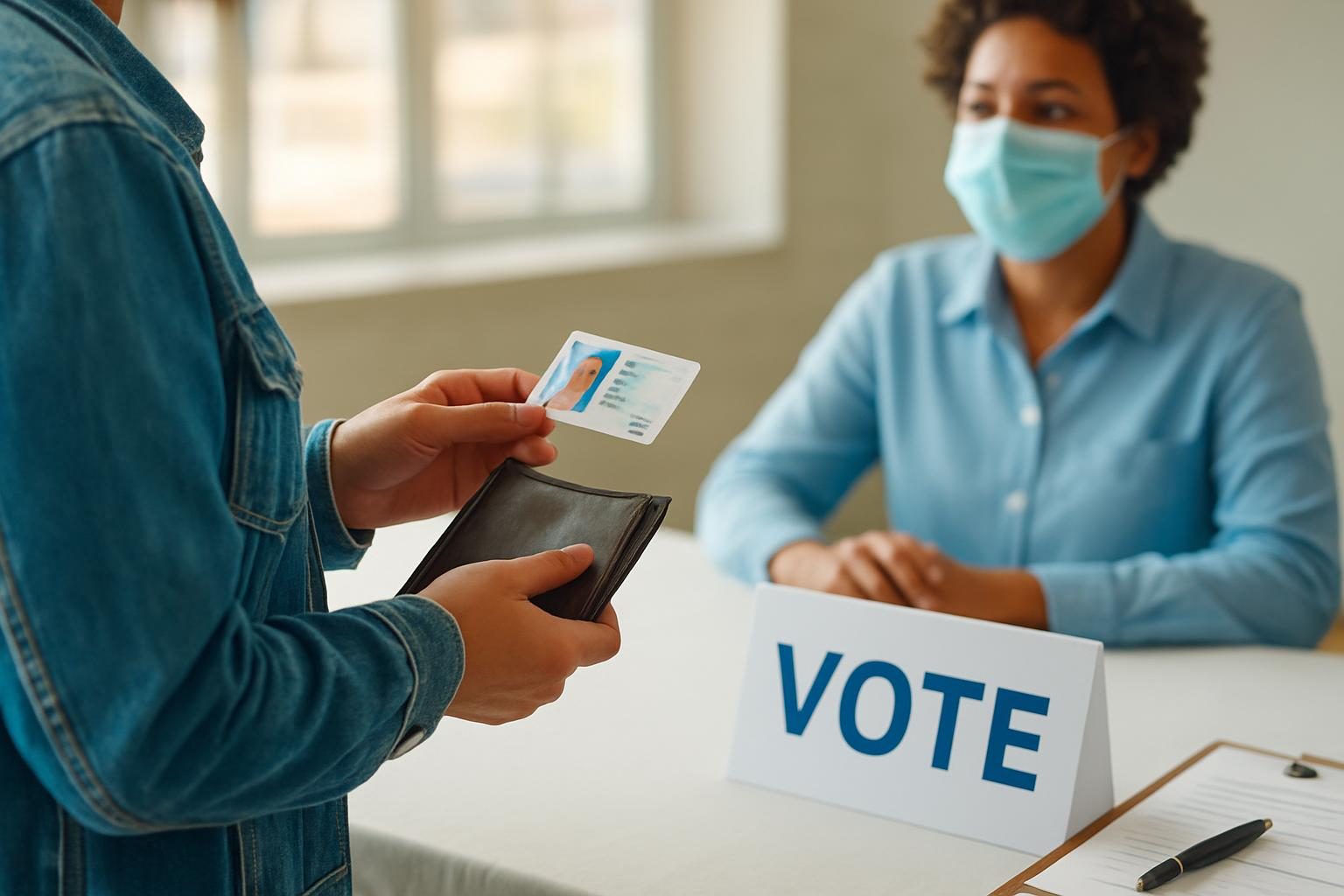
    A voter handing identification to a poll worker at a check-in table

    What counts as acceptable ID?

    Acceptable forms of ID are decided state by state. Commonly accepted documents in many places include a driver’s license or state-issued ID card, but the full lists vary. Some states accept things like a passport, military ID, student ID or tribal ID. Others are narrower.

    Details matter here. Some states care whether the ID is current or recently expired. Some require that the name on your ID closely match the name on your voter registration. Some want a current address; others do not.

    Check these details before you go

    1. Is the ID unexpired? Confirm whether your state accepts IDs that have recently expired.
    2. Does the name match? If you changed your name, make sure your registration and your ID tell the same story.
    3. Does the address matter? Some states look at the address on your ID or ask for proof of residence.
    4. Is a photo required? If so, make sure your document includes one and is on your state’s accepted list.

    If you find a mismatch, you have time to fix it. Update your registration, or contact your state election office to ask what they recommend.

    The best time to learn your state’s ID rules is long before Election Day, not in the check-in line.

    How to find your state’s rules in minutes

    Start with vote.gov, the federal government’s portal for voting information. It links to every state’s official registration rules and online registration tools. Each state has its own page; for example, https://vote.gov/register/ohio or https://vote.gov/register/new-york. Swap in your state’s name to find yours.

    From there, follow the link to your state or county election office for the latest word on what to bring. Election officials are the final authority, and their websites are where changes are posted first.

    A simple three-step plan

    1. Look up your state on vote.gov and open your state election office’s website.
    2. Find the “what to bring” page for voting in person, and the instructions for mail ballots if you plan to vote that way.
    3. Put your ID where you will not forget it, such as with your keys or phone, and set a reminder.

    Not sure you are even registered? Our guide to checking your voter registration status takes just a few minutes. And if you need to sign up, start with how to register to vote in every state.

    A student using a laptop to check voting information

    Voting by mail and early voting: ID can work differently

    Showing ID at a polling place is only one piece of the puzzle. If you vote by mail, the rules are usually different. Some states ask you to write an ID number on your return envelope. Others ask for a signature that is compared to the one on file. Details vary, and mistakes on the envelope can cause problems, so read the instructions that come with your ballot carefully.

    Our explainer on how to vote by mail and use absentee ballots walks through the process. If you would rather vote in person before Election Day, learn more about how early voting works and how to find your options. Early voting sites follow your state’s rules, so bring whatever your state asks for.

    Special situations worth planning for

    You recently moved

    If you changed addresses, your registration may need an update. Do that early, and see what your state asks voters to show if the address on your ID does not match. We are working on a guide to updating your voter registration after moving.

    You are a college student

    Students often wonder whether to vote from a home address or a school address, and whether a student ID counts. Rules differ by state. Our upcoming college students voting guide will cover the basics, and your state election office has the official answer on which IDs are accepted.

    You are a first-time voter

    Some states ask first-time voters to show ID or provide extra documents, especially if they registered by mail. If this will be your first ballot, check your state’s page for new-voter rules so you are not surprised at check-in.

    You do not have a photo ID

    Many people do not drive and may not have a license. If you do not have the ID your state asks for, contact your state election office. Many states offer free voter ID options or alternative ways to verify who you are, and officials can tell you what applies where you live. Do not give up; ask early so there is time to sort it out.

    Every eligible voter deserves a clear, simple path to the ballot, and clear information is where that path starts.

    Our view: ID rules should never be a mystery

    This section is opinion from the Vote Blue Wave team.

    We believe voting should be easy to understand and easy to do. When rules vary this much, confusion is the enemy, because a voter who is unsure what to bring may stay home. Democrats and progressives have long argued that policies should expand access and make sure every eligible voter can cast a ballot without needless obstacles. You can read more about the party’s priorities in our guide to Democratic Party platform issues.

    Whatever the rules are in your state, the best response is preparation. Know what to bring, help your friends and family do the same, and show up. Wave elections are built from millions of people doing exactly that; if you are curious about the history, see our explainer on what a blue wave means.

    Volunteers with clipboards talking with neighbors about voting

    The big elections ahead

    The 2026 midterm elections are on Tuesday, November 3, 2026, with all 435 House seats, about a third of the Senate and 36 governors on the ballot. Check your ID requirements now so you are ready. For the stakes, see our rundown of the 2026 midterm elections and what is at stake for 2028.

    Looking further ahead, the general election is Tuesday, November 7, 2028. You can follow every date on our 2028 election key dates calendar, and the full picture lives in our 2028 presidential election hub. Primaries have their own rules, too, so check what your state asks for in the spring as well.

    Take action: Open vote.gov right now, find your state, and write down exactly what to bring to the polls. Then text one friend or family member the link and ask them to do the same. Two minutes, two more prepared voters.

    Last updated October 2026. Dates and candidate news change fast; we update this page as things are announced.

    Key takeaways

    • Voter ID requirements vary by state, so there is no single national rule to rely on.
    • Vote.gov links to every state’s official voting information, and your state or county election office has the final word.
    • Rules can differ for in-person voting, mail ballots, first-time voters and early voting.
    • Check that the name and address on your ID line up with your registration, and fix any mismatch early.
    • If you lack the ID your state asks for, contact your election office now to learn your options.
    • The 2026 midterms are Tuesday, November 3, 2026; the 2028 general election is Tuesday, November 7, 2028.

    Frequently asked questions

    Do I need ID to vote in every state?

    No. Rules differ from state to state. Some states ask every voter to show ID at the polls, others accept alternatives like signing an affidavit or matching a signature, and some have different rules for first-time voters. Check vote.gov or your state election office for your state’s current rules.

    What if I show up without my ID?

    Many states have a backup option, such as a provisional ballot or a signed statement, but the details vary and you may have extra steps to complete afterward. Do not assume you will be turned away, and do not assume it will be easy. Ask the poll worker what your options are, and confirm your state’s process ahead of time on vote.gov or with your state election office.

    Do I need ID to register to vote?

    It depends on your state and how you register. Many registration forms ask for a driver’s license number or the last four digits of a Social Security number rather than a physical ID card. Your state’s page on vote.gov explains what is required where you live. For more, see how to register to vote in your state and whether you can register to vote online.

    Does voting by mail require ID?

    Rules for mail ballots are separate from in-person rules and differ by state. Some states ask for an ID number or a signature on the return envelope. Read the instructions that come with your ballot carefully, and confirm the requirements with your state election office.

    Where can I find my state’s official voter ID rules?

    Start at vote.gov, which links to every state’s official registration and voting information, using addresses like https://vote.gov/register/ohio. Your state or county election office is the final word on what to bring, so check there before Election Day. For more voting guides, browse our Voting & Registration section.

  • How to Vote by Mail: Absentee Ballots Explained

    How to Vote by Mail: Absentee Ballots Explained

    Imagine casting your vote from your own kitchen table, with a cup of coffee, a pen and all the time you need to read every race. For millions of Americans, that is exactly how voting by mail works. If you want to know how to vote by mail, you are in the right place.

    Here is the best part: mail voting is one of the easiest ways to make sure your voice is counted, especially if work, school, caregiving, a disability or travel makes Election Day tricky. Let’s walk through it step by step.

    Quick answer: To vote by mail, make sure you are registered, find your state’s rules on vote.gov, request a ballot if your state requires it (some mail one automatically), fill it out exactly as instructed, sign where required, and return it by your state’s deadline. Rules differ by state, so always confirm details with vote.gov or your state election office.

    What “voting by mail” and “absentee” actually mean

    You will hear several terms for the same basic idea: a paper ballot you complete at home and send back. “Absentee ballot” is the older term, and it traditionally meant a ballot for someone who could not be at the polls. “Mail ballot” or “vote by mail” is the more common phrase today.

    The names and the rules vary from state to state. In some states, any registered voter can ask for a mail ballot. In others, you need to meet certain conditions. In a few, every registered voter is mailed a ballot automatically.

    That is why the single most important step is checking your own state’s rules. We will show you exactly where to look.

    Is it the same as early voting?

    Not quite. Mail voting means completing a ballot at home and returning it. Early voting usually means voting in person at a designated site before Election Day. Many states offer one, both or neither, so check what your state offers.

    Step 1: Make sure you are registered

    You cannot vote by mail unless you are registered to vote. (North Dakota is the only state with no voter registration.) If you have moved, changed your name or never registered, start by registering to vote.

    Not sure where you stand? Our guide to checking your voter registration status takes just a few minutes. If you need to sign up, our simple guide to registering to vote in every state walks you through it.

    Every state’s official rules, deadlines and online registration links are on vote.gov. Just add your state name to the address, like vote.gov/register/ohio or vote.gov/register/new-york.

    Your ballot is only as powerful as your registration, so check it first and check it early.

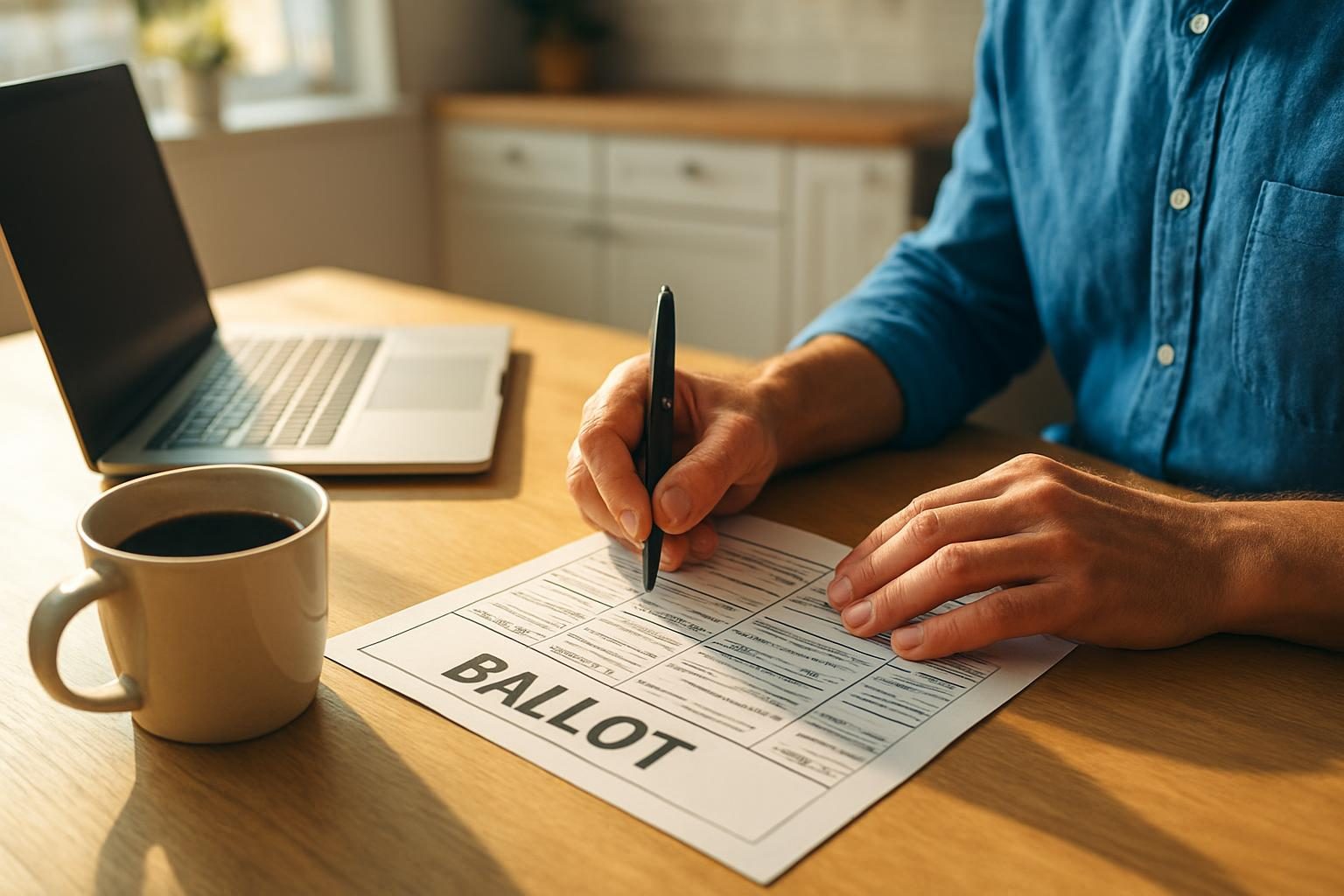
    Voter filling out a mail ballot at a kitchen table

    Step 2: Find your state’s mail voting rules

    States handle mail voting in a few broad ways. Which one applies to you decides what you need to do next.

    If your state works like this… What it usually means for you
    Ballots are mailed automatically Watch your mailbox and update your address if you have moved
    Anyone can request a mail ballot You submit a request, then wait for your ballot to arrive
    You need an eligible reason Check whether you qualify and how to document it
    Special rules for certain voters Military, overseas and some other voters may have their own process

    Rules on who qualifies, how to ask and when everything is due all differ. We will not guess on your behalf, because getting it wrong could cost you your vote. Instead, go to vote.gov, choose your state and follow the official links to your state election office.

    Why we send you to official sources

    Election rules can change, and they can differ even from one county to the next. Official state and local election offices are the final word. Our job is to point you to them and get you excited to use them.

    Step 3: Request your ballot (if your state requires it)

    If your state does not mail ballots automatically, you will need to request one. Most states let you do this through your state or county election office, often with an online form, and some offer a paper form as well.

    1. Visit vote.gov and select your state to find official instructions.
    2. Find the request form on your state or county election website.
    3. Fill it out carefully with the same name and address as on your voter registration.
    4. Submit it by your state’s deadline. Confirm that deadline on vote.gov or with your state election office.
    5. Keep an eye out for your ballot, and contact your election office if it does not arrive.

    Do not wait until the last minute. Mail takes time in both directions, and a little early planning removes a lot of stress.

    Step 4: Fill out your ballot the right way

    Your ballot packet will come with instructions. Read them before you mark anything, because small mistakes are the most common reason mail ballots run into trouble.

    • Use the pen the instructions call for. Many ballots specify a color or type.
    • Mark your choices exactly as directed. Fill in ovals fully if that is what the ballot asks.
    • Use only the envelopes provided. Many states use a secrecy sleeve or inner envelope plus an outer return envelope.
    • Sign where required. Many states ask for a signature, and some require other information or a witness. Follow your state’s instructions precisely.
    • Do not add extra marks or notes unless the instructions say you can.

    Take your time. This is your chance to research every race on the ballot, from president to school board, without any pressure. You can look up candidates, read about ballot measures and even talk it over with your family before you decide.

    A mail ballot gives you something precious: time to learn about every race and vote with confidence.

    Volunteers talking with neighbors about voting on a sunny sidewalk

    Step 5: Return your ballot on time

    Once your ballot is complete, you need to return it by your state’s deadline. How you can return it depends on where you live. Common options include:

    • Mailing it back through the postal service
    • Dropping it in an official drop box
    • Delivering it to an election office or designated site

    Not every option is available everywhere, and some states have rules about who can return a ballot on your behalf. Whichever method you use, confirm what is allowed and when your ballot must arrive. Some states count ballots based on when they are received, others based on when they are postmarked, and the rules differ.

    Our advice, and it is only advice: return your ballot early. Do not leave it for the final day. Check the exact deadline for your state on vote.gov or with your state election office.

    Can you track your ballot?

    Many states and counties offer a way to confirm your ballot was received and counted. If yours does, use it. It is a nice bit of peace of mind, and it helps you catch problems early. If you cannot find a tracking tool, your local election office can tell you what is available.

    Common mail voting mistakes (and how to avoid them)

    Mail voting is simple, but a few slip-ups come up again and again. Here is how to steer clear of them.

    • Waiting too long. Request and return early so nothing is left to chance.
    • Skipping the signature. Missing or mismatched signatures can cause problems, so follow the instructions carefully.
    • Using the wrong envelope. Use exactly what came in your packet.
    • Forgetting to update your address. If you moved, see our upcoming guide on updating your voter registration after moving.
    • Assuming the rules are the same everywhere. They are not. Always check your own state.

    Special situations: students, travelers and more

    Mail voting can be a lifesaver in all kinds of situations. Here are a few where it comes up often.

    College students

    Many students vote by mail from school. You may have a choice about which address to register at, and the answer affects where your ballot comes from. Our upcoming college students voting guide will cover the details, and in the meantime vote.gov is a good place to start.

    Voters who travel or live abroad

    If you are away from home for work, family or military service, mail voting may be the best way to take part. Special processes exist for military and overseas voters, so look them up through vote.gov and your state election office.

    Voters with disabilities or limited mobility

    Mail voting can make participation easier for many people. States also have rules about accessible options and assistance, so contact your election office to learn what is available to you.

    Voter ID and mail ballots

    Identification rules can apply to mail voting as well as in-person voting, and they differ by state. We are building a guide to voter ID requirements by state. Until then, your state election office has the final word.

    Voter dropping a ballot envelope into an official drop box

    Why this matters for 2028 and beyond

    The next big test is the 2026 midterm elections on Tuesday, November 3, 2026, when all 435 House seats, about a third of the Senate and 36 governorships are on the ballot. Those races shape what comes next, including the stakes heading into 2028.

    The general election is Tuesday, November 7, 2028, and the road there begins with primaries. The DNC approved its early-window calendar on August 15, 2026, starting with South Carolina on January 22, 2028. You can see every date in our 2028 Democratic primary calendar.

    Here is our view: the best way to feel powerful in this process is to get ready now. Whether you vote by mail, early or on Election Day, make a plan, check your registration and bring a friend along. Want to see how the whole race fits together? Our 2028 presidential election hub has the big picture, and our 2028 election key dates calendar keeps the timeline in one place.

    Take action: Do two things today. First, check your registration with our voter registration status guide. Second, visit vote.gov, choose your state and look up how mail voting works there. Then text one friend and ask them to do the same.

    Key takeaways

    • Voting by mail means completing a paper ballot at home and returning it, and the rules differ by state.
    • You must be registered first. Check your status and find your state’s official rules on vote.gov.
    • Some states mail ballots automatically; others require you to request one. Confirm which applies to you.
    • Read your instructions closely, use the envelopes provided and sign where required.
    • Return your ballot early and confirm your state’s deadline with vote.gov or your state election office.
    • Every ballot counts. Help a friend or neighbor make a plan too.

    Want to keep exploring? Our Voting & Registration section has more guides to help you get ready.

    Last updated October 2026. Dates and candidate news change fast; we update this page as things are announced.

    Frequently asked questions

    Is voting by mail the same as voting absentee?

    Often, yes, but the terms vary by state. Some states use “absentee” for ballots requested by voters who meet certain conditions, and “mail voting” for ballots anyone can request or that go to every voter automatically. Check vote.gov or your state election office to see which term applies where you live.

    Do I need to be registered before I can vote by mail?

    Yes. In nearly every state you must be registered to vote before you can request or receive a mail ballot. Check your status first, then follow your state’s steps on vote.gov. North Dakota is the one state with no voter registration.

    Can I track my mail ballot after I send it?

    Many states offer a ballot tracking tool or a way to confirm your ballot was received and counted. Availability differs by state and even by county. Look on your state or county election website, or call your election office, to see what is offered where you live.

    What if I make a mistake on my ballot or envelope?

    Do not guess and do not throw it away. Contact your local election office right away and ask what your state allows, since some states let you fix a problem or request a replacement. Rules and timelines differ, so ask before you try anything on your own.

    Can I still vote in person if I requested a mail ballot?

    In many states you can, but the rules differ, and some states ask you to bring your mail ballot with you or vote a provisional ballot. Confirm the process with your state election office before you go so your vote counts and is not duplicated.

  • Check Voter Registration Status: How to Do It in Minutes

    Check Voter Registration Status: How to Do It in Minutes

    Here is a stat nobody needs: the number of people who found out they were not registered on the day they showed up to vote. Here is a better plan: spend five minutes right now making sure you are ready. Checking your voter registration status is quick, free, and one of the most powerful things you can do for democracy.

    Quick answer: To check voter registration status, go to vote.gov, choose your state, and follow the link to your state’s official lookup tool. Enter the details it asks for, usually your name and date of birth, and confirm that your name and address are correct. If anything is off or missing, fix it through your state’s official process, and confirm deadlines on vote.gov or with your state election office.

    Why checking your voter registration status matters

    Registration records can change without you doing anything. People move, rental addresses shift, names change after marriage, and election offices update their lists. Sometimes a record is outdated, and sometimes a person is simply not on the rolls at all.

    The good news is that this is easy to catch early. A quick check tells you whether you are registered, whether your address is current, and whether you need to take any action before the next election.

    There is a bigger picture here too. The 2026 midterm elections are on Tuesday, November 3, 2026, with all 435 House seats, about a third of the Senate, and 36 governorships on the line. The 2028 presidential general election follows on Tuesday, November 7, 2028. Every one of those contests is decided by the people who are ready and registered.

    Your vote only counts if your registration is in order, and the best time to check is before you need it.

    How to check your voter registration status, step by step

    The process is simple, and it works the same way in spirit for every state. Each state runs its own elections, so the exact lookup tool differs, but vote.gov gets you to the right place.

    1. Go to vote.gov. It is the official U.S. government site for voter registration information.
    2. Pick your state. Every state has its own page with official rules, deadlines, and links. The address follows a simple pattern, such as https://vote.gov/register/ohio or https://vote.gov/register/new-york.
    3. Find the registration status link. Your state’s page points you to its official lookup tool or to your state election office.
    4. Enter the requested details. This is typically your name and date of birth, and some states also ask for your address or ZIP code.
    5. Read your results carefully. Confirm that your name is spelled correctly, your address is current, and your registration is active.
    6. Take action if something is wrong. Update or register through your state’s official process.

    If a lookup tool cannot find you, do not assume the worst right away. Try again with alternate spellings, a previous name, or an older address. If you still come up empty, contact your state or local election office to ask directly.

    What information you will probably need

    Have a few basics handy so the check goes smoothly. Requirements differ by state, so treat this as a general guide rather than a rule.

    Information Why it may be needed
    Full legal name To match your record, including any previous names
    Date of birth To confirm your identity in the lookup
    Home address or ZIP code Some states use it to find your record or your local district
    County or city Helps when a state search tool asks you to narrow results

    One safety tip: an official lookup should never ask for a payment, a bank account, or your full Social Security number. If a site does, close it and go back to vote.gov.

    Volunteers with clipboards helping neighbors on a sunny sidewalk

    What to check once you find your record

    Finding your name is only half the job. Read the whole record with a critical eye, because small errors can cause real headaches later.

    Your name and address

    Make sure your name matches the one you use on your ID, and that your address is where you actually live now. An old address is the most common problem, especially for renters and younger voters who move often.

    Your registration status

    Look for words like active or inactive, and read any notes the tool gives you. If your status is marked inactive or something looks unfamiliar, contact your election office to find out what it means in your state and what to do about it.

    Your polling place and voting options

    Many state tools also show where you vote and what districts you live in. Use that information to plan ahead. If you want to skip the Election Day line, look into early voting options in your state, or find out how voting by mail works where you live.

    Also look up what you may need to bring with you. Rules about identification differ widely, so check voter ID requirements for your state well before you head to the polls.

    Not registered, or your info is out of date? Here is what to do

    This happens to lots of people, and it is fixable. The key is to act through official channels and to confirm timing with your state.

    If you are not registered

    Use vote.gov to find your state’s official registration process. Many states allow online registration, and you can learn more about registering to vote online. Our full walkthrough, How to Register to Vote: A Simple Guide for Every State, covers the basics for everyone.

    Same-day registration exists in many states, but the rules differ, so do not count on it without confirming. And one fun fact for North Dakota readers: your state has no voter registration at all.

    On deadlines, we will be straightforward: they vary by state, and we will not guess at them here. Confirm yours on vote.gov or with your state election office, and do it early.

    If you moved

    An address change usually means updating your record, and a move to a new state means registering there. Our upcoming guide, how to update your voter registration after moving, will walk through it.

    If you are a student

    Students often wonder whether to register at home or at school. The answer depends on your situation and your state’s rules, so see our planned college students voting guide and confirm the details with your state election office.

    If you are about to turn 18

    Some young people can get ahead of the game. Learn how it works in our guide to whether you can register to vote at 17, and check your state’s rules on vote.gov.

    Five minutes of checking today beats five hours of regret on Election Day.

    Diverse line of voters waiting outside a polling place in autumn

    How often should you check?

    A good rule of thumb is to check at least once a year, plus a few specific moments when a check really pays off.

    • After you move, even across town
    • After you change your name
    • Before each major election
    • If you have not voted in a while
    • Any time you get mail from an election office that you do not understand

    Think of it like checking your tire pressure before a road trip. It takes a minute, and it keeps you from getting stuck.

    Why every single registration matters for 2026 and 2028

    As of October 5, 2026, no major Democrat has formally declared a 2028 presidential run. Plenty of names are widely reported as potential candidates, and you can follow them in our 2028 Democratic candidates tracker. But before anyone gets on a debate stage, voters have work to do.

    First up is November 3, 2026. What happens in the midterms shapes what comes next, from who controls Congress to who leads statehouses. If you want to dig in, read about the 2026 Senate races to watch, the 36 governor races explained simply, and what happens if Democrats win the House.

    Then comes the primary season. The Democratic National Committee approved its 2028 early-window calendar on August 15, 2026, starting with South Carolina on January 22, 2028. You can see every date in our 2028 Democratic primary calendar. Whether and how you can vote in a primary depends on your state’s rules, so confirm them with your state election office.

    Here is our view: a healthy democracy is one where every eligible person who wants to participate can. A clean, current registration is the foundation. It is not glamorous, but it is where winning starts.

    Help your friends and neighbors get ready

    Checking your own status is great. Getting five friends to check theirs is a movement. Most people do not avoid voting out of apathy. They just assume everything is fine, or they feel unsure where to begin.

    You can be the person who makes it easy. Send the vote.gov link in a group chat. Offer to sit with a relative while they look themselves up. Bring it up at the next family dinner.

    Take action: Open vote.gov right now, check your own registration status, and then text the link to three people you know. Ask them to check theirs and report back. Want to do more? Look for a local volunteer group helping with registration drives near you.

    College student updating voter information on a laptop in a library

    Swing states and special situations

    Some states get extra attention in presidential years, and for good reason. If you live in one, a clean registration matters just as much as anywhere else, and each state has its own process. We are building guides for several, including Arizona, Georgia, Michigan, and Pennsylvania.

    Whatever your state, the official source for its rules is vote.gov or your state election office. We are happy to point you in the right direction, but we never want you relying on a blog for a deadline or a legal rule.

    Keep going: your next steps

    Once you are confirmed and ready, there is plenty more to explore. Browse everything in our Voting & Registration section, or get the big-picture view in our 2028 presidential election hub. Keep our 2028 election key dates calendar handy so you always know what is coming.

    Voting is also about what you care about. If you want to understand where the party stands, check out Democratic Party platform issues. Then find your people, whether that is a campaign office, a county party, or a neighborhood group, and get involved.

    Key takeaways

    • Start at vote.gov to find your state’s official registration status tool.
    • Check your name, address, and status, not just whether you show up.
    • If something is wrong, fix it through official channels and confirm deadlines on vote.gov or with your state election office.
    • Check at least once a year and any time you move or change your name.
    • The 2026 midterms are on November 3, 2026, and the general election is on November 7, 2028.
    • Help three friends check their status; it multiplies your impact.

    Last updated October 2026. Dates and candidate news change fast; we update this page as things are announced.

    Frequently asked questions

    How often should I check my voter registration status?

    A good habit is to check once a year, plus any time you move, change your name, or haven’t voted in a while. A quick check before every major election is the safest approach. It takes a few minutes and can save you a lot of trouble later.

    Can I check my registration status without creating an account?

    In most states, yes. Official state lookup tools usually ask for basic details such as your name, date of birth, and sometimes your address or ZIP code. Start at vote.gov to find your state’s official page, and never pay a third party for this service.

    What if I’m not registered or my information is wrong?

    Don’t panic. Register or update your record through your state’s official process, which you can find on vote.gov. Rules and deadlines differ by state, so confirm the details with vote.gov or your state election office. Some states also offer same-day registration, but the rules vary.

    Does registration status carry over if I move to a new state?

    No. Registration is handled state by state, so moving to a new state means registering there under that state’s rules. Moving within your state usually means updating your address. Check vote.gov or your state election office for the correct steps.

    Is checking my voter registration status safe?

    It is safe when you use official government sites. Start from vote.gov, which links to each state’s official tools, and look for a .gov web address. Be wary of any site that charges a fee or asks for sensitive details like a full Social Security number or bank information.

  • How to Register to Vote: A Simple Guide for Every State

    How to Register to Vote: A Simple Guide for Every State

    Voting starts with one simple step: making sure you are registered. It takes a few minutes, it is free, and it puts your voice in every election to come, from the 2026 midterms to the race for the White House in 2028. Here is how to register to vote, check your status, and stay ready, whatever state you call home.

    Quick answer: To register to vote, go to vote.gov, choose your state, and follow the link to your official registration options: online (in most states), by mail, or in person. Rules and deadlines vary by state, so confirm yours on vote.gov or with your state election office. North Dakota has no voter registration.

    Why registering matters more than ever

    Elections are decided by the people who show up, and you cannot show up if you are not on the rolls. Registration is the front door to everything else: choosing your next senator, your governor, your school board and, in 2028, the next president.

    The calendar is already moving. The 2026 midterm elections are Tuesday, November 3, 2026, with all 435 House seats, about a third of the Senate and 36 governorships on the line. Our guide to the 2026 midterm elections and what is at stake for 2028 explains why this fall matters so much.

    Then comes the big one: the general election on Tuesday, November 7, 2028. Primaries and caucuses begin early in 2028, and many states have rules about who can vote in them. Getting registered now, and keeping your record current, means you never have to scramble.

    Who can register to vote?

    Eligibility is set by each state, but the basics are similar nearly everywhere. You generally need to be a US citizen, meet your state’s residency requirement, and be old enough to vote by Election Day. Some states also have rules about certain criminal convictions or court-declared mental incapacity.

    Because details differ, treat your state election office as the final word. The simplest route is vote.gov, which links you to the official rules for every state and territory. We are not lawyers, and nothing here is legal advice; it is a map to point you toward the official source.

    Registering before you turn 18

    Many states let younger people sign up ahead of time so they are ready the moment they are eligible. The rules vary, including the age you can start. Our upcoming guide on whether you can register to vote at 17 will walk through pre-registration in detail.

    Volunteers with clipboards helping neighbors on a sunny sidewalk

    Your three ways to register: online, by mail, in person

    Every state gives you at least one way to register, and many give you all three. Pick the one that fits your life. Here is how they compare.

    Method How it works Best for Watch out for
    Online Fill out your state’s official web form, usually in a few minutes Anyone in a state that offers it who wants speed and a clear record Not every state offers it; some ask for a state ID number or similar details
    By mail Complete a paper form and send it to your election office People who prefer paper or whose state lacks online registration Allow time for delivery and processing; confirm the mailing address and any ID rules
    In person Register at an election office or another designated location Anyone who wants help, has questions, or needs to fix a problem Office hours and locations differ; bring whatever your state asks for

    Whichever route you choose, start at vote.gov. It sends you to your own state’s official page, so you are never guessing about the right place to go.

    Registering online

    Online registration is the fastest option for most people, and most states offer it. You enter your name, address, date of birth and any identification details your state requires, then submit. Our upcoming explainer, can you register to vote online, covers how it works and what to expect.

    Use only official government websites. The link format on vote.gov is simple: for example, vote.gov/register/ohio or vote.gov/register/new-york. If a site asks for a payment to register, that is a red flag, because registering to vote is free.

    Registering by mail

    If you prefer paper, or your state does not offer online registration, you can complete a form and mail it in. Vote.gov helps you find your state’s form and the right address. Fill it out clearly, double-check your information, and send it with plenty of time to spare.

    Keep a note of the date you mailed it. A quick status check a week or two later will tell you whether it went through.

    Registering in person

    You can often register at a local election office, and many states also offer registration at other public offices, such as motor vehicle agencies. In-person registration is great if you have questions or a tricky situation, because a real person can help you on the spot. Check your state election office for locations and hours before you go.

    Registering takes minutes, but it unlocks every election for years to come.

    How to register to vote, step by step

    The exact screens differ by state, but the process follows the same shape. Here is a simple path you can follow today.

    1. Go to vote.gov. Choose your state to see its official rules, options and links.
    2. Confirm you are eligible. Check your state’s requirements for citizenship, age and residency.
    3. Gather your information. You will typically need your full name, address and date of birth, and possibly a state ID or the last digits of a Social Security number, depending on your state.
    4. Choose your method. Register online if available, or use a mail form or in-person option.
    5. Submit and save proof. Keep a screenshot, confirmation number or copy of your form.
    6. Check your status. After a short wait, confirm your registration went through.

    That is it. Six steps, mostly done from your couch.

    Check that you are registered right now

    Even if you registered years ago, it is worth a quick check. Records can go out of date after a move, a name change, or a long stretch without voting. A two-minute look today can save a headache later.

    Your state election website, reachable through vote.gov, usually lets you look yourself up. Our upcoming guide on how to check voter registration status will walk you through it step by step.

    Take action: Open vote.gov right now, pick your state, and confirm your registration status. Then text one friend or family member and ask them to do the same.

    Person with moving boxes updating their address on a smartphone

    Moved? Update your registration

    Your registration is tied to where you live, so a move usually means an update. That is true if you moved across town, to a new county, or to a different state. Skipping this step is one of the most common reasons people hit trouble at the polls.

    Many states let you update your address online using the same system as new registration. If you moved to a new state, you will generally need to register there. Our upcoming guide on how to update voter registration after moving covers the details.

    Name changes and other updates

    Got married, divorced, or changed your name for another reason? Your voter record should match your current identification. Most states let you update your name through the same channels you use to register. Check your state election office for the specific steps and any documents they ask for.

    College students: home or school?

    Students often have a real choice about where to register, and the rules can be nuanced. Our upcoming college students voting guide breaks down the home-versus-school question. In the meantime, check your state’s rules at vote.gov before you decide.

    Same-day registration and deadlines

    Some states let you register and vote in a single visit. Others require you to register ahead of time. Same-day registration exists in many states, but the rules differ, including when and where you can do it and what you need to bring.

    Deadlines are the part that trips people up. We are not going to guess, because a wrong date could cost you your vote. Please confirm your state’s registration deadline on vote.gov or with your state election office, and do it early. Register as soon as you can rather than waiting for the last minute.

    What about North Dakota?

    North Dakota is the one state with no voter registration. If you live there, contact the state’s election office to learn what to bring to vote. Everywhere else, registration is part of the process.

    IDs, documents and what to bring

    Identification rules come in two flavors: what you need to register and what you need to vote. They are not always the same, and they vary widely by state. Some states ask for a driver’s license number or part of a Social Security number when you register. Others have separate ID rules at the polls.

    Do not assume your neighbor’s experience in another state applies to you. Our upcoming guide to voter ID requirements by state will lay out what to expect. Until then, vote.gov and your state election office are the places to confirm what you need.

    Diverse line of voters waiting outside a polling place entrance

    After you register: voting by mail, early voting and finding your polling place

    Registering is step one. Step two is choosing how you will vote. Many states offer options beyond Election Day, and picking the one that fits your schedule can make voting a breeze.

    • Voting by mail: Some states let anyone request a mail ballot; others require a reason. Our upcoming explainer on how to vote by mail will help you sort it out.
    • Early voting: Many states let you vote in person before Election Day. Learn more in our upcoming guide to early voting.
    • Election Day: You will usually vote at an assigned polling place. Our upcoming guide on how to find your polling place will point the way.

    Each state sets its own options and rules. Check vote.gov or your state election office for what applies to you.

    Voting in primaries: why registration matters early

    Primaries are where parties choose their nominees, and some states ask you to register with a party to vote in them. Others let you vote in a primary regardless of party. Those rules differ, so check your state before you assume.

    The 2028 Democratic primary calendar is taking shape. The DNC approved its early window on August 15, 2026, at its summer meeting in Austin, Texas, with South Carolina on January 22, 2028, followed by Nevada, New Hampshire, New Mexico, Michigan and Virginia, and Super Tuesday on March 7, 2028. See every date in our 2028 Democratic primary calendar.

    If you live in an early state, being registered correctly matters even more. Check your state’s primary rules and any party-registration requirements well ahead of time. New Hampshire’s state law requires it to hold the first primary in the nation, which clashed with the DNC calendar in 2024, so watch for changes there.

    Registration by state: where to find the rules

    Every state runs its own elections, which is why the details vary. The good news is that you do not have to hunt for the right page. Vote.gov gives each state its own official link using a simple pattern: vote.gov/register/your-state-name.

    For example, Ohio’s page is vote.gov/register/ohio, and New York’s is vote.gov/register/new-york. Swap in your own state’s name and you are there. We are building state-by-state guides for the places that matter most in 2028, including how to register to vote in Pennsylvania, Michigan and Georgia. More will follow, and you can browse our full Voting & Registration section as it grows.

    Every election is decided by the people who show up, and showing up starts with being registered.

    Where to start: your quick roadmap

    Feeling overwhelmed? Do not be. Here is a simple order of operations that takes less than an afternoon.

    1. Today: Visit vote.gov and check whether you are registered.
    2. This week: Register or update your record if needed, especially if you moved or changed your name.
    3. This month: Learn your voting options, including mail, early and Election Day, and make a plan for November 3, 2026.
    4. Ongoing: Help friends and family get registered, and look for ways to volunteer.

    Then keep your eyes on the horizon. The 2028 contest is wide open: as of early October 2026, no major Democrat has formally declared a presidential run. Our 2028 Democratic candidates tracker follows the people widely reported as possibilities, and our 2028 presidential election hub collects the dates and what comes next.

    Get involved: register others, volunteer, vote

    Registering yourself is great. Helping others do it is how movements grow. You can volunteer at a registration drive, remind friends to check their status, or offer a ride to a local election office.

    Small acts add up. A text to a cousin who just moved, a table at a community event, a conversation at the dinner table: that is how turnout is built. We are optimistic because ordinary people, doing ordinary things, change elections.

    Our view: a democracy is strongest when more people take part, and we think everyone eligible should be able to register and vote without hassle. That is why we point you to official sources and keep this guide current.

    Key takeaways

    • Start at vote.gov: pick your state for official rules, options and registration links.
    • You can usually register online, by mail or in person; most states offer online registration.
    • Check your status now, and update your record after any move or name change.
    • Deadlines, same-day registration and ID rules vary by state, so confirm yours on vote.gov or with your state election office.
    • North Dakota is the only state with no voter registration.
    • The 2026 midterms are November 3, 2026, and the 2028 general election is November 7, 2028.

    Last updated October 2026. Dates and candidate news change fast; we update this page as things are announced.

    Frequently asked questions

    What is the easiest way to register to vote?

    For most people, it is online, if your state offers it. Visit vote.gov, pick your state, and follow the link to your official registration page. If your state does not offer online registration, you can use a paper form by mail or register in person. Rules differ, so always confirm on vote.gov or with your state election office.

    How do I know if I am already registered?

    You can check your registration status through your state’s official election website, which you can reach through vote.gov. It usually takes a minute or two and asks for basic details like your name, date of birth and address. If you cannot find yourself, or the information is out of date, re-register or update your record.

    Do I need to re-register if I move?

    In most cases, yes: your registration is tied to your address, so a move usually means updating your record, especially if you move to a new state, county or district. Many states let you update online. Check vote.gov or your state election office for the exact rules that apply to you.

    Can I register on the same day I vote?

    Same-day registration exists in many states, but the rules differ a lot: some allow it during early voting, some on Election Day, and some require specific documents. Other states do not offer it at all. Do not assume; confirm your state’s rules on vote.gov or with your state election office well before you head to the polls.

    Is there a state with no voter registration?

    Yes. North Dakota does not have voter registration. Everywhere else, you need to be registered according to your state’s rules. If you live in North Dakota, check with the state’s election office to understand what you need to bring to vote.