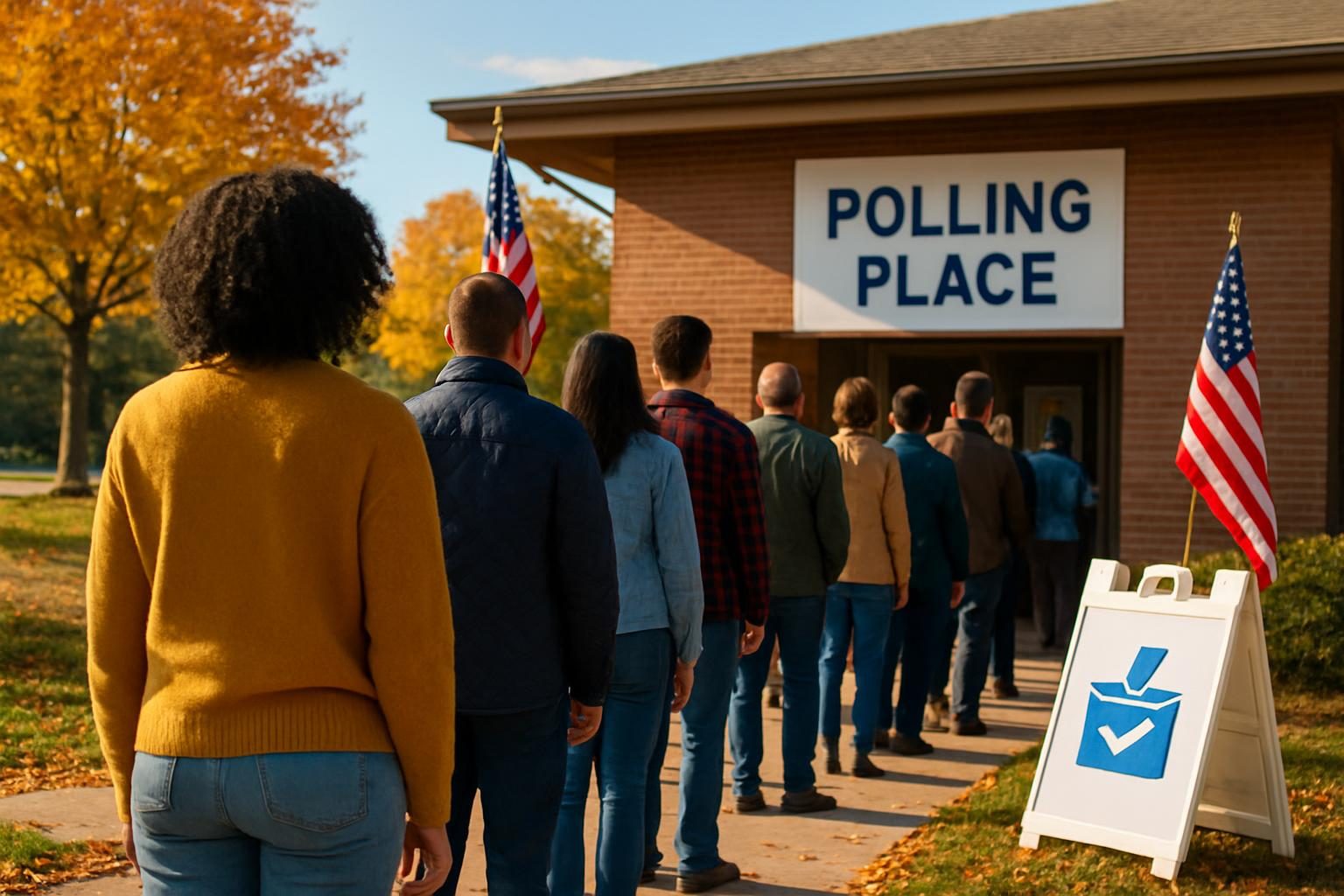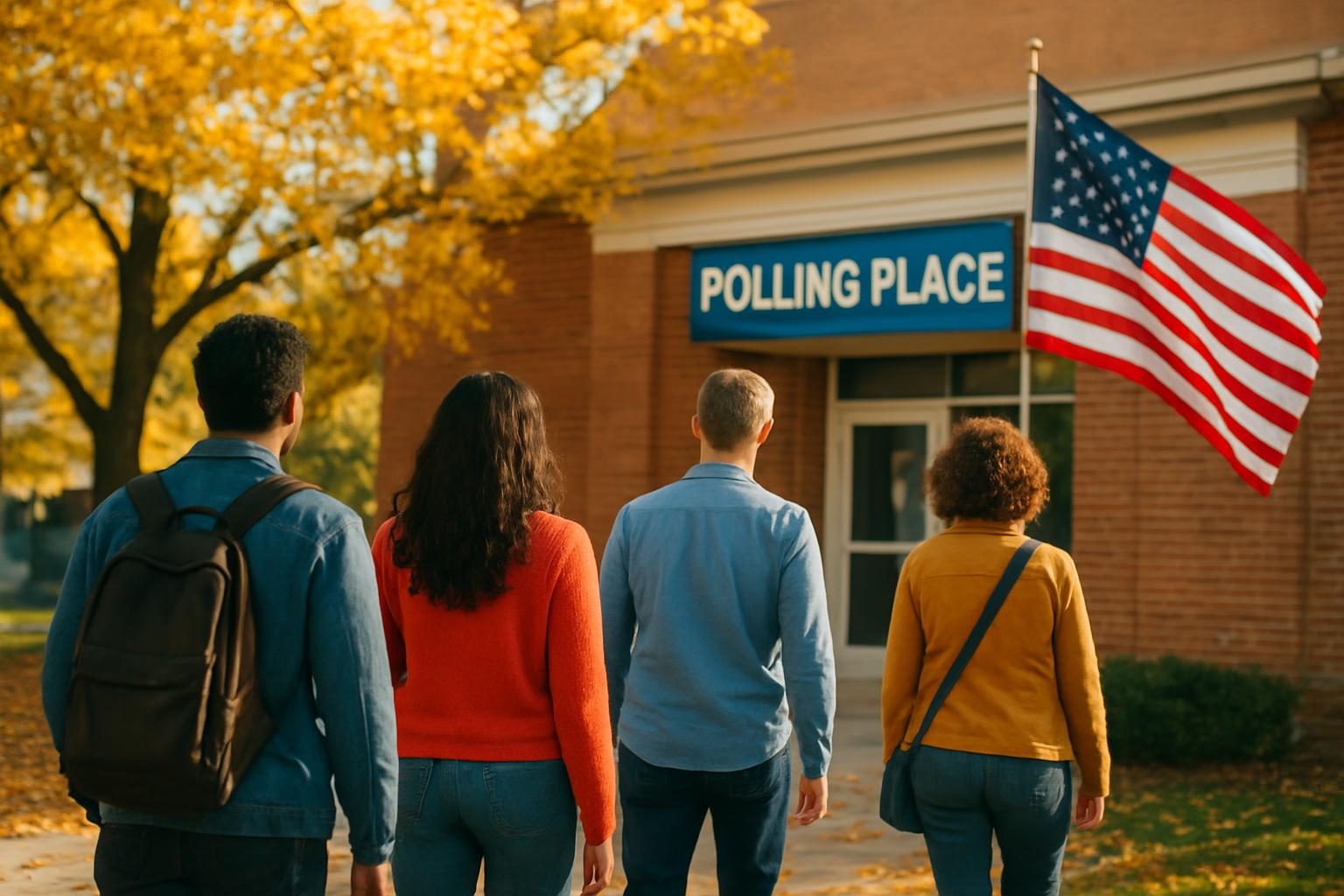
The 2028 presidential election is closer than it feels, and the work that decides it starts right now. Before anyone casts a ballot for president, there are midterms to win, primaries to run and a nominee to choose. This page is your home base for all of it.
Quick answer: The 2028 general election is Tuesday, November 7, 2028, and the inauguration is January 20, 2029. As of October 5, 2026, no major Democrat has formally declared a run, but the Democratic primary calendar is taking shape, with South Carolina voting first on January 22, 2028.
The 2028 presidential election at a glance
Here is where things stand as of early October 2026. The general election date is locked in by federal law and tradition. The Democratic early-state calendar has been approved. The convention dates are set, though the host city is not. And the field of candidates is still wide open.
That last point is the exciting part. With no incumbent on the ballot, both parties will pick new standard-bearers. The 22nd Amendment limits a president to two elected terms, so the White House will have a new occupant in January 2029.
For Democrats, that means a real, competitive, open contest for the nomination, followed by a general election where every vote in every battleground counts. Progressives have a chance to shape both.
Key dates: from now to Inauguration Day
Here is the timeline of dates that are confirmed today. Anything not listed here is not settled yet, and we say so plainly rather than guess.
| Date | What happens |
|---|---|
| Tuesday, November 3, 2026 | Midterm elections: all 435 House seats, about a third of the Senate and 36 governors |
| January 22, 2028 | South Carolina Democratic primary |
| February 1, 2028 | Nevada Democratic primary |
| February 8, 2028 | New Hampshire Democratic primary (subject to change; see below) |
| February 15, 2028 | New Mexico Democratic primary |
| February 22, 2028 | Michigan Democratic primary |
| February 29, 2028 | Virginia Democratic primary |
| March 7, 2028 | Super Tuesday |
| August 7-10, 2028 | Democratic National Convention (host city not yet chosen) |
| Tuesday, November 7, 2028 | General election |
| December 18, 2028 | Electors meet |
| January 20, 2029 | Inauguration Day |
Want this in calendar form? Our 2028 election key dates calendar is on the way, and you can read more about when the 2028 presidential election happens in our dedicated explainer.
The race for 2028 does not begin in a debate hall. It begins in November 2026, at the ballot box.

Step one: the 2026 midterms
The road to 2028 runs straight through Tuesday, November 3, 2026. All 435 House seats are on the ballot, along with about a third of the Senate and 36 governorships. Those results shape what Democrats can do in Congress, who runs the state election offices, and which parties have momentum heading into the presidential cycle.
Governors matter more than people think. They sign or veto voting laws, appoint officials and, in many cases, become presidential contenders themselves. A strong night for Democrats in November gives the whole 2028 effort a running start.
Not sure what is on your ballot? Start with our guide to the date and what’s on the ballot in the 2026 midterms, then dig into what the 2026 midterm elections mean for 2028.
How the Democratic nomination works
Presidential nominees are not chosen on Election Day. They are chosen through a months-long series of state primaries and caucuses, where voters pick delegates who then vote at the national convention. Whoever wins a majority of delegates becomes the nominee.
If you want the full mechanics, our explainer on how presidential primaries and caucuses work walks through it step by step. The short version: early states matter because winning them builds momentum, media attention and donations.
The approved early-state calendar
The DNC approved the 2028 early window on August 15, 2026, at its summer meeting in Austin, Texas. The order is:
- South Carolina: January 22, 2028
- Nevada: February 1, 2028
- New Hampshire: February 8, 2028
- New Mexico: February 15, 2028
- Michigan: February 22, 2028
- Virginia: February 29, 2028
Super Tuesday follows on March 7, 2028. Iowa is not in the Democratic early window. The source for the calendar is the DNC itself (democrats.org, “DNC Votes to Officially Select Early States for 2028”).
It is a lineup that spans regions and demographics, from the Southeast to the Mountain West to the industrial Midwest. We think that is a healthy way to test candidates before the whole country votes. Our 2028 Democratic primary calendar page tracks every date as it firms up.
The New Hampshire question
New Hampshire state law requires it to hold the first primary in the nation. That clashed with the DNC calendar in 2024, and the same tension could resurface. The DNC calendar slots New Hampshire third, so watch for changes. We will update this page if the state moves its date or the party responds.
What about superdelegates?
Party rules govern when and how superdelegates can vote at the convention. If you want the basics, see our explainer on what superdelegates are and how the Democratic rules work.
An open nomination is not a problem to manage. It is a chance for voters to decide what this party stands for.

Who might run: the 2028 Democratic field
As of October 5, 2026, no major Democrat has formally declared a 2028 presidential run. That is normal this early in the cycle. Many names are widely reported as potential candidates, and being on a list is not an announcement.
Here are the Democrats widely reported as potential candidates, listed in no particular order:
- Gavin Newsom, governor of California
- Josh Shapiro, governor of Pennsylvania
- JB Pritzker, governor of Illinois
- Gretchen Whitmer, governor of Michigan
- Andy Beshear, governor of Kentucky
- Pete Buttigieg, former Transportation Secretary
- Kamala Harris, former Vice President
- Alexandria Ocasio-Cortez, New York representative
- Cory Booker, New Jersey senator
- Raphael Warnock, Georgia senator
- Ruben Gallego, Arizona senator
- Mark Kelly, Arizona senator
- Elissa Slotkin, Michigan senator
- Chris Van Hollen, Maryland senator
- Ro Khanna, California representative
We will track announcements, exploratory moves and withdrawals in our 2028 Democratic candidates tracker. Our approach is simple: facts first, dated and sourced, with opinion clearly labeled as opinion.
What about the Republican side?
No Republican has declared either. Names widely mentioned as potential candidates include JD Vance, Marco Rubio, Ron DeSantis, Ted Cruz and Brian Kemp. Republicans are expected to keep Iowa first on their 2028 calendar, according to RNC reports from September 2026, but the GOP calendar is not final.
Who is allowed to run?
The Constitution requires a president to be a natural-born citizen, at least 35 years old, and a US resident for 14 years. The 22nd Amendment limits a president to two elected terms. For the full picture, see our explainer on who can run for president, and the related question can Trump run for a third term.
What will the candidates talk about?
Platforms are not written yet, and it is too early to say which issues will dominate. We will break down where Democrats stand on the big questions in where Democrats stand on the issues heading into 2028 as the field takes shape.
Take action: Check your voter registration today at vote.gov. It takes a few minutes, and it is the single best thing you can do for 2026 and 2028. Then text three friends and ask if they are registered too.

The conventions and the debates
The 2028 Democratic National Convention is scheduled for August 7-10, 2028. Three finalist host cities were announced on August 20, 2026: Boston, Denver and Philadelphia. Atlanta and Chicago were eliminated. The final pick is expected later in 2026, and we will update this page the moment it is made. Our 2028 Democratic National Convention guide follows the host city race.
The Republican convention date and city are not covered here because we are sticking to what has been confirmed. We will add them when they are officially set.
Debate schedules have not been announced. When they are, you will find them here, along with a plain-language guide to how presidential debates work and how to watch them.
The map: how 270 wins the White House
The president is not chosen by national popular vote. Each state gets electoral votes, and a candidate needs 270 of 538 to win. In nearly every state, the winner of the state’s popular vote takes all of its electoral votes. Electors then meet on December 18, 2028 to formally cast them.
The 2028 election uses the electoral map from the 2020 census apportionment. That means the same state-by-state electoral vote totals that applied in 2024.
Because of the way the system works, campaigns pour time and money into a handful of competitive states. We will break down which ones to watch in our 2028 electoral map and 2028 swing states guides, and explain the mechanics in how the Electoral College works.
Which states will be competitive in 2028 is not settled, and anyone who tells you otherwise two years out is guessing. What is certain is that turnout and organizing in those places will matter enormously, which is why the work you do locally counts.
Why a blue wave is possible
Wave elections happen when enthusiasm, organizing and voter turnout line up behind one party at once. They are not accidents. They are built by volunteers, registration drives and candidates who give people a reason to show up.
Want the history? Read about the meaning of a blue wave and the lessons of the 2018 blue wave. The takeaway is optimistic: when people organize early and show up, outcomes change.
How to get involved now
You do not need to wait for a candidate to declare. The most valuable work happens long before that, and it starts at home.
- Register and check your status. Every state’s official rules, deadlines and online registration links are on vote.gov. Find yours at vote.gov/register followed by your state name, such as vote.gov/register/ohio or vote.gov/register/new-york. Rules and deadlines differ by state, so confirm yours on vote.gov or with your state election office. North Dakota is the one state with no voter registration.
- Vote on November 3, 2026. The midterms set the table for everything that follows.
- Volunteer. Knock doors, make calls, write postcards or staff a registration table. Local campaigns and county parties always need help.
- Talk to someone. A friend, a coworker, a family member. Many people simply do not know how or when to vote.
New to registering? Our simple guide to registering to vote is coming for every state. Same-day registration exists in many states, but the rules differ, so check before you count on it.
Where to start: your roadmap
- Today: Check or complete your voter registration at vote.gov.
- Before November 3, 2026: Learn what is on your ballot and make a plan to vote.
- This fall: Find a local campaign or group and sign up for one volunteer shift.
- Late 2026: Watch for the convention host city announcement and any early candidate news.
- 2027 and beyond: Follow the field as it forms, and keep this page bookmarked.
You can also browse everything we publish on the cycle in our 2028 election coverage.
Key takeaways
- The general election is Tuesday, November 7, 2028, with the inauguration on January 20, 2029.
- The DNC approved its early-state calendar on August 15, 2026, starting with South Carolina on January 22, 2028. Super Tuesday is March 7, 2028.
- As of October 5, 2026, no major Democrat has formally declared; every name you hear is a potential candidate.
- The Democratic National Convention is August 7-10, 2028, with Boston, Denver and Philadelphia as finalists.
- The 2026 midterms on November 3 come first and shape everything after.
- Registration rules differ by state, so confirm yours at vote.gov or with your state election office.
Last updated October 2026. Dates and candidate news change fast; we update this page as things are announced.
Frequently asked questions
When is the 2028 presidential election?
The general election is Tuesday, November 7, 2028. Electors meet on December 18, 2028, and the new president is inaugurated on January 20, 2029.
Has any major Democrat announced a 2028 run?
Not as of October 5, 2026. No major Democrat has formally declared. Many names are widely reported as potential candidates, and we track them on our candidate page and update it as news breaks.
Which states vote first in the 2028 Democratic primary?
The DNC approved an early window on August 15, 2026: South Carolina (Jan 22, 2028), Nevada (Feb 1), New Hampshire (Feb 8), New Mexico (Feb 15), Michigan (Feb 22) and Virginia (Feb 29). Iowa is not in the Democratic early window. Super Tuesday follows on March 7, 2028.
Where will the 2028 Democratic National Convention be held?
It is set for August 7-10, 2028. The finalist host cities are Boston, Denver and Philadelphia, and the final pick is expected later in 2026. We will update this page when it is announced.
How do I register to vote?
Every state’s official rules, deadlines and online registration links are on vote.gov. Visit vote.gov/register and your state name, or contact your state election office, to confirm the rules and deadlines that apply to you. North Dakota is the one state with no voter registration.