★ Election Day 2028 is in 763 days  ·  Midterms in 28 daysRegister to vote →

Author: Edward Garcia

  • New Hampshire Primary 2028: Date, State Law and the DNC

    New Hampshire Primary 2028: Date, State Law and the DNC

    New Hampshire has spent decades guarding its place at the front of the presidential line, and the 2028 Democratic calendar has set up another showdown. The state’s famously independent voters, its town halls and its stubborn state law all make this primary one to watch.

    Here’s what is settled, what isn’t, and how you can get ready to be part of it.

    Quick answer: The DNC’s approved 2028 calendar puts the New Hampshire Democratic primary on February 8, 2028, third in the early window after South Carolina (Jan 22) and Nevada (Feb 1). But New Hampshire state law requires the state to hold the first primary in the nation, so expect tension and watch for changes.

    What the DNC calendar says about the New Hampshire primary 2028

    On August 15, 2026, the Democratic National Committee approved its 2028 early-window calendar at its summer meeting in Austin, Texas. New Hampshire landed on February 8, 2028.

    That slot puts the Granite State in the early window, which matters enormously. Early states get the candidates’ time, the media’s attention and the first real tests of who can build a winning coalition. You can see the source on democrats.org under “DNC Votes to Officially Select Early States for 2028.”

    The full early window at a glance

    Date State
    January 22, 2028 South Carolina
    February 1, 2028 Nevada
    February 8, 2028 New Hampshire
    February 15, 2028 New Mexico
    February 22, 2028 Michigan
    February 29, 2028 Virginia
    March 7, 2028 Super Tuesday

    For the complete picture, see our 2028 Democratic primary calendar, which we update as dates are confirmed.

    New Hampshire has a date on the party calendar and a different promise in state law. Both can’t come first.

    The state law tension

    New Hampshire law requires the state to hold the first primary in the nation. That is not a tradition or a preference; it is written into state law.

    The DNC, meanwhile, decides the order of early states for its own nominating contest. Those two things clashed in 2024, and the 2028 calendar sets up the same basic collision: the party’s schedule has South Carolina and Nevada ahead of New Hampshire, while state law says New Hampshire goes first.

    What we do and don’t know

    We know the DNC approved February 8, 2028 for New Hampshire. We know state law calls for the first primary in the nation. We know the same conflict played out in 2024.

    What we do not know is how the 2028 version will be resolved. Whether New Hampshire’s date shifts, whether the party and state reach an accommodation, or how candidates will respond is not announced yet. We will update this page as the picture clears.

    Why this fight matters to voters

    It’s easy to see calendar fights as inside baseball. They aren’t. The order of states shapes who can run, who gets attention and which voters get a real say.

    New Hampshire is small, which means candidates can win by showing up, shaking hands and answering tough questions face to face. That rewards organizing over ad budgets, and in our view that is good for democracy and good for Democrats.

    Our view: the party should want voters to trust the process

    Opinion: The best outcome is a calendar that is clear, fair and settled early, so campaigns, volunteers and voters can plan. A messy standoff helps no one, and the people who pay for confusion are ordinary voters. We’d rather see the energy go toward turning out voters than toward fighting over who goes first.

    Campaign office desk with a calendar and circled dates for the primary schedule

    How the early states fit together

    The early window is designed to test candidates in different kinds of places. South Carolina brings a diverse electorate, and you can read more in our guide to the South Carolina Democratic primary 2028. Nevada follows with its own mix of voters; see the Nevada Democratic primary 2028 explainer.

    Then comes New Hampshire on February 8, followed by New Mexico on February 15, Michigan on February 22 and Virginia on February 29. A week later, Super Tuesday arrives on March 7; here’s what to expect on Super Tuesday 2028.

    What about Iowa?

    Iowa is not in the Democratic early window for 2028. Republicans, by contrast, are expected to keep Iowa first on their calendar, according to RNC-related reports from September 2026, though the GOP calendar is not final. Our explainer on the Iowa caucus in 2028 covers why Democrats moved on.

    Early states don’t pick the nominee alone, but they decide which campaigns survive long enough to ask for your vote.

    Who might show up in New Hampshire?

    No major Democrat has formally declared a 2028 presidential run as of early October 2026. Plenty of names are widely reported as potential candidates, including governors, senators and former administration officials, but none should be described as running yet.

    You can follow the field in our 2028 Democratic candidates tracker. Individual profiles include Gavin Newsom, Josh Shapiro and Pete Buttigieg, among others.

    Curious about timing? Our upcoming guide to when 2028 presidential campaigns start will explain the long run-up before anyone formally declares.
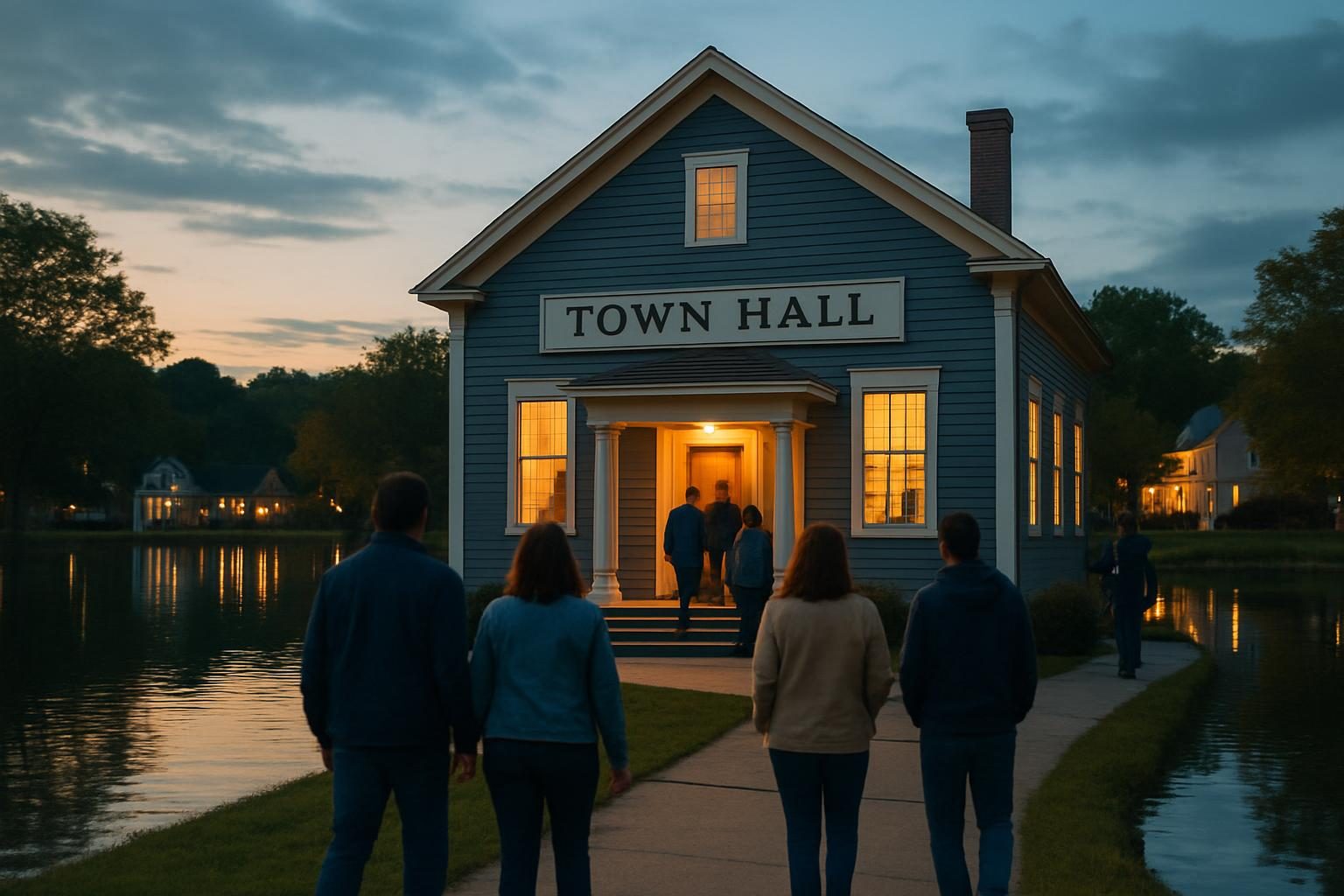
    Lakeside town hall at dusk with neighbors gathering for a community meeting

    How primaries work: the basics you’ll want to know

    Primary rules vary by state and by party, and they are different from the November general election. Who can vote, whether you need to be registered with a party, and how delegates are awarded all depend on the rules in place.

    Our upcoming explainers on open vs closed primaries and on how Democrats award delegates will go deeper. For New Hampshire specifically, confirm the current rules with the state election office rather than relying on any summary, ours included.

    The bigger calendar: what comes first

    Before 2028 primaries, there is a very real election coming up. The 2026 midterms are on Tuesday, November 3, 2026, with all 435 House seats, about a third of the Senate and 36 governorships on the ballot.

    What happens then shapes the political landscape heading into 2028. Start with our overview of the 2026 midterm elections, and for the whole timeline, see the 2028 election key dates.

    Further out, the 2028 Democratic National Convention is set for August 7-10, 2028. Boston, Denver and Philadelphia are the finalist host cities, with a final pick expected later in 2026. Details are in our convention host city guide. The general election is Tuesday, November 7, 2028.

    Take action: Don’t wait for the primaries to get ready. Check your registration status today at our status-check guide, or register at vote.gov. Then text one friend and ask if they’re registered too. That single conversation is how waves start.

    Volunteers with clipboards chatting with residents on a sunny sidewalk

    Get ready to take part

    You don’t have to live in New Hampshire to matter in this race. Primary season runs on volunteers, small-dollar donors and neighbors who knock on doors, and the early states always need help.

    Registration rules differ by state, and every state’s official rules, deadlines and online registration links are on vote.gov. If you’re in New Hampshire, start at vote.gov/register/new-hampshire, and confirm deadlines and same-day options with the state election office. Our guide to registering to vote walks through the basics for every state.

    And if you want to understand what the party is fighting for once the voting starts, read about where Democrats stand on the issues.

    For more on how this fits into the larger election, see the 2028 presidential election hub or browse the Primaries & Calendar section.

    Key takeaways

    • The DNC approved February 8, 2028 for the New Hampshire Democratic primary on August 15, 2026.
    • New Hampshire is third in the early window, after South Carolina (Jan 22) and Nevada (Feb 1).
    • State law requires New Hampshire to hold the first primary in the nation, so the conflict is not fully resolved and bears watching.
    • No major Democrat has formally declared a 2028 run as of early October 2026.
    • Check vote.gov or your state election office for registration rules and deadlines, since they differ by state.
    • The 2026 midterms on November 3, 2026 come first, and your vote there matters.

    Last updated October 2026. Dates and candidate news change fast; we update this page as things are announced.

    Frequently asked questions

    When is the New Hampshire primary in 2028?

    The DNC’s approved calendar puts the Democratic New Hampshire primary on February 8, 2028. New Hampshire state law, however, requires the state to hold the first primary in the nation, so the final date is worth watching. We update this page when anything changes.

    Is New Hampshire the first Democratic primary state in 2028?

    Not on the DNC calendar. South Carolina is scheduled first on January 22, 2028, followed by Nevada on February 1, and then New Hampshire on February 8. State law in New Hampshire says the state’s primary must come first, which is the source of the tension.

    Why does New Hampshire law clash with the DNC calendar?

    New Hampshire law requires the state to hold the first primary in the nation, while the DNC sets its own early-state order for the party’s nominating contest. That clash also surfaced in 2024. How it plays out for 2028 is not settled, so we are tracking it.

    Will Republicans hold their New Hampshire primary on the same date?

    Not necessarily. The GOP calendar is not final, and Republicans are expected to keep Iowa first on their 2028 schedule, according to reports from September 2026. The two parties set their own calendars.

    How do I make sure I can vote in the New Hampshire primary?

    Start at vote.gov/register/new-hampshire or with the New Hampshire election office to confirm registration rules, deadlines and how party affiliation works for primaries. Rules differ by state and can change, so always check the official source rather than relying on a summary.

  • Nevada Democratic Primary 2028: Date and What to Know

    Nevada Democratic Primary 2028: Date and What to Know

    Nevada is back in the spotlight, and this time it is carrying a bigger role in the Democratic race for the White House. The state landed a coveted early slot on the 2028 calendar, which means its voters will help shape who leads our party into the biggest election of the decade. Here is everything you need to know about the Nevada Democratic primary 2028, and how to get ready.

    Quick answer: The Nevada Democratic primary is scheduled for Tuesday, February 1, 2028. The DNC approved it on August 15, 2026, placing Nevada second in the early window, right after South Carolina on January 22 and before New Hampshire on February 8. No major Democrat has formally declared a 2028 run yet.

    When Is the Nevada Democratic Primary 2028?

    The date is Tuesday, February 1, 2028. The Democratic National Committee approved its 2028 early-window calendar on August 15, 2026, at its summer meeting in Austin, Texas. Nevada earned the second spot on that list.

    That puts Nevada among the first states to weigh in on who the Democratic nominee should be. Early contests matter because they build momentum, test messages and give voters a chance to meet candidates up close.

    The official source for the calendar decision is the DNC at democrats.org (“DNC Votes to Officially Select Early States for 2028”). For the full list of dates, see our 2028 Democratic primary calendar.

    Where Nevada Fits in the Early Window

    The DNC lined up six states ahead of Super Tuesday. Nevada sits in the middle of a fast, busy stretch that runs from late January to the end of February.

    Order State Date
    1 South Carolina January 22, 2028
    2 Nevada February 1, 2028
    3 New Hampshire February 8, 2028
    4 New Mexico February 15, 2028
    5 Michigan February 22, 2028
    6 Virginia February 29, 2028

    After that comes Super Tuesday on March 7, 2028, when many states vote at once. Our guide to Super Tuesday 2028 explains what to expect.

    Early states do not pick the nominee alone, but they decide who gets a real shot.

    Volunteers with clipboards chatting with neighbors on a sunny sidewalk

    Why Nevada Matters to Democrats

    Nevada is a diverse, fast-growing state with a large working-class workforce and a lot of young voters. It is a place where campaigns have to talk about jobs, housing costs, health care and the cost of living, not just national headlines.

    That makes it a useful test. A candidate who connects with voters in Nevada has to show they can speak to a broad, real-world coalition. In our view, that is exactly the kind of stress test a Democratic nominee should face before the general election.

    Nevada also shows up in conversations about the general election map. Read our breakdown of the 2028 electoral map and battleground states to see how the state fits into the bigger picture.

    The early states are a package

    Nevada does not stand alone. The DNC built an early window that mixes different regions and voter groups. South Carolina opens things up, Nevada follows, then New Hampshire, New Mexico, Michigan and Virginia keep the pressure on.

    If you want to see how the others stack up, we have a guide to the South Carolina Democratic primary 2028, and more state guides are coming, including New Hampshire, Michigan and Virginia.

    Who Might Run? The Field Is Still Forming

    Here is the honest picture: as of early October 2026, no major Democrat has formally declared a 2028 presidential run. That is normal. Campaigns usually take shape after the midterms.

    Plenty of names are widely reported as potential candidates. They include governors, senators, members of Congress and former administration officials. To be clear, these are only possibilities, not announced campaigns:

    • Governors such as Gavin Newsom, Josh Shapiro, JB Pritzker, Gretchen Whitmer and Andy Beshear
    • Pete Buttigieg and Kamala Harris
    • Members of Congress and the Senate, such as Alexandria Ocasio-Cortez, Cory Booker, Raphael Warnock, Ruben Gallego, Mark Kelly, Elissa Slotkin, Chris Van Hollen and Ro Khanna

    For a regularly updated look, check our 2028 Democratic candidates tracker. You can also read profiles such as Gavin Newsom 2028, Josh Shapiro 2028 and Kamala Harris 2028.

    The timing of when campaigns actually start is its own story. We are preparing a guide on when 2028 presidential campaigns start.

    The 2028 race will be won by voters who show up early, long before any candidate announces.

    Line of diverse voters waiting outside a polling place

    What We Do Not Know Yet

    It is worth being upfront about what is still being set. We would rather tell you that than guess.

    • Debates: no debate schedule has been announced yet.
    • Candidate announcements: none from major Democrats so far.
    • Voting details: the specific rules for how and where Nevadans will take part in the Democratic primary are not covered here. Check with Nevada’s election officials for the official process.
    • Calendar changes: New Hampshire state law requires it to hold the first primary in the nation. That clashed with the DNC calendar in 2024, so watch for changes.

    We will update this page as details are confirmed.

    How delegates and rules will work

    Primary results turn into delegates, and delegates choose the nominee at the convention. The 2028 Democratic National Convention is set for August 7-10, 2028, with Boston, Denver and Philadelphia as the finalist host cities. The final pick is expected later in 2026. See our page on the 2028 Democratic National Convention for updates.

    We are also working on a guide to how Democrats award delegates, and another on open vs closed primaries, since primary participation rules differ from state to state.

    Iowa and the Bigger Calendar Story

    You may notice who is missing from the early window. Iowa is not in the Democratic early window for 2028. Republicans are expected to keep Iowa first on their calendar, according to September 2026 reports, though the GOP calendar is not final.

    If you want the story behind that shift, read about why Democrats dropped Iowa from the early window. For the full timeline through the general election, our 2028 election key dates page has you covered.

    Why the 2026 Midterms Come First

    Before anyone casts a primary ballot in Nevada, there is a big election right around the corner. The 2026 midterms are on Tuesday, November 3, 2026, with all 435 House seats, about a third of the Senate and 36 governors on the line.

    What happens in November shapes the political mood heading into 2028. Learn more in our guide to the 2026 midterm elections, and see the 2026 Senate races to watch. Every vote you cast and every neighbor you bring along counts.

    Take action: Do not wait for 2028. Confirm you are registered at your current address on vote.gov if you live in Nevada, or look up your own state’s rules there. Then text one friend and ask if they are registered too.

    Student registering to vote on a laptop at a campus cafe

    How to Get Ready Right Now

    You do not need a campaign to start making a difference. A few simple steps put you ahead.

    1. Register or update your registration. Go to vote.gov and choose your state. For Nevada, that is vote.gov/register/nevada. Always confirm deadlines there or with your state election office.
    2. Check your status. Moved recently? Changed your name? Use our guide to checking your voter registration status.
    3. Vote in 2026. The midterms are your first chance to make your voice heard.
    4. Volunteer. Local Democratic groups and campaigns always need people to knock doors, make calls and help with registration drives.
    5. Learn the issues. Our overview of Democratic Party platform issues is a good place to start.

    New to registering? Our simple guide to registering to vote in every state walks you through it.

    For the big-picture view of the race, visit our 2028 presidential election hub, and browse more in the Primaries & Calendar section.

    Key takeaways

    • The Nevada Democratic primary is scheduled for Tuesday, February 1, 2028, approved by the DNC on August 15, 2026.
    • Nevada is second in the early window, after South Carolina on January 22 and before New Hampshire on February 8.
    • As of early October 2026, no major Democrat has formally declared a 2028 run; names you hear are only potential candidates.
    • Debate dates and other details are not announced yet, and we will update this page as they are.
    • Check your registration and voting rules on vote.gov or with your state election office.
    • The 2026 midterms on November 3, 2026 come first, and your vote and volunteer time matter now.

    Last updated October 2026. Dates and candidate news change fast; we update this page as things are announced.

    Frequently asked questions

    When is the Nevada Democratic primary in 2028?

    The DNC approved Tuesday, February 1, 2028 for Nevada on August 15, 2026. It comes right after South Carolina’s January 22 contest and a week before New Hampshire’s February 8 primary. We will update this page if anything changes.

    Is Nevada first in the nation for Democrats in 2028?

    No. South Carolina goes first on January 22, 2028. Nevada is second, followed by New Hampshire on February 8, New Mexico on February 15, Michigan on February 22 and Virginia on February 29.

    Has anyone announced a run in the Nevada primary?

    As of early October 2026, no major Democrat has formally declared a 2028 presidential run. Many names are widely reported as potential candidates, but none are officially running. Our candidate tracker covers who might run.

    How do I register to vote in Nevada?

    Visit vote.gov/register/nevada for Nevada’s official rules, deadlines and online registration link. You can also contact your state or county election office. Confirm every deadline there rather than relying on secondhand information.

    Can I vote in the Nevada Democratic primary if I’m not a registered Democrat?

    Primary participation rules vary by state and can change. We are not going to guess here. Check vote.gov or the Nevada election office for the current rules on who may take part in the Democratic primary, and we will publish more detail as the process gets closer.

  • 2028 Electoral Map: Battleground States to Watch

    2028 Electoral Map: Battleground States to Watch

    Every presidential election comes down to a map, and the 2028 electoral map is already taking shape. A handful of states will decide who sits in the Oval Office on January 20, 2029, and voters in those places have outsized power. The good news: that power is yours to use, and there is plenty of time to get ready.

    Quick answer: The 2028 electoral map has 538 electoral votes, and a candidate needs 270 to win. The general election is Tuesday, November 7, 2028. The battlegrounds are not officially set, but the states that decided close races in recent cycles (Arizona, Georgia, Michigan, Nevada, Pennsylvania, and Wisconsin) are the ones to watch. Make sure you are registered through vote.gov or your state election office.

    How the 2028 electoral map works

    Americans do not vote directly for president. We vote for slates of electors, and those electors make up the Electoral College. There are 538 electoral votes in all, and the winner needs 270 to take the presidency.

    Most states award all of their electoral votes to the candidate who wins the state’s popular vote. That is why campaigns pour time and money into a few competitive states and mostly skip the rest. If you want the full explainer, see our upcoming guide on how the Electoral College works.

    One technical detail matters for 2028: the election uses the electoral map from the 2020 census apportionment. That means each state’s number of electors is already set, so the fight is about who wins each state, not how many votes it carries.

    The key dates on the calendar

    Event Date
    2026 midterm elections Tuesday, November 3, 2026
    General election Tuesday, November 7, 2028
    Electors meet December 18, 2028
    Inauguration January 20, 2029

    Want the full run-up? Our 2028 election key dates calendar walks through everything from now to inauguration, and our guide on when the 2028 presidential election is covers the basics.

    A presidential race is decided state by state, and your state may matter more than you think.

    Volunteers on phones in a campaign office with a large wall map

    Battleground states to watch in 2028

    Here is an important note on honesty: no one can responsibly hand you a final list of 2028 battlegrounds this early. Candidates have not declared, the issues will shift, and the national mood will move between now and Election Day. What we can do is point to the states that proved most competitive in recent cycles. We are not citing polling here, because it is far too early for polling to tell us anything reliable about 2028.

    The Great Lakes trio: Michigan, Pennsylvania, Wisconsin

    These three states have been central to presidential contests in recent cycles, and they are often discussed together because of their shared industrial roots and tight margins. Winning the presidency has frequently run through at least one of them. Michigan is also a big deal on the Democratic side: it sits in the DNC’s early primary window, with its primary set for February 22, 2028.

    Pennsylvania has a Democratic governor who is widely reported as a potential 2028 candidate, and so does Michigan. We cover each of them in our tracker, and you can read more on Josh Shapiro’s 2028 prospects.

    The Sun Belt: Arizona, Georgia, Nevada

    The Sun Belt has become a major part of the conversation as these states have grown and changed. Arizona and Georgia each have Democratic senators who are widely reported as potential 2028 candidates, which tells you how much attention both parties are paying to the region.

    Nevada is a double story. It is a general election battleground and an early Democratic primary state, with its primary on February 1, 2028. Candidates who want to win the nomination and the White House will spend serious time there.

    Other states that could surprise

    Every cycle brings a few surprises. States that look safe for one party can tighten when the national environment shifts, and states we call battlegrounds today can drift. We will keep updating this page as the field and the issues come into focus. For a deeper look, watch for our upcoming guide to 2028 swing states.

    Why the early primary calendar matters for the map

    The Democratic nomination fight and the general election map are connected. Candidates build organizations, test messages, and earn media attention in the early states, and those same skills carry into November.

    On August 15, 2026, the DNC approved the 2028 early-window calendar at its summer meeting in Austin, Texas. Here is the schedule:

    1. South Carolina: January 22, 2028
    2. Nevada: February 1, 2028
    3. New Hampshire: February 8, 2028
    4. New Mexico: February 15, 2028
    5. Michigan: February 22, 2028
    6. Virginia: February 29, 2028

    Super Tuesday follows on March 7, 2028. Iowa is not part of the Democratic early window; you can read why in our Iowa caucus 2028 explainer. For every date in one place, see our 2028 Democratic primary calendar, and for the opening contest, our page on the South Carolina Democratic primary.

    A caution on New Hampshire: state law requires it to hold the first primary in the nation, and that clashed with the DNC calendar in 2024. Watch for changes to the schedule. On the Republican side, Iowa is expected to stay first on the 2028 calendar according to September 2026 reports, but the GOP calendar is not final. To understand the mechanics, see our upcoming explainer on how presidential primaries and caucuses work.

    Primaries pick the candidate; the map decides whether that candidate wins. Both are won by people who show up.

    A diverse line of voters waiting outside a polling place

    Who might run? The candidate picture

    As of October 5, 2026, no major Democrat has formally declared a 2028 presidential run. That is normal this far out, and it means the field is wide open. Candidates are not announced yet, and we will update this page when they are.

    Widely reported potential Democratic candidates include Gavin Newsom, Josh Shapiro, JB Pritzker, Gretchen Whitmer, Andy Beshear, Pete Buttigieg, Kamala Harris, Alexandria Ocasio-Cortez, Cory Booker, Raphael Warnock, Ruben Gallego, Mark Kelly, Elissa Slotkin, Chris Van Hollen, and Ro Khanna. These are potential candidates only, not announced ones.

    Notice how many of them come from or represent battleground states. That is not an accident, and it is part of why the map matters so much to the primary conversation. Explore the full field in our 2028 Democratic candidates tracker, or read about individual names like Gavin Newsom, Pete Buttigieg, Kamala Harris, and Alexandria Ocasio-Cortez.

    On the Republican side, no one has declared either. Potential candidates reported include JD Vance, Marco Rubio, Ron DeSantis, Ted Cruz, and Brian Kemp. Curious about eligibility? The Constitution requires a president to be a natural-born citizen, at least 35 years old, and a US resident for 14 years, and the 22nd Amendment limits a president to two elected terms. Read more in Can Trump run for a third term? or see our upcoming guide on presidential eligibility requirements.

    The road to the map starts in 2026

    Here is our view, and we are labeling it as opinion: the best way to shape the 2028 map is to show up in 2026. The midterm elections on Tuesday, November 3, 2026, will decide all 435 House seats, about a third of the Senate, and 36 governorships. Those results set the stage for everything that follows.

    Governors and legislatures in battleground states run elections, shape voting access, and build the infrastructure that campaigns rely on. Wave elections can also change the national conversation, as we explore in our guide to blue wave meaning and history and our upcoming look at the 2018 blue wave.

    Dig into what is on the ballot with our 2026 midterm elections guide, our 2026 Senate races to watch, and our rundown of 2026 governor races.

    A college student registering to vote on a laptop

    How to get involved right now

    You do not need to wait for a candidate to declare to make a difference. The work that wins battleground states starts years early: registering voters, knocking doors, and building community networks.

    Register and check your status

    Every state’s official rules, deadlines, and online registration links are on vote.gov. Use the format https://vote.gov/register/STATE-NAME, for example vote.gov/register/new-york. Same-day registration exists in many states, but the rules differ, so confirm yours there or with your state election office. North Dakota is unique in that it has no voter registration.

    Already registered? Double-check, especially if you have moved. Our guide on how to check your voter registration status takes just minutes, and our how to register to vote guide covers every state.

    Take action: Go to vote.gov right now, pick your state, and confirm you are registered at your current address. Then send the link to one friend or family member and ask them to do the same.

    Volunteer and talk to your neighbors

    Local campaigns, county parties, and voter-registration groups are always looking for help, and the 2026 races are the perfect place to start. Even a few hours of phone banking or door knocking builds skills and relationships that matter in 2028. If you live in a non-battleground state, you can still call or text voters in competitive states, or support candidates in your own state’s down-ballot races.

    Know where Democrats stand on the issues so you can have confident conversations. Our guide to Democratic Party platform issues is a good place to start.

    What is still unsettled

    Plenty of details are not decided yet, and we want to be upfront about them:

    • No major candidate has formally declared a 2028 run on either side.
    • The GOP primary calendar is not final.
    • New Hampshire’s first-in-the-nation law could still collide with the DNC calendar.
    • The 2028 Democratic National Convention is set for August 7-10, 2028, with finalist host cities Boston, Denver, and Philadelphia. The final pick is expected later in 2026 and is not announced yet. See our convention host city page for updates.

    For the big picture, head to our main 2028 presidential election hub or browse the full 2028 Election category.

    Key takeaways

    • The 2028 general election is Tuesday, November 7, 2028, and a candidate needs 270 of 538 electoral votes to win.
    • The map uses the 2020 census apportionment, so each state’s electoral votes are already set.
    • Battlegrounds are not official yet, but Arizona, Georgia, Michigan, Nevada, Pennsylvania, and Wisconsin are the states to watch based on recent cycles.
    • No major Democrat or Republican has formally declared; names you hear are only potential candidates.
    • The 2026 midterms on November 3, 2026, come first and shape the road to 2028.
    • Check your registration on vote.gov and get involved now.

    Last updated October 2026. Dates and candidate news change fast; we update this page as things are announced.

    Frequently asked questions

    What is the 2028 electoral map?

    It is the state-by-state map of the 538 electoral votes that decide the presidency. In 2028, electors are allocated using the 2020 census apportionment, and a candidate needs 270 electoral votes to win.


    Which states are the 2028 battlegrounds?

    Nobody can say for certain yet. The states that decided close races in recent cycles, including Arizona, Georgia, Michigan, Nevada, Pennsylvania, and Wisconsin, are the ones most watched. The final list will depend on candidates, issues, and the national mood.

    When is the 2028 general election?

    Tuesday, November 7, 2028. Electors meet on December 18, 2028, and the inauguration is January 20, 2029. You can learn more about what happens on Inauguration Day 2029 in our upcoming guide.

    Has any Democrat declared a 2028 run?

    As of early October 2026, no major Democrat has formally declared. Many governors, senators, and other figures are widely reported as potential candidates, but none has announced. We update our candidate tracker as news breaks.

    How do I make sure I can vote in a battleground state?

    Visit vote.gov, choose your state, and follow its official registration rules, deadlines, and online registration links. You can also check with your state or local election office. Rules differ by state, so always confirm there.

  • Pete Buttigieg 2028: Will Buttigieg Run for President?

    Pete Buttigieg 2028: Will Buttigieg Run for President?

    Few names come up faster in 2028 conversations than Pete Buttigieg. The former Transportation Secretary and former South Bend mayor has a national profile, a gift for explaining Democratic ideas in plain language, and a lot of fans who want to know what he’ll do next. Other potential candidates like JB Pritzker are also drawing speculation about their 2028 intentions.

    So, will he run? Here is what we actually know, what we don’t, and why it matters for how you get involved right now.

    Quick answer: Pete Buttigieg is widely reported as a potential 2028 Democratic candidate, but he has not announced a run. Status: Not declared (as of October 2026). No major Democrat has formally declared yet. We track every move on our 2028 Democratic candidates tracker and will update this page when anything changes.

    Quick bio and current role

    Pete Buttigieg is a former U.S. Secretary of Transportation, a post he held in the Biden administration. Before that, he was the mayor of South Bend, Indiana, a mid-sized Rust Belt city where he governed for two terms.

    He rose to national attention during his 2020 run for the Democratic presidential nomination, when he went from a little-known mayor to a serious contender in the early states. He is a Navy Reserve veteran and a Rhodes Scholar, and he is one of the most prominent openly gay figures in American politics.

    He is not currently in the Cabinet. For the latest on how he is spending his time, check his official channels and recent news coverage, since a person’s public role can change quickly.

    Record highlights

    We stick to well-documented, widely reported facts here. Opinions about what they add up to come later, and we label them.

    Mayor of South Bend

    Buttigieg was elected mayor of South Bend and later won reelection. His tenure is often cited for downtown redevelopment efforts and for his emphasis on revitalizing a manufacturing city. It also drew criticism, which we cover below.

    The 2020 campaign

    His 2020 bid is a core part of his national story. He competed in the opening contests and built a national donor and volunteer network from a standing start. He later endorsed the eventual nominee and became a frequent surrogate for the party.

    Transportation Secretary

    As Transportation Secretary, Buttigieg was a public face of the administration’s infrastructure agenda, including the bipartisan infrastructure law. He spent much of his tenure traveling the country to talk about roads, bridges, transit and airports. His time in the job also included high-profile moments of criticism over supply chain problems and aviation disruptions.

    A candidate who can explain bridges and buses in plain English has a head start with everyday voters.

    Commuters on a city street near a bus and bridge, evoking infrastructure

    What has Buttigieg said about 2028?

    Not much that is definitive. Buttigieg has not announced a presidential campaign, and he has generally avoided committing either way. Like most politicians in this position, he has stayed visible in the media and on the political circuit without declaring.

    We are not going to put words in his mouth. If he makes a formal announcement or a clear public statement about 2028, we will report it here with the date and a link to the source.

    It is worth remembering that “widely reported as a possible candidate” describes the buzz around a person, not a decision by that person. Plenty of names on every party’s early list never run.

    Strengths in a Democratic primary

    Here is where our own view comes in. These are strengths we think matter, framed as analysis rather than fact.

    • Communication. Buttigieg is widely regarded as one of the party’s clearest communicators, comfortable in both friendly and tougher interview settings.
    • Broad media presence. He has been willing to take Democratic arguments into places beyond the usual cable studios, which can help reach persuadable voters.
    • A concrete governing story. Running a city and a federal department gives him real examples to point to, from local development to national infrastructure.
    • Proven national organization. He has run a national campaign before and built a network of donors and volunteers.
    • Midwestern roots. A Midwest story can resonate in the region that decides so many elections, which is also home to an early primary state, Michigan.

    Open questions and criticisms from across the party

    No candidate arrives without questions. Here are the main ones we see, stated fairly. Primary voters will decide how much weight each deserves.

    Support with Black voters

    This was a widely discussed challenge in 2020, and the early calendar makes it important again. South Carolina opens the 2028 Democratic window, and its electorate has historically been a key test for candidates seeking broad coalition support. Any 2028 hopeful will need to show real, durable strength with Black voters.

    South Bend record

    Some critics point to policing and community-relations controversies during his time as mayor. Supporters argue he governed a complicated city and learned from hard moments. Either way, expect that chapter to be revisited in any primary.

    Progressive versus moderate lanes

    Buttigieg is often seen as a centrist-leaning communicator, while parts of the party’s progressive wing want bolder economic and structural reforms. Where he lands on core party questions will matter. For context on those debates, see our guide to Democratic Party platform issues.

    Electoral experience

    Some Democrats note he has not won a statewide race. Others say executive experience at the city and federal levels counts for a lot. This is a live debate, not a settled one.

    Primary voters don’t just pick a message. They pick the person they trust to carry it into the toughest rooms.

    Volunteers with clipboards chatting with residents on a sunny sidewalk

    How he might fit the early-state calendar

    The DNC approved the 2028 early-window calendar on August 15, 2026, at its summer meeting in Austin, Texas. Here is the lineup, which is public and confirmed:

    Date State
    January 22, 2028 South Carolina
    February 1, 2028 Nevada
    February 8, 2028 New Hampshire
    February 15, 2028 New Mexico
    February 22, 2028 Michigan
    February 29, 2028 Virginia
    March 7, 2028 Super Tuesday

    Iowa is not in the Democratic early window. For the backstory, read our explainer on why Democrats dropped Iowa from the early window.

    What does that mean for a candidate like Buttigieg? That is our analysis, not a prediction. New Hampshire is a place where retail politics and town halls matter, a setting in which he performed well in 2020. Michigan is a Midwestern battleground that could suit a candidate with Rust Belt roots. South Carolina, by contrast, is the first real test of broad coalition strength.

    One thing to watch: New Hampshire state law requires it to hold the first primary in the nation, and that clashed with the DNC calendar in 2024. Calendar changes are possible, so keep an eye on our 2028 Democratic primary calendar and our explainer on the South Carolina primary.

    The crowded field

    Buttigieg would not be alone. Other Democrats widely reported as potential candidates include governors, senators and former administration officials. On our site you can read profiles of Gavin Newsom, Josh Shapiro, Kamala Harris and Alexandria Ocasio-Cortez, with more on the way, including Andy Beshear and Gretchen Whitmer.

    Remember: none of these people has formally declared. A wide-open field is good news for voters, because it means real debate about where the party goes next. You can browse everyone in one place in our Candidates category.

    College student registering to vote on a laptop in a campus library

    What to watch next

    Several things will tell us more over the coming months. Here is our short list, in rough order.

    1. The 2026 midterms on Tuesday, November 3, 2026. Potential candidates often campaign for others this fall, which shows where they are building relationships. See what’s at stake in the 2026 midterms.
    2. Any formal announcement. None has happened yet. We will update this page the moment that changes.
    3. The convention host city. The 2028 Democratic National Convention is August 7-10, 2028. Finalists are Boston, Denver and Philadelphia, with a final pick expected later in 2026. Follow our convention guide.
    4. Early polling. Early numbers are shaky this far out. When we cover them, we’ll explain how to read them, in our upcoming guide to 2028 Democratic polls.
    5. The other side. The GOP field matters too. Potential Republican candidates include JD Vance, Marco Rubio, Ron DeSantis, Ted Cruz and Brian Kemp, and none has declared. Republicans are expected to keep Iowa first on their calendar, though that calendar is not final. Our upcoming pieces on 2028 Republican candidates will dig in.

    For the big picture, our 2028 presidential election hub pulls everything together, and the 2028 key dates calendar runs all the way to inauguration. The general election is Tuesday, November 7, 2028.

    Take action: Candidates come and go, but your vote is yours. Check that you’re registered today at vote.gov, or use our guide to checking your voter registration status. Then tell one friend to do the same.

    Why this matters before anyone announces

    It’s tempting to wait until the field is set to pay attention. We’d argue the opposite. The people who show up early shape the conversation: they volunteer, host house parties, ask candidates hard questions and register new voters.

    The path to 2028 runs through this November. Every House seat is on the ballot on November 3, 2026, along with about a third of the Senate and 36 governorships. Strong turnout this fall builds the energy and the infrastructure that any eventual nominee will rely on. Curious about the stakes? Read our guides to 2026 Senate races to watch and 2026 governor races.

    New to registering? Our how to register to vote guide walks through it, and vote.gov has the official rules and deadlines for every state. Deadlines and rules vary, so please confirm yours with vote.gov or your state election office.

    Key takeaways

    • Pete Buttigieg has not announced a 2028 run. Status: Not declared (as of October 2026).
    • He is widely reported as a potential candidate, alongside many other Democrats; none has formally declared.
    • His strengths include communication skills and a national campaign track record. Open questions include coalition breadth and his South Bend record.
    • The DNC’s early window runs South Carolina, Nevada, New Hampshire, New Mexico, Michigan and Virginia, with Super Tuesday on March 7, 2028.
    • The 2026 midterms on November 3 come first, and your registration is the best way to get involved now.

    Last updated October 2026. Dates and candidate news change fast; we update this page as things are announced.

    Frequently asked questions

    Is Pete Buttigieg running for president in 2028?

    Not as of October 2026. No major Democrat has formally declared a 2028 presidential run, and Buttigieg has not announced one. He is widely reported as a potential candidate, which is not the same as being in the race. We will update this page if that changes.

    What is Pete Buttigieg doing now?

    Buttigieg is a former U.S. Transportation Secretary and a former mayor of South Bend, Indiana. He is not currently in the Cabinet. Because his public role has shifted since leaving office, check recent news and his official channels for his latest activities.

    Has Buttigieg run for president before?

    Yes. He sought the Democratic presidential nomination in the 2020 cycle and was widely seen as a breakout candidate in the early contests. He later served as Transportation Secretary in the Biden administration.

    When are the 2028 Democratic primaries?

    The DNC approved the early-window calendar on August 15, 2026. It runs South Carolina on January 22, 2028, Nevada on February 1, New Hampshire on February 8, New Mexico on February 15, Michigan on February 22 and Virginia on February 29, with Super Tuesday on March 7, 2028. Iowa is not in the Democratic early window. See our Super Tuesday 2028 guide for more.

    How do I make sure I can vote in the 2028 primaries?

    Confirm your registration now and again before each election. Official rules, deadlines and online registration links for every state are on vote.gov, or you can contact your state election office. Rules differ by state, so always check the official source.

  • Iowa Caucus 2028: Why Democrats Dropped Iowa From Early Window

    Iowa Caucus 2028: Why Democrats Dropped Iowa From Early Window

    For decades, the Iowa caucuses opened the presidential race. In 2028, Democrats are turning the page. The party’s early window has a new lineup, and Iowa is not in it.

    That does not mean Iowa disappears from the political conversation. Republicans are expected to keep it first on their side. Here is what changed, what did not, and how you can get ready for the Iowa caucus 2028 season, wherever you live.

    Quick answer: The DNC approved its 2028 early-window calendar on August 15, 2026, and Iowa is not part of it. Democrats will start in South Carolina on January 22, 2028. Republicans are expected to keep Iowa first on their calendar, but the GOP schedule is not final.

    What did the DNC decide about Iowa?

    At its summer meeting in Austin, Texas, on August 15, 2026, the DNC voted to approve the 2028 early-window calendar. Six states made the cut. Iowa did not.

    You can read the party’s announcement on democrats.org under the title “DNC Votes to Officially Select Early States for 2028.” The calendar is set for Democrats, and the early window now looks very different from the one many voters grew up with.

    For a full running list of dates, see our 2028 Democratic primary calendar.

    The 2028 Democratic early window, state by state

    Here is the lineup the DNC approved. Every date below comes straight from the August 15, 2026 decision.

    Date State
    January 22, 2028 South Carolina
    February 1, 2028 Nevada
    February 8, 2028 New Hampshire
    February 15, 2028 New Mexico
    February 22, 2028 Michigan
    February 29, 2028 Virginia
    March 7, 2028 Super Tuesday

    Notice the mix. You have a Southern state with a large Black electorate, a Western state with a big Latino population, a New England state, a Southwestern state, a Great Lakes battleground and a fast-growing Mid-Atlantic state.

    That variety is the point. Many Democrats argue the early window should reflect the party’s real coalition. That is our view, and it is the heart of why this lineup looks the way it does.

    The first voters in a presidential race shape which candidates survive, so who gets to go first matters.

    Volunteers with clipboards talking with neighbors on a sunny sidewalk

    Why Democrats left Iowa out

    We want to be careful here. The DNC’s decision speaks for itself, and we will not put words in anyone’s mouth. What we can lay out is the broader debate that has surrounded Iowa for years, framed as our opinion.

    The case against an Iowa-first calendar

    Critics have long argued that a single, relatively small state should not hold so much power over who becomes the nominee. They point out that Iowa’s population is far less diverse than the Democratic electorate as a whole.

    Caucuses also ask more of voters than a primary. You show up at a set time, you spend an evening, and you may have to publicly stand with a candidate. That can be hard for shift workers, parents, caregivers and people with disabilities.

    What Democrats want from an early state

    In our view, a good early state tests candidates in front of the voters who power the party’s wins. It also gives candidates a real reason to build organizations, hire local staff and listen. The six states in the new window each offer a different version of that test.

    If you want a closer look at the opening contest, read our guide to the South Carolina Democratic primary 2028.

    Will Republicans still hold the Iowa caucus in 2028?

    Republicans are expected to keep Iowa first on their 2028 calendar, according to RNC reports from September 2026. Note the wording: “expected.” The GOP calendar is not final, and we will update this page when it is.

    So the Iowa caucus 2028 story has two tracks. On the Republican side, Iowa is expected to stay at the front of the line. On the Democratic side, Iowa is not in the early window at all.

    The Republican field is also wide open. No Republican has declared yet. Names that have been widely reported as potential candidates include JD Vance, Marco Rubio, Ron DeSantis, Ted Cruz and Brian Kemp. None has announced a run.

    Calendars are rules, and rules are choices. Democrats made theirs in public, and every voter can weigh in.

    Diverse line of voters seen from behind outside a polling place

    The New Hampshire wrinkle to watch

    New Hampshire is on the Democratic calendar for February 8, 2028. But state law there requires New Hampshire to hold the first primary in the nation. That clashed with the DNC calendar in 2024, so watch for changes.

    What could that mean in practice? We do not know yet, and we are not going to guess. If New Hampshire moves, other dates could be affected, and we will update the page the moment something is official. For the full background, see our upcoming explainer on the New Hampshire primary 2028.

    Why the other early states matter

    With Iowa out of the Democratic window, voters in the six early states carry a lot of weight. Here is a quick look at what each brings to the table, and where to read more as our guides go live.

    After those six come the big multi-state contests. Check our Super Tuesday 2028 guide for March 7, 2028.

    Who might run? Nobody has declared yet

    As of October 5, 2026, no major Democrat has formally declared a 2028 presidential run. That is important, because plenty of headlines make it sound otherwise.

    Widely reported potential Democratic candidates include Gavin Newsom, Josh Shapiro, JB Pritzker, Gretchen Whitmer, Andy Beshear, Pete Buttigieg, Kamala Harris, Alexandria Ocasio-Cortez, Cory Booker, Raphael Warnock, Ruben Gallego, Mark Kelly, Elissa Slotkin, Chris Van Hollen and Ro Khanna. Again, these are potential candidates, not declared ones.

    Want to go deeper? Our 2028 Democratic candidates tracker follows each name, and we have profiles on Gavin Newsom, Josh Shapiro and Kamala Harris. Curious about the invisible primary that happens before anyone announces? Watch for our guide on when 2028 presidential campaigns start.

    Volunteers making calls in a busy campaign office with wall maps

    What this means for you, even if you do not live in an early state

    It is easy to feel like the early states have all the power. But you have more influence than you might think, and the work starts now, not in 2028.

    First, the 2026 midterms come before any of this. They are on Tuesday, November 3, 2026, with all 435 House seats, about a third of the Senate and 36 governors on the ballot. What happens then shapes the political landscape heading into the 2028 race. Start with our 2026 midterm elections guide.

    Second, primaries have rules that vary by state. Some let you vote regardless of party and some do not. Look for our explainer on open vs closed primaries, and always confirm your state’s rules with your state election office.

    Take action: Check that you are registered at your current address today. Go to vote.gov, pick your state, and follow the steps. Then text a friend and ask them to do the same. Our guide on how to check your voter registration status takes just a few minutes.

    How to get registered and involved

    Every state’s official rules, deadlines and online registration links are on vote.gov. You can find your state at an address like https://vote.gov/register/ohio or https://vote.gov/register/new-york.

    Deadlines differ from state to state, so confirm yours on vote.gov or with your state election office. Same-day registration exists in many states, but the rules are not the same everywhere. North Dakota has no voter registration at all.

    For a state-by-state walkthrough, read how to register to vote. Then look at the bigger picture in our 2028 presidential election hub.

    Want to see how it all fits together? Browse everything in the Primaries & Calendar section.

    The big dates to keep on your calendar

    1. November 3, 2026: Midterm elections.
    2. January 22, 2028: South Carolina opens the Democratic calendar.
    3. March 7, 2028: Super Tuesday.
    4. August 7-10, 2028: Democratic National Convention. Finalist host cities are Boston, Denver and Philadelphia, and the final pick is expected later in 2026. See our convention host city guide.
    5. November 7, 2028: General election.
    6. January 20, 2029: Inauguration.

    For more, see our 2028 election key dates page.

    Key takeaways

    • The DNC approved its 2028 early window on August 15, 2026, and Iowa is not in it.
    • Democrats begin in South Carolina on January 22, 2028, followed by Nevada, New Hampshire, New Mexico, Michigan and Virginia.
    • Republicans are expected to keep Iowa first, but the GOP calendar is not final.
    • New Hampshire’s first-in-the-nation state law clashed with the DNC calendar in 2024, so watch for changes.
    • No major Democrat has formally declared a 2028 run as of October 5, 2026.
    • You can register, check your status and volunteer now, starting with vote.gov.

    Last updated October 2026. Dates and candidate news change fast; we update this page as things are announced.

    Frequently asked questions

    Is Iowa part of the 2028 Democratic early window?

    No. The DNC approved its 2028 early-window calendar on August 15, 2026, and Iowa is not on it. The early states are South Carolina, Nevada, New Hampshire, New Mexico, Michigan and Virginia.

    Will there be an Iowa caucus in 2028?

    Republicans are expected to keep Iowa first on their 2028 calendar, according to RNC reports from September 2026, but the GOP calendar is not final. Democrats are not including Iowa in their early window, so any Democratic activity there would not carry early-state status.

    When is the first 2028 Democratic contest?

    South Carolina goes first on January 22, 2028. Nevada follows on February 1, New Hampshire on February 8, New Mexico on February 15, Michigan on February 22 and Virginia on February 29. Super Tuesday is March 7, 2028.

    Why does New Hampshire matter in the calendar fight?

    New Hampshire state law requires it to hold the first primary in the nation. That clashed with the DNC calendar in 2024, so watch for changes and for how the state handles its February 8 date this time.

    Has any Democrat declared a 2028 run?

    As of October 5, 2026, no major Democrat has formally declared. Plenty of names are widely reported as potential candidates, but none has announced. We update our candidate tracker as news breaks.

  • Alexandria Ocasio-Cortez 2028: Will AOC Run for President?

    Alexandria Ocasio-Cortez 2028: Will AOC Run for President?

    Few names in Democratic politics spark as much energy as Alexandria Ocasio-Cortez. Supporters see a generational leader; skeptics ask whether she can build a coalition big enough to win. So, will Ocasio-Cortez run for president in 2028? Here is what we know, what we do not, and what to watch.

    Quick answer: Alexandria Ocasio-Cortez has not announced a 2028 presidential run. She is widely reported as a potential Democratic candidate, but no major Democrat has formally declared yet. Status: Not declared (as of October 2026). Current role: US Representative from New York.

    Quick bio and current role

    Alexandria Ocasio-Cortez, often called AOC, represents a New York district in the US House of Representatives. She grew up in the Bronx and Westchester County, New York, and worked in community organizing and as a bartender before running for office.

    She first won her House seat in 2018 and became the youngest woman ever elected to Congress at the time. Her upset primary victory over a longtime incumbent made national headlines and made her one of the most recognizable progressive voices in the country.

    Today she is one of the most visible Democrats in the House, with a large following on social media and a reputation for drawing big crowds. That visibility is a major reason her name appears on so many lists of potential 2028 candidates, alongside other figures like Andy Beshear.

    Record highlights

    We stick to well-documented, widely reported facts here. For a broader look at the issues driving the party, see our guide to Democratic Party platform issues.

    Policy priorities

    • Green New Deal: She co-introduced a Green New Deal resolution in 2019 with Senator Ed Markey, putting a large-scale climate and jobs framework at the center of the national debate.
    • Health care and economic fairness: She has been a leading supporter of Medicare for All and has pushed for policies aimed at lowering costs for working families.
    • Oversight work: She has served on the House Oversight Committee and has been known for pointed questioning in hearings.

    Political style

    Ocasio-Cortez is known for communicating directly with voters online, explaining legislation and the budget process in plain language. She has also been a prominent surrogate for Democrats in other races, using her profile to raise attention and money for candidates beyond her own district.

    Enthusiasm wins primaries only when it turns into organizers, volunteers and votes in every early state.

    What she has said about 2028

    She has not announced a presidential campaign, and we are not aware of any widely reported statement in which she has committed to a 2028 bid. Like many politicians in her position, she has generally kept the focus on her current work and on the 2026 elections.

    We will not guess at her plans or invent quotes. If she makes a public statement about 2028, we will add it here with a date and a source.

    Volunteers with clipboards canvassing on a sunny city sidewalk

    Strengths in a Democratic primary

    Here is why many Democrats see her as a serious figure in any open 2028 field. This is our read of the landscape, not a prediction.

    • Energy and small-donor appeal: She has shown an ability to generate excitement and grassroots fundraising, which matters in a long primary.
    • Younger voters: Her message and online presence resonate with many younger voters, a group Democrats need to turn out.
    • Communication skills: She explains complicated policy simply and cuts through the noise, a valuable skill on a debate stage.
    • Name recognition: Few House members are as widely known nationwide.

    In our view, the party gets stronger when energized voters feel they have a real stake in the nominee. Whoever wins, an active, engaged base is a Democratic advantage.

    Open questions and criticisms

    No candidate is without challenges. Here are the questions raised by people across the party, stated fairly.

    1. Experience: She has served in the House, not in a governor’s office or the Senate. Some Democrats argue that executive experience or a statewide win is a stronger résumé for the presidency, while others say a presidency does not require a specific job history.
    2. Appeal beyond the base: Moderates worry that a progressive nominee could struggle in swing states. Progressives respond that bold, clear ideas can expand the electorate. Both sides point to different past election results.
    3. Electability debates: This argument comes up in every primary, and early polls are unreliable this far out. When we cover polling, we will explain how to read it carefully in our upcoming guide to 2028 Democratic primary polls.
    4. Crowded field: If she ran, she would compete with many other potential candidates, including governors and senators who may appeal to overlapping voters.

    Electability arguments cut both ways, and early polls are a weak guide. Voters should weigh records, not just labels.

    Volunteers making calls inside a busy campaign office

    How she might fit the early-state calendar

    The DNC approved the 2028 early-window calendar on August 15, 2026. Here is the lineup. Our full breakdown is in the 2028 Democratic primary calendar.

    Date State
    January 22, 2028 South Carolina
    February 1, 2028 Nevada
    February 8, 2028 New Hampshire
    February 15, 2028 New Mexico
    February 22, 2028 Michigan
    February 29, 2028 Virginia
    March 7, 2028 Super Tuesday

    Iowa is not in the Democratic early window. New Hampshire state law requires it to hold the first primary in the nation, which clashed with the DNC calendar in 2024, so watch for changes.

    What would this mean for a candidate like Ocasio-Cortez? We will not guess at how any state would vote. But the calendar tests different kinds of voters quickly, from South Carolina’s electorate to Nevada’s diverse coalition and Michigan’s mix of labor, suburban and urban communities. Any candidate would need a plan that works across all of them. Read more in our guides to the South Carolina Democratic primary and Super Tuesday 2028.

    What to watch next

    For the big picture, visit our 2028 presidential election hub. You can also browse more profiles in our Candidates category.

    College student registering to vote on a laptop

    Your move: get ready now

    You do not have to wait for an announcement to make a difference. Elections are won by people who register, show up and bring friends along.

    Take action: Confirm you are registered today at vote.gov or your state election office. Our voter registration status guide takes just minutes, and our how to register to vote guide covers the basics. Then text a friend and ask if they are registered too.

    Key takeaways

    • Alexandria Ocasio-Cortez has not announced a 2028 run; she is widely reported as a potential candidate.
    • She represents New York in the US House and is known for her progressive policy focus and strong communication skills.
    • Supporters point to energy, name recognition and appeal with younger voters; critics raise questions about experience and broad electability.
    • The DNC’s early window begins with South Carolina on January 22, 2028, and Super Tuesday is March 7, 2028.
    • The 2026 midterms on November 3, 2026 come first, and your registration and vote matter now.

    Last updated October 2026. Dates and candidate news change fast; we update this page as things are announced.

    Frequently asked questions

    Has Alexandria Ocasio-Cortez announced a 2028 presidential run?

    No. As of October 2026, no major Democrat has formally declared a 2028 presidential campaign, and Ocasio-Cortez has not announced one. She is widely reported as a potential candidate. We will update this page if that changes.

    Is Alexandria Ocasio-Cortez old enough to be president?

    Yes. The Constitution requires a president to be at least 35 years old, a natural-born citizen and a US resident for 14 years. Ocasio-Cortez was born in 1989, so she will be well past 35 by the 2028 election. Always check the full requirements in the Constitution.

    When would the first 2028 Democratic primary contests happen?

    The DNC approved its early-window calendar on August 15, 2026. It starts with South Carolina on January 22, 2028, then Nevada on February 1, New Hampshire on February 8, New Mexico on February 15, Michigan on February 22 and Virginia on February 29. Super Tuesday is March 7, 2028.

    Could Ocasio-Cortez run for Senate or another office instead?

    It is possible, and people often speculate about it, but she has not announced any plans for a different office or for the presidency. We only report what is confirmed, so we will update this page when she makes her intentions public.

    How can I get involved in the 2028 race right now?

    Start by confirming you are registered at vote.gov or with your state election office, then vote on November 3, 2026, and volunteer for a candidate or campaign you believe in. The 2026 midterms shape the political landscape heading into 2028.

  • Josh Shapiro 2028: Will Shapiro Run for President?

    Josh Shapiro 2028: Will Shapiro Run for President?

    Pennsylvania is the ultimate swing state, and its Democratic governor keeps showing up on every list of possible 2028 presidential contenders. Will he actually run? Here is what we know, what we do not, and how you can get ready. Like other potential candidates such as Alexandria Ocasio-Cortez, Shapiro’s path to the White House remains uncertain.

    Quick answer: Josh Shapiro, the governor of Pennsylvania, has not announced a 2028 presidential run. He is widely reported as a potential Democratic candidate, and nothing more. Status: Not declared (as of October 2026). As of our last fact check on October 5, 2026, no major Democrat has formally declared a 2028 run.

    Josh Shapiro at a glance: bio and current role

    Josh Shapiro is the Democratic governor of Pennsylvania. Before becoming governor, he served as the state’s attorney general, and earlier held local and state-level office in the Philadelphia area. That path through county, state and statewide office is a big part of why national Democrats pay attention to him.

    He is also on the ballot this year. Pennsylvania is one of 36 states choosing a governor in the midterms on Tuesday, November 3, 2026. How that race goes will shape any conversation about 2028, which is why we are watching it closely. For the full picture, see our explainer on the 2026 governor races across all 36 states.

    Why Pennsylvania matters so much

    Pennsylvania is a perennial battleground in presidential elections, and its electoral votes are among the most fought-over in the country. A winning candidate needs 270 of 538 electoral votes, and 2028 will use the map from the 2020 census apportionment. A Democrat who can win statewide in a state like Pennsylvania gets a long look from party strategists.

    Volunteers making phone calls in a busy campaign office

    Record highlights: what is well documented

    We stick to widely reported, well-documented facts here. A potential candidate’s record is the best predictor of how a campaign would be built, so it is worth knowing the basics.

    • Attorney general: Shapiro served as Pennsylvania’s top law enforcement officer before running for governor, which gives him a prosecutor-style political identity.
    • Governor: He won the governorship and now leads a large, closely divided state, working with a legislature in which Democrats and Republicans share power.
    • Statewide electoral record: He has won statewide races in a competitive state, a credential that matters in any conversation about electability.

    For specific policy details, budget numbers and bill-by-bill results, we recommend checking the governor’s official site and nonpartisan news coverage rather than relying on summaries. Our goal is to keep this profile accurate, so we are not going to cite figures we cannot verify.

    Winning statewide in a swing state is the closest thing to a résumé line every Democratic primary voter understands.

    What Shapiro has said about 2028

    Shapiro has not announced a presidential campaign, and he has said little of substance publicly about running in 2028. Like most governors who appear on these lists, he has largely pointed attention back to his current job. We are not going to put words in his mouth or invent quotes.

    If that changes, you will see it here first. We will update this page the moment there is an announcement, an exploratory committee or any on-the-record statement worth sharing.

    Strengths in a Democratic primary

    Here is our read on what supporters would point to. This is analysis, not a prediction.

    1. A swing-state track record

    Democratic primary voters care about who can win in November. Winning statewide in Pennsylvania gives Shapiro a ready answer to that question, and any campaign would lean on it hard. Other potential candidates, like Pete Buttigieg, bring different strengths to the primary field.

    2. Executive experience

    Governors can point to budgets, emergencies and day-to-day decisions. Having run a statewide government is a different kind of credential than a congressional voting record, and many primary voters like it.

    3. Attorney general background

    A career that includes law enforcement and consumer-protection work gives a candidate a clear lane for talking about accountability and the rule of law, themes that resonate in a year when many voters worry about both.

    Want to see how Shapiro stacks up against the rest of the field? Our 2028 Democratic candidates tracker keeps every widely reported potential contender in one place.

    Diverse voters lining up outside a polling place on a sunny autumn morning

    Open questions and criticisms from across the party

    No candidate is perfect, and a healthy primary tests everyone. Here are the questions Democrats across the spectrum have raised or are likely to raise, stated fairly. We are describing the debate, not endorsing any side.

    Question Why it comes up
    Is he progressive enough? Some on the party’s left want bolder positions on issues like health care, labor and climate. Supporters answer that governing a swing state takes pragmatism.
    Can a governor go national? Moving from state office to a national campaign means defining a message on foreign policy, the economy and more, in front of voters who know little about you.
    Does the midterm come first? His own 2026 race has to be won before any 2028 talk becomes serious, and a presidential run would raise questions about finishing a term.
    How would he handle a crowded field? With many potential candidates, standing out will require a clear message and a coalition that goes beyond one state.

    These are the kinds of debates that make a primary valuable. Voters get to hear the arguments and choose. To see where the party stands on the big issues, read our guide to Democratic Party platform issues.

    A primary is not a threat to Democrats; it is how we test ideas and build a nominee voters can believe in.

    How Shapiro might fit the early-state calendar

    The DNC approved its 2028 early window on August 15, 2026, at its summer meeting in Austin, Texas. Here is the order:

    1. South Carolina: January 22, 2028
    2. Nevada: February 1, 2028
    3. New Hampshire: February 8, 2028
    4. New Mexico: February 15, 2028
    5. Michigan: February 22, 2028
    6. Virginia: February 29, 2028

    Super Tuesday follows on March 7, 2028. Iowa is not in the Democratic early window. One thing to watch: New Hampshire state law requires it to hold the first primary in the nation, which clashed with the DNC calendar in 2024, so changes are possible. Our 2028 Democratic primary calendar tracks every update.

    What does that mean for a potential Shapiro campaign? Our view: the early states reward candidates who can build broad coalitions fast. South Carolina’s electorate looks very different from New Hampshire’s, and Michigan is a neighboring industrial state. A candidate would need to show strength across all of them. Read more about the opening contest in our piece on the South Carolina Democratic primary, and about the big multi-state day in our Super Tuesday 2028 guide.

    The wider 2028 field

    Shapiro is far from alone. Widely reported potential Democratic candidates include governors, senators and former officials. Other governors on the list include Gavin Newsom, JB Pritzker, Gretchen Whitmer and Andy Beshear. Former Vice President Kamala Harris is also widely mentioned. All of these are potential candidates only; none has declared.

    On the other side, no Republican has declared either. We cover that field in our upcoming 2028 Republican candidates profile. For the big picture, start at our 2028 presidential election hub.

    Volunteers with clipboards canvassing a tree-lined neighborhood

    What to watch next

    Here is our short list of things that will tell us more about whether Shapiro, or anyone else, is moving toward 2028:

    • The November 3, 2026 midterms: Pennsylvania’s governor race and the national results will shape the whole conversation. See what is at stake for 2028.
    • Formal announcements: No major Democrat has declared. The first to do so will set off a chain reaction.
    • The convention host city: The 2028 Democratic National Convention is set for August 7-10, 2028. Boston, Denver and Philadelphia are the finalists, and the final pick is expected later in 2026. Philadelphia is in Pennsylvania, so keep an eye on that decision. Details are in our convention host city guide.
    • Early polling: Be careful with early numbers. We will explain how to read them in our upcoming 2028 Democratic polls guide.

    For every key date between now and Inauguration Day, January 20, 2029, bookmark our 2028 election key dates page. The general election is Tuesday, November 7, 2028.

    Take action: Do not wait for 2028. Check your voter registration today at vote.gov or with your state election office, then sign up to volunteer for a campaign in the November 3 midterms. Not sure where you stand? Our guide to checking your voter registration status takes just minutes.

    Why this matters to you

    Whether or not Shapiro runs, the 2028 race will be won by voters and volunteers, not by lists of names. The path starts now: a strong showing in 2026 builds the energy and the infrastructure that carry into 2028. If you want a refresher on how big swings happen, read our explainer on the meaning and history of wave elections.

    Need to register or update your registration? Every state’s official rules, deadlines and online registration links are on vote.gov, and our how to register to vote guide walks you through it. Always confirm your state’s rules and deadlines with vote.gov or your state election office. North Dakota is the one state with no voter registration.

    You can also browse more profiles in our Candidates section.

    Key takeaways

    • Josh Shapiro, Pennsylvania’s governor, has not announced a 2028 run; he is widely reported as a potential candidate.
    • No major Democrat has formally declared a 2028 presidential run as of our October 5, 2026 fact check.
    • His case rests on winning statewide in a swing state and on executive experience; open questions include how progressive and how national his message would be.
    • The DNC’s early window begins with South Carolina on January 22, 2028, and Super Tuesday is March 7, 2028.
    • The November 3, 2026 midterms come first, and they are where you can make a difference right now.

    Last updated October 2026. Dates and candidate news change fast; we update this page as things are announced.

    Frequently asked questions

    Has Josh Shapiro announced a 2028 presidential run?

    No. As of October 2026, no major Democrat has formally declared a 2028 presidential run, and Shapiro is no exception. He is widely reported as a potential candidate. We will update this page if that changes.

    What is Josh Shapiro’s current job?

    Josh Shapiro is the governor of Pennsylvania. He is on the ballot for governor this November in the 2026 midterm elections, held Tuesday, November 3, 2026.

    When would a Shapiro campaign face its first primary test?

    The DNC’s approved 2028 early window starts with South Carolina on January 22, 2028, followed by Nevada, New Hampshire, New Mexico, Michigan and Virginia. Super Tuesday is March 7, 2028. Whether Shapiro runs at all is still unknown.

    Is Josh Shapiro eligible to be president?

    The Constitution requires a president to be a natural-born citizen, at least 35 years old, and a US resident for 14 years. Shapiro was born in the United States and meets the age and residency requirements. Eligibility is not the open question here; the decision to run is.

    How can I get involved in the 2028 race right now?

    Start with your own registration. Check your status and find your state’s rules and deadlines on vote.gov or with your state election office, then volunteer in the 2026 midterms, which set the stage for 2028.

  • Check Voter Registration Status: How to Do It in Minutes

    Check Voter Registration Status: How to Do It in Minutes

    Here is a stat nobody needs: the number of people who found out they were not registered on the day they showed up to vote. Here is a better plan: spend five minutes right now making sure you are ready. Checking your voter registration status is quick, free, and one of the most powerful things you can do for democracy.

    Quick answer: To check voter registration status, go to vote.gov, choose your state, and follow the link to your state’s official lookup tool. Enter the details it asks for, usually your name and date of birth, and confirm that your name and address are correct. If anything is off or missing, fix it through your state’s official process, and confirm deadlines on vote.gov or with your state election office.

    Why checking your voter registration status matters

    Registration records can change without you doing anything. People move, rental addresses shift, names change after marriage, and election offices update their lists. Sometimes a record is outdated, and sometimes a person is simply not on the rolls at all.

    The good news is that this is easy to catch early. A quick check tells you whether you are registered, whether your address is current, and whether you need to take any action before the next election.

    There is a bigger picture here too. The 2026 midterm elections are on Tuesday, November 3, 2026, with all 435 House seats, about a third of the Senate, and 36 governorships on the line. The 2028 presidential general election follows on Tuesday, November 7, 2028. Every one of those contests is decided by the people who are ready and registered.

    Your vote only counts if your registration is in order, and the best time to check is before you need it.

    How to check your voter registration status, step by step

    The process is simple, and it works the same way in spirit for every state. Each state runs its own elections, so the exact lookup tool differs, but vote.gov gets you to the right place.

    1. Go to vote.gov. It is the official U.S. government site for voter registration information.
    2. Pick your state. Every state has its own page with official rules, deadlines, and links. The address follows a simple pattern, such as https://vote.gov/register/ohio or https://vote.gov/register/new-york.
    3. Find the registration status link. Your state’s page points you to its official lookup tool or to your state election office.
    4. Enter the requested details. This is typically your name and date of birth, and some states also ask for your address or ZIP code.
    5. Read your results carefully. Confirm that your name is spelled correctly, your address is current, and your registration is active.
    6. Take action if something is wrong. Update or register through your state’s official process.

    If a lookup tool cannot find you, do not assume the worst right away. Try again with alternate spellings, a previous name, or an older address. If you still come up empty, contact your state or local election office to ask directly.

    What information you will probably need

    Have a few basics handy so the check goes smoothly. Requirements differ by state, so treat this as a general guide rather than a rule.

    Information Why it may be needed
    Full legal name To match your record, including any previous names
    Date of birth To confirm your identity in the lookup
    Home address or ZIP code Some states use it to find your record or your local district
    County or city Helps when a state search tool asks you to narrow results

    One safety tip: an official lookup should never ask for a payment, a bank account, or your full Social Security number. If a site does, close it and go back to vote.gov.

    Volunteers with clipboards helping neighbors on a sunny sidewalk

    What to check once you find your record

    Finding your name is only half the job. Read the whole record with a critical eye, because small errors can cause real headaches later.

    Your name and address

    Make sure your name matches the one you use on your ID, and that your address is where you actually live now. An old address is the most common problem, especially for renters and younger voters who move often.

    Your registration status

    Look for words like active or inactive, and read any notes the tool gives you. If your status is marked inactive or something looks unfamiliar, contact your election office to find out what it means in your state and what to do about it.

    Your polling place and voting options

    Many state tools also show where you vote and what districts you live in. Use that information to plan ahead. If you want to skip the Election Day line, look into early voting options in your state, or find out how voting by mail works where you live.

    Also look up what you may need to bring with you. Rules about identification differ widely, so check voter ID requirements for your state well before you head to the polls.

    Not registered, or your info is out of date? Here is what to do

    This happens to lots of people, and it is fixable. The key is to act through official channels and to confirm timing with your state.

    If you are not registered

    Use vote.gov to find your state’s official registration process. Many states allow online registration, and you can learn more about registering to vote online. Our full walkthrough, How to Register to Vote: A Simple Guide for Every State, covers the basics for everyone.

    Same-day registration exists in many states, but the rules differ, so do not count on it without confirming. And one fun fact for North Dakota readers: your state has no voter registration at all.

    On deadlines, we will be straightforward: they vary by state, and we will not guess at them here. Confirm yours on vote.gov or with your state election office, and do it early.

    If you moved

    An address change usually means updating your record, and a move to a new state means registering there. Our upcoming guide, how to update your voter registration after moving, will walk through it.

    If you are a student

    Students often wonder whether to register at home or at school. The answer depends on your situation and your state’s rules, so see our planned college students voting guide and confirm the details with your state election office.

    If you are about to turn 18

    Some young people can get ahead of the game. Learn how it works in our guide to whether you can register to vote at 17, and check your state’s rules on vote.gov.

    Five minutes of checking today beats five hours of regret on Election Day.

    Diverse line of voters waiting outside a polling place in autumn

    How often should you check?

    A good rule of thumb is to check at least once a year, plus a few specific moments when a check really pays off.

    • After you move, even across town
    • After you change your name
    • Before each major election
    • If you have not voted in a while
    • Any time you get mail from an election office that you do not understand

    Think of it like checking your tire pressure before a road trip. It takes a minute, and it keeps you from getting stuck.

    Why every single registration matters for 2026 and 2028

    As of October 5, 2026, no major Democrat has formally declared a 2028 presidential run. Plenty of names are widely reported as potential candidates, and you can follow them in our 2028 Democratic candidates tracker. But before anyone gets on a debate stage, voters have work to do.

    First up is November 3, 2026. What happens in the midterms shapes what comes next, from who controls Congress to who leads statehouses. If you want to dig in, read about the 2026 Senate races to watch, the 36 governor races explained simply, and what happens if Democrats win the House.

    Then comes the primary season. The Democratic National Committee approved its 2028 early-window calendar on August 15, 2026, starting with South Carolina on January 22, 2028. You can see every date in our 2028 Democratic primary calendar. Whether and how you can vote in a primary depends on your state’s rules, so confirm them with your state election office.

    Here is our view: a healthy democracy is one where every eligible person who wants to participate can. A clean, current registration is the foundation. It is not glamorous, but it is where winning starts.

    Help your friends and neighbors get ready

    Checking your own status is great. Getting five friends to check theirs is a movement. Most people do not avoid voting out of apathy. They just assume everything is fine, or they feel unsure where to begin.

    You can be the person who makes it easy. Send the vote.gov link in a group chat. Offer to sit with a relative while they look themselves up. Bring it up at the next family dinner.

    Take action: Open vote.gov right now, check your own registration status, and then text the link to three people you know. Ask them to check theirs and report back. Want to do more? Look for a local volunteer group helping with registration drives near you.

    College student updating voter information on a laptop in a library

    Swing states and special situations

    Some states get extra attention in presidential years, and for good reason. If you live in one, a clean registration matters just as much as anywhere else, and each state has its own process. We are building guides for several, including Arizona, Georgia, Michigan, and Pennsylvania.

    Whatever your state, the official source for its rules is vote.gov or your state election office. We are happy to point you in the right direction, but we never want you relying on a blog for a deadline or a legal rule.

    Keep going: your next steps

    Once you are confirmed and ready, there is plenty more to explore. Browse everything in our Voting & Registration section, or get the big-picture view in our 2028 presidential election hub. Keep our 2028 election key dates calendar handy so you always know what is coming.

    Voting is also about what you care about. If you want to understand where the party stands, check out Democratic Party platform issues. Then find your people, whether that is a campaign office, a county party, or a neighborhood group, and get involved.

    Key takeaways

    • Start at vote.gov to find your state’s official registration status tool.
    • Check your name, address, and status, not just whether you show up.
    • If something is wrong, fix it through official channels and confirm deadlines on vote.gov or with your state election office.
    • Check at least once a year and any time you move or change your name.
    • The 2026 midterms are on November 3, 2026, and the general election is on November 7, 2028.
    • Help three friends check their status; it multiplies your impact.

    Last updated October 2026. Dates and candidate news change fast; we update this page as things are announced.

    Frequently asked questions

    How often should I check my voter registration status?

    A good habit is to check once a year, plus any time you move, change your name, or haven’t voted in a while. A quick check before every major election is the safest approach. It takes a few minutes and can save you a lot of trouble later.

    Can I check my registration status without creating an account?

    In most states, yes. Official state lookup tools usually ask for basic details such as your name, date of birth, and sometimes your address or ZIP code. Start at vote.gov to find your state’s official page, and never pay a third party for this service.

    What if I’m not registered or my information is wrong?

    Don’t panic. Register or update your record through your state’s official process, which you can find on vote.gov. Rules and deadlines differ by state, so confirm the details with vote.gov or your state election office. Some states also offer same-day registration, but the rules vary.

    Does registration status carry over if I move to a new state?

    No. Registration is handled state by state, so moving to a new state means registering there under that state’s rules. Moving within your state usually means updating your address. Check vote.gov or your state election office for the correct steps.

    Is checking my voter registration status safe?

    It is safe when you use official government sites. Start from vote.gov, which links to each state’s official tools, and look for a .gov web address. Be wary of any site that charges a fee or asks for sensitive details like a full Social Security number or bank information.

  • Kamala Harris 2028: Will Harris Run for President?

    Kamala Harris 2028: Will Harris Run for President?

    Few names in Democratic politics start more conversations than Kamala Harris. She was the party’s 2024 presidential nominee, and now activists, donors and everyday voters are asking whether she will go again. Here is what we actually know about Kamala Harris 2028, and what we do not.

    Quick answer: Kamala Harris has not announced a 2028 presidential run. She is widely reported as a potential Democratic candidate, but as of October 2026 no major Democrat has formally declared. Status: Not declared (as of October 2026). The first Democratic contest, in South Carolina, is set for January 22, 2028, so there is time for the field to take shape.

    Quick bio and current role

    Kamala Harris is a former Vice President of the United States. She served alongside President Joe Biden and, in 2024, became the Democratic nominee for president after Biden withdrew from the race. She was the first woman, the first Black American and the first person of South Asian descent to serve as Vice President.

    Before the White House, Harris was a US senator from California, California’s attorney general and the district attorney of San Francisco. She is no longer in elected office, which gives her a different kind of flexibility than the governors and senators on the potential-candidate list. She can travel, speak and build relationships without a day job pulling her back to a statehouse or the Capitol.

    Want to see how she stacks up against everyone else being talked about? Our 2028 Democratic candidates tracker keeps the full list in one place.

    Volunteers making calls in a busy campaign office

    Record highlights

    We stick to well-documented, widely reported facts here. Harris has held some of the most visible jobs in American public life, and her record spans prosecution, the Senate and the vice presidency.

    Prosecutor and attorney general

    Harris served as San Francisco district attorney and then as California’s attorney general. That record is both a source of pride for supporters, who point to her work as a law enforcement official, and a point of debate within the party, as we cover below.

    US Senate

    Elected to the Senate from California, Harris became known for sharp questioning in confirmation hearings and committee work. It raised her national profile well before she joined the 2020 presidential race, which she did not win.

    Vice President

    As Vice President, Harris cast tie-breaking votes in the Senate and was widely reported to have taken a leading role in the administration’s messaging on reproductive rights after the Supreme Court overturned Roe v. Wade. She then carried the Democratic ticket in the 2024 general election, running a compressed campaign that began after Biden stepped aside.

    Want to see how these issues connect to where the party stands today? Read our guide to Democratic Party platform issues.

    Running for president is a choice, and Harris has not publicly made it yet.

    What Harris has said about 2028

    Harris has not formally announced a 2028 campaign. We are not aware of any widely reported, definitive statement from her ruling a run in or out, and we will not put words in her mouth or invent quotes. If she says more, we will add it here with the date.

    That silence is normal. The 2028 calendar is still more than a year from its first contest, and many serious potential candidates wait until after the midterms to say anything formal. For now, the best signals are the ordinary ones: where she travels, whom she campaigns for and how she builds her network.

    Strengths in a Democratic primary

    These are the arguments supporters make, and they are worth taking seriously. We label the assessment as our own view: Harris starts with real assets.

    • Name recognition. Few Democrats are as widely known. Having been on a national ticket twice (2024 as the nominee, 2020 as a candidate who did not win), she starts with an audience others must build.
    • Coalition ties. Her 2024 run drew on a broad Democratic coalition, and her background connects with Black voters, women and many younger voters.
    • Experience at the top. She has seen the presidency from the inside, which matters in a race where voters will weigh readiness.
    • Donor and organizer networks. A national campaign leaves behind relationships, lists and volunteers that can be reactivated.
    Rally crowd waving blue signs outdoors

    Open questions and criticisms

    A fair profile includes the hard questions Democrats are asking, including Harris’s own allies. None of these is a verdict. They are the debates the party is having.

    Is the party ready to go back to the 2024 ticket?

    Some Democrats want a fresh face and a clean break after a loss. Others argue Harris ran a short campaign under unusual conditions and deserves a fuller chance. Reasonable people in the party land on both sides.

    Her record as a prosecutor

    Critics on the left have questioned parts of her law enforcement record. Supporters respond that she held tough jobs and pursued reforms. Expect this to come up again if she runs.

    The 2020 and 2024 campaigns

    Her 2020 bid ended before the first votes were cast, and her 2024 general election campaign did not win. Skeptics ask what would be different this time. Her supporters point to how little time the 2024 campaign had.

    A crowded field

    If governors and senators jump in, Harris would compete with several well-known names. Our profiles of Gavin Newsom, Josh Shapiro and Pete Buttigieg show how different the options are.

    Early name recognition is a head start, not a finish line. Primaries are won by organizing.

    How Harris might fit the early-state calendar

    The DNC approved the 2028 early window on August 15, 2026, at its summer meeting in Austin, Texas. Iowa is not in the Democratic early window. Here is the order:

    Date State
    January 22, 2028 South Carolina
    February 1, 2028 Nevada
    February 8, 2028 New Hampshire
    February 15, 2028 New Mexico
    February 22, 2028 Michigan
    February 29, 2028 Virginia
    March 7, 2028 Super Tuesday

    Our view: a diverse early lineup rewards candidates who can build broad coalitions fast, and that is the kind of test any candidate with national name recognition will face. Starting in South Carolina puts an early premium on connections with Black voters, an area where Harris has a visible record. Read more in our guide to the South Carolina Democratic primary.

    One thing to watch: New Hampshire state law requires it to hold the first primary in the nation, which clashed with the DNC calendar in 2024. Watch for changes. For the full schedule, see our 2028 Democratic primary calendar and our Super Tuesday 2028 page.

    Student registering to vote on a laptop

    What to watch next

    Here is how to follow the Harris question without getting lost in speculation.

    1. The midterms on November 3, 2026. Every House seat, about a third of the Senate and 36 governorships are up. Where potential candidates campaign, and how they do, will shape the 2028 conversation. See our 2026 midterm elections guide.
    2. Any formal announcement. A declaration, or a clear statement of not running, will be big news. We will update this page right away.
    3. The convention host city. Boston, Denver and Philadelphia are the finalists for the August 7-10, 2028 Democratic National Convention, with a final pick expected later in 2026. Details are in our convention guide.
    4. Early polling. Treat early numbers with caution. We will explain how to read them in our upcoming guide to 2028 Democratic polls.

    For the big picture, start with our 2028 presidential election hub. You can also browse every profile in our Candidates section.

    Take action: Do not wait for 2028. Check that your voter registration is current at vote.gov or your state election office, make a plan to vote on November 3, 2026, and sign up to volunteer with a campaign or registration drive near you. Then send this page to one friend who is on the fence about getting involved.

    Key takeaways

    • Kamala Harris has not announced a 2028 run; no major Democrat has formally declared as of October 2026.
    • She is a former Vice President, former US senator and the 2024 Democratic nominee.
    • Her strengths include name recognition and coalition ties; open questions include whether Democrats want a fresh face.
    • The DNC calendar opens with South Carolina on January 22, 2028, and Super Tuesday is March 7, 2028.
    • The general election is Tuesday, November 7, 2028; the midterms on November 3, 2026 come first.
    • For registration rules and deadlines, always check vote.gov or your state election office.

    Last updated October 2026. Dates and candidate news change fast; we update this page as things are announced.

    Frequently asked questions

    Has Kamala Harris announced a 2028 presidential run?

    No. As of October 2026, no major Democrat has formally declared a 2028 presidential run, and Harris is widely reported as a potential candidate only. We will update this page the moment that changes.

    Can Kamala Harris legally run for president in 2028?

    Yes, as far as the Constitution goes. A president must be a natural-born citizen, at least 35 years old, and a US resident for 14 years. The 22nd Amendment limits a president to two elected terms, which does not affect Harris, who has never been elected president.

    When is the first 2028 Democratic primary contest?

    The DNC approved South Carolina as the first contest on January 22, 2028, followed by Nevada on February 1, New Hampshire on February 8, New Mexico on February 15, Michigan on February 22 and Virginia on February 29. Super Tuesday is March 7, 2028.

    Who else might run for the 2028 Democratic nomination?

    Widely reported potential candidates include Gavin Newsom, Josh Shapiro, JB Pritzker, Gretchen Whitmer, Andy Beshear, Pete Buttigieg, Alexandria Ocasio-Cortez, Cory Booker and others. None has formally declared. See our candidate tracker for the full list.

    How can I get involved before the 2028 race starts?

    Start with the 2026 midterms on November 3, 2026. Confirm your registration at vote.gov or your state election office, vote, and volunteer for a campaign or voter registration drive near you. Our guide to registering to vote walks you through it.

  • Super Tuesday 2028: Date and What to Expect

    Super Tuesday 2028: Date and What to Expect

    One day in early March 2028 could reshape the entire Democratic race. Super Tuesday is when the campaign stops being a series of small-state stops and becomes a national contest, and it is already circled on the calendar.

    Quick answer: Super Tuesday 2028 is on March 7, 2028. It follows six early contests on the Democratic calendar approved by the DNC on August 15, 2026. The exact list of states voting that day is still being set, and no major Democrat has formally declared a run yet.

    When is Super Tuesday 2028?

    Super Tuesday 2028 falls on March 7, 2028. That date comes from the 2028 Democratic calendar the Democratic National Committee approved at its summer meeting in Austin, Texas, on August 15, 2026.

    It sits just after the early window closes. That window starts with South Carolina on January 22 and ends with Virginia on February 29. For the full rundown, see our 2028 Democratic primary calendar.

    Keep in mind that this is a primary date, not the general election. The general election is Tuesday, November 7, 2028, and our guide to when the 2028 presidential election is covers the bigger picture.

    What is Super Tuesday, and why does it matter?

    Super Tuesday is the day in the primary season when the largest batch of states hold their contests at once. Because so many voters weigh in on a single day, it often shapes who the front-runners are and who runs out of road.

    Here is why it matters for everyday voters:

    • It is national. The early states are small by design, so campaigns get to test messages one community at a time. Super Tuesday tests whether a candidate can win across many regions at once.
    • It is expensive. Campaigns have to compete in many places at the same time, which rewards organization and volunteers as much as money.
    • It can narrow the field fast. Candidates who do not show strength by then often face hard choices about continuing.

    Early states test a candidate’s message. Super Tuesday tests whether that message works everywhere at once.

    Volunteers making phone calls in a busy campaign office with a wall map

    Where Super Tuesday fits in the 2028 Democratic calendar

    The DNC’s approved early window gives Democrats a clear runway to March 7. Here are the dates, as approved on August 15, 2026:

    Date Contest
    January 22, 2028 South Carolina
    February 1, 2028 Nevada
    February 8, 2028 New Hampshire
    February 15, 2028 New Mexico
    February 22, 2028 Michigan
    February 29, 2028 Virginia
    March 7, 2028 Super Tuesday

    Each early contest has its own story. We are building out explainers on the Nevada Democratic primary, the Michigan Democratic primary and the Virginia Democratic primary, and you can already read about the South Carolina Democratic primary, which kicks off the window.

    What about Iowa and New Hampshire?

    Iowa is not in the Democratic early window for 2028. Our upcoming explainer on the Iowa caucus and why Democrats dropped it from the early window will go deeper. Republicans, meanwhile, are expected to keep Iowa first on their calendar, according to September 2026 RNC reports, though the GOP calendar is not final.

    New Hampshire is a different story. State law requires it to hold the first primary in the nation, and that clashed with the DNC calendar in 2024. So watch for changes. We will cover the details in our coming piece on the New Hampshire primary and the state law fight.

    Which states vote on Super Tuesday 2028?

    Here is the honest answer: the lineup is still being set. We are not going to guess, because a wrong list could send someone to the wrong place at the wrong time.

    Scheduling depends on decisions by parties and state officials, and those can shift. When the list is confirmed, we will publish it here and update this page. Until then, the date to remember is March 7, 2028.

    The smartest move today is to find out what your own state’s primary looks like. Our upcoming guide on open vs closed primaries will help explain whether you can vote in your state’s contest and under what rules. Your state election office always has the final word.

    Volunteers with clipboards chatting with neighbors on a sunny sidewalk

    Who might be on the ballot?

    As of October 5, 2026, no major Democrat has formally declared a 2028 presidential run. Anyone you hear about, including potential contenders like Kamala Harris in 2028, is a potential candidate, not an announced one.

    Names widely reported as potential Democratic candidates include:

    • Gavin Newsom, governor of California
    • Josh Shapiro, governor of Pennsylvania
    • JB Pritzker, governor of Illinois
    • Gretchen Whitmer, governor of Michigan
    • Andy Beshear, governor of Kentucky
    • Pete Buttigieg, former Transportation Secretary
    • Kamala Harris, former Vice President
    • Alexandria Ocasio-Cortez, New York representative
    • Cory Booker, New Jersey senator
    • Raphael Warnock, Georgia senator
    • Ruben Gallego, Arizona senator
    • Mark Kelly, Arizona senator
    • Elissa Slotkin, Michigan senator
    • Chris Van Hollen, Maryland senator
    • Ro Khanna, California representative

    Again, this is a list of potential candidates, not a list of people running. Track the latest on our 2028 Democratic candidates tracker, or read our look at whether Gavin Newsom will run for president.

    On the Republican side, no one has declared either. Potential candidates widely mentioned include JD Vance, Marco Rubio, Ron DeSantis, Ted Cruz and Brian Kemp.

    A big, open field means voters have real choices, and every one of us gets a say in the outcome.

    How the race builds toward March 7

    Campaigns do not start on Super Tuesday. They are built months, even years, earlier through travel, fundraising, staffing and relationship building. We are working on an explainer about when 2028 presidential campaigns start and the quiet “invisible primary.”

    The path from here looks like this:

    1. November 3, 2026: Midterm elections decide all 435 House seats, about a third of the Senate and 36 governorships. See our 2026 midterm elections guide.
    2. Later in 2026: The DNC is expected to pick the 2028 convention host city from finalists Boston, Denver and Philadelphia.
    3. January 22 to February 29, 2028: The six early contests.
    4. March 7, 2028: Super Tuesday.
    5. August 7-10, 2028: The Democratic National Convention.
    6. November 7, 2028: General election day.

    For every date between now and inauguration, our 2028 election key dates calendar keeps it all in one place, and the 2028 Democratic National Convention guide tracks the host city race.

    How are delegates won?

    Primaries are how candidates collect delegates, who ultimately choose the party’s nominee at the convention. We will explain the rules in our upcoming piece on how Democrats award delegates. For now, the key idea is that winning big on one day matters, but so does staying competitive across many contests.

    A college student completing an online form on a laptop at a campus cafe

    Our take: why this is a moment for optimism

    This section is opinion from Vote Blue Wave.

    We think the 2028 calendar is good news for voters who want a real conversation. A mix of states, from South Carolina to Nevada to Michigan to Virginia, pushes candidates to talk to different communities about the things that affect daily life, from health care to wages to housing.

    Primaries are also where policy gets debated. If you want to know where Democrats stand on the big questions, our guide to Democratic Party platform issues is a good place to start. And remember, big political shifts happen when ordinary people show up, as the history in our blue wave meaning explainer shows.

    Take action: Check your voter registration today at vote.gov, or help a friend do it. Official rules, deadlines and online registration links for every state are at https://vote.gov/register/ followed by your state name, such as https://vote.gov/register/ohio. North Dakota has no voter registration. Confirm your state’s details with vote.gov or your state election office, and see our simple guide to registering in every state.

    What you can do before March 7

    You do not need to wait for a candidate to declare to get involved. The strongest campaigns are powered by neighbors who started early.

    • Register or update your registration. Moved recently? Changed your name? Fix it now, not the week of the election.
    • Learn your state’s primary rules. Same-day registration exists in many states, but rules differ, so confirm yours on vote.gov or with your state election office.
    • Vote on November 3, 2026. The midterms shape the road to 2028. Our guides to 2026 Senate races to watch and 2026 governor races show where your vote counts.
    • Volunteer locally. Knock doors, make calls, or help people register. It is the best way to learn how campaigns really work.

    For the broader picture of the next two years, start with our 2028 presidential election hub, or browse everything in the Primaries & Calendar section.

    Key takeaways

    • Super Tuesday 2028 is on March 7, 2028.
    • It follows six early contests, from South Carolina on January 22 to Virginia on February 29, approved by the DNC on August 15, 2026.
    • The list of states voting on Super Tuesday is still being set, and we will update this page.
    • No major Democrat has formally declared a 2028 run as of October 5, 2026; everyone named is a potential candidate.
    • Iowa is not in the Democratic early window, and New Hampshire’s state law could still force changes.
    • Check your registration on vote.gov now so you are ready for every election between now and 2028.

    Last updated October 2026. Dates and candidate news change fast; we update this page as things are announced.

    Frequently asked questions

    When is Super Tuesday 2028?

    Super Tuesday 2028 is on March 7, 2028, according to the 2028 Democratic calendar approved by the DNC on August 15, 2026. It comes after the six early-window contests that run from January 22 to February 29, 2028.

    Which states vote on Super Tuesday 2028?

    The full lineup is still being set, so we are not listing states yet. Each state’s party and election officials make their own scheduling decisions. We will update this page when the list is confirmed.

    Has anyone officially declared for the 2028 Democratic nomination?

    Not as of October 5, 2026. No major Democrat has formally declared a 2028 presidential run. Many names are widely reported as potential candidates, but they are potential candidates only.

    Is Iowa part of the Democratic early window in 2028?

    No. Iowa is not in the Democratic early window for 2028. Republicans are expected to keep Iowa first on their calendar, though the GOP calendar is not final.

    How do I make sure I can vote on Super Tuesday 2028?

    Check your registration status and your state’s primary rules well ahead of time. You can check your voter registration status online, and official rules, deadlines and registration links for every state are on vote.gov. Your state election office has the final word on your local details.

  • Gavin Newsom 2028: Will Newsom Run for President?

    Gavin Newsom 2028: Will Newsom Run for President?

    Gavin Newsom is one of the most talked-about names in Democratic politics, and the 2028 chatter follows him everywhere he goes. But talk is not a campaign. Here is what we actually know about whether the California governor will run, and what it would mean for the race.

    Quick answer: Gavin Newsom has not announced a 2028 presidential run. He is widely reported as a potential Democratic candidate, but as of October 2026 no major Democrat has formally declared. Status: Not declared (as of October 2026). The general election is Tuesday, November 7, 2028, and the early primary contests begin in January 2028.

    Gavin Newsom: quick bio and current role

    Newsom is the governor of California, the most populous state in the country. Before that he served as lieutenant governor and as mayor of San Francisco. He has been a fixture in California politics for decades.

    That long résumé matters in a presidential conversation. He has run a huge state government, faced voters statewide more than once, and spent years in the national spotlight. He is also a frequent presence in national media, which keeps his name in the 2028 conversation even without an announcement.

    Record highlights

    We stick to well-documented, widely reported facts here. For anything specific, check official sources and the news archive before you quote it.

    • Governing the nation’s largest state. California’s size means almost every national issue, from housing to climate to health care, shows up on Newsom’s desk.
    • A record on social issues. As San Francisco mayor, he drew national attention in the early 2000s for backing same-sex marriage before it was legal nationwide.
    • Public fights with Republicans. He has become a prominent Democratic voice sparring with the Trump administration and other Republican leaders, which has raised his national profile.
    • Wins at the ballot box. He has won statewide races in California, including surviving a recall effort that put his job on the ballot.
    Volunteers making calls in a busy campaign office with a wall map

    What Newsom has said about 2028

    Newsom has not announced a presidential campaign, and we will not put words in his mouth. Like most governors and senators who are mentioned for 2028, he has generally been cautious about formally discussing a run while the 2026 midterms are still ahead.

    That is typical. Candidates who announce too early risk becoming a target, and they risk looking like they are looking past the work in front of them. If Newsom, or anyone else, declares, we will update this page with the date and the details.

    Being widely discussed is not the same as running, and the voters decide who becomes a candidate.

    Strengths in a Democratic primary

    This is our read of the landscape, not a prediction. Here is why many Democrats see Newsom as a serious possibility.

    A big platform and a bigger megaphone

    California’s size gives a governor reach, resources and attention. Newsom has used that platform to take on the national fights of the moment, and many Democrats hungry for forceful messengers have noticed.

    Fundraising reach and name recognition

    A governor of California can tap a vast donor base and a national audience. In a crowded primary, simply being known matters, and Newsom starts with that advantage.

    Executive experience

    Voters often like candidates who have run something. Newsom has led a state government and a major city, which gives him concrete achievements and concrete decisions to defend.

    Open questions and criticisms from across the party

    No candidate is without critics, and fairness matters. Here are concerns Democrats raise about a Newsom run, stated plainly.

    1. The California question. Some Democrats worry that a California governor is an easy target for Republican attacks about cost of living, housing and homelessness. Supporters reply that California’s economy is a powerhouse and that the problems are national ones.
    2. Electability across the map. Democrats who focus on swing states ask whether a coastal governor can win in the Midwest and the Sun Belt. Others say strong candidates can win anywhere.
    3. Which wing of the party? Progressives and moderates both debate how much a nominee should lean left or toward the center. Newsom will face questions from both sides of that argument.
    4. A crowded field. Many potential candidates, from governors to senators to House members, are in the mix. Standing out will take more than name recognition.

    You can compare these debates with our look at where Democrats stand on the major issues.

    Crowd waving blue signs at an outdoor Democratic rally

    How Newsom might fit the 2028 early-state calendar

    The DNC approved its 2028 early window on August 15, 2026, at its summer meeting in Austin, Texas. Here is the lineup, which any Democratic hopeful would have to navigate.

    State Date
    South Carolina January 22, 2028
    Nevada February 1, 2028
    New Hampshire February 8, 2028
    New Mexico February 15, 2028
    Michigan February 22, 2028
    Virginia February 29, 2028
    Super Tuesday March 7, 2028

    Iowa is not in the Democratic early window. For a West Coast candidate, Nevada is the nearest early test, followed by a long swing through states that look very different from California. New Hampshire state law requires it to hold the first primary in the nation, which clashed with the DNC calendar in 2024, so watch for changes there.

    Dig into every date in our 2028 Democratic primary calendar and read about the opening contest in our guide to the South Carolina Democratic primary.

    The road to the nomination runs through six early states, and each one asks a different question of a candidate.

    What to watch next

    The next few months will shape the 2028 field more than any speech or poll. Here is what we are tracking.

    • The 2026 midterms. Voters go to the polls on Tuesday, November 3, 2026. Potential 2028 candidates will be campaigning for others and building relationships. See our midterm elections guide for what is at stake.
    • Any formal announcement. None has happened yet. We will update this page the moment it does.
    • The convention host city. The 2028 Democratic National Convention is set for August 7-10, 2028, with Boston, Denver and Philadelphia as finalists. Follow our convention page for the final pick, expected later in 2026.
    • The rest of the field. Newsom is one of many names. See the full list in our 2028 Democratic candidates tracker, and read about others such as Josh Shapiro, JB Pritzker and Kamala Harris.
    • Early polling. Numbers this far out measure name recognition more than real support. Our upcoming guide to how to read early 2028 Democratic polls will help you keep perspective.

    Take action: Do not wait for a candidate to announce. Confirm your voter registration today at vote.gov or with your state election office, then text one friend and ask them to do the same. Our simple registration guide walks you through it.

    Student completing a voter registration form on a laptop

    Why this matters for you right now

    Presidential primaries are decided by voters, not pundits. Every name on the 2028 shortlist, Newsom’s included, is a name until people show up to knock doors, make calls and cast ballots.

    The most useful thing you can do in October 2026 is to help win the races on your ballot. A strong midterm builds the momentum that carries into 2028. Our Senate races to watch and 2026 governor races guides show where your time counts most, and for the bigger picture, start at our 2028 presidential election hub.

    We will keep this profile current as news breaks. You can also browse every profile in our Candidates section.

    Key takeaways

    • Gavin Newsom has not announced a 2028 presidential run; he is widely reported as a potential candidate.
    • As of October 2026, no major Democrat has formally declared.
    • The DNC’s early window starts with South Carolina on January 22, 2028, and Super Tuesday is March 7, 2028.
    • Supporters point to his big platform and executive experience; critics raise electability and California-specific attacks.
    • The 2026 midterms on November 3, 2026 come first, and your registration and volunteering matter now.

    Last updated October 2026. Dates and candidate news change fast; we update this page as things are announced.

    Frequently asked questions

    Has Gavin Newsom announced a 2028 presidential run?

    No. As of October 2026, no major Democrat has formally declared a 2028 presidential run, and that includes Newsom. He is widely reported as a potential candidate. We will update this page if that changes.

    Is Gavin Newsom allowed to run for president?

    The Constitution requires a president to be a natural-born citizen, at least 35 years old, and a US resident for 14 years. Newsom is a California governor and a lifelong American, and he is widely reported as a potential candidate. Eligibility is not the open question here. Whether he chooses to run is.

    When would the first 2028 Democratic primary contests happen for Newsom?

    The DNC approved its early window on August 15, 2026: South Carolina on January 22, 2028, Nevada on February 1, New Hampshire on February 8, New Mexico on February 15, Michigan on February 22, and Virginia on February 29. Super Tuesday is March 7, 2028. Iowa is not in the Democratic early window.

    Who else might run for the Democratic nomination in 2028?

    Widely reported potential candidates include Josh Shapiro, JB Pritzker, Gretchen Whitmer, Andy Beshear, Pete Buttigieg, Kamala Harris, Alexandria Ocasio-Cortez, Cory Booker, Raphael Warnock, Ruben Gallego, Mark Kelly, Elissa Slotkin, Chris Van Hollen and Ro Khanna. None has formally declared as of October 2026. Our candidate tracker keeps the full list.

    How can I get involved before any candidate announces?

    Start with the basics: confirm your voter registration on vote.gov or with your state election office, then help others do the same. The 2026 midterms on November 3, 2026 come first, and volunteering for races on your ballot is the most powerful thing you can do right now.

  • 2026 Governor Races: All 36 States Explained Simply

    2026 Governor Races: All 36 States Explained Simply

    Your governor probably affects your daily life more than almost anyone in Washington. They shape your schools, your health care, your roads and, in many states, how smoothly your election runs. And this year, 36 states get to choose.

    The 2026 governor races are one of the biggest opportunities of the midterm season, and they are easy to overlook. Let’s change that, one clear explanation at a time.

    Quick answer: Thirty-six states elect a governor on Tuesday, November 3, 2026, the same day as the midterms. These races shape state policy on schools, health care, jobs and voting, and they help build the political machinery for 2028. Register, check your status and make a plan to vote.

    What are the 2026 governor races, and when are they?

    On Tuesday, November 3, 2026, voters will pick governors in 36 states. It is the same day as the midterm elections, when all 435 House seats and about a third of the Senate are also on the ballot. If you want the full picture of that day, see our guide on when the 2026 midterms are and what is on the ballot.

    Some governors are running for another term. In other states the seat is open, which usually means a more competitive race and more fresh faces. Your state election office has the official list of candidates for your ballot.

    We are not going to list every candidate here, because fields change and we only publish what is verified. What we can do is show you why these races matter and how to find the ones in your state.

    Why governors matter more than you think

    Governors are the people who actually run state government. They sign or veto bills, propose budgets and appoint leaders to state agencies and courts. When Washington gridlocks, states keep moving, and governors are at the wheel.

    What a governor can do for your family

    • Schools: Governors propose education budgets and set priorities for public schools and state colleges.
    • Health care: They shape how states handle Medicaid, public health and access to care.
    • Jobs and costs: They influence economic development, state taxes and what gets built.
    • Voting: Governors sign or veto election laws and often work closely with the officials who run elections.
    • Emergencies: They lead state responses to storms, floods, fires and outbreaks.

    Want to see where Democrats stand on the big policy questions? Our explainer on Democratic Party platform issues is a good place to start.

    Governors do not just manage states. They decide whose voices count, whose schools get funded and whose families get a fair shot.

    Volunteers with clipboards canvassing neighbors on a sunny sidewalk

    How the 36 races fit into the bigger midterm picture

    Midterms are a report card on the party in power, and they are also a chance to change direction. Governor races sit right alongside the fight for Congress, so strong turnout in one helps the others. If you are curious about the history of big swings, read our piece on what a blue wave means.

    It is worth looking at the whole ballot. In many states you will vote for governor, a U.S. House member and possibly a senator all at once. Our look at the 2026 Senate races to watch and our explainer on what happens if Democrats win the House show how those pieces connect.

    For the full overview, our hub page on what the 2026 midterms mean for 2028 pulls it all together.

    Why these races shape 2028

    Governors are often the leaders of their state parties and the face of a party’s message. A governor who wins big builds a network of staff, donors and volunteers that can matter for years. That is one reason governors show up so often in conversations about the next presidential race.

    As of early October 2026, no major Democrat has formally declared a 2028 presidential run. But several current governors are widely reported as potential candidates, including Gavin Newsom of California, Josh Shapiro of Pennsylvania, JB Pritzker of Illinois, Gretchen Whitmer of Michigan and Andy Beshear of Kentucky. They are potential candidates only, and none has announced anything. Follow the field on our 2028 Democratic candidates tracker.

    Midterm results also send signals about the national mood. We are preparing a deeper look at how midterm results shape the next presidential race, and we will link it here once it is live.

    Early states and statehouses

    State leaders also matter in the primary calendar. The DNC approved its 2028 early window on August 15, 2026, with South Carolina first on January 22, 2028. Michigan is on that calendar too (February 22), and its governor is on our potential-candidate list. For every date, see our 2028 Democratic primary calendar.

    The road to the White House runs through statehouses, and it starts with showing up in November 2026.

    Diverse voters lining up at a polling place entrance in autumn

    Your step-by-step plan for the 2026 governor races

    You do not need to be a political expert to make a difference. Here is a simple plan you can start today.

    1. Check your registration. Go to vote.gov (swap in your own state name in the web address, such as new-york) to see your state’s official rules and online registration link.
    2. Confirm deadlines. Registration and mail ballot deadlines vary by state. Always confirm them on vote.gov or with your state election office, and do it early.
    3. Look up your ballot. Your state election office can show you who is running for governor and for other offices where you live.
    4. Make a voting plan. Decide when and how you will vote, whether in person, early or by mail where your state allows it.
    5. Bring someone with you. Text a friend, a sibling or a coworker and ask if they are registered.

    Need a full walkthrough? Our guide on how to register to vote in every state covers the basics in plain language.

    A quick state-by-state reality check

    Every state runs its own elections, so the details really do differ. Here is a simple table to keep the key facts straight.

    Question Answer
    Election date Tuesday, November 3, 2026
    States electing a governor 36
    Also on the ballot nationwide All 435 House seats and about a third of the Senate
    Where to find registration rules vote.gov or your state election office
    State with no voter registration North Dakota
    Same-day registration Available in many states, but rules differ

    Not sure which of these applies to you? Do not guess. The official sources above will tell you exactly what your state requires.

    College student registering to vote on a laptop in a library

    Get involved: it is easier than you think

    Races for governor are often decided by communities that show up. Volunteer shifts, phone banks, rides to the polls and simple conversations with neighbors all add up. You do not need a campaign title to matter.

    Here is our view: a state that is engaged and well informed is a state that holds its leaders accountable. That is not a partisan idea, but it is one we believe progressives can lead on.

    Take action: Open vote.gov right now, check that your registration is current, then send the link to one friend. Two minutes today can mean two more votes in November.

    Looking ahead, the 2028 general election is on Tuesday, November 7, 2028, with the inauguration on January 20, 2029. Keep our 2028 presidential election hub bookmarked, and see all our Midterms 2026 coverage for more.

    Key takeaways

    • Thirty-six states elect a governor on Tuesday, November 3, 2026.
    • Governors shape schools, health care, jobs, emergencies and often election rules.
    • No major Democrat has formally declared a 2028 run; several governors are only widely reported as potential candidates.
    • Voter registration rules and deadlines differ by state, so confirm yours on vote.gov or with your state election office.
    • North Dakota is the only state with no voter registration.
    • Your vote, your volunteer hour and one conversation with a friend all count.

    Last updated October 2026. Dates and candidate news change fast; we update this page as things are announced.

    Frequently asked questions

    When are the 2026 governor elections?

    They take place on Tuesday, November 3, 2026, the same day as the midterm elections. That day also includes all 435 House seats and about a third of the Senate. Confirm your polling place and hours with vote.gov or your state election office, and use our 2026 voting checklist to prepare.

    How many governors are on the ballot in 2026?

    Thirty-six governor’s offices are up for election on November 3, 2026. Some of those races have an incumbent running again, and others are open seats. Check your state election office for the candidates on your own ballot.

    Why do governor races matter for the 2028 presidential election?

    Governors often oversee how elections are run and appoint or work with the officials who do. They also lead state parties, build campaign networks and, in some cases, become presidential contenders. Several governors, including Gavin Newsom, Josh Shapiro, JB Pritzker, Gretchen Whitmer and Andy Beshear, are widely reported as potential 2028 Democratic candidates, but none has formally declared.

    Do I need to register to vote in a governor’s race?

    In almost every state, yes. North Dakota is the exception because it has no voter registration. Rules, deadlines and online registration links for every state are on vote.gov, and same-day registration exists in many states but the rules differ, so confirm yours before Election Day.

    How can I find out who is running for governor in my state?

    Your state election office publishes official candidate lists and sample ballots, and vote.gov links you to the right place for your state. You can also check back here, since we update this page as news develops.