★ Election Day 2028 is in 763 days  ·  Midterms in 28 daysRegister to vote →

Author: Edward Garcia

  • How to Register to Vote in Georgia: A 2026 Guide

    How to Register to Vote in Georgia: A 2026 Guide

    Georgia has been one of the most closely watched states in American politics, and every registered voter there matters. Getting registered is quick, free to try, and the first step to having a say in who leads your community and your country.

    This guide walks you through how to register to vote in Georgia, how to check that you are already on the rolls, and what to know about ID, early voting and mail ballots.

    Quick answer: To register to vote in Georgia, start at the official page at vote.gov/register/georgia, which links to the state election office and the state’s online registration. You can also register by mail, in person or through the DMV. Confirm the current deadline on vote.gov before you plan, because we do not guess at dates.

    Who can register to vote in Georgia

    Voter eligibility is set by state law, and the details can change. In general, you must be a U.S. citizen, a resident of the state, and old enough to vote by Election Day. Rules around felony convictions and mental competency are set by the state, so check the specifics if either applies to you.

    If you are not sure whether you qualify, do not assume the answer is no. Ask the Georgia election office directly. You can find its contact information on vote.gov’s Georgia page.

    Under 18? Pre-registration rules vary by state. Our planned guide on whether you can register to vote at 17 will cover how it works.

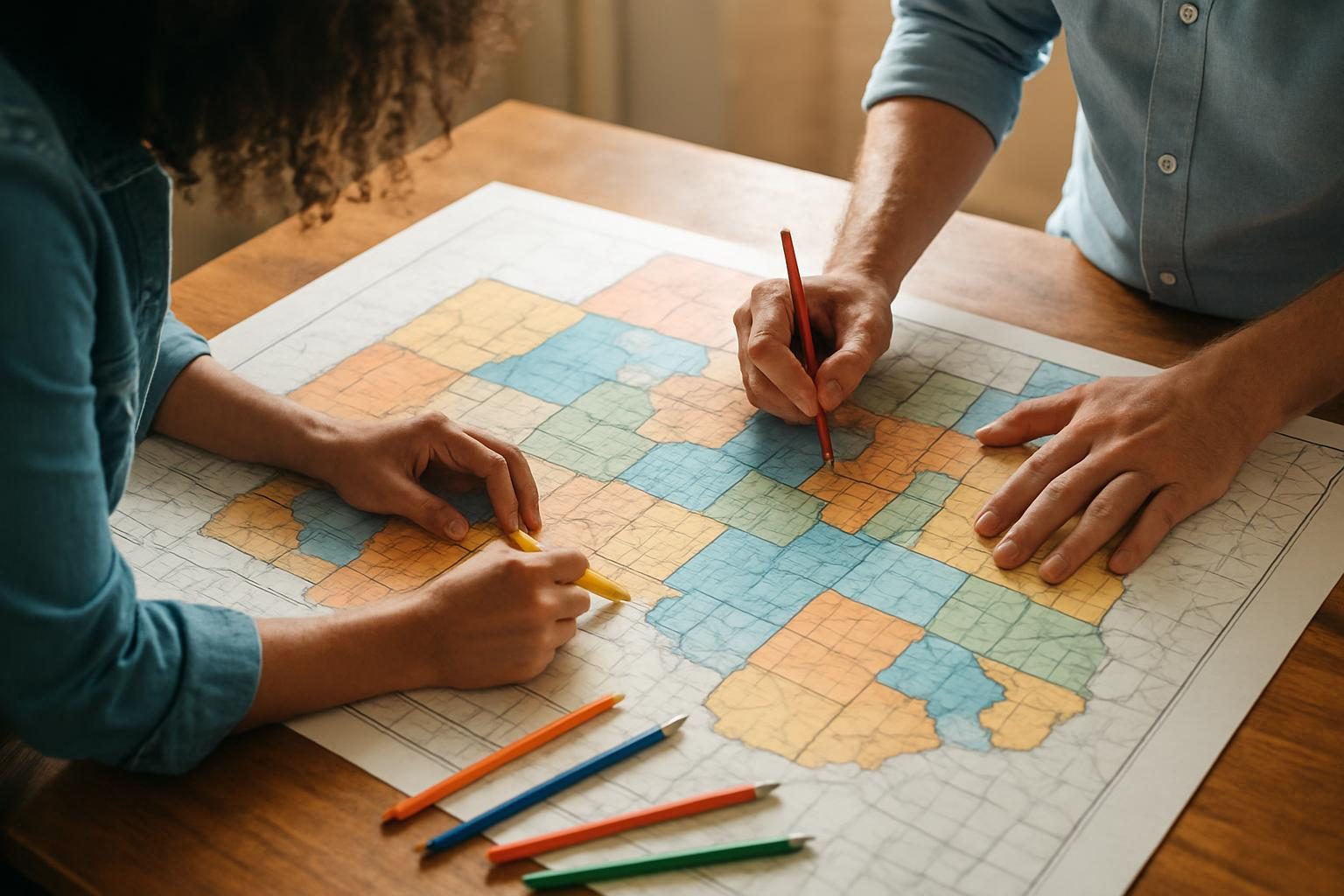
    A voter completing a registration form on a laptop at home

    Every way to register to vote in Georgia

    There is more than one door into the voter rolls. Pick whichever is easiest for you, then check your status afterward to make sure it went through.

    Method How it works Good to know
    Online Use Georgia’s official online registration, linked from vote.gov. Fastest option for most people. Always start from vote.gov to avoid look-alike sites.
    By mail Complete a registration form and mail it to the address on the form. Confirm the current form and mailing address with the state election office.
    In person Register at an election office or other official location. Check hours and what to bring before you go.
    At the DMV Register or update your information when you handle driver’s license business. Ask to register during your visit, and confirm afterward that it was processed.

    Whichever route you choose, check the current deadline on vote.gov or with the Georgia election office. Deadlines can differ by election, and we will not hand you a number that might be out of date.

    Want a broader look at how registration works nationwide? See our simple guide to registering to vote in every state.

    Registering takes minutes, but it unlocks every election on your ballot for years to come.

    How to check or update your registration

    Do not assume you are still registered. People get dropped or fall out of date after a move, a name change or a long stretch between elections. A two-minute check can save you a headache later.

    Check your status

    Use the state’s official voter lookup, reachable through vote.gov. Confirm your name, address and polling place. Our walkthrough on how to check your voter registration status in minutes shows what to look for.

    Update your information

    If you moved, changed your name or want to fix a mistake, update your record through the same official channels you would use to register. Our planned guide, Moved? How to Update Your Voter Registration, will go deeper on this.

    College students have a few extra questions about home versus school addresses. Our upcoming college students voting guide will help sort that out.

    Voter ID basics in Georgia

    ID rules are one of the places where voters most often get tripped up, and the details can change. We are not going to list specific accepted IDs here, because the safest answer is always the current one from the state.

    Before you vote, confirm what identification Georgia requires for in-person voting and for mail ballots by checking vote.gov or the state election office. For a national overview, see our guide to voter ID requirements by state.

    If you do not have the ID you need, ask the election office what options exist. Do not give up before asking.
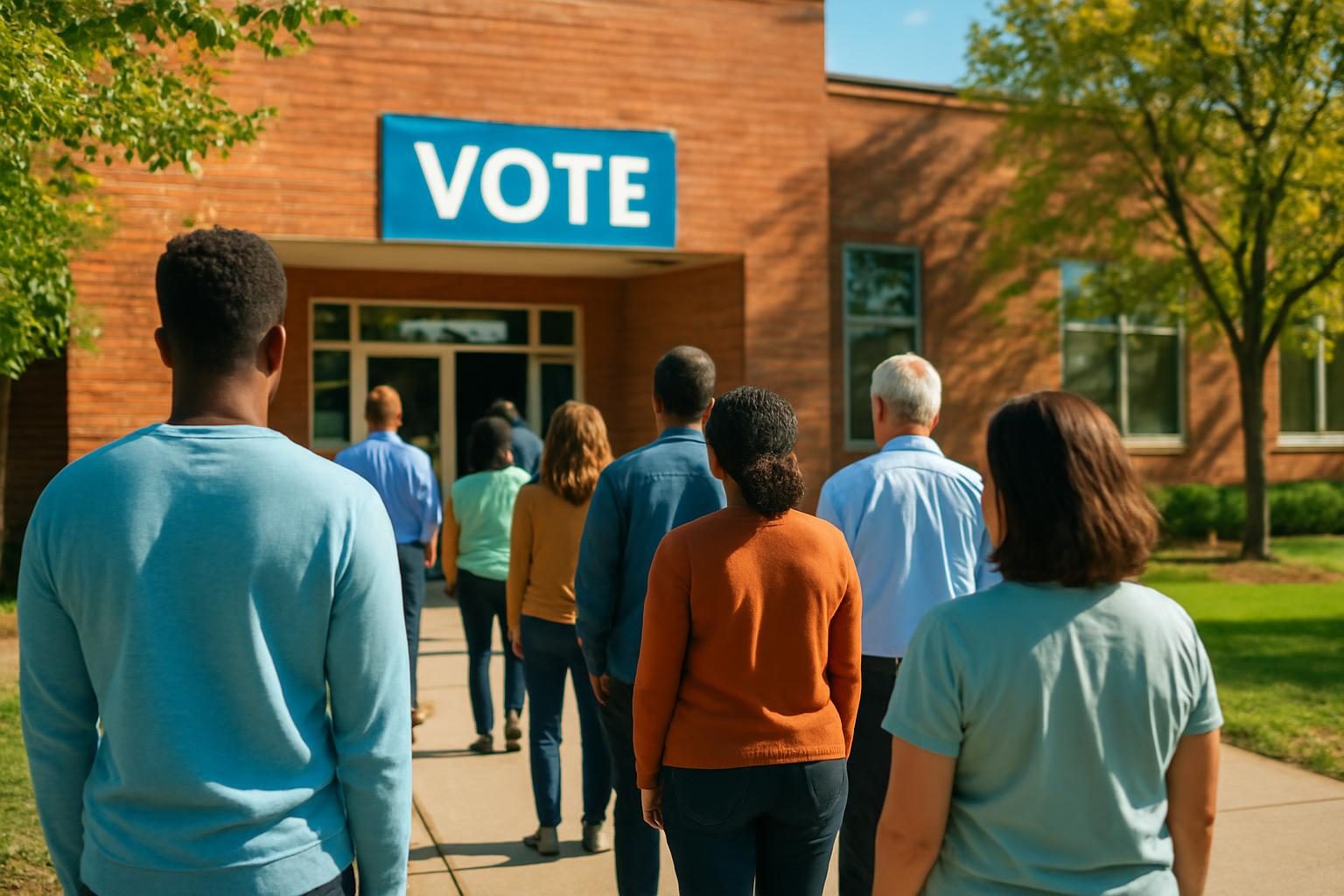
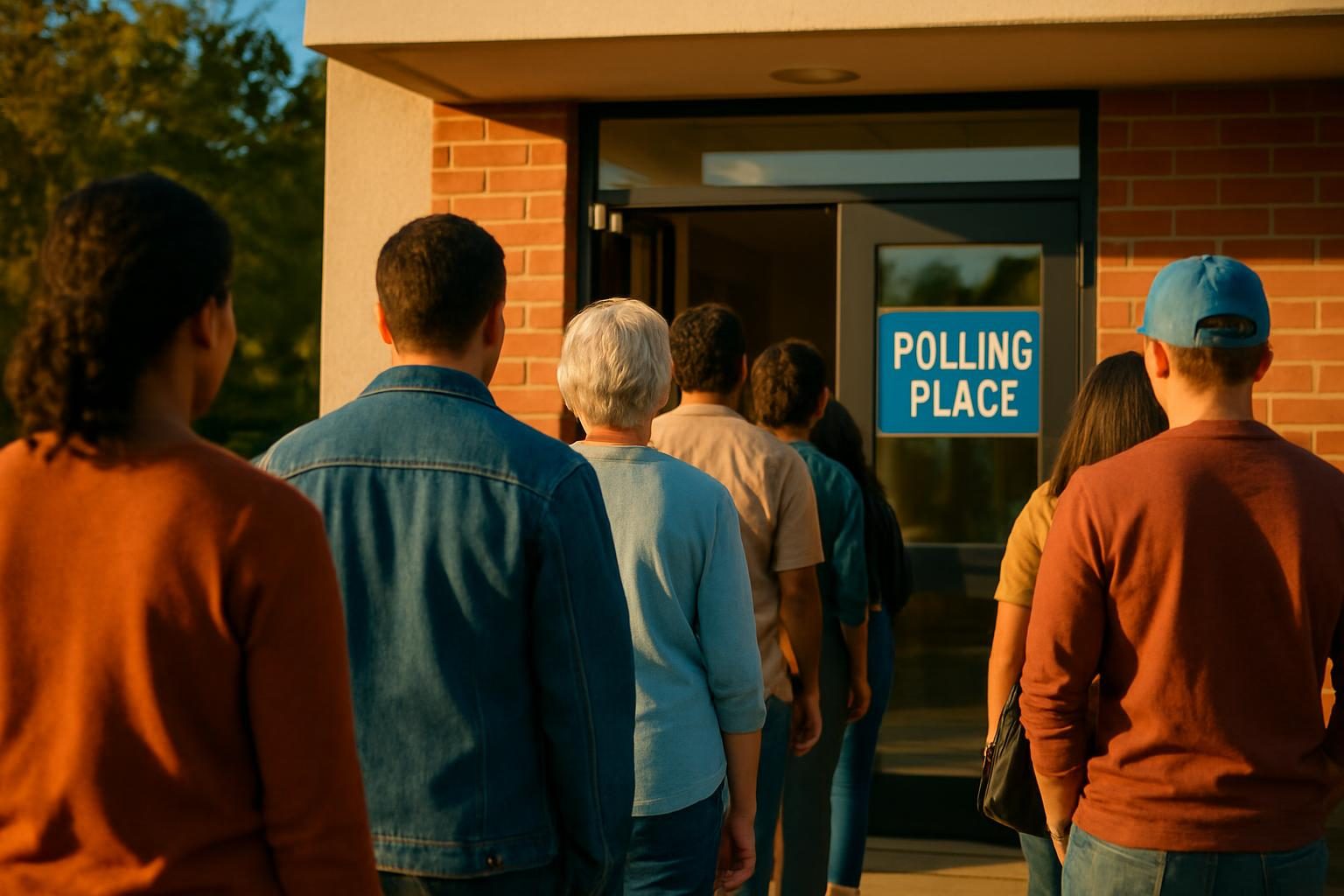
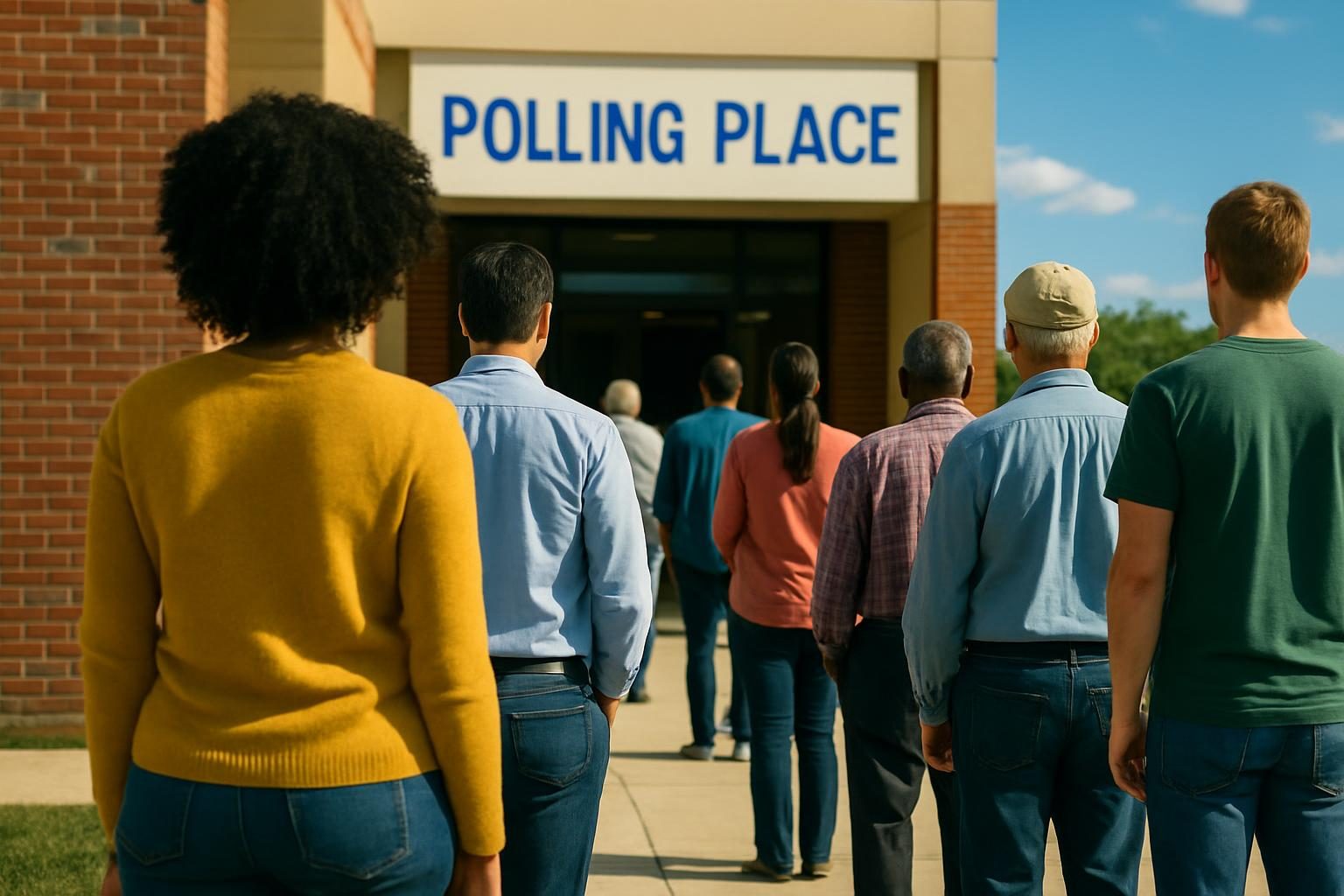
    A line of voters waiting outside a polling place

    Early voting and mail voting overview

    Georgia gives voters options beyond Election Day, and using them can make voting easier if you work long hours, care for family or travel. The specifics, including dates, locations and who can request a mail ballot, are set by the state and can change, so verify them for each election.

    For current Georgia rules on any of these, start at vote.gov or contact the state election office directly.

    A plan beats good intentions: pick how you will vote, check the rules, and tell a friend.

    Supporters gathered near a state capitol at golden hour

    Georgia in the 2028 race

    Georgia is often discussed as a battleground, and our 2028 electoral map and swing states pages track where the race may be decided. Presidential contests are won by reaching 270 electoral votes, which is why individual states get so much attention. If you want the mechanics, read how the Electoral College works.

    The general election is Tuesday, November 7, 2028. As for Georgia’s 2028 presidential primary, the date is still being set. Check back, because we will update this page when it is announced. For the early Democratic states that are already set, see our 2028 Democratic primary calendar.

    No major Democrat has formally declared a 2028 run as of this writing. Georgia’s own Raphael Warnock is among the senators widely reported as a potential candidate, but that is speculation, not an announcement. Follow our 2028 Democratic candidates tracker for updates.

    Before 2028, there is also the 2026 midterm on Tuesday, November 3, 2026. See what’s at stake in the 2026 midterms.

    Take action: Open vote.gov/register/georgia right now, confirm your registration or sign up, then text one friend or family member the link and ask them to do the same.

    Your 5-step Georgia registration checklist

    1. Confirm you are eligible using the state’s rules, linked from vote.gov.
    2. Check your status with the official voter lookup to see if you are already registered.
    3. Register or update online, by mail, in person or through the DMV.
    4. Verify the deadline and ID rules on vote.gov or with the state election office.
    5. Make a voting plan: early, by mail or on Election Day, and find your polling place.

    Want to get more involved? Volunteer to help neighbors register, and learn where Democrats stand in our guide to Democratic Party platform issues. You can also browse more guides in our Voting & Registration section, or see how neighboring races shape up in our guides to registering to vote in North Carolina and registering to vote in Florida.

    Key takeaways

    • Start at vote.gov/register/georgia for the official state links.
    • You can register online, by mail, in person or at the DMV.
    • Check the current deadline and ID rules on vote.gov before you plan.
    • Check your status regularly, especially after a move.
    • Georgia’s 2028 primary date is still being set; we will update this page.

    Last updated October 2026. Dates and candidate news change fast; we update this page as things are announced.

    Frequently asked questions

    Can I register to vote online in Georgia?

    Georgia offers online registration, and vote.gov links to the state’s official portal along with the state election office. Start at vote.gov/register/georgia so you land on the real state page and not a look-alike site.

    How do I know if I’m already registered in Georgia?

    Use the state’s official voter lookup, which you can reach through the Georgia links on vote.gov. Check after any move, name change or long gap between elections, and confirm your polling place details while you are there.

    Does Georgia have same-day voter registration?

    Not as a standard option, as far as we can confirm. Rules differ from state to state and can change, so confirm the current deadline and process on vote.gov or with the Georgia election office rather than relying on a rule of thumb.

    Do I need to re-register if I move within Georgia?

    Yes, update your registration so your address and polling place are current. You can usually do this through the same official channels you would use to register, so start at vote.gov and confirm the steps for your situation.

    When is Georgia’s 2028 presidential primary?

    The date is still being set, so we do not have one to share yet. We will update this page as soon as it is announced, and our Democratic primary calendar tracks the early states.


  • How to Register to Vote in Arizona: A 2026 Guide

    How to Register to Vote in Arizona: A 2026 Guide

    Arizona is one of the most closely watched states in American politics, and it is decided by people who show up. Every election, a few thousand votes here can shift the outcome. The first step to being one of them is simple: make sure you are registered.

    This guide walks you through how to register to vote in Arizona, how to check your status, what to know about ID and mail voting, and what is coming in 2028.

    Quick answer: To register to vote in Arizona, you must be a U.S. citizen who lives in Arizona and meets the state’s age and eligibility rules. Start at the official page, vote.gov/register/arizona, which links to the state election office and online registration. Confirm current deadlines there, not from memory or a friend’s text.

    Who can register to vote in Arizona

    In general, you need to be a U.S. citizen, an Arizona resident, and old enough to vote by Election Day. There are also rules about certain criminal convictions and court-ordered restrictions. Eligibility details can be technical, so confirm yours with the state election office or your county recorder.

    Not sure whether you qualify? Do not assume the answer is no. Many people who think they cannot vote actually can, including some people with past convictions whose rights have been restored. Ask an official source before you decide.

    Young people have options too. If you are not yet old enough, look into whether pre-registration is available, and read our upcoming guide on whether you can register to vote at 17.

    Voter filling out a registration form on a laptop at a kitchen table

    Every way to register in Arizona

    Arizona gives you several routes. The best one is the one you will actually finish today. Here is the overview, with the caveat that you should confirm current details on vote.gov.

    Method How it works Good for
    Online Arizona offers online registration. Vote.gov links you to the official state portal. Most people with a few minutes and a phone or computer
    By mail Complete a registration form and mail it to the address the state provides. Vote.gov explains how to get the form. Voters who prefer paper
    In person Register at your county recorder’s office or another official location. Check your county’s current options. Anyone who wants help from a real person
    At the DMV Motor vehicle offices offer voter registration when you get or update a license or ID. Ask when you are there. People already updating their license or address

    Whatever route you pick, double-check your name, address and date of birth before you submit. A small typo can create a big headache later.

    New to the idea of signing up online? Our upcoming explainer on whether you can register to vote online covers how it works across the country. For the nationwide picture, see How to Register to Vote: A Simple Guide for Every State.

    Registration takes a few minutes, but it unlocks every election for years to come.

    How to check or update your registration

    Registered a while ago? Check again. Moving, changing your name, or going a long stretch without voting can all affect your record. It is a quick check that can save you a lot of trouble on Election Day.

    Start with the state election office, which you can reach through vote.gov/register/arizona. Your county recorder can also confirm your status and help fix any problems. Our step-by-step guide to checking your voter registration status shows what to look for.

    When to update your registration

    • You moved, even within the same county
    • You changed your name
    • You want to change how you receive your ballot or your party preference

    If you recently moved, our upcoming guide on how to update your voter registration after moving will walk you through it. College students juggling a campus address and a home address should watch for our college students voting guide.

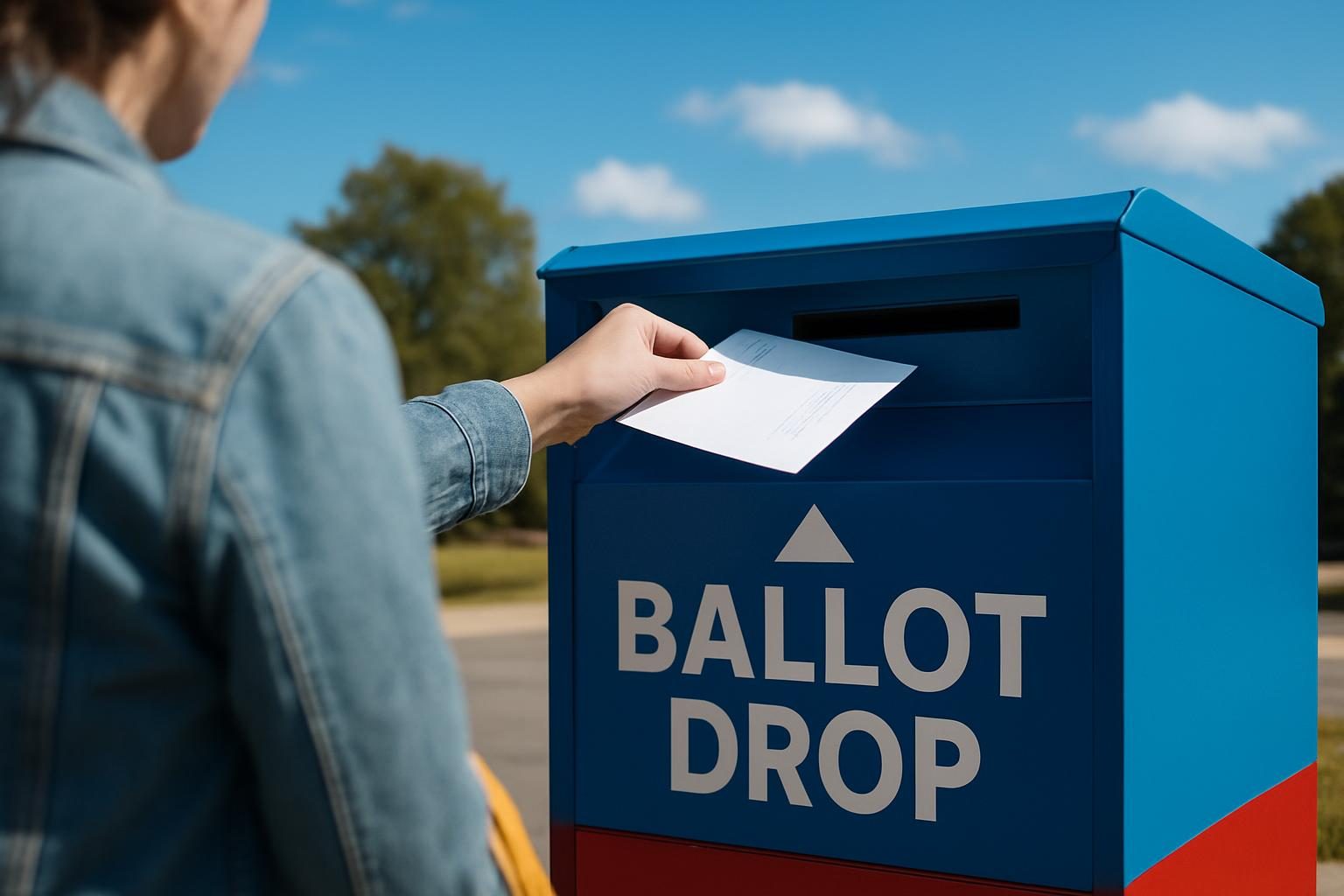
    Hands placing a mail ballot envelope into a ballot drop box

    ID basics for Arizona voters

    Identification rules matter at two points: when you register and when you vote. They can differ, and they can change, so we are not going to hand you a checklist from memory. A wrong assumption about ID is exactly the kind of thing that trips people up.

    Instead, here is the smart move. Confirm what you need through the state election office or your county recorder, and do it before Election Day, not at the polling place. Our overview of voter ID requirements by state explains how the rules work across the country.

    If you do not have the ID you expect, ask what alternatives exist. Election officials handle this question constantly, and there is often a path forward.

    Early and mail voting in Arizona

    Arizona is known for making voting flexible. Many voters cast their ballots by mail or vote early instead of waiting for Election Day. That means you can read your ballot at the kitchen table, research every race, and vote on your own schedule.

    The details, including how to request a mail ballot, whether you can join a list for future elections, and where to return it, are handled by your county recorder and the state election office. Confirm current rules rather than relying on what worked in a past election. For the fundamentals, see our guides to voting by mail and early voting.

    If you plan to vote in person, find out ahead of time where. Our upcoming guide on how to find your polling place will help.

    Take action: Open vote.gov/register/arizona right now and check your status or start your registration. Then text one friend or family member and ask them to do the same.

    Elections are won by people who made a plan, not people who hoped it would work out.

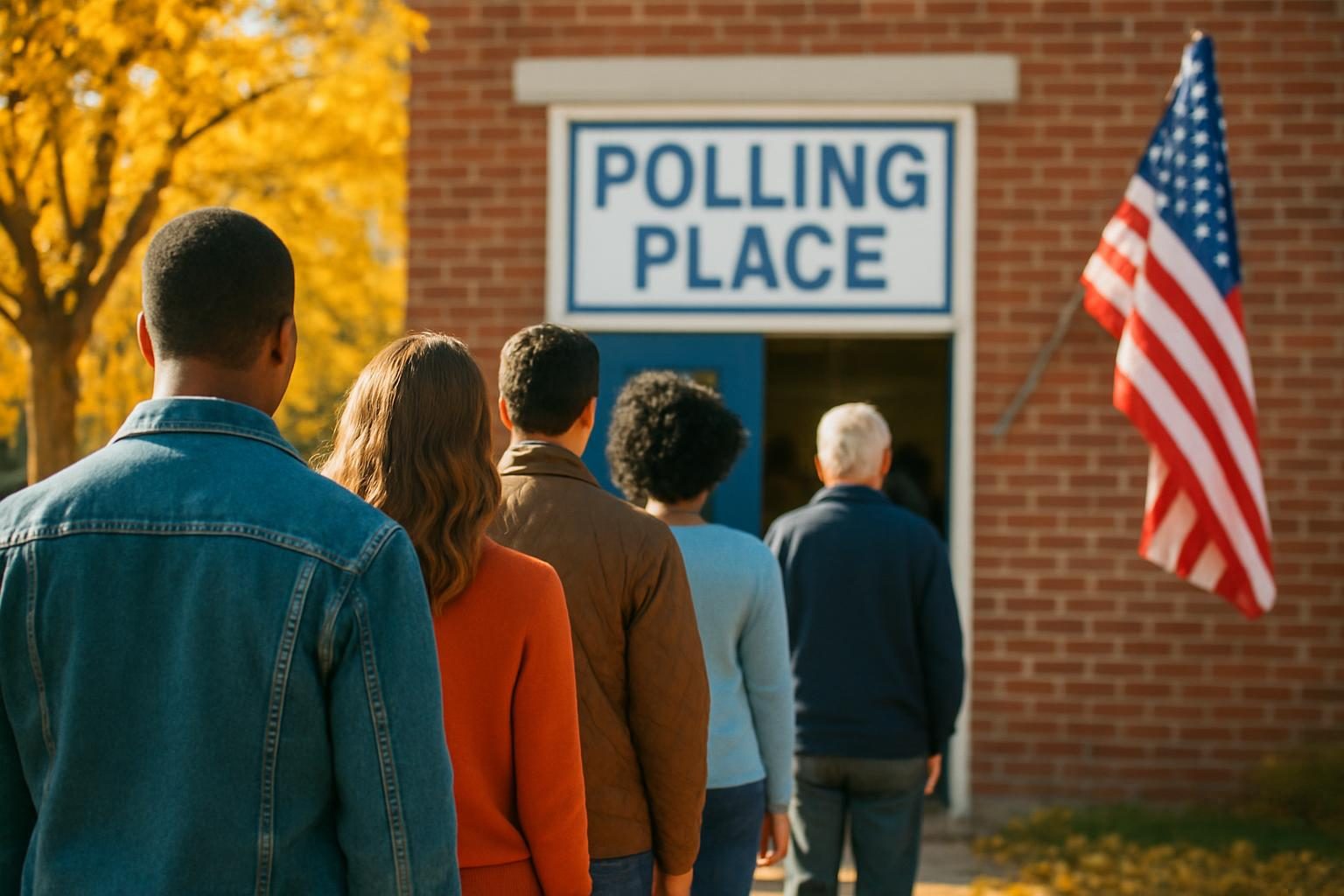
    Line of diverse voters seen from behind outside a polling place

    Arizona in the 2028 race

    Arizona is widely discussed as a battleground, and it will matter in the fight for the White House. A presidential candidate needs 270 of 538 electoral votes to win, and every state counts. Learn more in our guides to the 2028 electoral map, 2028 swing states, and how the Electoral College works.

    The general election is Tuesday, November 7, 2028. As for Arizona’s Democratic primary, the date is still being set, so check back. Arizona is not in the DNC’s early window, which the party approved on August 15, 2026: South Carolina, Nevada, New Hampshire, New Mexico, Michigan and Virginia. See the full 2028 Democratic primary calendar and our explainer on how presidential primaries work.

    No major Democrat has formally declared a 2028 run as of this writing. Plenty are discussed as potential candidates, including Arizona’s own Sens. Ruben Gallego and Mark Kelly. Follow the field in our 2028 Democratic candidates tracker.

    First, though, comes the 2026 midterm election on Tuesday, November 3, 2026. If you want to understand what is on the line, read 2026 Midterm Elections: What’s at Stake for 2028. Our view: the best way to shape 2028 is to show up and organize now.

    Your 5-step Arizona registration checklist

    1. Check your status. Use vote.gov/register/arizona to find the state election office and confirm whether you are already registered.
    2. Pick your method. Online, mail, in person, or at the DMV, whichever you will finish.
    3. Gather your details. Have your name, current address and date of birth ready, plus any ID information the form asks for.
    4. Confirm the deadline. Check the current deadline on vote.gov or with the state election office, and register early.
    5. Make a voting plan. Decide whether you will vote by mail, early, or in person, and tell a friend your plan.

    Want a broader look at the issues shaping the next election? Visit our guide to Democratic Party platform issues, and browse more guides in our Voting & Registration section. Following the bigger picture? Start at our 2028 presidential election hub.

    Key takeaways

    • Start at vote.gov/register/arizona, the official page for Arizona registration and the state election office.
    • Arizona offers several ways to register, including online, by mail, in person and at the DMV.
    • Check your status often, and update it after a move or name change.
    • Confirm ID rules and deadlines with official sources, since they can change.
    • Arizona’s 2028 primary date is still being set; the general election is November 7, 2028.

    Last updated October 2026. Dates and candidate news change fast; we update this page as things are announced.

    Frequently asked questions

    Can I register to vote in Arizona online?

    Arizona offers online voter registration, and the official page at vote.gov/register/arizona links you to the state’s registration options. Check vote.gov or your county recorder for current requirements before you start.

    How do I know if I’m already registered in Arizona?

    You can check your registration status through the state election office, which vote.gov links to, or by contacting your county recorder. It only takes a few minutes, and it is worth doing every time you move or change your name.

    Do I need to register again if I move within Arizona?

    Generally, yes. Your registration is tied to your address, so you should update it whenever you move, even to a new place in the same county. Use vote.gov or your county recorder to confirm the current process.

    What is the voter registration deadline in Arizona?

    Deadlines are set by the state and can change, so we do not list a number here. Check the current deadline on vote.gov or with your state election office, and register as early as you can so you are never scrambling.

    When is Arizona’s 2028 Democratic primary?

    The date is still being set and we have not confirmed it. Arizona is not part of the DNC’s early window for 2028. Check back, because we update this page as soon as dates are announced.

  • Mark Kelly 2028: Will Kelly Run for President?

    Mark Kelly 2028: Will Kelly Run for President?

    He has flown combat missions, commanded a space shuttle and won a Senate seat in a state that swings. So it’s no surprise that Mark Kelly’s name keeps coming up in 2028 conversations. But has the Arizona senator actually said he is running? Here is the honest, sourced answer.

    Quick answer: Mark Kelly is a US senator from Arizona, a former Navy pilot and NASA astronaut, and one of the widely reported potential Democratic candidates for president in 2028. Status: Not declared (as of October 2026). No major Democrat has formally declared a 2028 run yet. We will update this page as news breaks.

    Quick bio and current role

    Mark Kelly represents Arizona in the US Senate as a Democrat. Before politics, he built a career that few people in Washington can match. He served in the US Navy as a combat pilot and later became a NASA astronaut who flew on space shuttle missions.

    His wife, Gabby Giffords, is a former Arizona congresswoman who survived a 2011 shooting. After that, Kelly became a prominent voice on gun violence prevention, and the couple helped found an organization focused on the issue. That story is a big part of how many voters first came to know him.

    Kelly first won his Senate seat in a special election and later won a full term. Arizona has become one of the most closely watched states in American politics, which is part of why his name travels beyond the Southwest.

    Record highlights

    We stick to well-documented, widely reported facts here. For a full look at where Democrats stand on the big issues, see our guide to Democratic Party platform issues.

    • Military and space service: Navy combat pilot and NASA astronaut before entering public office.
    • Gun violence prevention: A leading advocate on the issue, alongside Gabby Giffords.
    • Statewide wins in Arizona: Elected to the Senate in a competitive, politically divided state.
    • Senate service: A sitting senator whose work has included national security and defense matters.

    We are deliberately not listing vote counts or bill-by-bill details we can’t source today. For a fuller legislative record, check his official Senate page and nonpartisan trackers.

    Few potential candidates can pair a military and space career with wins in a swing state.

    Rocket on a launch pad at dawn, a nod to Kelly's astronaut career

    What Kelly has said about 2028

    As of this writing, Kelly has not announced a presidential campaign. He has not said much that is widely reported in a way we can responsibly paraphrase as a decision either way. Like most of the potential field, he is mentioned by commentators and activists far more often than he addresses the question himself. Other potential 2028 candidates face similar speculation.

    That is normal this early. The 2026 midterms are still weeks away, and most potential candidates are focused on helping Democrats win now. Candidates who jump in too soon often regret it. Our 2028 Democratic candidates tracker follows who is saying what.

    Strengths in a Democratic primary

    A story that needs no explanation

    Astronaut, Navy pilot, husband of a shooting survivor turned advocate. Voters grasp that biography in seconds. In a crowded field, an easily understood personal story is a real asset.

    Swing-state credibility

    Winning statewide in Arizona shows he can appeal beyond the base. Many Democratic voters say they want a nominee who can win in November, not just in primaries. Kelly’s backers point to Arizona as proof of concept. See our look at the 2028 swing states for why those states matter so much.

    A strong message on safety and security

    His military background and gun safety work give him credibility on two themes that matter to many voters. In our view, that mix could help Democrats reach independents and moderates without abandoning core values.

    Southwest neighbors on the calendar

    Arizona borders both Nevada and New Mexico. If he ran, he would have regional familiarity in two states in the early window. More on that below.

    Open questions and criticisms from across the party

    No candidate is perfect, and a fair profile says so. Here are the questions Democrats raise about a potential Kelly bid.

    • Name recognition and national profile: Beyond his biography, some Democrats wonder if he has a signature national message that would stand out in a big field.
    • Style versus energy: Some activists want a more fiery fighter. Others value a steady, low-drama approach. This is a genuine debate in the party.
    • Where he sits ideologically: Progressives will want to see detail on issues like health care, climate and economic fairness. Moderates will have their own questions. Those details matter more than a biography.
    • The Arizona factor: Winning a swing state is an asset, but it also means a record shaped by a politically mixed electorate. Some voters will want to see how that plays on a national stage.

    Our view: these are fair questions, not disqualifiers. Any potential candidate should expect to answer them if a campaign comes together.

    A great biography opens the door. Detailed positions on health care, jobs and rights are what win a primary.

    Volunteers making calls in a campaign office with regional maps on the wall

    How Kelly might fit the early-state calendar

    The DNC approved the 2028 early window on August 15, 2026. Here is the lineup, which we cover in depth in our 2028 Democratic primary calendar.

    Date State Why it could matter for a Kelly-style run
    Jan 22, 2028 South Carolina Tests appeal with a diverse electorate. See South Carolina’s primary.
    Feb 1, 2028 Nevada A Southwest neighbor of Arizona. See Nevada’s primary.
    Feb 8, 2028 New Hampshire State law wants it first, so watch for changes. See New Hampshire’s primary.
    Feb 15, 2028 New Mexico Another Southwest neighbor. See New Mexico’s primary.
    Feb 22, 2028 Michigan A Midwest battleground. See Michigan’s primary.
    Feb 29, 2028 Virginia Rounds out the early window.

    Super Tuesday follows on March 7, 2028. Iowa is not in the Democratic early window. New Hampshire’s state law requiring the first primary clashed with the DNC calendar in 2024, so that date is worth watching.

    In our view, two early Southwest states give a candidate from Arizona a natural regional story. But geography is no guarantee. Organization, money and message decide primaries. Other potential 2028 candidates like Ro Khanna face similar strategic considerations.

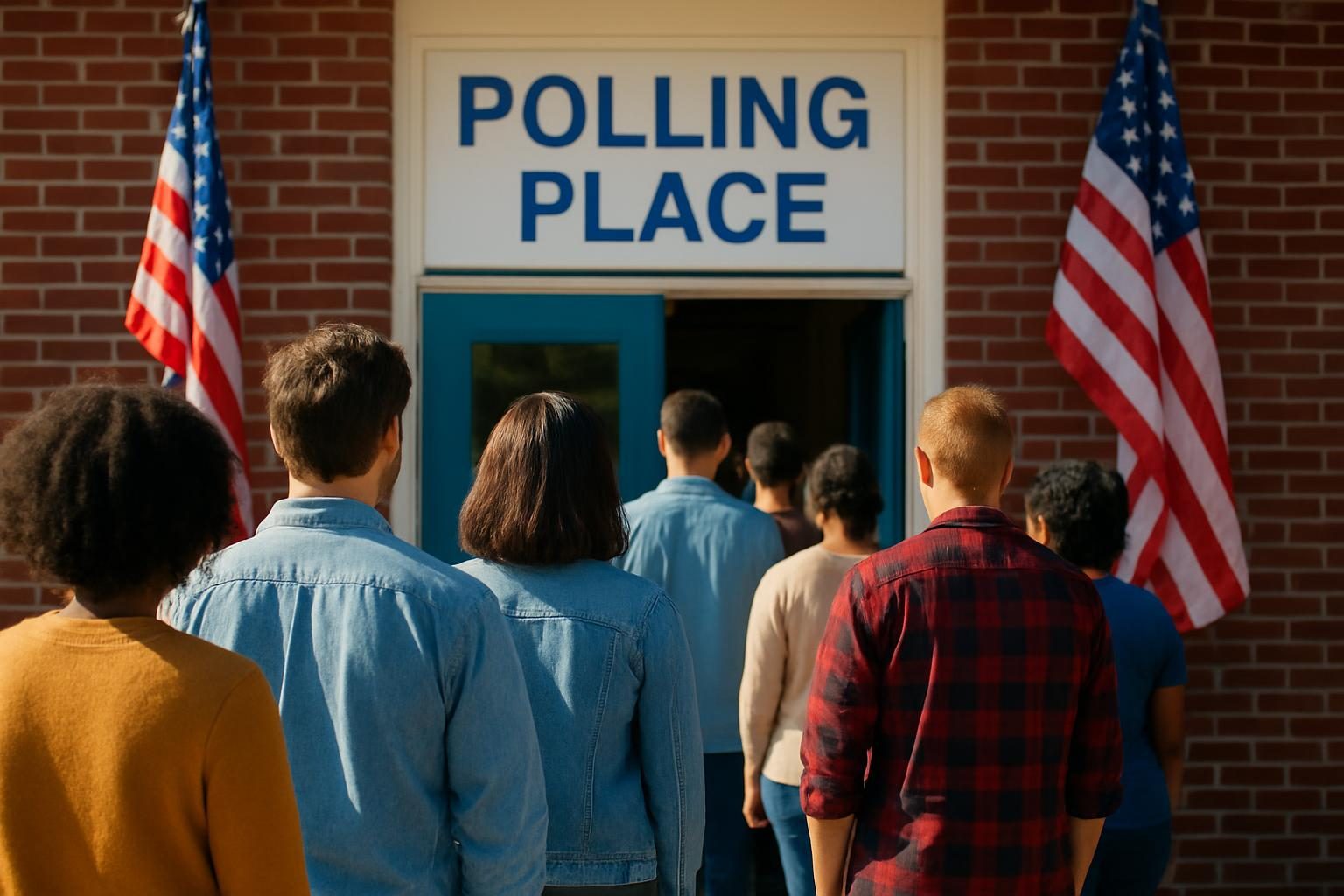
    Diverse line of voters waiting outside a polling place on a sunny morning

    What to watch next

    Here is what we are tracking on the road to a possible Kelly decision:

    1. The 2026 midterms on November 3, 2026. Potential candidates will be campaigning for others. Read our guide to the 2026 midterm elections.
    2. Travel and staffing signals. Visits to early states and hires of national political staff are classic early tells.
    3. Convention host city. Boston, Denver and Philadelphia are the finalists, with the final pick expected later in 2026. See the 2028 Democratic National Convention page. The convention is August 7-10, 2028.
    4. Polling, with caution. Early numbers mostly measure name recognition. Learn how to read early 2028 primary polls.

    Kelly is one of several Southwest and Midwest figures in the conversation. Compare him with Ruben Gallego, his Arizona Senate colleague, and see where Elissa Slotkin and the rest of the field stand. For the full picture, head to our 2028 presidential election hub or browse all candidate profiles.

    Take action: Whoever runs, the first step is the same: make sure you’re registered. Check your status at vote.gov (swap in your own state’s name at the end of the link) or with your state election office, then text a friend and ask them to do the same. Our guide to registering to vote walks you through it.

    Key takeaways

    • Mark Kelly has not announced a 2028 run. He is widely reported as a potential Democratic candidate.
    • His background as a Navy pilot, NASA astronaut and gun safety advocate gives him a distinctive story.
    • Strengths include swing-state credibility and Southwest ties to Nevada and New Mexico.
    • Open questions include national profile, policy detail and how his style fits a party that wants fighters.
    • The DNC’s early window runs from South Carolina on Jan 22, 2028 to Virginia on Feb 29, with Super Tuesday on March 7.
    • Check your registration on vote.gov now; November 3, 2026 comes first.

    Last updated October 2026. Dates and candidate news change fast; we update this page as things are announced.

    Frequently asked questions

    Is Mark Kelly running for president in 2028?

    Not as of October 2026. Kelly has not announced a 2028 presidential campaign, and no major Democrat has formally declared. He is widely reported as a potential candidate. We will update this page if that changes.

    What does Mark Kelly do now?

    Kelly is a US senator from Arizona. Before entering politics he was a Navy combat pilot and a NASA astronaut. He is one of the Arizona senators listed among widely reported potential 2028 Democratic candidates.

    Could Mark Kelly legally run for president?

    Yes, as far as the constitutional basics go. The Constitution requires a president to be a natural-born citizen, at least 35 years old, and a US resident for 14 years. Kelly was born in the United States and is well past 35.

    Where would Kelly fit on the 2028 Democratic primary calendar?

    The DNC approved an early window of South Carolina, Nevada, New Hampshire, New Mexico, Michigan and Virginia, followed by Super Tuesday on March 7, 2028. Nevada and New Mexico are Southwest neighbors of Arizona, which could matter if he ran.

    How can I make sure I can vote in the 2028 primaries?

    Check your registration now on vote.gov, which lists every state’s official rules, deadlines and online registration links. You can also contact your state or local election office. Don’t wait until a campaign heats up.

  • Ruben Gallego 2028: Will Gallego Run for President?

    Ruben Gallego 2028: Will Gallego Run for President?

    Every presidential cycle has a few Democrats everyone is watching, and a few whose names keep coming up in conversations about the future of the party. Arizona Sen. Ruben Gallego is one of them. So, will Ruben Gallego run in 2028? Here is what we know, what we do not, and why it matters for voters like you. (Other potential candidates like Ro Khanna 2028 are also being discussed.)

    Quick answer: Ruben Gallego has not announced a 2028 presidential campaign, and no major Democrat has formally declared yet (as of October 2026). He is widely reported as a potential candidate. Status: Not declared (as of October 2026).

    That is the honest answer today. Below, we walk through his background, his record, his strengths and the questions Democrats are asking, and we show where he might fit on the new early-state calendar. We update this page as news breaks.

    Who is Ruben Gallego? Quick bio and current role

    Ruben Gallego is a Democratic US senator from Arizona. Before the Senate, he represented an Arizona district in the US House of Representatives. He is also a Marine Corps veteran who served in Iraq, and his personal story is a big part of how he introduces himself to voters.

    He is widely described as the son of immigrants, with a Latino heritage and a working-class upbringing. He went from that background to Harvard and then to public office. Those details matter in a party that is always asking which candidates can connect with voters across communities and regions.

    The basics at a glance

    Item Detail
    Current role US senator from Arizona (Democrat)
    Previous role US House member from Arizona
    Military service Marine Corps veteran, Iraq War
    2028 status Not declared (as of October 2026)
    Constitutional eligibility Natural-born citizen, over 35, long-term US resident

    On eligibility, the Constitution requires a president to be a natural-born citizen, at least 35 years old, and a US resident for 14 years. Nothing in those rules is in question for Gallego.

    Voters waiting in line outside a polling place on a sunny morning

    Record highlights: what Gallego is known for

    We stick to well-documented, widely reported points here. For the full legislative record, check his official Senate pages and the Congressional record.

    A veteran’s perspective

    Gallego’s military service is central to his public identity. He has long been associated with veterans’ issues, and he has spoken often about how his service shaped his view of government and of the people it is supposed to help.

    Winning in a purple state

    Arizona is a genuine battleground. Winning statewide there means earning votes from a mix of urban, suburban, rural and Latino communities, plus independents and some Republicans. His move from the House to the Senate is a major credential for any Democrat thinking about a national race. For context on why states like his matter so much, see our guide to 2028 swing states and the 2028 electoral map.

    A focus on working families

    Gallego has framed much of his politics around the economic concerns of working families, from housing and costs to jobs and wages. He has also been a visible voice on immigration and border-state issues, which come up constantly in Arizona. How he handles those debates will shape how national voters see him.

    Arizona is where Democrats prove they can win the voters who decide national elections.

    What has Gallego said about 2028?

    As of our latest check, Gallego has not formally announced a presidential run, and we are not aware of a widely reported, definitive statement ruling one in or out. We will not guess at his plans or put words in his mouth.

    Like many Democrats on the widely reported list of potential candidates, he is much more likely to talk about the work in front of him: the Senate, Arizona and the 2026 midterms. That is common this early. Most serious contenders wait until after the midterms to say anything formal.

    If he does say something on the record, we will add it here with the source and date.

    Strengths in a Democratic primary

    Why do people talk about Gallego as a possible contender? Here is our read, framed as analysis rather than prediction.

    1. A compelling personal story. A Marine veteran, a son of immigrants and a first-generation success story is the kind of biography that connects across audiences.
    2. Battleground credentials. Winning in Arizona signals he can compete in the places where general elections are won.
    3. Appeal to Latino voters. Democrats know they need strong Latino engagement in the West and Southwest. A candidate who can speak to those communities authentically is a real asset.
    4. A working-class message. Talking about costs, jobs and dignity at work is a message that resonates widely in a Democratic primary.
    5. Fresh national profile. Compared with longtime national names, a senator who is still building a national audience has room to introduce himself.

    Open questions and criticisms from across the party

    No candidate is perfect, and Democrats are rightly asking tough questions of everyone on the list. Here are some that come up about Gallego, stated fairly.

    Is he known enough nationally?

    Gallego is newer to the Senate than many others on the widely reported list. Name recognition outside Arizona is a real hurdle. Early 2028 Democratic polls mostly measure who is already famous, so we urge caution in reading them this far out.

    Where does he sit on the party’s spectrum?

    Progressives want bold action on economic fairness and healthcare, while others in the party stress electability in swing states. Gallego’s positions on immigration and border policy in particular draw different reactions from different parts of the party. Some voters will want more ambition, others more caution. Voters will want to read his actual record and plans, not just headlines.

    Is he short on experience?

    Critics may point to his relatively short time in the Senate. Supporters would answer that experience comes in many forms, including military service, a record of winning tough races and years in the House.

    Can he stand out in a crowded field?

    With fifteen or more Democrats widely discussed as potential candidates, every one of them faces the same challenge: getting noticed. For a head-to-head look at the field, see our 2028 Democratic candidates tracker.

    A crowded field rewards the candidate who can introduce themselves best, not just the one who is already famous.

    Crowd waving blue signs at an outdoor Western rally at dusk

    How Gallego might fit the early-state calendar

    The Democratic National Committee approved its 2028 early window on August 15, 2026, at its summer meeting in Austin, Texas. Here is the order. For the full picture, see our 2028 Democratic primary calendar.

    Date State Why it could matter for a Southwest candidate
    Jan 22, 2028 South Carolina First test; builds momentum with a diverse electorate
    Feb 1, 2028 Nevada Western neighbor with a large Latino electorate
    Feb 8, 2028 New Hampshire State law complicates the calendar; watch for changes
    Feb 15, 2028 New Mexico Southwestern state with a large Latino population
    Feb 22, 2028 Michigan Big Midwest battleground
    Feb 29, 2028 Virginia Diverse, growing electorate

    Super Tuesday follows on March 7, 2028. Iowa is not in the Democratic early window.

    Two things stand out for a Southwest candidate. First, Nevada and New Mexico are Western states with large Latino electorates, which is a natural fit for an Arizona senator. Second, the calendar is not locked in forever. New Hampshire state law requires it to hold the first primary in the nation, which clashed with the DNC calendar in 2024, so watch for changes there.

    Not sure how the whole process works? Our guide to how presidential primaries work explains it in plain language.

    How Gallego compares with others on the list

    Gallego is far from alone. Widely reported potential Democratic candidates include governors, senators, House members and former officials. Several are fellow Southwest and Western voices, like Mark Kelly of Arizona. Others bring different regional strengths, from Gavin Newsom in California to Josh Shapiro in Pennsylvania and Gretchen Whitmer in Michigan. Georgia’s Raphael Warnock and Michigan’s Elissa Slotkin are also widely mentioned.

    On the Republican side, no one has declared either. See our 2028 Republican candidates page and our look at JD Vance to understand who Democrats may face.

    What to watch next

    • The midterms. The 2026 midterm elections are on Tuesday, November 3, 2026. Candidates who campaign for others, raise money and build relationships often signal their 2028 intentions. Our 2026 midterm elections guide covers what is at stake.
    • Travel and visibility. Watch for trips to early-primary states, national media appearances and major speeches.
    • Formal steps. An exploratory committee or an official announcement would change his status. As of October 2026, none has been reported.
    • The convention. The 2028 Democratic National Convention is set for August 7-10, 2028, with Boston, Denver and Philadelphia as finalist host cities. The final pick is expected later in 2026. See our convention page.
    • Policy debates. The party’s direction on the economy, immigration and healthcare will shape the field. Read our overview of Democratic Party platform issues.
    Volunteers making calls in a busy campaign office with a map on the wall

    Why this matters for you right now

    It is easy to treat a 2028 profile as a spectator sport. It is not. The candidates who emerge will be shaped by what happens in the 2026 midterms, and by whether voters show up. Our own view: the best thing any Democrat can do for 2028 is to win and to organize in 2026.

    That starts with being registered. Every state has its own rules and deadlines, so we never guess for you. Check your state’s official rules and online registration link at vote.gov (for example, vote.gov/register/arizona), or contact your state election office. North Dakota has no voter registration. Our how to register to vote guide walks you through it.

    Take action: Take five minutes today to confirm your voter registration at vote.gov or with your state election office. Then text two friends and ask whether they are registered too. The midterms are on November 3, 2026.

    Want the bigger picture? Start with our 2028 presidential election hub, browse the rest of our candidate profiles, and check the key dates for when the 2028 presidential election is: Tuesday, November 7, 2028.

    Key takeaways

    • Ruben Gallego has not announced a 2028 presidential run (as of October 2026), and no major Democrat has formally declared.
    • He is an Arizona senator, a Marine veteran and a former House member, widely reported as a potential candidate.
    • His strengths include a compelling personal story, battleground credentials and appeal in the Latino-heavy Southwest.
    • Open questions include national name recognition, where he sits on the party’s spectrum and how he stands out in a crowded field.
    • The early window starts with South Carolina on January 22, 2028; Nevada and New Mexico are Western states that could suit him.
    • The best move for readers now: confirm your registration on vote.gov and get involved in the November 3, 2026 midterms.

    Last updated October 2026. Dates and candidate news change fast; we update this page as things are announced.

    Frequently asked questions

    Has Ruben Gallego announced a 2028 presidential run?

    No. As of October 2026, no major Democrat has formally declared a 2028 presidential campaign, and Ruben Gallego is among the Democrats widely reported as a potential candidate. We will update this page if that changes.

    What office does Ruben Gallego hold?

    Gallego is a US senator from Arizona. He previously served as a member of the US House of Representatives from Arizona before moving to the Senate.

    Is Ruben Gallego old enough and eligible to be president?

    The Constitution requires a president to be a natural-born citizen, at least 35 years old, and a US resident for 14 years. Gallego was born in the United States and is well past 35, so nothing in those rules stands in the way of a run.

    Which early primary states could matter for Gallego?

    The DNC’s approved 2028 early window starts with South Carolina on January 22, 2028, then Nevada on February 1, New Hampshire on February 8, New Mexico on February 15, Michigan on February 22 and Virginia on February 29. Nevada and New Mexico are Western states with large Latino electorates, which makes them especially interesting for any Arizona Democrat.

    How can I get involved in 2028 and the 2026 midterms?

    Start by confirming your voter registration on vote.gov or with your state election office. Then volunteer for a campaign or party organization near you, and talk to friends and family about voting in the November 3, 2026 midterms.

  • Cory Booker 2028: Will Booker Run for President?

    Cory Booker 2028: Will Booker Run for President?

    Few names come up in 2028 conversations as often as Cory Booker’s, and for good reason: he is a senator with national experience, a famously upbeat style and a presidential run already behind him. Cory Booker 2028 is a real question, but it is still only a question for now.

    Here is what we know, what we don’t, and what to watch, so you can follow the race with clear eyes and get ready to take part.

    Quick answer: Cory Booker, the US senator from New Jersey, has not announced a 2028 presidential run. He is widely reported as a potential Democratic candidate, like more than a dozen other figures. Status: Not declared (as of October 2026). We will update this page as soon as that changes.

    Quick bio and current role

    Cory Booker is a Democratic US senator from New Jersey. Before the Senate, he served as mayor of Newark, New Jersey’s largest city, a role that made him a national figure well before he reached Washington.

    He was elected to the Senate in a special election in 2013 and has been re-elected since. He is a Stanford graduate and a Rhodes Scholar, and he is known for a hopeful, community-centered political style.

    Booker is also one of the best-known Democrats in the country among activists and donors, which matters in any presidential field.

    Record highlights

    Booker’s career has several well-documented chapters. Here are the ones most often cited by voters and reporters:

    • Mayor of Newark. He led the city and became widely known for hands-on, high-visibility governing.
    • US Senate service. He has served in the Senate since 2013 and has been active on criminal justice, economic opportunity and consumer issues.
    • Criminal justice reform. He was a prominent Senate voice behind the bipartisan First Step Act, signed into law in 2018, which reformed parts of federal sentencing and prison policy.
    • Anti-lynching legislation. He was a lead sponsor of the bill making lynching a federal hate crime, which became law in 2022.
    • A 2020 presidential bid. He ran for the Democratic nomination and withdrew before the first votes were cast.

    For a deeper look at where the party stands on the big policy fights he works on, see our guide to Democratic Party platform issues.

    A potential candidate is not a candidate. Until someone declares, the best thing voters can do is get ready.

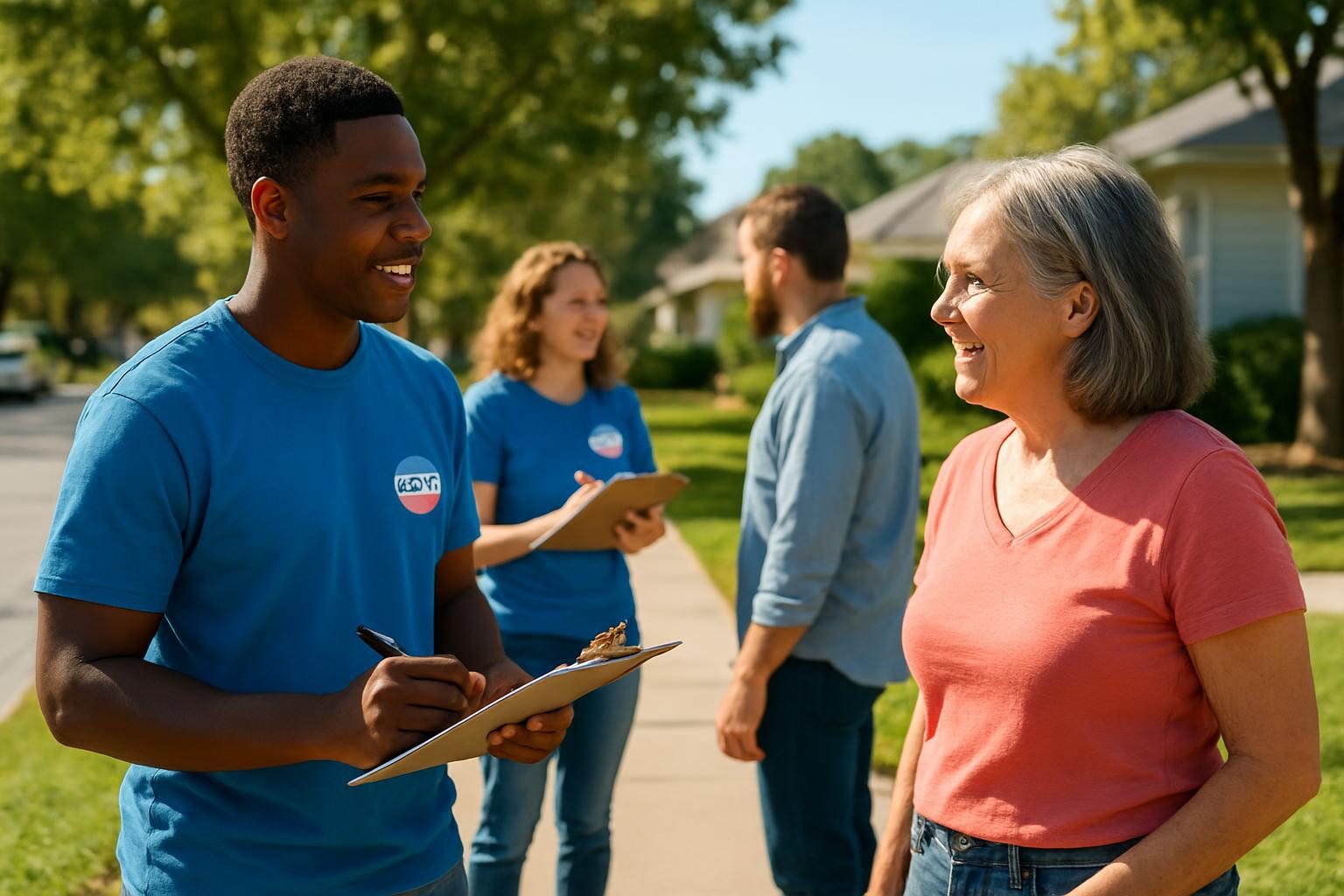
    Volunteers with clipboards canvassing neighbors on a sunny sidewalk

    What Booker has said about 2028

    As of this writing, Booker has not made a formal announcement about 2028, and we are not aware of a widely reported statement in which he commits either way. We won’t put words in his mouth.

    That is normal. Most potential candidates stay quiet until after the November 3, 2026 midterms, when attention shifts from the 2026 races to the next presidential cycle. Many will spend the fall campaigning for others, which is a classic way to build relationships.

    When he does say something that is widely reported, we will add it here with a date and a source.

    Strengths in a Democratic primary

    Every potential candidate brings something different. These are the strengths analysts most often point to for Booker, framed here as our view:

    1. Experience running before

    He has already been through a national primary. That means a campaign team with experience, a donor network and a good sense of what the grind looks like.

    2. A message built on hope and unity

    Booker’s trademark is optimism. In a party eager to turn frustration into energy, a candidate who talks about common purpose can stand out.

    3. A legislative record

    Few candidates can point to criminal justice and civil rights legislation that actually became law. That gives him concrete accomplishments to talk about on the trail.

    4. National name recognition

    Years in the Senate and a previous presidential run mean many primary voters already know who he is, a real head start in a crowded field.

    Open questions and criticisms

    No candidate is perfect, and fair coverage means laying out the questions Democrats ask. These come from across the party, and they are debates, not verdicts:

    • Did his 2020 bid leave a mark? He withdrew before voting began, and some wonder whether he can break through in a second run.
    • Is he progressive enough, or too progressive? Some on the party’s left want sharper economic confrontation, while some moderates want a narrower message. Booker has to convince both camps.
    • Which donors and industries does he work with? Like many senators, he has faced questions from the left over his relationships with business and the pharmaceutical industry. Voters will want to see how he answers.
    • Is the field too crowded? With a long list of potential candidates, standing out will be a challenge for anyone.

    Whether these concerns matter will depend on how he runs, if he runs. Our job is to lay them out so you can decide for yourself.

    Primaries are where Democrats argue about who we are. A crowded debate is a sign of a healthy party.

    Diverse voters lining up at a polling place entrance

    How Booker might fit the early-state calendar

    The DNC approved the 2028 early window on August 15, 2026 at its summer meeting in Austin, Texas. Here is the lineup:

    Date (2028) State Why it could matter for a candidate like Booker
    Jan 22 South Carolina A first test with a large share of Black Democratic primary voters, a crucial bloc for any contender.
    Feb 1 Nevada A diverse electorate that rewards strong organizing.
    Feb 8 New Hampshire Retail politics; state law on going first could still cause changes.
    Feb 15 New Mexico A heavily Latino electorate in the West.
    Feb 22 Michigan A big Midwestern battleground.
    Feb 29 Virginia A diverse state with a large suburban electorate.

    Super Tuesday follows on March 7, 2028. Iowa is not in the Democratic early window.

    Our view: a candidate who can win over a diverse coalition has a natural fit with this lineup. Which candidates benefit most is still unknown, and it will depend on who runs. For dates and details, see our 2028 Democratic primary calendar, our explainer on South Carolina’s first-in-the-nation primary and our look at the New Hampshire primary, state law and the DNC.

    Volunteers making calls in a busy campaign office with a wall map

    Who else might run?

    Booker is one of many names. Widely reported potential Democratic candidates include governors, senators and former administration officials. None has formally declared as of October 2026.

    To compare the field, start with our 2028 Democratic candidates tracker. You can also read our profiles of Gavin Newsom, Josh Shapiro and Kamala Harris.

    Other senators in the conversation include Raphael Warnock, Ruben Gallego and Mark Kelly, each widely reported as a potential candidate and none declared.

    What to watch next

    Here is a simple checklist for following Booker and the wider field:

    1. The November 3, 2026 midterms. Watch who campaigns where. Our 2026 midterm guide explains what is at stake.
    2. Travel to early states. Visits to South Carolina, Nevada, New Hampshire, New Mexico, Michigan and Virginia are often early signals.
    3. Staff and fundraising moves. Hiring and building a political organization can precede an announcement.
    4. The convention host city. Boston, Denver and Philadelphia are the finalists for the August 7-10, 2028 convention, with a pick expected later in 2026. See our convention guide.
    5. Polling, with caution. Early numbers are shaky. Read our guide to how to read early primary polling before you trust a headline.

    For the full timeline of the race, bookmark our 2028 presidential election hub.

    Take action: The best primary is one where everyone shows up. Check your voter registration today at vote.gov, or through your state election office, and text one friend to do the same. Our how to register to vote guide walks you through every state.

    Key takeaways

    • Cory Booker has not announced a 2028 run; he is a widely reported potential candidate.
    • He is a New Jersey senator and former Newark mayor who ran for president in the 2020 cycle.
    • His record includes work on criminal justice reform and anti-lynching legislation that became law.
    • Open questions include how he stands out in a crowded field and how he balances the party’s left and center.
    • The DNC’s early window starts with South Carolina on Jan 22, 2028; Super Tuesday is March 7, 2028.
    • Check your registration on vote.gov now so you are ready for every election between now and 2028.

    Last updated October 2026. Dates and candidate news change fast; we update this page as things are announced.

    Frequently asked questions

    Has Cory Booker announced a 2028 presidential run?

    No. As of October 2026, no major Democrat has formally declared a 2028 presidential campaign, and Booker is among the widely reported potential candidates. We will update this page if that changes.

    Has Cory Booker run for president before?

    Yes. Booker sought the Democratic nomination in the 2020 cycle and ended his campaign before the voting began. That experience gives him a national network and a clear view of what a primary campaign demands.

    Is Cory Booker eligible to be president?

    Based on the Constitution’s requirements (natural-born citizen, at least 35 years old, and 14 years of US residency), Booker meets the standard. Eligibility is not the question here; the open question is whether he chooses to run.

    When are the 2028 Democratic primaries?

    The DNC approved an early window on August 15, 2026: South Carolina on Jan 22, 2028, Nevada on Feb 1, New Hampshire on Feb 8, New Mexico on Feb 15, Michigan on Feb 22 and Virginia on Feb 29. Super Tuesday is March 7, 2028. New Hampshire’s state law could still cause changes, so watch for updates. See our guide to how presidential primaries work.

    How can I get ready to vote in the 2028 primaries?

    Check your registration status and update it if you have moved. Every state’s official rules, deadlines and online registration links are on vote.gov, or you can contact your state election office. Same-day registration exists in many states, but rules differ. For more candidate profiles, visit our Candidates section.

  • Gerrymandering Explained: How Maps Decide Elections

    Gerrymandering Explained: How Maps Decide Elections

    Imagine a game where one team gets to move the goalposts before kickoff. That is what happens when politicians pick their voters instead of the other way around. Gerrymandering explained simply: it is the practice of drawing district lines to rig outcomes, and it quietly shapes who holds power in Congress and statehouses across the country.

    Our take: Gerrymandering lets mapmakers decide elections before voters speak, and it is bad for democracy no matter which party does it. We believe fair, transparent, independent map-drawing is one of the most important pro-democracy reforms available, and you can help by registering, voting and getting involved locally.

    What is gerrymandering, exactly?

    Every state with more than one U.S. House seat has to divide itself into districts. State legislatures also draw their own districts. Those lines decide which neighbors vote together and, often, which party is likely to win.

    Gerrymandering happens when the people drawing those lines use that power to favor one party, one incumbent or one group over others. The word is a blend of an early American governor’s name and the salamander-like shape of a district drawn in his era. The tactic is old, but modern mapping software has made it far more precise.

    That precision is the problem. With detailed voter data, mapmakers can predict how a district will vote down to the block. They can build safe seats and starve competitive ones.

    How the trick works: packing and cracking

    Two techniques do most of the work. They sound technical, but the idea is simple: waste the other side’s votes.

    Technique What mapmakers do Effect on voters
    Packing Cram opposing voters into a few districts They win those seats by huge margins, but their votes are wasted beyond what was needed
    Cracking Split opposing voters across many districts They fall just short in each one and win nothing

    Think of a state where voters are split roughly evenly. A fair map might produce a roughly even split of seats. A gerrymandered map can turn that same electorate into a lopsided delegation, with no one changing their mind.

    The result is that the party drawing the map can win more seats than its share of votes would suggest. Voters in the disfavored party are told their voice counts, while the map quietly discounts it.

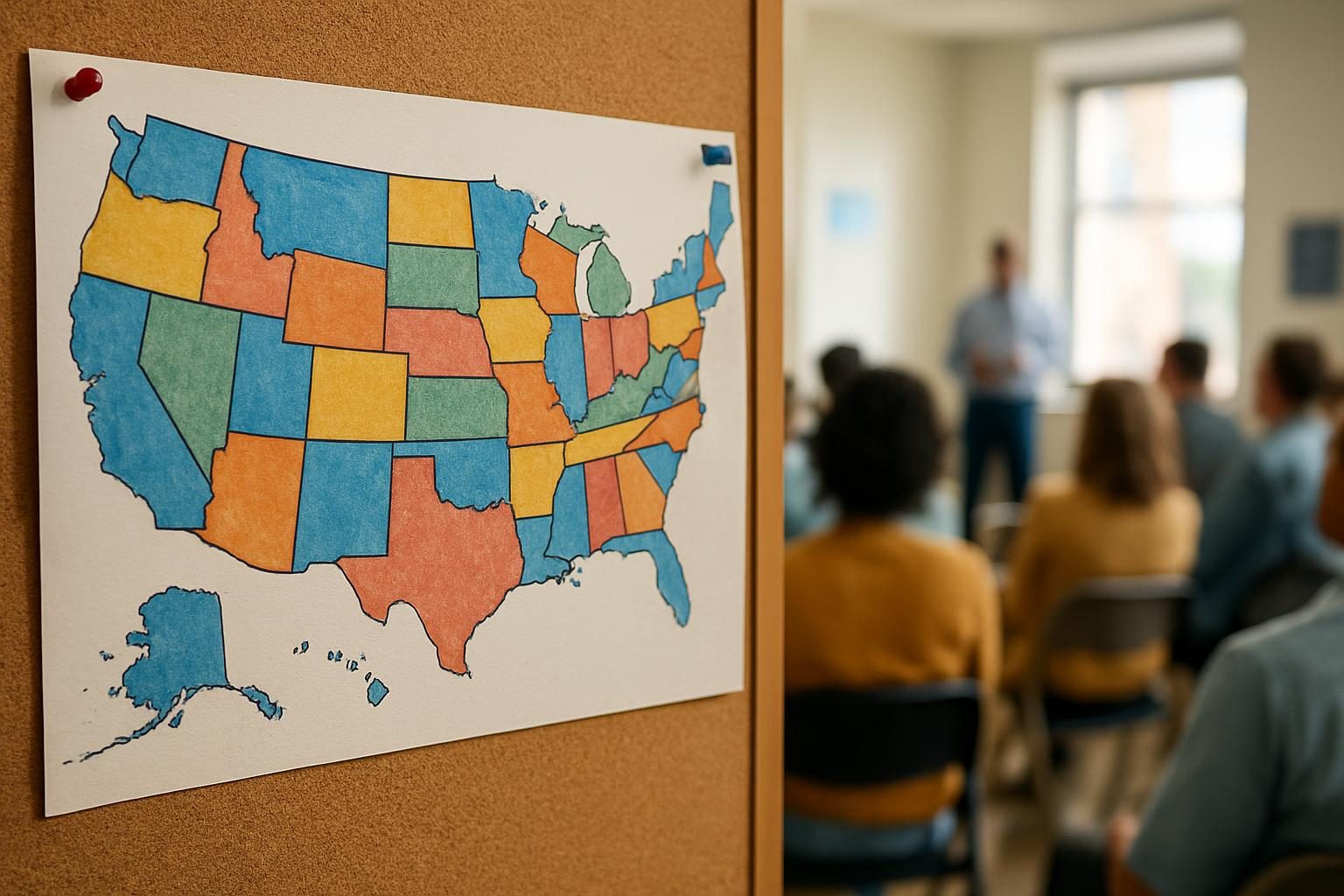
    Irregular district map pinned to a corkboard at a community meeting

    Why gerrymandering matters for 2028 and beyond

    The presidency is decided by the Electoral College, and electors are awarded by state, so district lines do not directly pick the president. If you want the basics on that system, see our guide to how the Electoral College works and why 270 matters. The 2028 contest still runs on the map from the 2020 census apportionment.

    But maps shape almost everything else around a president. They help decide who controls the House, who controls statehouses, and who writes the rules for elections in each state. A president with a hostile Congress built on lopsided maps will struggle to deliver on any promise.

    That is why the 2026 midterms matter so much. The races on November 3, 2026 cover all 435 House seats, about a third of the Senate and 36 governorships, and they set the stage for the next round of map fights. Our 2026 midterm elections guide breaks down what is at stake for 2028.

    When maps pick the winners, voters stop being the deciders and start being the audience.

    Why this is a pro-democracy issue

    Here is our view, clearly labeled as opinion: elections should be competitive enough that politicians have to earn your vote. Safe seats do the opposite. When a district is drawn so that one party is nearly guaranteed to win, the real contest moves to a low-turnout primary, and the general election becomes a formality.

    That tends to reward the most extreme candidates and punish compromise. It also makes people feel like voting does not matter, which is corrosive for any democracy.

    We also believe the fix should apply to everyone. Both parties have drawn aggressive maps when they held the pen. A principled reform movement says no one should get to pick their voters, and that includes Democrats. Standing for fair maps even when it costs us a seat is how we earn the credibility to demand it from others.

    The strongest arguments on the other side

    Fair debate means stating the opposing case at its best. Here are the serious arguments critics of reform make.

    Redistricting is a legislative job

    The Constitution gives states, and by extension their elected legislatures, significant authority over how elections are run. Opponents of independent commissions argue that handing map-drawing to unelected panels removes accountability. If voters dislike a map, they can vote out the legislators who drew it.

    Unilateral disarmament is risky

    Some argue that if one party adopts fair maps while the other keeps drawing partisan ones, the fair-play side simply loses seats. That is a real concern, and it is why many reformers push for national standards or action across multiple states at once rather than going it alone.

    “Fair” is hard to define

    Even good-faith mapmakers have to balance competing goals: keeping communities together, following county lines, honoring legal requirements and avoiding odd shapes. Reasonable people disagree on which goal comes first, and a neutral-looking map can still favor one party because of where people happen to live.

    These are not silly objections. Our response is that independent commissions, clear public criteria and transparent data are better than leaving the pen in the hands of those who benefit. Accountability that only arrives after a decade-long map is locked in is not much accountability at all.

    A fair map does not guarantee a win for anyone. It just guarantees that voters get a real say.

    Diverse line of voters waiting outside a polling place

    What a fairer system could look like

    Reform does not require a single magic bullet. Advocates point to a handful of practical steps:

    1. Independent or bipartisan commissions that draw maps instead of the politicians who run on them.
    2. Clear, public criteria such as compactness, keeping communities together and respecting existing boundaries.
    3. Open meetings and public data so anyone can see how and why lines were drawn.
    4. Legal protections for voters, including the ones tied to civil rights law. Our upcoming explainer on the Voting Rights Act and why it still matters covers that history.
    5. Standards that apply across states so one side does not carry the burden alone.

    States differ widely in how they draw maps today. Some use commissions, others leave it to legislatures, and the rules continue to change through legislation and court cases. We are not going to guess at current details here; check your state election office for how your own state does it, and we will update this page as developments are confirmed.

    For a broader look at the party’s stance on democracy and elections, see our guide to Democratic Party platform issues, or browse everything in Issues & Ideas.

    How maps connect to the big 2028 picture

    It is tempting to treat redistricting as a nerdy side issue. It is actually upstream of nearly every policy fight. Health care, wages, climate and student debt all depend on who holds a majority. If you care about the Democratic health care plan or the Democratic economic agenda, the maps that decide Congress belong on your radar.

    The same goes for the presidential race. No Major Democrat has formally declared a 2028 run as of our latest check, but the field of potential candidates is already being watched closely. Follow our 2028 Democratic candidates tracker and the 2028 presidential election hub for what is confirmed.

    And remember that the voting itself starts early. The DNC approved its early window on August 15, 2026, beginning with South Carolina on January 22, 2028. Our 2028 Democratic primary calendar keeps every date in one place.

    Volunteers with clipboards canvassing neighbors on a sunny sidewalk

    What you can do right now

    You cannot redraw a map from your couch, but you can do a lot. Gerrymandering thrives when people tune out. It weakens when people show up, ask questions and pay attention to who is drawing the lines.

    Take action: Check your registration today at vote.gov (find your state at https://vote.gov/register/STATE-NAME) or with your state election office, then text one friend and ask if they have checked theirs. Confirm deadlines and rules yourself; they vary by state.

    Beyond that, get local. Redistricting hearings, commission meetings and legislative sessions are often sparsely attended, which means your voice carries real weight. Learn how to get involved in politics locally, or find out how to volunteer for a campaign that supports fair maps and strong turnout.

    If you have never registered, start with our simple guide to registering in every state. And if you are curious how all of this fits into the long game, our look at the history of wave elections shows what happens when voters turn out in force.

    The good news is that this problem has a solution, and the solution is people. Fair maps are built by engaged voters who refuse to be treated like an afterthought. That could be you, starting this week.

    Key takeaways

    • Gerrymandering is drawing district lines to favor a party or group, often by packing or cracking voters.
    • It affects Congress and statehouses most directly, and that shapes what any president can accomplish.
    • Critics of reform raise real concerns about accountability, unilateral disarmament and defining “fair.”
    • We favor independent, transparent map-drawing that applies to both parties.
    • Rules for voting and map-drawing vary by state; confirm yours at vote.gov or your state election office.
    • Registering, voting and showing up locally are the most direct ways to fight back.

    Last updated October 2026. Dates and candidate news change fast; we update this page as things are announced.

    Frequently asked questions

    What is gerrymandering in simple terms?

    Gerrymandering is drawing electoral district lines to give one party or group an advantage. Mapmakers pick which voters go in which district, so they can influence outcomes before anyone casts a ballot.

    What is the difference between packing and cracking?

    Packing crams as many of the opposing party’s voters as possible into a few districts so they win those by huge margins. Cracking splits the opposing party’s voters across many districts so they fall short everywhere. Both waste their votes.

    Does gerrymandering affect the presidential election?

    Not directly, because presidential electors are awarded by state, not by congressional district (with limited exceptions in a couple of states). But maps shape who controls Congress and state legislatures, which affects election rules and the policies a president can pass.

    Who draws district maps?

    It depends on the state. In many states the legislature draws the maps, sometimes with a governor’s signature or veto. Other states use independent or bipartisan commissions. Check your state election office for how your state does it.

    How can I find out if my district is gerrymandered?

    Start by looking up your state’s process and current maps through your state election office. Then confirm your registration and polling information at vote.gov so you are ready to vote under whatever map applies to you.

  • JD Vance 2028: What His Likely Run Means for Democrats

    JD Vance 2028: What His Likely Run Means for Democrats

    He is the sitting Vice President, he is widely reported as a potential candidate, and he has not said a word about 2028 that makes it official. So what does a possible JD Vance 2028 run mean for Democrats? It means we have time to prepare, and every bit of that time counts.

    Quick answer: JD Vance has not declared a 2028 run. As of October 2026, no major Republican has formally entered the race. He is widely reported as a potential candidate, so Democrats should treat the 2026 midterms, voter registration and organizing as the real starting line.

    Where things stand: no one has declared yet

    Let’s start with what we know, because accuracy matters. As of October 5, 2026, no major Democrat or Republican has formally declared a 2028 presidential run. That includes Vice President Vance.

    Plenty of names are floated, though. Among Republicans, the widely reported potential candidates are Vance, Secretary of State Marco Rubio, Ron DeSantis, Ted Cruz and Brian Kemp. “Potential” is the key word. None has announced.

    We will not guess at timing, polling or announcement dates. If something changes, we will update this page. Until then, the smartest move is to get ready for any matchup.

    Potential Republican candidate Current role Status
    JD Vance Vice President Potential, not declared
    Marco Rubio Secretary of State Potential, not declared
    Ron DeSantis Widely reported potential candidate Not declared
    Ted Cruz Widely reported potential candidate Not declared
    Brian Kemp Widely reported potential candidate Not declared

    Why Vance is widely seen as a potential contender

    The simple reason is the job. Vice presidents often draw attention as possible successors, and Vance holds the office. That gives him a national platform and a front-row seat to the administration’s record.

    The Constitution’s 22nd Amendment limits a president to two elected terms. That shapes how people talk about the next race. For the full picture, see our explainer on whether Trump can run for a third term.

    We want to be careful here. Being talked about is not the same as running. Plenty of widely discussed names never launch campaigns, and the Republican calendar and field are still taking shape.

    Being talked about is not the same as running, and the smartest campaigns prepare for every opponent.

    Diverse voters lining up at a polling place entrance on a sunny morning

    What a Vance run could mean for Democrats

    Here is our view, clearly labeled as opinion: a Vance candidacy would likely make the next election a referendum on the current administration’s record. When a sitting vice president runs, the party in power owns its results, good or bad.

    That is a big opportunity for Democrats who can explain, in plain language, what their plan will do for people’s lives. Costs, health care, jobs and rights are the kitchen-table issues that decide elections. Our guide to where Democrats stand on the issues is a good place to start.

    Three things Democrats can do right now

    1. Win the midterms first. The 2026 elections on November 3 decide all 435 House seats, about a third of the Senate and 36 governorships. Read what is at stake in the 2026 midterms.
    2. Know the calendar. The early-state order is set, and it will shape who gets a head start on the Democratic side.
    3. Build the volunteer base now. Campaigns are won by neighbors talking to neighbors long before any ad airs.

    The Republican side: Iowa first, calendar not final

    On the GOP side, Republicans are expected to keep Iowa first on their 2028 calendar, according to RNC reports from September 2026. That calendar is not final, so treat it as a likely outline rather than a done deal.

    This matters because the first contests often shape momentum. An early win can bring donors, attention and endorsements. We will track changes and update this page as they are announced.

    The Democratic calendar is already set

    The Democratic early window is locked in. The DNC approved it on August 15, 2026, at its summer meeting in Austin, Texas. Iowa is not in the Democratic early window.

    Date State
    January 22, 2028 South Carolina
    February 1, 2028 Nevada
    February 8, 2028 New Hampshire
    February 15, 2028 New Mexico
    February 22, 2028 Michigan
    February 29, 2028 Virginia
    March 7, 2028 Super Tuesday

    One thing to watch: New Hampshire state law requires it to hold the first primary in the nation. That clashed with the DNC calendar in 2024, so watch for changes. For every date in one place, see our 2028 Democratic primary calendar.

    The race is won by voters who show up, and showing up starts with being registered.

    Volunteers making calls in a busy campaign office with a wall map

    Who might face a Republican nominee on our side?

    No Democrat has declared either. Widely reported potential candidates include Gavin Newsom, Josh Shapiro, JB Pritzker, Gretchen Whitmer, Andy Beshear, Pete Buttigieg, Kamala Harris, Alexandria Ocasio-Cortez, Cory Booker, Raphael Warnock, Ruben Gallego, Mark Kelly, Elissa Slotkin, Chris Van Hollen and Ro Khanna. Again, these are potential candidates only.

    Want to dig into individual names? We have profiles of Gavin Newsom, Josh Shapiro, JB Pritzker, Gretchen Whitmer, Andy Beshear, Pete Buttigieg, Kamala Harris and Alexandria Ocasio-Cortez.

    More profiles are on the way, including Cory Booker, Ruben Gallego, Mark Kelly and Elissa Slotkin. Our 2028 Democratic candidates tracker collects everything in one place.

    The map: where the election will be decided

    The general election is Tuesday, November 7, 2028. A candidate needs 270 of the 538 electoral votes to win, and 2028 uses the electoral map from the 2020 census apportionment. That map’s shape reflects how gerrymandering affects representation across the country.

    That means a handful of states will get most of the attention. Learn how it works in our guide to the Electoral College and why 270 matters, then explore the 2028 swing states and the broader electoral map.

    Whoever the nominees are, the road to 270 runs through communities where organizing, registration and turnout make the difference.

    A note on polls and predictions

    You will see early polls about a Vance matchup. Treat them with care. Fields are not set, no one has declared, and names tested in a poll may never run.

    We are not citing any numbers here because early surveys are a snapshot, not a forecast. If you want to read them wisely, our guide to how to read early primary polling explains what to look for.

    Hands dropping a ballot into a ballot box

    Your move: register, check, volunteer

    No matter who ends up on the ballot, the most powerful thing you can do is make sure you and the people you care about are ready to vote. Every state’s official rules, deadlines and online registration links are on vote.gov. North Dakota has no voter registration, and many states offer same-day registration, but the rules differ.

    We will never tell you a specific deadline here, because the right answer depends on where you live. Confirm yours on vote.gov or with your state election office. Our simple guide to registering in every state walks you through it.

    Take action: Visit vote.gov today and check that your registration is current, then text three friends or family members and ask them to do the same. Then find a local Democratic campaign or group and sign up for one volunteer shift before the November 3 midterms.

    For the big picture, our 2028 presidential election hub covers the dates, candidates and what comes next. You can also browse every profile in our Candidates category.

    Key takeaways

    • JD Vance has not declared a 2028 run. He is widely reported as a potential candidate, and so are Rubio, DeSantis, Cruz and Kemp.
    • No major Democrat has declared either, so the field is wide open.
    • The Democratic early calendar is set, starting with South Carolina on January 22, 2028. Republicans are expected to keep Iowa first, but that calendar is not final.
    • The general election is Tuesday, November 7, 2028, and a candidate needs 270 of 538 electoral votes.
    • The 2026 midterms on November 3 come first, and they matter for everything that follows.
    • Check your registration on vote.gov and confirm deadlines with your state election office.

    Last updated October 2026. Dates and candidate news change fast; we update this page as things are announced.

    Frequently asked questions

    Has JD Vance announced a 2028 presidential run?

    No. As of October 2026, no major Republican has formally declared a 2028 presidential run, and that includes Vice President JD Vance. He is widely reported as a potential candidate. We will update this page if that changes.

    Who else might run for the Republican nomination in 2028?

    Widely reported potential Republican candidates include Marco Rubio, Ron DeSantis, Ted Cruz and Brian Kemp, along with Vance. None has declared. The GOP calendar is not final, though Republicans are expected to keep Iowa first, according to RNC reports from September 2026.

    Is JD Vance old enough and eligible to run for president?

    The Constitution requires a president to be a natural-born citizen, at least 35 years old, and a US resident for 14 years. Whether any individual meets those requirements is a question of public record, and nothing in this article suggests Vance faces an eligibility problem.

    When is the 2028 general election?

    The general election is Tuesday, November 7, 2028. Electors meet on December 18, 2028, and the inauguration is January 20, 2029. A candidate needs 270 of 538 electoral votes to win.

    How can I get ready to vote in 2028?

    Start by checking your registration at vote.gov, where every state’s official rules, deadlines and online registration links are listed. Rules differ by state, so confirm details on vote.gov or with your state election office. Then volunteer, talk to friends and vote in the 2026 midterms on November 3.

  • 2028 Republican Candidates: Who Might Run

    2028 Republican Candidates: Who Might Run

    The next presidential race is still more than two years away, but the jockeying has already started. No Republican has formally entered the 2028 field yet, though a handful of familiar names keep surfacing in the news. Here is a plain-language look at the 2028 Republican candidates who might run, what we know, and what it means for you.

    Quick answer: As of our October 2026 check, no major Republican has formally declared a 2028 presidential run. The most widely reported potential candidates are Vice President JD Vance, Secretary of State Marco Rubio, Ron DeSantis, Ted Cruz and Brian Kemp. Republicans are expected to keep Iowa first on their calendar, but that calendar is not final.

    Where the Republican field stands right now

    Let’s start with what is solid. As of October 5, 2026, no major Republican has formally declared a run for president in 2028. The same is true on the Democratic side, which we track in our 2028 Democratic candidates tracker.

    That means every name below is a potential candidate, not an announced one. These are people widely reported as possibilities. Being on a list is not the same as running, and plenty of people on early lists never launch a campaign.

    We will update this page as announcements happen. For the big picture of the whole race, start with our 2028 presidential election guide.

    The potential 2028 Republican candidates

    Here are the five Republicans most widely reported as possible 2028 contenders. The order is not a ranking, and none has declared.

    Name Current role Status
    JD Vance Vice President Potential, not declared
    Marco Rubio Secretary of State Potential, not declared
    Ron DeSantis Florida governor Potential, not declared
    Ted Cruz Texas senator Potential, not declared
    Brian Kemp Georgia governor Potential, not declared

    JD Vance

    As the sitting Vice President, JD Vance holds the office that has launched many modern presidential campaigns. He is widely reported as a potential 2028 candidate, but he has not announced anything. We are working on a deeper look at JD Vance’s likely run and what it means for Democrats.

    Marco Rubio

    Marco Rubio serves as Secretary of State, a high-profile national role with a lot of public exposure. He is reported as a possible contender. Like everyone else here, he has not declared.

    Ron DeSantis

    Ron DeSantis is the governor of Florida and a national Republican figure. He is widely mentioned as a potential candidate for 2028. No announcement has been made.

    Ted Cruz

    Ted Cruz is a US senator from Texas and appears on lists of possible contenders. He has not declared a 2028 campaign.

    Brian Kemp

    Brian Kemp is the governor of Georgia, a state that matters a great deal in presidential politics. He is reported as a potential candidate, but nothing is official. For more on why Georgia and other states loom so large, see our 2028 swing states guide.

    A name on a list is not a campaign, and early lists are only a starting point.

    Volunteers with clipboards canvassing neighbors on a sunny sidewalk

    The Trump question: can he run again?

    People ask this constantly, so let’s be direct about the rules. The 22nd Amendment limits a president to two elected terms. That is the constitutional text, and it frames how analysts think about the 2028 field.

    We cover the amendment and the surrounding debate in our explainer, Can Trump Run for a Third Term? The 22nd Amendment. Read it if you want the details rather than the rumors.

    The basic eligibility rules apply to everyone. A president must be a natural-born citizen, at least 35 years old, and a US resident for 14 years. Curious about the age extremes? We are preparing a piece on the youngest and oldest presidential candidates in history.

    How the Republican calendar compares

    The parties do not run identical primary calendars, and 2028 is shaping up differently on each side.

    Republicans: Iowa expected first

    Republicans are expected to keep Iowa first on their 2028 calendar, according to RNC reports from September 2026. The key word is expected. The GOP calendar is not final, and we will update this page when it is. (State-level map changes through gerrymandering can also affect primary delegate allocation.)

    Democrats: a new early window

    Democrats took a different path. The DNC approved its 2028 early-window calendar on August 15, 2026, at its summer meeting in Austin, Texas. Iowa is not in the Democratic early window.

    1. South Carolina: January 22, 2028
    2. Nevada: February 1, 2028
    3. New Hampshire: February 8, 2028
    4. New Mexico: February 15, 2028
    5. Michigan: February 22, 2028
    6. Virginia: February 29, 2028

    Super Tuesday follows on March 7, 2028. New Hampshire state law requires it to hold the first primary in the nation, which clashed with the DNC calendar in 2024, so watch for changes. Our 2028 Democratic primary calendar keeps every date in one place, and how presidential primaries work explains the process from scratch.

    Every primary, early or late, is decided by the people who show up and the volunteers who got them there.

    Line of diverse voters seen from behind outside a polling place

    Why this matters for Democrats and progressives

    Our view: Understanding the other side’s field is smart organizing. The more we know about who might run and what they have done in office, the better we can talk to neighbors about records and policies. That means debating ideas and results, not insulting anyone.

    It also helps to know where we stand. Our guide to Democratic Party platform issues lays out the priorities we are fighting for. And the road to 2028 runs straight through this fall.

    The midterms come first

    Before any of these candidates can take the stage, there is Election Day on Tuesday, November 3, 2026. All 435 House seats, about a third of the Senate and 36 governorships are on the ballot. Those results will shape the political landscape heading into 2028. See 2026 midterm elections: what’s at stake for 2028 for the full picture.

    History shows what a motivated electorate can do. Read about it in our explainer on blue wave meaning and the history of wave elections.

    The map these candidates will have to win

    Whoever ends up as the Republican nominee needs 270 of 538 electoral votes, just like the Democratic nominee. The 2028 election uses the electoral map from the 2020 census apportionment. If you want to understand why a few states get so much attention, read how the Electoral College works and why 270 matters.

    Then dig into the 2028 electoral map and battleground states. Georgia, where one potential Republican candidate is governor, is among the states worth watching.
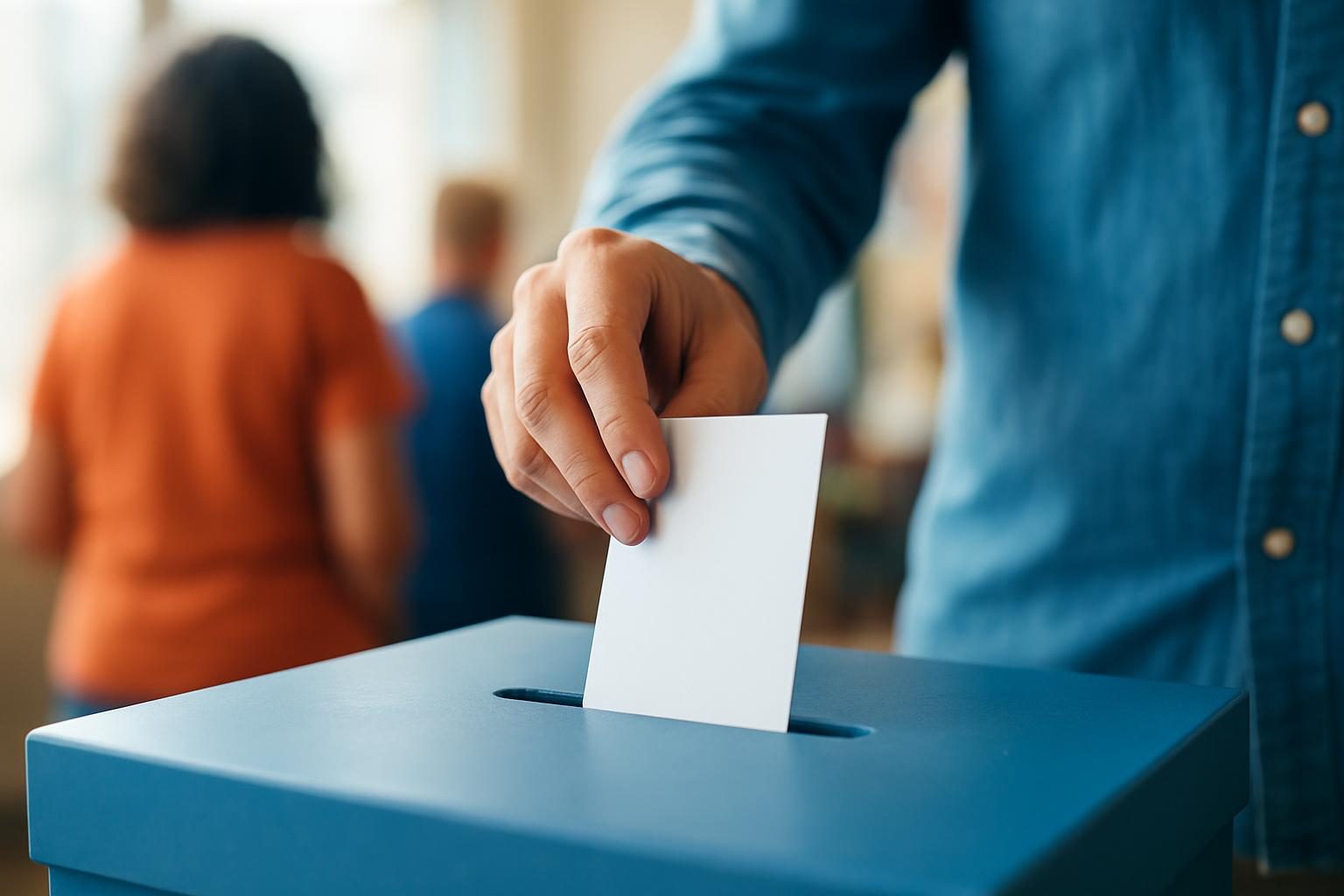
    Key dates to put on your calendar

    • General election: Tuesday, November 7, 2028
    • Electors meet: December 18, 2028
    • Inauguration: January 20, 2029

    For more, see when is the 2028 presidential election and our 2028 election key dates calendar.

    College student registering to vote on a laptop in a library

    What you can do right now

    You do not have to wait for a candidate to declare to make a difference. Registration, volunteering and conversations with friends all matter this fall and every fall after.

    Take action: Check your voter registration today at vote.gov, where every state’s official rules, deadlines and online registration links live. Then text one friend and ask if they are registered too. Not sure where to start? Our guide to how to register to vote in every state walks you through it.

    Rules and deadlines differ by state, and some states offer same-day registration with different requirements. Always confirm the details on vote.gov or with your state election office. North Dakota is unusual because it has no voter registration at all.

    Want to go further? Knock doors, make calls or join a local campaign for November 3. Every race on the ballot this year builds the organizing muscle we need in 2028.

    Key takeaways

    • As of our October 2026 check, no major Republican has formally declared a 2028 presidential run.
    • The most widely reported potential candidates are JD Vance, Marco Rubio, Ron DeSantis, Ted Cruz and Brian Kemp.
    • Republicans are expected to keep Iowa first, but the GOP calendar is not final.
    • The 22nd Amendment limits a president to two elected terms.
    • The general election is Tuesday, November 7, 2028, and the midterms on November 3, 2026 come first.
    • Check your registration at vote.gov and volunteer now.

    Last updated October 2026. Dates and candidate news change fast; we update this page as things are announced.

    Want to see how the Democratic side looks? Browse everything in our candidates category.

    Frequently asked questions

    Who are the 2028 Republican candidates?

    As of our October 2026 check, no major Republican has formally declared a 2028 presidential run. The most widely reported potential candidates are JD Vance, Marco Rubio, Ron DeSantis, Ted Cruz and Brian Kemp. On the Democratic side, Cory Booker is among those mentioned as a potential contender. We will update this page as announcements happen.

    Has JD Vance announced a 2028 run?

    No. JD Vance is the sitting Vice President and is widely reported as a potential 2028 candidate, but he has not formally declared. Until someone files and announces, every name on the list is only a possibility.

    Can Donald Trump run again in 2028?

    The 22nd Amendment limits a president to two elected terms. Our separate explainer walks through the amendment and the questions people ask about it, so you can see exactly what the text says and does not say.

    Will Iowa go first for Republicans in 2028?

    Republicans are expected to keep Iowa first on their 2028 calendar, according to RNC reports from September 2026. The GOP calendar is not final, so treat that as expected rather than settled.

    When is the 2028 general election?

    The general election is Tuesday, November 7, 2028. The Electoral College meets December 18, 2028, and the next president is inaugurated January 20, 2029. To register or check your status, use vote.gov or your state election office.

  • 2018 Blue Wave: What Happened and What Democrats Learned

    2018 Blue Wave: What Happened and What Democrats Learned

    In November 2018, millions of Americans who had never knocked on a door or made a phone call for a candidate did exactly that, and the results rippled through every level of government. The 2018 blue wave is the best recent proof that ordinary voters, working together, can change who holds power in Washington and in statehouses. Here is what happened, what Democrats took from it, and why it matters as 2028 gets closer.

    Quick answer: The 2018 blue wave was the Democratic surge in the midterm elections of November 2018. Democrats won control of the U.S. House, gained governorships and flipped state legislative seats, while Republicans kept the Senate. The big lessons: turnout, local organizing and strong candidates in every kind of district matter, and midterms can reshape a presidency’s second half.

    What was the 2018 blue wave?

    A “wave election” is one where one party’s gains are broad and deep, reaching well beyond a few targeted contests. The 2018 midterms fit that description for Democrats. The party took back the House of Representatives, which gave it the power to set committee agendas, run investigations and block legislation.

    The wave was not only about Congress. Democrats also picked up governorships and made gains in state legislatures across the country, which matters because states run elections, draw many district lines and make decisions that touch daily life. If you want the longer history of wave elections and how the term is used, see our explainer on the blue wave meaning and the history of wave elections.

    Just as important, it was a wave of people. Record numbers of first-time candidates, many of them women, veterans and community leaders, stepped up to run. Volunteers filled campaign offices in places where the party had not invested in years.

    How did it happen?

    No single event explains 2018. A few ingredients came together, and each one is a lesson that still applies.

    Energized, organized voters

    Midterm electorates are usually smaller and older than presidential electorates. In 2018, many Democratic-leaning voters decided that staying home was not an option. They showed up at town halls, joined local groups, registered friends and committed to voting.

    Candidates in places Democrats had written off

    One of the quiet stories of 2018 is how many contested seats there were. Democrats competed in suburban districts, in conservative-leaning areas and in places where the party had often left the seat uncontested. Showing up is a strategy, and it paid off in House races across the map.

    A message people could repeat at the kitchen table

    Candidates talked about costs, health care and whether government works for ordinary families. Those are issues voters feel in their own budgets. You can see how Democrats frame these debates today in our guide to Democratic Party platform issues.

    Diverse voters lining up at a polling place entrance

    What did the wave change?

    Winning the House changed what Democrats could do from Congress, even without the White House or the Senate. A House majority controls the committee gavels, the oversight agenda and what comes to the floor for a vote. It also acts as a check on the other branches of government.

    The wave also changed who is in the room. A new generation of lawmakers arrived in Washington, and some of them are now among the names regularly mentioned in the conversation about 2028. We do not treat any of them as declared candidates; no major Democrat has formally declared a 2028 presidential run as of this writing. You can follow who is being discussed in our 2028 Democratic candidates tracker.

    Waves are not weather. They are built by neighbors who decide to knock on one more door.

    What did Democrats not win?

    Honesty is part of learning from 2018. Democrats won the House but did not win the Senate. Republicans kept their majority there, in part because the Senate map that year was difficult for Democrats, with many Democratic seats up in states that lean the other way.

    That is a useful reminder: a wave is strong, but it is shaped by the map. Which seats are up, how districts are drawn and who turns out all set the limits. The same logic applies to the presidency, where the path runs through the Electoral College. Our explainer on how the Electoral College works covers why 270 electoral votes is the number that matters.

    Lessons Democrats took from 2018

    Here is a quick look at the lessons organizers and strategists commonly draw from the 2018 cycle, and why each one still matters. This table is our summary, not a ranking or a poll.

    Lesson What it looks like in practice
    Compete everywhere Recruit candidates for every seat, including districts that look out of reach on paper.
    Organize early and locally Build volunteer networks long before Election Day, not in the final weeks.
    Turn enthusiasm into registration Help friends and neighbors confirm they are registered and have a plan to vote.
    Talk about everyday costs Lead with issues like health care and household budgets that people feel directly.
    Respect the map Understand that Senate seats, district lines and state rules shape what a wave can win.
    Volunteers making calls inside a busy campaign office

    Why 2018 matters for 2026 and 2028

    We are now days away from the next midterms. The 2026 midterm elections are Tuesday, November 3, 2026, with all 435 House seats, about a third of the Senate and 36 governors on the ballot. For a closer look at what is at stake, read our guide to the 2026 midterm elections and what they mean for 2028.

    Our view: the biggest lesson of 2018 is that nothing is automatic. A strong year for one party is the product of turnout, candidates and organizing, and a weak one can be reversed by the same ingredients. No one can promise a wave in 2026. But every voter who registers, votes and brings a friend along changes the math.

    After the midterms, the focus shifts to the presidential race. The general election is Tuesday, November 7, 2028, with inauguration on January 20, 2029. Before that comes the primary season. The Democratic National Committee approved its early-window calendar on August 15, 2026: South Carolina on January 22, 2028; Nevada on February 1; New Hampshire on February 8; New Mexico on February 15; Michigan on February 22; and Virginia on February 29, with Super Tuesday on March 7, 2028. See every date in our 2028 Democratic primary calendar.

    A wave starts with one person confirming their registration and deciding to show up.

    How to be part of the next wave

    You do not need to be a candidate or a political expert. The people who powered 2018 were mostly ordinary voters who decided to do one more thing than they had done before.

    1. Check your registration. Every state’s official rules, deadlines and online registration links are on vote.gov. Do not rely on a general rule: confirm your own state’s details there or with your state election office.
    2. Make a voting plan. Decide how you will vote, when and where, and check your state’s options.
    3. Volunteer. Local campaigns and community groups need people for phone calls, door knocks and ride-to-the-polls help.
    4. Bring someone with you. Ask a friend, family member or coworker whether they are registered and ready.

    If you are new to the process, our simple guide to registering to vote in every state walks you through it.

    Take action: Take two minutes today to confirm your voter registration at vote.gov, then text one friend and ask whether they have done the same. That small chain is how waves are built.

    A hand dropping a ballot into a ballot box

    Looking ahead to 2028

    The presidential race is still taking shape. No major Democrat has formally declared a 2028 run as of this writing, and the Republican side is the same, with no declared candidates. Potential Democratic names that are widely reported include Gavin Newsom, Josh Shapiro, JB Pritzker, Gretchen Whitmer, Andy Beshear, Pete Buttigieg, Kamala Harris and others, but “potential” is exactly what they are. Anyone considering a run must meet presidential eligibility requirements. We will update our tracker as anything is announced.

    There is plenty else to follow. The 2028 Democratic National Convention is set for August 7-10, 2028, with Boston, Denver and Philadelphia as the finalist host cities; the final pick is expected later in 2026, and you can follow it in our convention host city guide. For the full picture, start at our 2028 presidential election hub. And if you are curious how the nominating process works, including the debate over what superdelegates are, we are building guides to explain it plainly.

    The lesson of 2018 is simple and hopeful: when people organize, show up and vote, outcomes change. The next chapter is yours to write.

    Key takeaways

    • The 2018 blue wave gave Democrats control of the House, plus gains in governorships and state legislatures.

    • Republicans kept the Senate, showing that the map shapes how far any wave can go.
    • Strong turnout, local organizing and candidates in every kind of district were central to the results.

    • The 2026 midterms are Tuesday, November 3, 2026, and no one can promise a wave; turnout decides it.

    • No major Democrat has formally declared a 2028 run; confirm your voter registration at vote.gov.

    Last updated October 2026. Dates and candidate news change fast; we update this page as things are announced.

    Frequently asked questions

    What was the 2018 blue wave?

    The 2018 blue wave was the Democratic surge in the November 2018 midterm elections, when Democrats won control of the U.S. House of Representatives and made gains in governors’ races and state legislatures. It is widely treated as one of the strongest midterm showings for Democrats in decades.

    Did Democrats win the Senate in 2018?

    No. Democrats flipped the House, but Republicans kept control of the Senate. The Senate map that year included many Democratic seats in states that were difficult terrain, which limited the party’s ceiling even in a strong year.

    Why does the 2018 blue wave still matter for 2028?

    It is the clearest recent example of how a midterm can reshape national politics before a presidential race. The lessons about turnout, candidate recruitment and organizing carry into 2026, 2028 and beyond. When 2028 arrives, staying informed about how to watch the presidential debates will help you engage with the candidates and issues.

    Is there a blue wave in 2026?

    Nobody can promise one. The 2026 midterms are Tuesday, November 3, 2026, with all 435 House seats, about a third of the Senate and 36 governors on the ballot. What happens depends on who turns out, and that includes you.

    How do I make sure I can vote in the next election?

    Check your registration status and deadlines on vote.gov or with your state election office. Rules differ by state, so confirm your own state’s details instead of relying on a general rule of thumb.

  • Early Voting: How It Works and How to Find Your Options

    Early Voting: How It Works and How to Find Your Options

    Imagine skipping the Election Day rush entirely. No juggling work shifts, no scrambling for childcare, no crossing your fingers about the weather. For millions of Americans, early voting makes that possible, and it is one of the most powerful tools we have to make sure every voice gets counted.

    With the midterm elections on Tuesday, November 3, 2026, now is the perfect time to learn how it works where you live. Here is a clear, practical guide to what early voting is, how to find your options, and how to get ready.

    Quick answer: Early voting lets you cast your ballot in person before Election Day, at official sites set up by your state or county. Availability, dates, hours and locations vary a lot by state. To find yours, go to vote.gov, pick your state, and follow the links to your official election office.

    What early voting actually is

    Early voting is a way to vote in person during a set period before Election Day. You go to an official location, check in, and fill out your ballot much like you would on Election Day. Your ballot is then secured and counted according to your state’s procedures.

    It is easy to mix up early voting with other options, so here is a simple breakdown. Each one has its own rules, and your state decides which ones you can use.

    Option Where you vote When Good to know
    Early in-person voting Official early voting site Before Election Day, during a window set by your state Dates, hours and sites vary by state and often by county
    Voting by mail (absentee) At home; return by mail or drop-off Ballot arrives ahead of Election Day Rules on who qualifies and how to return it vary. See our guide to voting by mail
    Election Day voting Your assigned polling place Tuesday, November 3, 2026 Usually tied to your address

    One thing to keep straight: the terms people use differ from place to place. Some states call it “early voting,” others use different names, and a few blend early in-person and mail options together. Do not worry about the label. Focus on what your state and county offer.

    Why early voting matters for progressives

    Here is our view, and we are happy to say so plainly: more access means a stronger democracy. Early voting gives people with unpredictable schedules, long commutes, caregiving duties or hourly jobs more than one chance to participate. When voting is easier, more people can show up.

    It also helps campaigns and volunteers. When voters cast ballots early, organizers can focus their phone calls and door knocks on neighbors who have not voted yet. That makes every volunteer hour count for more.

    When voting fits real life, more neighbors can take part, and democracy gets stronger.

    Volunteer chatting with a neighbor about voting on a sunny sidewalk

    How to find your early voting options

    The single most important thing to know: the rules are set by your state, and sometimes your county. We will not guess at your local dates or locations, because getting that wrong could cost you your vote. Instead, here is a reliable way to find them.

    1. Start at vote.gov. Visit vote.gov and choose your state. Each state page links to official information, including registration details. For example, you can find Ohio’s at vote.gov/register/ohio and New York’s at vote.gov/register/new-york.
    2. Go to your state or county election office. These official sites list whether early voting is offered, the dates, the hours and the exact addresses.
    3. Confirm you are registered. Use our guide to checking your voter registration status to make sure you are set.
    4. Check ID rules. Requirements differ by state. Our voter ID guide is a good starting point, but always confirm with your state election office.
    5. Pick your plan. Choose a day and time, and put it on your calendar. Bring a friend if you can.

    Looking for a nearby site? We are working on a dedicated guide on how to find your polling place, and we will link it here once it is live.

    Do not rely on social media or word of mouth

    Locations and hours can change, and misinformation spreads fast. Only trust official sources: vote.gov, your state election office, or your county or city election website. If something looks off, double-check it there.

    Are you registered? Check first

    In most states, you need to be registered before you can vote, early or otherwise. North Dakota is the exception, since it has no voter registration. Some states offer same-day registration, which may be available at certain voting sites, but the rules are not the same everywhere. If you need help registering, we have a guide to voter registration in Arizona.

    Do not assume. Registration deadlines are set by each state, so confirm yours on vote.gov or with your state election office. For a full walkthrough, see our simple guide to registering in every state.

    Many states let you register online. We are building a guide on whether you can register to vote online, and one for people who recently need to update their registration after moving. If you live in Michigan, our Michigan voter registration guide can walk you through the process.

    A ballot you never cast is a voice we never hear. Check your registration today, not tomorrow.

    Hands placing a ballot envelope into a secure drop box

    What to bring and what to expect

    Showing up prepared makes the process quick and stress-free. Requirements differ by state, so use this as a general checklist and confirm the details locally.

    • Any required ID. Some states require it, some do not, and the types accepted differ.
    • Your registration details. Know the name and address you registered under.
    • A sample ballot, if available. Many election offices publish one online so you can read the choices ahead of time.
    • Your notes. Bring your list of candidates and ballot measures. Most places allow this, but ask if you are unsure.
    • A little patience. Lines can vary by time of day. Early in the voting period or mid-day on weekdays can be quieter, but there is no guarantee.

    When you arrive, you will check in with a poll worker, get your ballot, mark your choices in private, and submit it as directed. If you have a question or run into a problem, ask a poll worker right away. They are there to help.

    If you are a student or you have moved

    Where you register and vote can depend on your address, which matters for students and anyone who has moved recently. We are putting together a college students voting guide to walk through the home-versus-school question. In the meantime, check your state’s rules at vote.gov.

    Early voting, mail voting or Election Day?

    There is no single best choice. It depends on your state, your schedule and what makes you feel confident. Here is a quick way to think it through.

    • Choose early in-person voting if you like the experience of voting at a site but want flexibility on timing.
    • Choose voting by mail if you prefer to take your time with the ballot at home. Check the rules in our mail voting guide.
    • Choose Election Day if that fits your life best. Just make a plan so nothing gets in the way.

    Whichever you pick, the goal is the same: make your plan early, confirm the details with an official source, and follow through.

    College student checking voting information on a laptop in a library

    Why this matters beyond November

    The 2026 midterms decide all 435 House seats, about a third of the Senate and 36 governorships. Those results shape the political landscape heading into the next presidential race. For more on what is on the line, read our look at the 2026 midterm elections and what is at stake for 2028.

    Looking further ahead, the 2028 general election is on Tuesday, November 7, 2028. Primaries come first, and the Democratic early window is already taking shape. Early voting habits you build now will carry into those contests. You can follow the full schedule in our 2028 Democratic primary calendar and our hub on the 2028 presidential election.

    Primary voting rules, including early options, are set state by state and can differ from the general election. We will keep updating our coverage as states finalize their plans.

    Take action: Today, visit vote.gov, find your state, and confirm your registration and early voting options. Then text one friend or family member and ask them to do the same. Two minutes, double the impact.

    Get involved beyond your own ballot

    Voting is the foundation, but it is not the whole story. Early voting periods are some of the busiest and most rewarding times to volunteer. Here are a few ways to help your community participate.

    • Remind your people. A friendly nudge from someone you know is more effective than almost anything else.
    • Offer a ride or company. Going together makes it easier and more fun.
    • Volunteer with a campaign or local group. Phone banks, canvassing and voter outreach all need hands.
    • Share official info only. Point friends to vote.gov and their local election office, not to rumors.

    Want to see where the Democratic field is heading? Our 2028 Democratic candidates tracker covers who might run. No major Democrat has formally declared a presidential run yet, and we will update as that changes. For the issues driving the conversation, see where Democrats stand on the platform issues.

    You can also browse everything in our Voting & Registration section.

    Key takeaways

    • Early voting lets you cast a ballot in person before Election Day, but availability and rules vary by state.
    • Start at vote.gov and your state or county election office for official dates, hours and locations.
    • Confirm you are registered first. North Dakota has no registration; same-day registration rules differ by state.
    • Check your state’s ID rules before you go, and never rely on rumors or social media for logistics.
    • The 2026 midterms are Tuesday, November 3, 2026, so make your plan now.
    • Bring a friend, remind your neighbors, and consider volunteering to help others vote.

    Last updated October 2026. Dates and candidate news change fast; we update this page as things are announced.

    Frequently asked questions

    What is early voting?

    Early voting means casting your ballot in person at an official site before Election Day. It is different from voting by mail, where your ballot is delivered to you and returned by mail or drop-off. Rules, dates and locations vary by state, so check vote.gov or your state election office.

    Does every state offer early voting?

    No. Many states offer some form of early in-person voting, but the rules differ widely, and some states rely mainly on mail voting or limit early options. Confirm what your state offers on vote.gov or with your state election office.

    Do I have to be registered before I vote early?

    In most states, yes. Some states offer same-day registration, which may be available at certain early voting sites, but rules differ. North Dakota has no voter registration. Check your state’s rules on vote.gov before you go.

    Can I change my mind after I vote early?

    Generally, once your ballot is cast and counted as submitted, it is final. Rules for specific situations vary by state, so if you have a question about your ballot, contact your state or local election office.

    Do I need ID to vote early?

    It depends on your state. Some states require ID at the polls and others do not. Check our voter ID guide and confirm the rules with your state election office before you head out.

  • 2028 Democratic Polls: How to Read Early Primary Polling

    2028 Democratic Polls: How to Read Early Primary Polling

    Every few weeks, a new headline announces who is “leading” the 2028 Democratic field. Before you cheer, worry, or share, it helps to know what those numbers can and cannot tell us. Reading 2028 democratic polls well is a skill, and it takes about ten minutes to learn.

    Quick answer: Early 2028 Democratic primary polls mostly measure name recognition and mood, not who will win. As of October 2026, no major Democrat has formally declared, so polls test potential candidates. Look at averages from aggregators, check who was surveyed and how, and remember the real contest begins in South Carolina on January 22, 2028.

    Why early polls are mostly a name-recognition contest

    Right now, the Democratic field is a list of possibilities, not a lineup of declared candidates. As of October 5, 2026, no major Democrat has formally declared a 2028 presidential run. Widely reported potential candidates include Gavin Newsom, Josh Shapiro, JB Pritzker, Gretchen Whitmer, Andy Beshear, Pete Buttigieg, Kamala Harris, Alexandria Ocasio-Cortez, Cory Booker, Raphael Warnock, Ruben Gallego, Mark Kelly, Elissa Slotkin, Chris Van Hollen, and Ro Khanna. Republicans, meanwhile, have JD Vance positioning for 2028.

    So what are pollsters measuring? Mostly familiarity. People who have been on the national stage for years tend to do well in early surveys simply because more voters have heard of them. A governor who is beloved at home but little known elsewhere can look weak on a national poll for reasons that have nothing to do with their ability to win.

    That is not a flaw in the poll. It is just the nature of the moment. Think of early numbers as a map of who is already known, not a verdict on who is best.

    An early poll tells you who is famous today, not who will be the nominee tomorrow.

    What goes into any poll: the basics

    Every poll is built from a handful of choices, and each choice can nudge the result. Once you know what to look for, you can judge a poll in under a minute. Here is a simple checklist.

    1. Who was surveyed? All adults, registered voters, likely voters, or Democratic primary voters specifically. For a primary question, the last group is the most relevant.
    2. How were they reached? Phone calls, text messages, online panels, or a mix. Each method reaches different kinds of people.
    3. How many people answered? A larger sample generally means a smaller margin of error, though size alone does not guarantee quality.
    4. What was the exact question? Was it a long list of names or a short one? Was it open-ended or multiple choice?
    5. Who paid for it? Campaigns, groups, and news outlets all run polls, and the sponsor can influence the framing.
    6. When was it taken? A survey from months ago can be out of date after a news cycle or two.

    A reputable pollster will publish these details. If a poll hides its methods, treat it with extra caution.

    Campaign office with phones and maps where staff study voter data

    The question matters as much as the answer

    Long lists versus short lists

    Imagine two surveys of the same voters. One offers fifteen names; the other offers five. The results will almost certainly look different, because support gets divided among more choices in the longer list.

    Neither poll is “wrong.” They are answering different questions. When you compare polls, make sure they tested similar fields before you decide something has changed.

    Including or leaving out a big name

    Some surveys test a field with a very well-known figure and some without. Leaving a high-profile name out can reshuffle everyone else. Always check who was on the list before reading much into the ranking.

    Who counts as a Democratic voter?

    Some polls ask people who identify as Democrats, while others include independents who lean Democratic. The primary electorate varies by state, and the early states have their own rules. Our guide to how presidential primaries work explains why who gets to vote matters so much.

    What aggregators do (and why we like them)

    An aggregator gathers many individual polls and blends them into an average or trend. Because it combines several surveys, it tends to smooth out the quirks of any one poll. That makes it a better starting point than a single headline number.

    Different aggregators use different recipes. Some weight polls by the pollster’s track record, sample size, or how recent the survey is. Others use simple averages. Good ones tell you which polls they include and how they treat them.

    Here is a quick way to compare what you might see.

    Source type What it gives you Watch out for
    Single poll A snapshot from one survey Wide swings from small samples or odd wording
    Aggregator average A blended trend across many polls Different weighting methods; delays in updating
    Campaign or group poll Data from an interested party Selective release or favorable framing
    Media or university poll Often transparent methods May test a narrow or shifting list of names

    A single outlier poll can generate a lot of buzz. A steady trend across many polls is far more meaningful. When in doubt, zoom out.

    One poll is a data point. A trend across many polls is a story worth paying attention to.

    Margin of error: what it actually means

    You will often see a margin of error, such as “plus or minus a few points.” It describes the statistical uncertainty from surveying a sample instead of everyone. If two candidates are separated by less than that margin, the race is effectively too close to call from that poll alone.

    Two cautions. First, the margin of error covers sampling randomness, not every possible problem, like biased wording or who chose to respond. Second, for subgroups, such as one age group or one state, the margin is larger because the sample is smaller.

    Why national polls miss the real contest

    Democrats do not choose a nominee in one national vote. They choose through state-by-state contests, and the early window is set. The DNC approved the 2028 early calendar on August 15, 2026, at its summer meeting in Austin, Texas.

    • South Carolina: January 22, 2028
    • Nevada: February 1, 2028
    • New Hampshire: February 8, 2028
    • New Mexico: February 15, 2028
    • Michigan: February 22, 2028
    • Virginia: February 29, 2028
    • Super Tuesday: March 7, 2028

    Iowa is not in the Democratic early window. New Hampshire state law requires it to hold the first primary in the nation, which clashed with the DNC calendar in 2024, so watch for changes there. For the full picture, see our 2028 Democratic primary calendar.

    Why does this matter for polling? A strong showing in an early state can change a candidate’s national standing almost overnight. A national poll taken a year earlier cannot capture that. State-level surveys in places like South Carolina, Nevada, and New Hampshire will tell us much more once the campaign gets going.

    Volunteers with clipboards canvassing on a sunny neighborhood sidewalk

    Common traps when reading 2028 democratic polls

    Treating a “lead” as a done deal

    A candidate ahead by a modest margin years before voting starts is not the nominee. Fields change, new candidates enter, and voters pay attention late. History is full of early front-runners who faded and lesser-known figures who surged.

    Cherry-picking the poll you like

    It is human to share the survey that makes your favorite look good. We do it too. But the honest approach is to look at the average and note when a poll is an outlier.

    Confusing favorability with vote choice

    Someone can be liked by many voters without being anyone’s first choice. Favorability, which asks if people view someone positively, is different from a head-to-head primary question. Make sure you know which one you are reading.

    Forgetting the field is not set

    Because nobody has formally declared, every list of “candidates” in a poll is a guess about who might run. Some on the list may never enter the race. You can follow who is reportedly considering a run in our 2028 Democratic candidates tracker.

    How to follow the field without getting whiplash

    Here is a calm approach. Check an aggregator once in a while rather than every time a new poll drops. Look at the direction over months, not days. And read beyond the topline into who was surveyed and how.

    Then get to know the people behind the numbers. Read about the potential contenders and their records, such as Gavin Newsom, Josh Shapiro, Pete Buttigieg, and Kamala Harris. Policies and records are what win trust in the end. Our overview of Democratic Party platform issues can help you decide what matters most to you.

    Other names are circulating too, including Cory Booker and Mark Kelly. We will add coverage as it publishes. And on the other side of the aisle, keep an eye on the Republican field, since no one has declared there either.

    Our view: the most important poll is Election Day

    This section is our opinion. Polls are useful, but they can also make us feel like spectators. The 2028 race will be decided by people who show up, register, knock on doors, and vote. Nothing about an early survey changes that.

    The sooner 2026 is behind us, the sooner the real work of 2028 begins, and the midterms come first. On Tuesday, November 3, 2026, all 435 House seats, about a third of the Senate, and 36 governorships are on the ballot. Our guide to the 2026 midterm elections explains what is at stake for the years ahead.

    Take action: Do not let a poll decide for you. Check that you are registered at your state’s page on vote.gov (for example, https://vote.gov/register/ohio), confirm any deadlines with vote.gov or your state election office, and then ask one friend to do the same. Our simple guide to registering in every state walks you through it.

    Diverse line of voters waiting outside a polling place entrance

    What to watch next

    Several things will shape the polling picture in the months ahead. We will update this page as each develops.

    • Formal announcements. None have been made by major Democrats as of October 2026. Once candidates declare, polls will test real fields instead of guesses.
    • The convention host city. The 2028 Democratic National Convention is set for August 7-10, 2028. The finalists are Boston, Denver, and Philadelphia, and the final pick is expected later in 2026. See our convention host city guide.
    • State-level polling. Surveys in the early states will matter more as 2028 approaches.
    • The general election picture. The general election is Tuesday, November 7, 2028, and 270 of 538 electoral votes win the presidency. Our 2028 electoral map and swing states guides show where it could be decided.

    For the big picture on dates, candidates, and what comes next, start with our 2028 presidential election hub, or browse everything in the Candidates category.

    Key takeaways

    • Early 2028 Democratic polls mostly reflect name recognition, not who will win the nomination.
    • As of October 2026, no major Democrat has formally declared, so every poll tests potential candidates.
    • Trust averages from aggregators over single polls, and check who was surveyed, how, and when.
    • The real contest starts with the early states, beginning in South Carolina on January 22, 2028.
    • Polls measure opinion; registered voters who show up decide elections.

    Last updated October 2026. Dates and candidate news change fast; we update this page as things are announced.

    Frequently asked questions

    Are 2028 Democratic polls accurate this early?

    Early polls are best read as a snapshot of name recognition and mood, not a forecast. No major Democrat has formally declared a run as of October 2026, so most polls test a list of potential candidates that may change. The real contest starts in the early states in 2028.

    What is a polling aggregator?

    An aggregator collects many individual polls and combines them into one average or trend line. Because it blends several surveys, it usually smooths out the noise of any single poll. Good aggregators are open about which polls they include and how they weight them.

    Why do different polls show different leaders?

    Pollsters ask different questions, survey different groups, and use different methods. One might include a long list of names while another tests only a handful, and one might poll all adults while another polls likely Democratic primary voters. Those choices can shift results.

    Do national polls predict who will win the Democratic nomination?

    Not reliably. Democrats pick a nominee through state-by-state contests, starting with South Carolina on January 22, 2028, so national numbers miss how early states can reshape the race. Early momentum and campaign organizing often matter more than a name-recognition lead years out.

    How can I make my voice count beyond polls?

    Polls measure opinion, but only registered voters decide elections. Check your registration on vote.gov or your state election office, then volunteer, donate time, and talk to friends and neighbors. Your participation shapes outcomes in a way no survey can.

  • How Presidential Primaries Work: A 2028 Voter’s Guide

    How Presidential Primaries Work: A 2028 Voter’s Guide

    Every four years, a handful of states get a huge say in who leads the Democratic ticket, and then the whole country follows. If you have ever wondered how it all works, you are in the right place. Understanding how presidential primaries work is the first step to making your voice count in 2028.

    Quick answer: Presidential primaries and caucuses are state-by-state contests where voters choose which candidate each party’s delegates will support. Candidates win delegates based on party rules, and the delegates formally pick the nominee at the national convention. The 2028 Democratic convention is set for August 7-10, 2028, and the general election is Tuesday, November 7, 2028.

    The big picture: how a nominee is chosen

    The United States does not pick presidential nominees in one national vote. Instead, each party runs its own nominating process, state by state, over several months. Think of it as 50 states plus territories each sending a message about who should lead the ticket.

    Here is the basic path from start to finish:

    1. The invisible primary. Potential candidates build networks, raise money and travel before anyone votes.
    2. Announcements. Candidates formally declare and open campaigns.
    3. Primaries and caucuses. Voters in each state weigh in, and candidates win delegates.
    4. The national convention. Delegates formally nominate the party’s candidate for president.
    5. The general election. The nominees face off, and the Electoral College decides the winner.

    Each party writes its own rules, so the Democratic process and the Republican process are not identical. That matters a lot when you look at calendars and delegate math.

    Primary vs. caucus: what is the difference?

    Primaries

    A primary is a regular election run by state and local election officials. You show up (or vote by mail, where allowed), mark a ballot and go home. Most states use primaries, and they work much like the elections you already know.

    Caucuses

    A caucus is a meeting run by a political party. Participants gather in person, discuss and show support for candidates. Caucuses take more time and have historically drawn fewer participants than primaries, which is one reason many states have moved away from them.

    Open, closed and in between

    States also differ on who can take part. In a closed primary, you generally need to be registered with the party to vote in its contest. In an open primary, voters can usually choose a party’s ballot on election day. Some states fall somewhere in the middle.

    Because rules vary and change, check your state’s details on vote.gov or with your state election office. Our simple guide to registering to vote in every state walks you through the first steps.

    Primaries are where the choices get made, long before the general election ballot is printed.

    Volunteers with clipboards canvassing neighbors on a sunny sidewalk

    How delegates work

    When you vote in a primary, you are really voting for delegates who will support a candidate at the convention. A candidate who wins more support in a state generally wins more of that state’s delegates. The exact formula depends on party rules.

    Democrats award most delegates proportionally. That means a candidate does not have to win a state outright to leave with delegates. Strong second-place finishes can still add up, which is part of why Democratic nominations can take time to settle.

    To become the nominee, a candidate needs a majority of delegates at the convention. Most years, the winner is clear long before delegates gather. Party rules also create some delegates who are not chosen by a state vote. We are publishing a deeper explainer on what superdelegates are and how the Democratic rules work, so check back.

    The 2028 Democratic early window

    The order of states matters because early results build momentum, media attention and fundraising. On August 15, 2026, at its summer meeting in Austin, Texas, the DNC approved the 2028 early-window calendar. Here it is:

    Date State
    January 22, 2028 South Carolina
    February 1, 2028 Nevada
    February 8, 2028 New Hampshire
    February 15, 2028 New Mexico
    February 22, 2028 Michigan
    February 29, 2028 Virginia
    March 7, 2028 Super Tuesday

    Source: democrats.org (DNC Votes to Officially Select Early States for 2028). For the full picture, see our 2028 Democratic primary calendar, and dive into the states one by one: South Carolina, Nevada, Michigan and Super Tuesday 2028.

    What about Iowa and New Hampshire?

    Iowa is not in the Democratic early window for 2028. Republicans, meanwhile, are expected to keep Iowa first on their calendar, according to RNC reports from September 2026, though the GOP calendar is not final. Read more in our Iowa caucus 2028 explainer.

    New Hampshire is in the DNC window, but state law requires it to hold the first primary in the nation. That clashed with the DNC calendar in 2024, so watch for changes. We cover it in New Hampshire Primary 2028: Date, State Law and the DNC.

    A calendar is more than dates. It decides which communities candidates visit, and whose concerns they hear first.

    Campaign office with volunteers, phones and state maps

    Who is running? Not anyone yet, officially

    Here is a fact that surprises people: as of October 5, 2026, no major Democrat has formally declared a 2028 presidential run. The same is true on the Republican side. Candidates are expected to wait until after the November 3, 2026 midterms before making moves, though that is not settled.

    That does not mean nothing is happening. Widely reported potential Democratic candidates include Gavin Newsom, Josh Shapiro, JB Pritzker, Gretchen Whitmer, Andy Beshear, Pete Buttigieg, Kamala Harris, Alexandria Ocasio-Cortez, Cory Booker, Raphael Warnock, Ruben Gallego, Mark Kelly, Elissa Slotkin, Chris Van Hollen and Ro Khanna. To be clear, these are potential candidates only, and none has announced.

    Want to go deeper? Our 2028 Democratic candidates tracker follows who might run, and we have profiles on Gavin Newsom, Josh Shapiro and Pete Buttigieg. To understand the pre-announcement phase, read When Do 2028 Presidential Campaigns Start? The Invisible Primary.

    Who is allowed to run?

    The Constitution requires a president to be a natural-born citizen, at least 35 years old, and a US resident for 14 years. The 22nd Amendment limits a president to two elected terms. We are preparing a full guide to the constitutional requirements for running for president.

    From primaries to the convention

    After the early states and Super Tuesday, the calendar rolls on state by state. By late spring or early summer, a front-runner often has enough delegates to clinch the nomination. Then comes the convention, where delegates make it official and the party unveils its platform.

    The 2028 Democratic National Convention is set for August 7-10, 2028. The finalist host cities, announced August 20, 2026, are Boston, Denver and Philadelphia. Atlanta and Chicago were eliminated, and the final pick is expected later in 2026. We will update this page when it is announced, and you can follow along at our 2028 Democratic National Convention page.

    Along the way, debates help voters compare candidates. Dates for 2028 primary debates have not been announced yet. Our upcoming guide on how presidential debates work and how to watch them will help when the schedule is set.

    Why your primary vote matters

    Here is our view, and we will label it as opinion: primaries are the most underrated elections in American life. Turnout is often much lower than in November, which means each vote carries more weight. The people who show up shape the choices everyone else gets later.

    Primaries are also where our party debates its direction on health care, wages, climate, voting rights and more. Curious where Democrats stand today? Start with our overview of Democratic Party platform issues.

    And do not forget the midterms. The November 3, 2026 elections, covering all 435 House seats, about a third of the Senate and 36 governors, set the stage for 2028. See 2026 Midterm Elections: What’s at Stake for 2028.

    Take action: Check your voter registration today at vote.gov, where every state’s official rules, deadlines and online registration links live. Then text one friend and ask whether they are registered too. Primary rules differ by state, so confirm your state’s details with vote.gov or your state election office.

    Delegates waving blue signs inside a national convention hall

    How to get involved before anyone votes

    You do not have to wait for a candidate to announce. Volunteers power every campaign, and the groundwork for 2028 starts now. Here are simple ways to jump in:

    • Register and update your info. Moved recently? Changed your name? Fix it now through vote.gov. Note that North Dakota has no voter registration.
    • Learn your state’s primary rules. Find out whether your state holds a primary or caucus, and whether it is open or closed.
    • Volunteer in 2026. Knock doors, make calls or write postcards for the November 3 midterms.
    • Help a first-time voter. Share a registration link with a student, a new neighbor or a coworker.
    • Follow the news. Bookmark our 2028 presidential election hub and our key dates calendar.

    For the bigger picture, our 2028 Election section collects everything in one place. And if you want to see how wave elections happen, read about the history of wave elections and look out for our explainer on the 2018 blue wave and what Democrats learned.

    The road to the White House

    Remember where this is all headed. After the primaries and the convention comes Tuesday, November 7, 2028, when voters choose electors, and 270 of 538 electoral votes win the presidency. Electors meet December 18, 2028, and the inauguration is January 20, 2029. Learn more in How the Electoral College Works (and Why 270 Matters) and our 2028 swing states guide. We will also cover what happens on Inauguration Day 2029 closer to the date.

    Key takeaways

    • Presidential nominees are chosen state by state through primaries and caucuses, with delegates making it official at the national convention.
    • The DNC approved its 2028 early window on August 15, 2026: South Carolina, Nevada, New Hampshire, New Mexico, Michigan and Virginia, then Super Tuesday on March 7, 2028.
    • As of October 5, 2026, no major Democrat or Republican has formally declared a 2028 run; every name you hear is a potential candidate.
    • Primary rules, deadlines and eligibility differ by state, so confirm yours on vote.gov or with your state election office.
    • The 2028 Democratic convention is set for August 7-10, 2028, and the general election is November 7, 2028.
    • You can start now: register, check your status, volunteer in the 2026 midterms and bring a friend along.

    Last updated October 2026. Dates and candidate news change fast; we update this page as things are announced.

    Frequently asked questions

    What is the difference between a primary and a caucus?

    A primary is a state-run election where you cast a ballot, usually at a polling place or by mail. A caucus is a party-run meeting where voters gather and show support for a candidate in person. Primaries are far more common today, and the 2028 Democratic early window is made up of state primaries.

    Do I have to be registered with a party to vote in a primary?

    It depends on your state. Some states hold closed primaries, some are open, and some fall in between. Check your state’s rules and registration deadlines on vote.gov or with your state election office before you plan to vote.

    Who wins the nomination?

    The candidate who wins a majority of delegates at the national convention becomes the party’s nominee. Delegates are won in state primaries and caucuses based on each party’s rules. The 2028 Democratic National Convention is set for August 7-10, 2028.

    Has anyone officially declared a 2028 run?

    As of October 5, 2026, no major Democrat has formally declared a 2028 presidential run, and no major Republican has either. Many names are widely reported as potential candidates, and we track them on our candidate tracker and update it as news breaks.

    Why is Iowa not in the Democratic early window?

    The DNC approved its 2028 early-window calendar on August 15, 2026, and Iowa was not included. Republicans are expected to keep Iowa first on their own calendar, though the GOP calendar is not final. See our Iowa caucus explainer for the full story.