★ Election Day 2028 is in 763 days  ·  Midterms in 28 daysRegister to vote →

Author: Edward Garcia

  • Youngest Presidential Candidates in History: Ages Explained

    Youngest Presidential Candidates in History: Ages Explained

    Can a 35-year-old be president? Can someone in their eighties? The American presidency has an age floor but no ceiling, which means the field of candidates can span generations. As 2028 gets closer, the conversation about age is getting louder, and it is worth understanding what the rules actually say.

    Quick answer: The Constitution sets a minimum age of 35 to be president and no maximum. The youngest presidential candidates in history have run in their thirties and forties, and the oldest have run well into their seventies and beyond. As of October 2026, no major Democrat has formally declared a 2028 run, so every name you hear is only a potential candidate.

    What the Constitution Says About Age

    The rule is short and clear. A president must be at least 35 years old, a natural-born citizen, and a US resident for 14 years. That is the whole list.

    There is no upper age limit anywhere in the Constitution. Voters, not the text, decide whether a candidate’s age helps or hurts them. For a deeper look at all the requirements, see our guide to presidential eligibility requirements.

    The three requirements at a glance

    Requirement What the Constitution says
    Age At least 35 years old
    Citizenship Natural-born citizen
    Residency US resident for 14 years

    One more limit is separate from age: the 22nd Amendment caps a president at two elected terms. We explain how that works in our piece on whether Trump can run for a third term.

    The Constitution gives the youngest hopefuls a floor of 35 and the oldest no ceiling at all.

    Why the Age Floor Exists

    The founders wanted a president with some life experience and a track record voters could judge. Thirty-five was their answer. It is the same minimum age as for a senator plus five years, reflecting the idea that the presidency calls for more seasoning than Congress.

    Whether 35 is the right number is a fair debate, and reasonable people differ. What is not debatable is the number itself: it is in the Constitution, and changing it would take an amendment. That is a very high bar.

    The Youngest Presidential Candidates: What History Shows

    Because the minimum is 35, truly young candidates are rare. Most who have run for president have been in their forties, fifties or sixties. The ones who stood out as “young” for their era often ran in their thirties or early forties and drew attention precisely for that reason.

    We are deliberately not publishing a ranked list of exact ages here until each entry has been checked against a primary source. Accuracy is our brand, and a wrong age on a historical record would undercut it. As we verify individual candidates, we will add them to this page.

    What young candidates tend to offer

    • A fresh voice: Younger candidates can speak to issues like housing costs, student debt and climate from lived experience.
    • Energy on the trail: Campaigns are a marathon. Stamina and a willingness to meet voters everywhere can matter.
    • Appeal to new voters: Candidates who connect with first-time voters can expand the electorate.

    What they have to prove

    Critics often say younger candidates lack experience. That is a fair question to ask of anyone, at any age. The best response is a concrete record: laws passed, budgets balanced, problems solved.

    The right test is not a birth year but a résumé and a vision. Judge candidates on what they have done and what they plan to do.

    College student completing a form on a laptop in a campus library

    The Oldest Candidates and the Age Debate

    At the other end of the spectrum, American politics has seen candidates in their seventies and beyond seek the White House. Age on this end raises its own questions, usually about stamina and the length of time a candidate could serve.

    Here is our view, clearly labeled as opinion: age alone should not disqualify or qualify anyone. What matters is judgment, competence and a plan that improves people’s lives. Voters of every generation deserve candidates who take their problems seriously.

    Both ends of the age range show the same truth. The presidency belongs to the voters, and they are free to weigh age however they choose.

    Age is a fact about a candidate. Judgment, record and vision are what voters actually elect.

    What Age Means for the 2028 Democratic Field

    The 2028 field is still taking shape. As of our last check on October 5, 2026, no major Democrat has formally declared a presidential run. Everyone below is a widely reported potential candidate, nothing more.

    The names most often discussed include governors Gavin Newsom, Josh Shapiro, JB Pritzker, Gretchen Whitmer and Andy Beshear; Pete Buttigieg and Kamala Harris; and members of Congress including Alexandria Ocasio-Cortez, Cory Booker, Raphael Warnock, Ruben Gallego, Mark Kelly, Elissa Slotkin, Chris Van Hollen and Ro Khanna. Our 2028 Democratic candidates tracker keeps the full list current.

    A note on Alexandria Ocasio-Cortez and the age rule

    Ocasio-Cortez is often mentioned as a potential candidate, and her age comes up because the Constitution’s 35-year minimum applies to the person who takes office. Our standing guidance is to check the exact rule against the Inauguration Day date, January 20, 2029, and we will not state her birthdate or a verdict here without sourcing. For the full picture, read our AOC 2028 page.

    Profiles of other potential candidates

    If you want a closer look at individual names, these pages cover what is known and what is still unsettled:

    On the other side of the aisle, nobody has declared either. For the Republican picture, see our 2028 Republican candidates page.

    State capitol dome glowing at golden hour

    How the 2028 Calendar Gives Every Candidate a Chance

    Age matters less than you might think once the primaries begin. What counts is organization, message and the ability to win votes state by state. The DNC approved the 2028 early window on August 15, 2026, at its summer meeting in Austin, Texas.

    1. South Carolina: January 22, 2028
    2. Nevada: February 1, 2028
    3. New Hampshire: February 8, 2028
    4. New Mexico: February 15, 2028
    5. Michigan: February 22, 2028
    6. Virginia: February 29, 2028

    Super Tuesday follows on March 7, 2028. Iowa is not in the Democratic early window. New Hampshire state law requires it to hold the first primary in the nation, which clashed with the DNC calendar in 2024, so watch for changes. Our 2028 Democratic primary calendar tracks every date, and our primaries guide explains how delegates are won.

    Your Vote Counts at Every Age

    Candidates get the headlines, but voters decide the outcome. The next big test is the 2026 midterm election on Tuesday, November 3, 2026, covering all 435 House seats, about a third of the Senate and 36 governors’ races. See what is at stake in the 2026 midterms for the full picture.

    The general election is Tuesday, November 7, 2028, with electors meeting on December 18, 2028 and the inauguration on January 20, 2029. A president needs 270 of 538 electoral votes, as we explain in our Electoral College guide.

    Take action: Check your voter registration today at vote.gov, or through your state election office, and make sure your address is current. Then text one friend, especially a first-time voter, and ask if they are registered too. For the step-by-step, see our guide to registering in every state.

    Line of diverse voters waiting outside a polling place

    How to Register and Where to Confirm the Rules

    Every state’s official rules, deadlines and online registration links are on vote.gov. Use the link for your state, such as vote.gov/register/ohio or vote.gov/register/new-york. North Dakota has no voter registration. Many states offer same-day registration, but the rules differ.

    We never list a registration deadline here because deadlines vary and change. Always confirm yours on vote.gov or with your state election office. Our midterm registration deadlines page points you to the right place.

    If you are 17 or approaching 18, check your state’s rules on early registration. Eligibility details vary, so rely on your state’s official site rather than a rule of thumb.

    Where This Story Goes Next

    The youngest presidential candidates in 2028, if any, will emerge as people announce. Nothing is settled today, and we will not guess. We update the 2028 election hub and the candidate pages as news breaks.

    For more on this beat, browse our Candidates category. The best way to shape the field is to show up, register, vote and bring a friend.

    Key takeaways

    • The Constitution requires a president to be at least 35, a natural-born citizen and a 14-year US resident. There is no maximum age.
    • As of October 5, 2026, no major Democrat has formally declared a 2028 run; all names are potential candidates only.
    • The DNC’s 2028 early window runs from South Carolina on January 22, 2028 through Virginia on February 29, with Super Tuesday on March 7, 2028.
    • The 2026 midterms are Tuesday, November 3, 2026, and the 2028 general election is Tuesday, November 7, 2028.
    • Confirm your registration and deadlines on vote.gov or with your state election office.

    Last updated October 2026. Dates and candidate news change fast; we update this page as things are announced.

    Frequently asked questions

    What is the minimum age to run for president?

    The Constitution says a president must be at least 35 years old. The same section also requires a natural-born citizen who has been a US resident for 14 years. Those are the only age-related rules in the Constitution; there is no maximum age.

    Is there a maximum age limit for running for president?

    No. The Constitution sets a minimum age of 35 but no upper limit. Whether a candidate’s age is a concern is up to voters, who weigh it alongside experience, record and vision.

    Who are the youngest potential Democratic candidates in 2028?

    No major Democrat has formally declared a 2028 run, so everyone on our tracker is a potential candidate only. Several widely reported names are in their forties or fifties, and one, Alexandria Ocasio-Cortez, would face the question of whether she meets the age rule by Inauguration Day 2029. See our candidate tracker for current ages and status, and check back as announcements are made.

    How old do you have to be to run in the 2028 primaries?

    The Constitution’s 35-year minimum applies to holding the office of president. Our guide to presidential eligibility requirements walks through how the rules work in practice. We update this page as candidates make announcements.

    How can I help shape the 2028 race, whatever my age?

    Start by checking your voter registration status on vote.gov or with your state election office. Then volunteer, talk to friends and family, and follow the primary calendar. The 2026 midterms on November 3, 2026 are your next chance to vote.

  • What Happens on Inauguration Day 2029: A Plain Guide

    What Happens on Inauguration Day 2029: A Plain Guide

    Every four years, the country pauses for a few hours and does something remarkable: power changes hands peacefully, in public, with the whole nation watching. That moment is Inauguration Day, and in 2029 it lands on a date we can already circle on the calendar.

    Here is a clear walkthrough of what happens on inauguration day, how we get there, and the part you play long before the oath is spoken.

    Quick answer: Inauguration Day is January 20, 2029. On that day the winner of the November 7, 2028 election takes the presidential oath of office and the new term begins. The electors meet on December 18, 2028 to formally cast the votes that make it official.

    The key dates that lead to Inauguration Day

    Inauguration Day is the finish line of a long process. Knowing the steps makes the whole thing feel less mysterious, and shows where ordinary voters have the most power.

    Date What happens
    Tuesday, November 3, 2026 Midterm elections for all 435 House seats, about a third of the Senate and 36 governorships
    January 22, 2028 South Carolina opens the Democratic early window
    March 7, 2028 Super Tuesday
    August 7-10, 2028 Democratic National Convention
    Tuesday, November 7, 2028 General election
    December 18, 2028 Electors meet to cast their votes
    January 20, 2029 Inauguration Day

    For the full run of dates, see our 2028 election key dates calendar, and our guide on when the 2028 presidential election is.

    Inauguration Day is not the start of the story. It is the day the voters’ decision becomes real.

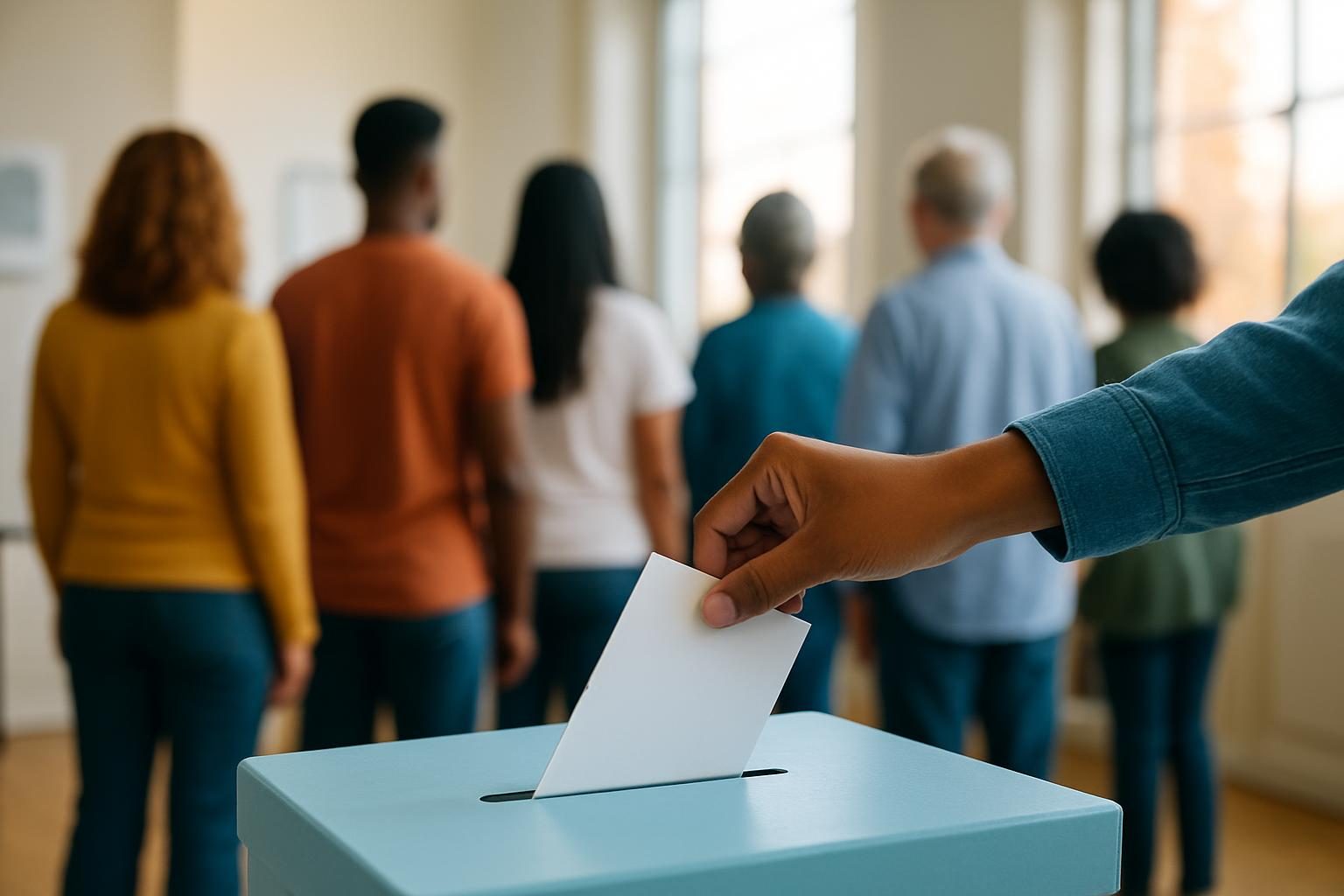
    Hand dropping a ballot into a ballot box at a polling place

    What happens on inauguration day, step by step

    The exact program is set by the inaugural committee and has not been announced yet. We will update this page as details are released. What follows is the long-standing outline of the day, based on how recent inaugurations have gone, so treat the order and timing as a guide rather than a schedule.

    1. The morning gathering

    The day typically begins with ceremonial and traditional events as the incoming and outgoing leaders and their families gather. Many inaugurations have included a worship service in the morning. These customs come from tradition rather than law, so they can vary.

    2. The oath of office

    The heart of the day is the oath. The text is written into the Constitution, and the new president takes it in front of the crowd and the cameras. A new term begins when the oath is administered, and the time of the transfer is set by the Constitution.

    That is the moment the peaceful transfer of power becomes visible to everyone. It is worth savoring, whoever wins.

    3. The inaugural address

    After the oath, the new president speaks to the country. The address is a chance to set the tone and name priorities for the term. Past addresses have varied in length and style, and no one can say now what the 2029 speech will include.

    4. The parade, the celebrations and the first official acts

    The afternoon traditionally includes a procession and celebratory events, and presidents often take early official actions. The details of the 2029 festivities are not announced yet.

    A peaceful handoff only works because millions of ordinary people showed up, registered and voted.

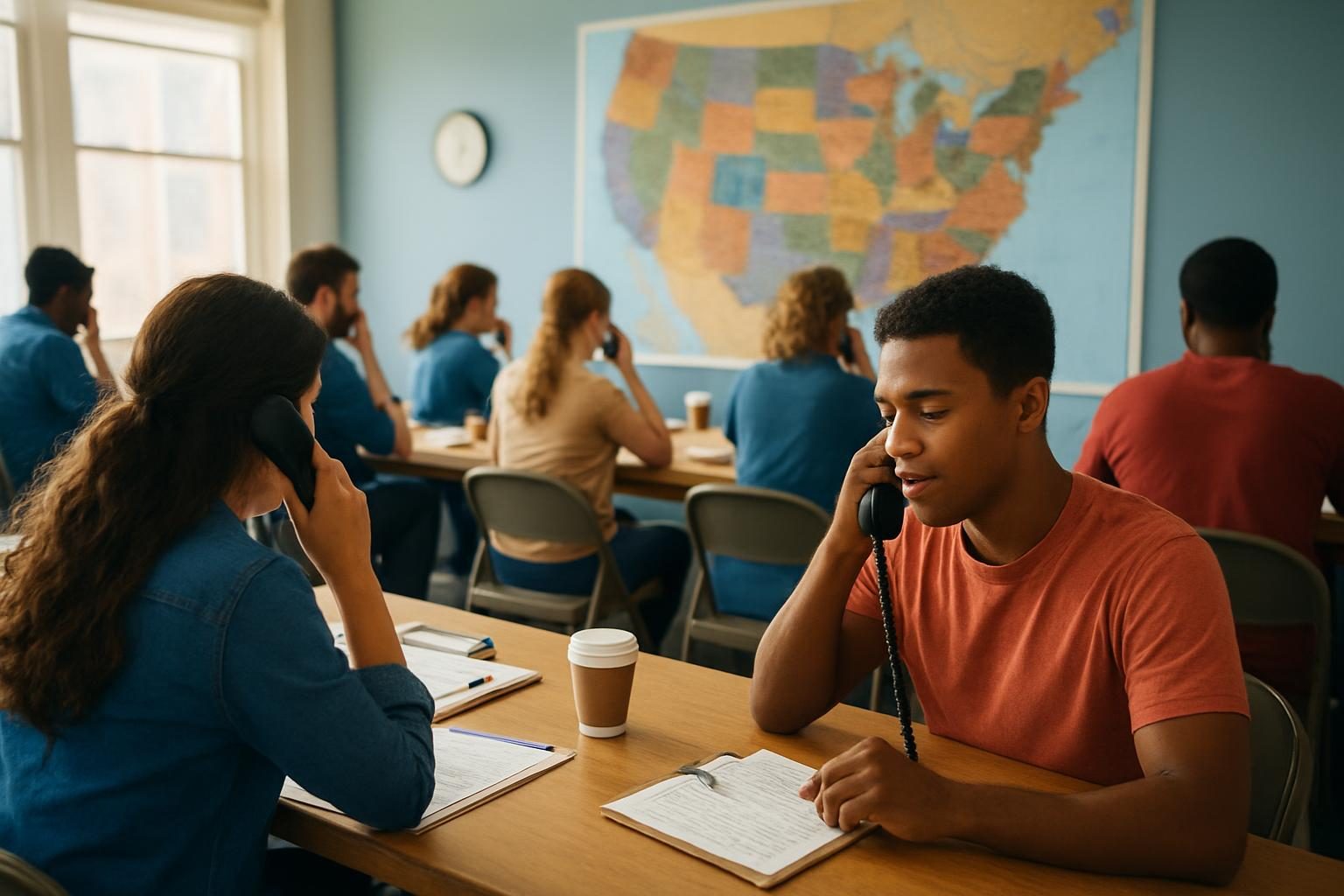
    Volunteers making calls in a busy campaign office

    How we get from Election Day to the oath

    The winner is not decided by a single night of results. A series of formal steps turns votes into a presidency.

    1. Voters cast ballots on Tuesday, November 7, 2028.
    2. States certify results under their own rules and timelines.
    3. Electors meet on December 18, 2028, the first Monday after the second Wednesday in December, to cast their electoral votes.
    4. Congress counts the electoral votes as part of the formal process.
    5. The president is sworn in on January 20, 2029.

    A candidate needs 270 of the 538 electoral votes to win. Our explainer on how the Electoral College works walks through the math, and the 2028 electoral map shows where the fight is likely to happen. The map will use the electoral map from the 2020 census apportionment.

    Who can be sworn in?

    Not just anyone can take the oath as president. The Constitution requires a president to be a natural-born citizen, at least 35 years old, and a US resident for 14 years. The 22nd Amendment also limits a president to two elected terms.

    We cover this in detail in presidential eligibility requirements, and we break down the term-limit debate in our look at the 22nd Amendment.

    Who will take the oath? The race is wide open

    As of October 2026, no major Democrat has formally declared a 2028 presidential run, and no major Republican has either. That means the next chapter is still being written, and the people who show up now help shape it.

    Widely reported potential Democratic candidates include Gavin Newsom, Josh Shapiro, JB Pritzker, Gretchen Whitmer, Andy Beshear, Pete Buttigieg, Kamala Harris, Alexandria Ocasio-Cortez, Cory Booker, Raphael Warnock, Ruben Gallego, Mark Kelly, Elissa Slotkin, Chris Van Hollen and Ro Khanna. These are potential candidates only. None has announced.

    On the Republican side, JD Vance, Marco Rubio, Ron DeSantis, Ted Cruz and Brian Kemp are among those widely mentioned, also as potential candidates only. Follow our 2028 Democratic candidate tracker for updates, and read up on a few names: Gavin Newsom, Josh Shapiro, JB Pritzker and Gretchen Whitmer.

    The road to the oath runs through the primaries

    Before anyone is sworn in, parties choose their nominees. The DNC approved the 2028 early-window calendar on August 15, 2026: South Carolina on January 22, 2028, then Nevada on February 1, New Hampshire on February 8, New Mexico on February 15, Michigan on February 22 and Virginia on February 29. Super Tuesday follows on March 7, 2028.

    New Hampshire state law requires it to hold the first primary in the nation, which clashed with the DNC calendar in 2024, so watch for changes. Iowa is not in the Democratic early window. Our 2028 Democratic primary calendar tracks every date, and how presidential primaries work explains the process.

    The Democratic National Convention is set for August 7-10, 2028. Finalist host cities are Boston, Denver and Philadelphia, and the final pick is expected later in 2026. See our 2028 Democratic National Convention page for the latest.

    Student registering to vote on a laptop at a campus cafe

    Your part in it, starting now

    Inauguration Day can feel far away, but the decisions that lead to it begin with things you can do this fall. The midterms on November 3, 2026 decide who controls Congress and many statehouses. Our guide to the 2026 midterms and what is at stake for 2028 explains why they matter.

    Registration rules are set by each state. Every state’s official rules, deadlines and online registration links are on vote.gov, and you can find your state’s page at an address like https://vote.gov/register/ohio. North Dakota has no voter registration. Many states offer same-day registration, but the rules differ, so confirm the details on vote.gov or with your state election office rather than relying on anything secondhand. For a plain walkthrough, see how to register to vote in every state.

    Take action: Check your registration status today on vote.gov, then text one friend or family member and ask whether they are registered too. Five minutes now can mean one more voice on Election Day.

    Our view: peaceful transfers of power are something to protect and celebrate, and the best way to protect them is to take part. Volunteer for a campaign, give a few hours to a registration drive, or offer a ride to a neighbor on Election Day. Ordinary people are the engine of every inauguration.

    Last updated October 2026. Dates and candidate news change fast; we update this page as things are announced.

    Key takeaways

    • Inauguration Day is January 20, 2029, after the November 7, 2028 general election.
    • Electors meet on December 18, 2028 to cast the votes that make the result official.
    • The oath of office is the core of the day; program details have not been announced yet.
    • No major Democrat or Republican has formally declared a 2028 run as of October 2026.
    • Confirm your voter registration details on vote.gov or with your state election office.
    • The midterms on November 3, 2026 come first, and your vote there counts.

    Frequently asked questions

    When is Inauguration Day 2029?

    Inauguration Day is January 20, 2029. The general election that decides who takes the oath is Tuesday, November 7, 2028, and the electors meet on December 18, 2028 to cast their votes.

    What happens if Inauguration Day falls on a Sunday?

    Public rules and tradition can shift the schedule when January 20 lands on a Sunday, but that is not an issue for 2029. For any date question, check the official inaugural committee announcements once they are published, and we will update this page as details are released.

    Who takes the oath of office, and what does it say?

    The incoming president takes the oath of office, and its text is set out in the Constitution. The Constitution also sets the basic qualifications: a president must be a natural-born citizen, at least 35 years old, and a US resident for 14 years.

    Can I attend the inauguration?

    Details about public access, tickets and viewing areas have not been announced yet. Official information typically comes from the inaugural committee and your members of Congress closer to the date, and we will update this page when it is available.

    Who will be sworn in on January 20, 2029?

    That is up to voters. As of October 2026, no major Democrat or Republican has formally declared a 2028 run, so the field is wide open. Check our 2028 presidential election hub for the latest on who might run.

  • How to Watch Presidential Debates: A 2028 Voter’s Guide

    How to Watch Presidential Debates: A 2028 Voter’s Guide

    Few moments in a campaign put the candidates side by side, unfiltered, in front of millions of people. Presidential debates are your chance to see how the people asking for your vote think, respond and handle pressure. Here is how to watch presidential debates, how they work, and how to turn watching into action.

    Quick answer: Presidential debates are televised, moderated events where candidates answer questions and respond to each other. Most are carried live on broadcast and cable news and streamed free online. No 2028 debate dates have been announced yet; we will update this page when they are.

    What a presidential debate actually is

    A presidential debate is a structured, live event. Candidates stand at podiums, answer questions from one or more moderators, and respond to each other within set time limits. The goal is to help voters compare candidates on the issues, not to hand anyone a victory by default.

    Debates happen at two stages. During the primaries, candidates from the same party compete to become their party’s nominee. In the general election, the nominees of different parties face off. Both matter, and both are worth your time.

    Primary debates vs. general election debates

    Feature Primary debates General election debates
    Who is on stage Candidates from one party Nominees from different parties
    Main goal Choose a party nominee Help voters choose a president
    Who sets the rules The party and the hosting media outlet The sponsoring organization and the campaigns
    Typical timing Before and during the primary season Late in the campaign, ahead of Election Day
    Stage size Can be large, depending on the field Usually the major nominees

    Because the 2028 Democratic field has not formed yet, there is nothing to schedule for primary debates. Our 2028 Democratic candidates tracker follows the people who might run, and none of them has formally declared.

    A debate is the one campaign moment where candidates cannot hide behind a perfectly edited ad.

    Are 2028 debate dates set?

    No. As of this update, we have not seen official 2028 debate dates, hosts or locations announced. We are not going to guess, and you should be skeptical of any site that gives you exact dates this early.

    Here is what we do know about the calendar. The general election is Tuesday, November 7, 2028. The DNC approved its early primary window on August 15, 2026, with South Carolina going first on January 22, 2028, and Super Tuesday landing on March 7, 2028. Debates will be built around that timeline, but the debate schedule itself is still being set. For the full picture, see our 2028 Democratic primary calendar.

    The Republican side is also unsettled. Republicans are expected to keep Iowa first on their calendar, but their calendar is not final. No Democrat or Republican has formally declared a 2028 run, so there is no official field to debate yet.

    Empty debate stage with two podiums under studio lights before a presidential debate

    How to watch presidential debates

    The good news is that watching is easy and usually free. Here is a simple approach that works for most people.

    1. Find out who is hosting. The hosting network or organization announces the channel, streaming options and start time. Check that announcement once a debate is scheduled.
    2. Pick your screen. Many debates air on broadcast and cable news and stream free on news outlet websites and apps. Pick whichever setup works best for you.
    3. Save the time. Put the start time in your calendar and set a reminder. Debates run on a fixed schedule, so being early beats being late.
    4. Prepare a notepad. Jot down the issues you care about most before it starts. It makes it easier to listen for real answers.
    5. Watch with someone. Debates are better shared. Invite a friend, a neighbor or your family.

    If you miss it live

    Full debates are typically posted online afterward, so you can catch up on your schedule. Watching the whole thing beats relying on a few clipped moments, since short clips can leave out the context.

    How to get the most out of a debate

    Debates move fast. It helps to watch with a plan so you leave knowing more than you did when you started.

    • Listen for specifics. Does a candidate describe what they would actually do, how it would work and who it would help?
    • Notice what goes unanswered. If a question gets dodged, that tells you something too.
    • Check claims afterward. Candidates sometimes stretch the truth. Look up a statement from a reliable source before you share it.
    • Compare records, not just performances. A sharp one-liner is memorable, but a candidate’s record and plans matter more.

    Want a head start on the policy side? Our guide to where Democrats stand on the issues is a good place to begin before the first debate.

    The best debate viewers listen for specifics, not slogans, and they check the claims afterward.

    Viewer taking notes while streaming a debate on a laptop at a kitchen table

    Where debates fit in the road to 2028

    Debates are one stop on a long road. Before anyone takes the stage, there is the quiet stretch we call the invisible primary, when potential candidates build donor lists, travel and test their messages. Learn more in when 2028 presidential campaigns start.

    From there, primaries and caucuses begin. Our explainer on how presidential primaries work walks through the process, and the 2028 Democratic National Convention page covers the August 7-10, 2028 event. The finalist host cities are Boston, Denver and Philadelphia, and the final pick is expected later in 2026.

    After the conventions, the general election campaign takes off. Debates matter most in states where the race is close, so it also helps to know the 2028 swing states and how the Electoral College works, since 270 of 538 electoral votes win the presidency.

    The road ends with Inauguration Day on January 20, 2029. If you are curious how that day works, we are preparing a guide to what happens on Inauguration Day 2029.

    Why debates matter to progressive voters

    In our view, debates are one of the best chances for voters to hear directly from candidates about healthcare, wages, housing, climate, voting rights and the economy. Those are the issues that shape everyday life, and the stage is where candidates have to explain their plans out loud, without a script.

    That is also an opportunity. When you watch, talk about it. Ask your friends and family what they heard and what questions they still have. Informed conversations are how movements grow.

    Debates are not the whole story, though. Candidates win and lose on records, organizing and turnout. A great night on stage does not matter if people are not registered and ready to vote.

    Volunteers with clipboards chatting with neighbors on a sunny sidewalk to encourage voting

    Turn watching into voting

    Here is the part that matters most. Watching a debate is great, but showing up on Election Day is what counts. The 2026 midterms are on Tuesday, November 3, 2026, and they set the stage for 2028. See what is at stake in our 2026 midterm elections guide.

    Registration rules vary by state, and some states offer same-day registration, though the details differ. North Dakota has no voter registration at all. For your state’s official rules, deadlines and online registration, go to vote.gov or your state election office. Our how to register to vote guide can walk you through the basics.

    Take action: Check your voter registration status today at vote.gov or your state election office, then text one friend and invite them to do the same. Next time a debate is announced, plan a watch night together.

    Key facts to keep handy

    • 2026 midterm elections: Tuesday, November 3, 2026.
    • 2028 general election: Tuesday, November 7, 2028.
    • Electors meet December 18, 2028, and the inauguration is January 20, 2029.
    • 2028 debate dates: not announced yet.

    For a full timeline, see our 2028 election key dates page, or head to the 2028 presidential election hub for the big picture.

    Key takeaways

    • Presidential debates are moderated, live events where candidates answer questions and respond to each other, in both primaries and the general election.
    • No 2028 debate dates, hosts or locations have been announced yet, and we will update this page when they are.
    • Most debates are carried on broadcast and cable news and streamed online; check the host’s announcement for details.
    • Listen for specifics, check claims afterward and compare records, not just performances.
    • Watching is just the start. Confirm your registration at vote.gov or your state election office.

    Last updated October 2026. Dates and candidate news change fast; we update this page as things are announced.

    Frequently asked questions

    Have the 2028 presidential debate dates been announced?

    No. As of this update, we have not seen official 2028 debate dates, hosts or locations announced, and we will not guess. Primary debate schedules are set by the parties and the general election schedule is typically set well before the fall. We will update this page as soon as real dates are confirmed.

    Where can I watch presidential debates?

    Major debates are usually carried live by broadcast and cable news networks and streamed free online by many news outlets. Exact channels and platforms depend on who hosts each debate, and those details are not set for 2028 yet. Check the host organization’s announcement closer to the date.

    Do I need to be registered to vote to watch a debate?

    No. Anyone can watch a debate. But watching is only the first step, since your voice counts most on Election Day. Check your registration status and find your state’s rules at vote.gov or your state election office.

    Who gets to be on the debate stage?

    It depends on the debate. In primaries, the party and the hosting network set the qualifying rules, which often involve factors like polling or fundraising. For the general election, the sponsoring organization sets the criteria. Since 2028 rules have not been announced, treat any early claims about who qualifies with caution.

    Are there debates between the vice presidential candidates too?

    Vice presidential debates have been a regular part of general election campaigns in modern history. Whether and when one happens in 2028 depends on the nominees and the sponsoring organization, and nothing has been announced yet.

  • Minimum Wage Increase Debate: The Case and the Critiques

    Minimum Wage Increase Debate: The Case and the Critiques

    Millions of people work full time and still count every dollar before payday. The minimum wage increase debate is really a debate about what a day’s work should be worth in America. Here is our progressive case, the best arguments against it, and what you can do about it.

    Our take: We believe a higher, regularly adjusted wage floor is good policy: it rewards work, helps families cover basics, and puts money back into local economies. Serious critics raise real concerns about job impacts and regional cost differences, and we address them fairly below. The fight will be decided by who votes, so register and show up.

    Why the wage floor is back on the ballot

    The federal minimum wage is set by Congress, and lawmakers have not raised it in many years. Meanwhile, rent, groceries, child care and gas have kept climbing. A wage that stands still while prices move is a pay cut in slow motion.

    That stalemate in Washington pushed the fight to the states. Many states and cities have set their own higher wage floors, through the legislature or directly by ballot measure. The result is a patchwork where the same job pays very differently depending on which side of a state line you work on.

    That patchwork is part of why this issue sits at the center of the Democrats’ economy agenda. It is also a clear example of how elections change daily life, from the statehouse to the ballot box.

    Diner owner and employee reviewing a work schedule together

    The case for raising the minimum wage

    We make this argument from our own point of view, and we will say so plainly: this is opinion. Here is why we think a higher wage floor is the right call.

    Work should lift people out of struggle

    The core idea is simple. If you work hard, you should be able to afford a place to live and food on the table. Many people earning near the minimum are adults, not teenagers, and many are supporting families. A wage floor is a statement about the dignity of that work.

    Higher pay circulates locally

    Workers at the bottom of the pay scale tend to spend what they earn close to home: at the grocery store, the pharmacy, the corner repair shop. That spending supports local businesses. Supporters argue a raise is not just a cost to employers but also a boost to the customers who keep them open.

    It reduces the burden on public programs

    When wages are too low to cover basics, families often lean on public assistance to fill the gap. Advocates argue that a higher floor means employers carry more of the cost of their own workforce, rather than leaving taxpayers to cover it. That is a fairness argument as much as an economic one.

    Indexing ends the cycle of fights

    Many Democratic proposals tie future increases to living costs, so the wage floor adjusts automatically instead of requiring a new act of Congress every decade. We think that is smart. It takes a basic standard of living out of the political tug-of-war.

    A wage that stands still while prices climb is a pay cut in slow motion.

    What the strongest critics say

    A good argument has to face the best opposition, not a cartoon of it. Here are the strongest critiques, stated fairly.

    Job losses and reduced hours

    The classic concern is that when labor gets more expensive, employers hire fewer people or cut hours. Critics say this risk is greatest for the least experienced workers, who can lose a first rung on the ladder. Economists have studied this for decades and disagree, and the answer seems to depend on how large the increase is and how quickly it takes effect.

    One national number for very different economies

    Living costs in a big coastal city are not the same as in a small rural town. Critics argue that a single national floor could be too low for expensive areas and too high for cheaper ones, straining local businesses. This is a serious point, and it is why many proposals include phase-in periods and regional flexibility.

    Pressure on small businesses

    Small employers often run on thin margins and cannot absorb costs as easily as large chains. Opponents warn that sudden increases could force price hikes, closures, or automation. Supporters respond that gradual phase-ins and small-business support can ease the transition, but the concern deserves a real answer.

    Other tools might target help better

    Some critics prefer wage supplements for low-income workers, such as tax credits, arguing these direct help to those who need it most without touching hiring costs. Others favor training and education. These are sincere policy alternatives, not bad-faith arguments, and many policymakers see them as complements to a wage floor rather than substitutes.

    Where we land

    Our view: these critiques argue for smart design, not for doing nothing. Gradual phase-ins, indexing, and attention to small businesses can address the real risks. Leaving the floor frozen is also a policy choice, and it has costs of its own.

    State capitol dome at golden hour with a rally crowd below

    How the two sides compare

    Question Supporters of a higher floor say Critics say
    Jobs Moderate increases have shown modest or no job losses in many studies Larger or faster increases may cut hours or hiring
    Cost of living Wages have not kept pace with prices Costs vary widely by region, so one number may not fit
    Small business Phase-ins and customer spending soften the impact Thin margins make sudden increases risky
    Best tool A wage floor sets a basic standard for all work Tax credits or training may target help better

    Where Democrats and the 2028 field stand

    Raising the wage floor is a long-standing Democratic priority, and you can see how it fits alongside other goals on our page about Democratic Party platform issues. Details differ, including how high to go, how fast, and whether to index future increases.

    As for 2028, no major Democrat has formally declared a presidential run as of our latest check. Governors, senators and others are widely reported as potential candidates, and you can follow them in our 2028 Democratic candidates tracker. Their positions on the wage floor will take shape as the field does, and we will update this page as that happens.

    The calendar matters too. The DNC approved its early-window primary schedule on August 15, 2026, starting with South Carolina. You can see every date in our 2028 Democratic primary calendar.

    The wage floor is decided by whoever shows up, from the statehouse to the White House.

    Voter dropping a ballot into a ballot box at a polling place

    Why your vote decides this

    Because Congress has been stuck, much of the action has happened in states and cities. That means school board seats, city councils, statehouses and ballot measures shape what workers earn. Your vote reaches further on this issue than you might think.

    The next big test is the midterms on Tuesday, November 3, 2026, when all 435 House seats, about a third of the Senate and 36 governorships are on the ballot. Our guide to the 2026 midterm elections explains what is at stake for 2028 and beyond.

    Rules differ by state, so confirm your registration and deadlines on vote.gov (swap in your own state’s name at the end of the link) or with your state election office. Our guide to registering in every state walks you through it step by step.

    Take action: Check your registration status today on vote.gov, then text one friend or coworker and ask whether they are registered too. If you want to do more, see our starter guide to volunteering for a campaign.

    How to get involved beyond the ballot

    You do not need to run for office to move this issue. Show up at a city council meeting when wages or workers come up. Talk to neighbors who run small businesses and listen to what they need. Our guide to getting involved in politics locally has simple first steps.

    For a wider look at the topics shaping the next election, browse our Issues & Ideas section. And if you have ever thought about stepping up yourself, our beginner’s roadmap to running for local office is a good place to start.

    Key takeaways

    • The federal minimum wage is set by Congress, and the long stall has pushed the fight to states and cities.
    • Our view: a higher, indexed wage floor rewards work and supports local economies.
    • Serious critics raise job, regional cost and small-business concerns; smart design can address them.
    • No major Democrat has formally declared a 2028 run, so candidate positions are still forming.
    • Check your registration on vote.gov or with your state election office, and vote on Tuesday, November 3, 2026.

    Last updated October 2026. Dates and candidate news change fast; we update this page as things are announced.

    Frequently asked questions

    What is the federal minimum wage?

    The federal minimum wage is set by Congress, and it has not changed in many years, which is a big reason the debate keeps coming back. Many states and cities set higher wage floors of their own, so what you earn at the bottom depends heavily on where you live. Check your state labor department for the current rate where you work.

    Can states raise the minimum wage without Congress?

    Yes. States can set a wage floor above the federal one, and many have done so through legislation or ballot measures. Some cities and counties set their own higher rates too, where state law allows. That is why local and state elections matter so much on this issue.

    Do higher minimum wages cost jobs?

    Economists disagree, and the answer depends on how big the increase is, how fast it phases in, and the local economy. Supporters point to research finding modest or no job losses from moderate increases. Critics warn that large jumps, especially in lower-cost regions, could cut hours or hiring. We lay out both sides above.

    What do Democrats propose on the minimum wage?

    Democrats have broadly backed raising the federal wage floor and, in many versions, tying future increases to living costs. Specific proposals vary, and no 2028 presidential candidate has formally declared yet, so positions are still taking shape. We will update our coverage as candidates announce.

    How can I make sure I can vote on wage ballot measures and races?

    Confirm your registration status and deadlines on vote.gov or with your state election office. Rules differ by state, including whether same-day registration is available. Our registration guide walks you through the steps.

  • How to Become a Poll Worker: Requirements, Pay, Training

    How to Become a Poll Worker: Requirements, Pay, Training

    Every Election Day, a quiet army makes democracy happen: the neighbors who check you in, hand you a ballot and make sure the doors open on time. You can be one of them. It is one of the most hands-on ways to protect everyone’s right to vote, and it takes less red tape than you might think. To get started, make sure you’re registered to vote in your state.

    This guide walks you through how to become a poll worker, from who qualifies to what the day actually feels like. One note up front: rules differ by state and county, so treat this as a map and confirm the details locally. If you’re not yet registered, see our guide on how to register to vote in Alabama.

    Quick answer: To become a poll worker, contact your county or local election office, confirm you meet its age and residency rules, submit an application, and complete the required training. Pay, hours and eligibility vary by state and county, so check with your local election office before you apply.

    What does a poll worker actually do?

    Poll workers run the polling place. They set up equipment, greet voters, check people in, hand out ballots, help with questions and keep lines moving. At the end of the day, they help close the site and secure the results according to local procedures.

    Roles often come with titles, though the names vary by place. You might hear terms like election judge, clerk, inspector or precinct officer. They describe similar jobs, and your county will explain exactly what each one means locally.

    Common jobs at a polling place

    • Check-in: confirming voters are in the right place and getting them started.
    • Ballot help: explaining how to mark and submit a ballot or use equipment.
    • Greeter or line manager: keeping things welcoming and orderly.
    • Site lead: an experienced worker who oversees opening, closing and problem-solving.

    Who can be a poll worker?

    Requirements are set by states and counties, so there is no single national rule. That said, many places look at a handful of common factors. Here is what to expect and what to ask about.

    Requirement What to expect What to check locally
    Age Most places set a minimum age; some have youth or student programs Your exact minimum age and any student options
    Residency Often live in the county, and sometimes the precinct, where you serve Whether you must live in the county, state or precinct
    Voter registration Frequently required, with exceptions in some places Whether you must be registered to apply
    Citizenship Commonly required for those who serve in most roles Your office’s citizenship rule
    Language skills Not required, but bilingual workers are often in high demand Whether your language is needed in your area
    Political party Some counties aim for balance across parties Whether your office asks about party affiliation
    Other limits Some places restrict candidates or their close family from serving Local conflict-of-interest rules

    Not sure you are registered? You can check in minutes with our guide to checking your voter registration status. If you need to sign up, start with how to register to vote in every state, or go straight to the official site, vote.gov.

    Democracy does not run itself; it runs on neighbors who show up before sunrise.

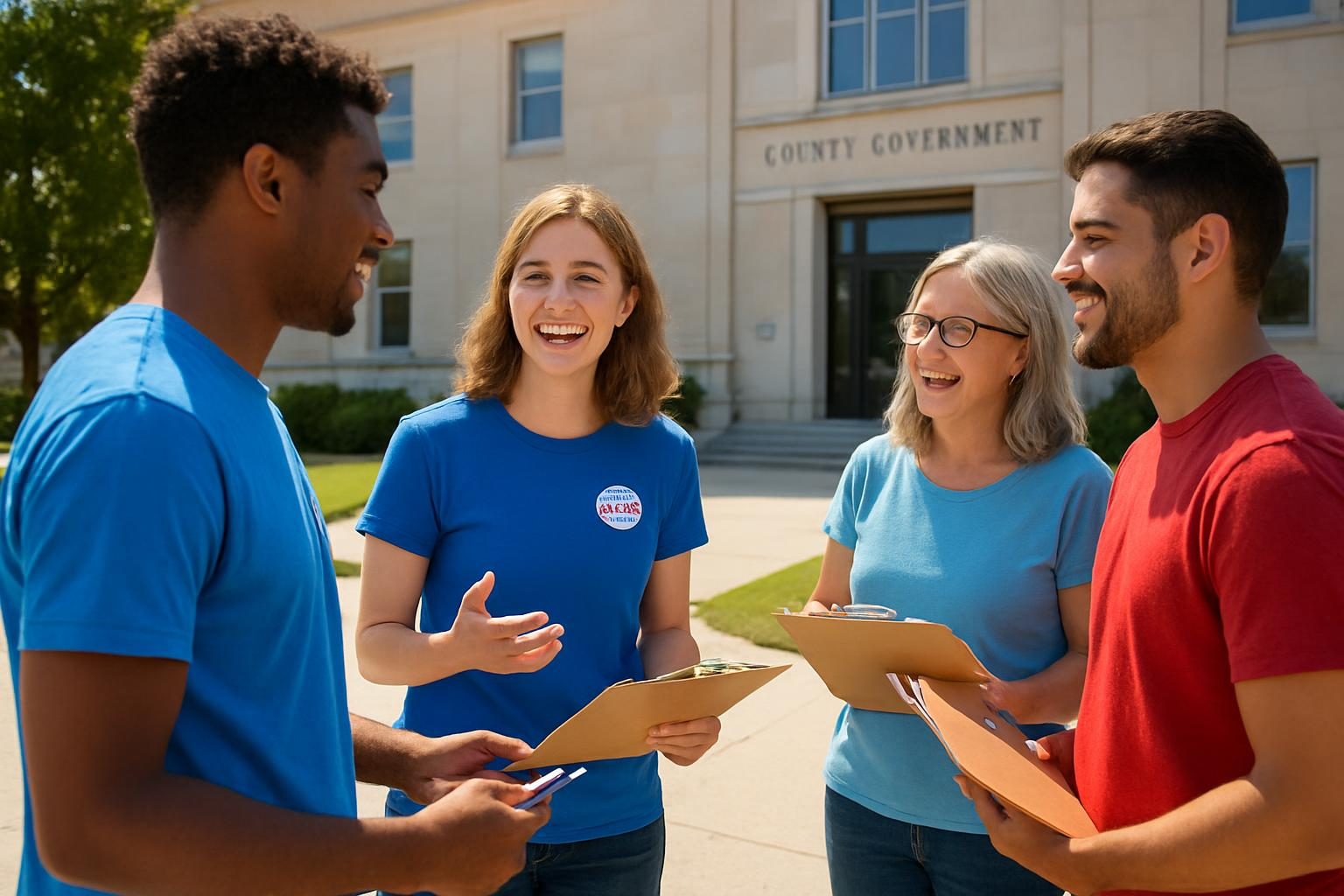
    Volunteers with clipboards talking outside a county government office

    How to become a poll worker: step by step

    The process is usually simple. Most of it happens through your county election office, and many offices make it easy to apply online or by phone.

    1. Find your local election office. Search for your county’s election office, sometimes called the board of elections, county clerk or registrar of voters. Your state election office or vote.gov can point you to the right place.
    2. Look for the poll worker page. Many offices post an application, a list of requirements and contact details for their poll worker coordinator.
    3. Confirm you qualify. Check age, residency, registration and any other rules before you apply.
    4. Submit your application. Some offices use an online form; others use paper forms or a phone call. Include your availability and any language skills.
    5. Wait for a response. Offices often assign workers closer to an election, so a quick reply is not guaranteed. Following up politely is fine.
    6. Complete training. You will usually be told when and where to attend, or how to take it online.
    7. Get your assignment. You will be told which polling place, role and hours you are covering.

    Timing matters. Election offices often recruit well ahead of big elections, but they also need people for smaller local races. Do not wait for a presidential year to reach out.

    Which elections need poll workers?

    Nearly every election needs them, from primaries to special elections to the general election. The big ones draw the most attention, including the 2026 midterm elections on Tuesday, November 3, 2026, and the general election on Tuesday, November 7, 2028. But local offices staff polling places for many contests in between, so there is almost always a next chance to serve.

    What does poll worker training involve?

    Training is designed so that you do not need any election experience to start. Formats vary. Some counties hold in-person classes with hands-on practice; others use online modules, or a mix of both.

    Expect to cover topics like these:

    • How to open and close the polling place
    • How to check in voters and handle common questions
    • How to set up and use voting equipment
    • How to help voters with disabilities and language needs
    • What to do when a problem comes up, and who to call
    • Rules for keeping the polling place orderly and fair

    Many offices include practice time with the actual equipment. That means you can ask questions and make mistakes before the real thing. Whether training is paid or unpaid varies by place, so ask when you apply.

    You do not need to be an election expert to serve; you need to be reliable and kind.

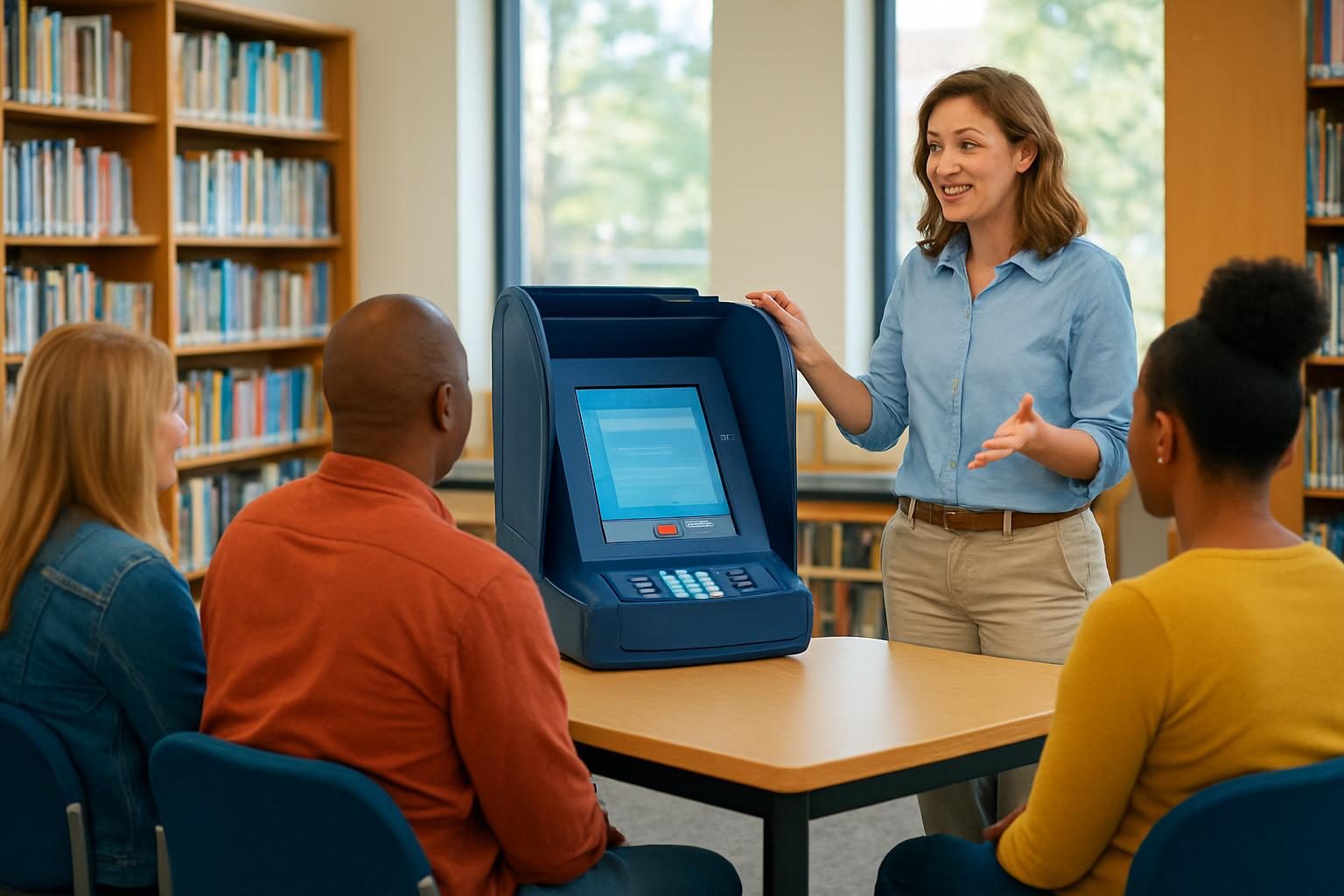
    Trainees practicing with a voting machine during a poll worker training session

    What is the workday like?

    Be ready for a long day. Poll workers typically arrive before the polls open to set up and stay after they close to wrap up. That can easily mean a shift of twelve hours or more, though the exact schedule depends on your location and role.

    Some places offer shorter or split shifts, especially for early voting. If a full day is too much, ask your election office what options exist.

    A typical Election Day rhythm

    1. Before opening: set up equipment, post required signs and run through checklists with your team.
    2. Morning rush: greet voters, check people in and keep lines moving.
    3. Midday lull: take breaks, restock supplies and help anyone who needs extra time.
    4. Evening wave: handle a second rush from people coming off work.
    5. Closing: follow local procedures to close the site and secure materials.

    Pack snacks, water and comfortable shoes. Bring a sweater, because some buildings are chilly. And bring patience, because kindness goes a long way when a voter is nervous or confused.

    How much do poll workers get paid?

    Pay varies a lot by state, county and role. Some places pay a flat daily stipend; others pay by the hour. Lead roles often pay more than entry-level ones. Training time may or may not be paid, and some places pay extra for attending.

    Because the numbers differ so widely, the only reliable answer comes from your own county election office. Ask these questions when you apply:

    • Is the pay a flat amount or hourly?
    • Is training paid?
    • Do different roles pay differently?
    • When and how do I get paid?
    • Can I work for pay if I also have another job or receive certain benefits?

    Many poll workers say the pay is not the point. If you are weighing it against your time, ask whether your employer offers time off for civic duty. Some do, and it never hurts to ask.

    Hand placing a ballot into a ballot box at a polling place

    Why poll workers matter for 2028

    Elections are won and lost on turnout, and turnout depends on a smooth voting experience. Long lines, confusion and understaffed sites can discourage people from voting. A strong corps of poll workers helps keep polling places open, welcoming and efficient.

    That matters well beyond any one race. Whoever ends up on the ballot for the White House, the stakes of the 2028 presidential election run through thousands of local polling places. Understanding how the Electoral College works and where the 2028 swing states are shows just how much each community’s voting experience can count.

    Our view: protecting access to the ballot is not a partisan act, and it is one of the most practical ways to put progressive values into action. When everyone eligible can vote easily and be heard, our democracy is stronger.

    Take action: This week, search for your county election office and look for its poll worker page. Fill out an application or send a quick email asking how to sign up, then text a friend and invite them to apply with you.

    Other ways to help if you cannot work Election Day

    A full-day shift is not for everyone, and that is fine. There are other ways to strengthen elections in your community.

    • Help people register. Share our guides, including how to register to vote and how to vote by mail.
    • Check your own status. Make sure your registration is current well before the next election.
    • Ask about shorter shifts. Some offices have early-voting roles or partial days.
    • Spread the word. Tell coworkers, classmates and neighbors that poll workers are needed.
    • Offer language skills. Bilingual volunteers can make a big difference at many sites.

    Rules and options differ in every state, so check vote.gov or your state election office for official information. If you want to dig into your state’s registration steps, we have guides for places like Pennsylvania, Georgia and Michigan, with more states coming, including Colorado, Minnesota and Oregon.

    You can also browse everything in our Voting & Registration section.

    Key takeaways

    • Apply to be a poll worker through your county or local election office.
    • Age, residency, registration and other requirements differ by state and county.
    • Training is usually provided, and you do not need election experience.
    • Expect a long day, often starting before polls open and ending after they close.
    • Pay varies widely, so ask your county election office for the details.
    • Check vote.gov or your state election office for official voting rules.

    Last updated October 2026. Dates and candidate news change fast; we update this page as things are announced.

    Frequently asked questions

    Do I have to be a registered voter to be a poll worker?

    Often, yes, but not always. Many places require poll workers to be registered voters in the county or state, while some allow students or other residents who are not yet old enough to vote. Rules differ by state and county, so confirm with your county election office.

    How old do you have to be to work at the polls?

    It depends on where you live. Most places set a minimum age, and some have youth or student poll worker programs for teens. Because the age rules vary by state and county, check with your local election office for the exact requirement.

    Do poll workers get paid?

    In most places, yes, but the amount varies widely. Pay may be a flat daily stipend or an hourly wage, and training time may be paid or unpaid. Your county election office can tell you exactly what applies in your area.

    Can I choose which polling place I work at?

    Sometimes. Many offices try to match you with a location near home, but assignments depend on where help is needed. Tell your county election office your preferences when you apply, and be flexible if you can.

    Do I have to be a member of a political party to serve?

    No, party membership is not what makes you a poll worker. In many places, election offices aim for a balance of parties at each location, so some counties ask about party affiliation or recruit through party channels. Ask your county election office how it works locally.

  • 2026 State Ballot Measures to Watch: What Voters Decide

    2026 State Ballot Measures to Watch: What Voters Decide

    Every other November, voters do more than pick candidates. In many states, you also decide real policy yourself, with a yes or no that can become law. The 2026 midterms are no different, and the measures on your ballot may touch your daily life more directly than some of the races above them.

    Quick answer: Ballot measures reach voters in two main ways: citizens gather signatures for initiatives, or legislatures send referrals to the ballot. Election Day is Tuesday, November 3, 2026. To see which 2026 state ballot measures to watch in your state, check Ballotpedia and your state election office, because the final certified list varies by state.

    One note on how we handle this topic: ballot measure lists change as states certify, challenge, and sometimes remove proposals. We are not naming specific measures here because we only name ones we can confirm as certified, and those details differ for every voter. What we can do is show you how the process works and where to find the official list for your address.

    What is a ballot measure, exactly?

    A ballot measure is a question put directly to voters. Depending on the state, it might ask you to approve a new law, change the state constitution, approve a bond, or keep or repeal something the legislature already passed. You vote yes or no, and the outcome can take effect without a governor signing anything.

    Not every state allows every kind. Some states have a robust citizen initiative process, others have only legislative referrals, and a few have very little direct democracy at all. That is why a friend in another state may be voting on very different questions than you are.

    The two main roads to the ballot

    Most measures arrive by one of two routes. The table below sums up the difference.

    Route Who starts it How it gets on the ballot
    Citizen initiative Voters, advocacy groups, or coalitions Supporters gather signatures; officials verify them; the measure is certified for the ballot
    Legislative referral The state legislature Lawmakers vote to send a proposal to voters, sometimes because the constitution requires voter approval
    Veto or popular referendum Voters, in states that allow it Signatures are gathered to ask voters to approve or reject a law the legislature already passed

    Exact signature requirements, deadlines, and review steps are set by each state, so the details vary widely. Your state election office is the authority on how it works where you live.

    A ballot measure is democracy with the middleman removed: your yes or no, not a lawmaker’s, decides the outcome.

    How citizen initiatives reach the ballot

    The citizen initiative is the grassroots path. It usually begins with a group drafting proposed language, filing it with the state, and then collecting signatures from registered voters. Those signatures are the proof that enough people want the question to be decided by everyone.

    After signatures are submitted, officials review them. They check that signers are registered and that the petition followed the rules. If the measure qualifies, it is certified for the ballot. Along the way, courts sometimes get involved when the language or the process is challenged, which is one reason lists can shift late in the cycle.

    Why this path matters to progressives

    In our view, initiatives are one of the most powerful tools everyday people have. When legislatures stall on issues most voters support, a well-organized petition drive can break the logjam. Many of the policies progressives care about, from voting access to health care to workers’ rights, have moved forward in some states through direct votes.

    That is opinion, not a prediction about any specific measure. But it is a good reason to pay attention, sign petitions you believe in, and volunteer for the campaigns you care about.

    Volunteers with clipboards collecting petition signatures on a sunny sidewalk

    How legislative referrals get there

    The other road runs through the statehouse. A legislature can vote to place a question on the ballot, and in many states that is the only way to change the state constitution. Lawmakers may also refer bonds, tax questions, or policy changes they would rather put in voters’ hands.

    Referrals often require a supermajority vote in the legislature, though thresholds differ by state. Some also pass through a governor, and others skip that step. Again, the rules belong to each state, so check your state’s official sources.

    Read the wording carefully

    Ballot language can be dense, and a “yes” does not always mean what you assume. A measure to repeal a law, for example, flips the usual logic. Read the official summary and the full text if you can, and do not rely on a slogan or a mailer alone.

    Many states publish a voter information guide with plain-language summaries and arguments for and against. That guide is one of the most underused tools in elections, and it is free.

    How to find your 2026 state ballot measures

    This is the practical part. There is no single national list that applies to every voter, so you will want to check two kinds of sources.

    1. Your state and county election office. This is the official source for what will be on your ballot, including any sample ballot for your address.
    2. Ballotpedia. This nonpartisan encyclopedia tracks statewide measures across the country and explains each one, including its status. Search for your state and the 2026 election.
    3. Your state’s voter information guide, if it publishes one, for official summaries and arguments on each side.
    4. Local news and trusted community groups, for context on who is backing and opposing each measure and why.

    Always confirm the status of a measure with an official source before you rely on it. A proposal you read about months ago may have changed, been removed, or been modified since.

    You cannot vote on what you have not read. Ten minutes with your sample ballot beats an hour of guessing at the booth.

    State capitol dome at golden hour where legislatures refer measures to voters

    Why ballot measures matter beyond the issue itself

    A measure is rarely only about its own subject. Questions about voting rules, redistricting, or how elections are run can shape the playing field for years, including the lead-up to 2028. They can also mobilize voters who might otherwise sit out a midterm.

    That connection is why we cover them alongside the big races. If you are following the battle for Congress, see our guides to the 2026 Senate races to watch and the 2026 House races that decide control. For the full picture of what is on the ballot, our overview of the 2026 midterm elections and what is at stake for 2028 is a good place to start.

    Measures and the governor’s races

    In many states, ballot measures share the ballot with a governor’s race, and the two can influence each other. A highly motivated issue campaign can bring more people to the polls. Our explainer on the 2026 governor races in all 36 states shows which states have the top of the ticket in play.

    Make sure you can vote on them

    Everything above matters only if you are registered and have a plan to vote. Election Day is Tuesday, November 3, 2026, and rules, deadlines, and options differ by state. Confirm your registration and your options on vote.gov or with your state election office.

    We cannot tell you your state’s deadlines, because they change and vary, but our guides can point you in the right direction. See how to vote in the 2026 midterms: a last-minute checklist and our page on 2026 midterm voter registration deadlines by state. For the basics, how to register to vote: a simple guide for every state walks you through it, and every state’s official registration page is at vote.gov.

    Take action: Today, look up your sample ballot on your state or county election office website, then search your state on Ballotpedia. Pick one measure, read the official summary, and text a friend what you learned. Then ask them if they are registered.

    Hands dropping a completed ballot into a ballot drop box

    What to do after you vote

    Ballot measure results are not always immediate, and close ones can take time to call. Counting rules differ by state, so patience matters. Our guide on when midterm election results come in explains what to expect.

    And the work does not stop at the count. Measures that pass often need implementation, funding, and defending, and measures that fail often come back. Staying involved, from local volunteering to showing up in 2028, is how wins stick. To see where this all leads, check out the 2028 presidential election hub.

    If you want to dig into the policy debates behind many of these questions, our overview of Democratic Party platform issues is a helpful companion. You can also browse everything in our Midterms 2026 category.

    Key takeaways

    • Ballot measures reach voters through citizen initiatives, legislative referrals, and, in some states, popular referendums.
    • Rules differ by state, so your state election office is the authority on how measures qualify and what is on your ballot.
    • Ballotpedia is a strong nonpartisan resource for tracking statewide measures and their current status.
    • Measure lists change as states certify and courts rule, so always confirm status with an official source.
    • Election Day is Tuesday, November 3, 2026; confirm your registration and voting options on vote.gov or with your state election office.
    • Read the official summary, since a “yes” or “no” does not always mean what a slogan suggests.

    Last updated October 2026. Dates and candidate news change fast; we update this page as things are announced.

    Frequently asked questions

    What is the difference between a citizen initiative and a legislative referral?

    A citizen initiative starts with voters, who gather signatures to put a proposal on the ballot. A legislative referral is placed on the ballot by the state legislature, often because the state constitution requires voter approval for certain changes, such as amendments.

    Where can I find the ballot measures in my state?

    Start with your state or county election office, which publishes official ballot information, and with Ballotpedia, which tracks measures nationwide. Many states also mail or post a voter information guide. Confirm everything against your official sources before you vote.

    Can I vote on ballot measures without voting for candidates?

    In general, voters can skip races they choose not to vote on and still have their other choices counted, but rules and ballot layouts vary by state. Check your state election office for how your ballot works and for any instructions on marking it.

    Do ballot measures matter for 2028?

    They can. Measures on voting access, redistricting, and election administration shape the rules for future elections, and the issues they raise often carry into campaigns. They also bring new voters to the polls, which can affect turnout in down-ballot races.

    Is it too late to register or vote in the 2026 midterms?

    Election Day is Tuesday, November 3, 2026. Deadlines and options differ by state, so confirm your registration status and any remaining options right away on vote.gov or with your state election office.

  • When Do Midterm Election Results Come In? 2026 Guide

    When Do Midterm Election Results Come In? 2026 Guide

    It’s the night millions of us will spend glued to a screen, refreshing maps and texting friends. The 2026 midterms decide who controls Congress, and knowing how election night actually works will keep you calm, informed and ready to act. So when do midterm election results come in 2026? Here is your plain-language guide.

    Quick answer: Election Day is Tuesday, November 3, 2026. Polls close at different times across the country, and the first results can arrive within minutes of closing. Some races will be called that night, but close contests and slower-counting states can take days. Official results come later, after counties and states finish counting and certifying.

    The key date: Tuesday, November 3, 2026

    All 435 House seats, about a third of the Senate and 36 governorships are on the ballot on Tuesday, November 3, 2026. If you want the full rundown of what’s on your ballot, our guide to the date and what’s on the ballot has you covered.

    Here’s the most important thing to know up front: election night is a process, not a single moment. Results trickle in state by state, county by county. Patience is part of the job, and so is making sure your own vote is counted.

    When do polls close?

    There is no single national closing time. Each state sets its own poll hours, and some states span more than one time zone. That means polls in the East close first and polls in the West and beyond close hours later.

    We are not publishing a closing time for every state here, because hours vary and can differ by county or even by polling place. Always confirm your own polling place hours with your state or county election office, and check vote.gov to find your state’s official election information.

    The golden rule: if you’re in line, stay in line

    Rules vary by state, but in general voters who are in line when polls close are typically still able to cast a ballot. Don’t give up and go home. If you run into a problem at the polls, ask for help from poll workers and contact your local election office.

    What you will see as the night unfolds

    Think of election night in stages. Here is a simple way to picture it.

    1. Polls close in the earliest states. The first batch of results begins to appear, usually from areas that count quickly.
    2. Early calls on lopsided races. Races with big margins can be called soon after polls close.
    3. The middle of the night. More states report, and attention turns to competitive House and Senate contests.
    4. The late night and morning after. Close races stay uncalled while election workers finish counting ballots, including mail ballots and provisional ballots.
    5. The following days and weeks. Counties finish counting, states canvass and certify, and official results are set.

    The first numbers you see are not the whole story. Which votes get counted first can change how a race looks at 9 p.m. versus the next morning.

    Hands drop a mail ballot into an official ballot drop box

    Why mail ballot counting speeds differ by state

    This is the biggest reason election night feels different from place to place. States write their own rules, and those rules shape how fast results arrive.

    The rules that change the pace

    • When counting can start. Some states allow election workers to begin processing mail ballots (opening envelopes, verifying signatures, preparing them for tabulation) before Election Day. Others restrict that work until Election Day itself. Early processing generally means faster results.
    • Deadlines for returned ballots. States differ on whether a mail ballot must arrive by Election Day or whether it can arrive later if it was sent on time. Waiting for those ballots to arrive extends the count.
    • Signature and verification steps. Some states have extra steps to confirm a ballot is valid, and some give voters a chance to fix certain problems. That takes time, and it protects voters.
    • Volume. A county with a huge number of mail ballots and limited staff simply needs more time.

    A slow count is not a sign of something wrong. In most cases it means election workers are following the rules carefully. Our view: a count that takes a little longer but is accurate beats a fast count that misses voters.

    The “red mirage” and “blue shift” idea

    Different kinds of votes are often counted in a different order. In some places, in-person votes are tallied first and mail ballots later, while in others the reverse is true. As a result, a candidate’s lead can grow or shrink as more votes come in. Whether and how much this happens depends on the state and the year, so avoid assuming the early picture is final. Wait for the count to finish before drawing conclusions.

    A slower count is not a broken count. It usually means election workers are making sure every eligible vote is counted correctly.

    What does it mean when a race is “called”?

    You’ll hear anchors say a race has been “called” or “projected.” Here’s what that actually means.

    A call is a news organization’s judgment that a candidate has won, based on the votes counted so far, the votes still outstanding and how those remaining votes are likely to break. It is analysis, not an official government result.

    Called versus certified

    Term What it means Who decides
    Projected or called A news organization concludes a candidate cannot be caught Media outlets and decision desks
    Too close to call The margin is small enough that outstanding votes could change the outcome Media outlets
    Recount Ballots are counted again, often when margins are very close Triggered under state law
    Certified Election officials confirm the final official count County and state election authorities

    Different news organizations may call the same race at different times, because they use different methods and thresholds. If you see one outlet call a race and another hold off, that’s normal. When in doubt, look to your state election office for official results.

    Whether a race goes to a recount depends on each state’s law, and those laws differ. We won’t guess at thresholds here. Your state election office can tell you the rules where you live.

    Volunteers gather in a campaign office to follow election night coverage

    How to follow the race for House and Senate control

    Control of Congress is decided one seat at a time. To make sense of the night, focus on the races that will tip the balance rather than trying to watch everything at once. We do not predict outcomes, but we can tell you where to look.

    Watching the House

    The House has 435 seats, and the party that wins a majority of them controls the chamber. The most useful approach is to keep an eye on the closest, most competitive districts. We break these down in our guide to House races to watch.

    Here is a smart way to follow along:

    • Watch states with early poll closings first, since they report sooner.
    • Pay attention to how many votes are still outstanding in a district, not just who leads.
    • Remember that some districts include places that count at very different speeds.

    Curious what a change in House control could mean? See what happens if Democrats win the House in 2026.

    Watching the Senate

    About a third of the Senate is up this year. Senate control comes down to a small number of competitive states, and a single seat can matter. Our Senate races to watch guide explains which contests matter most and why.

    Senate races can also be slow to resolve when margins are tight, so don’t be surprised if control isn’t clear by bedtime.

    Don’t forget governors and ballot measures

    Thirty-six governors are on the ballot, and many states have other big decisions in play. Governors oversee things like state budgets and, in many states, play a role in how elections are run. Explore our 2026 governor races explainer, and keep an eye out for our upcoming piece on 2026 state ballot measures that voters will decide.

    Congress is decided one seat at a time. Know the handful of races that tip the balance and the night gets a lot clearer.

    Could control take days to decide?

    Yes, it’s possible. If the national picture is lopsided, news organizations may be able to project control relatively early. If it’s close, the answer may hinge on a few tight races that need more counting. We can’t tell you which scenario will happen, and nobody should claim to know in advance.

    Here’s what to remember if it drags on: a delayed result is normal in a close election. It means counting is still underway, not that anything has gone wrong. The best response is to stay informed through reliable sources and ignore rumors.

    How to follow along without losing your mind

    • Use official sources. Your state or county election website is the best place for official results.
    • Be careful with screenshots. A map from earlier in the night may be out of date by morning.
    • Check more than one outlet. Different organizations call races at different times.
    • Take breaks. A long count is a marathon, not a sprint.

    If you want context for why this election matters beyond November, read our explainer on how midterms affect presidential elections, and visit our 2026 midterms hub for everything in one place.

    A young voter checks registration information on a laptop

    The most important step: make sure your vote counts

    Election night is thrilling to watch, but the real power is in showing up. Every race that’s too close to call is a reminder that individual votes and organized neighbors make the difference.

    If you haven’t voted yet, don’t wait for the results to start caring. Check your registration, make a plan for how and when you’ll vote, and bring a friend. Our last-minute voting checklist walks you through it, and our registration guide covers the basics.

    Rules and deadlines differ by state, so always confirm the details on vote.gov or with your state election office. If you’re not sure whether you’re registered, check right now rather than on Election Day.

    Take action: Look up your registration status and polling place today, then text three friends or family members and ask if they have a plan to vote. Offer to go together. A single reminder from someone they trust can be the nudge that gets a ballot cast.

    What comes after election night

    When the dust settles, the 2026 results shape the road to 2028. The 2028 general election is on Tuesday, November 7, 2028, and the early Democratic primary calendar is already set, with South Carolina going first on January 22, 2028. No major Democrat has formally declared a run for president yet, but plenty of names are being discussed, which you can follow in our 2028 Democratic candidates tracker.

    For the big picture, head to our 2028 presidential election hub. And for more on this topic, browse the full Midterms 2026 category.

    Our view: the best way to turn election night anxiety into energy is to get involved. Volunteer, register a neighbor, and vote. That’s how change happens.

    Key takeaways

    • Election Day is Tuesday, November 3, 2026, covering all 435 House seats, about a third of the Senate and 36 governorships.
    • Polls close at different times by state, so confirm your own hours with your election office or on vote.gov.
    • Mail ballot counting speed varies because each state sets its own rules for when processing starts and when ballots must arrive.
    • A race “call” is a news organization’s projection, not the official result; certification comes later.
    • Close races for House and Senate control can take days to resolve, and that is normal.
    • The most powerful thing you can do is register, vote and help others do the same.

    Last updated October 2026. Dates and candidate news change fast; we update this page as things are announced.

    Frequently asked questions

    When do midterm election results come in 2026?

    Election Day is Tuesday, November 3, 2026. Polls close at different times across the country, and the first results usually appear within minutes of closing in the fastest-counting states. Many races are called on election night, but close races and states that count mail ballots slowly can take days or longer.

    Will we know who controls the House and Senate on election night?

    Possibly, but not guaranteed. If the margins are wide, news organizations may be able to call enough races on election night to show which party is ahead. If control comes down to a handful of tight races, it could take days or weeks. We will not predict which scenario happens.

    Why do some states count votes faster than others?

    States set their own rules. Some let election workers begin processing mail ballots before Election Day, while others cannot start until polls open or close. States also differ on whether ballots that arrive after Election Day can count, and how long they take to verify signatures and finish certification.

    What does it mean when a race is “called”?

    A call is a news organization’s judgment that one candidate cannot be caught based on the votes counted and the votes still outstanding. It is not an official result. Official results come later, after counties finish counting and states complete canvassing and certification under their own rules.

    I haven’t voted yet. How do I find out how and where to vote?

    Check vote.gov and your state or county election office for your registration status, early voting options, mail ballot rules and polling place. Rules and deadlines differ by state, so confirm the details directly with official sources rather than relying on a friend’s advice or a social media post.

  • Provisional Ballot: What to Do If Turned Away at Polls

    Provisional Ballot: What to Do If Turned Away at Polls

    You show up, ready to vote, and a poll worker says your name isn’t on the list. Or you left your ID on the kitchen counter. Before you walk away in frustration, know this: you may still have a way to make your voice count.

    That way is the provisional ballot, and it exists for exactly this moment. If you know how it works before Election Day, you can handle a bad surprise at the polls with confidence.

    Quick answer: If you are turned away because your name isn’t on the rolls, you lack ID, or there is a question about your eligibility, ask for a provisional ballot. Fill it out, ask what you must do afterward, keep your receipt or tracking information, and follow up so it is counted. Rules vary by state, so confirm yours on vote.gov or with your state election office. For help in the moment, call 866-OUR-VOTE.

    One note up front: this is general voter information, not legal advice. Every state runs its own elections, so the details below differ depending on where you live.

    What is a provisional ballot?

    A provisional ballot is a backup ballot. You fill it out like a regular ballot, but instead of going into the machine or box with the others, it goes into a sealed envelope. Election officials review it later to decide whether it should be counted.

    Think of it as a “vote now, verify later” option. The poll worker can’t always settle a question about your eligibility on the spot, and the provisional ballot keeps that question from silencing you.

    Federal law requires states to offer provisional ballots in federal elections to voters who believe they are eligible but run into a problem at the polls. That is a major protection, and it is worth knowing it exists.

    Why you might be offered one

    Provisional ballots come up more often than people expect. Common reasons include:

    • Your name isn’t on the voter list, even though you believe you registered.
    • You don’t have the ID your state requires, or the ID you brought isn’t accepted.
    • You moved and your address on file is out of date.
    • Your name or address doesn’t match exactly, such as a typo or a name change after marriage.
    • The list says you already requested or returned a mail ballot, but you didn’t.
    • You are at a different polling place than the one assigned to you.

    Most of these are clerical problems, not signs that you did anything wrong. Mistakes in voter lists happen, and a provisional ballot is the safety net.

    A voter's hands fill out a paper ballot at a privacy booth in a polling place

    Step by step: what to do if you’re turned away

    Here is a simple game plan. Stay calm and polite. You have the right to ask questions, and you don’t need to argue.

    1. Ask why. Find out what the problem is: not on the list, ID issue, wrong location, or something else.
    2. Check the polling place. Ask whether you are at the right location. If not, ask where to go, and whether you can get there in time. Some states will not count a provisional ballot cast at the wrong place.
    3. Ask for a provisional ballot. Say plainly: “I believe I am eligible to vote. I would like to cast a provisional ballot.”
    4. Read and fill out the form completely. Incomplete information is one of the most common reasons a provisional ballot can run into trouble. Print clearly and sign where required.
    5. Ask what happens next. Does your state require you to bring ID or other documents afterward? By when? To which office?
    6. Keep your receipt or tracking info. Many places give you a number, slip, or instructions to check the status later. Take a photo of it.
    7. Call for backup if needed. If you are refused a provisional ballot or told something that doesn’t sound right, call 866-OUR-VOTE.

    Being turned away at the window doesn’t have to mean being turned away from democracy.

    If your name isn’t on the rolls

    Don’t panic. First, ask the poll worker to double-check the list, including alternate spellings and your previous address. Sometimes the problem is simply a lookup error.

    If you still can’t be found, ask for a provisional ballot. Election officials will later look into whether you were registered, and in many cases they can find a record that the poll book missed.

    Whether your provisional ballot is counted often depends on whether you were actually registered in time under your state’s rules. That is why it is smart to check your registration well before Election Day. Our guide to checking your voter registration status in minutes walks you through it.

    Some states offer same-day registration, which may let you register and vote at the same time. The rules differ from state to state, so confirm yours on vote.gov or with your state election office. Our simple guide to registering in every state is a good place to start.

    If you don’t have your ID

    ID rules are one of the biggest differences from state to state. Some states don’t require ID at the polls for most voters. Others ask for photo ID. Others accept a wider range of documents, such as a utility bill or bank statement.

    In states that do require ID, a voter without it is often offered a provisional ballot. Many of those states then give you a short window to show your ID to election officials so your ballot can be counted. The length of that window and where you must go vary, so ask the poll worker for the exact instructions in writing if you can.

    The most important thing is to follow through. Casting the provisional ballot is step one. In some states, if you don’t take the follow-up step, the ballot may not be counted.

    A quick comparison of common situations

    Situation Common next step Do you need to follow up?
    Name not on the list Ask for a double-check, then a provisional ballot Yes, check your ballot status
    No ID (in an ID state) Cast a provisional ballot, ask about the ID deadline Often yes, you may need to show ID afterward
    Wrong polling place Ask for the correct location and go there if you can Depends on your state’s rules
    Moved recently Ask how your state handles address changes at the polls Check your status afterward
    Record says you already voted by mail Cast a provisional ballot and explain the situation Yes, and consider contacting the election office

    Treat this table as a general guide, not a promise about your state. Your state election office has the final word.

    A poll worker hands a voter a provisional ballot envelope at a polling table

    Know your rights at the polls

    Every eligible voter deserves a fair shot at the ballot box. Here are protections that voters should know about, with the caveat that details vary by state:

    • If you believe you are eligible and there is a problem with your registration or ID, you should be offered a provisional ballot in federal elections.
    • You have the right to ask questions and to ask for a supervisor.
    • If you are in line when the polls close, many states let you stay and vote. Ask a poll worker about your state’s rule.
    • You can ask for help casting your ballot if you have a disability or need language assistance, under the rules in your state.

    If anyone tells you something that doesn’t add up, don’t just accept it. Ask politely, then call for help.

    Where to get help right now

    You are not alone. Free, nonpartisan help is available.

    • 866-OUR-VOTE (866-687-8683): the national Election Protection hotline, staffed by trained volunteers who can walk you through your rights and options.
    • Your state or local election office: the official source for your state’s rules. You can find contact information through vote.gov.
    • The poll worker or precinct supervisor: often the fastest way to resolve a problem on the spot.

    Save the hotline number in your phone before Election Day. It takes ten seconds and could save your vote.

    The most powerful thing you can do after casting a provisional ballot is make sure someone counts it.

    How to follow up so your ballot is counted

    Casting a provisional ballot is not the finish line. It is the start of a short follow-up process, and you can be the one who makes sure it works.

    1. Do any required follow-up fast

    If you were told to bring ID or other documents, find out the deadline and the exact place to deliver them. Ask for it in writing if you can. Don’t wait until the last day.

    2. Check your ballot’s status

    Most states offer a way to check whether a provisional ballot was counted, such as an online lookup, a phone number, or a mailed notice. Use the instructions you were given at the polling place, or look up your state election office through vote.gov.

    3. If it wasn’t counted, find out why

    Election officials generally can tell you the reason a provisional ballot was rejected. Common reasons include not being registered, voting in the wrong place, or missing paperwork. Knowing the reason helps you fix the problem before the next election.

    4. Fix your registration for next time

    Whatever happened, update your registration now so you are covered for the next race. Our state guides can help, including Pennsylvania, Georgia, Michigan, and Texas.

    A voter checks online to confirm their provisional ballot was counted

    Avoid the problem in the first place

    The best provisional ballot is the one you never need. A few habits go a long way:

    • Check your registration well before Election Day, especially if you moved, changed your name, or haven’t voted in a while.
    • Confirm your polling place. Locations can change between elections.
    • Know your state’s ID rules and bring the right documents.
    • Consider voting by mail if your state allows it. Our guide to voting by mail and absentee ballots explains how.
    • Go early if you can, so there is time to solve a problem and try again.

    With the 2026 midterms set for Tuesday, November 3, 2026, now is the time to double-check these basics. Our midterm elections guide explains what is at stake, and the 2028 general election is on Tuesday, November 7, 2028.

    Why every ballot matters, and how to get involved

    Voting is how we shape the schools, health care, jobs, and rights that affect our daily lives. When eligible voters get shut out by paperwork problems, democracy loses. That is why knowing your options matters, and why helping others know theirs matters too.

    If you want to do more, consider helping run elections yourself. We are working on a guide to becoming a poll worker, a great way to help neighbors vote smoothly. You can also explore where the parties stand on the issues in our Democratic Party platform guide, or follow the road ahead in our 2028 presidential election hub.

    Find more practical guides in our Voting & Registration section.

    Take action: Right now, take two minutes to check your voter registration, save 866-OUR-VOTE in your phone, and text a friend or family member the same tips. Then confirm your state’s ID rules on vote.gov.

    Key takeaways

    • If your name isn’t on the rolls or you lack ID, ask for a provisional ballot instead of walking away.
    • A provisional ballot is counted only after officials verify your eligibility, so follow-up matters.
    • ID, deadlines, and wrong-polling-place rules vary by state; confirm yours on vote.gov or with your state election office.
    • Keep your receipt or tracking information and check your ballot’s status afterward.
    • Call 866-OUR-VOTE if you are refused or unsure; save the number before Election Day.
    • Check your registration early so you rarely need a provisional ballot at all.

    Last updated October 2026. Dates and candidate news change fast; we update this page as things are announced.

    Frequently asked questions

    Can a poll worker refuse to give me a provisional ballot?

    In general, if you believe you are eligible and your name is not on the rolls or you lack required ID, you should be offered a provisional ballot. Federal law is designed to make sure eligible voters are not simply turned away. If you are refused, stay calm, ask for a supervisor, and call 866-OUR-VOTE right away. Rules vary by state, so confirm yours on vote.gov or with your state election office.

    Does a provisional ballot always get counted?

    No. A provisional ballot is counted only after election officials verify that you were eligible and registered, and the rules for that review differ by state. Casting one gives you the chance to have your vote counted, but following up matters. Use the free access system or contact information you are given to check the status.

    What if I go to the wrong polling place?

    Many states will not count a provisional ballot cast at the wrong location, though some will count the parts of the ballot you were eligible to vote on. Before you vote, look up your assigned polling place through your state election office or vote.gov. If you realize you are at the wrong place, ask a poll worker where to go and whether you have time to get there.

    What should I do if I forgot my ID?

    ID rules vary widely by state. Some states require no photo ID, some accept other documents, and some let you vote provisionally and then provide ID afterward. Ask the poll worker what your state allows, cast a provisional ballot if offered, and ask exactly what you must do and by when to have it counted.

    Who can I call if I have trouble voting?

    The national Election Protection hotline is 866-OUR-VOTE (866-687-8683). Trained volunteers can help you understand your rights and get help in the moment. You can also contact your state or local election office, whose information is listed on vote.gov.

  • How to Phone Bank and Text Bank for a Campaign

    How to Phone Bank and Text Bank for a Campaign

    You don’t need a title, a budget or a big following to help win an election. You need a phone, a little time and a friendly voice. Phone banking and text banking are two of the most direct ways to talk to real voters, and this guide shows you how to start.

    Quick answer: To phone bank or text bank for a campaign, find a local campaign, party office or progressive group offering shifts, sign up, attend a short training, and use the provided script and tools to contact voters. Many shifts are remote, so you can help from home. Ask the program about its rules before you start, and never guess on voting information.

    What phone banking and text banking actually are

    Phone banking means calling voters from a list a campaign or organization provides. Text banking means sending short messages to voters through a platform, then answering replies. Both are about conversations: sharing information, answering questions and encouraging people to vote.

    The goal depends on the stage of the race. Early on, volunteers might introduce a candidate, recruit other volunteers or help people check their registration. Closer to the election, the focus shifts to making sure people have a plan to vote.

    If you’ve never done it, don’t worry. Most volunteers start as beginners, and the tools are built for that. Your job isn’t to win every argument. It’s to be a warm, honest person on the other end of the line.

    Step 1: Find a phone bank or text bank near you (or not near you)

    There are plenty of places to look. Pick one that matches the races you care about, then sign up for a first shift.

    • Campaign websites. Most campaigns have a “volunteer” or “get involved” page where you can sign up for shifts.
    • Your county or state Democratic Party. Local party offices often run regular phone and text banks for the whole ticket.
    • Progressive organizations. Issue groups, labor unions and voter-engagement groups often run their own programs.
    • Local volunteer groups. Neighborhood and campus groups often organize shifts and can walk you through your first one.

    Because remote volunteering is common, you aren’t limited to your own area. You can help in a competitive state across the country or focus on a race close to home. To see where the next big fights are, check our guides to the 2026 midterm elections and the 2028 swing states.

    A volunteer making remote phone bank calls from a home kitchen table

    Step 2: Know what training and scripts look like

    Almost every program starts with a short orientation. It might be a few minutes on a video call, a written guide or a quick walkthrough from a shift leader before you begin. You’ll learn the tool, the goal of the campaign and what to do if something unexpected happens.

    What a script usually includes

    Scripts are built so nobody has to improvise. A typical one covers a short intro, the reason you’re reaching out, one or two questions and a clear next step. You’ll also usually get answers to common questions, and a way to record what the voter said.

    Use the script as a guide, not a straitjacket. Your own voice, a natural pace and a smile (people really can hear it) matter more than reading word for word.

    A simple call or text flow

    1. Introduce yourself. Give your first name and say who you’re volunteering with.
    2. State why you’re reaching out. Keep it short and specific.
    3. Ask a question and listen. Let the voter talk. Their answer tells you what to do next.
    4. Offer the next step. That might be a plan to vote, information from the campaign or a volunteer sign-up.
    5. Thank them and log the result. Record the outcome in the tool so the campaign can follow up.

    You don’t have to be a policy expert to be a great volunteer. You have to be kind, honest and consistent.

    Step 3: Phone bank vs. text bank at a glance

    Both methods work, and many volunteers try each. Here’s how they compare.

    Feature Phone bank Text bank
    Format Live voice conversations Short written messages
    Pace Real-time; you talk and listen Flexible; replies may come minutes or hours later
    Best for Longer conversations and warm, personal tone Quick reminders and easy replies
    Comfort level Can feel nerve-racking at first Often feels easier for beginners
    Typical tools Web-based dialer or call list Texting platform with message templates

    If you’re nervous, start with texting. If you like conversation, try a call shift. Either way you’ll be doing something that genuinely moves races.

    Step 4: Handle tough calls with grace

    Most calls and texts are short and pleasant. Some go unanswered, and a few won’t be. That’s normal, and it’s part of the work.

    Voters who are not interested

    Say thank you and move on. Not everyone wants to talk, and that’s fine. Log the result and go to the next contact without taking it personally.

    Disagreement or frustration

    Stay calm and polite. You don’t have to debate. Listen, acknowledge what the person said and, if the conversation isn’t productive, thank them and end it. Your calm tone represents the campaign far better than a win in an argument.

    Questions you can’t answer

    Never guess. Use your talking points, tell the voter you’ll pass the question along if your program allows it, or direct them to the campaign’s website. For anything about how, when or where to vote, send them to vote.gov or their state election office. Wrong voting information can cost someone their vote, so accuracy comes first.

    Requests to stop contact

    If someone asks not to be contacted again, honor it immediately and record it using your tool. Respecting that request is both good manners and an important part of doing this the right way.

    Rude or abusive responses

    You never have to stay on a call or keep texting with someone who is abusive. End the conversation, log it and tell your shift leader if you want support. A good program has your back.

    Hands holding a smartphone while volunteering for a text bank

    Legal basics for texting voters

    Texting is regulated, and the rules can be more complicated than they look. This section is a general overview, not legal advice. Your campaign or organization should handle the compliance side, and your training should explain what you need to do.

    • Use the platform you’re given. Campaigns and organizations choose tools designed for compliant messaging. Don’t mass-text people from your personal phone on your own.
    • Follow the approved messages. Stick to the templates and guidance you’re given.
    • Honor opt-outs. If someone says to stop, record it so they are removed from future messages.
    • Be honest. Say who you’re with and never mislead a voter about voting rules, dates or places.

    If you have a question about the rules, ask your shift leader or program organizer. For anything related to voting itself, direct voters to vote.gov or their state election office.

    Remote shifts: help from your couch

    Remote volunteering has made it easy to fit this work into real life. You can join a shift from home, between classes or on a quiet evening after dinner.

    Most remote programs use a web-based dialer or texting platform and a video call so you can see your teammates and ask questions. All you typically need is a laptop or phone, a reliable internet connection and a quiet place to talk.

    Remote also means you can support races outside your own community. Our 2028 electoral map and swing states guide show where battleground contests are likely to matter most.

    Take action: Pick one campaign or group this week, sign up for a single beginner shift, and invite one friend to join you. Starting small beats waiting for the perfect moment.

    Every conversation is a small act of democracy, and a lot of them add up to a win.

    The final weeks before Election Day

    The last stretch before an election is when volunteer energy matters most. Campaigns shift into get-out-the-vote mode, with a heavy focus on making sure supporters know how and when to vote.

    Expect shifts to get more frequent and sometimes longer. Many campaigns hold weekend call and text marathons, and some add shifts on Election Day itself. If you can give extra time near the end, tell your organizer.

    The message in these weeks is usually about a voting plan: how someone will vote, where and when. Always send people to vote.gov or their state election office for the exact rules in their state, and never state a deadline you haven’t confirmed. If a voter says they might not be registered, point them to our guide on how to check voter registration status, and see our simple guide to registering in every state.

    Some voters will be voting by mail, so our explainer on how to vote by mail is a handy resource. If someone tells you they were turned away at the polls, you can mention that there is a process for that, and our upcoming guide on provisional ballots will explain it in plain language.

    Volunteers making get-out-the-vote calls in a busy campaign office

    Beyond the phone: keep building your skills

    Once you’re comfortable, there’s plenty more to do. You can help register voters, join a canvass, train new volunteers or become a poll worker. Look out for our upcoming guide on how to become a poll worker if you want to help on Election Day itself.

    It also helps to understand what’s at stake. Our overview of Democratic Party platform issues lays out where Democrats stand, which makes it easier to talk with confidence. And for the bigger picture, our 2028 presidential election hub tracks what’s next.

    Our view: this kind of volunteering is among the most powerful things an everyday person can do. The 2018 wave is a good reminder of what organized, people-powered work can accomplish. Read the story in 2018 Blue Wave: what happened and what Democrats learned.

    You can also browse more guides in our Voting & Registration section.

    Key takeaways

    • Phone banking and text banking connect you directly with voters, and beginners are welcome.
    • Find shifts through campaign websites, your local Democratic Party and progressive organizations.
    • Training and scripts make it easy: introduce yourself, ask, listen, offer a next step and log the result.
    • Remote shifts let you help from home, including in races outside your own area.
    • Follow your program’s texting rules, honor opt-outs and never guess on voting information.
    • Always point voters to vote.gov or their state election office for registration and voting rules.

    Last updated October 2026. Dates and candidate news change fast; we update this page as things are announced.

    Frequently asked questions

    Do I need experience to phone bank or text bank?

    No. Almost every campaign and organization runs a short training before your first shift, and most give you a script and a way to log responses. You only need a phone or computer, a willingness to follow the training, and a friendly tone.

    Will voters see my personal phone number?

    It depends on the tool. Many phone banks use a web dialer that connects calls through the platform, and many text banks send messages through a platform instead of your personal number. Your shift leader can tell you how the specific tool works, so ask before your first shift if privacy matters to you.

    Can I phone bank or text bank for a campaign in another state?

    Yes. Remote volunteering lets you contact voters anywhere, as long as the campaign or organization is running a remote program. Many volunteers help in competitive states, and you can also help in your own community.

    What if a voter asks a question I cannot answer?

    Do not guess. Use the answers in your script or talking points, offer to have someone follow up if your program allows it, or point the voter to vote.gov or their state election office for voting rules. Saying you do not know is always better than giving wrong information.

    Is texting voters legal?

    Texting for campaigns is regulated, and the rules involve things like consent, opt-outs and the tools used. We are not a source of legal advice. Volunteering through a campaign or organization that provides a compliant platform and training is the simplest path, and your training will cover what you need to do.

  • 2026 House Races to Watch: Seats That Decide Control

    2026 House Races to Watch: Seats That Decide Control

    Every two years, the fight for the House of Representatives comes down to a few dozen districts where a handful of votes can change who runs Congress. The good news: you don’t need to be a pollster to find them. You just need to know where to look, and then show up.

    Quick answer: All 435 House seats are on the ballot on Tuesday, November 3, 2026, and a party needs 218 for a majority. The races that decide control are the competitive districts, which nonpartisan forecasters like the Cook Political Report and Sabato’s Crystal Ball rate as “toss-up” or “lean.” Check their current ratings for the latest, and confirm your own registration and voting details on vote.gov.

    How control of the House is decided

    The House has 435 voting seats, and each one represents a single congressional district. Voters in each district choose one representative every two years. That makes the House the most direct, most frequently refreshed part of the federal government.

    The party that wins a majority of those seats controls the chamber. That means choosing the Speaker, setting the legislative agenda and chairing every committee. With 435 voting seats, the magic number is 218.

    On Tuesday, November 3, 2026, every one of those 435 seats is up. Compare that with the Senate, where only about a third of the seats are on the ballot. For more on the full ballot, see our guide to when the 2026 midterms are and what’s on the ballot.

    Why a few seats matter so much

    Most districts are not truly in play. They lean so strongly toward one party that the result is widely expected before a single vote is cast. The fight for control happens in the districts that are genuinely close.

    That is why a small slice of the map gets a huge share of the attention, the volunteers and the money. A few thousand votes in a handful of districts can flip the whole chamber. Your vote carries real weight in a close district, and your volunteer hours do too.

    Control of the House is won in the close districts, one door knock and one phone call at a time.

    Volunteers making phone calls in a busy campaign office

    The 2026 House races to watch: how to find them

    Instead of handing you a list that goes stale, we want to teach you to find the battlegrounds yourself. Ratings change as campaigns heat up, new information arrives and forecasters update their views. A list frozen in time can mislead you.

    Two long-running, nonpartisan sources do this work well:

    • The Cook Political Report publishes race-by-race House ratings on its website.
    • Sabato’s Crystal Ball, from the University of Virginia Center for Politics, publishes its own House ratings and analysis.

    Both sort districts into categories, and the exact labels and wording can vary by outlet. Always read the current ratings directly on the forecaster’s site, and check the date on the page.

    What the rating labels generally mean

    Rating type What it generally signals
    Solid / Safe One party is strongly favored; the race is not expected to be close.
    Likely One party has a clear edge, but an upset is possible.
    Lean One party has a modest advantage; the race could tighten.
    Toss-up Neither party has a clear advantage; the race could go either way.

    The toss-up and lean categories are where control is decided. When you want to know where to focus, start there.

    A simple three-step method

    1. Open two forecasters. Read the current House ratings from both the Cook Political Report and Sabato’s Crystal Ball, and note where they agree.
    2. Look at disagreements. When one forecaster rates a race a toss-up and the other leans one way, that is a district worth watching.
    3. Check the date. Make sure you are reading the latest update, not an old snapshot or a screenshot someone shared.

    We are deliberately not quoting individual ratings in this article, because they move and we will not guess. Go straight to the sources for the live picture.

    Take action: Look up your own congressional district today. If it is rated competitive, your vote and your volunteer time matter even more. If it is not, pick a nearby competitive district and phone bank or text bank for it from home.

    What decides whether a district is competitive

    Forecasters weigh many factors, and no single one tells the whole story. Understanding them helps you read the ratings like a pro.

    The lines on the map

    District boundaries shape everything. Lines drawn by state legislatures or commissions can make a district friendlier to one party or leave it truly mixed. When boundaries change, a district’s rating can change with them, so check that you are looking at the current map for your state.

    Open seats and incumbents

    Incumbents, the representatives already in office, often have advantages such as name recognition and fundraising. When an incumbent retires or runs for another office, the seat becomes “open,” and open seats are frequently more competitive. Forecasters pay close attention to them.

    The national mood

    Midterms often reflect how voters feel about the party in the White House. We unpack that history in how midterms affect presidential elections and in our look at whether a blue wave in 2026 is realistic. Mood matters, but turnout in each individual district is what actually decides the result.

    A forecast is a map of where the fight is, not a promise of how it ends.

    Diverse line of voters outside a polling place in autumn

    Why winning the House matters

    The House is far more than a scoreboard. It has real power, and that is why these races deserve your attention.

    • The power of the purse. Spending bills start in the House, giving the majority major influence over the budget.
    • The agenda. The majority party decides which bills get a vote and which never leave committee.
    • Oversight. Committee chairs can launch investigations and hold hearings.

    For a closer look at what a change in control could mean, read what happens if Democrats win the House in 2026. And for the issues voters are weighing, see our overview of where Democrats stand on the big issues.

    The road to 2028

    Our view: a strong showing in the House builds momentum, recruits volunteers and sets the tone for the next presidential race. The 2028 general election is on Tuesday, November 7, 2028. Our hub on the 2028 presidential election tracks the dates and the field as they develop.

    The Senate and governors are on the ballot too

    The House is only one part of the November 3 ballot. About a third of the Senate and 36 governorships are also up for election, and many states have local races and ballot measures as well. Our guides to the 2026 Senate races to watch and the 2026 governor races cover those contests.

    Some states will also vote on ballot questions. We are preparing a guide, 2026 state ballot measures to watch, and we will link it here once it is published.

    Get ready to vote and to help

    Following the races is great. Acting on them is better. Here is how to turn interest into impact.

    Check your registration first

    Rules, deadlines and online registration links differ by state, and some states offer same-day registration with their own rules. Go to vote.gov, choose your state, and confirm exactly what applies to you. You can also contact your state or local election office. Our simple guide to registering in every state walks through the basics, and our 2026 midterm registration deadlines page points you to the right place. Please confirm any deadline with vote.gov or your state election office, because we will not guess at yours.

    Make a plan to vote

    Know where, when and how you will vote. Our last-minute checklist for voting in the 2026 midterms can help, and your state election office has the official details for your polling place and any early or mail options.

    Know when results arrive

    Close House races can take time to call. We are working on a guide to when midterm results come in and how to follow them. Patience on election night is part of the process.

    Volunteer where it counts

    Campaigns and local Democratic organizations need people to knock on doors, make calls, send texts and drive voters to the polls. Even a couple of hours makes a difference in a close district. Look for opportunities with your local party or a campaign in a competitive district near you.

    For the full picture of what is at stake, our hub on the 2026 midterm elections and what they mean for 2028 is the best place to start, and the Midterms 2026 category collects everything in one spot.

    Key takeaways

    • All 435 House seats are on the ballot on Tuesday, November 3, 2026, and a party needs 218 for a majority.
    • Control is decided in a small number of genuinely close districts.
    • The Cook Political Report and Sabato’s Crystal Ball publish nonpartisan House ratings; read their current pages, not old screenshots.
    • Toss-up and lean districts are where your time, votes and volunteer hours go furthest.
    • Confirm your registration and voting details on vote.gov or with your state election office.
    • Get involved: talk to a friend, volunteer, and make a plan to vote.

    Last updated October 2026. Dates and candidate news change fast; we update this page as things are announced.

    Frequently asked questions

    How many seats does a party need to control the House?

    A party needs a majority of the 435 voting seats, which is 218. All 435 seats are on the ballot on Tuesday, November 3, 2026, so control can change hands in a single election.

    What is a toss-up race?

    A toss-up is a rating from a nonpartisan forecaster meaning neither party has a clear advantage in that district. Ratings can shift as the campaign goes on, so check the forecasters’ live pages for the latest.

    Where can I find ratings for competitive House districts?

    The Cook Political Report and Sabato’s Crystal Ball both publish House ratings on their websites. Compare them, since forecasters sometimes disagree, and check their current pages instead of relying on a screenshot or an old article.

    Can I still register or vote if I am not sure which district I live in?

    Yes. Your state election office can confirm your district and your registration status, and vote.gov links to every state’s official rules, deadlines and online registration. Confirm everything there before Election Day.

    Why do House races matter for 2028?

    The House writes spending bills, runs investigations and can check the White House. The midterm result also shapes the political mood heading into the 2028 presidential race, which is why every district counts.

  • Blue Wave Midterm 2026: Will One Really Happen?

    Blue Wave Midterm 2026: Will One Really Happen?

    Every two years, someone asks the big question: is a wave coming? With the midterms days away, the honest answer is that nobody knows yet, but we do know what to watch, and we know what you can do about it.

    This guide explains what people mean by a blue wave midterm, which signals point toward one in 2026 and which point away. It will not hand you a prediction dressed up as fact. It will give you the tools to read the news like an analyst and the reasons to get involved right now.

    Quick answer: A blue wave midterm means Democrats make big, broad gains across many districts and states. Whether 2026 becomes one depends on factors like presidential approval, the generic ballot, turnout and open seats. None of them settle it alone, and no one can promise a wave. The midterms are Tuesday, November 3, 2026, and turnout is the part you control.

    What is a wave election, exactly?

    A wave election is one where a party does far better than usual, and does it nearly everywhere at once. Think of it as a tide rising across the whole map, not a few lucky ripples. The party catching the wave tends to flip seats in very different kinds of places: suburbs, small towns, and districts that looked safe on paper.

    Here is the catch: there is no official definition. No rulebook says “gain this many seats and you have a wave.” Historians and analysts use the word as shorthand, and they sometimes disagree about which elections qualify.

    That is why it helps to look at the long view. Our history of wave elections walks through how the term has been used, and our look back at the 2018 blue wave shows what it looked like when many people felt one arrive.

    Wave, ripple or tide: how analysts think about size

    Analysts often talk in degrees. A modest shift toward one party is not usually called a wave. A very large one, with many seats changing hands and strong results in places the party rarely wins, is. Everything in between is where the arguments happen.

    So when you hear a pundit in late October say “this could be a wave,” treat it as a read of the mood, not a forecast carved in stone.

    A wave is not a prediction you wait for. It is a result that millions of people build.

    Volunteers making calls in a busy campaign office with district maps on the wall

    The factors that point toward a wave

    Forecasters tend to look at the same handful of indicators. Here is a plain-language guide to each, and how it can push toward a Democratic wave.

    Factor What it is Why it can point toward a wave
    Presidential approval How many Americans approve of the president’s job performance Midterms often work as a referendum on the party in the White House; lower approval has historically meant trouble for that party
    Generic ballot A poll asking which party people plan to back for Congress A consistent, sizable lead for one party can signal a national mood in its favor
    Turnout and enthusiasm Who actually shows up, and how energized they are A motivated base and strong turnout in key groups can swing close races
    Open seats Races with no incumbent running Open seats are easier to flip because there is no incumbent advantage
    Candidate quality and money Strong recruits and resources in competitive races Good candidates with the means to compete can put more seats in play

    Presidential approval: the midterm referendum

    Midterms are often read as a verdict on whoever holds the White House. Historically, the president’s party has frequently lost ground in these elections. If the public is unhappy with the direction of the country, that mood can spill into congressional races.

    We will not quote approval numbers here, because they move and we only publish figures we can source and date. Check a reputable polling average and look at the trend, not a single poll. For the pattern across cycles, see our explainer on how midterms affect presidential elections.

    The generic ballot: a mood ring, not a map

    The generic ballot asks a simple question: if the election were today, would you vote for the Democratic or Republican candidate in your House district? It is a useful temperature check.

    It also has limits. National numbers do not map neatly onto 435 separate House races, and district lines matter enormously. Use it to gauge direction, not to count seats.

    Turnout: the factor you can move

    Midterm electorates are usually smaller than presidential ones, which means every voter carries more weight. When one side is fired up and the other is not, close races can tip.

    This is where the story stops being about analysts and starts being about you. Registration, reminders and rides to the polls are not glamorous, but they are how waves get built.

    Open seats: where flips are most likely

    When an incumbent retires, the seat becomes more competitive. There is no name recognition or built-in advantage to overcome. Watch retirements and open-seat contests closely, because that is where a wave often first shows up. We will cover the biggest contests in our 2026 House races to watch guide.

    The factors that point away from a wave

    Being optimistic does not mean ignoring the headwinds. A fair read of 2026 has to include the reasons a wave might not materialize.

    The map is a real obstacle

    The number of genuinely competitive House seats is smaller than the total. Many districts are drawn to favor one party, so even a strong national mood can only reach so far. A big popular-vote edge does not always become a big seat gain.

    The Senate is its own puzzle. Only about a third of seats are up this year, and which ones are up shapes what is even possible. Our guide to 2026 Senate races to watch breaks down the terrain.

    Incumbency still matters

    Incumbents usually have name recognition, fundraising advantages and established campaign operations. In a wave, many incumbents lose. In a normal year, most win again. That is why open seats and well-funded challengers matter so much.

    Mood can fade or shift

    Polls move, news cycles change, and enthusiasm can drain away if people assume the outcome is already decided. This is the quiet danger of wave talk: if voters think a win is guaranteed, some stay home. No result is guaranteed until the votes are counted.

    Waves do not wash over the map on their own. They are carried by neighbors who knock, call and vote.
    Volunteers with clipboards canvassing a sunny neighborhood sidewalk

    How to read the signals without getting fooled

    Everyone loves a confident headline. Here is a short checklist for staying grounded as the final days tick down.

    1. Look at trends, not single polls. One survey can be an outlier. A pattern across many is more meaningful.
    2. Remember polls are snapshots. They describe a moment, not a destiny, and they can miss who actually turns out.
    3. Think district by district. Control of Congress is decided in individual races, not by a national average.
    4. Check the source and the date. If a number has no source or is months old, be skeptical.
    5. Watch what you can influence. Registration and turnout are the parts of the story ordinary people can actually change.
    When in doubt, treat predictions, ours included, as informed opinion. Our view is that the fundamentals give Democrats real reasons for hope. Our view is also that hope is not a strategy. Votes are.

    What a strong Democratic night could mean

    This is why the stakes feel so high. Winning the House, for instance, would change what Congress can do, from oversight to which bills even get a vote. We lay it out in what happens if Democrats win the House.

    The ballot is also bigger than Congress. Thirty-six states are choosing governors, and those offices shape everything from health care access to how elections are run. See our rundown of the 2026 governor races. Many states also have initiatives on the ballot, which we will cover in our 2026 state ballot measures guide.

    And yes, it connects to 2028. Midterm results can shape the national mood, the party’s momentum and the field of potential presidential candidates. For the big picture, start with our hub on what’s at stake for 2028.

    Hand dropping a ballot envelope into an outdoor ballot drop box

    Your part in building a blue wave

    You do not need to be a pundit to matter. You need to be registered, informed and willing to nudge a few people you know. The midterms are on Tuesday, November 3, 2026, and every day between now and then counts.

    Start with the basics. Our last-minute checklist for voting in the 2026 midterms covers the practical steps. Voting rules differ by state, so for your registration status, deadlines and options, go to vote.gov or your state election office. Our simple guide to registering in every state can help, too.

    Not sure when to expect answers once the polls close? We are preparing a guide to when midterm election results come in, and we will update this page when it is ready.

    Take action: Check your voter registration status today at vote.gov, then text three friends or family members and ask if they have a plan to vote. Offer to go together. If you have a few spare hours, volunteer with a local campaign or voter-protection group.

    Key takeaways

    • A blue wave means broad, large Democratic gains, but there is no official definition, so treat the label as shorthand.
    • Presidential approval, the generic ballot, turnout and open seats are the main signals analysts watch.
    • The map, incumbency and shifting moods can all limit a wave, so no outcome is guaranteed.
    • Polls are snapshots, not predictions; read trends and check sources and dates.
    • Turnout is the factor ordinary voters can move, and the midterms are Tuesday, November 3, 2026.
    • For your state’s rules and deadlines, use vote.gov or your state election office.

    Last updated October 2026. Dates and candidate news change fast; we update this page as things are announced.

    Frequently asked questions

    What is a blue wave midterm?

    A blue wave midterm is an election in which Democrats make large, broad gains in Congress and often in state offices, usually across many kinds of districts rather than just a handful. There is no official threshold, so analysts and historians use the term loosely. For the longer history, see our guide to the meaning of a blue wave.

    Does the president’s party usually lose seats in a midterm?

    Historically, the president’s party has often lost ground in midterm elections, which is one reason analysts watch presidential approval so closely. It is a pattern, not a rule, and the size of any shift varies a lot from one cycle to the next. Our explainer on how midterms affect presidential elections looks at the record.

    Can polls tell us whether a wave is coming?

    Polls such as the generic ballot can show the mood of the country, but they are snapshots, not predictions. They can miss turnout shifts, and national numbers do not always translate into individual district results. Treat them as one signal among several, and remember that the only count that matters is the one on Election Day.

    When is the 2026 midterm election?

    The 2026 midterm elections are on Tuesday, November 3, 2026. All 435 House seats, about a third of the Senate and 36 governorships are on the ballot. Check your polling place, early voting options and any remaining deadlines with your state election office or through vote.gov. You can also read our guide to the date and what’s on the ballot.

    How can I help if I want a blue wave?

    Make sure you are registered and have a plan to vote, then help people you know do the same. You can also volunteer with a campaign or voter-protection group, talk to friends and family, and give time to races in your area. For rules and deadlines in your state, go to vote.gov or your state election office. More coverage lives in our Midterms 2026 section.

  • How to Vote in the 2026 Midterms: Last-Minute Checklist

    How to Vote in the 2026 Midterms: Last-Minute Checklist

    The 2026 midterms are days away, and your vote is the most powerful tool you have to shape what comes next. The good news: voting is simpler than it looks, and you can knock out every step in a single afternoon. This how to vote in the 2026 midterms checklist walks you through each one.

    Quick answer: Midterm Election Day is Tuesday, November 3, 2026. To vote, confirm you are registered, pick how you will vote (early, by mail or on Election Day), check your state’s ID rules, find your polling place, and preview your ballot. Rules vary by state, so confirm every detail on vote.gov or with your state election office.

    Last updated October 2026. Dates and candidate news change fast; we update this page as things are announced.

    Why this election matters so much

    On November 3, 2026, voters will decide all 435 House seats, about a third of the Senate and 36 governorships. That is a huge slice of the government, and it sets the stage for the 2028 presidential race. Our guide to what’s at stake in the 2026 midterms for 2028 breaks down the bigger picture.

    Midterms are often decided by who shows up. Turnout in these elections tends to be lower than in presidential years, which means every ballot carries extra weight. To understand what’s at stake, check out our analysis of whether a blue wave will happen in 2026. If you are reading this, you are already ahead of the game.

    Midterms are won by the people who show up, and that can be you, your neighbors and your friends.

    Your seven-step voting checklist

    Here is the whole plan at a glance. Work through it top to bottom, and you will be ready well before the polls open.

    1. Confirm your registration is active and your address is current.
    2. Choose your voting method: early in person, mail or Election Day.
    3. Check your state’s ID rules so nothing surprises you.
    4. Find your polling place or ballot drop-off location.
    5. Preview your ballot and research the races and measures.
    6. Make a plan for when, how and with whom you will vote.
    7. Bring a friend and help someone else get to the polls.
    A college student checking voter registration on a laptop

    Step 1: Confirm your voter registration

    Start here, because everything else depends on it. Moved recently? Changed your name? Skipped the last couple of elections? Do not assume you are still on the rolls.

    Where to check

    Every state’s official rules, deadlines and online registration links are on vote.gov. Pick your state and follow the links; for example, Ohio’s page and New York’s page show how the pages are laid out. Your state election office can confirm whether your registration is active.

    What if you are not registered?

    Do not panic, but do not wait. Registration deadlines vary by state, and some states offer same-day registration while the rules differ from place to place. We are not going to guess at your deadline, so confirm it on vote.gov or with your state election office right now.

    North Dakota is the one state with no voter registration at all. For everyone else, our plain-language guide on how to register to vote in every state and our 2026 midterm voter registration deadlines by state page can help you sort out the details.

    Take action: Check your registration today, then text three friends or family members and ask them to do the same. Thirty seconds on your end could be the reason someone else votes.

    Step 2: Choose how you will vote

    You usually have more than one option, and the right one is the one you will actually follow through on. The options and rules differ by state, so treat this as a menu to explore rather than a promise that every choice is open to you.

    Method How it works Good for
    Early in person Vote at a designated site before Election Day, where your state offers it Busy schedules and shorter lines
    Mail ballot Receive, complete and return a ballot by mail or drop-off, where your state allows it Voters who want time to research at home
    Election Day Vote at your assigned polling place on Tuesday, November 3, 2026 Voters who like the traditional experience

    If you are voting by mail

    Mail voting rules, including how and when ballots must be returned, vary by state. Read your instructions carefully, sign where required, and return your ballot as your state directs. If you are unsure whether your window is still open, contact your state election office and ask about options like drop boxes or in-person voting.

    If you are voting in person

    Plan your trip like you would any important appointment. Pick a time, check your route, and give yourself some cushion in case of a line. If you can, avoid the after-work rush.

    Step 3: Check your state’s ID rules

    ID requirements are not the same everywhere. Some states ask voters to show photo ID, others accept a wider range of documents, and some have special rules for first-time voters or those who registered by mail. We will not guess which category your state falls into.

    The fastest fix is to look up your state’s current requirements on vote.gov or call your state election office before you go. Gather what you need the night before, and put it somewhere you will not forget it.

    A five-minute check of your state’s ID rules can save you a headache at the polls.

    Hands placing a ballot envelope into a drop box

    Step 4: Find your polling place

    Polling places can change between elections, so do not rely on memory. Your state or county election office can tell you exactly where to vote, and vote.gov points you to the right official tools for your state.

    Look up the address, note the hours your state sets for voting, and check whether early voting sites differ from your Election Day location. If you are voting by mail, find out whether your county offers drop-off locations and when they are open.

    Make a quick voting plan

    • Pick the day and time you will vote.
    • Decide how you will get there, and have a backup.
    • Arrange childcare or time off work ahead of time.
    • Bring any ID or paperwork your state requires.

    Most employers and families can work with you if you ask early, so do it now rather than on Tuesday morning.

    Step 5: Preview your ballot

    Walking into the booth informed is one of the best things you can do for yourself. Your ballot may include federal races, state offices, local contests and ballot measures, and what appears depends on where you live. Your state or county election office can help you find a sample ballot.

    Races worth knowing about

    Depending on your state, you could be choosing a House member, a senator, a governor, or all three. Read up with our guides to 2026 Senate races to watch and our explainer on all 36 governor races. Curious about the stakes in Congress? See what happens if Democrats win the House in 2026, and keep an eye out for our upcoming 2026 House races to watch guide.

    Local races and ballot measures

    Do not skip the bottom of the ballot. Local offices and ballot questions often shape daily life in ways that surprise people, from schools to local services. Many states also put big questions directly to voters, and our upcoming guide to 2026 state ballot measures will help you sort through them.

    Know where candidates stand

    Our guide to Democratic Party platform issues explains where Democrats stand on the big topics. Whatever you decide, take your sample ballot with you if your state allows it, so you can vote with confidence.

    Volunteers with clipboards talking with neighbors on a sunny sidewalk

    Step 6: Plan for Election Night

    After you vote, you will want to know what happens next. Results do not always arrive all at once, and counting timelines vary. We will explain it all in our upcoming guide on when midterm election results come in, so check back for updates.

    In the meantime, remember that the date to circle is Tuesday, November 3, 2026. For a refresher on the calendar, see when the 2026 midterms are and what’s on the ballot.

    Step 7: Bring people with you

    Voting is personal, but it is also contagious. People are far more likely to show up when someone they trust asks them to. That is where you come in.

    Offer a ride to a neighbor. Remind a coworker about the date. Volunteer with a local campaign or a nonpartisan voter-help group for a few hours. Small acts add up, and this is how wave elections are built. Want some history? Read about the meaning of a blue wave and what happened in the 2018 blue wave.

    Looking ahead: why this vote shapes 2028

    Midterms do not just decide who holds office now. They shape the political landscape heading into the next presidential race. See how that has played out in how midterms affect presidential elections from 2010 to 2024.

    As of this writing, no major Democrat has formally declared a 2028 run, though plenty of names are being discussed. Follow our 2028 Democratic candidates tracker and our 2028 presidential election hub as that race develops. The general election is Tuesday, November 7, 2028, and your 2026 vote is the first step on that road.

    Our view: the best way to prepare for 2028 is to win in 2026, and that starts with you checking your registration, making a plan and voting. You can also browse everything we have on this topic in our Midterms 2026 category.

    Key takeaways

    • Election Day is Tuesday, November 3, 2026, with all 435 House seats, about a third of the Senate and 36 governorships on the line.
    • Confirm your registration first; deadlines and same-day options vary by state, so check vote.gov or your state election office.
    • Pick your voting method (early, mail or Election Day) based on what your state offers and what you will actually do.
    • ID rules differ by state, so verify yours before you leave home.
    • Look up your polling place and preview your ballot, including local races and ballot measures.
    • Bring someone with you: a ride, a reminder or a few volunteer hours can move the needle.

    Frequently asked questions

    Is it too late to register to vote in the 2026 midterms?

    It depends on your state. Deadlines vary, and some states offer same-day registration while others have already closed registration. Check your state’s official rules on vote.gov or with your state election office today to find out where you stand.

    Can I still vote by mail this late?

    In many states the window for requesting or returning a mail ballot is closing fast, and some states have rules about when ballots must be received. Look up your state’s current mail ballot rules on vote.gov or your state election office website, and consider early in-person voting or Election Day if time is short.

    Do I need a photo ID to vote?

    ID rules differ from state to state. Some states ask for photo ID, some accept other documents, and some have different rules for first-time voters. Confirm exactly what your state requires with your state election office or through vote.gov before you head out.

    How do I find my polling place?

    Your state election office or county election office can tell you where to vote. Start at vote.gov, choose your state, and follow the links to official tools. Polling places can change between elections, so check this year even if you voted in the past.

    What if I make a mistake on my ballot or have trouble at the polls?

    Ask a poll worker right away; they can explain your options for correcting a ballot or resolving a problem. If you are told you cannot vote, ask about your state’s provisional ballot process, and contact your state election office for guidance.