★ Election Day 2028 is in 763 days  ·  Midterms in 28 daysRegister to vote →

Author: Edward Garcia

  • 2026 Midterm Voter Registration Deadlines by State

    2026 Midterm Voter Registration Deadlines by State

    The 2026 midterm election is days away, and your voice in it starts with one simple thing: being registered. Every state runs its own rules, so the 2026 midterm voter registration deadlines by state are not one date but fifty-plus different sets of options. This guide shows you exactly how to find yours fast, and what to do if time is tight.

    Quick answer: The midterm election is Tuesday, November 3, 2026, and each state sets its own registration deadline and methods. Many regular deadlines have likely passed by now, but some states offer same-day registration. Go to vote.gov, pick your state, and confirm the rules with your state election office today.

    The 2026 midterm voter registration deadline: what you need to know right now

    Today is October 26, 2026, and Election Day is Tuesday, November 3. All 435 House seats, about a third of the Senate and 36 governorships are on the ballot. That is a lot of power to hand to your neighbors, your state and your country.

    Here is the honest truth: depending on where you live, your state’s regular registration deadline may already be behind us. We are not going to guess or give you a number of days, because the rules differ by state and the wrong date could cost you your vote. Instead, we point you to the official source.

    Do not give up if you are unsure. Many states have same-day registration, and several have options that stay open later than you might expect. The only way to know is to check, and it takes about two minutes.

    How to find your state’s deadline in two minutes

    The official hub is vote.gov. Every state’s rules, deadlines and online registration links live there, and the addresses follow a simple pattern: https://vote.gov/register/STATE-NAME. For example, https://vote.gov/register/ohio or https://vote.gov/register/new-york.

    1. Go to vote.gov and select your state, or type the state address directly.
    2. Read the registration deadline and the methods your state allows.
    3. Confirm with your state election office, because dates and procedures can be updated.
    4. Register, or check your status if you may already be registered.
    5. Make a plan for how and when you will vote.

    If you want a plain-language walkthrough first, our simple guide to registering to vote in every state covers the basics step by step.

    A deadline you have not checked is a deadline you might miss. Two minutes on vote.gov can protect your vote.

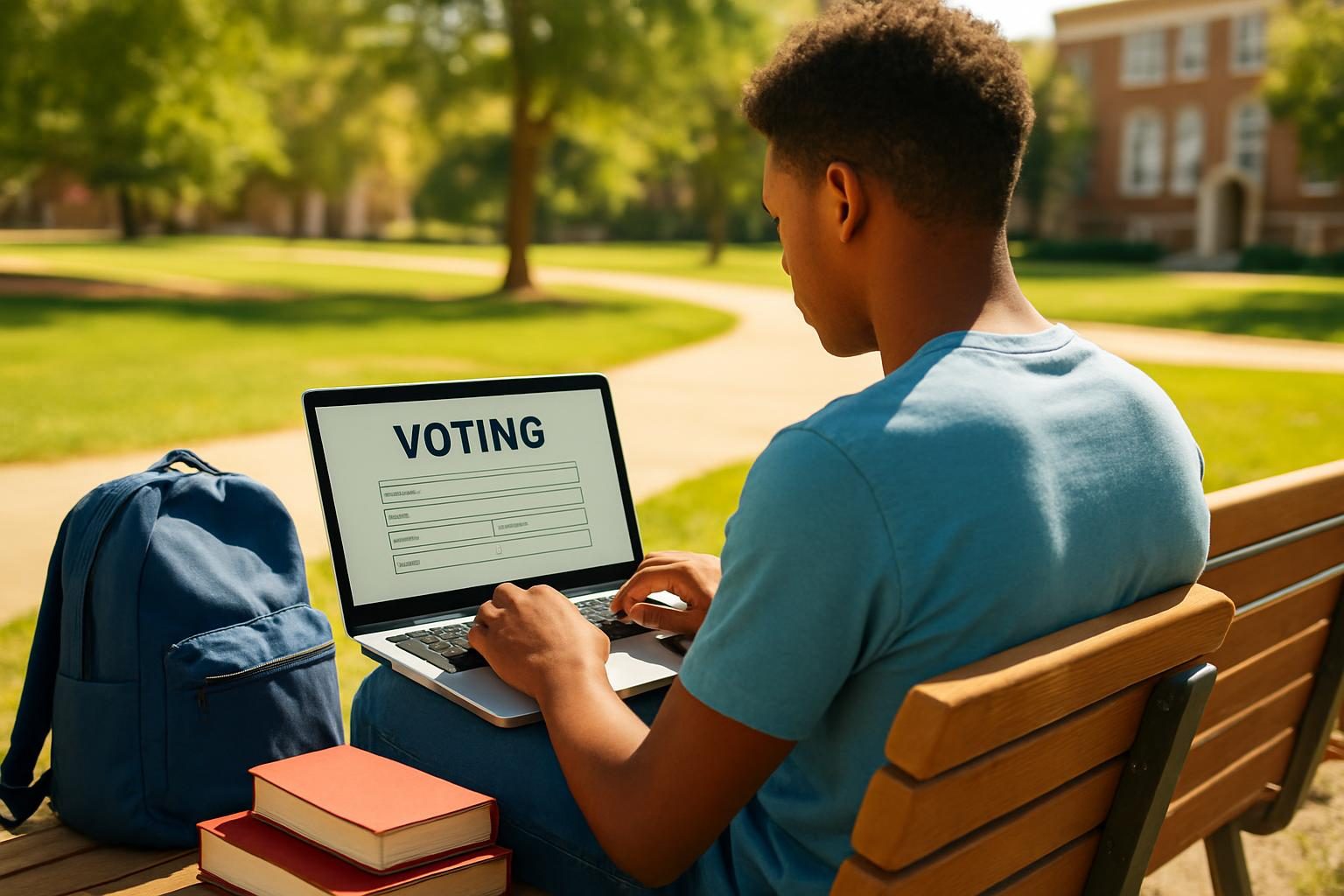
    College student registering to vote online on a laptop at a campus library

    Four ways to register: online, by mail, in person and same day

    States generally offer some mix of four registration paths. Which ones you have depends entirely on where you live, which is exactly why we send you to official sources for the details.

    Online registration

    Many states let you register online through an official state or vote.gov-linked form. It is usually the fastest route, and you typically need information such as your state ID number or other identifying details. Not every state offers it, so check your state page.

    Registration by mail

    Mail registration uses a paper form sent to your state or local election office. It is a good option if you prefer paper or lack online access, but it takes time, so it is the path most likely to be affected by a closing deadline. Ask your election office what counts as on time in your state.

    In-person registration

    You can often register in person at a local election office, and in some states at other designated offices. This can be a smart choice if you want to ask questions and confirm everything on the spot. Check hours and locations before you go.

    Same-day registration

    Same-day registration lets eligible voters register and vote in one trip. It exists in many states, but the rules differ: where you can do it, when, and what documents you need. Never assume your state allows it; confirm on vote.gov or with your state election office first.

    North Dakota is the standout: it has no voter registration at all. If you live there, check with your state election office for what you need to bring to vote.

    Quick reference: how to check each option

    Option What it is Where to confirm for your state
    Online registration Official digital form, available in many states Your state page on vote.gov
    Mail registration Paper form sent to election officials Your state election office
    In-person registration Register at an election office or designated site Your state or local election office
    Same-day registration Register and vote in one visit where allowed Your state page on vote.gov and your state election office
    No registration North Dakota has no voter registration North Dakota state election office

    State-by-state hub: where to look for your deadline

    The cleanest way to use this page is to find your state and go straight to the official source. For every state, your deadline and methods are listed at https://vote.gov/register/ followed by your state name, written in lowercase with hyphens for spaces. We do not list deadline numbers here because rules change and the official page is always the one to trust.

    States with a Vote Blue Wave guide

    We have in-depth guides for a growing list of states. If yours is here, start with it, then confirm on vote.gov.

    Other states: go straight to vote.gov

    Guides for more states are on the way, including Colorado, Minnesota, Oregon and New Jersey. Until they publish, use your state’s page on vote.gov.

    That covers every state: Alabama, Alaska, Arkansas, Connecticut, Delaware, Hawaii, Idaho, Indiana, Iowa, Kansas, Kentucky, Louisiana, Maine, Maryland, Massachusetts, Mississippi, Missouri, Montana, Nebraska, North Dakota, Oklahoma, Rhode Island, South Dakota and the rest. Every one has an official page at vote.gov/register/ plus the state name.

    Midterms are won by neighbors who showed up. Registration is the first, easiest step in that chain.
    Line of diverse voters waiting outside a polling place on a fall morning

    Missed the deadline? Here is what to do

    Do not panic, and do not assume it is over. First, confirm your state’s actual rules with your state election office, because what feels like a missed deadline may have an alternative.

    Check for same-day options

    If your state offers same-day registration, you may be able to register and vote in a single visit. The details vary: where you can do it, what you need to bring, and when it is available. Verify everything on vote.gov or with your state election office before you head out.

    Ask about your status first

    Sometimes people are already registered and do not know it. Use our guide to checking your voter registration status in minutes before assuming you need to start over.

    If registering for this election is not possible

    If your state’s window has truly closed and there is no same-day option, you can still make a difference. Register now so you are ready for every future election, and spend the final days getting friends and family to the polls. A registered voter next year is a win too.

    Register, then make a plan to vote

    Registration is step one. Step two is knowing how you will actually cast your ballot, and that depends on your state: in person on Election Day, early voting, or by mail. Planning now means no surprises on November 3.

    If you plan to vote absentee, read our explainer on how to vote by mail and how absentee ballots work. Mail ballots have their own timing rules, so check your state’s instructions right away.

    If something goes wrong at the polls, such as your name not appearing on the list, you may have options. We are preparing a guide on what to do if you are turned away at the polls and how provisional ballots work. Ask a poll worker about your rights and your state’s process on the spot.

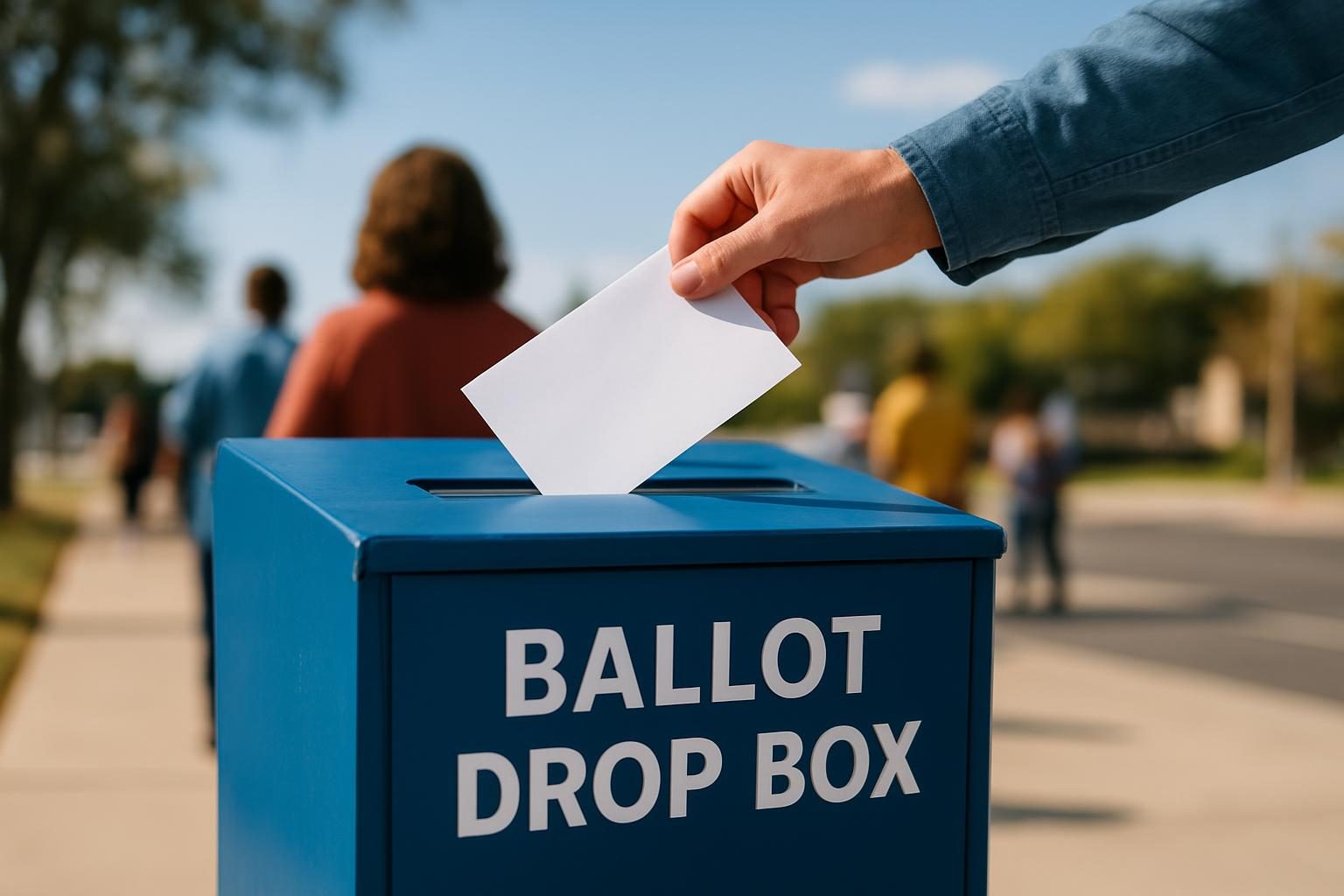
    Hands dropping a ballot into a drop box at golden hour

    Why this midterm matters for 2028

    The 2026 midterms decide who controls the House, a big share of the Senate and dozens of governorships. Those results shape what Congress and the states can do, and they set the stage for the presidential race ahead. Our view: the strongest foundation for 2028 is built by turning out in 2026.

    For a deeper look at the stakes, see what is at stake in the 2026 midterms for 2028. And when you are ready to look past November, our 2028 presidential election hub tracks dates, potential candidates and what is next.

    As of our last check, no major Democrat has formally declared a 2028 presidential run, so the field is wide open. That is exactly why grassroots energy matters now. Waves are built by voters, volunteers and organizers well before any candidate takes a stage.

    Get involved: more than just your own vote

    You can do a lot beyond casting your own ballot. Help a friend check their registration. Offer a ride. Share this page with someone who is not sure whether they are signed up.

    If you have a few hours, volunteer. Learn how to phone bank and text bank for a campaign and reach voters from your couch. Or consider becoming a poll worker in a future election to help keep voting smooth and fair for everyone.

    Take action: Open vote.gov right now, pick your state, and confirm your registration status and options. Then text one friend this page and ask them to do the same.

    Where to start: your roadmap

    1. Today: Visit vote.gov and find your state’s page.
    2. Today: Check whether you are already registered, then register or update your information if you can.
    3. This week: Decide how you will vote and find your polling place or mail ballot instructions.
    4. Before Tuesday, November 3: Bring a friend, family member or neighbor into the plan.
    5. After the election: Stay involved. 2028 is built on what we do now.

    You can also browse everything on registration and voting in our Voting & Registration section.

    Key takeaways

    • The midterm election is Tuesday, November 3, 2026, and every state sets its own registration deadline.
    • Many regular deadlines may have passed, so check today rather than assuming.
    • Vote.gov lists every state’s rules, deadlines and online registration links.
    • Same-day registration exists in many states, but rules differ, so confirm yours with your state election office.
    • North Dakota has no voter registration.
    • Registering and voting in 2026 builds the foundation for 2028.

    Last updated October 2026. Dates and candidate news change fast; we update this page as things are announced.

    Frequently asked questions

    What is the voter registration deadline for the 2026 midterms?

    There is no single national deadline. Each state sets its own, and the midterm election is Tuesday, November 3, 2026. Find your state’s rules and deadline at vote.gov or with your state election office, and do it today, because some deadlines have likely passed.

    What if I missed my state’s registration deadline?

    First, confirm the deadline with your state election office; do not assume. Many states offer same-day registration, though the rules differ, and some let you register at an early voting site or on Election Day. If your state’s window has closed, you can still register for the next election and help others get to the polls this year.

    Can I register to vote online?

    Many states offer online registration, but not every state does, and the requirements differ. The state page for your state on vote.gov, at a web address like https://vote.gov/register/ohio, shows whether online registration is available and links you to the official form.

    Which state does not require voter registration?

    North Dakota does not have voter registration. Every other state requires you to be registered before you can vote, although some let you do it on the same day you vote. Check vote.gov for the rules where you live.

    How do I know if I am already registered?

    You can check your registration status through your state election office, and vote.gov points you to the right place for your state. Check well before Election Day so you have time to fix any problem, such as an old address or a name change.

  • Student Loan Forgiveness Democrats: Where They Stand

    Student Loan Forgiveness Democrats: Where They Stand

    Tens of millions of Americans carry student debt, and for many of them it shapes everything: when they buy a home, start a business or start a family. Democrats have made relief a signature issue, but the party’s approach has been anything but uniform. Here is where student loan forgiveness Democrats back stands today, what has worked, what has stalled, and what is still wide open for 2028.

    Our take: Democrats are broadly united on the goal of easing the student debt burden, but divided on how: broad cancellation, targeted relief, or fixing college costs at the source. We think durable relief needs Congress, which makes the 2026 midterms and the 2028 primaries the moments that matter. No major Democrat has formally declared for 2028 yet, so the party’s next debt plan is still being written.

    Why student debt is a Democratic issue

    Student debt sits at the crossroads of several things progressives care about: economic opportunity, racial and generational equity, and the idea that education should be a ladder, not a trap. A degree is often sold as the path to the middle class. Yet many borrowers find themselves paying for years while balances barely move.

    That is why the issue shows up so often in Democratic Party platform issues and in the broader Democrats’ economy agenda. It touches household budgets directly, and it speaks to younger voters who are among the party’s most important and most persuadable supporters.

    Our view: debt relief is not a handout. It is a correction to a system that asked 18-year-olds to take on enormous obligations with little guidance and few protections.

    What Democrats have actually tried

    The record is a mix of administrative actions, program fixes and court fights. We will stick to the broad shape rather than numbers we cannot verify here.

    Executive action

    Democratic administrations have used the powers of the executive branch to adjust repayment programs and to pursue cancellation for certain groups of borrowers. Some of these efforts delivered real relief to real people. Others ran into legal challenges over how far a president can go without new legislation.

    Repayment and program reforms

    Beyond cancellation, Democrats have pushed to make income-driven repayment more manageable and to fix programs that were supposed to help public servants and defrauded students but were hard to access in practice. These are less flashy than a headline cancellation number, but they change monthly bills and long-term balances for many borrowers.

    Legislation

    Congressional Democrats have introduced proposals ranging from broad cancellation to more targeted relief and to tuition-free or debt-free college. Broad cancellation has not become law. That gap between what voters want and what Congress has passed is the heart of the story.

    Friends discussing household finances and student debt around a kitchen table

    Where the party splits

    It is a mistake to say “Democrats believe X” about student debt, because there is a genuine range. Here is a simplified map of the main camps.

    Approach Core idea Main appeal Main challenge
    Broad cancellation Wipe out a large share of federal student debt Big, immediate relief; simple message Cost, fairness questions, legal authority
    Targeted relief Focus on specific groups such as lower-income borrowers or those defrauded by schools More focused spending; easier to defend Complexity; some borrowers fall through the cracks
    Repayment reform Make monthly payments affordable and balances actually fall Helps future borrowers too Slower, less visible results
    Lower college costs Tuition-free or debt-free college, more public funding Prevents the problem from growing Requires sustained funding and state buy-in

    Many Democrats support more than one of these at once. The real debate is about priority, price tag and what can survive in court and in Congress.

    Relief that depends on a single court ruling or a single election is relief that can disappear overnight.

    The strongest arguments against broad forgiveness

    A serious case for relief should take the critics seriously. Here are the strongest objections, stated fairly.

    Fairness. Some argue it is unfair to people who already paid off their loans, chose a cheaper school, or never went to college. Why should they help cover someone else’s debt?

    Cost to taxpayers. Cancellation is not free. Critics, including some budget-minded voices in both parties, argue the money could be spent on other priorities or that large one-time costs add to deficits.

    It does not fix tuition. If prices keep rising, cancellation could be a one-time bandage on a wound that keeps reopening. Without reform, new borrowers could end up in the same place.

    Who benefits most. Some argue that broad cancellation can help people who go on to earn high incomes, such as those with graduate degrees, more than those who never finished college and still owe money.

    Legal authority. Even some supporters of relief worry that unilateral executive action invites court challenges and sours the public on the idea if it is struck down.

    How we respond

    Our view is that most of these points are arguments for better design, not for doing nothing. Targeting relief, pairing it with cost controls and passing it through Congress can answer the fairness, cost and legal concerns at once. Reasonable people can disagree about how much to forgive and who should qualify, and we expect that debate to continue through the primaries.

    State capitol dome at golden hour symbolizing legislative action on student debt

    Why Congress matters more than any single candidate

    Executive actions can be paused, challenged or reversed. Laws are sturdier. If you want relief that lasts, the most reliable path is legislation, and that depends on who controls the House and Senate.

    That is why the 2026 midterm elections matter so much. Every House seat and about a third of the Senate are on the ballot on Tuesday, November 3, 2026. The majority that emerges will set the terms for what is possible on student debt, on health care and on the economy.

    Maps matter too. How districts are drawn shapes who wins, and we explain the stakes in our guide to gerrymandering.

    Take action: Check your registration status today at vote.gov and confirm your details with your state election office. If you carry student debt, tell one friend who does too. A conversation at the kitchen table is how turnout starts.

    What the 2028 field might say

    As of our latest check, no major Democrat has formally declared a 2028 presidential run. That means there are no official campaign plans on student debt yet, and we are not going to guess at them.

    Widely reported potential candidates include governors such as Gavin Newsom, Josh Shapiro, JB Pritzker, Gretchen Whitmer and Andy Beshear, along with Pete Buttigieg, Kamala Harris, Alexandria Ocasio-Cortez, Cory Booker, Raphael Warnock, Ruben Gallego, Mark Kelly, Elissa Slotkin, Chris Van Hollen and Ro Khanna. They are potential candidates only. Some have records on higher education and debt, and voters will have a chance to compare them if and when they enter.

    Follow who is weighing a bid on our 2028 Democratic candidates tracker, and see the full picture on our 2028 presidential election hub.

    Questions worth asking every candidate

    1. Do you support broad cancellation, targeted relief or both, and how would you pay for it?
    2. How would you make sure relief survives court challenges?
    3. What will you do to stop tuition and borrowing from growing again?
    4. How will you fix repayment programs that already exist so borrowers can actually use them?
    5. What is your plan for people who owe money but never finished a degree?

    Primaries are where the party decides what it will fight for. Showing up is how your priorities make the list.

    Volunteers canvassing a neighborhood to encourage voter participation

    Where your voice counts: primaries and conventions

    The Democratic primary season begins early in 2028. The DNC approved the early window on August 15, 2026: South Carolina on January 22, Nevada on February 1, New Hampshire on February 8, New Mexico on February 15, Michigan on February 22 and Virginia on February 29. Super Tuesday is March 7, 2028. Iowa is not in the Democratic early window. Every date is on our 2028 Democratic primary calendar.

    New Hampshire state law requires it to hold the first primary in the nation, which clashed with the DNC calendar in 2024, so watch for changes. Our New Hampshire primary explainer tracks it.

    If you want to understand how delegates are won, read how presidential primaries work. The party then gathers at the 2028 Democratic National Convention on August 7-10, 2028, with Boston, Denver and Philadelphia as finalist host cities. The final pick is expected later in 2026, and we will update when it is announced. More at our convention guide.

    Student debt in the bigger economic picture

    Debt relief does not stand alone. It connects to wages, housing and health costs, and Democrats are weighing how these fit together. Related debates include the minimum wage increase debate and our look at the Democratic health care plan.

    Our view is that a message about affordability is strongest when it ties these pieces together. Voters feel one budget, not separate policy silos.

    How to make this count

    Opinions are not votes. Here is how to turn your concern about student debt into power.

    • Register and check your status. Rules and deadlines differ by state. Confirm on vote.gov or with your state election office. Our registration guide walks through it.
    • Vote on November 3, 2026. Congress is where lasting relief gets written.
    • Volunteer. Start with our campaign volunteer starter guide.
    • Get local. School boards, state legislatures and public universities all shape college costs. See how to get involved locally.

    For more on where the party stands across issues, browse our Issues & Ideas section.

    Key takeaways

    • Democrats broadly agree on easing student debt but differ on cancellation, targeting and cost reform.
    • Lasting relief likely needs Congress, because executive actions can be challenged in court.
    • The strongest critiques center on fairness, cost, tuition growth and legal authority, and they deserve real answers.
    • No major Democrat has formally declared for 2028, so official student debt plans are not out yet.
    • The 2026 midterms are on November 3, 2026, and your registration status is the first thing to check.

    Last updated October 2026. Dates and candidate news change fast; we update this page as things are announced.

    Frequently asked questions

    What is the Democratic position on student loan forgiveness?

    There is no single position. Many Democrats support broad forgiveness, others prefer targeted relief for specific groups, and some focus on lowering college costs going forward. Party-wide messaging is still being worked out, and no 2028 platform exists yet.

    Have any 2028 Democratic candidates announced a student debt plan?

    No. As of our latest check, no major Democrat has formally declared a 2028 presidential run, so there are no official campaign plans yet. We track potential candidates on our Democratic candidates page and will update this article as policies are announced.

    Why have forgiveness efforts run into legal trouble?

    Executive-branch efforts at broad cancellation have faced court challenges over how much authority the president has to cancel debt without a new law from Congress. That is a big reason many advocates argue lasting relief needs legislation, which makes congressional elections matter.

    What are the main arguments against broad forgiveness?

    Critics raise fairness to people who already paid or never borrowed, cost to taxpayers, and the concern that cancellation does not stop tuition from rising. Supporters answer that relief can be paired with college-cost reforms, but the debate is real and worth hearing out.

    How can I influence where Democrats go on student debt?

    Register and vote in the 2026 midterms and the 2028 primaries, then show up for candidates whose plans you believe in. Confirm your registration status on vote.gov or with your state election office, and consider volunteering or attending local meetings.

  • Presidential Eligibility Requirements: Who Can Run?

    Presidential Eligibility Requirements: Who Can Run?

    Who gets to run for president of the United States? Fewer rules than you might think, and that is good news for a democracy that belongs to everyone. The presidential eligibility requirements are short, clear and written right into the Constitution.

    Quick answer: To be president, a person must be a natural-born citizen, at least 35 years old, and a US resident for 14 years. The 22nd Amendment also limits a president to two elected terms. No prior office, degree or party membership is required.

    The three constitutional requirements

    The Constitution lists exactly three qualifications to serve as president. They apply to every candidate, from every party, in every election. Here they are at a glance.

    Requirement What it says
    Citizenship Must be a natural-born citizen
    Age Must be at least 35 years old
    Residency Must have been a US resident for 14 years

    That is the whole list in the original text. Beyond these three, there is one more limit that comes from a later amendment, which we cover below.

    Natural-born citizen

    The president must be a natural-born citizen. In plain terms, that means a person who was a US citizen from birth rather than someone who became a citizen later through naturalization.

    The Constitution does not spell out every edge case, and we are not here to give legal advice. If you are curious about a specific situation, a qualified attorney or a nonpartisan legal resource is the right place to ask.

    At least 35 years old

    A president must be at least 35. That is the youngest a person can be to hold the office. It is the same age floor that applies today, whether the election is in 2028 or any other year.

    Plenty of young people care deeply about this election. If you are under 35, you cannot be president yet, but you can register, vote, volunteer and organize your friends right now.

    14 years of US residency

    A president must have been a US resident for 14 years. The Constitution does not require those years to be consecutive or tied to one state, and it does not require holding any prior office.

    The rulebook for who can run is short, and it opens the door wider than most people realize.

    The 22nd Amendment: a two-term limit

    The 22nd Amendment limits a president to two elected terms. That is the fourth rule voters should know, even though it is not part of the original three qualifications.

    This matters for 2028 because the current president is term-limited. We break down what the amendment says and what it means for political chatter in our explainer, Can Trump Run for a Third Term? The 22nd Amendment.

    What is NOT required to run for president

    Many people assume there are hidden hurdles. There are not. The Constitution does not require:

    • A college degree or any specific education
    • Prior experience in elected office
    • Membership in a political party
    • A particular amount of wealth

    That is why the field can include governors, senators, members of Congress, former cabinet officials and others. It is also why the door stays open to people who have never held office at all.

    Meeting the constitutional rules makes someone eligible. Actually winning is a different matter. Parties have their own processes, states have ballot access rules, and candidates need money, volunteers and voters.

    Volunteers with clipboards talking to neighbors on a sunny sidewalk

    Eligible is not the same as on the ballot

    The Constitution tells us who may serve. It does not tell us how a candidate gets from interested to on your ballot. That path runs through primaries, party rules and state-by-state procedures.

    For Democrats, the 2028 primary season begins in the early window the DNC approved on August 15, 2026, at its summer meeting in Austin, Texas. The early states are:

    1. South Carolina: January 22, 2028
    2. Nevada: February 1, 2028
    3. New Hampshire: February 8, 2028
    4. New Mexico: February 15, 2028
    5. Michigan: February 22, 2028
    6. Virginia: February 29, 2028

    Super Tuesday follows on March 7, 2028. Iowa is not in the Democratic early window. For the full run-down, see our 2028 Democratic primary calendar and our guide to how presidential primaries work.

    One thing to watch: New Hampshire state law requires it to hold the first primary in the nation. That clashed with the DNC calendar in 2024, so changes are possible. We will update this page if the situation shifts.

    Who might run in 2028?

    Here is where things stand. As of October 5, 2026, no major Democrat has formally declared a 2028 presidential run. No major Republican has either. What exists right now is a lot of speculation about potential candidates.

    Widely reported potential Democratic candidates include Gavin Newsom, Josh Shapiro, JB Pritzker, Gretchen Whitmer, Andy Beshear, Pete Buttigieg, Kamala Harris, Alexandria Ocasio-Cortez, Cory Booker, Raphael Warnock, Ruben Gallego, Mark Kelly, Elissa Slotkin, Chris Van Hollen and Ro Khanna. These are potential candidates only. None has announced.

    On the Republican side, widely reported potential candidates include JD Vance, Marco Rubio, Ron DeSantis, Ted Cruz and Brian Kemp. Again, none has declared. Republicans are expected to keep Iowa first on their 2028 calendar, per RNC reports from September 2026, but that calendar is not final.

    Want to dig into individual names? Start with our 2028 Democratic candidates tracker, or read profiles like Gavin Newsom 2028, Josh Shapiro 2028, JB Pritzker 2028 and Gretchen Whitmer 2028.

    Anyone can be eligible. It takes voters, volunteers and organizers to turn a candidacy into a win.

    State capitol dome glowing at golden hour

    How the campaign gets going

    Before anyone formally announces, there is an unofficial phase of travel, fundraising and relationship-building. Political insiders call it the invisible primary. Our explainer, When Do 2028 Presidential Campaigns Start?, walks through how it works.

    Once the field is set, expect debates. We plan to cover how presidential debates work and how to watch them as the calendar firms up. No debate dates have been announced yet.

    Then comes the general election on Tuesday, November 7, 2028. The winner needs 270 of 538 electoral votes. Learn why that number matters in How the Electoral College Works, and see where the race could be decided in our 2028 electoral map guide. The Electoral College electors meet on December 18, 2028, and the inauguration is January 20, 2029. We will also explain what happens on Inauguration Day 2029 in a future article.

    Start with 2026

    The road to 2028 runs through this year. The 2026 midterm elections are on Tuesday, November 3, 2026, with all 435 House seats, about a third of the Senate and 36 governors on the ballot. Many of the governors and senators on those ballots, and some who are not, are talked about as future presidential contenders.

    In our view, what happens in the midterms shapes the political ground for 2028. Read 2026 Midterm Elections: What’s at Stake for 2028 to see why every race matters.

    Take action: Check your voter registration today at vote.gov, where every state’s official rules, deadlines and online registration links live. Then text one friend and ask if they are registered too. Not sure where to start? Our guide, How to Register to Vote, walks you through it. Always confirm your state’s deadlines on vote.gov or with your state election office.

    College student using a laptop to check voter registration

    Why this matters for the Democratic path ahead

    Knowing the basics helps you cut through noise. When someone claims a candidate is disqualified, or that a rule says something it does not, you can check it against the Constitution. Facts first, opinions clearly labeled.

    Here is our view: a healthy democracy needs more people participating, not fewer. Eligibility rules are the floor. Registering, voting, knocking on doors and making calls are how we build something on top of it. If you want to see where the party stands on the issues, explore Democratic Party platform issues, and follow the big picture on our 2028 presidential election hub.

    You can also browse everything in our 2028 Election section as new stories are published.

    Key takeaways

    • The Constitution requires a president to be a natural-born citizen, at least 35 years old, and a US resident for 14 years.
    • The 22nd Amendment limits a president to two elected terms.
    • No degree, prior office, party membership or minimum wealth is required to run.
    • As of October 5, 2026, no major Democrat or Republican has formally declared a 2028 run; names are only potential candidates.
    • The general election is Tuesday, November 7, 2028, and 270 of 538 electoral votes win.
    • Check your registration and rules at vote.gov or your state election office.

    Last updated October 2026. Dates and candidate news change fast; we update this page as things are announced.

    Frequently asked questions

    What are the presidential eligibility requirements?

    The Constitution requires a president to be a natural-born citizen, at least 35 years old, and a US resident for 14 years. The 22nd Amendment also limits anyone to two elected terms as president.

    Can someone under 35 run for president?

    The Constitution sets 35 as the minimum age to serve as president. Because the age requirement applies to holding the office, a candidate must meet it to take office. If you are under 35, you can still volunteer, organize and vote once you are eligible.

    Do you have to be a politician or hold office to run for president?

    No. The Constitution does not require any prior experience or office. The listed qualifications are citizenship status, age and residency, plus the two-term limit from the 22nd Amendment.

    Can a president serve more than two terms?

    The 22nd Amendment limits a president to two elected terms. For a deeper look at how that applies to current political talk, see our explainer on the 22nd Amendment and third-term questions.

    Has anyone declared a run for president in 2028?

    As of our latest check on October 5, 2026, no major Democrat has formally declared a 2028 presidential run, and no Republican has either. Many names are widely reported as potential candidates. We update our candidate tracker as news breaks.

  • Democrats Climate Policy: What Passed and What’s Next

    Democrats Climate Policy: What Passed and What’s Next

    Democrats have spent years turning climate promises into laws, tax credits and factories. Now the fight is over what survives, what comes next and who gets to decide. Here is a clear look at Democrats and climate policy, and why your vote in 2026 and 2028 shapes the answer.

    Our take: Democratic climate policy has moved from slogans to real law, most notably the 2022 Inflation Reduction Act, and the next chapter will be decided at the ballot box. We think the strongest path pairs clean energy with jobs, lower bills and cleaner air, and that voters who register, show up and organize are what make it possible.

    What Democrats have actually passed

    For decades, climate action in Washington meant hearings and failed bills. That changed in 2022, when Democrats in Congress passed the Inflation Reduction Act and a Democratic president signed it. It is widely described as the largest federal climate investment in US history.

    The law relied mostly on incentives rather than mandates. Tax credits and grants were aimed at clean electricity, electric vehicles, home efficiency upgrades and domestic manufacturing of things like batteries and solar components. The idea was simple: make clean energy cheaper and build more of it here.

    Democrats also supported earlier investments in roads, bridges, transit, grid upgrades and electric vehicle charging through the bipartisan infrastructure law of 2021. Not every Democrat thought these laws went far enough, and we will get to that debate below. But together they marked a real shift from talking to building.

    Beyond Congress

    A lot of climate policy happens outside Capitol Hill. Democratic governors, legislatures and mayors have set clean electricity goals, updated building codes, expanded transit and invested in resilience against floods, fires and heat. State action matters because it can move faster than Washington and show what works.

    That is one reason local elections matter so much. Utility regulators, zoning boards and city councils quietly decide how fast clean energy gets built in your community. Our guide to getting involved in politics locally shows how to take part without running for anything.

    Climate policy is not only a Washington story. It is also a story about your utility board, your city council and your ballot.

    Workers installing rooftop solar panels on a suburban home

    The Democratic case for climate action

    Here is the argument we find most persuasive, and it is our opinion, not a settled fact: climate policy is economic policy. Building clean energy means construction, manufacturing, electrical work and long-term demand for skilled trades. Efficient homes and cheaper power can lower household costs over time.

    There is a health case too. Cleaner air means fewer asthma triggers and less pollution in neighborhoods that have lived near highways, ports and power plants for generations. And there is a security case: producing more energy at home, from more sources, makes communities less exposed to price shocks overseas.

    Democrats also frame climate as a question of fairness. The people hit first and hardest by heat, floods and pollution are often those with the fewest resources to recover. Good policy should reach them first, not last.

    Where Democrats still disagree

    Democrats are united on the problem and divided on the tools. That is healthy, and it will play out in the 2028 primary. Here are the main fault lines.

    Debate One view Another view
    Carbon pricing Put a price on pollution and let markets do the work Rely on public investment and standards, not new costs on families
    Permitting reform Speed up approvals so clean energy and transmission lines get built Keep strong environmental and community review in place
    Scale of the agenda Go bigger and faster, in the spirit of the Green New Deal framework Focus on achievable steps that can win votes in Congress
    Fossil fuel transition Set firm phase-out goals Move gradually and protect workers and regions that depend on energy jobs

    The Green New Deal, introduced as a House resolution in 2019, is a good example. It was a statement of goals linking climate action with jobs and fairness, not a detailed bill. Democrats still argue about how much of it to adopt and how to pay for it.

    These debates connect to the broader economic agenda, including wages and worker protections. For the full picture, see our explainer on the Democrats’ economy plan.

    The strongest arguments from the other side

    Good democracy means taking opposing arguments seriously. Here are the strongest ones critics raise, stated fairly.

    1. Cost and prices. Critics argue that climate policies can raise energy costs, and that households and small businesses feel those costs before they see benefits. They say affordability should come first.
    2. Reliability. Some argue that moving too quickly away from fossil fuels risks strains on the grid, especially during extreme weather. They want firm, always-available power prioritized.
    3. Government spending. Fiscal conservatives question whether large federal subsidies are the best use of taxpayer money, and whether markets would deliver cleaner energy without them.
    4. Jobs and communities. Lawmakers from energy-producing regions warn that fast transitions can hurt workers and towns that depend on oil, gas and coal. Some of these concerns are shared by Democrats from those areas.
    5. Global emissions. Some argue that US action alone cannot solve a global problem, and that policy should weigh what other large emitters do.

    Our view is that these concerns deserve real answers rather than dismissal. That means keeping a close eye on bills, building the grid alongside new generation, and investing in the workers and places most affected. Climate policy wins when people can see that it helps them.

    Climate policy wins when people can see what it does for them: steadier jobs, cleaner air and lower bills.

    Residents at a community town hall meeting about local energy

    What is next: the fight over durability

    The biggest question now is whether these policies last. Laws passed by one majority can be changed by the next, and climate tax credits and agency rules have been targets of repeal and rollback efforts. Because the details keep shifting, check current reporting for what is in force today.

    That is why elections are climate policy. The 2026 midterms, held Tuesday, November 3, 2026, will decide all 435 House seats, about a third of the Senate and 36 governorships. Control of Congress shapes what can be protected, expanded or undone. We cover the stakes in our 2026 midterm elections guide.

    Beyond that, the 2028 general election is Tuesday, November 7, 2028, and the new president takes office January 20, 2029. Climate will be one of the issues Democratic candidates are asked about from the first debate on.

    What to watch in the 2028 field

    No major Democrat has formally declared a 2028 run as of this writing. Several governors, senators and former officials are widely reported as potential candidates, and each has a different climate record and style. Our 2028 Democratic candidates tracker follows who is considering a run, and we will update it as announcements happen.

    Here is what we suggest listening for: Do they have a plan to lower energy bills? Do they talk about workers and rural communities? Do they have a realistic path through Congress, or through states and agencies? Specifics matter more than slogans.

    The calendar also matters. The DNC approved its early window in August 2026, starting with South Carolina on January 22, 2028, and Nevada on February 1. Our 2028 Democratic primary calendar lists every date so far, and climate questions will be asked in those early states.

    Volunteers canvassing a neighborhood sidewalk on a sunny day

    Why climate is also a democracy issue

    Climate policy depends on a working democracy. If maps are drawn to protect incumbents and voting is made harder, public opinion on clean air and clean energy has a tougher time turning into law. That is why we link climate to the basics of fair elections.

    Our explainers on gerrymandering and the Voting Rights Act show how the rules of the game shape the policies we get. Fair maps and open access to the ballot are climate policy, in the sense that they decide who is heard.

    For a wider look at where the party stands across issues, see Democratic Party platform issues, and browse more in the Issues & Ideas section.

    How you can help

    You do not need to be an expert to matter here. Elections are won by people who show up, knock on doors, make calls and bring friends along. Here is a simple starting list:

    • Check your registration. Every state’s rules, deadlines and online registration links are on vote.gov, and you can swap in your own state name in the web address. Confirm your deadline there or with your state election office.
    • Vote in every election. Local and state races decide utilities, zoning and building codes.
    • Volunteer. Our starter guide to volunteering for a campaign walks through what to expect.
    • Bring a friend. A personal conversation is more persuasive than any ad.

    Take action: Take five minutes today to confirm your voter registration on vote.gov or with your state election office, then text one friend and ask whether they are registered too. Our guide to registering in every state makes it easy.

    Key takeaways

    • The 2022 Inflation Reduction Act is widely described as the largest federal climate investment in US history, built mostly on incentives.
    • Democrats agree on the problem but debate the tools, from carbon pricing to permitting reform to the scale of the agenda.
    • Critics raise real concerns about costs, reliability, spending and affected workers, and we think they deserve real answers.
    • Laws can be undone, so elections, including the November 3, 2026 midterms, decide how long climate policy lasts.
    • No major Democrat has formally declared for 2028 yet; check our tracker for updates.
    • Confirm your registration on vote.gov and get involved locally; that is where change starts.

    Last updated October 2026. Dates and candidate news change fast; we update this page as things are announced.

    Frequently asked questions

    What is the biggest climate law Democrats have passed?

    The Inflation Reduction Act, signed in 2022 under a Democratic president and Congress, is widely described as the largest federal climate investment in US history. It used tax credits, grants and loans to encourage clean energy, electric vehicles, efficiency upgrades and domestic manufacturing. Parts of it have been the target of repeal and rollback efforts since, so check current reporting for what remains in force.

    Do all Democrats agree on climate policy?

    No. Democrats broadly agree that climate change is real, human-caused and urgent, but they debate the tools. Some favor a carbon price, others prefer public investment and standards, and others emphasize permitting reform to build clean energy faster. Potential 2028 candidates have not laid out final platforms, and we will update this page as they do.

    What is the Green New Deal?

    The Green New Deal is a framework, introduced as a House resolution in 2019, that links climate action with jobs and economic fairness. It was a statement of goals, not a detailed law, and Democrats disagree about how much of it to adopt. It remains a reference point in primary debates.

    Can climate policy really change who wins elections?

    It can matter, especially when framed around jobs, energy bills and health. We think climate works best as part of an economic message that voters can feel in their communities. What moves any given voter varies by place, so local organizing and listening matter.

    How can I influence climate policy as a voter?

    Start by confirming your registration on vote.gov or with your state election office, then vote in every election, including local ones where utilities, zoning and building codes are decided. You can also volunteer with campaigns, attend local meetings and talk with neighbors. Our guides to getting involved locally and volunteering are good places to begin.

  • How Delegates Are Awarded in Democratic Primaries

    How Delegates Are Awarded in Democratic Primaries

    Winning a state primary is not the same as winning the nomination. Delegates are the real prize, and the Democratic Party has a specific system for handing them out. Understanding how delegates are awarded in the Democratic primary makes every 2028 result easier to read.

    Quick answer: Democrats award pledged delegates proportionally, not winner-take-all. A candidate generally needs at least 15% of the vote in a state or district to win delegates there, and delegates are then divided in proportion to the vote among those who clear that bar. Check the DNC’s official rules for the fine print.

    Why delegates matter more than the headline winner

    On primary night, news outlets declare a winner. But the nomination is decided by delegates, the people who formally cast votes for a candidate at the Democratic National Convention. The 2028 convention is set for August 7-10, 2028, and the host city is still being decided among Boston, Denver and Philadelphia.

    Think of it this way: each state is a pot of delegates, and the primary decides how that pot gets split. A candidate who comes in second can still walk away with a big share. That is very different from a system where the winner takes everything.

    If you want the bigger picture first, start with our guide to how presidential primaries work, then come back here for the math.

    The core idea: proportional allocation

    Democrats use proportional representation for pledged delegates. In plain terms, if a candidate earns roughly half of the qualifying vote, they should earn roughly half of the delegates. The party chose this approach so that more voters see their preference reflected in the final count.

    Republicans handle this differently in some states, and some GOP contests allow winner-take-all outcomes. The Democratic approach is a deliberate contrast: no state hands all its delegates to a narrow winner.

    Two levels of delegates

    Democratic delegates are generally allocated at two geographic levels. Some are tied to congressional districts, and others are tied to the state as a whole. The party’s official delegate selection rules set out how many go where.

    The exact delegate counts for each 2028 contest have not been announced in the sources we track. We will update this page when the DNC publishes them.

    In a proportional system, finishing second still earns real delegates, and every vote counts toward the final split.

    Diverse voters lining up outside a polling place

    The 15% threshold, explained

    The threshold is the heart of the system. In general, a candidate must reach 15% of the vote, in a district or statewide depending on the level, to earn delegates there. Candidates below the line typically receive none at that level.

    Why have a threshold at all? It keeps the delegate math manageable and prevents the convention floor from being split among a long list of tiny shares. It also rewards candidates who build real support.

    A simple example (illustrative only)

    Imagine a hypothetical district with four delegates and three candidates. This is an invented example to show the logic, not a real result or prediction.

    Candidate Share of vote Clears 15%? Result
    Candidate A 50% Yes Counted
    Candidate B 40% Yes Counted
    Candidate C 10% No No delegates

    Candidate C is out of the delegate count. The remaining vote is what gets divided, so A and B split the four delegates in proportion to their combined support. The party’s rules spell out exactly how fractions are rounded.

    What happens to votes for candidates under the line

    Votes for a candidate below the threshold do not vanish from the total, but they do not earn that candidate delegates either. In practice, the delegates are divided among the candidates who cleared the bar.

    That is why a crowded field can be so dramatic. A candidate sitting just under 15% in a district may walk away with nothing, while a rival just over it picks up a delegate. Small swings can matter, and that is a powerful reason to show up and vote.

    Fifteen percent is the line between winning delegates and winning nothing, which makes every district a real contest.

    Campaign volunteers working phones in front of a wall map

    Pledged delegates vs. superdelegates

    Not every delegate is awarded through a primary. Pledged delegates are the ones won by candidates based on voter support in primaries and caucuses. Superdelegates are party leaders and elected officials who hold a different role.

    The rules governing superdelegates have changed over the years, particularly regarding whether they can vote on the first ballot at the convention. We cover the current framework in our explainer on what superdelegates are and how the rules work.

    How the 2028 calendar shapes delegate math

    Delegates are awarded contest by contest, so the order of states matters. The DNC approved the 2028 early window on August 15, 2026, at its summer meeting in Austin, Texas. The sequence runs through South Carolina, Nevada, New Hampshire, New Mexico, Michigan and Virginia before Super Tuesday on March 7, 2028.

    1. South Carolina: January 22, 2028
    2. Nevada: February 1, 2028
    3. New Hampshire: February 8, 2028
    4. New Mexico: February 15, 2028
    5. Michigan: February 22, 2028
    6. Virginia: February 29, 2028
    7. Super Tuesday: March 7, 2028

    Early states award relatively few delegates compared with the big Super Tuesday haul, but they build momentum, headlines and donations. Our 2028 Democratic primary calendar tracks every date, and our Super Tuesday 2028 guide covers the biggest delegate day of the early season.

    One thing to watch: New Hampshire state law requires it to hold the first primary in the nation, which clashed with the DNC calendar in 2024. Read our New Hampshire primary explainer for what could change. Iowa is not in the Democratic early window this cycle; see why in our Iowa caucus breakdown.

    Crowd waving blue signs at an outdoor rally at golden hour

    Who is competing for those delegates?

    As of our last check in early October 2026, no major Democrat has formally declared a 2028 presidential run. Names widely reported as potential candidates include governors like Gavin Newsom, Josh Shapiro, JB Pritzker, Gretchen Whitmer and Andy Beshear, along with figures such as Pete Buttigieg, Kamala Harris and Alexandria Ocasio-Cortez. They are potential candidates only, and nothing is official.

    Follow the field in our 2028 Democratic candidates tracker. A crowded field is exactly where the 15% rule gets interesting, because many candidates will fight to stay above the line.

    Our view: proportional rules are a strength of the Democratic process. They give voters in every part of a state a stake in the outcome and reward candidates who build broad coalitions rather than narrow ones.

    Can you vote in a Democratic primary?

    Delegates only count if people turn out, and eligibility to vote in a party’s primary varies by state. Some states have open primaries, others limit participation to registered party members. Learn the differences in our guide to open vs. closed primaries.

    Registration rules and deadlines differ everywhere, so do not rely on memory. Every state’s official rules and online registration links are on vote.gov (swap in your state’s name at the end of the web address), and you can also confirm with your state election office. Our how to register to vote guide walks you through it.

    Take action: Check your registration status today on vote.gov, then text one friend and ask whether they are registered too. Primary delegates are won by the people who show up, and that starts with being ready.

    Key takeaways

    • Democrats award pledged delegates proportionally, not winner-take-all.
    • A candidate generally needs 15% of the vote in a state or district to win delegates there.
    • Votes for candidates under the threshold earn them no delegates, so close races can swing delegate counts.
    • Superdelegates are separate from pledged delegates; see our explainer for the current rules.
    • The 2028 early window runs from South Carolina on January 22, 2028 to Virginia on February 29, with Super Tuesday on March 7, 2028.
    • Confirm your registration and primary rules on vote.gov or with your state election office.

    Last updated October 2026. Dates and candidate news change fast; we update this page as things are announced.

    Frequently asked questions

    What is the 15% threshold in Democratic primaries?

    It is the minimum share of the vote a candidate generally needs, in a state or a district, to win any delegates there. Candidates below it typically get none, and their share is redistributed among those who cleared the bar. Confirm the details in the DNC’s official delegate selection rules.

    Does the Democratic Party use winner-take-all primaries?

    No. Democratic presidential primaries use proportional allocation, so delegates are divided according to vote share among candidates who clear the threshold. This differs from some Republican contests, which may use winner-take-all rules.

    What is the difference between pledged delegates and superdelegates?

    Pledged delegates are won through primaries and caucuses and are tied to the voters’ choices. Superdelegates are party leaders and elected officials who are not awarded through voting in the same way. Our superdelegates explainer covers the current rules in detail.

    How many delegates does it take to win the Democratic nomination?

    A candidate needs a majority of the pledged delegates at the convention to win on the first ballot. The exact number for 2028 depends on the final delegate count, which the DNC has not finalized in the sources we track. We will update this page when it is announced.

    Do I need to be registered to vote in a Democratic primary?

    In most states, yes, and some states limit who can vote in a party’s primary. Rules differ by state, so check your registration status and primary rules on vote.gov or with your state election office well before the contest. Our Primaries & Calendar section has more guides.

  • Moved? How to Update Your Voter Registration

    Moved? How to Update Your Voter Registration

    You packed the boxes, changed your address with the post office and finally found the coffee maker. But there is one more item on the moving checklist that really matters: your voice. If you want to update voter registration after moving, the good news is that it usually takes just a few minutes.

    A new address can mean a new polling place, a new ballot and new local races where your vote carries real weight. Let’s get you set so nothing stands between you and Election Day. If you do encounter any issues at your polling place, learn what to do if turned away at polls.

    Quick answer: To update your voter registration after moving, go to vote.gov, pick your state and follow its official steps. If you moved within your state, you usually update your address. If you moved to a new state, you generally register there. Rules and deadlines differ, so confirm yours on vote.gov or with your state election office.

    Why updating your registration after a move matters

    Your registration is tied to where you live. That address decides which ballot you get, which districts you vote in and where you cast your vote. When you move, your old registration doesn’t follow you automatically.

    Think of it like this: you wouldn’t leave your old address on your mail forwarding forever. Your voter registration works the same way. A quick update keeps your vote counting where you actually live.

    And here is the optimistic part. Local races are often decided by small margins, and the people who show up make the difference. Every updated registration is a vote that is ready to count. If you want to go further, you can even consider becoming a poll worker to help others vote.

    Did you move within your state or to a new state?

    This is the first question to answer, because it changes your next step.

    You moved within the same state

    In most states you update your existing registration with your new address. That keeps your voting history on file and gets you assigned to the right local districts. Many states let you do this online, while others use a paper form or in-person update.

    You moved to a different state

    Voter registration is run by each state, so you will generally need to register in your new state. Start by choosing your new state on vote.gov. It is also worth checking how your previous state handles cancelling your old registration, since you should only be registered in one place.

    Your vote follows your address, so every move is a chance to make sure your voice is ready to count.

    Hands using a phone to check an address update next to moving boxes and a house key

    How to update voter registration after moving: step by step

    Here is a simple plan. Each step is quick, and you can finish the whole thing in one sitting.

    1. Go to vote.gov. Choose your state to find its official registration page. Every state’s page follows the format https://vote.gov/register/STATE-NAME, such as Ohio or New York.
    2. Check your current status. See what address is on file. Our guide to checking your voter registration status walks you through it.
    3. Gather your information. You will typically need your name, date of birth, new address and an ID number. Requirements vary by state.
    4. Submit your update. Use your state’s online option if it has one, or follow its instructions for a mail form or in-person update.
    5. Confirm it went through. Check your status again after a little time has passed, and watch for a confirmation from your election office.

    If you want a broader walkthrough, our guide to how to register to vote in every state covers the basics.

    What you will probably need

    Exact requirements depend on your state, but most updates ask for a similar set of details. Having them ready makes the process fast.

    Item Why it is asked for
    Full legal name Matches you to your existing record
    Date of birth Confirms your identity and eligibility
    New home address Determines your polling place and districts
    Previous address Helps election officials find and update your record
    ID number (such as a driver’s license or part of a Social Security number) Verifies your identity; requirements vary by state

    Not sure which ones your state wants? Your vote.gov state page and your state election office will tell you exactly what applies.

    Ways to update, and what to know about timing

    Depending on where you live, you may have several ways to update. Many states offer online updates. Others accept mail forms or in-person updates at an election office. Some states link address changes at the motor vehicle office to voter records, but don’t assume it happened automatically. Double check.

    Same-day registration exists in many states, but the rules differ a lot from place to place. We can’t tell you your state’s deadline here, because it depends on where you live and can change. Confirm the current cutoff on vote.gov or with your state or local election office, and do it sooner rather than later.

    A five-minute update today can save you a stressful scramble on Election Day.

    Diverse voters lining up at a neighborhood polling place entrance

    Moving to one of our spotlight states?

    Each state has its own process. If you are heading to one of these places, our state guides break down the details in plain language:

    Heading somewhere else? We are building out guides for every state, including Colorado, Oregon and Minnesota. Until yours is up, your state’s page on vote.gov is the place to start. Note that North Dakota has no voter registration at all, so a move there works differently.

    Voting by mail after a move

    If you vote by mail or absentee, your new address matters even more. Ballots go to the address on file, so an out-of-date record can mean a ballot sent to the wrong home. Update your registration first, then check how mail voting works in your state with our guide to how to vote by mail and absentee ballots.

    If you are a college student, or you are living away from your old home, your state’s rules on where you can register may have some wrinkles. Check vote.gov or your election office to make sure you register where you are eligible.

    Why this matters for the elections ahead

    The 2026 midterm elections are on Tuesday, November 3, 2026, with all 435 House seats, about a third of the Senate and 36 governors on the ballot. Our overview of the 2026 midterm elections and what is at stake for 2028 explains why those races matter. If your registration is out of date, check your state’s rules right away on vote.gov or with your election office.

    Looking further ahead, the general election is Tuesday, November 7, 2028, and the Democratic calendar is already taking shape. You can follow it in our 2028 Democratic primary calendar and our hub on the 2028 presidential election. Primaries have their own rules, so see how presidential primaries work as well.

    Our view: a democracy is strongest when everyone who is eligible can easily take part. Keeping your registration current is one of the simplest ways to stay in the game, and it makes you a better neighbor, too, because you can help the people around you do the same.

    Take action: Open vote.gov right now, pick your state and update your address. Then text three friends or family members who moved recently and ask whether they have done the same. It takes five minutes and it can change who shows up. Once you’re registered, consider phone banking and text banking to help get out the vote in your new community.

    Volunteers with clipboards talking with neighbors about voter registration on a sidewalk

    Help others get set, too

    Moves happen constantly: new jobs, new apartments, new schools. That means plenty of people in your life may have an out-of-date registration without realizing it.

    Volunteer at a registration drive, share the vote.gov link in your group chat or help a neighbor check their status. These small acts add up, and they are the foundation of every successful campaign. For more, browse our voting and registration section.

    Last updated October 2026. Dates and candidate news change fast; we update this page as things are announced.

    Key takeaways

    • Your voter registration is tied to your address, so update it every time you move.
    • Start at vote.gov, where every state’s official rules and links live.
    • Moved within your state? You usually update your address. Moved to a new state? You generally register there.
    • Deadlines and options vary, so always confirm yours on vote.gov or with your state election office.
    • Check your status afterward to make sure your update went through.
    • Help a friend do the same: voting power grows when we do this together.

    Frequently asked questions

    Do I need to update my voter registration if I moved within the same county?

    In most cases, yes. Your address determines your polling place, your ballot and the districts you vote in, even for a short move across town. Rules differ by state, so confirm on vote.gov or with your state or local election office.

    Can I update my voter registration online?

    Many states offer online registration and updates, but not all of them. Vote.gov links to each state’s official page, and it will show you what options your state offers, including mail forms and in-person updates.

    What if I moved to a different state?

    You will generally need to register in your new state, since voter registration is run state by state. Start at vote.gov and choose your new state to see the official steps. It is also smart to follow your new state’s process for any cancellation of your old registration.

    Can I update my registration at the DMV?

    Many states connect driver’s license or ID address changes to voter registration, but the details vary. Do not assume it carried over automatically. After you change your address anywhere, check your registration status to be sure.

    What if I moved right before an election?

    Check your state’s rules right away on vote.gov or with your election office. Some states allow same-day registration, but the rules differ widely, and some states have strict cutoffs. For upcoming elections, see our 2026 midterm voter registration deadlines by state. Never rely on a friend’s advice or last election’s experience, because your state’s rules matter most.

  • How to Run for Local Office: A Beginner’s Roadmap

    How to Run for Local Office: A Beginner’s Roadmap

    The politicians who shape your daily life are not in Washington. They are on your city council, your school board, your county commission, and your water district. And many of those seats are decided by a handful of votes, sometimes with no challenger at all.

    If you have ever thought “I could do better than this,” this guide is for you. Here is how to run for local office, step by step, and why we think more progressives should.

    Our take: Running for local office is more doable than most people think, and it matters more than most people realize. Pick a seat that fits your life, learn your local filing rules from your official election office, build a small team, talk to a lot of neighbors, and start early. Progressive change often begins right here, close to home.

    Why local office matters so much

    Local governments decide things you feel every single day: zoning and housing, policing and public safety, school budgets, parks, libraries, transit, and how your tax dollars get spent. A school board vote can change what your kids learn. A zoning vote can decide whether your neighbors can afford to stay.

    It is also where future leaders learn the craft. Many of the people now mentioned as potential 2028 presidential candidates, from governors to senators, started somewhere smaller. You can see who is being discussed in our 2028 Democratic candidates tracker, but remember that nobody major has formally declared yet.

    Here is our view: a healthy democracy needs more people from more walks of life at the table. That means more renters, more nurses, more teachers, more young people, and more working parents, not fewer.

    The seat closest to your kitchen table often has the most power over your daily life.

    Residents attending a city council meeting in a small town chamber

    Step 1: Choose the right seat

    Not every office is the same. Before you decide, learn what each body actually does, how often it meets, and whether the job is paid, part-time, or full-time. Attend a few meetings first. Watch how decisions are made and who shows up.

    Common local offices to consider

    Office What it usually handles Good fit if you care about
    School board School budgets, curriculum policy, hiring the superintendent Education, kids, equity
    City or town council Local laws, budgets, zoning, services Housing, transit, public safety
    County commission or board County budgets, health services, roads, courts support Public health, infrastructure
    Special districts Water, parks, libraries, fire protection Utilities, public spaces
    Local party committee Party organizing, delegate selection, candidate recruitment Building the movement

    Titles and powers differ from place to place, so check how your own community is set up. Your city or county website is a good starting point.

    Step 2: Check the basics before you commit

    Every office has its own rules. Residency requirements, age limits, filing paperwork, petition signatures, and deadlines all vary by state and locality. We will not guess at yours, because the details matter and the consequences of missing one are real.

    Your county or state election office is the authority here. Ask them which offices are up, what the requirements are to appear on the ballot, and what the filing calendar looks like. This is not legal advice, just a plain recommendation to get the rules straight from the source.

    You also need to be registered where you live. If you are not sure of your status, start at our simple guide to registering in every state, or go straight to vote.gov for your state’s official rules and links.

    Step 3: Learn your community before you pitch it

    The strongest local campaigns start with listening. Spend a few weeks talking to neighbors, small business owners, teachers, faith leaders, and union members. Ask what is working and what is not.

    Then do your homework on the issues. Read the budget. Read the meeting minutes. Find out who has been winning, who has been running unopposed, and why. You do not need to be an expert on everything, but you should know the basics of the seat you want.

    • Read the budget: it shows what your government truly values.
    • Attend meetings: watch how votes happen and who speaks.
    • Talk to current officeholders: ask what the job really takes.
    • Find allies: civic groups, neighborhood associations, and unions can be crucial partners.

    If you want to build relationships first, our guide to getting involved in politics locally is a great warm-up, and you do not need to run to use it.

    You do not need a perfect résumé. You need to show up, listen, and keep showing up.

    Volunteers making calls in a busy local campaign office

    Step 4: Build your team and your message

    No one wins alone. Even a small local race needs a few reliable people: someone to help with scheduling and logistics, someone to keep the books clean, and a handful of volunteers willing to knock on doors.

    Your message in one sentence

    Voters should be able to tell, in a sentence, who you are and why you are running. “I am a teacher and a parent, and I want our schools to have the resources our kids deserve” beats a long list of vague promises. Keep it real and keep it local.

    Where progressive values fit

    Many progressive priorities show up at the local level in practical ways: affordable housing, fair wages for city workers, public health, clean water, and safe streets. National debates, such as the ones in our explainers on the Democratic economy agenda and health care plans, often have a local version. A debate over a local minimum wage proposal or climate resilience planning can be won or lost in a city hall.

    Step 5: Handle the money and the paperwork carefully

    Campaign finance rules apply even to small local races. Many places require you to register a committee, open a dedicated bank account, and file regular reports. Rules on contribution limits and disclosure differ widely.

    The safest approach is simple: keep personal and campaign money separate, record everything, and ask your local election office or ethics commission what applies to you. Mistakes here can be costly, so do not rely on guesswork or advice from a friend of a friend.

    On fundraising, most local candidates start with people they know and grow from there. Small contributions from many neighbors can matter just as much as the dollar total, because they signal real support.

    Step 6: Run a campaign built on conversations

    In local races, the most powerful tool is still a real conversation. Knock on doors. Make calls. Show up at community events. Many voters have never been asked their opinion by someone running for office, and they remember it.

    Volunteers are the engine of any grassroots campaign. If you are looking to build or join a team, our starter guide to volunteering for a campaign explains the basics from the other side of the clipboard.

    Take action: This week, look up your city council or school board schedule and attend one meeting. Then check that you are registered at your current address at vote.gov. Bring a friend.

    Neighbors walking into a lakeside town hall at dusk for a community meeting

    The strongest arguments against running (and our answers)

    It is worth taking the skeptics seriously. Here are the best objections we hear, stated fairly.

    “Local politics is thankless and the pay is low”

    This is true in many places. Many local offices pay little or nothing, and the hours can be long. That is a real barrier, and it tends to favor people with flexible jobs or family wealth. Our response: that is exactly why we need to make these seats more accessible, through fair stipends, evening meetings, and childcare support, and why more working people should run.

    “My one voice won’t change anything”

    Local bodies are small, so a single member can make a real difference by asking questions, proposing amendments, and building coalitions. Even losing a race can shift the conversation and build a base for the next one.

    “I’d rather volunteer than run”

    That is a great choice, and campaigns need volunteers. But volunteering and running are not rivals. Many candidates start as organizers. If you are not ready to run yet, back someone you trust, and keep the door open.

    “Party politics will poison local government”

    Some people argue that local government should be nonpartisan and that party labels distract from practical problems like fixing roads. They have a point, and many local offices are indeed nonpartisan. Still, values shape choices on housing, schools, and budgets. We believe being open about your values is more honest than pretending they do not exist.

    Think beyond one election

    Elections do not happen in a vacuum. Local officials often influence voter access, polling places, and how districts are drawn. If you care about fair maps, read our explainer on how gerrymandering decides elections. For the bigger picture of why every level matters, see our look at what is at stake in the 2026 midterms, and our 2028 presidential election hub for what comes next.

    For more on the values behind this work, browse our Issues & Ideas section or read about where Democrats stand on the big issues. Debates like student debt relief also play out in local politics, from community college boards to city hiring policies.

    Key takeaways

    • Local offices shape housing, schools, safety, and budgets, and many seats are decided by very few votes.
    • Choose a seat that fits your life, and attend meetings before you file.
    • Get filing rules, deadlines, and campaign finance requirements from your county or state election office, not guesswork.
    • Build a small, reliable team and a clear one-sentence message rooted in your community.
    • Conversations with neighbors, at doors and events, are the heart of a local campaign.
    • Register, vote, and volunteer even if you are not ready to run yet; every step builds the movement.

    Last updated October 2026. Dates and candidate news change fast; we update this page as things are announced.

    Frequently asked questions

    Do I need political experience to run for local office?

    No. Many local candidates are first-timers: teachers, nurses, small business owners, renters, and parents who got involved after a neighborhood issue. Experience in your community, from PTA meetings to tenant associations, counts for a lot. Showing up to meetings and listening is the best preparation.

    How do I find out which local offices are on my ballot?

    Start with your county or state election office, which can tell you which offices are up and when. You can also check your registration status and find official election contacts through vote.gov. Many city and county websites also post upcoming election calendars.

    How much money do I need to run for city council or school board?

    It varies enormously by place and office. Some small-town races are won with volunteers, door knocking, and modest budgets, while big-city races cost far more. Your local election office or ethics commission can explain the campaign finance rules and reporting requirements that apply to you.

    Can I run for local office if I work a full-time job?

    Often yes, since many local offices are part-time and some are only lightly paid. Check the time commitment of the seat, including meeting schedules, before you commit. Talk with current officeholders about what the job really demands.

    Are local elections partisan?

    It depends on where you live. Some cities, counties, and school districts hold nonpartisan elections, where party labels do not appear on the ballot, while others are partisan. Your local election office can tell you how the office you want is elected.

  • How to Register to Vote in Virginia: 2026 Guide

    How to Register to Vote in Virginia: 2026 Guide

    Your vote is your voice, and in Virginia it is just a few steps away. Whether you are signing up for the first time, back from college, or new to the Commonwealth, this guide shows you how to register to vote in Virginia and get ready for the elections ahead.

    Quick answer: To register to vote in Virginia, start at the official page on vote.gov, which links to the state election office and the online registration system. You can also register by mail, in person, or through the DMV. Always confirm the current deadline and rules on vote.gov or with your state election office.

    Who can register to vote in Virginia?

    Eligibility rules are set by state and federal law, so treat this as a general overview and confirm the details on vote.gov. In general, you must be a U.S. citizen, a resident of Virginia, and old enough to vote by the time of the election. Some people with certain criminal convictions or other legal circumstances may have special rules.

    If you are not sure whether you qualify, do not assume the answer is no. Check with the state election office or your local registrar before you give up on your right to vote.

    Moving in from another state? You will want to register at your new address rather than relying on your old registration. We cover that in the section on updating your information below.

    Volunteers helping neighbors register to vote on a sunny sidewalk

    Every way to register to vote in Virginia

    You have options, and the best one is whichever you will actually finish. Here is a quick overview of the common ways to register. Details and links can change, so use vote.gov as your starting point.

    Method How it works Best for
    Online Use the state’s official online registration system, linked from vote.gov Most people with an internet connection
    By mail Print and complete a registration application and mail it to the address on the form Anyone who prefers paper
    In person Visit your local registrar’s office to register or ask questions face to face People who want hands-on help
    At the DMV Register or update your information when you handle driver’s license business New drivers, movers, license renewals

    Not sure which form or office applies to you? Vote.gov lists the Virginia state election office, and your local registrar can answer questions about your locality.

    Want the big picture for other states? Our simple guide to registering in every state has you covered.

    Registration takes minutes, but it unlocks every election from the school board to the White House.

    How to check or update your registration

    Registered a while ago? Do not assume you are all set. Names change, people move, and records can get out of date.

    Check your status

    Use the voter lookup tool on the Virginia state election website, reachable through vote.gov. You can also call or visit your local registrar. Our voter registration status guide walks you through the process in minutes.

    Update your information

    If you moved, changed your name, or want to correct a mistake, update your registration through the official channels above. It is smart to do this well before any election. We are also working on a full explainer, Moved? How to Update Your Voter Registration, so check back.

    Pro tip: check your registration every year, and again before any major election. It takes two minutes and can save you a headache at the polls.

    Diverse line of voters waiting outside a polling place

    ID basics for voting in Virginia

    Identification rules can change, and we want you to hear them from the source, not from us. We are not listing specific accepted IDs here because the rules are set by the state and can be updated. Before you vote, check the current ID requirements on vote.gov or with the Virginia state election office.

    If you do not have the ID you expected to need, do not panic and do not stay home. Ask the election office what alternatives or options exist so you can still cast your ballot. If you are turned away, you may be able to use a provisional ballot.

    Early and mail voting in Virginia

    Voting does not have to happen on one busy Tuesday. Many states offer early in-person voting and voting by mail, and the rules vary by state and by election.

    For Virginia’s current options, including how to request a mail ballot and where to vote early, check vote.gov or your local registrar. Never rely on a friend’s memory or a social media post for dates and locations.

    To learn how these options work in general, read our guides on early voting and how to vote by mail.

    Every election you skip is a decision made without you, so make your plan early.

    Virginia in the 2028 race

    The 2028 general election is Tuesday, November 7, 2028, and the DNC approved its early-window primary calendar on August 15, 2026. Virginia’s presidential primary date is not in our verified calendar, so we are not going to guess. The date is still being set, and we will update this page when it is official.

    No major Democrat has formally declared a 2028 presidential run yet. Plenty of names are being discussed as potential candidates, and you can follow them in our 2028 Democratic candidates tracker.

    For the full schedule, see our 2028 Democratic primary calendar and our 2028 presidential election hub. Not sure how primaries work? Start with our primaries explainer.

    Closer to home, the 2026 midterms happen Tuesday, November 3, 2026. Our midterm elections guide explains what is at stake.

    Take action: Open vote.gov/register/virginia right now and check your registration. Then text three friends or family members in Virginia and ask them to do the same.

    Your 5-step Virginia registration checklist

    1. Confirm you are eligible. Review the basics above and check the official rules.
    2. Visit the official page. Start at vote.gov/register/virginia to find the state election office and the online registration link.
    3. Register or update. Choose online, mail, in person, or the DMV, whichever works for you.
    4. Check the current deadline. Confirm it on vote.gov or with the state election office, and do not wait until the last minute.
    5. Make a voting plan. Decide whether you will vote early, by mail, or on Election Day, and confirm your ID requirements.
    Capitol-style building at golden hour symbolizing state government

    Get involved beyond your own ballot

    Registering is the first step, not the last. Help a coworker check their registration, offer a ride to the polls, phone bank or text bank, or volunteer with a voter registration drive. Small acts add up fast.

    If you are moving between states, our other guides can help, including North Carolina and Pennsylvania. Neighbors in How to Register to Vote in Maryland will get their own guide soon, too.

    Want to know where Democrats stand on the issues you care about? Read our overview of Democratic Party platform issues. You can also browse everything in our Voting & Registration section.

    Key takeaways

    • Start at vote.gov/register/virginia to find official registration options and the state election office.
    • You can generally register online, by mail, in person, or through the DMV.
    • Check your registration regularly and update it after a move or name change.
    • Confirm deadlines and ID requirements on vote.gov or with your state election office, since rules can change.
    • Virginia’s 2028 primary date is still being set; the general election is November 7, 2028.

    Last updated October 2026. Dates and candidate news change fast; we update this page as things are announced.

    Frequently asked questions

    Can I register to vote online in Virginia?

    Virginia is listed on vote.gov with a link to the state’s official online registration system, which is the safest place to start. Go to vote.gov/register/virginia and follow the link so you land on the real state site, not a look-alike.

    How do I know if I’m already registered in Virginia?

    Use the voter lookup tool on the Virginia state election website, which you can reach through vote.gov. You can also contact your local registrar’s office. If anything looks wrong, such as an old address or a misspelled name, update it right away.

    Do I need to re-register if I move within Virginia?

    Yes, an updated address generally needs to be on file so you get the right ballot for your district. You can usually update through the same official channels you would use to register. Confirm the current steps on vote.gov or with your local registrar.

    What is the registration deadline in Virginia?

    Deadlines and any same-day options are set by state law and can change, so we don’t list a number here. Check the current deadline for your state on vote.gov or with the Virginia state election office before every election, and register early so you are never up against the clock.

    When is Virginia’s 2028 Democratic primary?

    Virginia’s date is not in our verified calendar yet. The DNC has approved an early-window schedule for other states, but we will not guess at Virginia’s timing. Check back, because we update this page as soon as the date is set.

  • How to Register to Vote in Texas: 2026 Step-by-Step Guide

    How to Register to Vote in Texas: 2026 Step-by-Step Guide

    Texas is huge, young and full of people who are ready to make their voices heard. But before you can vote, you have to be registered, and in Texas that step deserves a little extra attention. Here is how to register to vote in Texas, step by step.

    Quick answer: To register to vote in Texas, confirm you are eligible, then follow the official instructions at vote.gov/register/texas, which links to the Texas election office and the current application. Check your status, make sure your address is up to date, and confirm the current deadline before you count on it.

    Who can register to vote in Texas

    Eligibility rules are set by the state, and the details matter, so treat this as a general overview and confirm the specifics at vote.gov or with your county election office. In general, you must be a U.S. citizen and a resident of the county where you want to register. Age and other requirements apply, including rules about certain criminal convictions and court determinations.

    If you are not sure whether you qualify, do not assume the answer is no. Many people who think they cannot vote actually can, including some who have completed a sentence. Ask your county election office directly, and let them tell you where you stand.

    Every way to register in Texas

    Registration methods vary by state, and Texas has its own system. The table below gives the general routes. For which ones are available to you right now, and exactly how each works, use the official page at vote.gov/register/texas.

    Method What to know Where to confirm
    Online Availability and requirements can change. Check whether an online option is open to you before relying on it. vote.gov/register/texas
    By mail Use an official application form. Do not use unofficial forms or sites that ask for payment. vote.gov or your county election office
    In person Your county election office can help you complete and submit an application. Your county election office
    At a motor vehicle office Many states connect registration to driver’s license services. Ask what applies in Texas. vote.gov or the state election office

    Whichever route you choose, keep proof that you applied, such as a confirmation or a copy of what you submitted. It makes follow-up easier if something goes wrong.

    Registering takes minutes, but it unlocks your voice in every election for years to come.

    College student completing a voter registration form on a laptop

    How to check or update your registration

    Do not assume you are registered. Checking takes only a few minutes, and it is the best way to catch a problem early. Start at vote.gov/register/texas, which points you to the state’s official tools and your election office.

    Check your status

    Look up your registration and confirm your name, address and county are correct. For a simple walkthrough, see our guide to checking your voter registration status. If anything looks wrong, contact your county election office.

    Update after a move or name change

    If you moved, even within Texas, update your registration so it matches your current address. If your name changed, update that too. We are preparing a dedicated guide on how to update your voter registration after moving. For now, confirm the process with your county election office or vote.gov.

    ID basics for Texas voters

    Identification rules are one of the places where Texas voters most often have questions. We are not going to list specific acceptable IDs here, because rules and exceptions can change and getting it wrong could cost someone their vote. Instead, check the current requirements with your county election office or the state election office before you head to the polls.

    If you do not have the ID you expected, ask what alternatives or exceptions exist. Do not just stay home. Our national overview of voter ID requirements by state explains the general landscape and what to ask.

    Hands placing a ballot into a drop box

    Early voting and mail voting overview

    Texas offers early voting, which lets you cast a ballot in person before Election Day. It is a great option if your schedule is packed or you want to avoid a busy polling place. Learn how it works in our early voting guide, then check your county election office for the current dates and locations near you.

    Voting by mail is also possible, but eligibility rules can be specific, and the process has strict steps. Read our explainer on how to vote by mail, then confirm whether you qualify and how to request a ballot through the official state sources. Do not rely on rumors or social media posts for these details.

    A vote you plan for is a vote that counts. Check your options before the rush, not during it.

    Texas in the 2028 race

    Texas is a giant prize in the Electoral College, and Democrats have good reasons to organize here. Our view: every competitive Texas race, from county offices to Congress, makes the state more responsive to the people who live in it. Want to get involved? Learn how to phone bank and text bank for a campaign.

    On the calendar, the Texas 2028 primary date is not in our verified information, so we will not guess. It is still being set, and readers should check back as the schedule firms up. In the meantime, see the dates that are locked in on our 2028 Democratic primary calendar.

    The general election is Tuesday, November 7, 2028. For the big picture, read our 2028 presidential election hub and our guide to how presidential primaries work. The 2026 midterms on Tuesday, November 3, 2026, matter too, and our midterm elections guide explains what is at stake.

    A state capitol dome glowing at golden hour

    Your 5-step Texas registration checklist

    1. Confirm you are eligible. Review the basic requirements at vote.gov/register/texas.
    2. Check your status. You may already be registered. Look yourself up before you fill out anything new.
    3. Register or update. Use an official method from the table above, and keep proof that you applied.
    4. Confirm the deadline. Check the current deadline on vote.gov or with your county election office. Do not rely on old posts.
    5. Make your plan. Pick early voting or Election Day, learn your ID requirements, and tell a friend to do the same.

    Take action: Open vote.gov/register/texas right now and check your registration. Then text one friend or family member and ask whether they are registered too.

    Want the bigger picture? Browse our guide to registering to vote in every state, and see more in the Voting & Registration section. If you have family or friends in other states, we have a growing library, including guides for Arizona and Georgia, with more coming for places like Oklahoma and Louisiana.

    Key takeaways

    • Start at the official page, vote.gov/register/texas, for current rules and links.
    • Check your status first; you may already be registered.
    • Confirm the current deadline yourself rather than trusting old posts.
    • Check ID requirements with your county election office before voting.
    • The Texas 2028 primary date is still being set, so check back for updates.

    Last updated October 2026. Dates and candidate news change fast; we update this page as things are announced.

    Frequently asked questions

    Can I register to vote online in Texas?

    Texas has long been known for relying on paper applications, and the rules for online options can change. The safest move is to start at vote.gov/register/texas, which lists the current options and links you to the Texas election office. Follow the instructions there rather than any third-party site.

    How do I know if I am already registered in Texas?

    You can check your registration status through the state’s official voter lookup, which you can reach from vote.gov or the Texas Secretary of State’s website. Checking takes only a few minutes and also confirms your address. If anything is wrong or missing, contact your county election office.

    Do I need to re-register if I move within Texas?

    Yes, you generally need to update your registration so it matches your current address, since your address determines your ballot and polling place. Update it as soon as you move and confirm the process and deadlines by state on vote.gov or with your county election office.

    Can I register to vote at 17?

    Texas has rules about registering before you turn 18, and the details matter. Check the current eligibility rules on vote.gov or with your county election office, and ask them what applies to your birthdate so you are ready as soon as you qualify.

    When is the Texas primary for the 2028 presidential race?

    The Texas primary date for 2028 is not in our verified information, so we are not going to guess. It is still being set, and we update this page as soon as it is confirmed. Check back, and see our 2028 Democratic primary calendar for the dates that are already locked in.

  • How to Register to Vote in South Carolina: 2026 Guide

    How to Register to Vote in South Carolina: 2026 Guide

    South Carolina is about to be one of the most important states in American politics. Democrats have approved it as the first state in the 2028 early window, and that means your voice here carries real weight. The first step is simple: make sure you’re registered.

    Quick answer: To register to vote in South Carolina, confirm you’re eligible, then register through the state’s official channels listed at vote.gov/register/south-carolina. That page lists the state election office and online registration. Check the current deadline there before you plan, and register early.

    Who can register to vote in South Carolina

    Voter eligibility is set by state and federal law, and the details matter. In general, you must be a United States citizen and a resident of the state where you register, and you must meet the state’s age requirement by the time you vote. Some states have specific rules about people with past felony convictions, and those rules differ a lot from state to state. (Similar rules apply in other states like Virginia, though details vary.)

    We are not lawyers, and we don’t want to guess about your situation. If you have a question about residency, a past conviction, or anything unusual, ask the South Carolina election office directly. The official page at vote.gov lists how to reach them.

    One tip: if you recently turned 18, moved to South Carolina, or became a citizen, don’t assume you’re registered automatically. Check your status and register if you need to.

    College student registering to vote online on a laptop

    Every way to register in South Carolina

    Most states offer several paths to registration, and the right one depends on your timeline and comfort level. The table below summarizes the common methods. Availability and requirements can change, so confirm each option on vote.gov or with the state election office before you rely on it.

    Method How it works Good for
    Online Use the state’s official online registration system, linked from vote.gov, if you meet its requirements. Fast, convenient sign-ups from home
    By mail Complete a voter registration application and mail it to the address the state election office provides. People who prefer paper or lack online access
    In person Register at your county election office or another official location the state lists. Getting questions answered face to face
    At the DMV Many states let you register or update your registration when you get or renew a driver’s license or state ID. New residents and people updating an address

    Whichever route you pick, double-check your name, address and date of birth before you submit. Small typos are one of the most common reasons an application stalls. Save any confirmation you receive.

    Want a broader look at how registration works nationwide? Our simple guide to registering in every state and our explainer on registering to vote online are good companions to this page.

    Registering takes a few minutes, and it decides whether your voice counts when the stakes are highest.

    How to check or update your registration

    Don’t wait until Election Day to find out something is wrong. Checking takes just a few minutes, and fixing a problem early is far easier than fixing it late.

    When to check

    • You moved, even within the same county
    • You changed your name
    • You haven’t voted in several elections
    • You registered a long time ago and aren’t sure it went through

    How to check

    Start at vote.gov/register/south-carolina, which points you to the state election office and its official lookup tools. If anything looks off, update your information through the same official channels. Our guide to checking your voter registration status walks through the process, and we’re building a dedicated page on updating your registration after you move.

    Diverse line of voters waiting outside a polling place

    ID basics

    South Carolina has photo ID rules for voting in person, and they’re worth understanding before you head to the polls. We won’t list accepted IDs here because the specifics can change and accuracy matters more than speed. Check the current requirements with the state election office or your county election office.

    If you don’t have an accepted ID, don’t give up. States that require ID generally have a process to help voters obtain one, and there may be options if you run into trouble on Election Day. Ask your county election office early, not at the last minute. For a national overview, see our guide to voter ID requirements by state.

    Early and mail voting overview

    Many voters find early voting and mail voting the easiest way to participate, especially if work, school, caregiving, or health makes Election Day tricky. The rules about who can vote early, who can vote by mail, and how to request and return a ballot are set by the state and can change.

    Before any election, check South Carolina’s current options through the state election office, linked from vote.gov. Then make a plan: pick your method, mark your calendar, and tell a friend or family member your plan so you hold each other accountable. For general background, read our explainers on early voting and voting by mail.

    Take action: Open vote.gov/register/south-carolina right now and confirm you’re registered at your current address. Then text one friend or family member in South Carolina and ask them to do the same.

    Every election is decided by the people who show up, and showing up starts with being registered.

    Hands dropping a ballot into a drop box

    South Carolina in the 2028 race

    Here is why South Carolina matters. On August 15, 2026, at its summer meeting in Austin, Texas, the Democratic National Committee approved the 2028 early-window calendar, and South Carolina is first. The Democratic primary there is set for January 22, 2028. Nevada follows on February 1, New Hampshire on February 8, New Mexico on February 15, Michigan on February 22, and Virginia on February 29. Super Tuesday is March 7, 2028. Iowa is not in the Democratic early window. (If you’re voting in another early state, see our guide on how to register to vote in Texas, another key battleground.)

    That puts South Carolina at the front of the line, with an early say in who becomes the Democratic nominee. Dates can still shift, and New Hampshire’s state law requiring it to hold the first primary in the nation clashed with the DNC calendar in 2024, so we’ll keep watching for changes. We’ll update this page as the calendar develops.

    As of today, no major Democrat has formally declared a 2028 presidential run. Plenty of names are being discussed as potential candidates, and you can follow them in our 2028 Democratic candidate tracker. For the full picture, see our South Carolina Democratic primary 2028 guide and the full 2028 Democratic primary calendar.

    Ready to see how primaries work from the inside? Our explainer on how presidential primaries work covers the basics. And before 2028, there is the 2026 midterm election on November 3, 2026, which will shape the political landscape heading into the next presidential race.

    Your 5-step South Carolina registration checklist

    1. Confirm you’re eligible. Review the basics above, and ask the state election office if you have questions.
    2. Check your current status. Start at vote.gov to see whether you’re already registered at your current address.
    3. Choose how to register or update. Online, by mail, in person, or at the DMV, whichever fits your life.
    4. Confirm the current deadline. Look it up on vote.gov or with the state election office, and finish well ahead of it.
    5. Make a voting plan. Decide how you’ll vote, know your ID requirements, and bring a friend along.

    Once you’re set, think about going further. Volunteer with a local campaign, help a neighbor register, or share this guide. Elections are won by people who do the unglamorous work of getting others involved. To see what Democrats are fighting for, explore our overview of Democratic Party platform issues, and browse more voting and registration guides.

    Live near the state line? Neighboring states have their own rules, and we cover them too, including Georgia and North Carolina.

    Key takeaways

    • Start at vote.gov/register/south-carolina for the official state election office and online registration link.
    • Check your status now, especially if you’ve moved or changed your name.
    • Confirm the current deadline and ID requirements with official sources, not guesses.
    • Early and mail voting rules are set by the state, so check what’s available to you.
    • South Carolina is first in the DNC’s 2028 early window, with a primary set for January 22, 2028.
    • No major Democrat has formally declared a 2028 run yet, so the race is wide open.

    Last updated October 2026. Dates and candidate news change fast; we update this page as things are announced.

    Frequently asked questions

    Can I register to vote online in South Carolina?

    South Carolina’s official state election office handles online registration, and the vote.gov page for South Carolina lists the current online option and requirements. Because rules can change, start at vote.gov/register/south-carolina and follow the link to the state’s official site.

    How do I know if I’m already registered in South Carolina?

    You can look up your registration through the state election office, which vote.gov links to. If you’ve moved, changed your name, or haven’t voted in a while, check now rather than on Election Day so any problem can be fixed in time.

    What is the voter registration deadline in South Carolina?

    Deadlines are set by the state and can change, so we don’t list a number here. Check the current deadline on vote.gov or with the South Carolina election office before you plan your timeline, and register as early as you can.

    Do I need ID to vote in South Carolina?

    South Carolina has photo ID rules for voting in person. Because the list of accepted IDs and any exceptions can change, confirm the current requirements with the state election office or your county election office before heading to the polls.

    When is the South Carolina Democratic primary in 2028?

    The DNC approved South Carolina as the first state in the 2028 Democratic early window, with a date of January 22, 2028. Dates and rules can still shift, so we update this page as news comes in.

  • How to Register to Vote in Ohio: Simple 2026 Guide

    How to Register to Vote in Ohio: Simple 2026 Guide

    Ohio has a long record of close, high-stakes elections, and your vote can matter here. The first step is simple: make sure you are registered. This guide walks you through how to register to vote in Ohio, how to check your status, and how to get ready for 2028.

    Quick answer: To register to vote in Ohio, go to vote.gov/register/ohio, which links to the state election office and the official online registration option. You can also register by mail, in person, or through the DMV. Always confirm the current deadline on vote.gov before you plan, because we do not list specific dates here.

    Who can register to vote in Ohio?

    Voter eligibility is set by the state, so use the official source for the final word. In general, you must be a US citizen, an Ohio resident, and old enough to vote by Election Day. Some people with certain criminal convictions or court findings have special rules.

    If you are unsure whether you qualify, do not assume you cannot vote. Check the details on vote.gov or ask your county board of elections. A quick question now beats a missed election later.

    New to voting entirely? Our simple guide to registering to vote in every state covers the basics that apply everywhere.

    College student completing a voter registration form on a laptop

    Every way to register in Ohio

    Ohio gives you more than one path. Pick the one that fits your life, then confirm the details on vote.gov, since options and requirements can change.

    Method How it works Best for
    Online Use the state’s official online registration, linked from vote.gov. Check that your state ID details are what the form asks for. Anyone comfortable with a laptop or phone
    By mail Complete a paper registration form and return it as instructed by the state. Forms are available through the election office. People who prefer paper
    In person Register at your county board of elections or another official location listed by the state. Voters who want help or a face-to-face answer
    At the DMV When you get or update a driver’s license or state ID, you can often register or update your info at the same time. Anyone already making a trip to the DMV

    Whatever you choose, keep a record of when and how you submitted your form. Then check your status a little later to confirm it went through.

    Curious how online sign-up works in general? See our explainer on registering online.

    Registration is the one step that makes every other step possible, and it takes only a few minutes.

    How to check or update your Ohio registration

    Registered once does not mean registered forever. If you moved, changed your name, or have not voted in a while, your record may be out of date. Fixing it now saves stress later. If you’re relocating to another state like South Carolina, you’ll need to register there as well.

    Check your status

    Use the lookup tool from the Ohio election office, which you can reach through vote.gov. Confirm your name, address, and any other details shown. Our guide to checking your voter registration status shows how this works in minutes.

    Update after a move or name change

    Moving, even across town, usually means updating your registration so you get the right ballot and polling place. Update through the same official channels you would use to register. We are also preparing a guide on how to update your voter registration after moving, and we have guides for other states like how to register to vote in Virginia.

    Voter ID basics in Ohio

    Ohio has identification rules for voting. The details, including which documents are accepted, are set by the state and can change, so we are not listing them here. Confirm exactly what to bring with your state election office or through vote.gov.

    A good habit: check your ID well before Election Day, not the night before. If something is expired or missing, you will have time to fix it. For a broader look, see our guide to voter ID requirements by state.

    Line of voters waiting outside a polling place on a bright autumn morning

    Early voting and mail voting in Ohio

    Ohio offers ways to vote besides showing up on Election Day. Exact options, dates, and request rules are set by the state, so check the current details with your county board of elections or via vote.gov.

    Early voting lets you cast a ballot in person before Election Day, which can be a lifesaver if you work long hours or care for family. Mail voting lets you vote from home, but it has request and return steps you need to follow carefully.

    Want the full picture? Read our guides on how early voting works and how to vote by mail. Not sure where to cast your ballot? Find your polling place with our simple walkthrough.

    Every election is decided by the people who show up, and showing up starts with being ready.

    Ohio in the 2028 race

    The general election is Tuesday, November 7, 2028, and the new president will be inaugurated on January 20, 2029. Ohio’s date for its 2028 presidential primary is still being set. Check back, because we update this page as soon as it is announced.

    In the meantime, the Democratic Party’s early-window calendar is already approved, starting with South Carolina on January 22, 2028. Follow every date on our 2028 Democratic primary calendar, and see the big picture in our 2028 presidential election hub.

    No major Democrat has formally declared a 2028 run as of our last check. Plenty of names are floating around, and you can follow them in our 2028 Democratic candidates tracker. Our view: the best way to shape that field is to be a registered, active voter long before the first debate.

    The nearer test is the 2026 midterm elections on Tuesday, November 3, 2026, with all 435 House seats, about a third of the Senate, and 36 governors on the ballot. Wherever you are in your registration, today is a good day to confirm it.

    Volunteers making calls in a busy campaign office ahead of the next election

    Your 5-step Ohio registration checklist

    1. Confirm you are eligible. Review the basics on vote.gov/register/ohio.
    2. Check your current status. You may already be registered. Use the lookup tool before filling out a new form.
    3. Choose your method. Register online, by mail, in person, or at the DMV.
    4. Check the current deadline. Confirm it on vote.gov or with your state election office, and register early.
    5. Plan your vote. Decide whether you will vote early, by mail, or on Election Day, and confirm your ID and polling place.

    Take action: Open vote.gov/register/ohio right now and check your status. Then text three friends or family members in Ohio and ask them to do the same. A few minutes of effort can multiply across your whole circle.

    Beyond registration: get involved

    Registering is the start. Once you are set, help others get ready too. Volunteer for a local voter registration drive, offer a ride to the polls, or help a first-time voter fill out a form.

    Next, learn what the parties stand on. Our overview of Democratic Party platform issues is a good place to begin. And if you want to explore other states, check out guides like how to register to vote in Michigan and how to register to vote in Pennsylvania, two of Ohio’s neighbors. You can also browse our full Voting & Registration section.

    Key takeaways

    • Start at vote.gov/register/ohio, the official source for Ohio’s rules, deadlines, and online registration.
    • Ohio offers several ways to register: online, by mail, in person, or through the DMV.
    • Check or update your registration after any move or name change.
    • Confirm voter ID rules and the current deadline with the state, not from memory.
    • Ohio’s 2028 primary date is still being set; we will update this page when it is announced.
    • The general election is Tuesday, November 7, 2028, and your registration should be ready long before then.

    Last updated October 2026. Dates and candidate news change fast; we update this page as things are announced.

    Frequently asked questions

    Can I register to vote online in Ohio?

    Ohio’s official page on vote.gov lists the state’s online registration option and links you to the right place to use it. Requirements can change, so start at vote.gov/register/ohio and follow the link from there rather than a third-party site.

    How do I know if I’m already registered in Ohio?

    You can look up your registration through the Ohio election office, which is linked from vote.gov. Check after any move, name change, or long gap between elections. If anything looks out of date, update it right away.

    What is the voter registration deadline in Ohio?

    Deadlines are set by the state and can change, so we do not list a number here. Check the current deadline on vote.gov or with your state election office before you plan your timeline, and register as early as you can.

    Do I need ID to vote in Ohio?

    Ohio has ID rules for voting, and the details matter. Rather than guess, confirm exactly what to bring with your state election office or through vote.gov. Our voter ID guide also explains the basics across states.

    When is the 2028 Ohio presidential primary?

    The date for Ohio’s 2028 primary is still being set, and we do not have a confirmed date to share. Check back, because we update this page as soon as it is announced.

  • How to Register to Vote in New York: A Simple Guide

    How to Register to Vote in New York: A Simple Guide

    Your vote only counts if you are registered, and in New York getting signed up is easier than most people think. Whether you are brand new to the state, just turned eligible, or haven’t voted in years, this guide walks you through every step.

    Fired up about 2028? It all starts with one small form today.

    Quick answer: To register to vote in New York, apply online, by mail, in person, or through a state agency such as the DMV, using the official links on vote.gov. Confirm the current deadline and requirements there or with your state election office before you apply.

    Young voter completing a registration form on a laptop

    Who can register to vote in New York

    Eligibility rules are set by the state, so always confirm the details on vote.gov or with your election office. In general, you must be a US citizen, live in the state, and meet the age requirement by the time of the election you want to vote in.

    Some people are not sure whether a past conviction, a recent move, or being a student affects their eligibility. Those situations have specific rules, so check the official sources rather than assuming. Never skip registering just because a friend told you that you couldn’t. If you’re relocating from another state like South Carolina, make sure to understand both states’ requirements.

    Younger readers can learn about getting ahead of the game in our guide to registering to vote at 17.

    Every way to register in New York

    New York gives you several paths. Pick whichever fits your life, then double-check the current instructions for that method.

    Method How it works Good to know
    Online Start from the official state link on vote.gov and follow the prompts. Fastest option for many people. Read the on-screen requirements first.
    By mail Get the state registration form, fill it out, and mail it to the address printed on the form. Allow time for delivery. Confirm the current deadline and mailing details.
    In person Visit your county board of elections or another official location. Helpful if you want to ask questions face to face. Check hours before you go.
    At the DMV Register when you get or update a driver’s license or non-driver ID. Many state agencies offer registration. Ask for it when you visit.

    Not sure which is right for you? Our explainer on registering to vote online covers what to expect, and our simple guide to registering in every state shows how New York compares.

    Registering takes a few minutes. The result lasts every election after that.

    How to check or update your registration

    Already registered? Great. It is still worth a quick check, because moves, name changes, and long gaps between elections can leave your record out of date.

    Check your status

    Use the official state tools linked from vote.gov or contact your county board of elections. Our walkthrough on how to check your voter registration status shows what to look for.

    Update after a move or name change

    If you moved, even across town, update your address so your ballot and poll site match your home. The same goes for a name change. We are working on a dedicated guide to updating your voter registration after moving, but the state sites linked above are the place to start today.

    ID basics

    Rules about what ID you need can depend on how you register and how you vote. We are not going to guess at a list here, because getting it wrong could cost someone a vote.

    When you register, the form will tell you what identifying information it needs. For polling day, confirm what applies to you on vote.gov or with your county board of elections. For a broader look, see our guide to voter ID requirements by state.

    Voters lining up at a polling place entrance in autumn

    Early voting and mail voting overview

    You do not have to wait until Election Day to cast a ballot. Many voters can vote early in person, and some can vote by mail. The rules, dates, and eligibility for each option are set by the state and can change.

    Check your options with your county board of elections, and learn how it all works in our guides to early voting and voting by mail. Once you know where you will vote, our tips on finding your polling place help you make a plan.

    A plan for how you will vote is just as important as being registered.

    Why New York matters in the 2028 race

    The general election is Tuesday, November 7, 2028, and the new president will be inaugurated January 20, 2029. Before that, parties choose their nominees through primaries. The Democratic National Committee approved its early-window calendar on August 15, 2026, with South Carolina going first on January 22, 2028. Super Tuesday is March 7, 2028.

    New York’s own primary date is still being set, and we are not going to guess. Check back here and on our 2028 Democratic primary calendar for updates. Want the big picture? Start with our 2028 presidential election hub.

    As of today, no major Democrat has formally declared a 2028 run. Plenty are widely mentioned as potential candidates, and you can follow the conversation in our 2028 Democratic candidates tracker.

    Our view: you do not need to wait for a candidate to jump in. Elections are decided by who shows up, and that starts with registration. The 2026 midterms on Tuesday, November 3, 2026 come first, so see what is at stake in our 2026 midterm elections guide.

    Hands placing a ballot into a drop box

    Your 5-step checklist

    1. Confirm you are eligible. Review the requirements on vote.gov.
    2. Pick your method. Online, mail, in person, or at the DMV, whichever is easiest for you.
    3. Submit your registration. Check the current deadline on vote.gov or with your state election office.
    4. Verify it went through. Check your status and keep any confirmation you receive.
    5. Make a voting plan. Decide whether you will vote early, by mail, or on Election Day, and find your polling place.

    Take action: Open the official New York page on vote.gov right now, check your status, and text two friends or family members to do the same. Moving? Share this guide with a neighbor who just got to town.

    Thinking about family or friends in other states? Our Voting & Registration section has guides for many of them, including Pennsylvania and Michigan, with guides to New Jersey and Massachusetts on the way.

    Key takeaways

    • New York offers several ways to register, and the official starting point is vote.gov.
    • Always confirm the current deadline and requirements with vote.gov or your state election office.
    • Check your registration after any move or name change.
    • Learn your early voting and mail voting options before you need them.
    • New York’s 2028 primary date is still being set; we will update this page.

    Last updated October 2026. Dates and candidate news change fast; we update this page as things are announced.

    Frequently asked questions

    Can I register to vote in New York online?

    New York offers online registration, and the fastest way to start is through the official state page linked from vote.gov (https://vote.gov/register/new-york). Requirements for the online option can change, so read the instructions there before you begin.

    What if I moved within New York or changed my name?

    You generally need to update your registration so your poll site and ballot match where you live now. Use the official links on vote.gov or contact your county board of elections to update your address or name, and confirm the current rules and deadline.

    Do I need to pick a party when I register in New York?

    The registration form asks about party enrollment, and your choice can affect which primary elections you can vote in. Your enrollment is your decision, so check the current rules with your state or county election office before you submit.
    Can I register if I am 17?

    New York has pre-registration rules for younger voters, but the details matter. Check your eligibility on vote.gov or with your county board of elections, and see our guide to registering to vote at 17 for the basics.

    When is the 2028 New York primary?

    The date has not been confirmed in the information we track, so we are not guessing. We update this page as soon as it is set; the national calendar is in our 2028 Democratic primary calendar guide.